Feature Photo: roland Photo: jensen_chua

How to be veggie in a meat-loving land.

Coming to Korea as a vegetarian is a little like going to Nashville if you hate country music. There’s not a lot that’s going to interest you. More omnivorous folk will enjoy Korean barbecue (galbi) and an astounding array of seafood. But vegetarians (in particular vegans) will have a much harder time of it.

For those who can compromise a bit (by, say, picking the pork out of their rice ball) Korea won’t be so daunting. But if you’re more committed to your salad diet, it’s not going to be easy. There are three main problems for vegetarians in South Korea.

Ignorance.

Photo: anja_johnson

There is no word in Korean for vegetarian and the concept is often quite foreign to Koreans. Even my employer, who lived abroad for years and knows what a vegetarian is, will cheerfully offer me fish, chicken, spam, or tuna and is always quite surprised and sad when I turn it down.

Restaurants rarely make provisions for vegetarians, and special orders are not accepted. This is different in foreign friendly and ethnic restaurants, but the vast majority of restaurants here feature the same menu, the same interior, and seemingly the same adjumma (married woman) waiting at the door.

The Sheer Prevalence of Meat.

Every meal here, nearly, features some part of an animal. (Often a part of an animal that is quite surprising to Westerners). Even Kimchi, fermented cabbage, is so frequently made with shrimp or fish sauce that it’s off-limits. Soups and broths will have everything from chicken stock to floating fish heads.

Photo: anja_johnson

You can apparently find vegetarian kimbap, (sushi) but it’s not easy (I haven’t actually found it in 10 months). Even rice isn’t quite so safe–it too is often enhanced with small shrimp. The one true veggie-friendly dish is bibimbap, a mixture of rice, vegetables, and chili sauce. Vegans though will have to ditch the egg and sometimes it has ground beef.

Culture.

The language barrier is, if not insurmountable, a real challenge. Koreans are not as used to hearing broken Korean, and communication can be haphazard at best. Harder still is the Korean custom that you eat what is given to you. There is no such thing as “hold the onions” or “can I get tofu instead of cheese?”

This is by and large not culturally permissible here, most particularly in Korean restaurants.

Photo: anja_johnson

Those three challenges are foreboding, to be sure. But there are also three corresponding things you can do to surmount these obstacles.

Cook.

Cooking for yourself is fun, and the pluses are obvious. It’s cheaper, you get exactly what you want, and you know what you’re eating. Find an E-Mart or Homeplus and you can stock up on staples like rice, pasta, produce, marinara, chips, salsa, peanut butter and jelly, soy milk, and baked beans.

A problem with this is that you can’t read the ingredients on anything, and so things like instant noodles or really any pre-packaged food are out. Something else to keep in mind is that there is a high probability that you will not have an oven, so be prepared to take a year off from baking.

Photo: anja_johnson

Also, make sure you check the expiration date–they will sell things a year or two past here. Nonetheless, it’s quite easy, affordable, and pleasant here to cook up some pasta or stir fries.

Explore.

Ever so slowly, the numbers of veggie friendly places are increasing. You can get really good soy cream at a scattering of Soy Delicious outlets throughout Seoul. The artsy district of Insadong has vegetarian restaurants, though I find them to be expensive and not all that nice.

Also in Seoul, there’s a vegan bakery in Mok-dong and a vegan restaurant in Sinchon that sells everything from veggie burgers to mandu (Korean Dumplings). The restaurant also sells mock-meats, vegan bread, vegan ramen, and other goods that you can take home. Itaewon, famous for its rowdy nightlife, has half a dozen Indian buffets and a foreign food market where you can find lentils, chickpeas, oatmeal, and extremely frostbitten tempeh.

Embrace Pringles.

To be honest, you will probably be hungry a lot. If not either at home or one of the foreigner friendly zones, finding something you know is vegetarian is often not possible. You can usually find fruit for sale on roadside trucks, and occasionally 7-11 will sell yubu (Korea’s answer to inari) but often you may end up with a best-case scenario of snickers or potato chips.

If you can plan ahead and bring food, this will be best, but it’s often difficult to always be prepared.

Finding food you can eat as a vegetarian may be one of the biggest challenges of your time in Korea. But there are options out there if you’re willing to put in the extra effort.

Vegetarian
 

About The Author

Ahimsa Kerp

Ahimsa Kerp has lived on four continents, and been around the block long enough to collect an arresting assortment of useless information. His preferred recipe: mix two parts world history with one part meandering anecdote and top it off with a dash of wordplay. The resulting cocktail forms the foundation for his screenplays, various works of speculative fiction, and travel writing/nonfiction.

More By This Author

view all →
  • http://travelsofadam.com Adam

    Hey thanks for the tips! I only recently became a semi-vegetarian, so I’ve been wondering how and where my habits will have to change based on where I’m traveling on my RTW.

    Thanks!
    Adam

  • http://musictravelwrite.wordpress.com Michelle

    All true. I’m not a vegetarian, but I don’t want meat every day either. I ate a LOT of bibimbap my year in Korea.

  • http://matadortrips.com/ Hal Amen

    Sundubu is another good vegetarian fallback–a spicy soup of vegetables and soft tofu. Confirm that it has no seafood (haemul, 해물) and you’re good to go.

  • http://mikewalksamerica.com/ mike

    Great article Ahi!

  • Cici

    I’m a vegetarian and have been to Seoul and agree with this article. When I was there, I had bibimbap. It was quite tasty.

  • http://epicuriousvegan.blogspot.com Janessa (epicuriousvegan.blogspot.com)

    Dang! I sure feel lucky in Portland.

  • http://desmotspoursetaire.blogspot.com aelle

    Vegan and moving to Korea! Bookmarking this article.

    Like anywhere in the world, asking the locals (veg*ns or not) works best. I was there on business recently and my clents found me an all-you-can-eat vegan buffet, in Mokpo (of all places!)
    Apart from bibimbap, another enjoyable option is Korean poridge (rice based), which comes in many plant flavours, from pumpkin to walnut.

    I don’t agree with you when you say that one *cannot* read ingredient lists, though. Of course there’s a steep learning curve, but it is entirely possible to learn to read ingredient lists while being far from fluent in the language. And if you’re staying in the country for a few months or more, it is definitely worth investing the initial effort. I did it in Japan, I can’t imagine it being harder in Korea (hey, no kanjis!)

    Hal Amen, thanks for the additional recommendation. I’ll be trying that!

  • Anne

    Great advice! I had a great veggie kimbap place near my flat when I lived in Korea, but they’re rare. Like Michelle, I ate a lot of seaweed and rice that year. The toughest situations were when my doting Korean boss brought me meaty traditional dishes that his wife had spent hours preparing just for me, as a welcome gesture to their country. It’s tough to explain vegetarianism in the face of such generosity!

  • Ahimsa

    Thanks to everyone who enjoyed this article. As far as reading the labels goes, Aelle, you can definitely put more work into learning Korean than I did. And Hangol is far easier to learn than Kanji. But memorizing every possible ingredient strikes me as exceedingly difficult; good on you if you do it!

    I find asking for Sundubu without seafood and getting it without seafood are two different stories. The best way is to claim an allergy to seafood; which is something Koreans do understand. Vegans should know that Sundubu usually has egg as well. You can get an explicitily vegan version at The Loving Hut, which has a location in Seoul and in Jeju, at least.

  • Coco

    Very well written and useful article. I hope to go to korea soon, and will save this, as I’m sure it will be useful.

  • Garrett

    Yikes, I’m not even vegetarian and it sounds like it’d be tough to find something I’d like there. Great article.

  • http://www.onourownpath.com Bessie

    It’s true that being a vegetarian or vegan can have you missing out on a lot of culinary delights living in Korea. Anchovies and fish slip into almost all kimchi and soups.

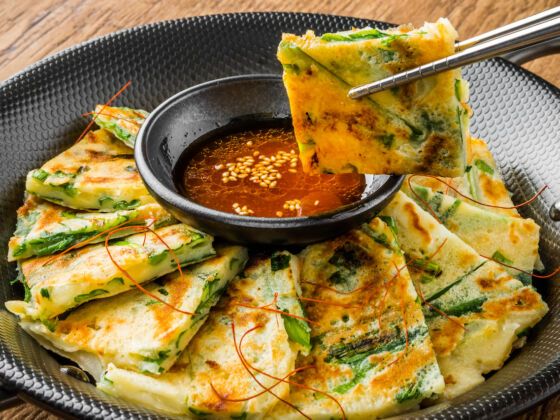
    A vegan friend of mine has been here 3 years & doesn’t have too hard of a time of it, but he frequents the same bibimbap and tofu restaurants that have gotten to know him. Aside from those main dishes, you can also ask for the pancakes, pajeong without egg and they’re pretty delicious. Sanchon (details in Lonely Planet) in Insadong is an amazing Buddhist feast that’s not to be missed in Korea.

  • Jon

    Great article. My mother, who is a vegetarian, will be visiting me in Korea shortly so it was very useful. Maybe I will ask her to bring some Chickpeas!

  • jeremy

    the korean word for vegetarian is 채식주의.

  • Ahimsa

    @Jeremy. You make a good point, and to be sure there are some words and phrases you can say. Phrases such as “Gogi han mogoyo” (I don’t eat meat), “Gogi upsoyo” (without meat) or “Chae sheek joowee immneeda” (I am vegetarian). The problem is that Gogi just means beef which still leaves a host of other things a westerner would think of as meat, and “Chasik juui’ is not really used by anyone, to my knowledge. Most vegetarian items say “vegetarian” either in English or Hangul. While there are things you can say, there isn’t one term universally used and because of that, “vegetarian” is the most often used word, in my experience.

    @Bessie. Personally, I think Sanchon is worth going to once, but at 30,000 won per person for dinner, it just isn’t seven times better than dolsot bibimbap (5,000 won). I love the varied foods there, but there is another vegetarian place closer to the subway that is half the price and just as good, in my opinion.

  • jeremy

    I pointed out 채식주의 because you wrote there isn’t a word in Korean for vegetarian when, in fact, there is. Regardless, you did a wonderful job explaining why that word is no guarantee your dinner wasn’t alive at some point beforehand, possibly even while you’re actually eating it.

  • Pingback: Quick-n-dirty guide to North Korea

  • http://www.surgesuppressors.info Katelyn Henderson

    I am also a vegetarian and my body has never been in a very good shape. Being a vegan can really make you much heathier.`’~

  • http://wonderandwander.com Ameya

    Thank you for this! We’re moving to China soon (where I imagine I’ll have similar problems) but we might be moving to Korea in a few years, so this is good to know!

  • Pingback: Korean Food Beyond Bulgogi: 12 Dishes You Might Want to Consider

  • Ahimsa Kerp

    I guess your mileage may vary.  I have seen Koreans who live abroad, who know the word vegetarian in English, repeatedly offer chicken, fish, and spam to people they know are vegetarian.  

    Also, in Nashville it’s culturally acceptable to change your order.  In Seoul, it’s not nearly as okay.  I’ve had people refuse, usually quite nicely, to change my meal.  But I do think that’s changing. 

Sustainability →

"Agriculture is the most destructive thing humans have done to the planet."

Vegetarian →

On a recent visit, I was once again impressed by the urban Swedish offerings of...

Culture Guides →

Of all the undies-only jobs a woman could have, I decide that a bath house matron is...

Culture + Religion →

John Francis Power learns what it means to be beautiful in South Korea.

Interviews →

People passed out cold on the train, face down on tables in restaurants, and drunkenly...


There’s a reason my hometown of Annandale is nicknamed Koreatown.

Soccer →

Rob McGovern suggests some places for a uniquely Korean World Cup experience.

Culture + Religion →

Drinking in Korea is a balance between Dionysian excess, regimented manners and social...

Vegetarian →

The creamy ravioli arrives on an asymmetrical plate, topped with watercress, drizzled...

Food + Drink →

School cafeterias offer a window into the evolving culture of Korea.

Culture and Art Festivals →

Beyond celebrating all things veggie and practicing purification, this festival is full...

Vegetarian →

Finding vegan food on the road can be a challenge. But it's not impossible...with these...