Photo: author Feature Photo: Zainub

An American expat in Pakistan finds herself confronting the color of her skin everywhere she turns.

“Sardar ji, Memsahib has arrived.”

I suppress a cringe at being identified as the “white foreign woman.” Memsahib is my least favorite Urdu label. I’ve gotten somewhat used to the staring, the whispering of “Dekho! Ghori larki hai!” (Look! It’s a white girl!), and constantly being referred to as Angrez or British. I often surprise my admirers by cheekily responding to them in Urdu that I am not British, but am in fact American.

When someone refers to me as memsahib, I know they’re doing it to be polite, but it evokes an entire history of well to do British army officers’ wives palling around in exquisite drawing rooms in the mid 19th century. I don’t want to be called memsahib or ghori; I’d rather be referred to as a teacher or a writer or anything else that identifies me aside from the color of my skin.

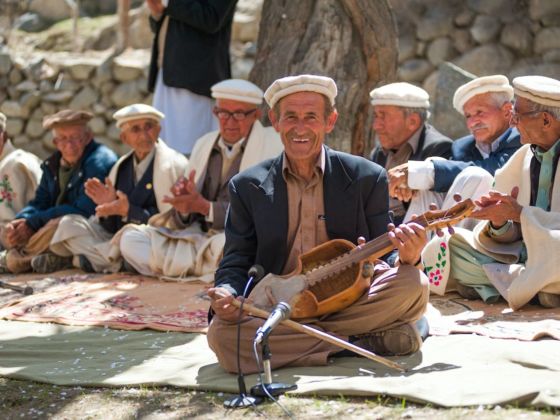
I smile at the guard who called me memsahib while I count out change for the rickshaw driver. The guard raises his hand to his wrinkled forehead and offers me a salute. His hand is stiff to attention at his drab olive-colored felt beret, yet his eyes glisten with kindness. I offer a wave and a greeting in return as I make my way toward the college’s main building.

Photo: kash_if

It is in Pakistan that I have had to come to grips with the inherent advantages and disadvantages of historical and cultural white privilege. Fair and Lovely beauty cream can be purchased at almost any roadside beauty shop, and every ladies’ beauty parlor offers multiple ways to whiten and lighten your skin tone.

For weddings, women use white powder and foundation to make themselves look lighter; the ones who overdo it end up looking like ghostly waifs in full bridal array. More than once when I asked an older woman about her daughter-in-law, the first thing she responded was, “She is very fair, not wheatish or dark-skinned.”

Because I am light-skinned, less educated locals often assume a lot of things about me. At first glance many see me as rich, educated, American and simultaneously a Christian and a loose woman.

A gaggle of men will surround me within seconds of emerging from a train, bus, taxi or rickshaw. “Ji, you want to buy carpets?” “How about some gold jewelry for a pretty lady?” “Taxi service to my brother’s hotel?” In addition to the typical touts, men try to grab me or brush up against me.

Photo: *_*

White women tend to be equated with prostitutes since most local men’s experience with white women is limited to pornography and Hollywood movies. “Eve-teasing,” as the Indian press terms it, is certainly not limited to white women; white women are just more likely to be targets of this popular pastime than local women.

Although being melanin deprived certainly has its disadvantages on the Indian subcontinent, there are also many privileges, or at least what are perceived to be privileges, granted to those who are fair skinned. Many times when a white person visits a local church in the Punjab, the ghora or ghori is garlanded with flowers and asked to stand in front of the congregation and greet everyone. The pastor may ask the foreigners to sit in the best seats, or even on the stage. Sometimes the white guest will be asked to preach with no prior notice consideration of whether said guest is a Christian or not.

I was offered several jobs just because of my foreignness, even though I was completely unqualified for the positions. Once I was asked to interview for a school principal job, even though I only had one year experience teaching in a K-12 school. Another time I was brought along to an advertising meeting. I thought I was going to meet up with some friends, and then suddenly I was being presented as a “foreign consultant.” My Portuguese husband was offered a position to teach college-level Spanish. He doesn’t even speak Spanish.

Photo: author

More often than not, we had to explain to locals why we were NOT the best people for the job. I spent an entire week persistently telling a local publisher in Lahore that I was not the person to write a complete K-8 English curriculum for Pakistani schools. The publisher’s response: “It’s okay, we just want your name on the front of the book, and a nice picture on the book cover. Find two or three other foreigners in America, and we can put their names on the cover as well. That’s the new trend; they don’t need to contribute. It just looks… nice.”

When I first arrived in Pakistan I was impressed with the hospitality of the locals, and I still am, although I am now wary of unsolicited hospitality and invitations. Being a memsahib can be tiring, especially during wedding season.

“Hello, Heather, are you free tonight?”

“Um, I’m at home. What’s up?”

“It is the marriage ceremony of my second cousin from my uncle’s village. You must dress smart and come to the barat with me. Thik hai?”

When people I barely knew started inviting me to three-day wedding ceremonies of a distant cousin, I started to get the gist that certain individuals wanted the company of my skin color more than me.

I turn on the lights in the classroom and take out the teeming folder of papers to pass back during my creative writing seminar. Today is the last day of class, and I have not failed to dress smartly in a fashionable shalwar kameez. I know my students will have their cameras. Most have never taken a class with a foreigner before, and they’ll want photographic proof for their families and friends.

I know I’m white. I know people who see those pictures will refer to me as the ghori or the memsahib or the Angrez. I put on a fresh coat of lipstick and give in to being a novelty.

Become a travel writer!

MatadorU is the most supportive, engaging, and innovative course for helping students accelerate their careers as travel writers and new media professionals. Join Us!

Culture Guides
 

About The Author

Heather Carreiro

Heather is a secondary English teacher, travel writer and editor who has lived in Morocco and Pakistan. She enjoys jamming on the bass, haggling over saris in dusty markets and cross-country jumping on horseback. Currently she's a grad student attempting to wrap her tongue around Middle English, analyze South Asian literature and eat enough to make her Portuguese mother-in-law happy. Learn more on her blog at ExpatHeather.com.

  • http://www.wanderingdona.com Dona

    This is a great piece Heather! I laughed out loud at some of the scenarios and loved the ending. Oh and thanks for the heads up on the Indian visa situation, but I have applied for a PIO card, so should be good to go!

    • http://www.expatheather.com Heather Carreiro

      Glad to have you laughing! I’m sure you will experience some similar experiences on your upcoming trip. I hope the paperwork for your PIO card moves quickly. Let me know if you need any wedding shopping advice!

  • George Baker

    Great article! Heather’s attention to detail instantly brought back forgotton feelings and memories of my trip to Pak. Looks like she has an exciting career ahead of her.

    • http://www.expatheather.com Heather Carreiro

      Thanks for the encouragement George! It was great to meet up with you and your wife in Lahore. Your globetrotting daughter must be on her way home soon, right?

  • http://www.mymissadventures.com Carina

    A great article and something I can absolutely relate to from my time in Sierra Leone. I think it’s the closest I’ll ever get to understanding what it’s like to be Brad Pitt. It can be lonely when you can’t be sure of the intentions of your “friends.”

    • http://www.expatheather.com Heather Carreiro

      Yeah I’ve even had random guys come up and ask to take pictures with me. No doubt they were planning to show the picture to everyone and say I went on a date with them or something! Thankfully I was able to connect with expats and locals who were beyond the foreigner complex.

  • Merilee

    I can definitely identify from my time in Colombia. It is hard to make real friends anywhere, but it is fun to simultaneously value the beauty of our darker friends. It is funny to me that Canadian and US-American-gals think tans are great, whereas their Middle and South-American friends think the opposite is lovely. Both in fact are a blessing because they taut the glory of the other. I never really thought being pale was lovely until my Latina sister said so. She never thought her glorious tan was lovely until I talked to her about how I can’t get that color in a spray tan and would instead look orange.
    Matt showed me a video of Lahore… will you both be there long?

    • http://www.expatheather.com Heather Carreiro

      Isn’t that interesting? In the subcontinent, white skin represents the leisure class, those who can stay inside and don’t need to work out in the sun. Now in our culture, tan is for the leisure class. Those can afford to spend time outside, do sports, etc. and don’t need to spend all their time working in an office.

  • http://matadortravel.com/travel-community/rsw Tim Patterson

    Terrific article.

  • http://amandasfulbright.blogspot.com Amanda

    Guuurl, I couldn’t write it more accurate of what it feels like to be white here in Bangladesh. Both good and bad things are, in the end, frustrating–because everyone is assuming your identity. But, I think it’s more shocking for us, never having experienced being judged by our skin because white is the ‘norm.’ This is nothing compared to people of color growing up in dominantly white cultures and the assumptions we make about them.

    • http://www.expatheather.com Heather Carreiro

      I’m sure it’s very similar in Bangladesh! A Pakistani friend who this on my profile after reading the article, . You’re right, it is strange not being the ‘norm,’ and it’s very strange to be looked up and thought highly of because of my skin color. Whereas my experience is frustrating, I agree that being looked down on and having negative assumptions made about a person due to their skin color is much more damaging. A book that got me thinking more about these dynamics lately is Adam Mansbach’s Angry Black White Boy.

  • http://milesofabbie.com Abbie

    Wow, great article! Thanks for sharing your experiences!

  • http://www.nehasweb.com neha

    Really enjoyed reading this piece. And you look terrific in a salwar kameez.

    • http://www.expatheather.com Heather Carreiro

      Thanks Neha! My students always kept me up to date on the latest fashions. Last year it was all about the “frocky” shirts with trousers, which is what I wore for our class “photo shoot.”

  • Rebecca

    Great article Heather! I just came back from abu dhabi and found it very surreal to find myself being photographed and gawked at for my whiteness.

  • Pamela Tan

    I loved this article! This is just the kind of juicy tidbits which I was hoping to hear about your time there! I really started to understand some of what it felt like for you to be there. Keep writing!

  • Jerry

    A very well written and eye-opening article. I had no idea that whiteness is still accorded this level of privilege and desired to such an extreme degree by those who are from this part of the world.

  • http://thefutureisred.com Leigh

    Loved this article, Heather.

    What struck me is when you say there are advantages to being melanin deprived. So true. I’ve found as we’ve traveled — and I haven’t yet been to Pakistan — my also-very-light skin affords me privileges that aren’t always borne out by my experience.

    It definitely makes things easier when you’re an expat (particularly when it’s easier to find work), but it still makes me uncomfortable.

    Maybe I need to take your advice and put on lipstick too!

    • http://www.expatheather.com Heather Carreiro

      You’re right, while the advantages often made things easier, they often made me feel uncomfortable. Like when I would go to the bank and get shuffled to the front of the line by one of the employees. Yes, I got out of the bank faster, but I was quite happy to wait in line with everyone else. Heck, it was nice to see a queue where people were waiting politely, and I felt the people should not be ‘punished’ by having to let the white girl go in front of them. At the same time, if I held my ground and refused to move to the front, then I would have been shaming the bank employee and making everyone else in the line uncomfortable as well. In the end, I usually gave in to the courtesy since I knew it was only me that would be bothered by it.

  • http://www.twitter.com/gabimgarcia Gabriela Garcia

    Heather, absolutely loved this piece, and could relate to much of it, in particular with my travels in India and West Africa. The anecdote about being asked to sit at the front of churches and being asked to preach used to happen to me exactly that way in Ghana. I wrote a little bit about the feeling of being treated like a celebrity despite doing nothing to deserve such appreciation in a post on Avatar in Brave New Traveler. And Leigh’s piece on stereotyping alluded to similar ideas. I love the dialogue taking place on Matador right now!

    • http://www.expatheather.com Heather Carreiro

      Me too! I was just sharing with my husband how there has been so much great dialogue here on Matador. That’s so funny you’ve been asked to preach in churches in Ghana. Isn’t it strange? I mean in our case, we had one pastor calling us in the middle of the night and telling us he wanted to start a special English service where we would preach, even though he was the ONLY one in the church who would understand English. It would have been like a show, “Hey come see the foreigners talk!” It’s sad that much of the legacy of western missionaries has been to leave people with a desire for otherness, rather than for God, or to think that they can only reach God through a different culture. Once a church elder told me in Urdu, “We have pews. We have an organ. We wear jeans. We are just like American Christians.”

      Nevermind that Punjabis traditionally sit on the floor, play tablas and harmoniums and wear shalwar kameez…

  • Brooke

    Great article…well done!

  • Debbie S

    Heather – nice article! And so informative for someone who has never experienced a different culture… I love all the inside comments on differences – amazing! Thanks for sharing and keep it up!

  • http://matadortravel.com/travel-community/anne137 Anne

    What a great article! Thanks for sharing this. I’ve had the same experience living in Turkey and being fairer than most people here.

    I wonder, does your husband experience the same amount of attention?

    • http://www.expatheather.com Heather Carreiro

      He gets quite a bit of attention, and if we’re together people approach him before me. They only difference is that he doesn’t get grabbed or harassed in the same way. It’s also a LOT worse for him in India since lighter skin is less common and there’s a more aggressive way of dealing with tourists. When we would emerge from train stations in India, he’d be completely overwhelmed and just start walking off in a random direction trying to find a place of “peace.” This was not usually successful!

  • Cindy

    Great writing! Reminds me of similar experiences in Bali when my friends and I got asked if we were celebrities and insisting we took photos with them. Loved how you engaged the audience throughout – I wanted to find out more!

  • Pingback: The 10 Cheapest Cities in the World

  • Javed

    This was funny stuff. I am married to a white Russian/American who happens to be a natural blonde. You can imagine what kind of attention that would get in Pakistan. It is rather sad, but she had to be a brunette for the three months I was there. We live in DHA area, which is very liberal and almost 70% of the families do have some sort of connection with western world in one way or the other.

    I suggested the brunetter part for safety reasons. Sometimes I just did not feel like going to shopping with her and my mom would take her and we always had a guard or two with them, but I think people have been suppressed for so long that sometimes it gets frustrating. Your article brought some interesting memories back.

    • Heather Carreiro

      Hey Javed,

      I lived in DHA too, some time in Phase III and my last year in Phase IV. When I first moved to Lahore, I dyed my hair too to make it darker. It was just nice not to attract so much attention in the street. I can imagine how tough it would be for your wife, blonde hair would definitely get stares! Going brunette is a good safety tip.

  • Pingback: Meet Matador intern, Heather Carreiro

  • Pingback: Perception of Race and Skin Color in Pakistan

  • Pingback: 10 Things I Learned Living Abroad – Part 1

  • Sheryar Khan

    Good article, My wife is English and very pretty but she never gets this treatment. She does get a lot of suspicious looks and people avoid her, which is a bumper. I think it is because most people in my area are considerably fair in complexion compare to Karachi or Punjab and they historically are more independent minded and not to mention historically hostile to English.

    • Heather Carreiro

      Thanks for reading Sheryar! Are you living in Khyber-Pakhtoonkhwa? Sometimes it would have been to be avoided rather than mobbed or followed!

  • http://www.facebook.com/stephen.chapman1 Stephen Chapman

    Just discovered this article after browsing the MatadorU Forum; really enjoyed reading it.  A fascinating topic.  Nice piece Heather

    • Anonymous

      Thanks Stephen! Hope your time in Matador U is as helpful was mine was. 

    • Anonymous

      Thanks Stephen! Hope your time in Matador U is as helpful was mine was. 

  • Hkan1185

    I dont get it why do you dislike being called a ‘gori’ I mean you dont seem to have any problem calling yourself a white person and they pretty much mean the same thing.

    • Anonymous

      Hkan – I would have a problem if in English people referred to me as ‘white girl’ – I don’t find my identity in my skin color. It’s different if people use a word like ‘gori’ to refer to/identify someone rather than simply to describe the person’s physical appearance. 

    • Anonymous

      Hkan – I would have a problem if in English people referred to me as ‘white girl’ – I don’t find my identity in my skin color. It’s different if people use a word like ‘gori’ to refer to/identify someone rather than simply to describe the person’s physical appearance. 

      • http://adnanymous.com Adnan Khan

        Its the same as people being called ‘asians’ and ‘indians’ in the western world. Since most Pakistani cannot identify a European or an American even after talking to the person, the label ‘Gori’ is the default answer left. I’d say its not offending in any way. Its just the way the average Pakistani would talk about you, without any prejudice. Infact, I can’t think of any other word describing a Caucasian in Urdu.

        Yes, Pakistanis have some kind of obsession with the white(er) skin, which is harder to explain. There is a pattern of lighter skin tones found with financial prosperity, although its a huge generalisation. (People from the northern areas of Gilgit/ Skardu are indistinguishable from a caucasian, specially with so many having blue eyes).

        • Guest

           Adnan, you just said there is an obsession with whiter skin among Pakistanis and that its linked with financial prosperity. On the same note, you mention the fact that people from Northern areas (Gilgit / Skardu) are like caucasians, hence white.

          What you FAIL to mention is the fact that these Northern Pakistani people are among the most financially worse off compared to other parts of Pakistan. As a matter of fact, the whole province of NWFP and Balochistan is financially worse off compared to Punjab and Sindh.

          There is absolutely no link in Pakistan between financial prosperity and skin color. In fact, how many ‘blonde’ and ‘blue-eyed’ politicians, businessmen, aristocrats and bureaucrats can you point out in Pakistan?

    • Anonymous

      Hkan – I would have a problem if in English people referred to me as ‘white girl’ – I don’t find my identity in my skin color. It’s different if people use a word like ‘gori’ to refer to/identify someone rather than simply to describe the person’s physical appearance. 

  • t5c

    My God, you have got some issues. Considering you were traveling in a Rickshaw, I can tell you are not financially well off, thus the complex. I dont mean to be too abrupt, but seriously, I’d love to know which places treat white people like that. Unfortunately my poor ‘English’ wife never got such treatment, now shes jealous!

  • rh

    if you we feel youve been targeted and branded we feel we have been too!
    such a generalization was completely unnecessary if not entirely false.
    or perhaps this was just to get the attention of your readers, after
    all, who’d be interested to hear about the economic situation which is
    why most well dressed and well spoken women our targeted as memsahib or
    baji even if they are the blackest of pakistanis (myself included)
    theres that streak of imperialistic opinion that you oblviously
    missed.

  • rh

    if you we feel youve been targeted and branded we feel we have been too!
    such a generalization was completely unnecessary if not entirely false.
    or perhaps this was just to get the attention of your readers, after
    all, who’d be interested to hear about the economic situation which is
    why most well dressed and well spoken women our targeted as memsahib or
    baji even if they are the blackest of pakistanis (myself included)
    theres that streak of imperialistic opinion that you oblviously
    missed.

    • Rukhsana

      I am an African lady living in Pakistan 20 years, and am reasonably “well dressed”, “well spoken” (what you mean to say is actually affluent, which i am) but I’ve never been called memsahib or baji. This article is true, as i understand the Pakistani culture from a neutral point of view. Skin color, class system, social status and money is very important in the daily life of Pakistanis.

    • Rukhsana

      I am an African lady living in Pakistan 20 years, and am reasonably “well dressed”, “well spoken” (what you mean to say is actually affluent, which i am) but I’ve never been called memsahib or baji. This article is true, as i understand the Pakistani culture from a neutral point of view. Skin color, class system, social status and money is very important in the daily life of Pakistanis.

Expat Life →

I’ve heard the place is where expats of a certain age go to meet local girls of...

Culture Guides →

Of all the undies-only jobs a woman could have, I decide that a bath house matron is...

Culture Guides →

I wondered if the guests approached it as a novel, if not slightly wacky event, in the...

Expat Life →

Brichero and gringa, hand in hand in the Plaza de Armas, her smiling from ear to ear,...

David Adams →

David sails a faluca up the Nile river into the lands of Sudan's pharaohs.

David Adams →

David caravans across the Sahara with Niger's legendary Tuareg warriors.

Culture Guides →

Take a trip through Cambridge's oldest alleyways, waterways and streets.

Culture Guides →

David takes us on a motorcycle journey through modern Georgia in search of the mythical...

David Adams →

David Adams explores the route of the ancient Roman armies and discovers a land as...

Expat Life →

Although I’ve driven less than a mile, it’s as if I’ve driven into a different...

Culture Guides →

China could be the Holy Grail for smokers. Smoking bans are rarely enforced except in...

Culture Guides →

Colin snaps his shutter over 4,000 times, capturing the vibrancy of Singapore's tubes and...


I'm looking for stories about expats exploring the complicated terrain of cultural...