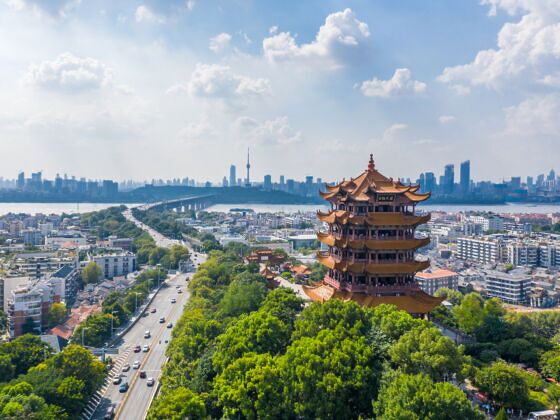
Since 2006, Google has made itself available to China, but at what cost?

On Tuesday, Google threatened to cease cooperating with China’s internet censorship practice, adding the possibility of closing all Google operations in the country, a decision spurred mostly by last week’s sophisticated, cyber attacks aiming to access the Gmail accounts of Chinese human rights activists.

Fortunately, according to Google, the attackers did not achieve their objective as only two accounts were hacked, but no email content was accessed.

Due to the serious nature and human rights implications of these attacks, Google is taking to its blog to talk about the investigation into the attacks and how it has changed Google’s stance with China.

From the blog: “These attacks… have led us to.. review the feasibility of our business operations in China. We have decided we are no longer willing to continue censoring our results on Google.cn, and so over the next few weeks we will be discussing with the Chinese government the basis on which we could operate an unfiltered search engine within the law, if at all. We recognize that this may well mean having to shut down Google.cn, and potentially our offices in China.”

Since entering the Chinese market over three years ago, Google has been criticized for abiding by Chinese censorship law and restricting search results on google.com and google.cn, Google’s website in China. Though little is known about the technology behind how Google is self-censoring search results, it’s been clear that Google is consistently updating its filtering methods.

Earlier this year, Google blocked all searches for “Tiananmen Square” regardless of page content (even directions to the location had been filtered out) for eight days, after which search queries only turned up uncontroversial results such as links to shops in the area and benign, cheery photos of downtown Beijing.

Photo: mandiberg

Besides confirming that they had indeed abandoned old methods, Google would not provide more information on the topic.

For every search, Google informs users in China that “in accordance with local laws and policies, some of the results have not been displayed,” a necessary compromise, Google felt, in order to allow the company to provide information access to a fifth of the world’s population.

Being the second most widely used search engine in China, behind Baidu, Google knows it will have “potentially far-reaching consequences” should the company choose to leave the Middle Kingdom.

As for now, Google can only promise us they “are committed to working responsibly to resolve the very difficult issues raised.”

World Events
 

About The Author

Juliane Huang

Juliane Huang currently writes for Matador from the beautiful city of San Francisco. With a laptop in one arm and a travel bag in the other, Juliane is rarely at home, though always online. Catch up with her on her blog.

  • http://onceatraveler.com Turner

    I wonder why they agreed to censor search results in the first place? Market share, of course, but I hoped no foreign company would help to fuel China’s tight internet controls.

    • http://matadortravel.com/travel-community/simonemarie Simone Gorrindo

      Market share is part of it, but I also think Google felt that supplying access to a great deal of information in that area of the world might be better than nothing. There are some serious censors, but a lot of people feel that the censorship is largely symbolic, and not terribly extensive.

  • http://www.nehasweb.com neha

    I was horrified when Google agreed to censorship laws by restricting certain searches, etc. Did they honestly expect a scenario different from what just happened? I wonder if there the hacked accounts led to any trouble (I know Google says email content was not accessed, but I don´t know…).

    • Christine

      I agree…it’ll be interesting to see what comes out of this in the long run.

World Events →

If you don't have any background context, how are you supposed to understand what's going...

World Events →

Our Cairo expert, Nick Rowlands, opens up his Twitter lists to tell us who we can follow...

World Events →

Nick Rowlands vents his confusion and frustration at being stuck hundreds of miles away...

World Events →

Few things explain the impact of a massive natural disaster better than a personal...

World Events →

Two filmmakers find themselves in Port-au-Prince during the earthquake and create a...

World Events →

One year after tragedy and, for many, little has changed; Port-au-Prince is still...

World Events →

Astounding amateur footage of the flash flood that rocked Australia.

World Events →

President Obama signed the repeal of the 17 year old "Don't Ask, Don't Tell" Policy on...

World Events →

After five days, authorities have finally arrived at Parque Indoamericano in Buenos Aires...

World Events →

Violent protests have left at least two dead and a neighborhood in a panic in Buenos...

World Events →

The glimmer of hope is still alive in Burma, but it requires tremendous courage to...

World Events →

The first Chilean miners step out of the collapsed mine into the open air for the first...

World Events →

Less than two hours ago, the city was in a jubilant uproar for the safe return of all 33...