I’m standing in my orange apron in front of stainless steel prep tables in the Targa neighborhood of Marrakech. Fresh grounded cinnamon, turmeric, and ginger are heavy in the air wafting off the tables. Each of the spices is placed in small ornamented traditional Moroccan containers. “In Morocco, we like beautiful things,” grins Nora Fitzgerald Belahcen, founder of Amal, the non-profit where I came to take the cooking class. Aside from knives, cutting boards, and bowls stacked on the side, some of the raw ingredients are on the table as well, such as chicken and beef, preserved lemon, olives, onions, capsicums, potatoes, and eggplants. I am accompanied by other tourists, who keep making silly jokes and prevent the cooks from actually starting the class. I shush them, because I do not have the patience that these kind cooks have.
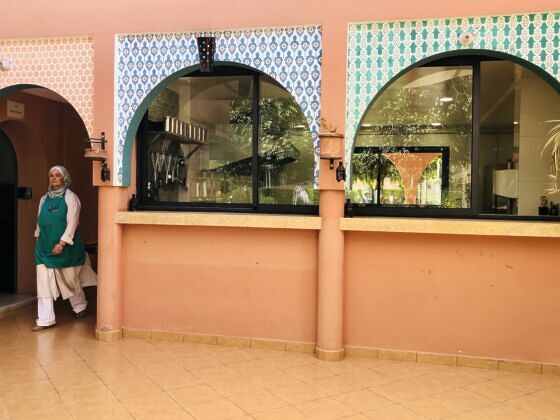
Inside the Marrakesh Kitchen Where Travelers Help Change Moroccan Women’s Lives
I’ve come to Amal Women’s Training Center and Moroccan Restaurant to learn how to make different kinds of tagine and mint tea. It’s more than just a cooking class, however. Amal serves a bigger mission to help the city’s most vulnerable women.
A cooking class with a mission
In 2006, Fitzgerald Belahcen met a single mother begging on a Marrakech street and helped her earn an income by making and selling baked goods. The experience led Belahcen to support more women seeking financial stability through food. By 2012, Fitzgerald Belahcen and a small team had formalized the work into a non-profit that empowers disadvantaged Moroccan women through culinary training and job placement with ethical employers.
The women who come to Amal face extraordinary challenges. Many are orphans, widows, divorcees, or single mothers — women who are often stigmatized in Moroccan society and struggle to earn even two to three dollars per day. Through Amal’s intensive eight-month training program, these women learn not just cooking skills, but gain French language education, customer service training, and the confidence to believe they deserve a place in society. Today, Amal, which means “hope” in Arabic, operates two training centers in Marrakech and has helped over 300 women escape poverty and stigmatization.
Amal’s commitment to its community extends beyond job training. During the COVID-19 pandemic, the organization delivered more than 7,500 food baskets to households in need during lockdown. After Morocco’s 2023 earthquake, Amal partnered with World Central Kitchen to prepare thousands of sandwiches for isolated mountain villages. As Fitzgerald Belahcen tells me, the natural disaster was “an invitation to a much larger responsibility.”
The cooking class experience
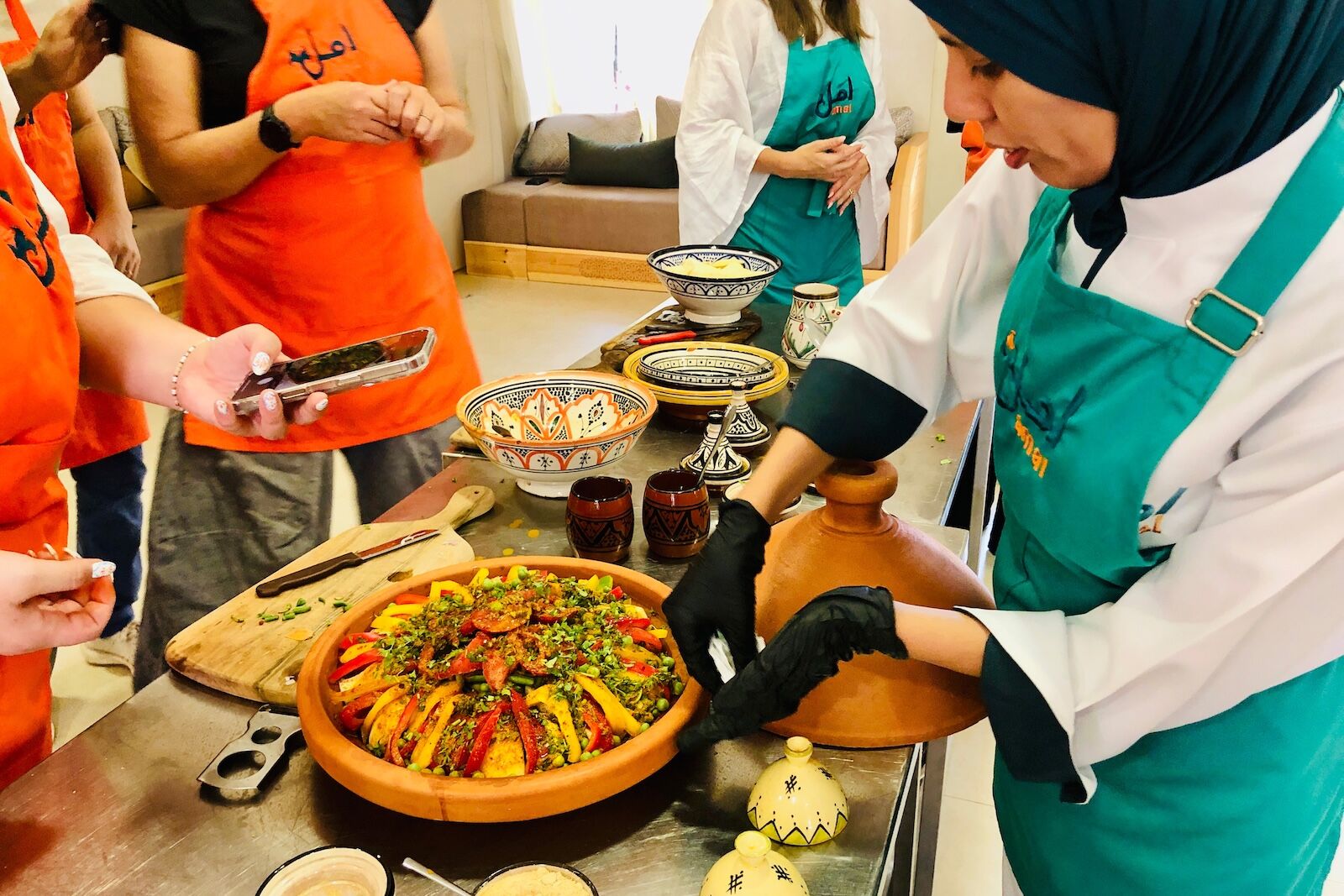
Photo: Debbie Gonzalez Canada
Classes are taught in English, French, or Arabic, and many instructors are Amal graduates who have stayed with the organization for years. The classes emphasizes traditional techniques passed down through generations. Participants learn to meticulously prepare spice blends, marinate meats, and assemble dishes step by step. The main lesson? “Be generous with the spices.”
Participants choose from a menu of classic Moroccan dishes, such as chicken couscous, pastilla, and different kinds of tagine and local pastries. Tagines are absolutely central to Moroccan cuisine. The term is used both for the cone-shaped cooking pot and the slow-cooked stew prepared in it. In this country, “couscous” describes both the grain and a whole stew made with couscous, a protein, vegetables, and broth. The basic spices for Moroccan dishes are salt, black pepper, ginger, and turmeric (always add ginger and turmeric in equal amounts, we’re told). Coriander and parsley are often added as well.
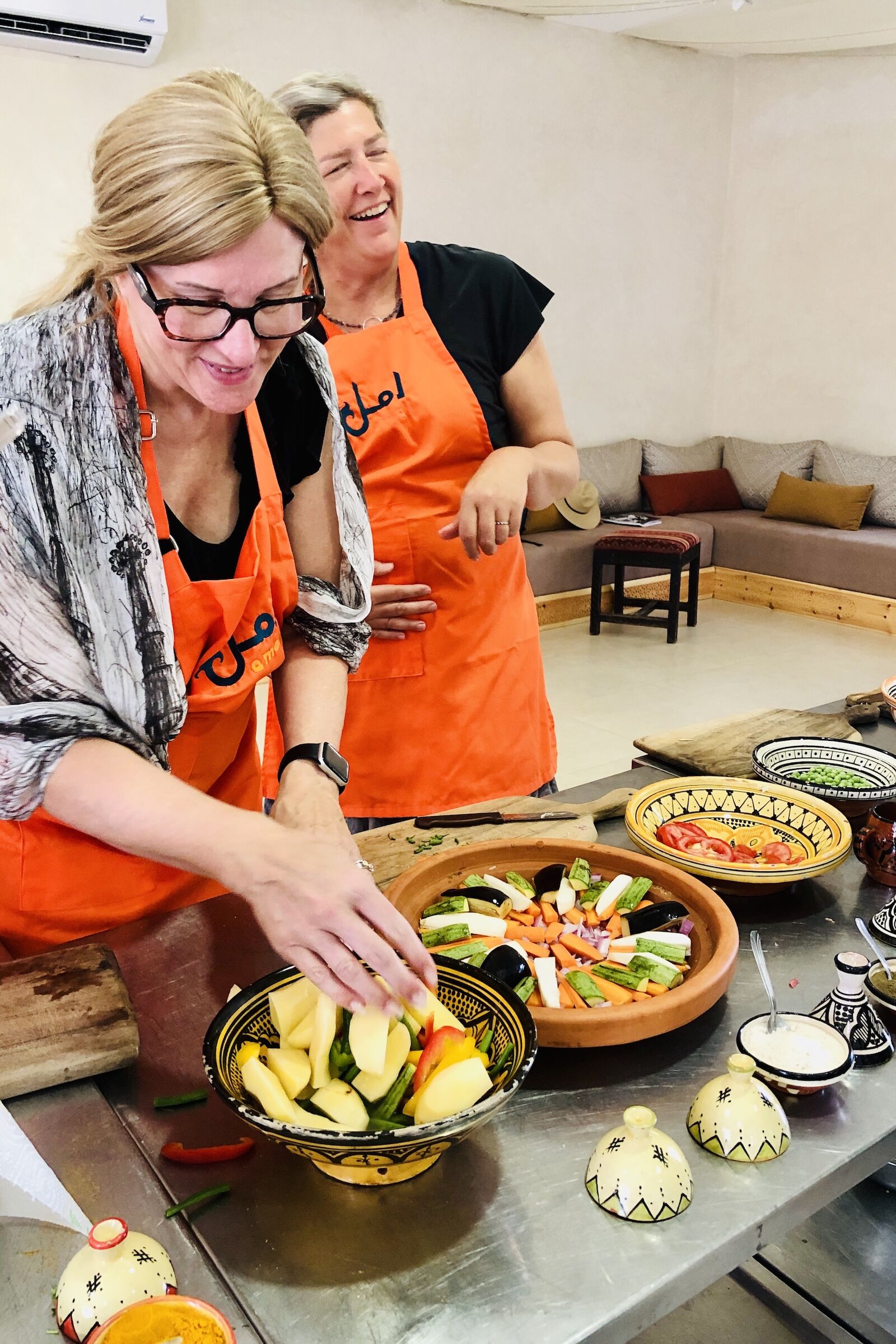
Photo: Debbie Gonzalez Canada
In the class, each group of three or four people shares the preparation of one dish. Experienced cooks guide our steps and direct how many spoons of spices and olive oil to add, but the participants get their hands dirty. Some keep the fire going while the stews cook.
In my class, I helped make chicken tagine with olives and lemons preserved in salt. I was in a group with a man from Portugal, one from South Africa, and another one from the United States. The four of us were eager to chop vegetables and mix spices onto the meat, so we took turns adding the ingredients and massaging the chicken with the preserved lemon — apparently the key to getting this dish right. My new South African friend made small cuts in the chicken to enhance the flavor.
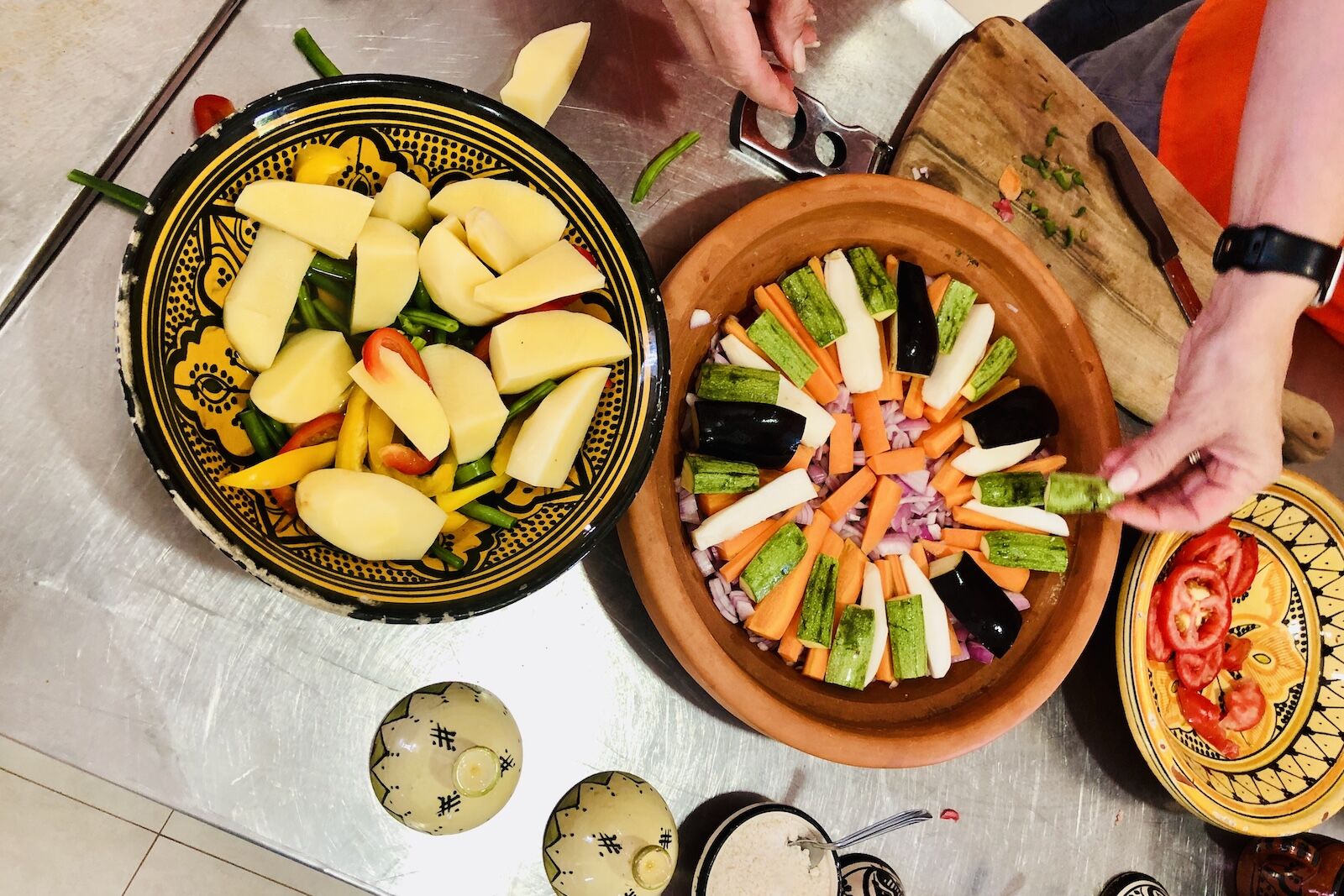
Photo: Debbie Gonzalez Canada
Later, I observed other groups making a lamb tagine, vegetarian tagine, and a beef tagine with prunes, almonds, cinnamon, and other spices. Presentation and layering were key to the vegetarian option: The vegetables are cut in similar shape and sizes, then placed in rings inside the pot with veggies that take longer to cook at the bottom.
Vegetarian tagines take about an hour to cook, while those with meat can take up to 2.5 hours. While the tagines cooked by the fire, an instructor heated a pot of water for traditional mint tea made with gunpowder green tea and a generous amount of different types of fresh mint.
There’s a ritual to serving Morocco’s ubiquitous beverage. It’s made by twice rinsing the tea leaves before adding sugar and mint, and then the mix is brought to a low boil. Finally, the tea is poured into cups from a height to aerate it. While those of us who joined the cooking class sipped tea and ate cookies, Amal’s staff explained the role of mint tea in Moroccan culture, from hospitality to the high-sugar content meant to provide extra calories.
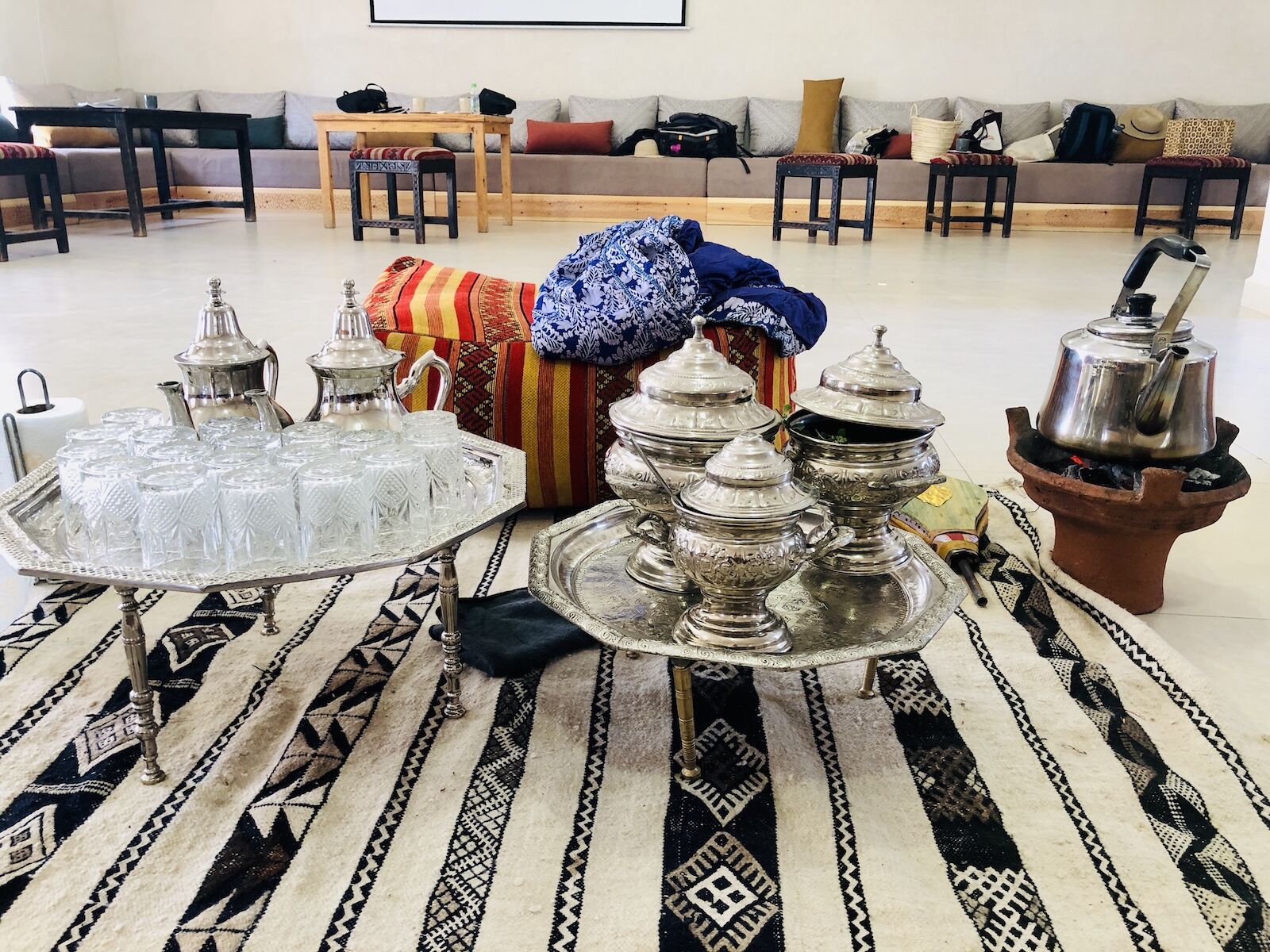
Photo: Debbie Gonzalez Canada
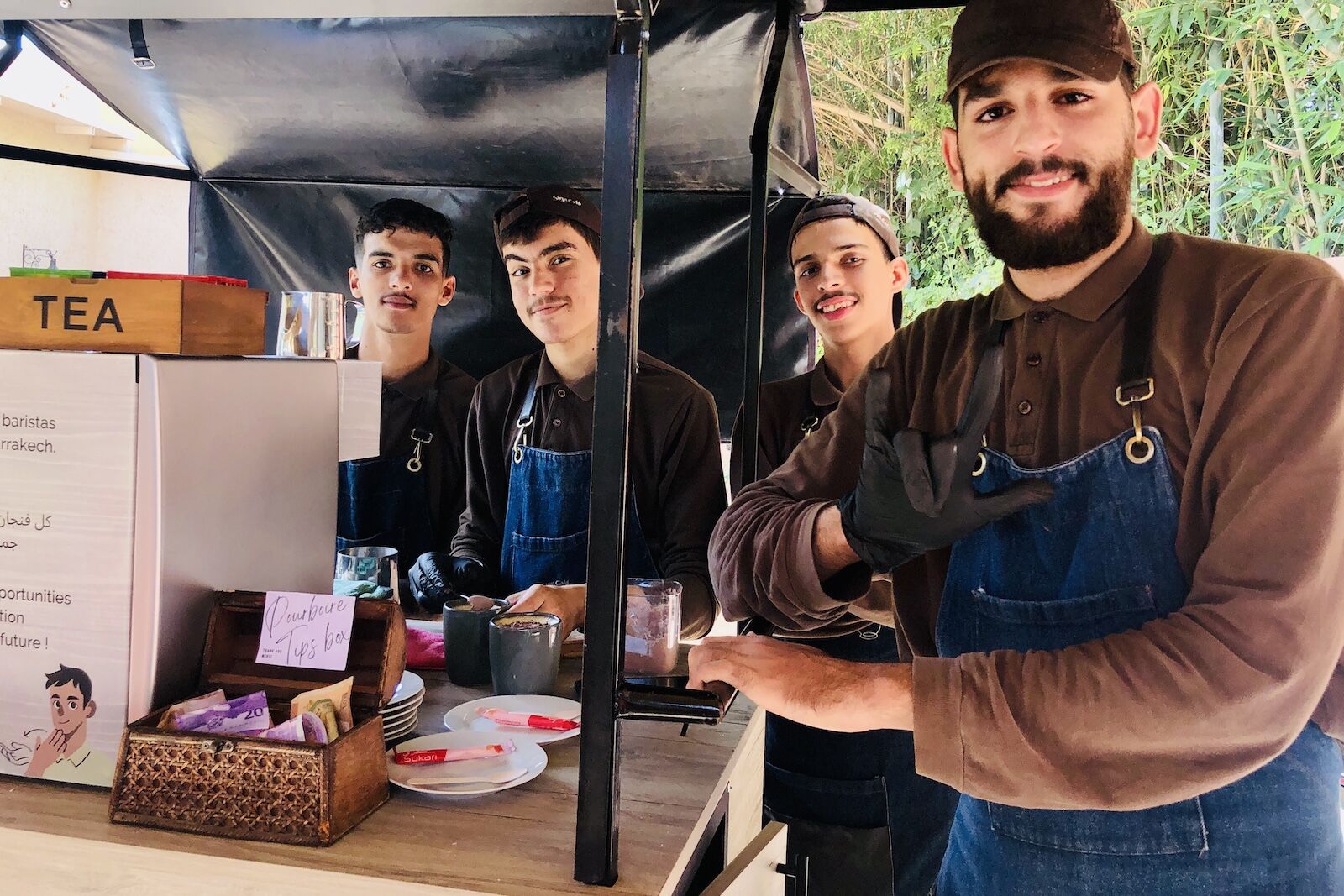
There’s coffee, too. While the dishes are being prepared, participants can have one of the best coffees in town prepared at the Sign Language Cafe stand, operated by staff with hearing loss. I loved learning how to order a flat white and say thank you in sign language — for the latter, open your hand and touch your chin with your fingertips, then move your hand forward and slightly down in a short arc toward the person you are thanking.
At the end of the experience, everyone gathers to enjoy the fruits of their labor — a communal feast where all dishes are shared, as is customary in Moroccan culture. Participants leave with recipes, practical cooking skills, and a deeper appreciation for Moroccan hospitality.
How to book a class
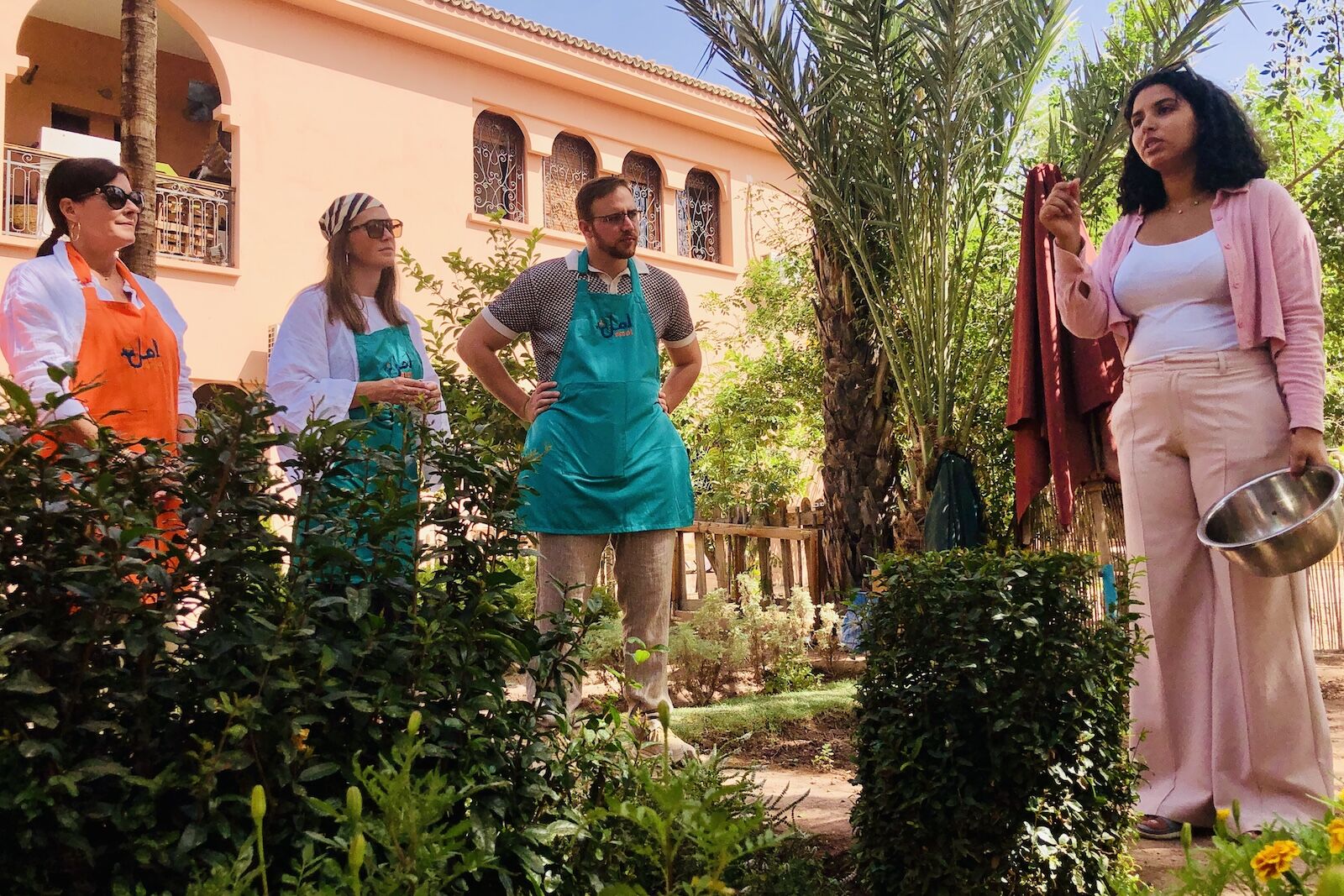
Learning to pick leaves for mint tea. Photo: Debbie Gonzalez Canada
Classes take place at the Amal Targa Center in the peaceful Targa neighborhood, about a 20-minute drive from the city center. The intimate setting is housed in a former residential villa surrounded by walls and herb gardens, where participants can pick fresh mint and other ingredients.
Classes run Monday through Friday, starting at 9:30 AM and lasting until about 1 PM from preparation to the final feast. Classes cost 400 Moroccan dirham (about $40 USD) per person for tagine, and 500 MAD (about $50 USD) per person for chicken couscous or pastilla. A separate baking class focused on Moroccan cookies like ghreyba and msemmen costs 300 MAD (about $30 USD) per person and runs from 10 AM to 12:30 PM.
Classes can be booked directly through Amal’s website at amalnonprofit.org, via email at contact@amalnonprofit.org, or by phone at +212(0) 5 24 49 37 76.
Amal Targa Center (cooking classes): Lot Harouchi, Quartier Sofia, Targa, Marrakech, Morocco. Phone: +212(0) 5 24 49 37 76 or +212(0) 6 00 00 73 75
Amal’s Restaurant and Sign Language Cafe
Amal Targa Center Sign Language Cafe. Photo: Debbie Gonzalez Canada
If you’d like to taste the food but don’t have time for the full cooking experience, Amal operates a flagship restaurant in Gueliz, housed in a villa with an open-air garden dining space. Lunch is served Monday through Saturday from noon to 3:30 PM. The menu changes daily based on seasonal availability, with Friday reserved exclusively for couscous — a nod to Moroccan tradition. Dining at Amal is an opportunity to enjoy exceptional authentic Moroccan cuisine at modest prices — meals typically range from 100-150 MAD ($10-15 USD).
The Sign Language Cafe, inside the Center for Language and Culture in the Gueliz neighborhood, serves a student population of 5,000 and is the first venture of its kind in Morocco. It operates daily from 9 AM to 7 PM, though times vary slightly on Sundays. The café is staffed by a rotating team of deaf and hearing graduates from Amal, creating an inclusive work environment.
Taking a cooking class at Amal or going to one of their venues offers something increasingly rare in modern tourism: an experience that genuinely matters beyond the moment, contributing to the community. Every dirham spent at Amal directly supports the organization’s social mission, as 100 percent of the revenue from the restaurants, cooking classes, and catering services is reinvested into the training program and initiatives like the Sign Language Café. Thirty percent of Amal’s funding comes from this work, while the other 70 percent comes from donations and grants.
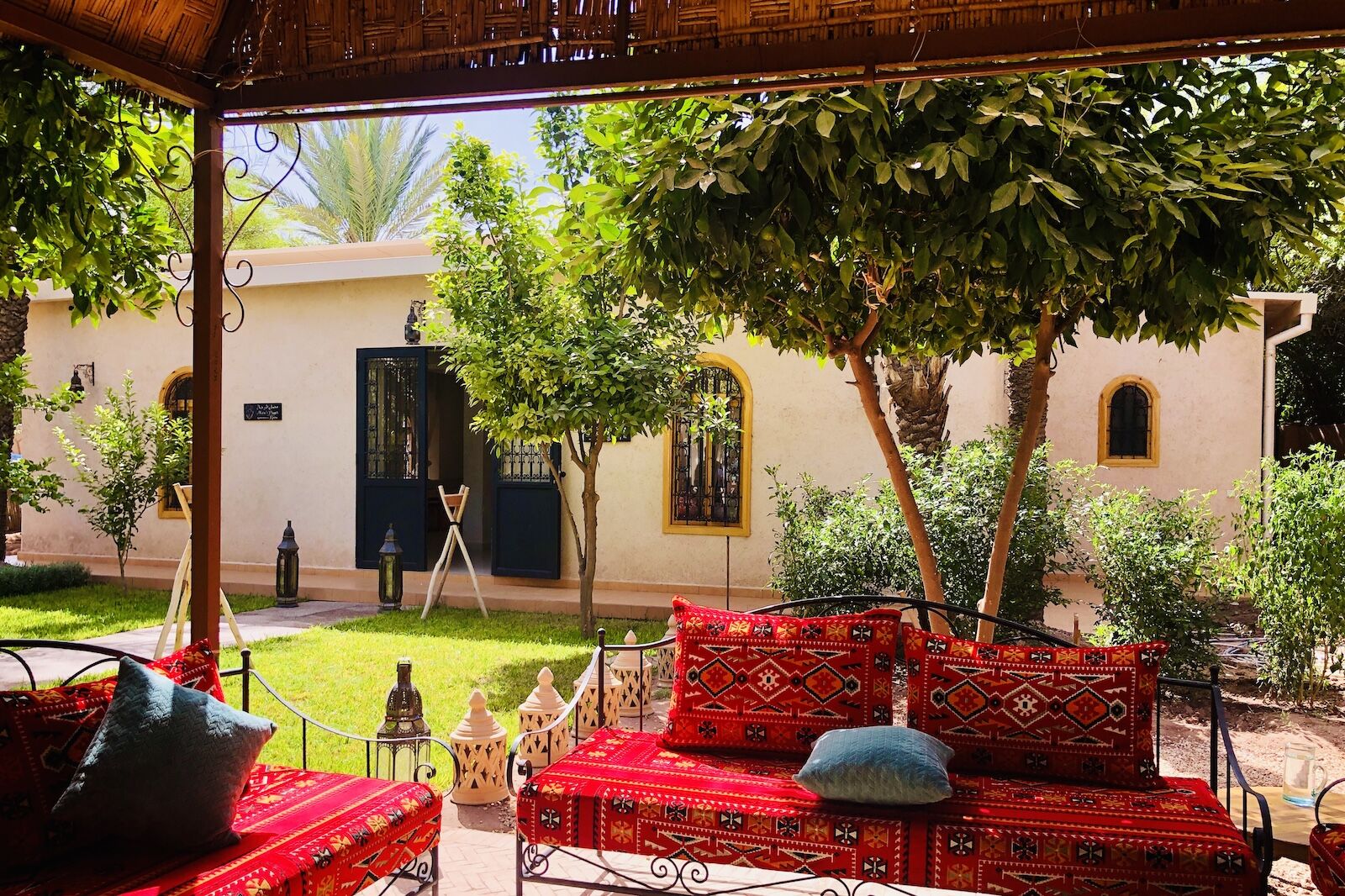
Photo: Debbie Gonzalez Canada
Want to contribute more before or after you visit? Consider making a donation to support Amal’s training program and community initiatives. Visit www.amalnonprofit.org/donate to contribute to empowering vulnerable women in Morocco. Contributions help new projects, cover unexpected costs during crises, pay staff salaries, and expand the organization’s reach to serve more women.
Amal Gueliz Center (restaurant): Rue Allal Ben Ahmed et Rue Ibn Sina, Gueliz, Marrakech, Morocco – Phone: +212(0) 5 24 44 68 96 or +212(0) 6 67 08 15 34
Sign Language Café Marrakech: Angle Rues Sourya, Rue Khalid Ben El Oualid, Gueliz, Marrakech, Morocco – Phone: +212(0) 6 79 27 87 92 or +212(0) 6 66 46 30 95 