Many people who travel to the Sea of Cortez between December and April come with the same purpose: watching gray whales. Each winter, the animals return to their traditional breeding and calving grounds near Baja California and delight visitors with their engaging demeanor by swimming right up to boats, seemingly looking for human interactions. That’s what I expected from a week aboard the National Geographic Venture on Lindblad Expeditions’ Baja California: Among the Great Whales itinerary. On the day we embarked, those expectations were dashed.
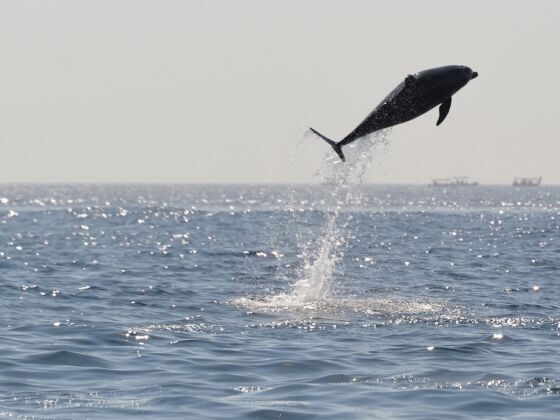
Photo: Jesse Adams
Camera Roll: Humpback Whales, Sea Lions, and Dolphins on a 7-Day Immersion In Baja’s Wilderness
“We will not be going to see the gray whales at their birthing ground,” our expedition leader told us an hour after we got on board.
Eastern North Pacific gray whales are in trouble. NOAA’s most recent count put the population at roughly 13,000 — the lowest since the 1970s and down from a peak near 27,000 in 2016. The decline has been linked to ecosystem changes in the whales’ Arctic feeding grounds, where shifting sea ice has cut into the prey supply they need to fuel a 10,000-mile round-trip migration. The result is fewer mothers reaching Baja, and fewer calves. Steven Swartz, a NOAA-affiliated researcher who has studied these whales for 45 years out of Laguna San Ignacio, told Sierra magazine that his team counted just four mom-calf pairs in the 2026 season. At the population’s peak, they regularly counted more than 100.
In Baja, our naturalists reported that some whale-watching operators were pursuing the few whales present, pressuring animals already under stress. National Geographic-Lindblad Expedition refused to be part of such tactics. For the crew of wildlife experts, the welfare of the animals comes first. To alleviate the pressure inflicted by tourism on these mammals at this difficult time, we were going to stay away and focus on seeing other species.
The Sea of Cortez, dubbed “the world’s aquarium” by oceanographer Jacques Cousteau, isn’t all about gray whales. The area’s vast biodiversity means that you’d fail miserably if you tried to avoid seeing any wildlife. Case in point: A few minutes before our plane touched down in Baja, my partner saw a whale from the window. Even in the gated and highly manicured neighborhood of Nopoló, we were treated to bright hooded orioles slurping the nectars of yellow torch lilies, fluorescent hummingbirds nesting, and sting rays wriggling away from their hiding spots under the sand. There’s no getting away from it in the best way.
Accompanied by a team of naturalists and expedition leaders, we spent every minute of our trip sailing the Sea of Cortez and exploring its depths, islands, and coastline in search of wonders. Fossils, marine and land mammals of all sorts, cacti, fish, corals, shells, birds, reptiles – we saw it all, and then some. There’s a reason why Baja was voted the best wildlife destination by the Matador Network team in 2025.
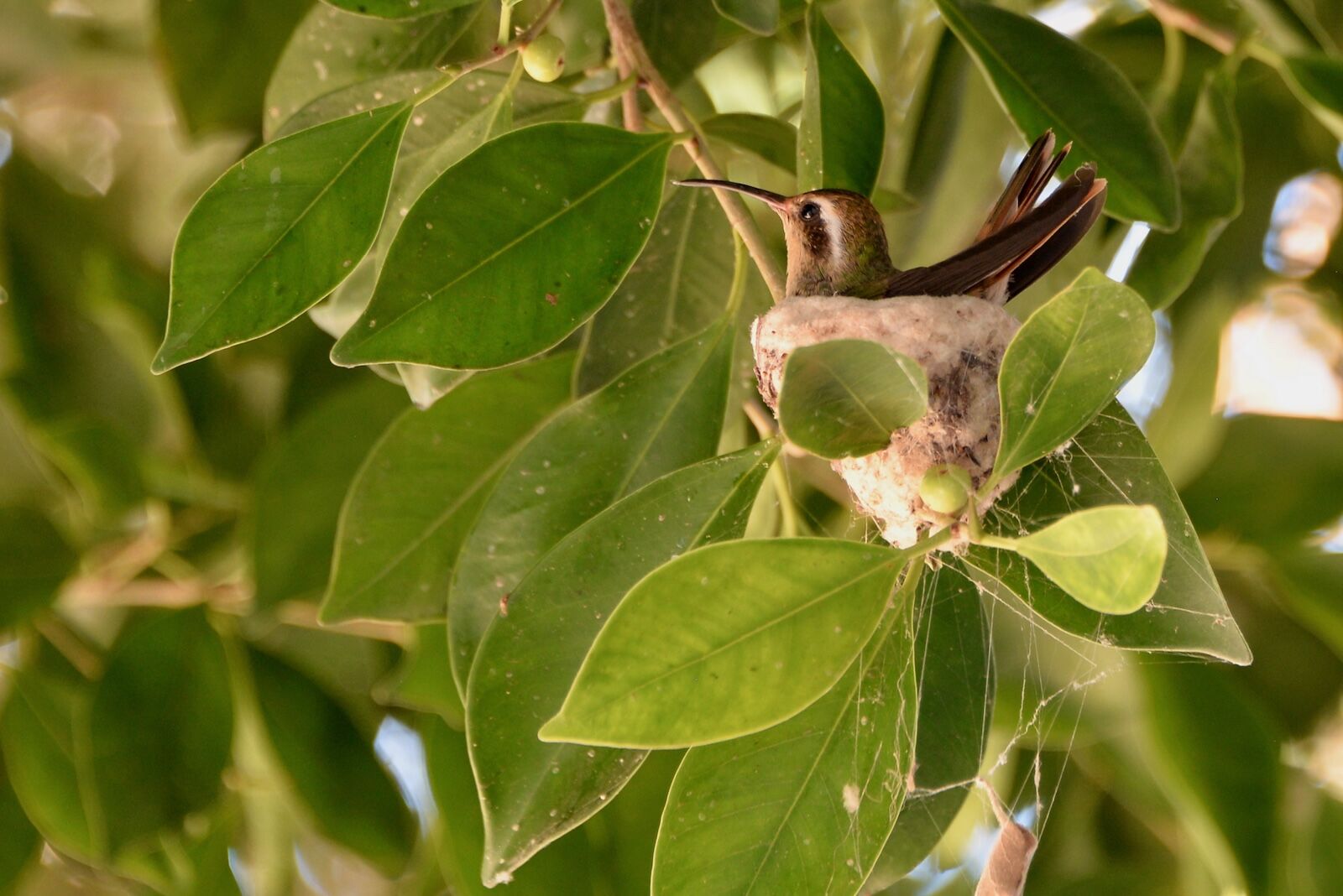
A Xantus’s hummingbird tends her nest in an Indian laurel outside a Nopoló café — an endemic species found almost nowhere outside the Baja peninsula. Photo: Jesse Adams
When we opted to enjoy breakfast outside in Nopoló, we never expected to have some of the best entertainment nature can offer. A Xantus’s hummingbird had made its tiny nest in the Indian laurel tree across from the restaurant’s patio, and we observed it for over an hour as it fed its young, kept them warm and safe by laying on them, and buzzed around looking for sustenance. I don’t think we paid any attention to what was served to us that morning.
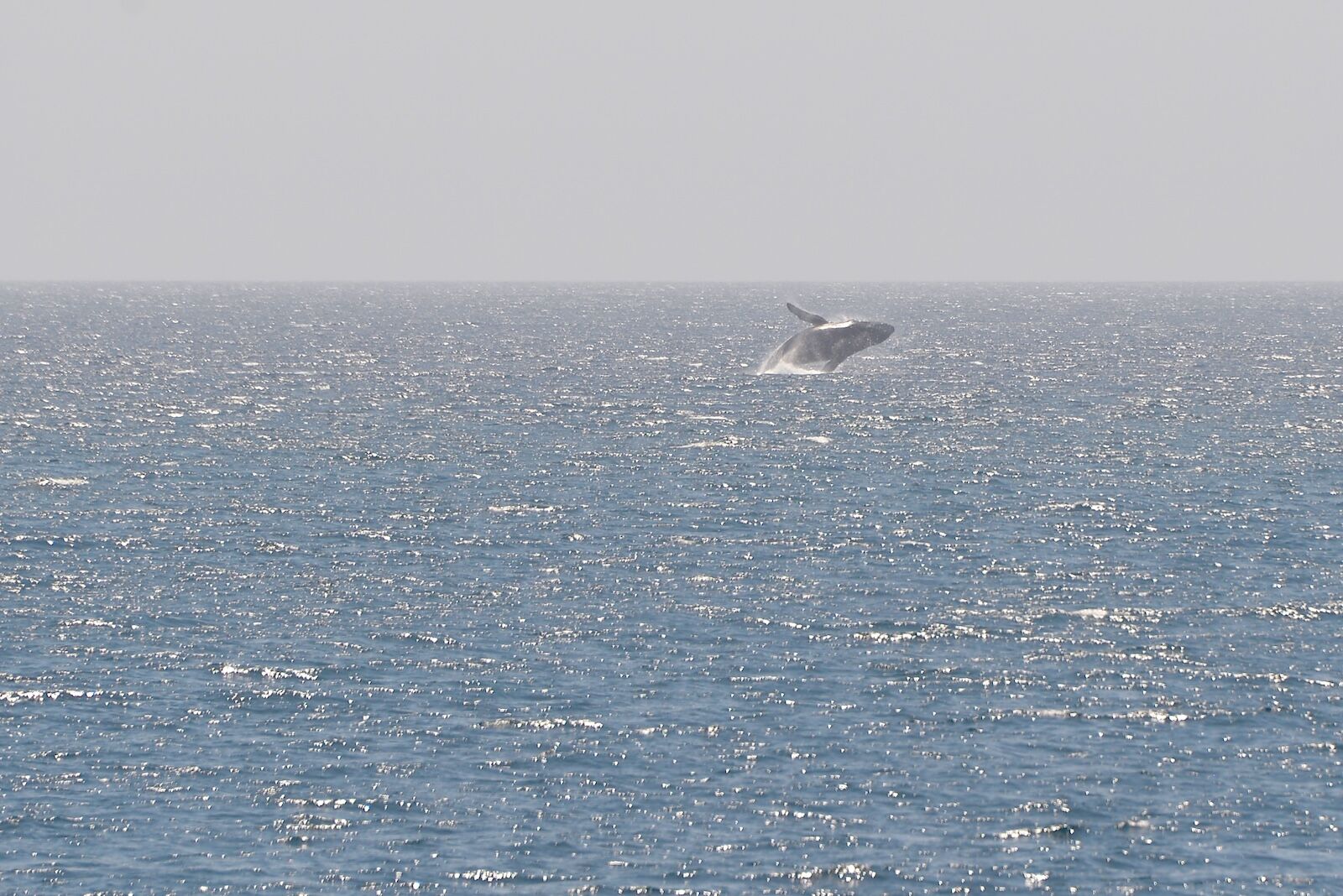
A humpback breaches off Cabo Pulmo. Adults can launch most of their 40-ton bodies clear of the water, powered by the peduncle. Photo: Jesse Adams
Breaching humpback whales were a daily occurrence during our voyage. We could observe the impressive phenomenon from afar from the deck of the Venture, or much closer from small boats. Humpbacks use the peduncle muscle in their tail (the largest muscle in the animal kingdom) to propel themselves out of the water for reasons that remain unknown. Off Cabo Pulmo National Park one afternoon, a calf and two adults breached together — three sequential leaps, close enough that the sound of the slap of return hit before the splash dropped.
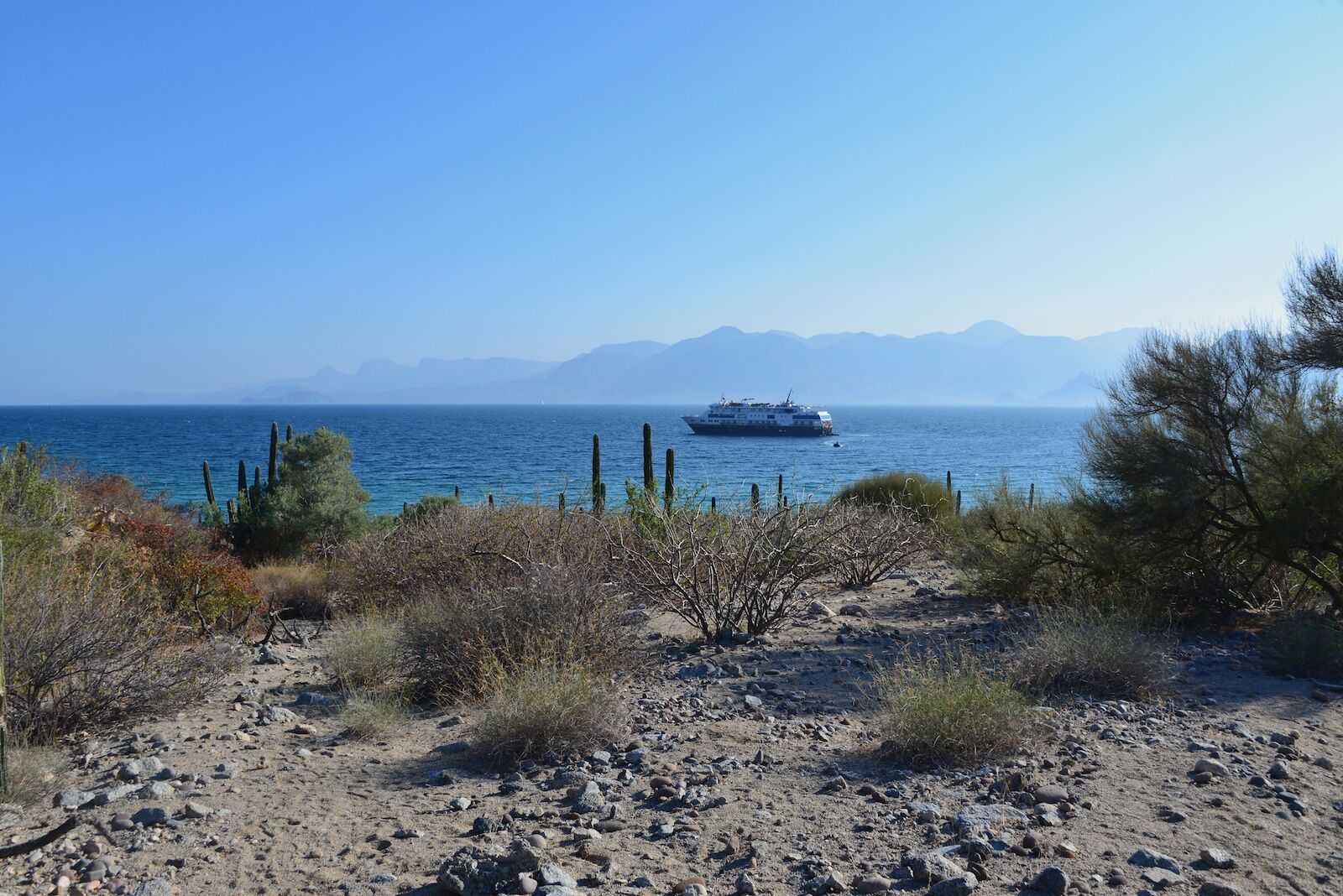
The National Geographic Venture anchored off Isla San Jose. The 100-passenger vessel never docks during the seven-day itinerary; guests reach shore by Zodiac. Photo: Jesse Adams
During the voyage, the Venture never docked. Instead, it anchored off the coast of some of the most striking and remote parts of Baja, and we were taken to shore by Zodiacs. At Mangle Solo on Isla San Jose, we hiked in the desert landscape guided by Yann, a Baja-born naturalist, who shared with us his immense knowledge of the isle’s fauna and flora. The narrow, steep, and rocky trail lined with threatening cacti took us to a vantage where we could admire the coast, and our ship, from above in all their glory.
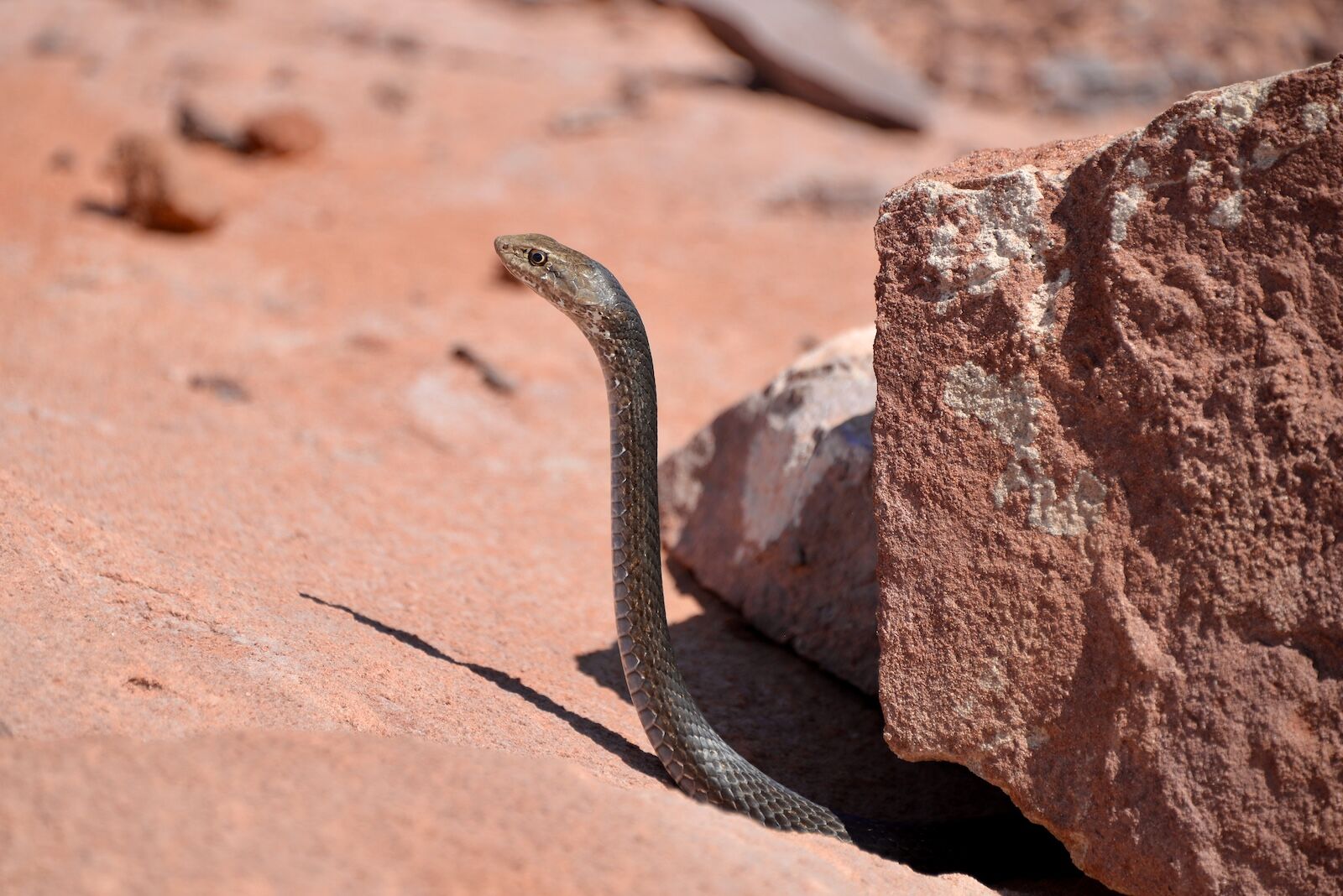
A six-foot Baja California coachwhip pauses on the sandstone cliffs at Puerto Los Gatos. Non-venomous and reputedly aggressive, this one was unbothered. Photo: Jesse Adams
We saw no cats at the mysteriously named Puerto Los Gatos, but we did see a snake. Hidden among the reddish fossilized sandstone cliffs, was a six-foot-long Baja California coachwhip. The non-venomous snake, known for its bad temper, wasn’t bothered by our presence. It slithered its way up the rock formations near us and even slowed down long enough for a photograph.
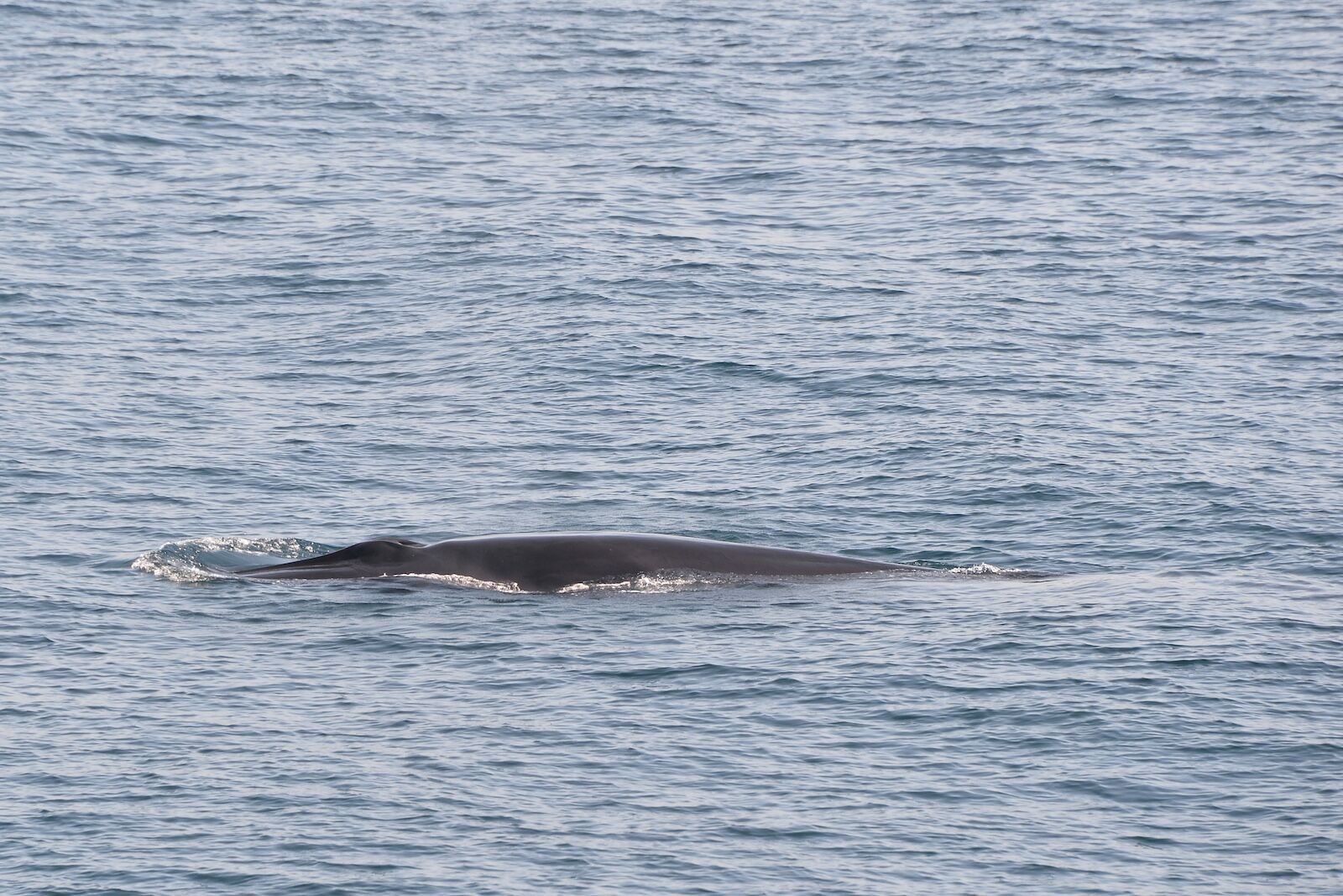
A fin whale surfaces in the Sea of Cortez. The species is the world’s second-largest animal after the blue whale and can reach 85 feet. Photo: Jesse Adams
There are 12 species of great whales in the world’s ocean and we were lucky enough to see three of them during our sailing: dozens of humpbacks, one minke whale, and one fin whale. Fin whales are the world’s second-largest mammal and can reach a length of 85 feet – the blue whale, also observable in the Sea of Cortez, is the largest. Fin whales were hunted into endangered status by 20th-century commercial whaling. They remain endangered under the US Endangered Species Act, though the IUCN reclassified the species as vulnerable in 2018 as some populations recover.
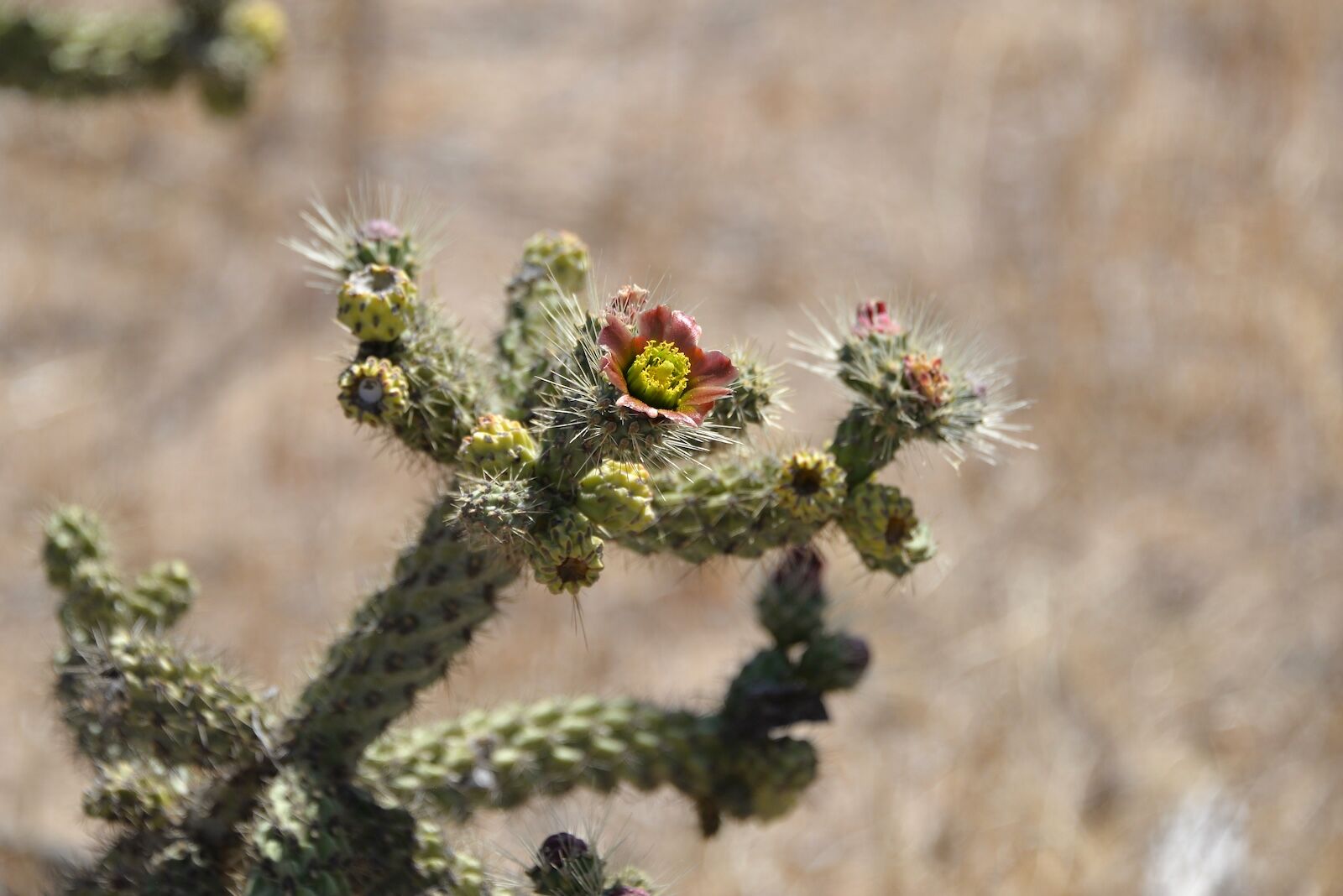
A cholla cactus (locals call it the “jumping cactus” for its barbed segments that detach at the slightest brush) flowers in spring across Baja’s desert islands. Photo: Jesse Adams
The harsh desert landscape of Baja California is dominated by spiky flora that will scratch and prick your legs and arms if you’re silly enough to hike in shorts and short sleeves. The cholla cactus, also known as the jumping cactus due to its uncanny capacity to spear anyone who comes near, is one of them. Its delicate blooms, visible in the spring, may be pretty, but don’t try to smell them.
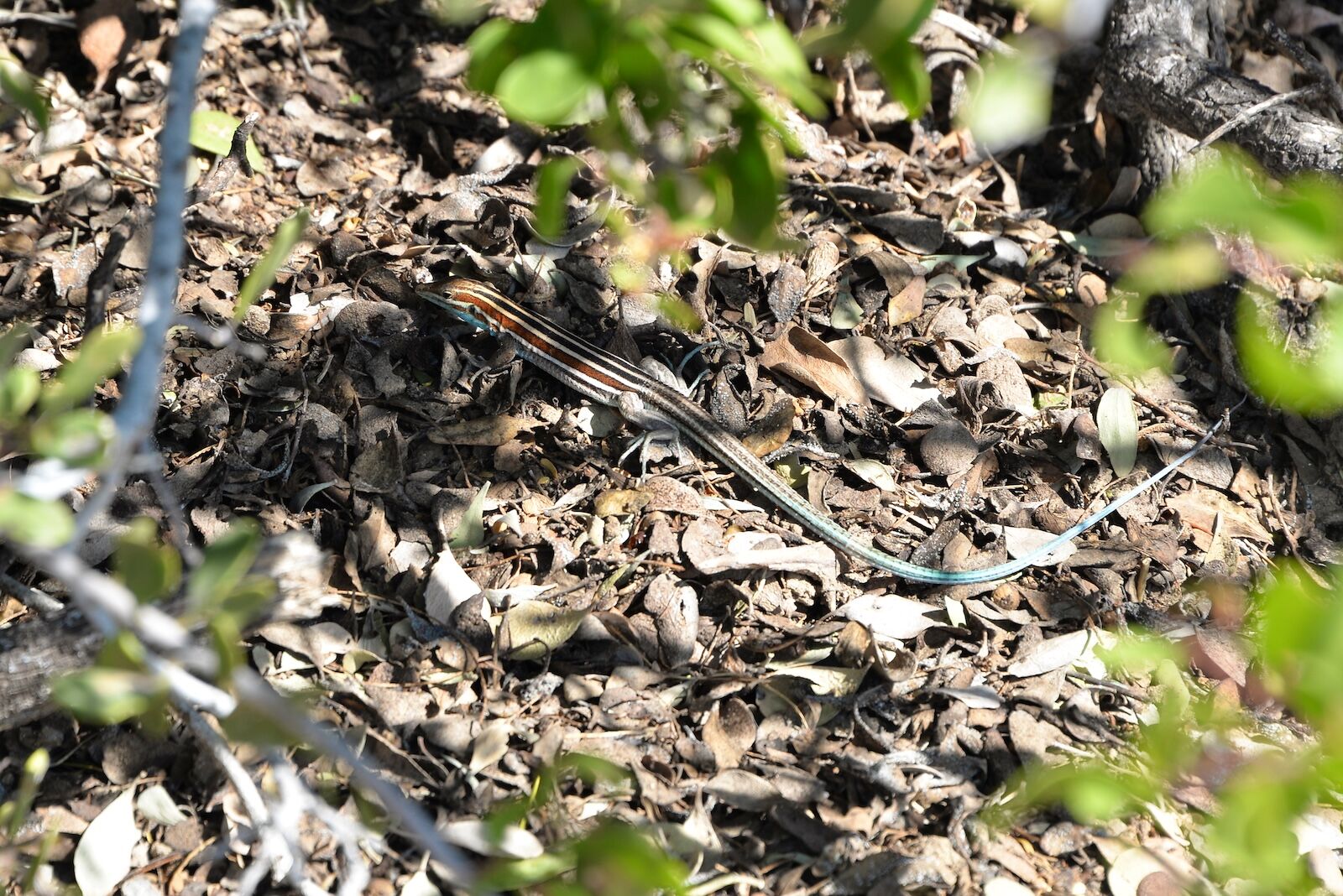
A western skink — identifiable by its electric-blue tail — darts through leaf litter on Isla San Jose. Photo: Jesse Adams
Lizards are everywhere in Baja’s desert landscape. Some blend in perfectly with the sand, others hide in cacti, and some, like the western skink, have a hard time going incognito. Their bright-blue tails make them very easy to spot. That said, like all lizards, the western skinks are shy and fast moving so you need to be quick to snap a shot.
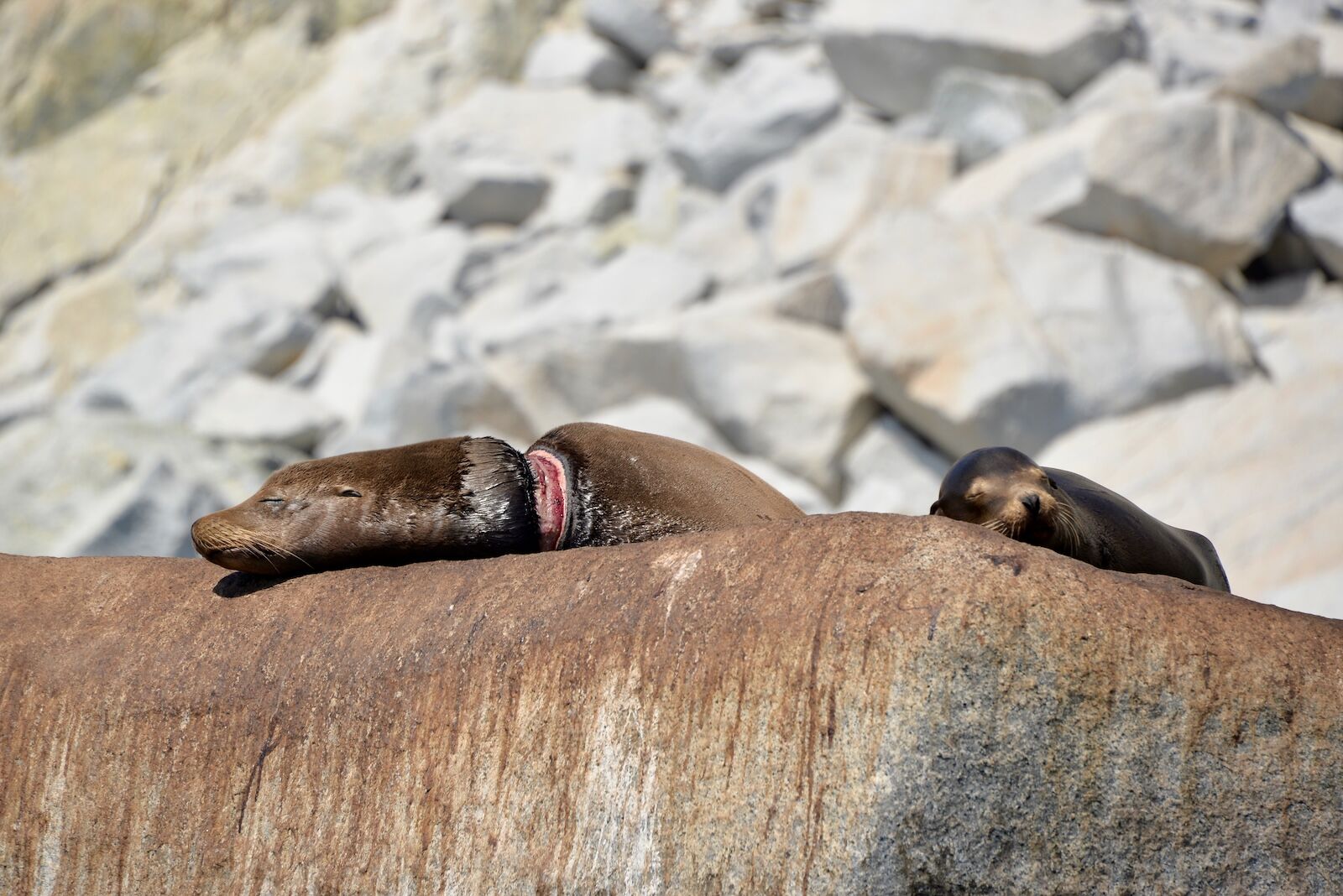
California sea lions rest on a sea stack near Cabo Pulmo National Park. The animal in front shows a neck laceration consistent with fishing-line entanglement; naturalists radioed local rescuers. Photo: Jesse Adams
On the second day of our voyage, we traveled to Isla las Ánimas to snorkel with a colony of sea lions. While in the water, the animals darted among us, came close to examine our gear, and generally melted everyone’s heart. That made what we saw a few days later even more difficult to take in. During our panga visit near Cabo Pulmo National Park, we spotted California sea lions sunbathing on a sea stack. We immediately noticed that one of the pinnipeds was seriously injured. Our guide explained that the neck laceration seen on the animal was consistent with being caught in a fishing line. One of the naturalists reported the animal to local rescuers in the hope that they could save it. Unfortunately, sea lion entanglements in fishing lines or nets aren’t rare. Sea Shepherd saved 13 entangled sea lions in the Sea of Cortez in just six days in March 2026. According to the marine conservation organization, fishing gear is one of the greatest threats to California sea lions in the Gulf of California.
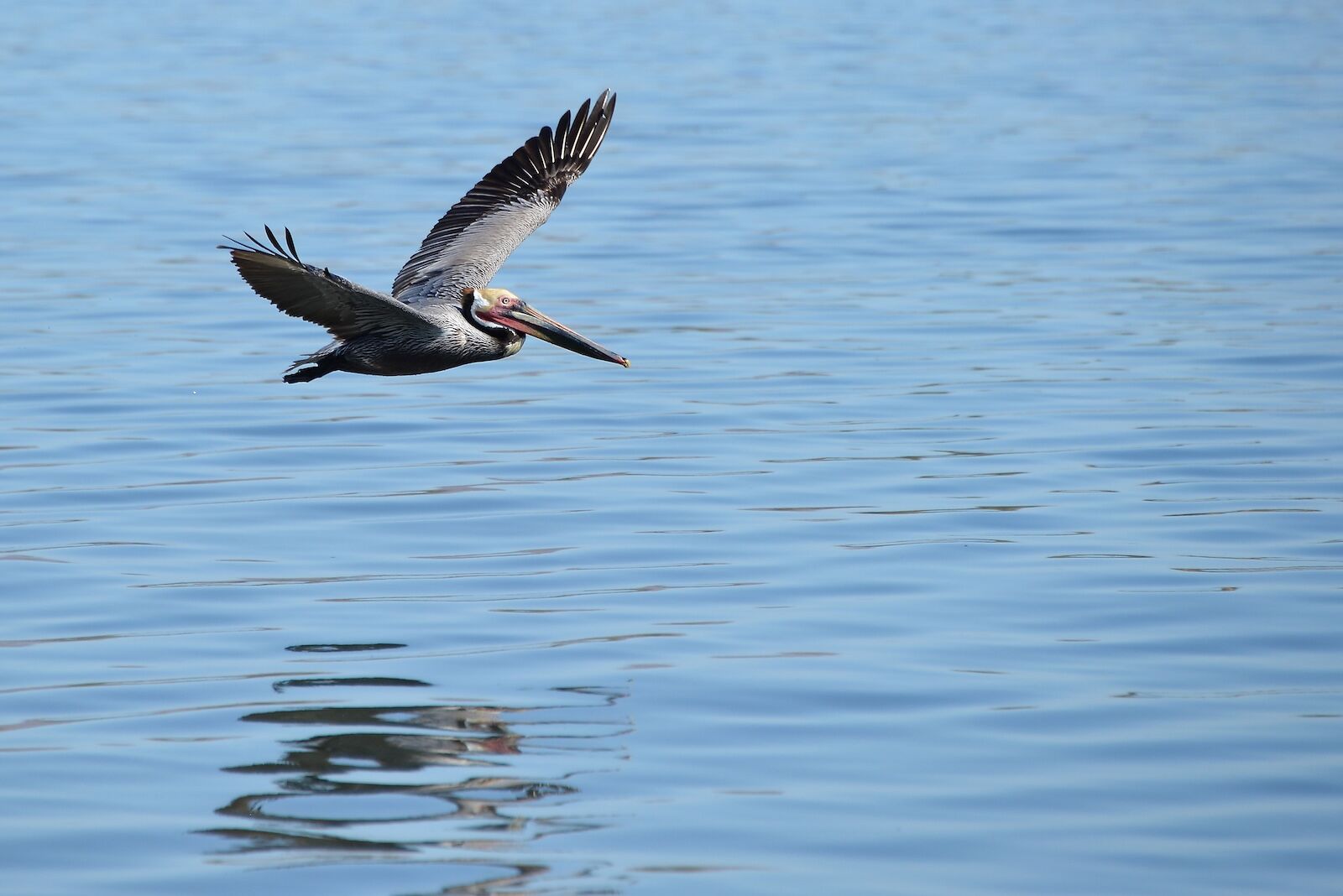
A brown pelican glides low over the Gulf of California near Loreto, where the birds shadow fishing boats by the dozens for tossed scraps. Photo: Jesse Adams
Pelicans are abundant on the coast of the Baja California Peninsula. In fact, along with turkey vultures, they were the birds we saw most frequently during our voyage. Although elegant while in flight, their landing skills leave something to be desired. They tend to hit the water in a big splash that would scare away just about any fish they were thinking of catching. In Loreto, they follow small fishing boats by the dozens in the hope of being tossed fish guts, and they are often rewarded for their patience.
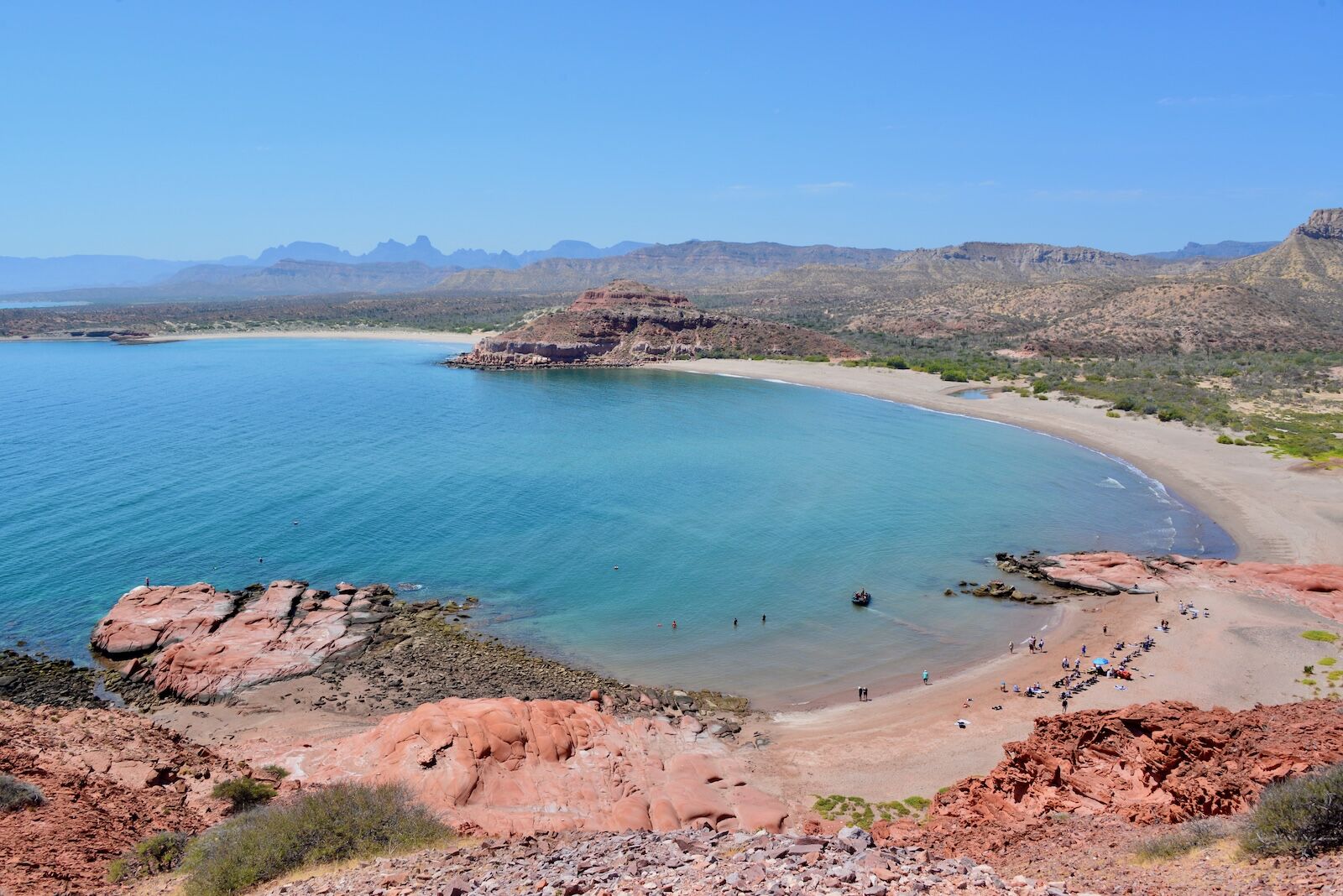
Puerto Los Gatos from above: rust-red sandstone, turquoise bay, and a beach the Venture’s guests had to themselves. Photo: Jesse Adams
We were alone whenever we went to shore during our voyage. At Puerto de Los Gatos, we were the only ones snorkeling along the coral reef, swimming in the bay, and climbing the unusual rock formations.
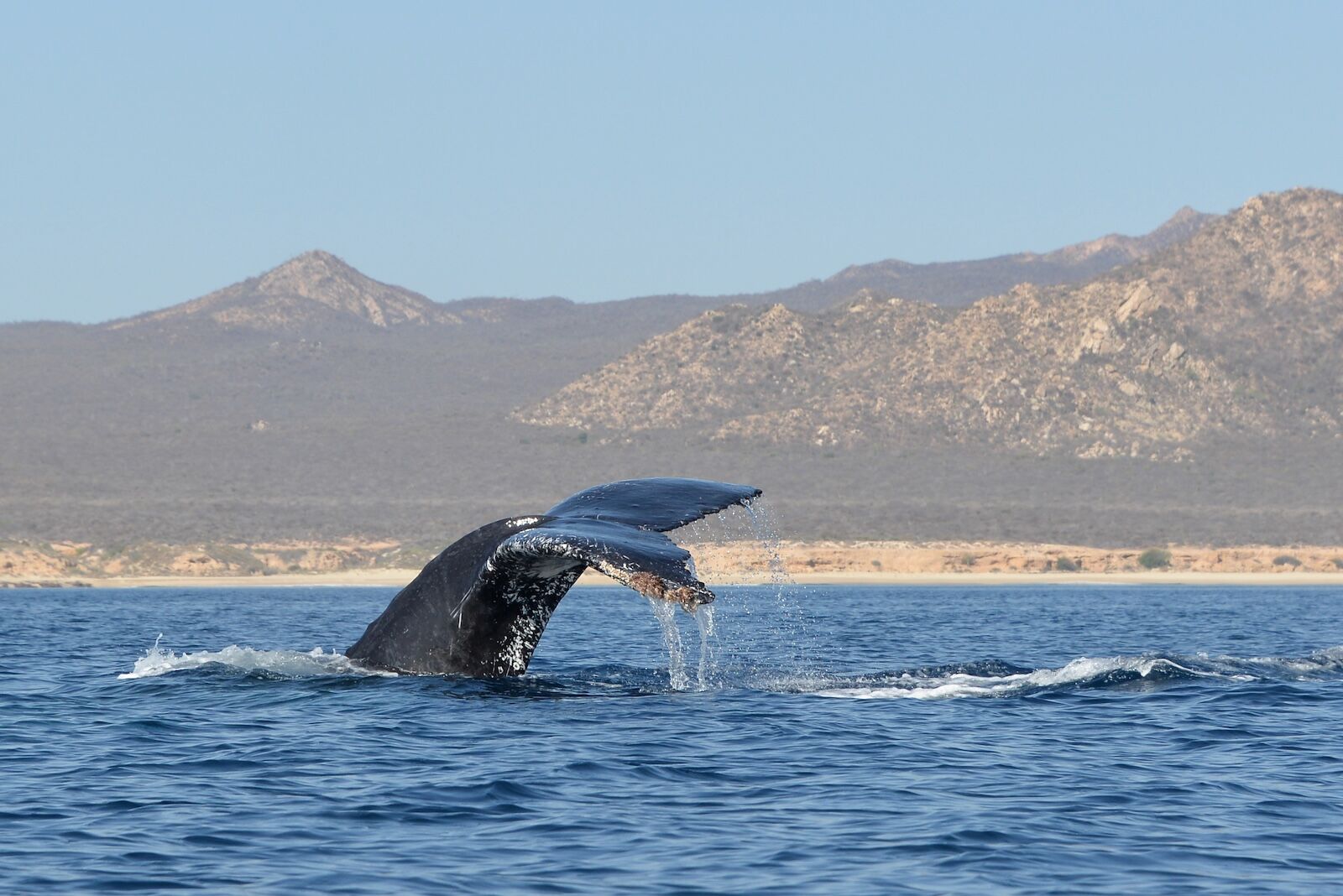
Each humpback fluke carries unique markings like a fingerprint. Guests aboard the Venture uploaded their fluke photos to Happywhale, a citizen-science database that helps scientists track individual whales across oceans. Photo: Jesse Adams
Before humpback whales dive deep into the ocean, they raise their tails, or flukes, out of the water. Each fluke is unique, with individual markings and pigmentations. We saw dozens of flukes over the seven-day trip and, because they never get old, we took photos every time. The naturalists encouraged all the guests onboard the Venture to upload their photos of whale flukes to the Happywhale app, which helps identify and track whales around the world. The data collected can help scientists with their research and conservation programs. At the time of writing, Happywhale has identified well over 100,000 individual flukes.
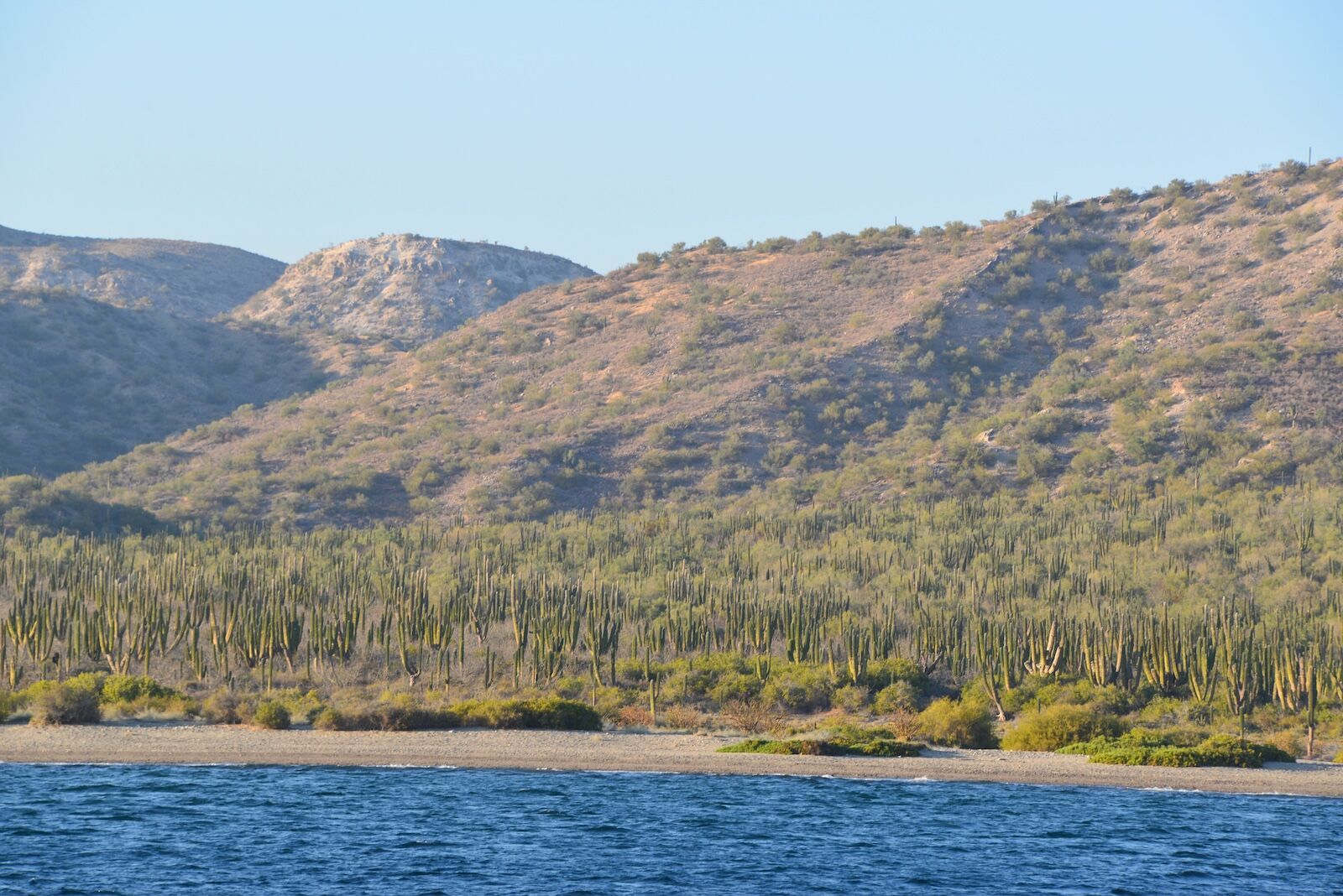
A hillside near Punta Colorada is dense with cardón cacti, some of the tallest cactus species in the world, reaching average mature heights of 20 to 30 feet. Photo: Jesse Adams
Punta Colorada was the first stop we made during our sailing and it was the greenest. Cardón cacti, some of the tallest cacti in the world with an average mature height of 20-30 feet, seem to cover every inch of the landscape. The Cardóns’ gigantic spiky arms supply perches and nesting sites for birds, hiding spots for lizards, and the biggest ones sometimes provide much-needed shade to the few humans that pass through. When in bloom, Cardón cacti are a source of nectar for bats, bees, hummingbirds and more, but we were not lucky enough to visit during the flowering season.
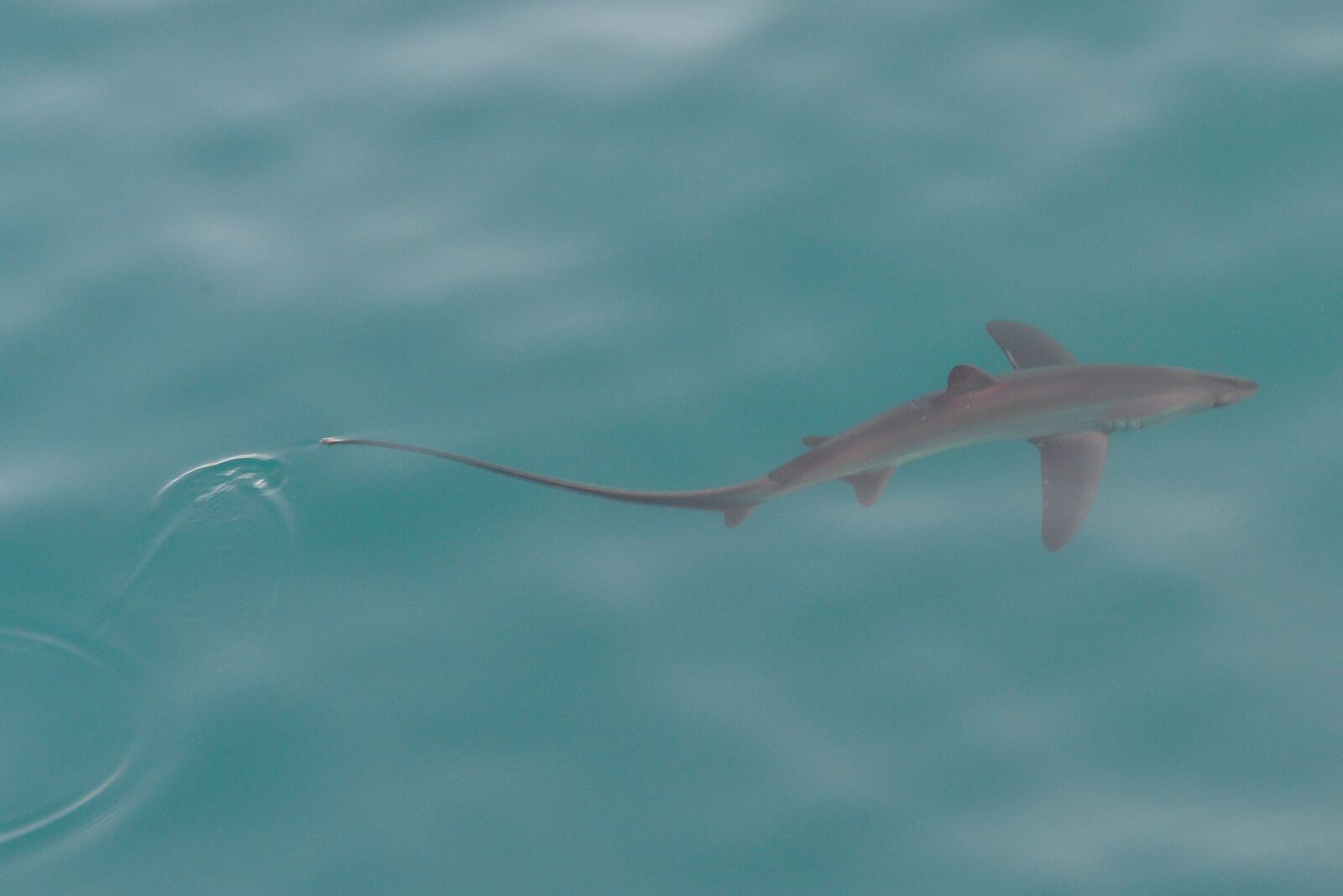
A thresher shark, identifiable by its long sickle-shaped tail, glides past the Venture on the last night of the voyage. Photo: Jesse Adams
We snorkeled nearly daily during our seven-day trip and not once did I think about sharks when in the water. I knew they were around, but I was not worried about their presence. I’m convinced they have better things to do than checking me out in my fetching wetsuit. While we never saw any sharks while in the water, we saw four from the vessel: two hammerheads and two thresher sharks (one pictured above). Easily identifiable thanks to its long sickle-shaped tail, we spotted this on the last night of the sailing. It felt like a goodbye present from Poseidon himself.
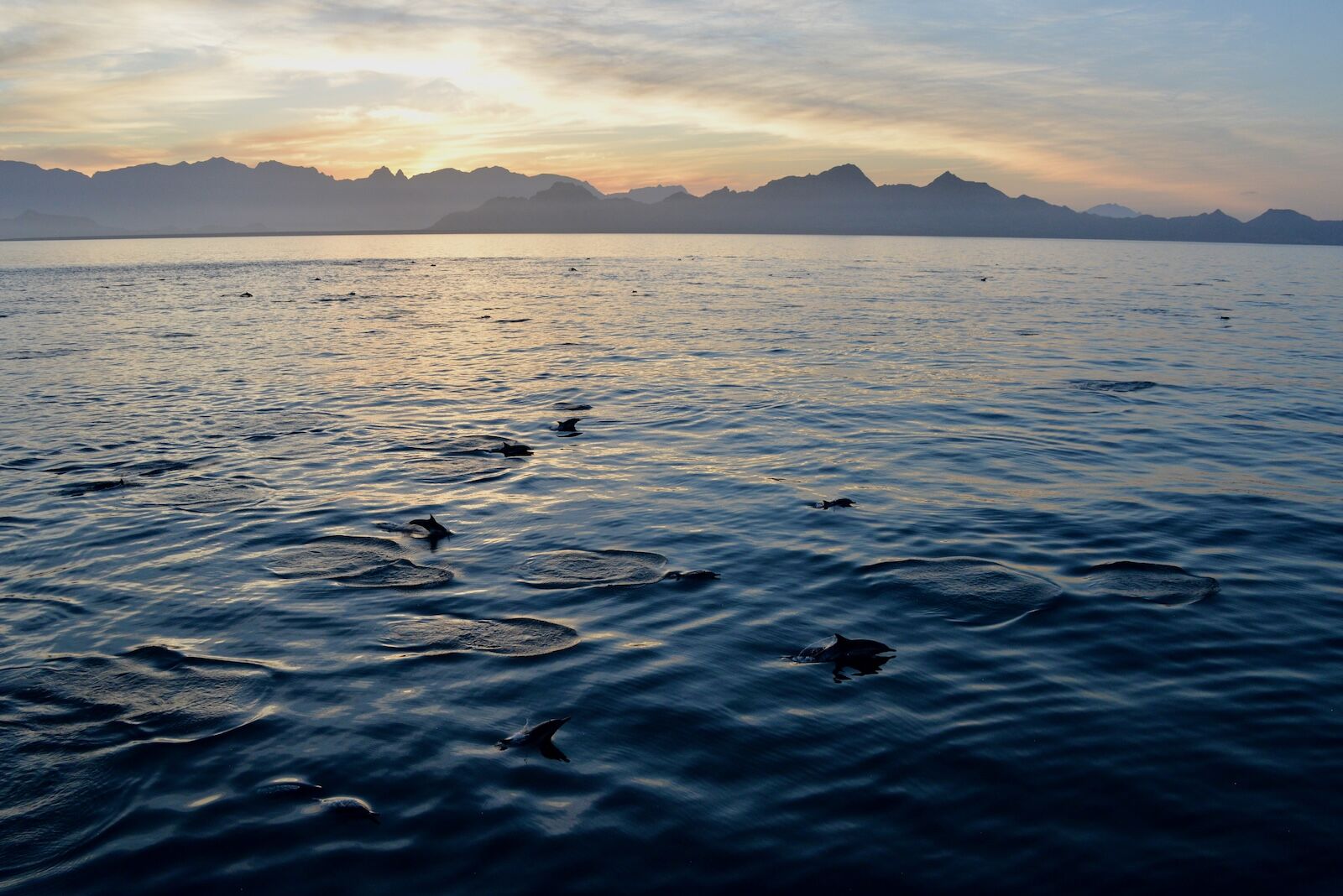
Dolphin fins break the surface at sunset on the Venture’s final night — the leading edge of a superpod of roughly 800. Photo: Jesse Adams
On our last night onboard the Venture, after a long day of hiking, swimming, and snorkeling, guests gathered at the bow, binoculars and cameras in hands, determined to spot more wildlife. And we were rewarded with the best send-off we could have hoped for: a superpod of roughly 800 dolphins. The calves and adults stayed with the vessel for nearly an hour riding the bow and jumping until the sun dropped and the water went black. Sea lions made an appearance, a couple of humpbacks also decided to show up, and we all oohed and aahed until the sun set and it was too dark to see anything. 