Covering up to 25,000 square miles of Californian terrain, the Mojave and the Colorado Deserts present a rich diversity in landscape, ecology, and climate, and provide an important preservation of natural and human history. They also make for incredible places to recreate, with stunning trails whether you’re a hiker, biker, or off-roader. Camping under the stars is a time-honored pastime in these parts, and is certainly a memorable way to immerse yourself in landscapes that at first appear barren and sparse but are, in fact, teeming with plant and animal life. The following are some of the most spectacular of the national and state parks.
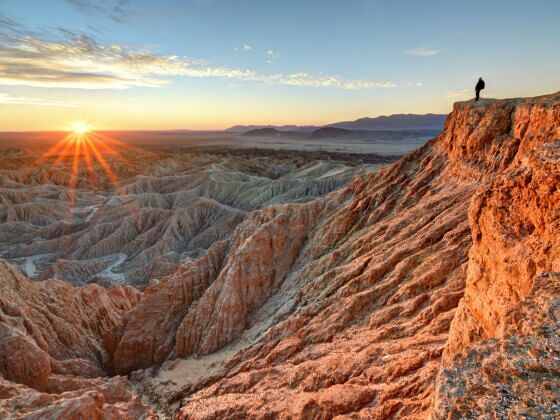
Photo: Sierralara/Shutterstock
The Most Spectacular California Deserts to Visit on a Road Trip
Traveling to California? Check out Matador’s California accommodations guides:
- These beautiful San Diego Airbnbs put you close to the beach and downtown
- The best 14 Airbnbs near Yosemite National Park
- 11 magical Airbnbs near Redwoods and Sequoia National Parks
- 9 dreamy oceanfront Airbnbs up and down the California coast
- 10 soulful beach Airbnbs for the perfect SoCal yoga retreat
- 12 very zen Joshua Tree Airbnbs perfect for families and groups
- These Airbnb stays near Disneyland offer an easy group vacation
- These Airbnbs near Knott’s Berry Farm put you close to legendary coasters
Joshua Tree National Park
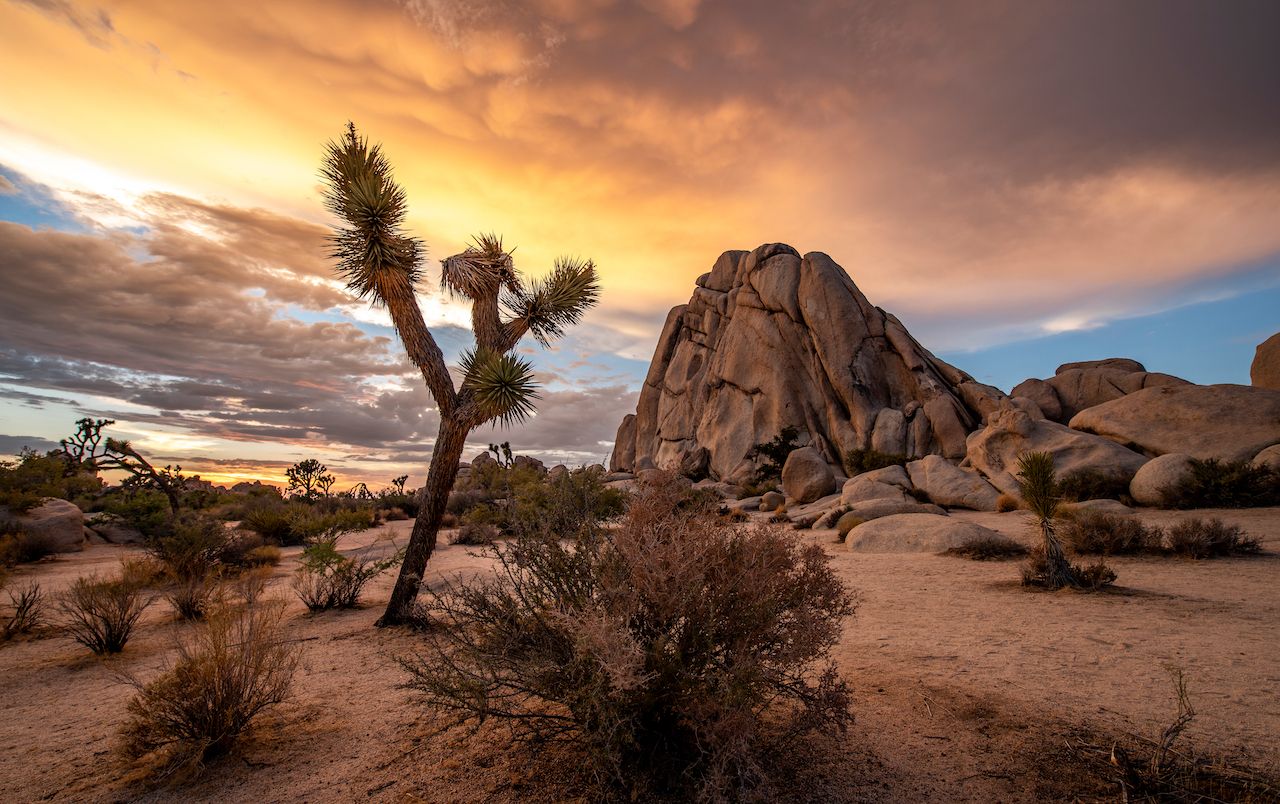
Photo: AndrePagaPhoto/Shutterstock
- When to visit: October through May
- How long to stay: Two to three days
- Closest major airport: Palm Springs
Popular for its Joshua tree forests and climbable hills of bare boulders, Joshua Tree National Park has a uniquely alien and prehistoric landscape. In southeastern California, east of Los Angeles and Palm Springs, the park sits where the higher-elevation Mojave Desert meets the lower Colorado Desert, which is why the scenery shifts so noticeably from thick Joshua tree stands to ocotillo, cholla, and broader open desert. It became a national monument in 1936 and was redesignated as a national park in 1994. Today, it draws visitors for its signature mix of short hikes, scenic drives, scrambling, technical rock climbing, camping, and stargazing under some of Southern California’s darkest skies.
What makes Joshua Tree especially compelling is how much variety it packs into one park. You can walk the short trail at Hidden Valley, climb or boulder among the granite formations that made the park a global climbing destination, drive sections of the Geology Tour Road, or time a visit for sunrise and sunset, when the monzogranite outcrops and twisted trees throw long shadows across the desert floor. Interesting facts go beyond the park’s namesake plant: Joshua Tree protects habitat for hundreds of plant species, dozens of reptiles and mammals, and more than 250 bird species. About 85 percent of the park is managed as wilderness;and the area was designated a biosphere reserve in 1984.
Death Valley National Park
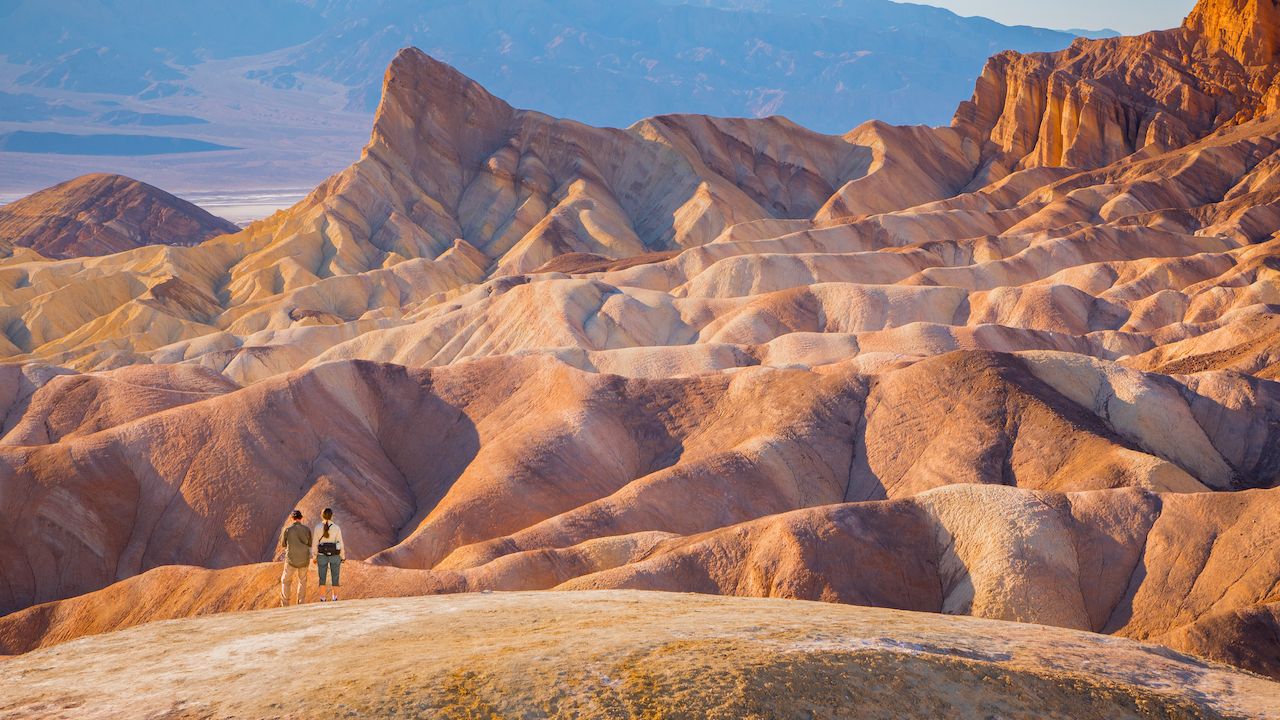
Photo: Dan Sedran/Shutterstock
- When to visit: November to March
- How long to stay: Two to three days
- Closest major airport: Las Vegas’ Harry Reid International Airport
Its rich geologic and cultural history, and extreme environment and isolation (having some of the clearest skies in North America for stargazing) make Death Valley an attractive destination for nature lovers. Low and hot, Death Valley National Park is home to both the lowest elevations and hottest temperatures in the US. But the landscape in this part of California is actually incredibly diverse, ranging from saltpans like the Devil’s Racetrack, pictured above, to snow-capped mountains reaching 11,000 feet. Straddling eastern California and a small section of Nevada, the park is a vast desert preserve defined by below-sea-level basins, salt flats, dunes, canyons, badlands, and high peaks. Death Valley became a national monument in 1933 and was redesignated as a national park in 1994. It is now the largest national park in the lower 48 states, at more than 3.4 million acres, and the National Park Service describes it as the hottest, driest, and lowest national park in the system.
For travelers, Death Valley works best as a park of big scenic contrasts and well-chosen stops. You can stand at Badwater Basin, the lowest point in North America, drive Badwater Road to reach Artists Drive and Devils Golf Course, hike among badlands at Zabriskie Point and Golden Canyon, walk the Mesquite Flat Sand Dunes near Stovepipe Wells, and stay after dark for some of the best night-sky viewing in the country. The park’s darkness is formally recognized with Gold Tier Dark Sky Park status, and its cultural history is inseparable from the Timbisha Shoshone, whose homeland includes Death Valley.
Red Rock Canyon State Park
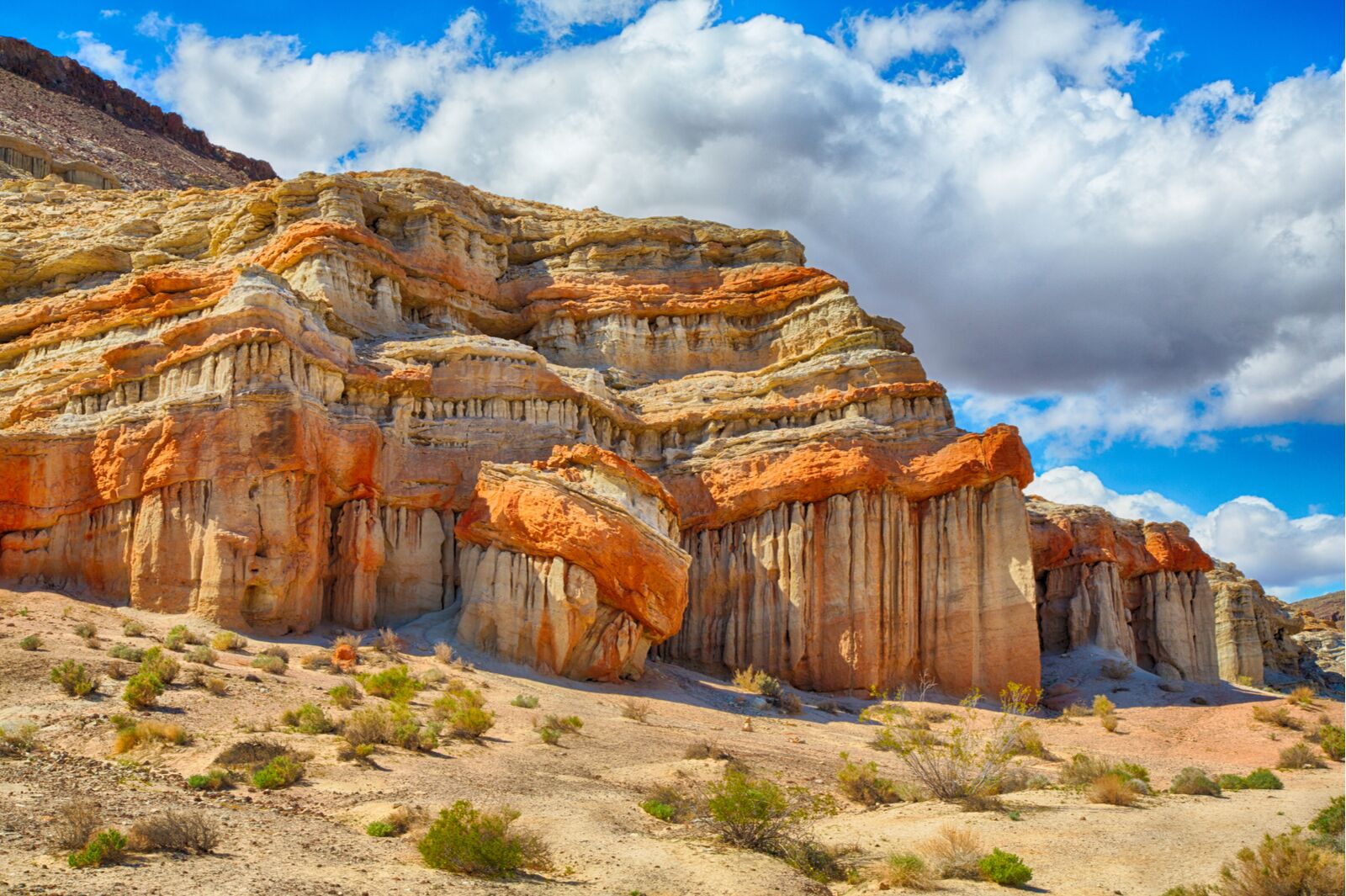
Photo: Gary C. Tognoni/Shutterstock
- When to visit: October through April
- How long to stay: Half a day to one full day
- Closest major airport: Los Angeles International Airport
The result of erosion exposing the colorful sandstone stratas and creating hoodoos and other dramatic rock formations, Red Rock Canyon State Park has served as the backdrop of many films, including “Jurassic Park.” In Kern County, about 25 miles north of Mojave along Highway 14, the park sits where the southern tip of the Sierra Nevada meets the El Paso Range, creating a landscape of desert cliffs, buttes, narrow canyons, and vividly banded rock. One important distinction: Red Rock Canyon is not a national park, but a California state park, established in 1968 as the first state park in Kern County. For visitors, the appeal is straightforward — short hikes through the Hagen and Red Cliffs areas, scenic driving, camping at Ricardo Campground, spring wildflower viewing, photography, and a close look at the park’s heavily eroded formations, which shift in color through the day.
What makes Red Rock Canyon especially interesting is that its scenery is only part of the story. The area was once home to the Kawaiisu, who left evidence of their habitation in the broader region, and the canyon itself lay along a Native American trade route for thousands of years before later becoming part of the route used by survivors of the Death Valley trek around 1850. The park has also expanded over time, with additions tied to the California Desert Protection Act of 1994, and now covers about 27,000 acres.
Anza-Borrego Desert State Park
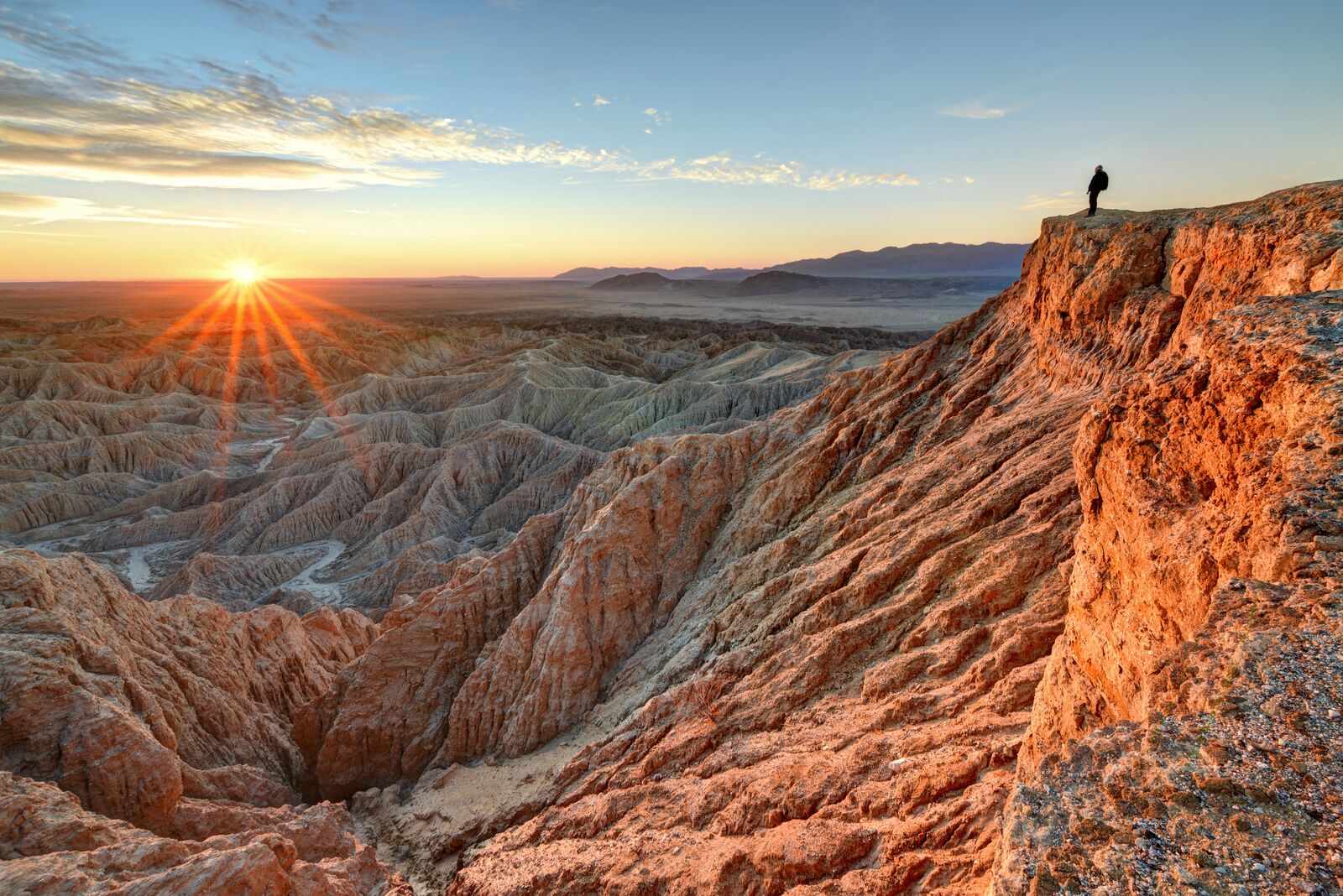
Photo: Sierralara/Shutterstock
- When to visit: November through April
- How long to stay: Two to three days
- Closest major airport: San Diego International Airport
The largest state park in California and the second largest in the continental United States, the Anza-Borrego Desert State Park offers a varied sample of the Colorado Desert with broad vistas, dry river beds, and diverse ecology, such as palm groves, iguanas, foxes, golden eagles, roadrunners, and rattlesnakes. In Southern California, mostly in eastern San Diego County with extensions into Imperial and Riverside counties, the park spreads across roughly 650,000 acres of badlands, canyons, washes, palm oases, and open desert east of San Diego and south of Palm Springs. It became a state park in 1933, and today it is best known for scenic drives, hiking, spring wildflower displays in good bloom years, off-highway exploration on its extensive dirt-road network, camping, stargazing, and wildlife watching, particularly for bighorn sheep. California State Parks notes that the park includes 500 miles of dirt roads, 12 wilderness areas, and many hiking trails, which helps explain why it works equally well for casual overlooks and more remote backcountry trips.
What makes Anza-Borrego especially interesting is the range of landscapes packed into one protected area. Travelers can head to Font’s Point for a broad view over the Borrego Badlands, hike to palm groves in narrow desert canyons, drive through ocotillo- and cactus-studded terrain, or plan a visit around winter and spring, when cooler temperatures make longer days outside far more realistic. The park’s name combines that of Spanish explorer Juan Bautista de Anza with borrego, Spanish for sheep, a reference to the region’s bighorn sheep population. It is also recognized for its ecological and paleontological importance, protecting a major crossroads of desert habitats and fossil-bearing landscapes that help tell the story of the ancient Colorado Desert.
Mojave National Preserve
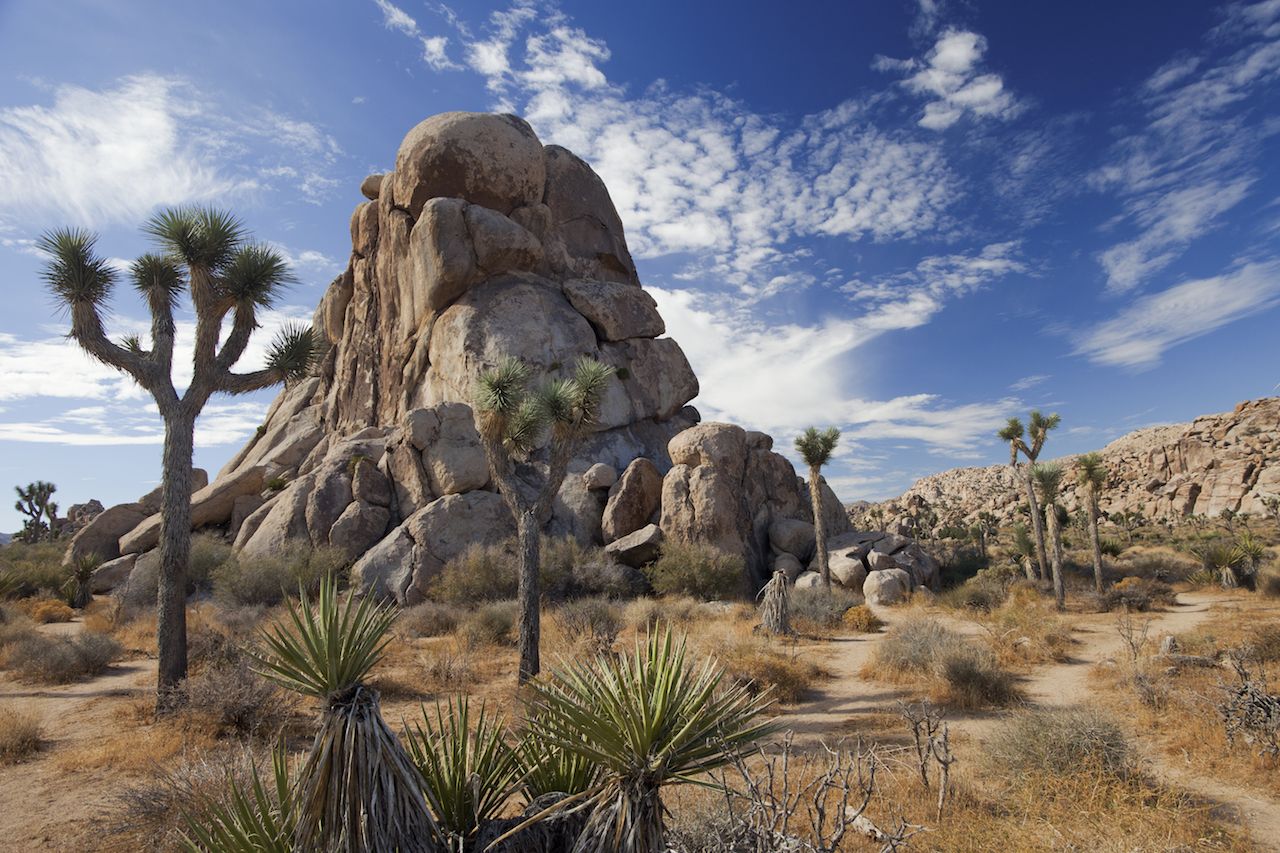
Photo: Dejan Stanisavljevic/Shutterstock
- When to visit: October through April
- How long to stay: One to two days
- Closest major airport: Las Vegas’ Harry Reid International Airport
Seemingly barren compared to other Californian deserts, many make their way to Mojave National Preserve for its booming sand dunes, volcanic formations, and Joshua tree forests. Between Interstate 15 and Interstate 40, the preserve is east of Barstow and close to the Nevada line. It became part of the National Park System on October 31, 1994, through the California Desert Protection Act. What looks sparse from the highway opens into a much more varied desert: the Kelso Dunes, the Cima Dome area, volcanic cinder cones and lava flows, high-desert grasslands, and a long record of human presence stretching back about 10,000 years.
What to do here depends on how much time and vehicle capability you have. The best-known outing is the hike up Kelso Dunes, whose sand can produce a low “booming” sound under the right conditions, while other signature stops include the lava tube in the Cima volcanic field, the Hole-in-the-Wall area’s ring-bolt trail through a narrow canyon, and drives through the recovering Joshua tree landscape around Cima Dome. One interesting fact is that Cima Dome held one of the densest and largest Joshua tree forests in the world before the 2020 Dome Fire burned more than 43,000 acres, killing an estimated 1.3 million Joshua trees. Another is that the preserve spans about 1.6 million acres, making it one of the largest National Park Service units in the contiguous US. 