My eyelashes had frosted over, leaving sparkling white crystals that blurred my vision. The temperature, at -30 degrees, was cold enough that both Celsius and Fahrenheit had agreed on its brutality. This was the coldest I’d ever been, which, sure, might not say much as a Southerner. But the sting of that cold made me feel alive in ways I’d never expected. I didn’t travel this far north expecting to fall in love with winter, but in the Cariboo Chilcotin Coast region of central British Columbia, I snowshoed for hours in search of wildlife, huddled in a glowing tent for ice fishing, and watched a 200-year-old dog sled mail run tradition in action. Up here, the north calls to be explored at its coldest. Raw, wild, and uncompromisingly itself.
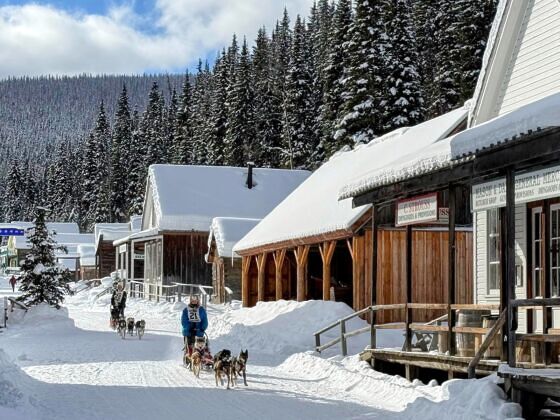
Photo: Adam Sawyer
What Winter Looks Like in the Cariboo, BC: Cowboys, Sled Dogs, and Snow
This past January, I spent a week here exploring the region. No matter how brutal the temperature is outside, what truly kept me warm were the endless winter-themed activities, the living cowboy culture, and the stereotypical Canadian friendliness you don’t believe until you experience. Driving from Kamloops through 100 Mile House, past Ten Mile Lake, and on to Barkerville, I found that embracing winter the “northern way” opens a whole new world of thrills, frontier heritage, and genuine hospitality I hadn’t experienced before.
Ice Fishing on the ‘Fishing Highway’
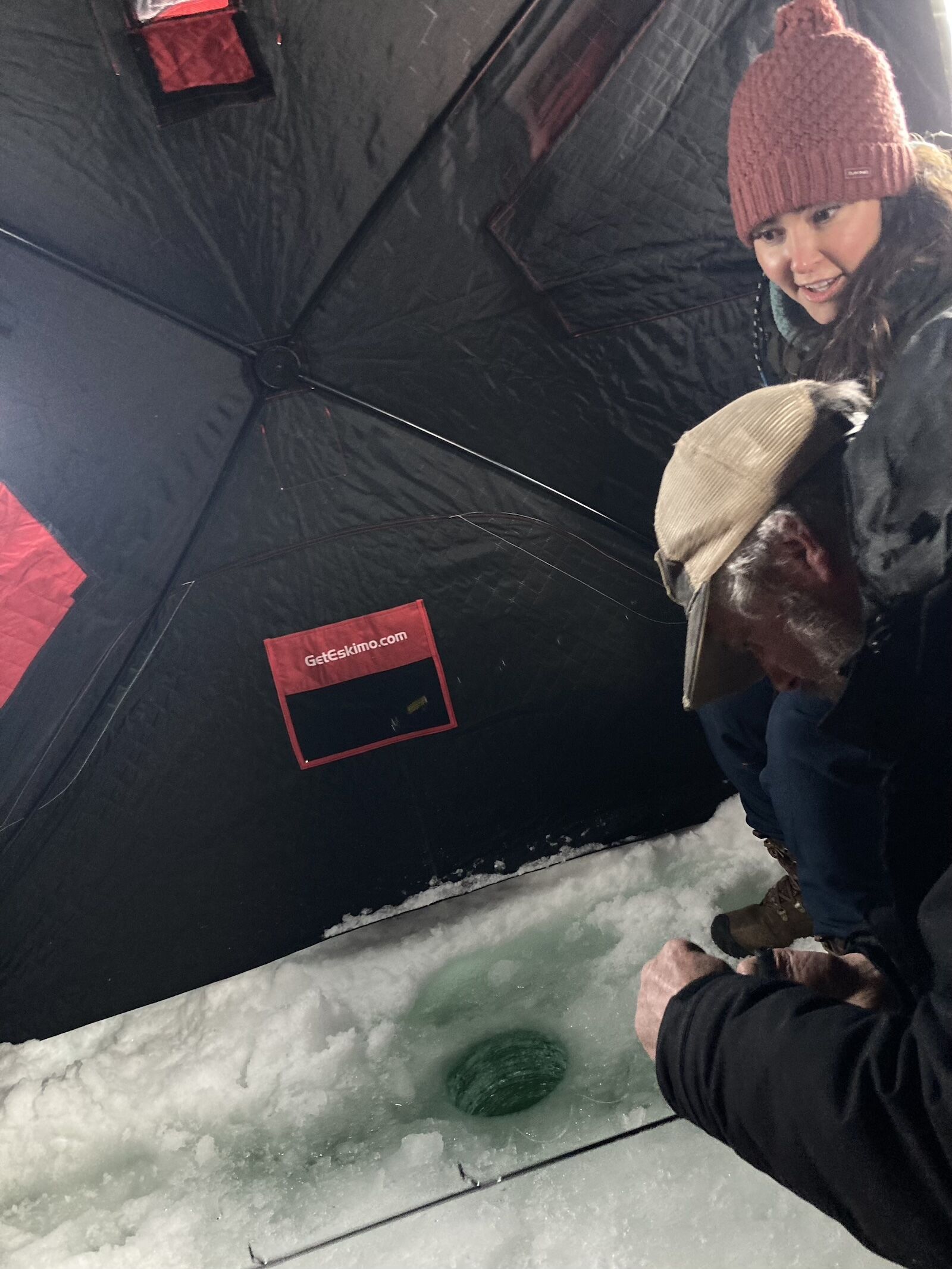
Ice fishing is the preferred winter activity in the Cariboo. Photo: Jo Matthews
Driving from Kamloops into the Cariboo region, my first winter adventure in the Cariboo began on a frozen lake, 12 inches of solid ice beneath my boots, where I was about to try my hand at catching burbot and rainbow trout. Out on the expanse of Fawn Lake, three tents were pitched on the ice, each with holes drilled through for fishing lines baited with maggots.
Outside, the air was biting. Inside, the tents glowed an otherworldly neon green as afternoon shifted into dusk, electric heaters keeping us warm. A steaming mug of hot chocolate (spiked with Fireball, as the locals prefer) made it even cozier as our guide, Jay Wingfield of Lone Butte Fishing Adventures, taught us how to use radar and other tech to track fish while entertaining us with stories. My tent team caught a slimy catfish-lookin’ fish. The burbot, Jay explained, is a non-native species often called the “poor man’s lobster” for its taste, and the males eventually transform into females once they reach a certain size. Set along Highway 24, better known as the Fishing Highway, Fawn Lake, located near the better-known Green Lake, proved the perfect place to drop a line for my first cast into the frozen north of British Columbia.
Learning about the Cariboo’s wildlife on a Wildlife Winter Safari
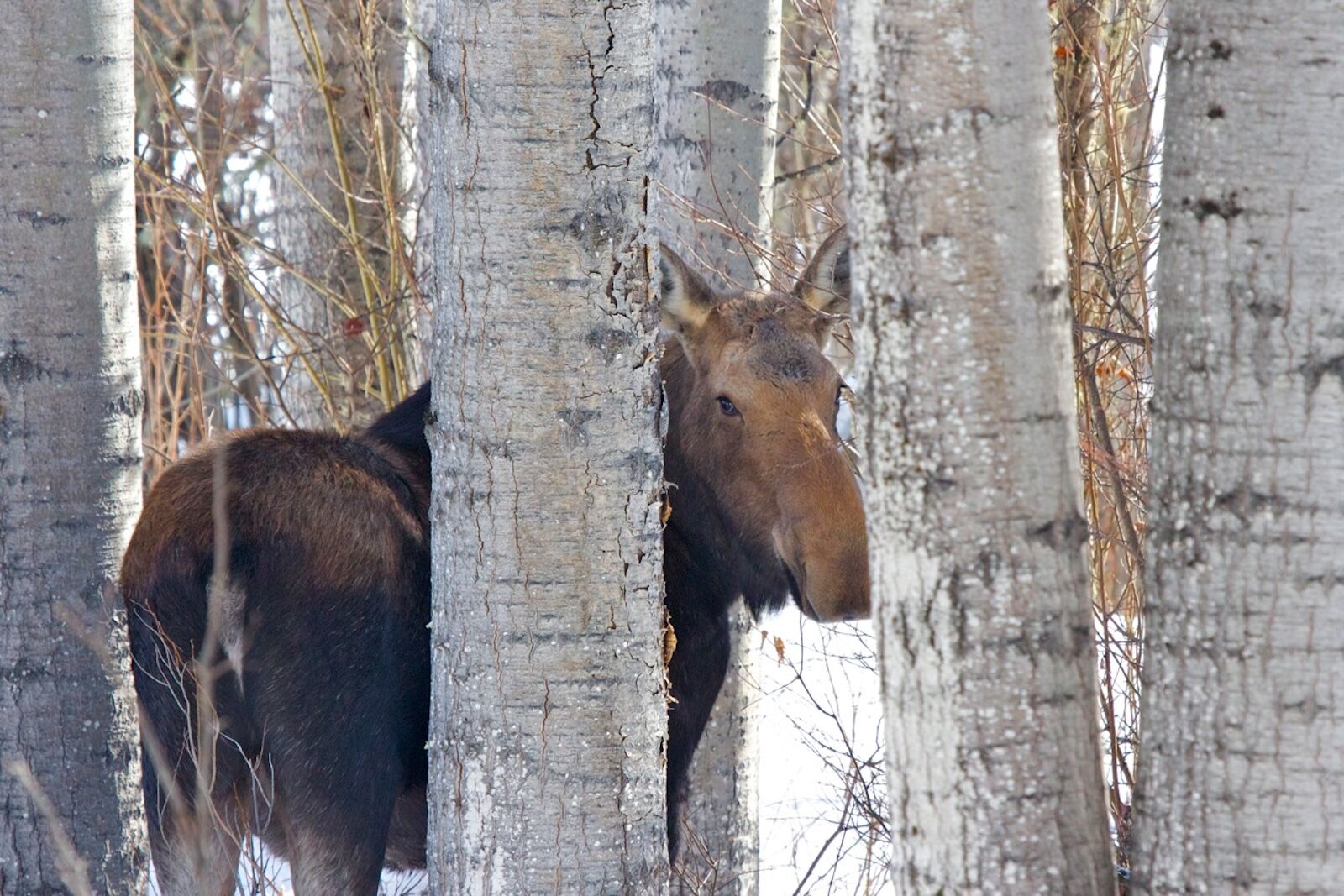
In the Cariboo, Lynx, moose, rabbit, and other wildlife often lurk just through the trees. Photo courtesy EcoTours BC
Before dawn the next morning, our band of yawning travelers bundled up for a wildlife tour in the Cariboo Mountains as the thermometer read a frosty -30°C outside. Our guide, Ryan Simmonds, Field Operations and Head Guide with EcoTours BC, led us through the snow after strapping on our snowshoes on Keithley Lake, sharing facts of the lynx, moose, and other animals that roam these forests. He pointed out small rabbit paw prints in the snow that ended abruptly where a lynx had been stalking, the slinking imprints of a pine marten searching for its next meal, and the domed lodge of a beaver built within the ice. Snowshoeing through the silence of the forest, learning to read the land through its tracks and signs, felt like a form of wilderness meditation. It was the most snow I’d ever seen, equal parts peaceful and exhilarating.
At the end of our expedition, Peggy Zorn, who founded EcoTours BC alongside her late husband, Gary, welcomed us with a hearty homemade meal that warmed us to the core and made us feel instantly at home. The company offers all-inclusive multi-day wildlife tours and lodging in every season, carrying forward the legacy Gary began as one of BC’s pioneering “bear whisperers.” Although our group wasn’t lucky with animal sightings that day, our guide recommended staying three to four days at the lodge to truly experience the wildlife. What this team has built is more than just a wildlife safari tour. It’s a way of teaching visitors to see not just the animals, but to appreciate the delicate balance of the ecosystem they inhabit.
Cross-country skiing at Bull Mountain
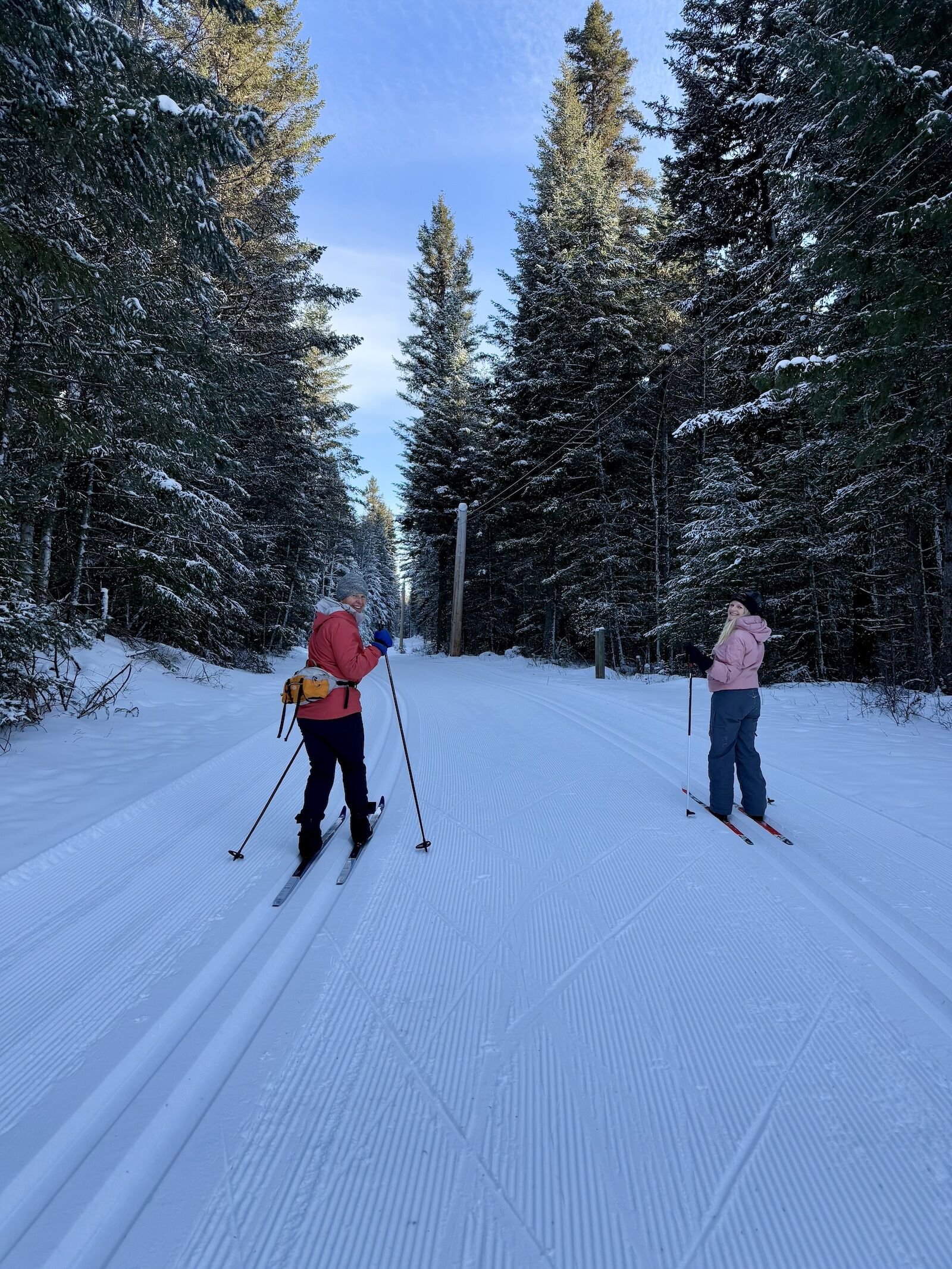
Cross-country ski trails abound throughout the region. Photo: Kelsey Wilking
At 37, I clipped into skis for the very first time ever at Bull Mountain, just an 18-minute drive from downtown Williams Lake. I’d always imagined skiing as a “rich people’s” sport, but cross-country proved surprisingly accessible and easier to pick up than I expected. Once I found my rhythm and balance – gained by channeling the roller skater of my youth – , I skid through Narnia-esque forest scapes with evergreens draped in snow and raced down hills.
The trails were serene, with only a handful of locals gliding by, greeting each other warmly in their trademark Canadian warmth. Out there, surrounded by snowy silence, this became my favorite type of workout. As Williams Lake Cross Country Ski Club trainer Denise Skarra told me, “The best part of cross-country skiing is being out on freshly groomed trails with beautiful blue skies and the quietness of the winter snow.”
Bull Mountain makes learning approachable. Adult group lessons cost just $75 for three sessions (or $45 with a season pass), with rentals available for an extra $15. Even one lesson is enough to get the basics down, thanks to the carved tracks in the snow that guide your skis. Cross-country skiing might not have the same adrenaline kick of downhill skiing, but it’s an affordable, welcoming, and deeply peaceful way to embrace winter in the Cariboo country.
The Art of curling – Canada’s other favorite sport
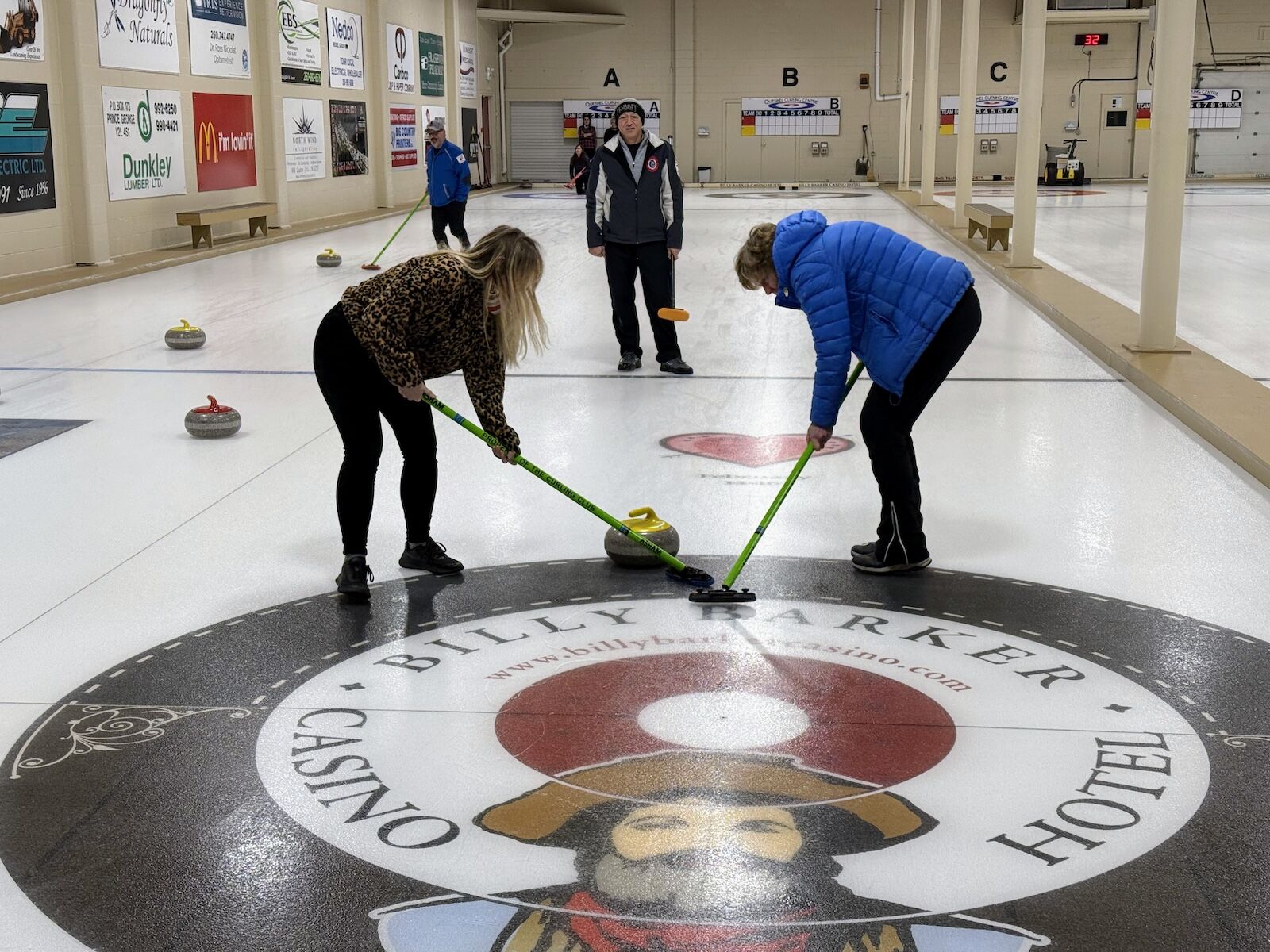
Photo: Kelsey Wilking
In British Columbia, people get creative with ways to cure boredom during darker winter days. Heli-skiing, after all, isn’t something one can do on the daily. A little less ambitious but a lot of fun, curling proved an oddly satisfying winter sport, somewhere between ice skating and yoga, with a dash of competitive strategy. Two coaches at Quesnel Curling Club showed us the ropes, making it easy for a newcomer like me to feel at home on the ice.
Dave Plant, Club Coordinator and Ice Technician, handed us curling brooms, slipped us into grippy-soled shoes, and gave a crash course in the history and basics of this Olympic sport. Soon, our group was sliding stones down the ice in a friendly match, balancing our strides over the ice. By the end and after quite a few tumbles, I was all stretched out, laughing, and genuinely looking forward to doing that again in the future.
Real-life cowboy culture in the Cariboo
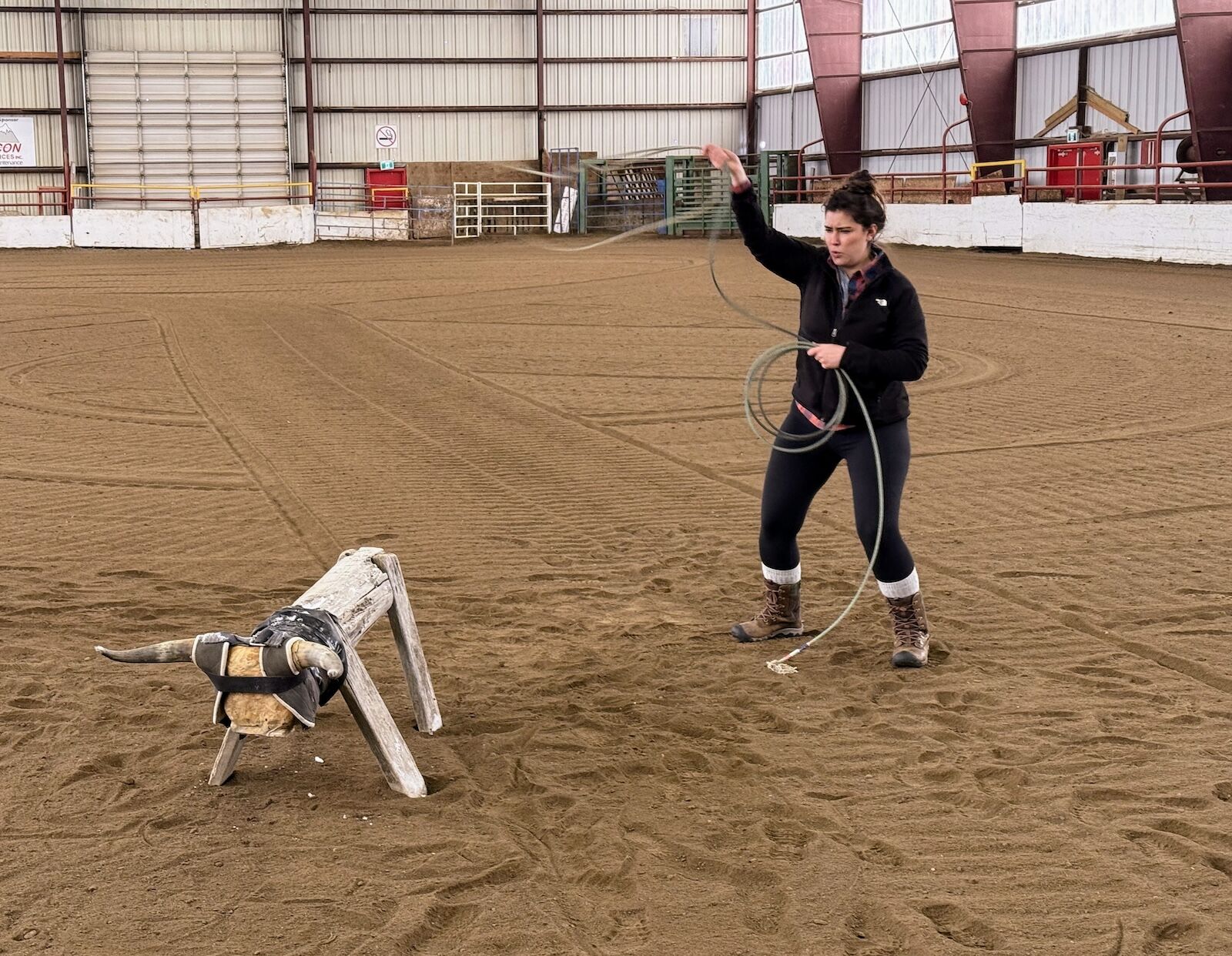
The author, from Tennessee, never imagined she’d learn to rope a steer north of the border. Photo: Adam Sawyer
Thanks to Yellowstone and its spinoffs, cowboy culture has re-entered pop culture in a big way. But in British Columbia’s Cariboo, it’s never been a trend. It’s a way of life – cattle outnumber residents almost 3 to 1 in Williams Lake, the hub of the region. The city of Williams Lake is famous for its annual rodeo, a 97-year-old tradition that drew record-breaking crowds in 2024. The summer spectacle brings ranch hands, barrel racers, and ropers together in a community celebration of grit and skill.
In winter, visitors can saddle up for a taste of the Cariboo’s western heritage. For history buffs and rodeo aficionados, the Museum of the Cariboo Chilcotin is open year-round and houses the BC Cowboy Hall of Fame, where artifacts, paraphernalia, and even costumed curators bring the region’s ranching past to life. If you visit in November, you’ll catch the Williams Lake Christmas Cowboy Festival, complete with cowboy music, markets, and a festive winter spirit that’s unlike anywhere else. Eagle View Equestrian Centre near Williams Lake also keeps the cowboy spirit alive with winter penning and racing events.
I was perusing images of past wranglers and ranchers at the museum, learning about the history of different rodeos, when it really hit home that being a cowboy here isn’t just about events or museums; it’s deeply personal. As the ultimate cowgirl herself and Cariboo Chilcotin Coast Tourism Destination Experience Manager, Patti Gerhardi told me, “Being a cowboy starts in your heart – it’s about your character – if you love animals and are kind to all, you’re already halfway there to being a cowboy.” She also reflected on the values that define this community: “Family, hard work, honesty, being true to yourself, and being a good neighbor. I’m proud to see younger generations blending new science and technology with the old ways.”
You can get a taste of the salt-of-the-earth, cowboy community in the snow-dusted arenas yourself where horses’ breath steams in the frosty air or in the hands of silversmiths and saddle makers at local markets. There is also a chance for you to try your hand at being a cowboy.
The Quesnel Team Roping Club hosts roping schools and events at Alex Fraser Park, where you can try your hand at swinging a lasso or simply watch locals compete in breakaway roping and barrel racing. Growing up with horses in Tennessee, the smell of a barnis pure nostalgia, an earthy mix of hay, manure, and sawdust. Our group stepped into the Alex Fraser Park arena and watched a team demonstrate on how to hold and throw a lasso. We then put what we learned into practice with roping a wooden calf, with mixed results but a whole lot of fun.
A town frozen in time and Balto-style dog sledding
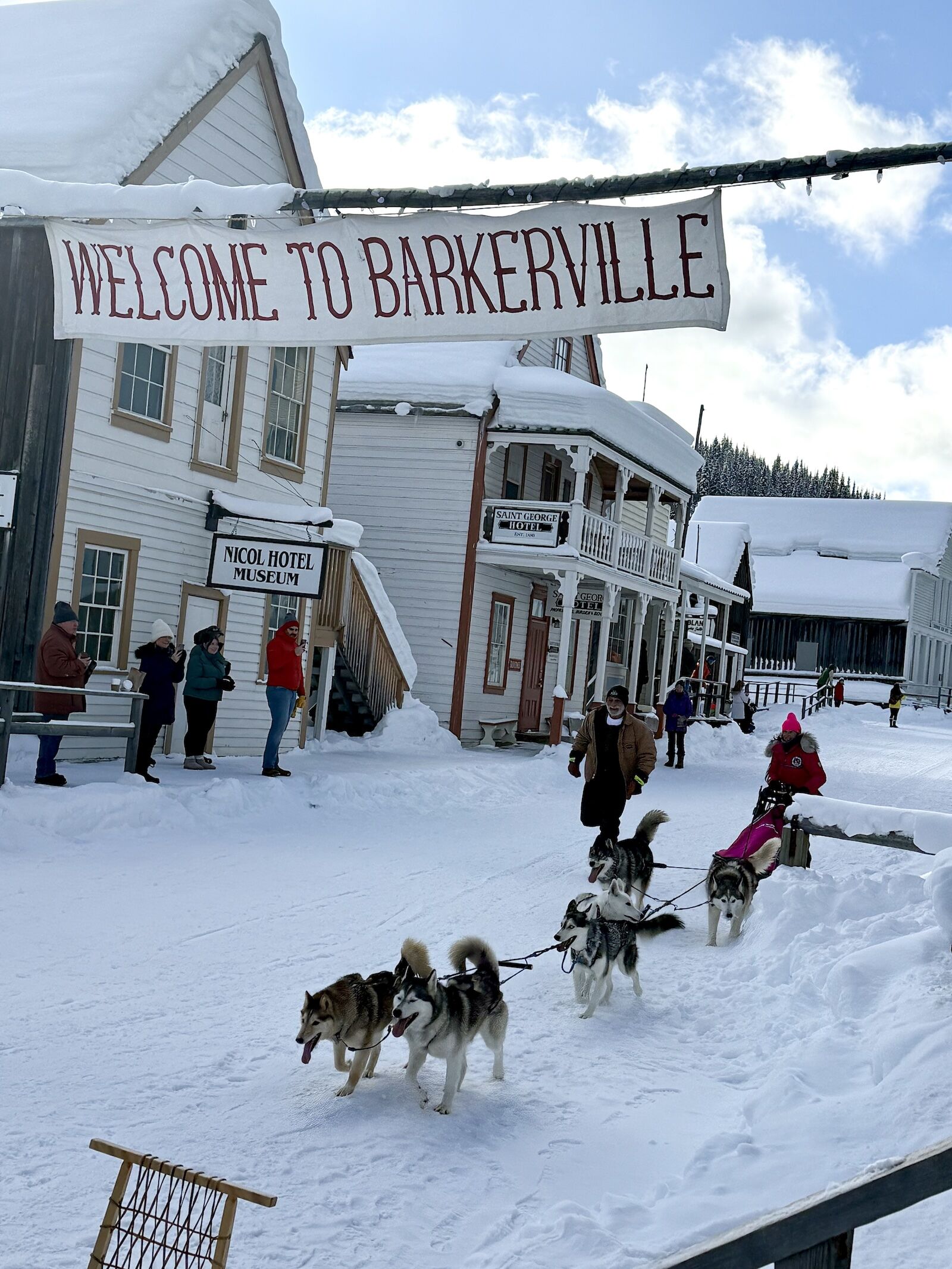
Photo: Kelsey Wilking
If you’ve ever been around huskies, you can probably hear it already: the shrill yips and howls, chomping at the bit to be released upon the tracks. That’s exactly what you’ll find at the starting line of the annual Gold Rush Trail Sled Dog Mail Run, a three-day, non-competitive event that retraces the historic mail route between Quesnel, Wells, and Barkerville. For more than three decades, volunteer mushers have carried real Canada Post mail by sled dogs across the snowy expanse between stops. It’s one of the last remaining mail runs of its kind in North America. Each letter is uniquely designed each year, complete with five commemorative stamps from each stop, and finally delivered to the Barkerville Post Office, then sent into the regular postal system where they are delivered by normal snail mail.
Before the start in the historic town of Barkerville, we got a chance to meet the dogs who were happy to receive pets or yelling at everyone nearby that they should get going. It’s equal part Balto and part postcard picture from another time, when this was how news and letters reached the Gold Rush towns. We even got our own chance at sled racing, with humans instead of dogs.
After the fast dash to begin, our travel group toured the surrounding town to learn more about the gold rush history that shaped this area with Stewart Cawood, who regaled, in period accurate clothing, the beginning of the town with the first findings of gold in 1858. “Barkerville is the largest living history museum in western North America. We do not just provide a museum experience for visitors to observe; they learn about history by living it with their senses. Barkerville brings history to life, and seeks to tell the full story of the gold rush,” Stewart explained as we walked through white-washed buildings, where 107 out of the 140 buildings are original, and then finally waiting at the finish line, the experience from provides a living connection to the frontier past. how mail historically was sent in this region. At the finish line in Barkerville, the historic character of the region lingers.
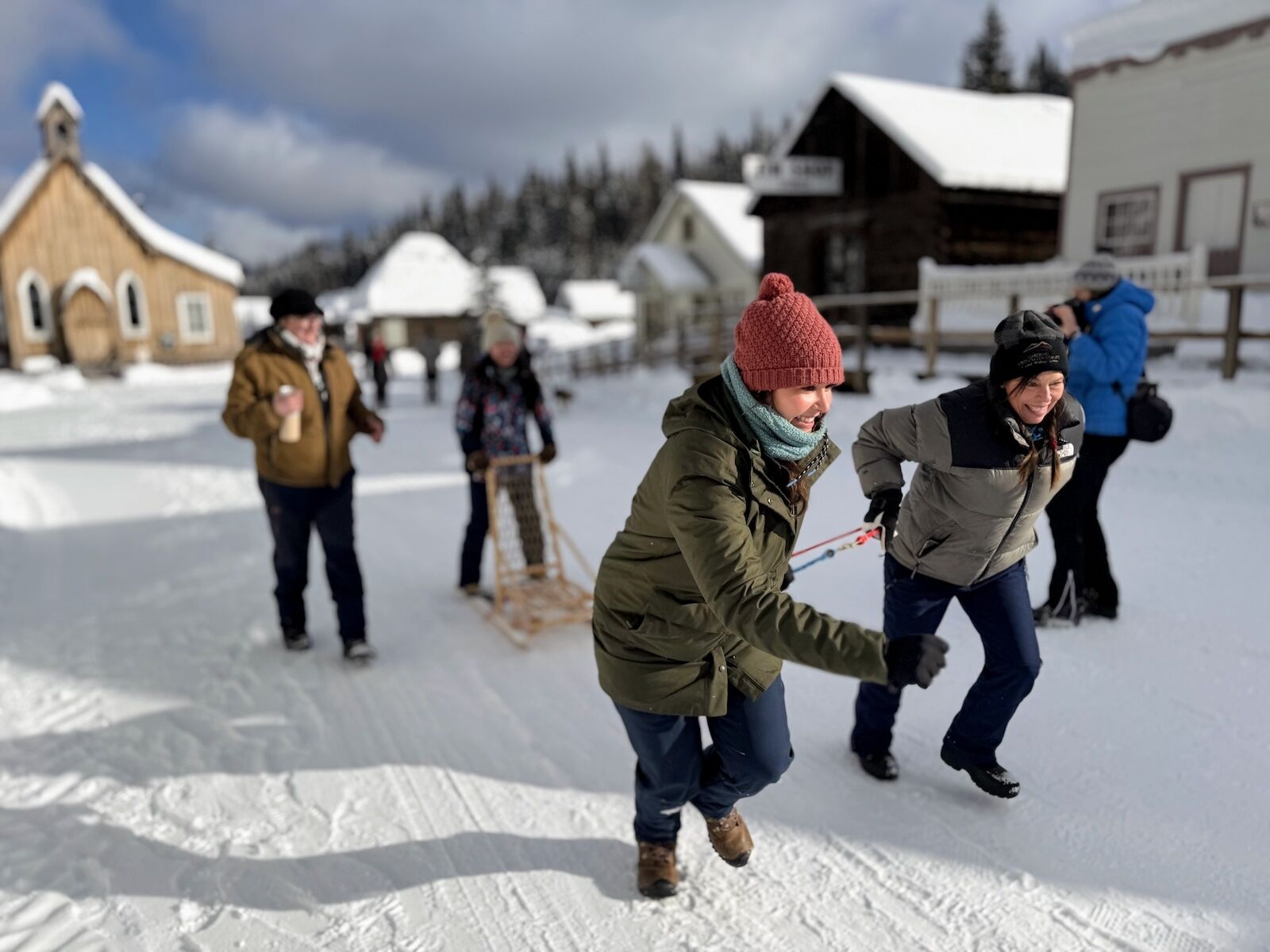
The author and her crew home their mushing skills. Photo: Adam Sawyer
A local, artist-powered watering hole
Just up the road, another town brings that same Gold Rush past into the present: the snow-covered artist haven of Wells. Built during the height of the Gold Rush, Wells quickly became a hub for miners and workers chasing fortunes. The Wells Hotel, founded in 1934, housed the first bar in town, a place where miners cashed their paychecks before heading through the “ladies” or “gentlemen” doors for a stiff drink.
Today, under the recent ownership of Jillian Merrick and Kerry MacDonald, the Wells Hotel still carries that history while offering something new. Guests can sip from the largest publicly available private scotch collection in west of the Rockies, sample an internationally inspired menu alongside hearty mountain breakfasts, and admire walls lined with work from local artists and historic news clippings. The result is a place that feels both a piece of time and artistically refined, a gathering spot that’s as cozy as it is storied. Wells is more than a stopover for the sled dog race. The town itself has become a refuge for artists and historical preservation; a small community that comes together, bringing their wares and creations, and banding together to weather even the coldest winter nights.
After a wintry week spent in the Cariboo Chilcotin Coast, I realized that staying indoors during the colder months is such a waste. Here, winter is a true playground for adventure and a look back into time. Cold on the outside but warm at its core, the Cariboo overturns every preconceived notion of what a winter vacation should be. 