A red flag is usually a telltale sign of danger (or a warning not to pursue a second date). As I recently learned in the Peruvian Andes, a scrap of red cloth billowing in the breeze means something entirely different. This flag, or sometimes a plastic bag or balloon, indicates that a fresh batch of chicha is ready and passersby should stop by for a glass before the batch runs dry.
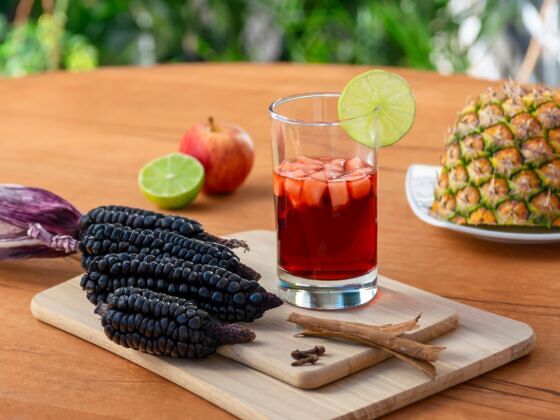
Photo: Fabricio Burbano /Shutterstock
Follow the Red: Everything You Need to Know About Drinking Chicha in Peru
“Chicha is an ancestral beverage with deep cultural significance in the Andes; it has long played an important role in ceremonial life,” says Leo Silva, the Indigenous Community Relations Manager at Mountain Lodges of Peru.
“During Inti Raymi, chicha is offered to the Sun as part of the ceremony. Traditionally, chicha formed part of offerings made alongside other sacred elements,” he says. “The first sip is given to the earth as an offering, and only then do we share the toast. It is a small but meaningful way of showing gratitude and respect for the Pachamama.”
Travelers attending shaman-led pago a la tierra (payment to the earth) ceremonies around Cusco and the Sacred Valley may experience this first-hand. Here, chicha is woven into everyday life, accompanying hair-cutting ceremonies and house inaugurations. It is also shared during acts of minka (collective community work) and ayni (reciprocal exchange).
Types of chicha in Peru
Chicha morada. Photo: NatalyaBond /Shutterstock
Chicha de jora is the most common form of chicha. Made from germinated yellow corn (jora in Spanish and huiñapo in Quechua), the brew is left to ferment for several days, thus producing a mildly alcoholic drink usually falling around five percent.
“The grain is ground, traditionally within close family or community circles, and then cooked,” explains Silva. “The first cooking produces what we call upi. It is then strained through a basket lined with straw before being boiled again.”
At this stage, additional maize is added to initiate the fermentation process. The taste is a touch sour, with a hint of fizz making it not unlike kombucha. For ceremonies, the fermentation period is shorter to reduce alcohol content.
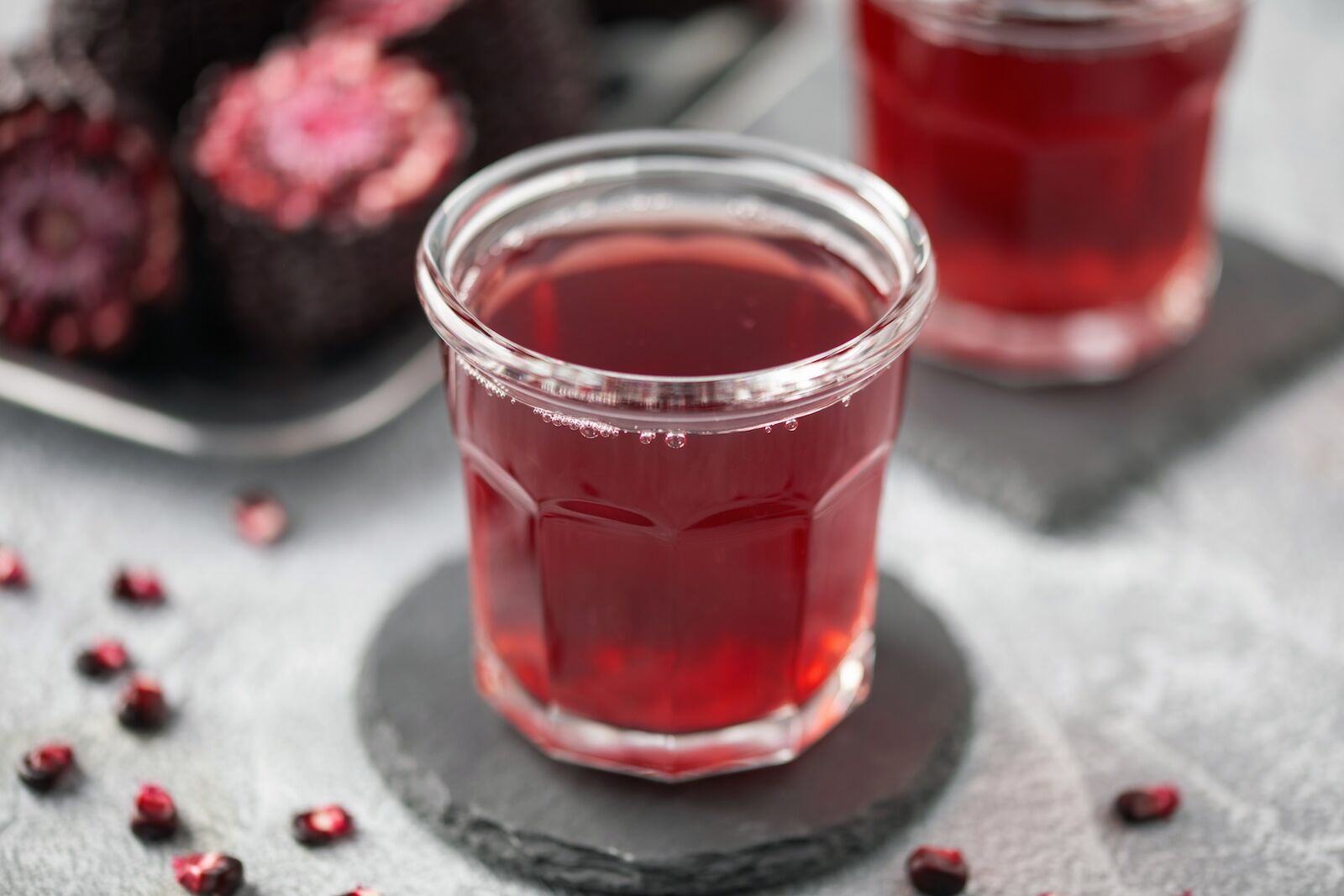
The alcohol-free chicha morada is made from the purple corn (maíz morado) native to the Andean region. Rather than being fermented, the maize is boiled with pineapple, cinnamon, cloves, and sugar. As a sufferer of altitude sickness, chicha morada helped me stay on top of my hydration levels in Cusco, alongside copious cups of muña tea.
Besides chicha de jora and chicha morada, many communities make versions of chicha infused with local ingredients. In Cusco and the Sacred Valley, this includes the frutillada (infused with strawberries). Chicha de güiñapo (fermented with black corn from Arequipa) and chicha blanca (made from white corn or quinoa) are others to look for.
Following the flags to chicha
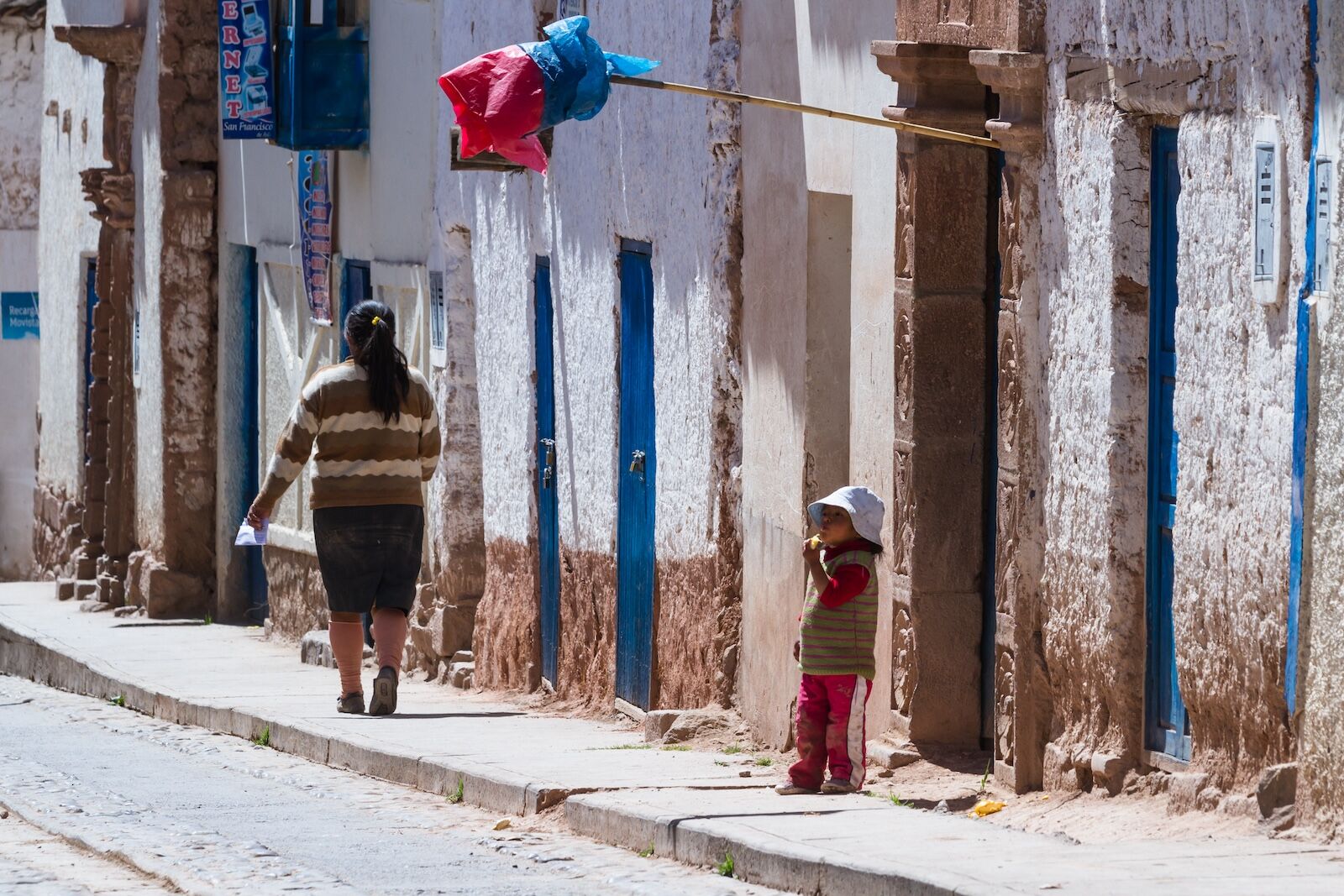
Photo: Nature’s Charm /Shutterstock
Although going by different names in the Quechua and Aymara languages, fermented maize beverages were part of life in the Andes long before the rise of the Inca Empire. Silva explains that red flowers have also been used to signal the availability of chicha, describing the custom as an example of cultural mestizaje, or the blending of cultural traditions.
“Across different societies, visual symbols have historically been used to communicate what was happening inside a building or establishment,” he says. “In this sense, the red flowers function as a form of traditional advertising: a simple, recognizable symbol communicating to passersby that chicha is available inside.”
Follow the red, and you might find a small shop, a restaurant where chicha is brewed, or even a chichería tucked inside someone’s home. Vendors selling chicha at sites like Maras also use a red flag to draw attention to their stall.
On the chicha trail in Cusco
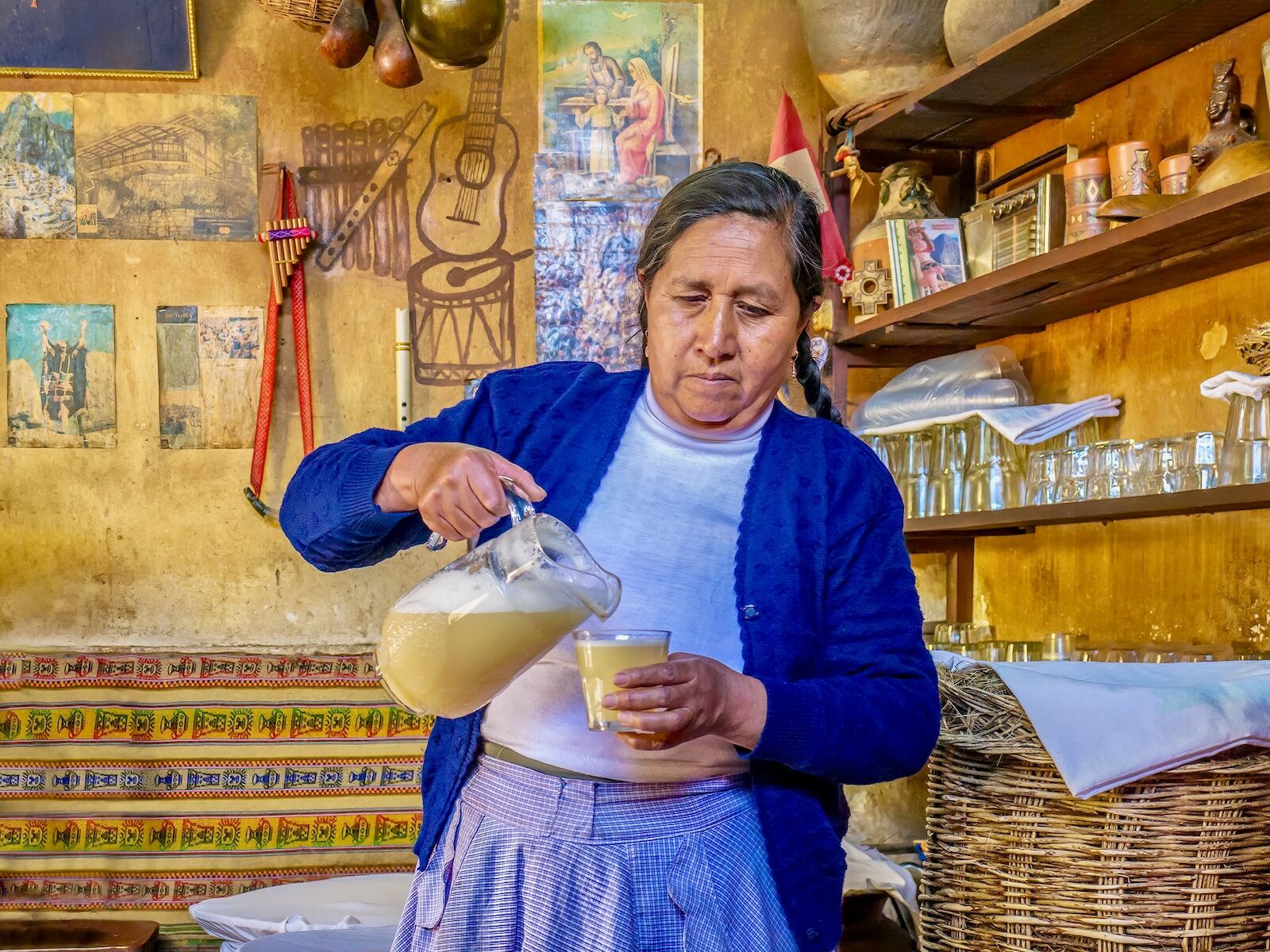
Photo: CherylRamalho /Shutterstock
A red flag generally signals that a chichería is open to visitors, although the setting can be quite different from a conventional bar. These spaces are usually part of a private residence, and the setting is less formal than even a more casual restaurant.
“The red signal generally indicates that the establishment is open to the public and that anyone passing by may enter,” he continues, explaining how chicherías differ from conventional bars. In the case that a chichería is located within a residential property, there is usually a kitchen where food and chicha are prepared and a dining area where visitors can sit, drink, and socialize.
“These spaces are part of a longstanding social tradition in which chicha is not simply a beverage but also a reason for people to gather and interact,” says Silva.
Once the batch runs dry, the flag comes down. Fortunately, chicha is widely available in restaurants throughout Cusco and the Sacred Valley; some places may fly the flag, others stick to more contemporary advertising: a chalkboard.
Evolving from chicherías, picanterías are informal lunch restaurants in Andean regions: if you see a restaurant denoted “picantería,” you can expect to find handcrafted chicha on the menu next to regional specialties like slow-roasted cuy, fried trout, chicharrón, and quinoa soup. Picanteria Mamatrini in San Blas is one such place.
Open on weekends and specializing in frutillada, La Chuccha in Santa Ana is another example of a picantería where a family home has been opened up to the community as a lunch spot. Get there early: seats fill up fast and the food always sells out.
Near Cusco’s Plaza de Armas, Chicha por Gaston Acurio reinterprets traditional Andean dishes together with chicha-based cocktails and housemade chicha morada and frutillada. Reservations are recommended. For a more hands-on approach, Salineras Ranch operates chicha de jora workshops in the heart of the Sacred Valley.
Chicha on the coast
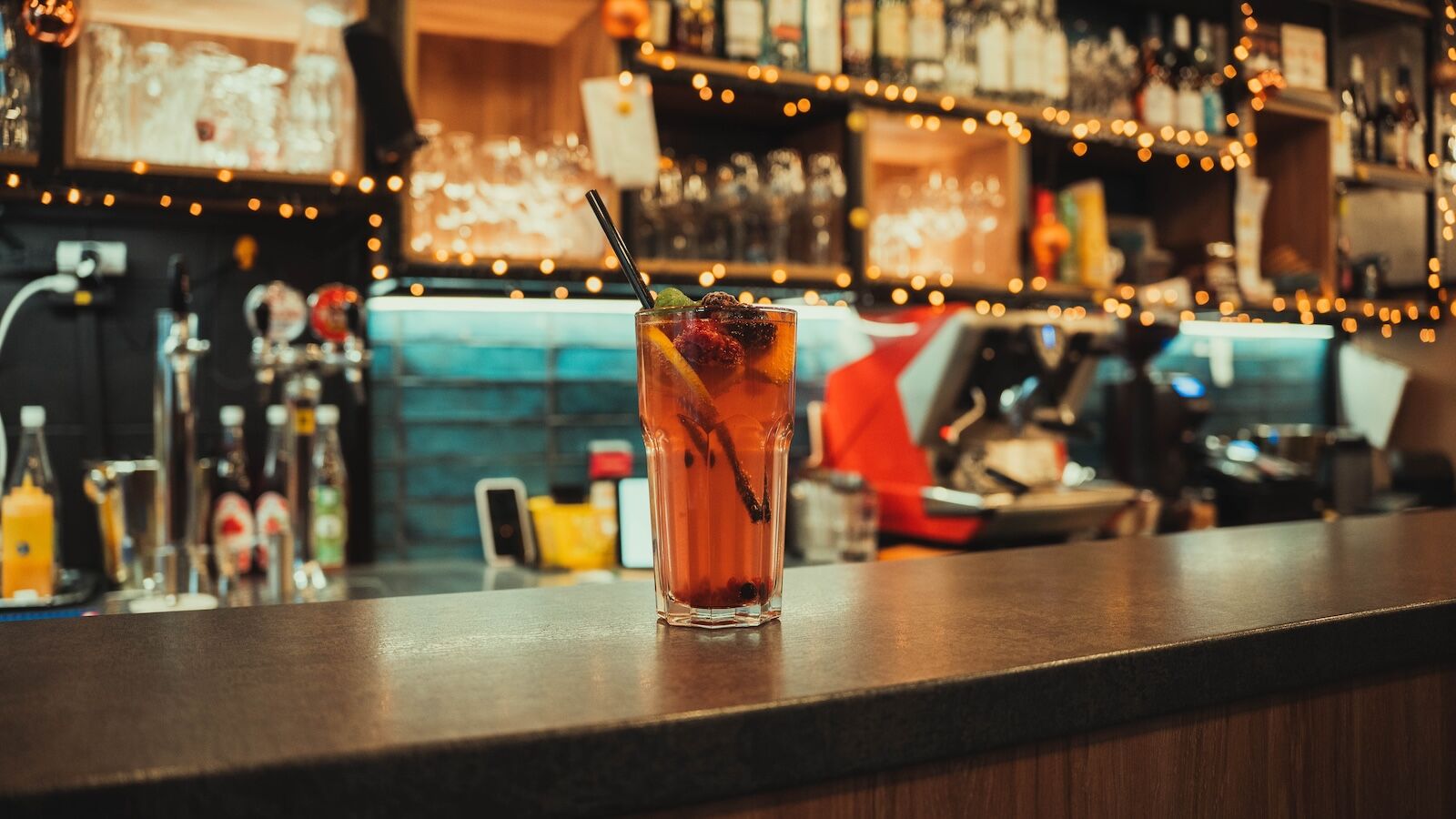
Photo: Roland Polanyi /Shutterstock
At the hands of modern baristas, chicha morada has found itself a star ingredient in cocktails, with the chicha sour (chicha morada added to the signature pisco sour) cropping up on menus in Peru’s coastal capital alongside bespoke tipples. The speakeasy-style Bijou Bar in Miraflores fuses pisco with chicha morada to produce the Moradita, garnished with blueberries and softened with tonic.
At Limaq Bar, led by Joel Chirinos, a rotating roster of guest bartenders brings new ideas to the table. One recent cameo is El Combinao, a mix of purple maize, pisco, and horchata. Ask what’s currently available, as the menu changes regularly.
For chicha in its everyday form, head to Mercado de Pueblo Libre, a working produce market in one of Lima’s oldest neighborhoods. Vendors sell homemade chicha de jora and chicha morada to go with Peruvian fruits and La 136’s made-to-order ceviche. 