Photo: Hannah D. Cooper

In Peru’s Tambopata Reserve, Travelers Become Wildlife Researchers

Peru Wildlife Sustainability
by Hannah D. Cooper Oct 1, 2026

It’s Sunday morning at Tambopata Research Center, and Aracely Yarasca is mentoring me in the practice of Lepidoptera mounting. These dinky moth specimens, jarred by travelers the evening prior, may generate intel critical to conservation. At the adjacent desk, Alejandra Chumbimune analyzes audio clips of the eight primate species present in this remote sector of the Peruvian Amazon.

While going about their daily routine, the biologists keep an eye on the clock. At 11 AM, their lab becomes the domain of curious tourists: Tambopata Research Center (TRC) is both an active research outpost and one of three (soon to be four) ecotourism lodges operated by the Peruvian-owned Rainforest Expeditions.

Founded in 1989 as a macaw conservation project, the jungle retreat sustains its legacy through science tourism in the heart of Peru’s Tambopata Nature Reserve. Apart from aiding the all-female trio of resident researchers, the rate includes a breakfast rendezvous with macaws, the ambassadors of the Amazon.
Citizen science tourism with Wired Amazon

Aracely Yarasca in peru

Aracely Yarasca explaining the Macaw Project at the site of one of the artificial nests. Photo: Hannah D. Cooper

Lima-born Yarasca graduated as a biologist before gaining her master’s in marine sciences and climate change. As the Wired Amazon Project Coordinator at Tambopata Research Center, she views her position at the forefront of citizen science tourism as on par with her research.

“Doing citizen science with guests helps us share knowledge and involve them in science,” Yarasca explains about the initiative, where guests have the option to participate in biologist-led conservation pursuits. TRC, the only lodge located within the reserve, offers four of the five Wired Amazon activities. Aerobotany is exclusive to the Brazil nut forests of Refugio Amazonas.

“They are not just listeners; they are part of these projects, they are active participants — change agents,” Yarasca says about lodge guests, deftly skewering a moth specimen through its thorax. “And they have responsibility,” she adds, passing me a pair of entomology tweezers.

Yarasca emphasizes that Wired Amazon is accessible to casual wildlife enthusiasts and children as well as the scientifically inclined. As we talk, she dispatches images of last night’s moths to the entomologist Dr. Juan Grado, who collaborates on the DNA barcoding of Lepidoptera.

“The Amazon affects the whole world; it’s important to protect this place,” Yarasca says. “I like to work with tourists because I can say what is happening in a way that they can understand.”

Neither she nor Chumbimune sugarcoat the risks faced by the Peruvian Amazon in their pre-dinner lectures at TRC. Droughts are a major cause for concern as rainfall patterns change and water temperatures rise, while illegal gold mining and logging are rife in the Madre de Dios department. The researchers admit they can do little to prevent destruction, but they can at least protect and conserve the species that depend on these habitats.

Besides citizen science, all lodges offer trekking excursions, panoramic canopy tower climbs, and sunset cruises which showcase the reserve’s biodiversity. The headliner activity takes us back to where the story took flight in 1989.

Breakfast with macaws

macaws in peru

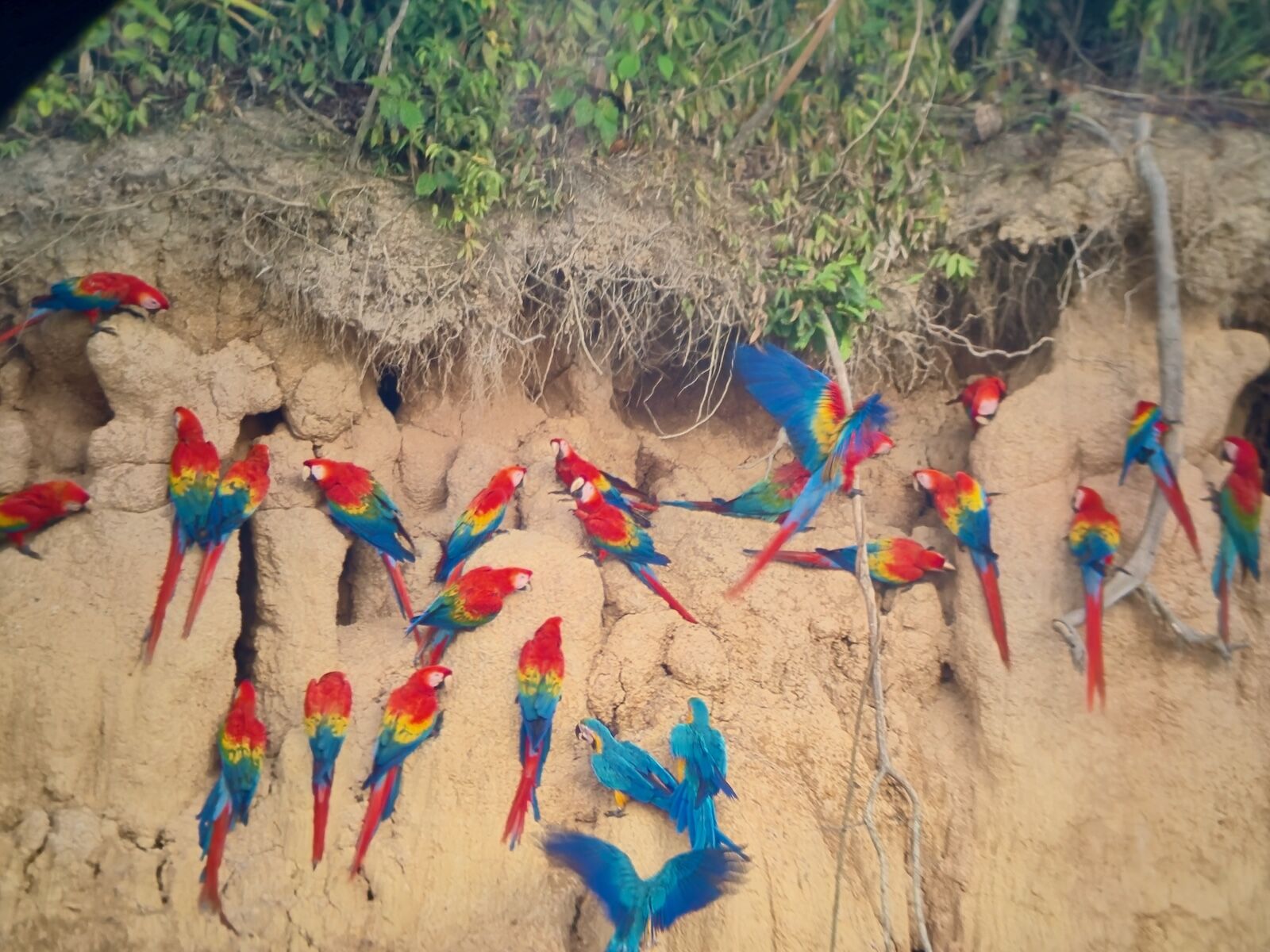
Tambopata Macaw Clay Lick, where macaws ingest essential minerals from the clay. Photo: Hannah D. Cooper

Each morning, as Yarasca organizes her samples, a sunrise spectacle occurs downstream. Dozens of scarlet, blue-and-yellow, and red-and-green macaws gather at the Chuncho Clay Lick, a mineral-rich deposit that supplies their essential intake of sodium, calcium, and magnesium. I visited the clay lick on my first morning, slipping out of bed before dawn and marveling as the boat crew navigated the Tambopata River under the remnants of moonlight. Tambopata’s clay licks are as much a social affair as a snack bar; my guide, Listen, likened it to a disco. Roles were reversed as we settled down for coffee and eggs on the riverbanks while winged rainbows swooped overhead.

It was these raucous birds that inspired the photographer and architect Eduardo Nycander’s ecotourism venture. As I learned from the Tambopata Macaw Project, these species depend on the large cavities present in trees such as the Shihuahuaca for breeding. Deforestation is causing macaw reproduction rates to drop due to a lack of resources.

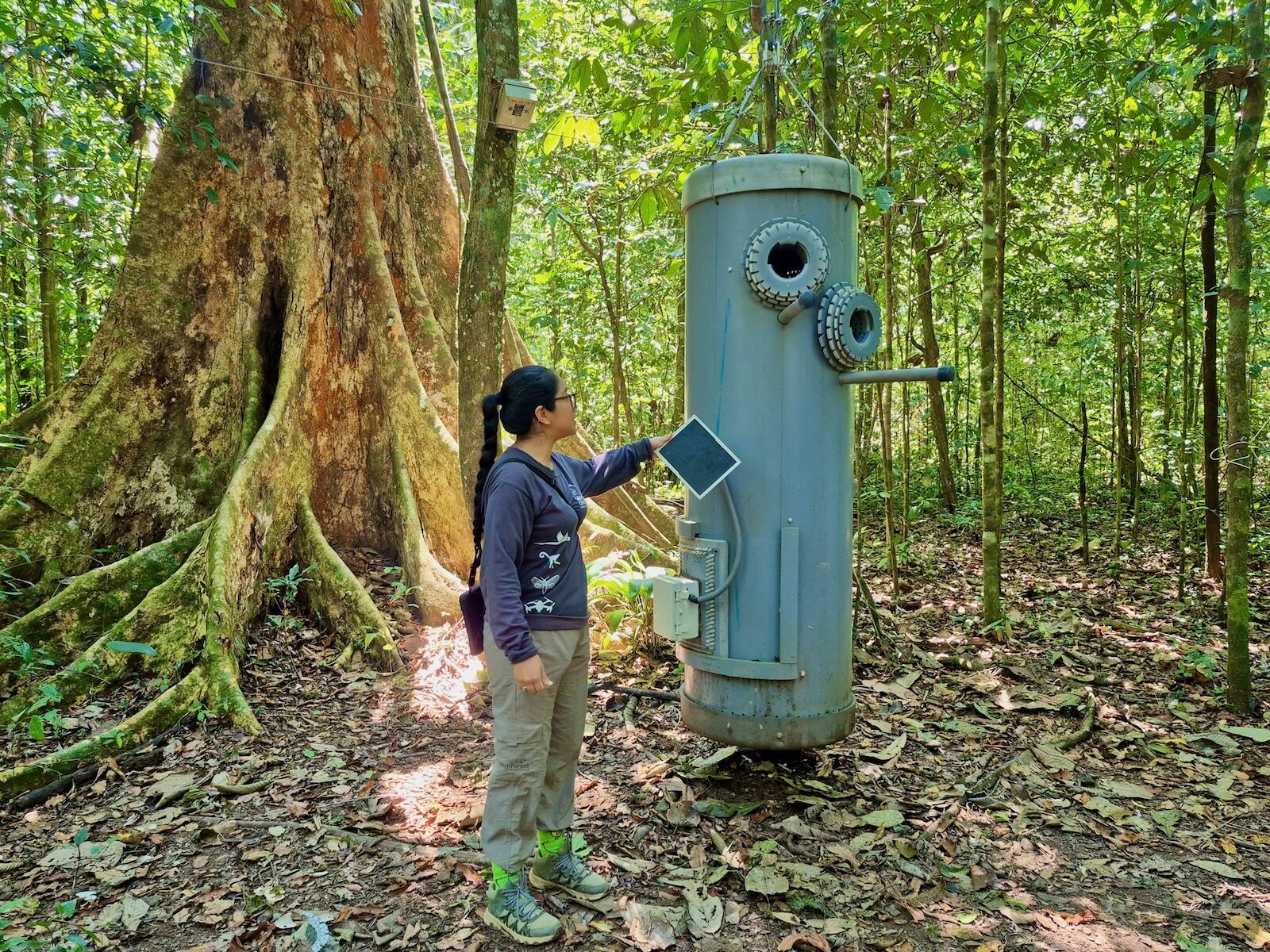
Wired Amazon’s flagship project sees the installation of artificial nests suspended high above the canopy and deep enough to give the occupying family a fighting chance from predators like toucans and olingos. It takes at least three months for a chick to gain feathers and brave its first flight, eventually finding its way to the clay lick where it will seek a lifelong mate to continue the circle. Internal cameras allow scientists to monitor the chicks’ development and study behavioral patterns, although they never intervene in the course of nature.

“We offer meaningful experiences that stick in travelers’ minds more than just taking a photo,” says Chumbimune. “They can think more about how they can help us and our wildlife.”

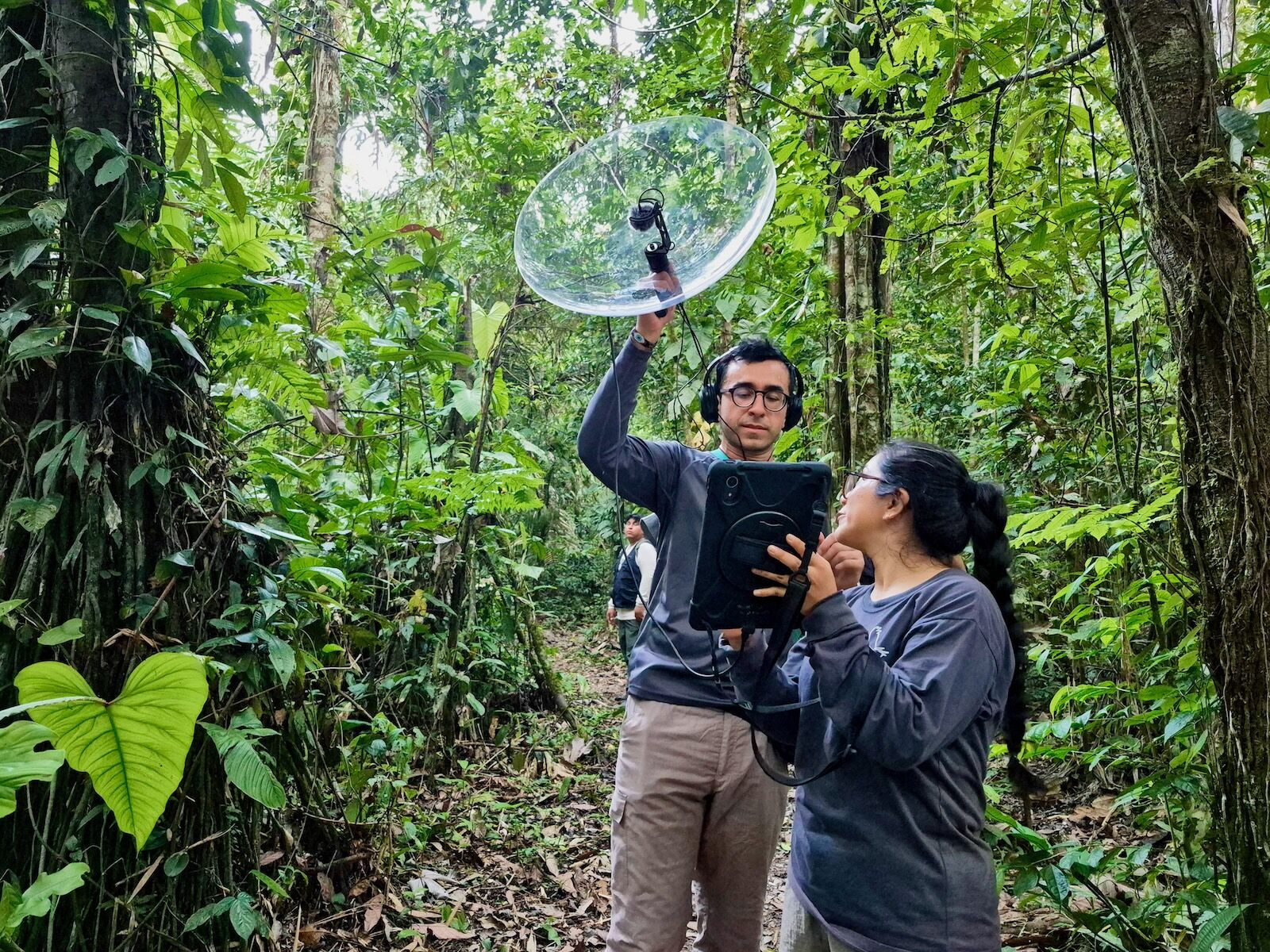
Speaking about how Wired Amazon elevates tourists from consumers to documenters, she explains how her project (led by Dr. Mark Bowler) gathers vocalizations from the likes of spider monkeys, howler monkeys, and capuchin monkeys.

Using tech to tune into nature

Collecting bioacoustic monkey recordings

Collecting bioacoustic monkey recordings with Aracely Yarasca. Photo: Hannah D. Cooper

Staying at Tambopata Research Center feels almost like a paradox. We come to the jungle to disconnect, yet even at the most remote of Rainforest Expeditions’ lodges, we are immersed as much in technology as in nature — coming to learn how monitoring the forest can help protect it. Besides live-streaming the nesting macaws (breeding occurs in November and December), guests assist the tropical biologists in setting up trap cameras and compiling bioacoustic recordings that track jaguar and primate populations, respectively.

Chumbimune clarifies that the goal of the newest Wired Amazon project, 8 Primates, is to build a library of monkey calls. This will ultimately help detect and monitor primates nationwide, with the data collected able to make a contribution to conservation by understanding forest health. Developing the tech is a costly undertaking, and it can take a decade to yield substantial data (a key takeaway from my time with Rainforest Expeditions is how much patience science demands), but the idea is that travelers will be able to support the team by assembling short audio recordings using their smartphones.

“We assume that the animals with a longer life cycle — primates or jaguars — will take more time to recover,” Chumbimune explains when asked about how ecological changes and habitat loss will affect Tambopata’s biodiversity, although this remains a hypothesis.

In contrast, insects may serve as an early-warning system for climate change. This is why the researchers consider all five Wired Amazon activities equal, whether that’s capturing footage of jaguars (seven individuals are known to circuit TRC) or establishing a biodiversity baseline by recording insects and vocalizations.

“You cannot separate the importance of every living organism,” says Yarasca.

What species discovery means for conservation

capybaras in peru

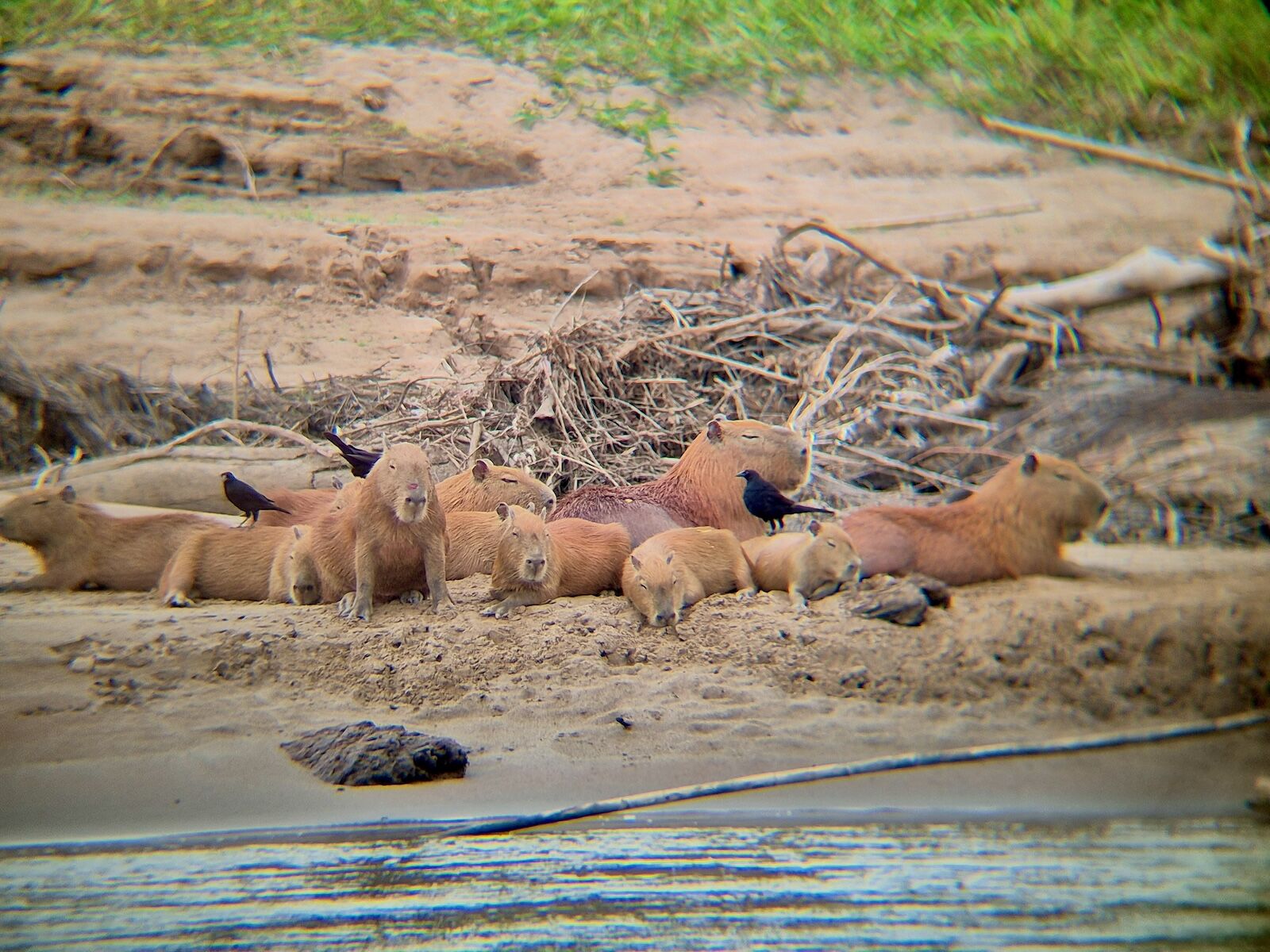
Spotting capybaras is typical from the boat, the birds are removing parasites from the rodents – we also spotted caimans. Photo: Hannah D. Cooper

With so many species on the brink of extinction, guests might wonder what the value is in traipsing around the jungle at twilight, trapping as-yet-unknown bugs in jars in the name of science.

“From a strategic approach, it’s an important tool when we are creating new reserves or protected areas, as we have to share an inventory of species,” Yarasca says about Wired Amazon’s Discovering New Species.

All samples are logged according to the guest who captured it, and they will be invited to name the species if it proves to be previously unidentified. The project currently focuses on tiger and pyralid moths.

“If we have a high biodiversity of insects, or any animal, you must protect that space,” she adds, particularly in regard to native species.

This information also strengthens the application process for international grants. Being swarmed by flying critters might not be every traveler’s cup of tea, but Yarasca hopes participants will use it to feel empathy for creepy crawlies while recognizing their worth in the ecosystem.

“For me, this is a way we can break paradigms about insects: they are important because they take all the nutrients to the soil,” she says.

After four days of citizen science, I can say I graduated with a newfound appreciation of even cockroaches, the planet’s natural decomposers who are, quite literally, cleaning up the mess made by humans in urban areas.

A jungle bedroom in the Peruvian Amazon

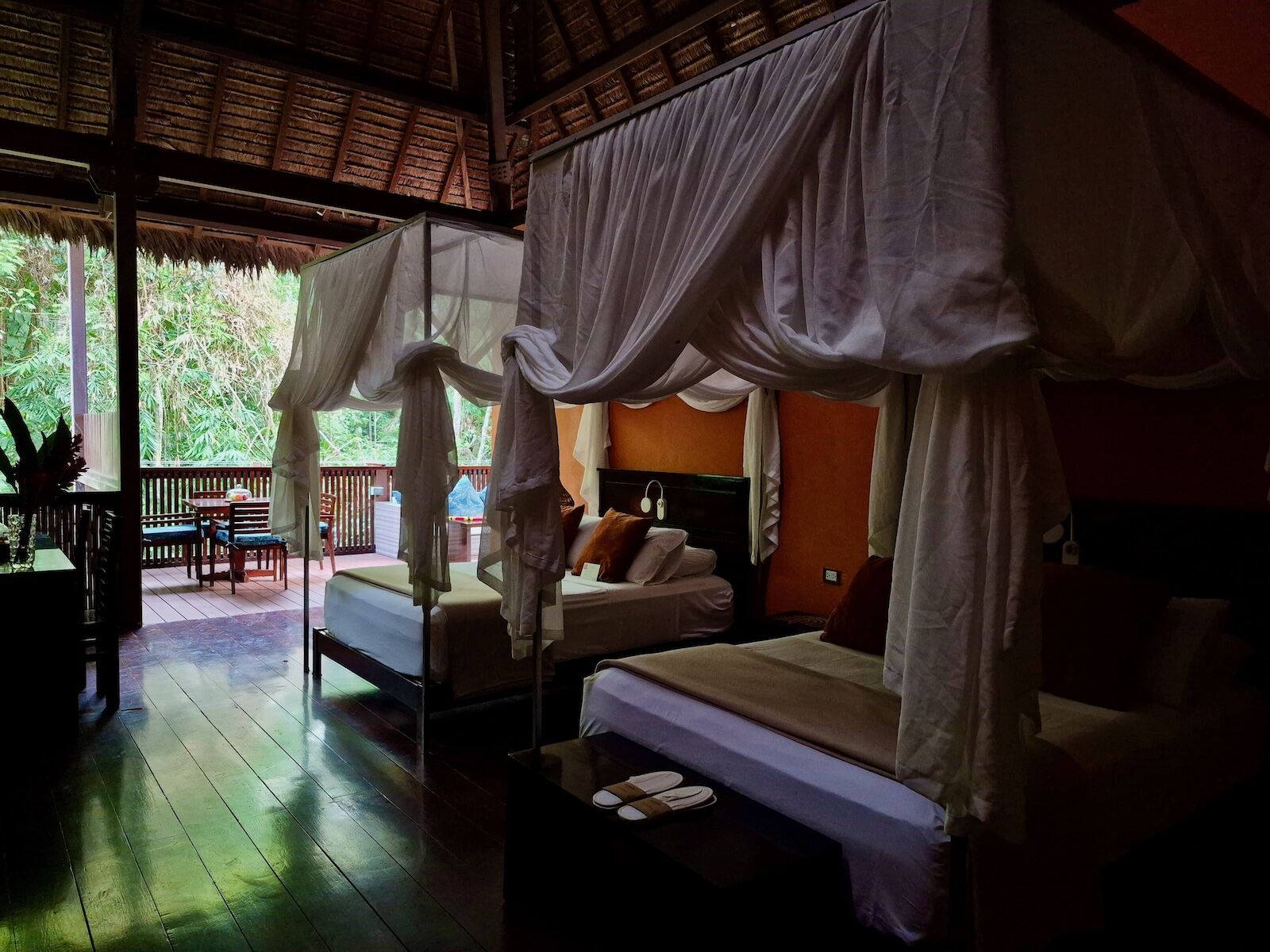
Deluxe Suite at Tambopata Research Center

Deluxe Suite at Tambopata Research Center. Photo: Hannah D. Cooper

Travelers needn’t tread too far to get a sense of Tambopata’s biodiversity. Designed by Eduardo Nycander himself, the 24 luxurious guest rooms at the all-inclusive Tambopata Research Center, starting around $800 per night, are elevated with no barrier (bar a robust mosquito net system) between mattress and tree trunk. My deluxe suite came with a soaking tub and hammock, perfect for afternoon siestas. Each night, a medley of jumping sticks and katydids dancing to the tune of cicadas kept me company as I brushed my teeth. Completely harmless, the critters were content to perform their nocturnal tasks outside, leaving me to sleep as snug as a bug all three nights.

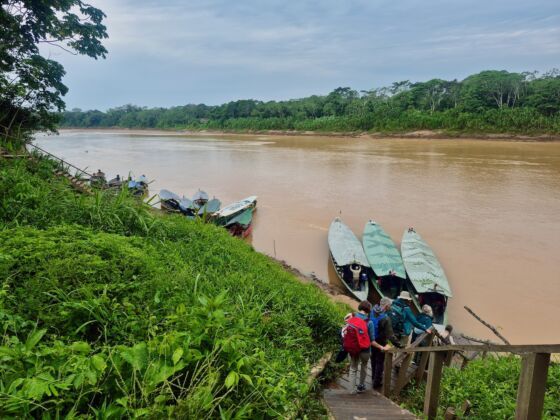
It’s a four-hour scenic transfer by bus and then boat (keep binoculars to hand for caiman and capybara sightings) from the Rainforest Expeditions office in Puerto Maldonado, where flights arrive from Lima and Cusco. Those looking for an express Amazon encounter may prefer the newest lodge, Kuaii Amazonas, opening in spring 2027, whereas younger families are best catered to at the community-managed Posada Amazonas.

Discover Matador

Save Bookmark

We use cookies for analytics tracking and advertising from our partners.

For more information read our privacy policy.