To slurp is to extract the essence of a cup of coffee. This succulent but sloppy method aerates the coffee and spreads it across your palate, revealing the full flavor profile through gargled guzzles. I learned this over two coffee-centric days spent with my wife Alisha in Costa Rica’s Central Valley. We got there on a Delta Airlines charter flight aptly dubbed the “In-Air Coffeehouse” in partnership with Starbucks.
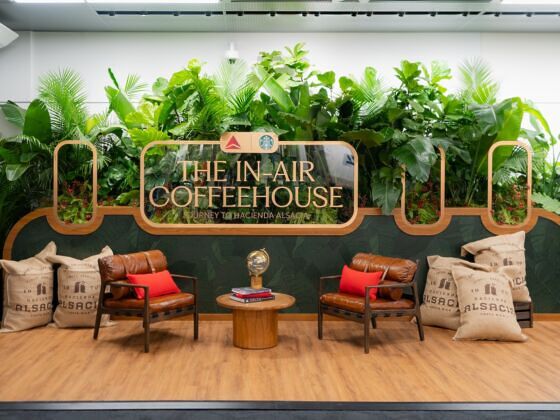
Photo: Starbucks
The Delta and Starbucks In-Air Coffeehouse Shows the Benefits of Airline Loyalty at 30,000 Feet
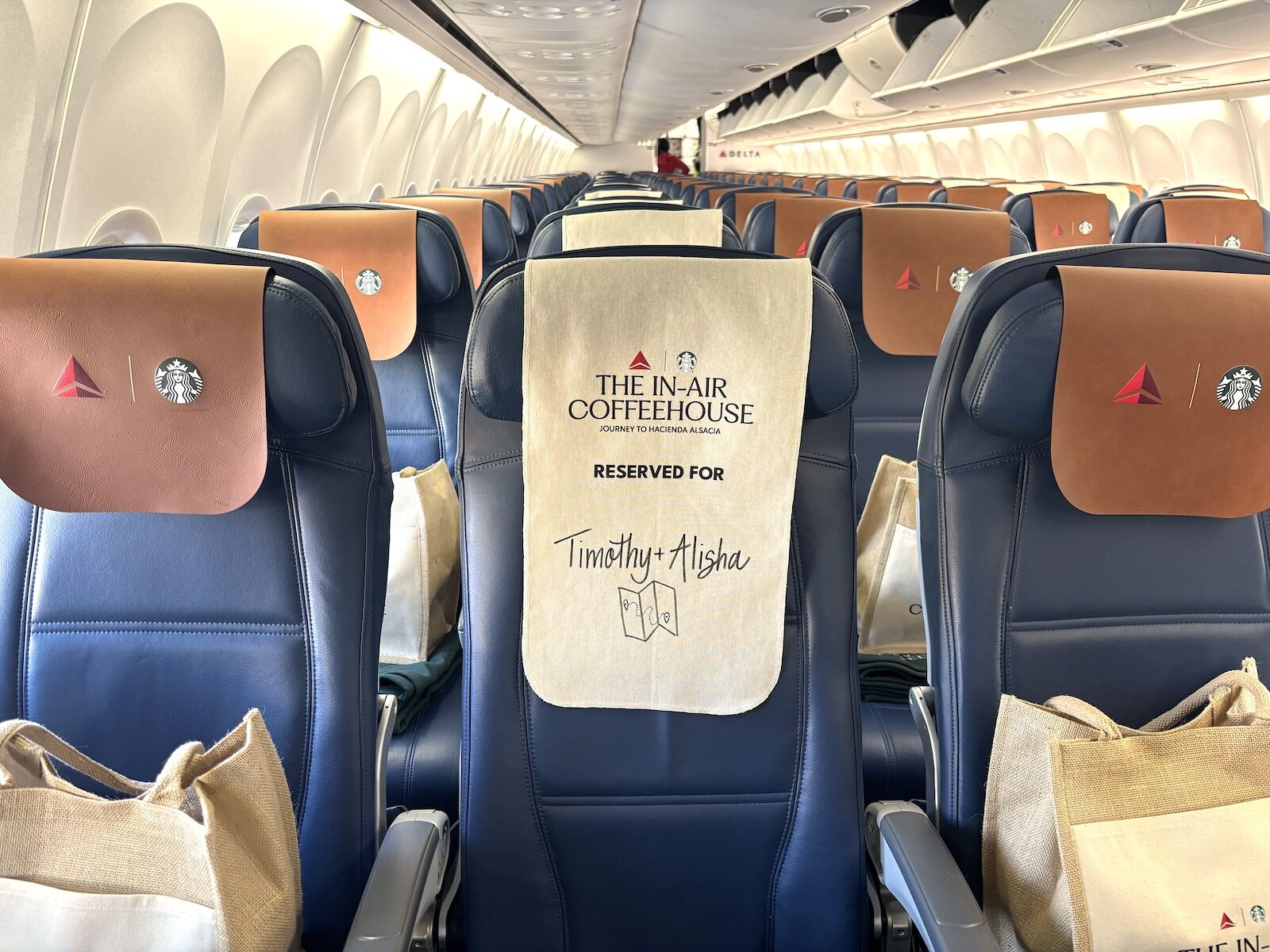
Never before have I seen my name written on burlap. Also, it was so nice having no one in the middle seat. Photo: Tim Wenger

A makeshift Starbucks kept us caffeinated before boarding. Photo: Starbucks
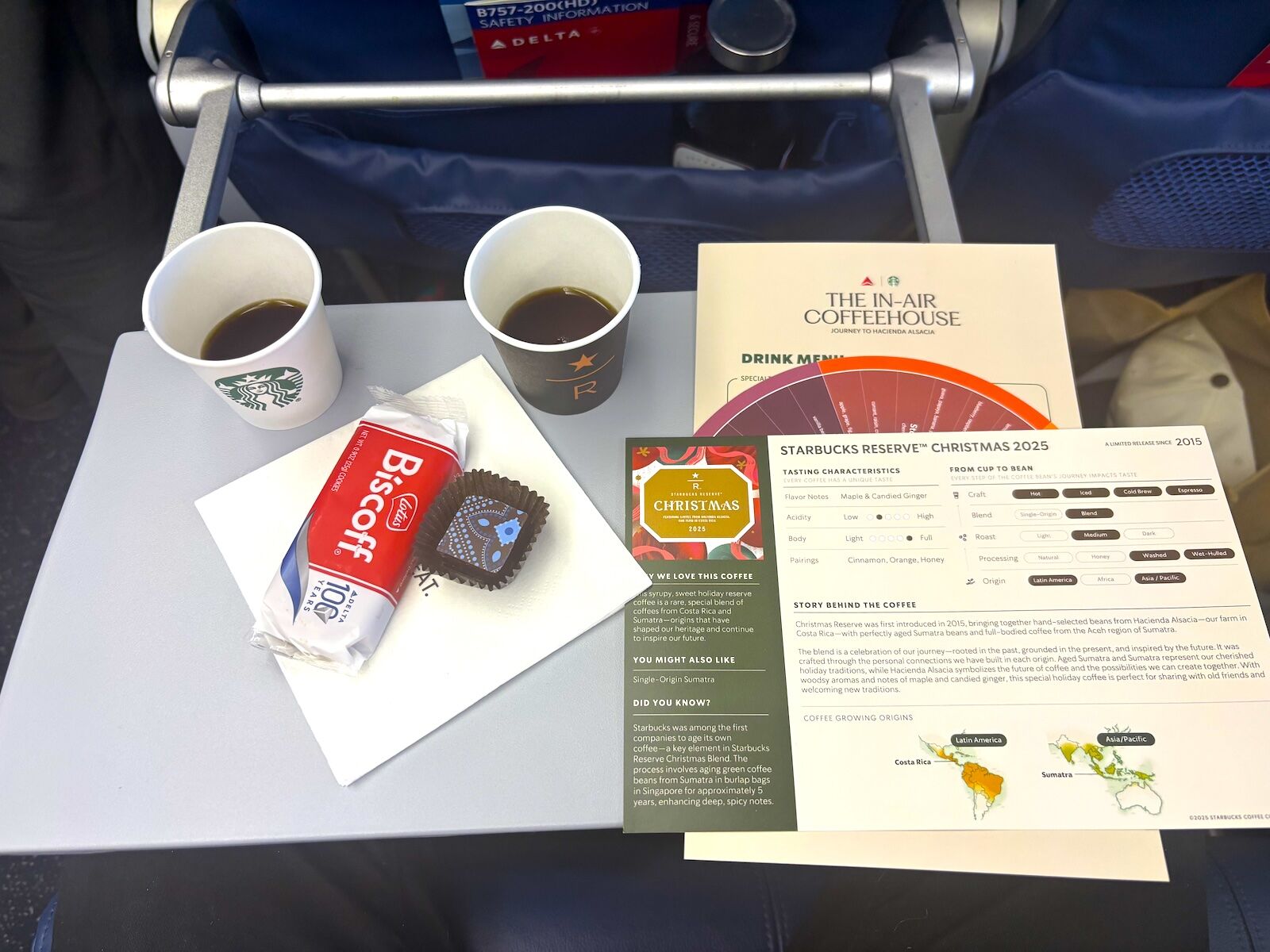
The in-air tasting included notes and info on the two roasts. Photo: Tim Wenger
The opportunity was exclusively available to SkyMiles Members and kicked off Delta’s Group Drop on SkyMiles Experiences — a “ new way for SkyMiles Members to access unforgettable events with a group of friends, zero miles needed,” as the brand puts it.
The In-Air Coffeehouse flight departed from the far end of the international terminal at Atlanta-Hartsfield Jackson International Airport following a pre-party that included far more excitement than I’m used to at 9 AM on a Tuesday. We heard the revelry as we approached the gate, which had been tricked out with a makeshift Starbucks coffee bar and deep-green flora evoking the mood of Costa Rica’s tropical environs. Mimosas flowed freely among the 150 or so travelers gathered for the charter flight.
The new experiential perk also coincided with Delta’s 100th anniversary. But back in the terminal, the present took precedence, as did the future. Primarily, what it means to be a part of an airline loyalty program, and what it could mean in the future.
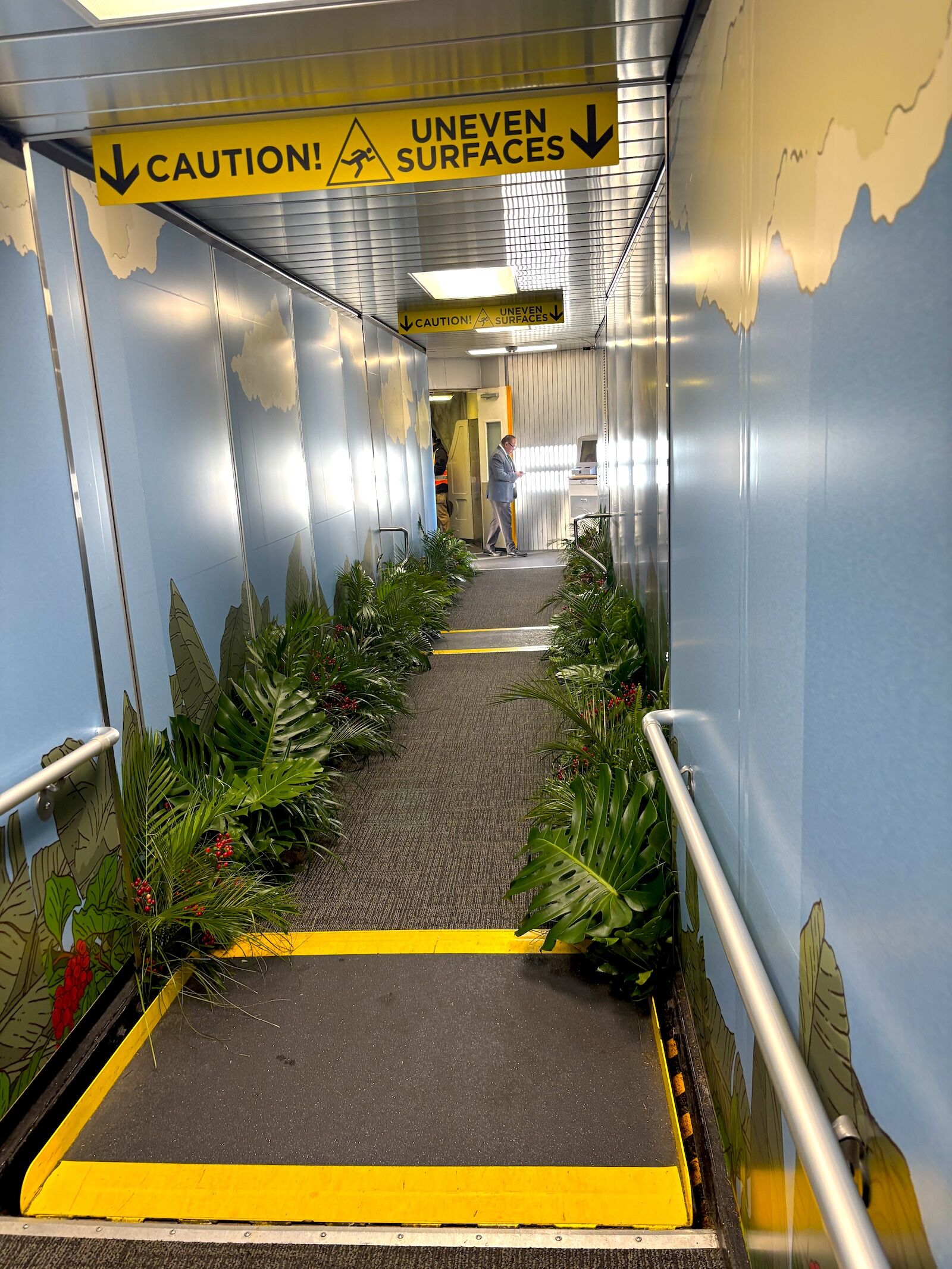
Even the jet brdige was tricked out for the occasion. Photo: Tim Wenger
I’d never been on a charter flight before this one. Full disclosure, my travel media career allowed me to bypass the actual sweepstakes, but I still felt like quite the winner as I observed the layman travelers sitting lumpily at the adjacent gate, looking jealously at the early morning shenanigans happening at ours.
The plane itself was a standard Boeing 737 modified for the occasion with faux leather accents and seatback nametags made of burlap coffee sacks. It felt as much like a coffeehouse as economy class could, with the added bonus of empty middle seats. En route, a Starbucks barista led us through a guided tasting of two blends from Hacienda Alsacia, the coffee farm we’d visit in Costa Rica. The mood was revelrous – I’ve never heard such clapping and whooping on a flight. We cheered after the coffee tasting, and again when it was announced that affogatos would be served after lunch. There were multiple rounds of applause for the stewardesses, and even a few claps when the pilot announced the time change as we pulled into the gate in San Jose (something certainly not stirred by the free Imperial beers on board).
Sustainable coffee at Hacienda Alsacia
Never before have I seen my name written on burlap. Also, it was so nice having no one in the middle seat. Photo: Tim Wenger
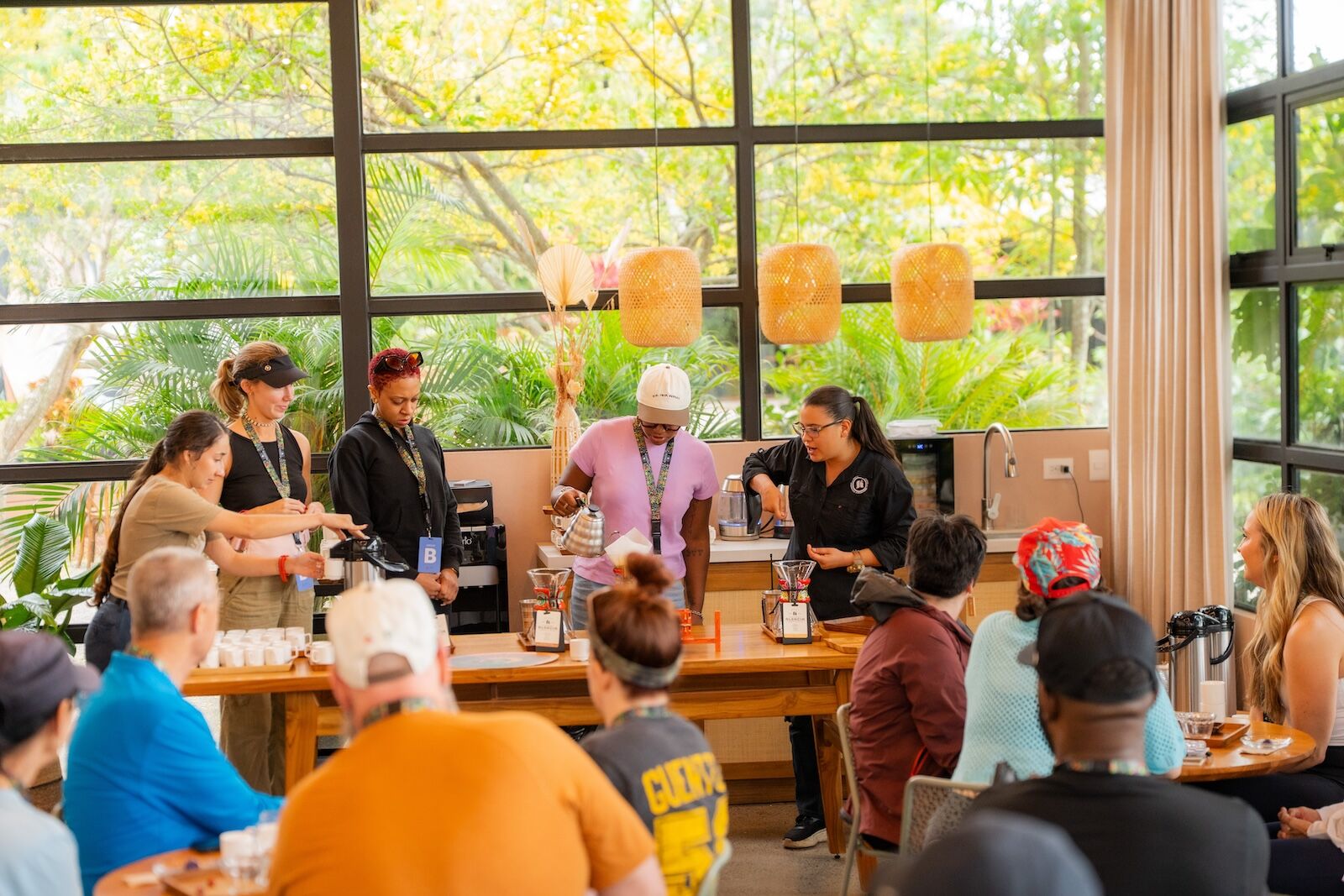
Starbucks baristas guided us through a thorough tasting at Hacienda Alsacia. Photo: Starbucs
The next morning, we boarded a bus for Hacienda Alsacia. The farm is in the hills outside of San Jose, overlooking the Central Valley region where some 70 percent of Costa Rica’s 5 million residents live. As we toured the beautiful farm, guides explaining sustainable farming and “safeguarding the future of coffee,” I found myself looking for evidence of corporate greenwashing. Or at least a sense that we were being duped by a giant corporation that buys 3 percent of the world’s coffee from growing regions around the world, yet somehow manages to keep it tasting the same every time.
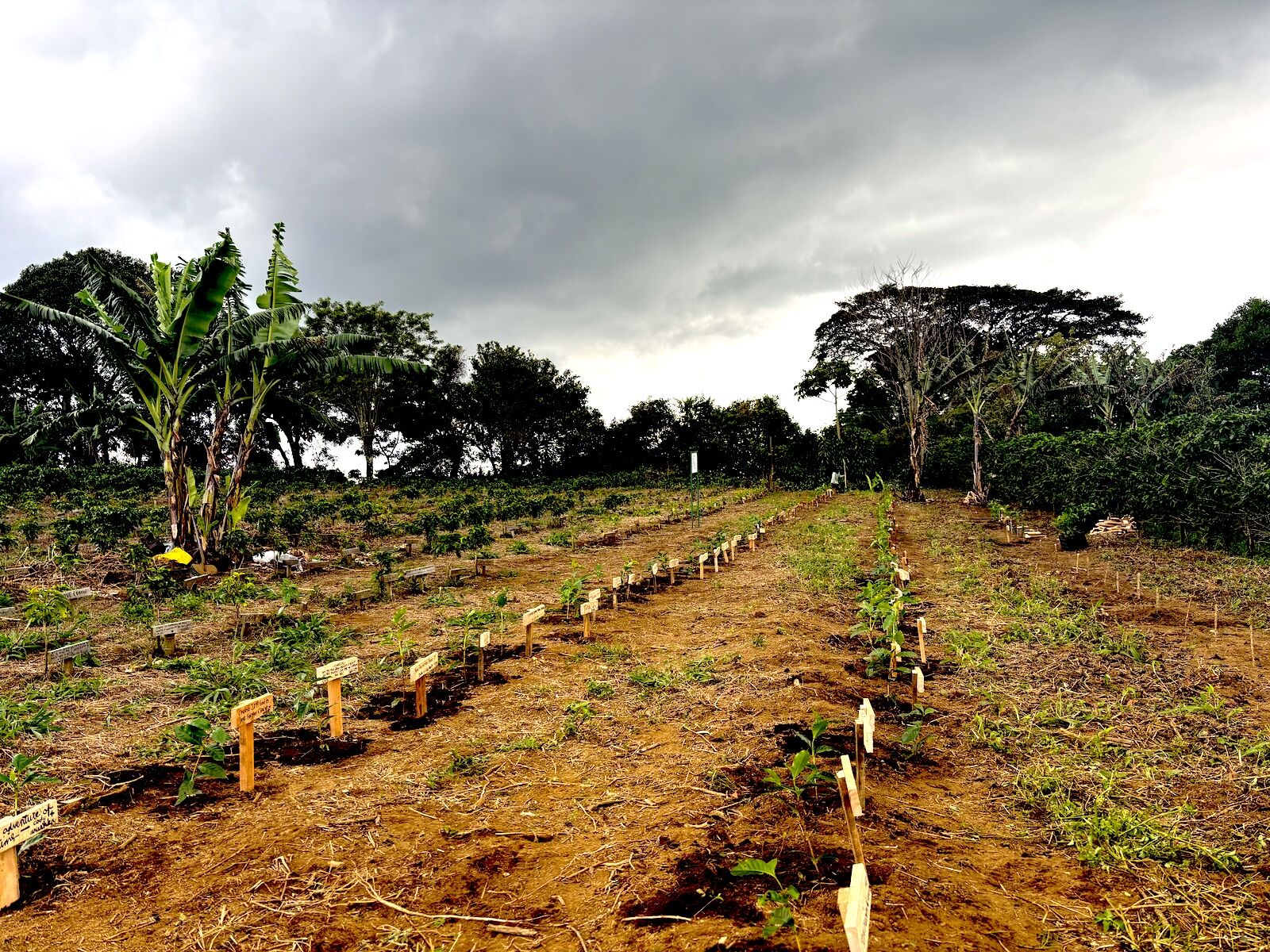
The farm exists for research and development – nothing grown here is exported out of Costa Rica. The goal is to create coffee plants that are resistant to both climate change and disease, and that use less water and energy. Studies have found that coffee farms will need to move to higher elevations as regions warm, and the threat of diseases like leaf rust (also made worse by climate change) are ever-present and devastating.
Hacienda Alsacia grows a plant resistant to climate change, and blends it with a plant resistant to disease for a durable hybrid. More than 800,000 coffee trees are on the farm, and each of the guests with Delta planted one more on the trip. My wife Alisha was particularly interested in this project as the owner of a boutique heirloom seed company in Colorado. How can sustainable farming practices in Central America be translated to growers in Asia, in the United States, or in the Southern Hemisphere?
It’s easy to blame big corporations for negatively impacting local businesses and communities, and in many cases that finger pointing is justified. When a Starbucks first opened in the small mountain town where I attended college, an angry mob of over-caffeinated locals threw bricks through the windows and publicly vowed never to support the big guy threatening local coffee shops. I didn’t participate in the window smashing, though I agreed with some of the sentiment. I figured that continuing to patronize local cafes was a strong enough vote. Two decades of added wisdom have since taught me that holding big companies to account also means recognizing when they do something right.
Hacienda Alsacia is, from what I gathered during our short time in Costa Rica, a prime example. During a guided tasting of three house blends, we learned about how the R&D farm’s research is open-sourced to growers around the world through the Starbucks Costa Rica Farmer Support Center, one of 10 in coffee growing regions around the globe. It serves as a database of knowledge about how to grow coffee for the future. According to LinkedIn, between 501 and 1,000 people work at Hacienda Alsacia, from farmers to customer service staff, making it a mid-sized employer in the region. As the company’s first wholly-owned coffee farm, the site is a model for other large international coffee companies to follow.
Experiencing a new side of Starbucks
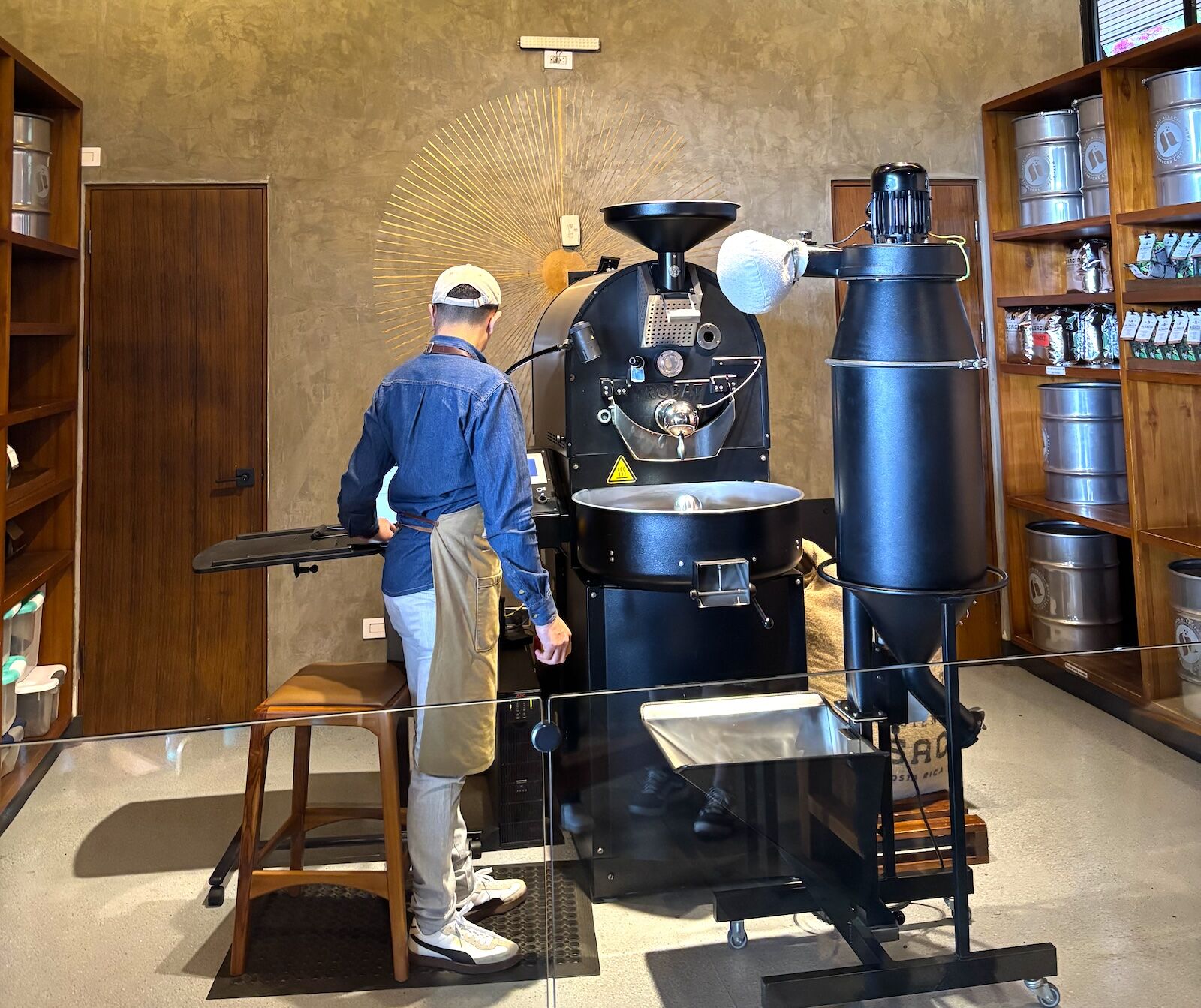
The Hacienda Alsacia coffee shop includes the change to watch beans be roasted while you sip. Photo: Tim Wenger
Anyone can visit Hacienda Alsacia and enjoy the unique coffees grown and roasted onsite, and can even watch the roasting happen live while they sip. Our return flight to Atlanta was a regular commercial flight, and I sat next to an American expat who lived in San Jose. He told me when family or friends visit him from back home, he asks if they want to “stop and get a Starbucks” on the way in from the airport, only to detour 40 minutes into the hills to Hacienda Alsacia to treat them to a Starbucks they’ve never tasted, complete with epic mountain views.
At Hacienda Alsacia’s onsite coffeeshop, looking over a waterfall spilling into a canyon below, I spoke with Joshua Kaehler, Delta’s managing director of Loyalty Partnerships, about whether experiences like the In-Air Coffeehouse are going to be more common. I told him I felt that Delta, or really any major airline willing to do so, has a strong opportunity to add memorable moments to the otherwise anxiety-inducing experience of air travel. In the view of this travel editor, knowing something as simple as a good cup of coffee and decent free Wi-Fi await onboard is more than enough to earn my business.
“I think our goal is to figure out what do customers want from brands they care about,” Kaelher says. “We’ve seen really good success so far when we do collaborations on the experiences side with brands that customers know.”

Leading a tasting at 30,000 feet is cause for smiles. Photo: Starbucks
He noted that this means not just more in-air collaborations with Starbucks, but also with services travelers use regularly, such as Uber. These collaborations can help make a full-service experience for Delta flyers that rewards them for choosing Delta and its partners. He emphasized the airline’s focus on establishing itself as the premium American airline, and that it has to maintain that trust with flyers in order to up the ante on experiences. Delta is frequently cited as the most on-time US airline, and has built an image as “premium” for an experience and ticketing process that is more streamlined than budget airlines, though customers pay for that convenience. Some studies have found Delta to be 20 to 40 percent more expensive than these budget carriers.
”We wouldn’t have the right to do this if we didn’t run a reliable, careful airline,” Kaelher says. “We’ve spent the last two decades building that and then you sort of can stack these memorable experiences on top of that. It comes back to delivering the core business really well, consistently, and then you have the right to speak about everything else.”
If the goal is for frequent fliers to have a reason to be loyal Delta customers, then these efforts, as well as perks like the In-Air Coffeehouse, represent a different way of thinking about the mass-market flying experience. Travelers have loads of options for the carrier they choose to fly with these days. Few of them inspire or live up to the aspirations of airlines like PanAm and TWA during the Jet Age when flying was an experience rather than a necessity. Today’s reality is more defined by shrinking legroom, angry passengers, confusing pricing and flier rights, and the feeling that hurtling through the sky in a metal tube is just another way to get where you’re going.
Travel inspiration is lacking. The perks for being part of an airline loyalty program are primarily reserved for people who fly a number of miles that seems unheard of to the average person. Something like Group Drop flips that and gives reason to be inspired by a loyalty program for once. Those of us of the Millennial and younger generations missed the “golden era” of flying, and its high time a legacy carrier like Delta brought it back. May the believers among us continue to gather round the proverbial coffee bar at 30,000 feet, toasting our cappuccinos to a new era of journeys, joe, and ample legroom. 