Photo: Hannah D. Cooper

In Chile’s Elqui Valley, Follow Gabriela Mistral’s Route Through Pisco and Cosmic Skies

Chile Travel
by Hannah D. Cooper Jan 23, 2026

The route of Chile’s Elqui Valley is paved by pisco, poetry, and the brightest stars in the Southern Hemisphere. Here in the Norte Chico region, high-altitude vineyards yield grapes packed with natural sugars (essential for producing Chile’s national spirit) while nightlife orbits around galaxies far, far away.

Beloved by Chileans but often overlooked by international travelers, this cosmic getaway is an antidote to Santiago and Valparaíso — provided you don’t get sucked into a vortex. Driving distances are far smaller than those of Patagonia and the Atacama Desert, with flat, paved roads making the valley one of Chile’s friendliest road trip destinations.

Despite the semi-arid climate, the mountain air is fresh even at the height of summer, and minimal cloud cover means stargazing is a year-round pastime. Latin America’s first-ever Nobel Prize for Literature winner found her muse in these powerful landscapes, and, supposedly, extraterrestrial beings have been rumored to make an appearance (this may or may not be connected to a growing trend for hallucinogenic tourism).
Pisco — the star of Chile’s Norte Chico

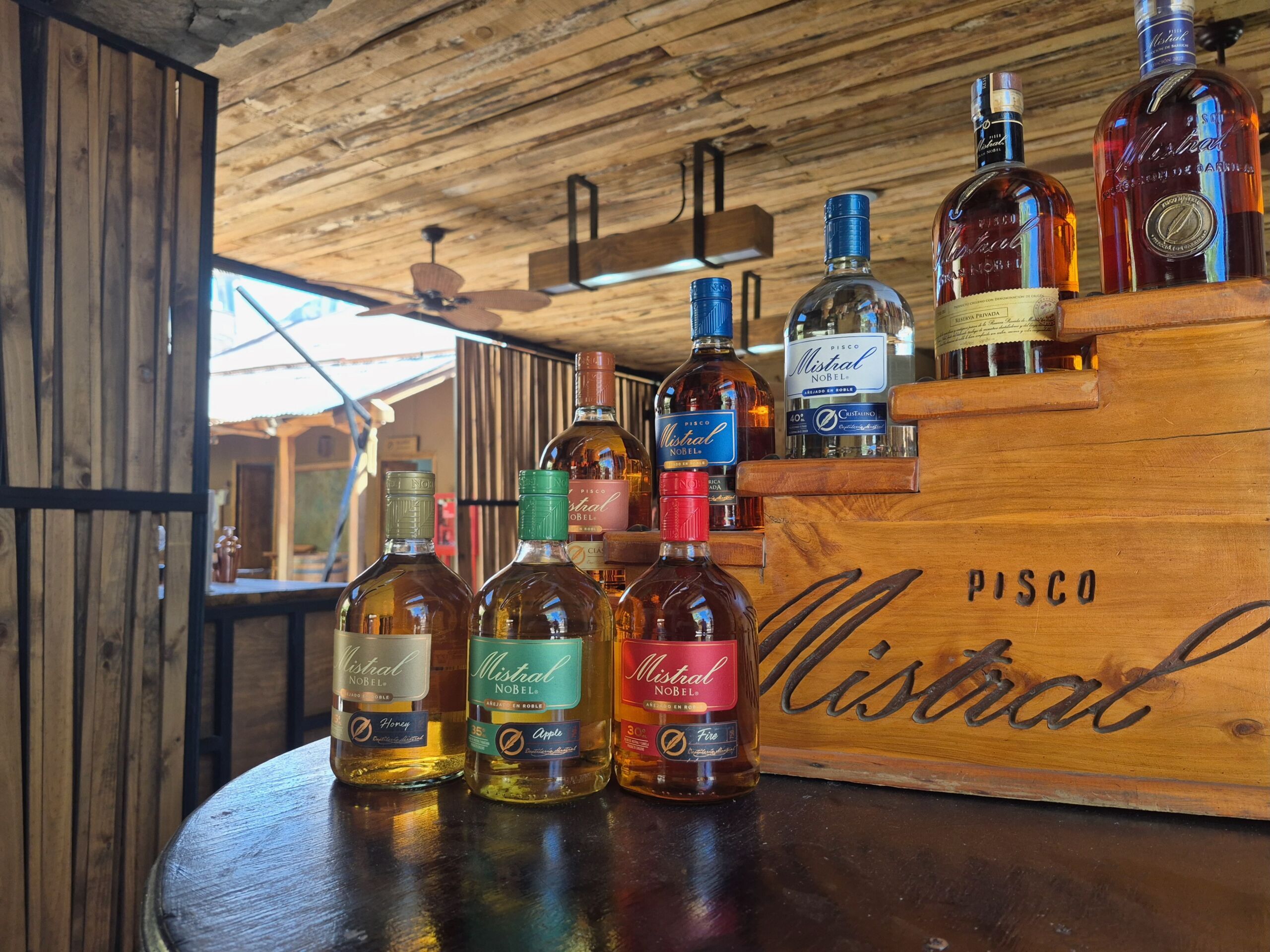
pisco on shelf in elqui valley

Photo: Hannah D. Cooper

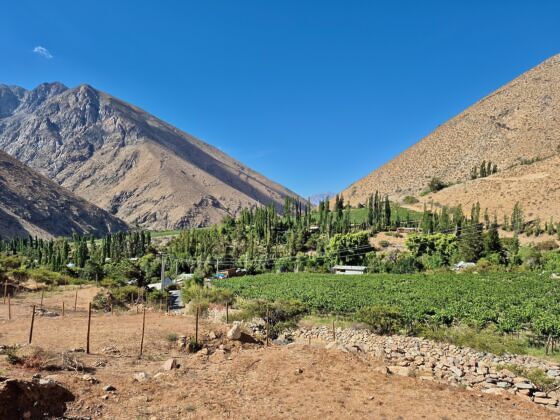
As the primary contributor to the 36 million liters of pisco produced annually in Chile, brandy tourism is the backbone of a visit to the Elqui Valley. These high-altitude vineyards thrive under the intense sunshine and subterranean rivers streaking down from the Andes are to thank for the mini oases sprouting amid the quartz ranges.

Right in the heart of Pisco Elqui village and the most accessible to non-Spanish speakers, Destileria Pisco Mistral is behind Chile’s best-known brand. After visiting the museum and production areas, the premium tour concludes with a tasting of five Nobel batches paired with artisan chocolates and one cocktail. The restaurant is a choice spot for a bowl of pastel de choclo (beef and corn casserole) and a pisco-infused dessert. English-language tours tend to run once a day, so it’s advisable to contact the distillery in advance to secure a spot; WhatsApp is the standard way to communicate with any business in Chile.

Named for its founder, Pisco Doña Josefa de Elqui is a family-run producer on the edge of Pisco Elqui committed to artisanal techniques and sustainability. Tours, hosted exclusively in Spanish, are free. Non-Spanish speakers can stop by for a meal where rural dishes are prepared with regional ingredients; guests staying at the cabins have access to the pool. A few miles south, Los Nichos Winery is the valley’s oldest pisco producer where tours focus on heritage methods. These principally operate in Spanish; English-speaking guides can be arranged with notice.

Although pisco is the darling of the Elqui Valley, the region caters to any thirst. Guayacán, Chile’s first solar-powered brewery, has beer gardens in Diaguitas, Vicuña, and Pisco Elqui, where hoppy ales and lagers are served with sourdough pizzas and papas fritas (fried potatoes) harvested from the valley. Cavas del Valle, a family-owned winery where bottling is done by hand, carries a boutique line of red, sparkling, and late harvest wines. Free drop-in tours of the barrel and fermentation rooms run almost exclusively in Spanish, but I’d recommend a pitstop to pick up a bottle to uncork under the stars.

The Elqui Valley’s astronomically clear skies

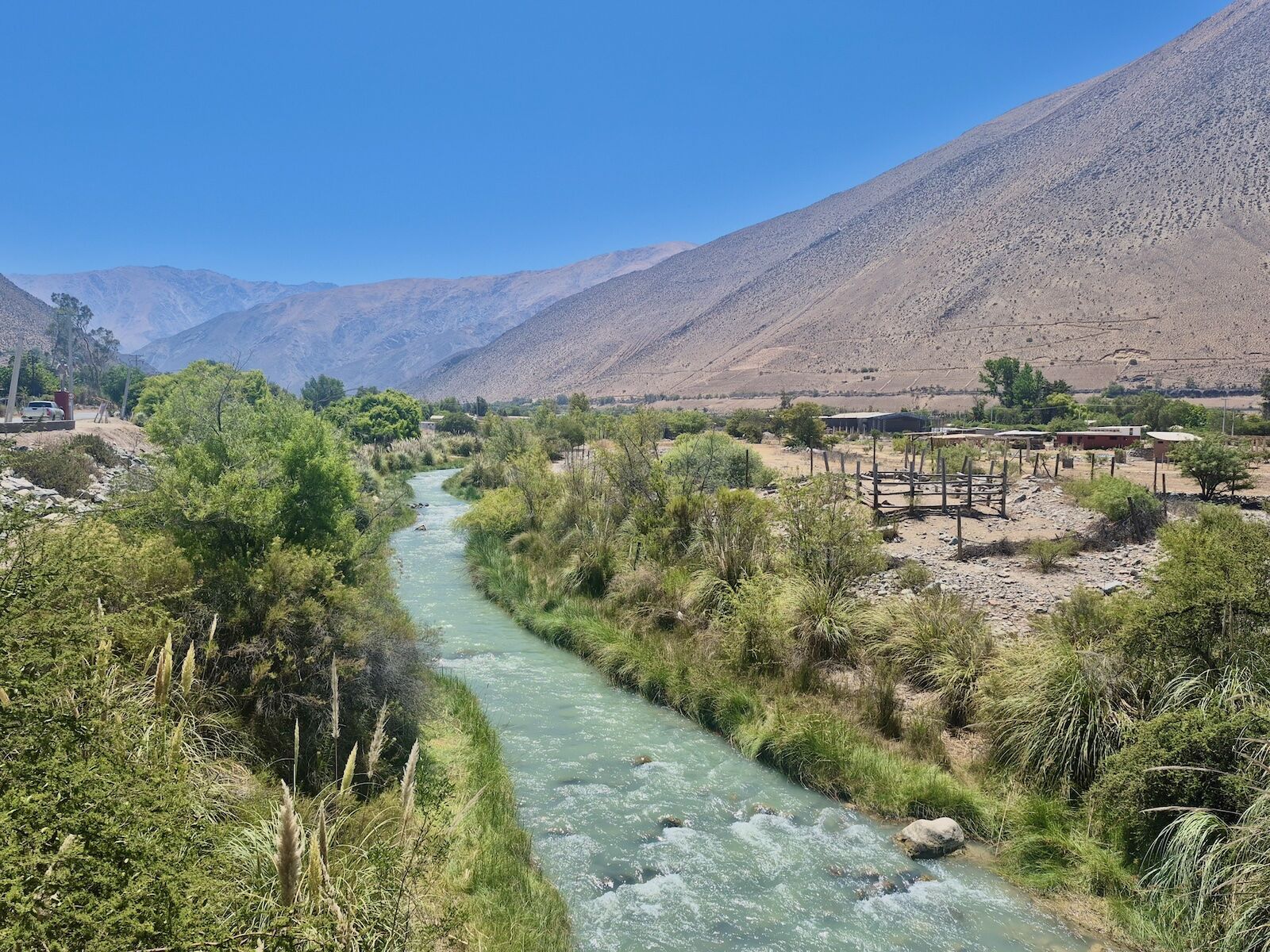
river in elqui valley, chile

Photo: Hannah D. Cooper

Standing at the southernmost end of the Atacama Desert, Chile’s Little North shares its neighbors’ famously inky skies. Elqui Valley stargazing tours typically comprise an astronomical talk paired with a telescope viewing, washed down with a pisco sour. A handful of the observatories and open-air facilities offer bilingual experiences, and it’s even possible to visit one of the high-tech facilities used by scientists and space agencies; northern Chile is now considered the global capital of astronomy.

Elki Magic includes round transport to their observation site on the outskirts of Vicuña, where you’ll take in the celestial show using a mix of naked eye study and motorized telescopes. If you venture deeper in the valley, Turismo Migrantes runs similar stargazing excursions with transfers to and from Pisco Elqui. Bilingual experiences are staged in a clay-built amphitheater with a focus on storytelling and, again, a combination of naked eye and telescope techniques.

For a more scientific perspective, the Galileo Observatory and Pangue Observatory host bilingual tours using Dobsonian reflectors and computerized trackers. The Alfa Aldea Observatory meets in the middle, combining an audiovisual experience in the dome with the use of large-aperture telescopes in the outdoor arena. For all three, it’s essential to reserve in plenty of time to guarantee an interpreter.

Last but not least, the Cerro Tololo Inter-American Observatory is open to the public on Saturdays during daylight hours. Guided tours focus on the Victor M Blanco Telescope and shed light on current research projects in deep-sky astronomy and engineering. Spots are free but they do tend to get snapped up months in advance, and you’ll need to brace yourself for the elevation (7,200 feet).

Tour or not, I recommend staying up to check out the night sky; even without a telescope, you can see the Milky Way, the Magellanic Clouds (large and small), and passing satellites. My Airbnb host tipped me off that the hours between 12:00 AM and 3:00 AM are prime time for skywatching — that’s past my bedtime, but setting the alarm to peek up at the heavens was worth it. The app, Stellarium, will help you make sense of what’s happening in the skies.

Route of Gabriela Mistral, Cochiguaz, and the magic of the Elqui Valley

street art in elqui valley, chile

Photo: Hannah D. Cooper

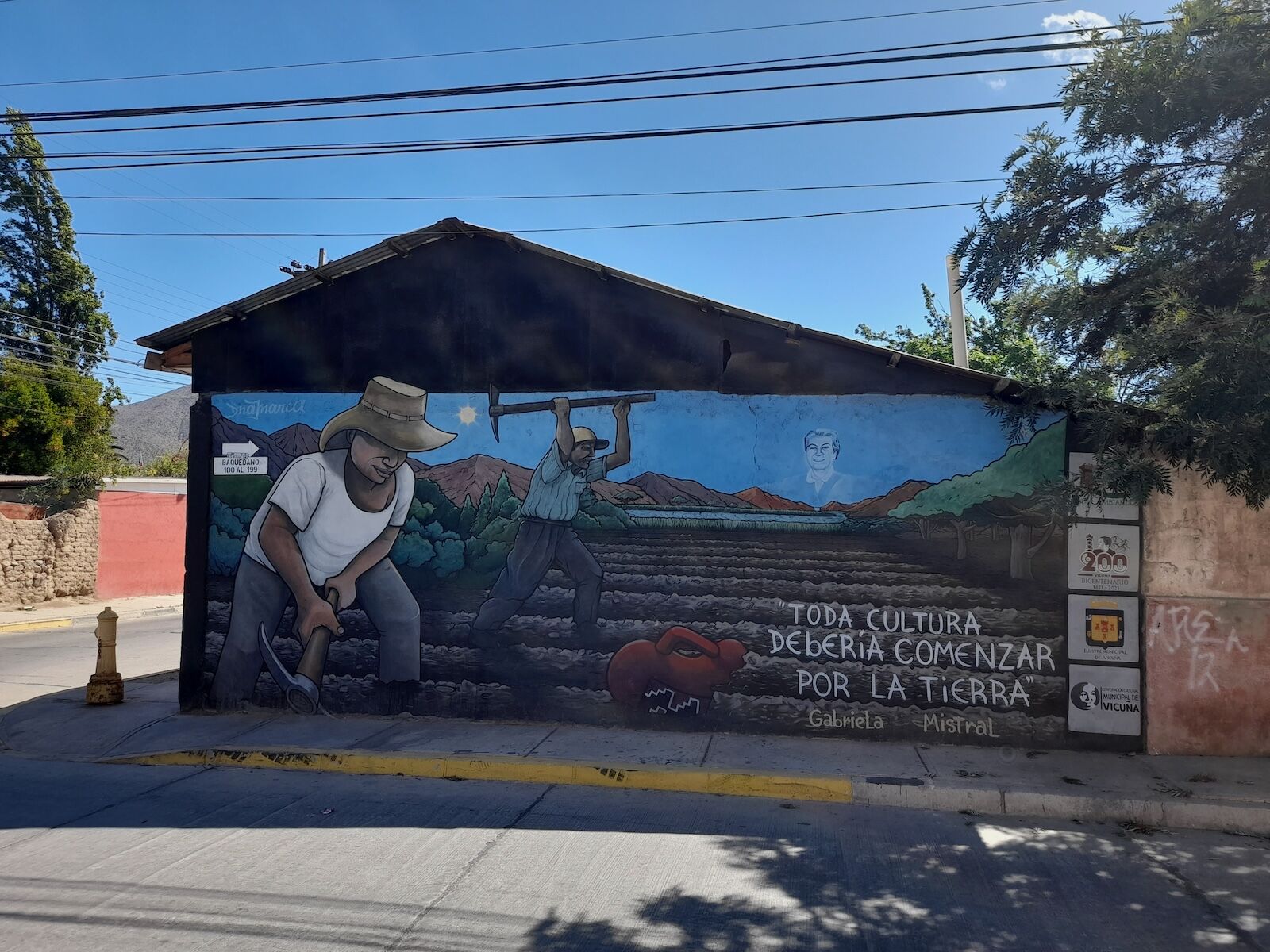
Twenty-six years before Pablo Neruda became the international face of the Land of Poetry, his mentor Gabriela Mistral pipped him to the post as the first Latin American to scoop the Nobel Prize for Literature. Born in Vicuña in 1889, Mistral’s hometown is fiercely proud of her lineage, and its Gabriela Mistral Museum is integral to learning about her personal life, poetry, and diplomatic pursuits. Admission is free, and you’ll appreciate a translation app like Google Lens for reading the material. The same applies to Monte Grande’s Gabriela Mistral Schoolhouse Museum, which documents the poet’s rural upbringing and what prompted her love of education. Mistral’s resting place lies a short walk from her former school.

This mystical valley also has a growing reputation as a wellness and esoteric hub, with its quartz ranges carrying an energy considered the counterpart to Tibet. A sliver of green following the Río Cochiguas connects Monte Grande with the hamlet of Cochiguaz, where local lore talks of vortexes and UFO sightings.

Culminating at the Stupa of Enlightenment, Chile’s largest Buddhist monument, this scenic pass showcases the natural beauty of the Elqui Valley at its finest and may be explored by bicycle with Turismo Migrantes. There is a swimming spot popular with valley residents near the start of the road while a string of campgrounds flank the riverbed. Yoga classes, aura readings, quartz healing, and other energy-centered experiences are concentrated around Pisco Elqui, Alcoguaz, and Cochiguaz.

Getting to and around the Elqui Valley

scooter on street in pisco elqui, chile

Photo: Hannah D. Cooper

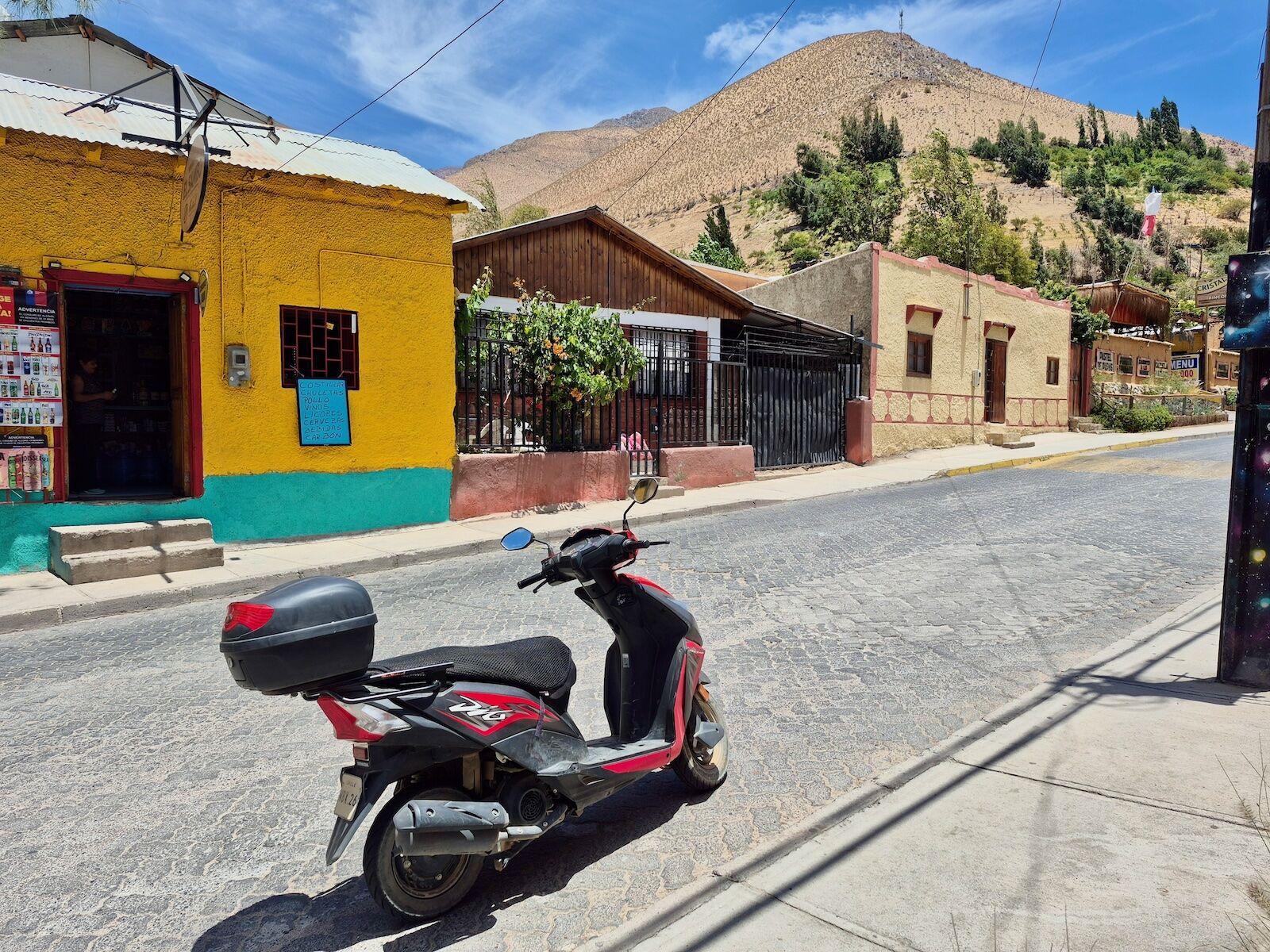
The best way to get around the Elqui Valley is with a rental car, picked up from La Serena’s La Florida Airport, which has connections with Santiago and Calama (the gateway to the Atacama Desert). The fastest buses, operated by Turbus, take six hours from Santiago. For the most part, a regular sedan does the trick in the Elqui Valley and for the drive to Cochiguaz. Consider hiring a high-clearance vehicle if you’re staying somewhere remote or plan to drive yourself to any observatories — it’s wise to check with your Airbnb host or hotel first.

Public buses link La Serena with Vicuña and Pisco Elqui; these can be flagged down anywhere on the main road. Shared taxis (collectivos) are readily available in Vicuña, while Airbnb hosts and hotels can provide contact numbers for drivers. Hitchhiking is another option; the valley is safe, and it’s a common way of getting around.

Where to stay in the Elqui Valley

plaza in pisco elqui, chile

Photo: Hannah D. Cooper

We hope you love the Elqui Valleyd! Just so you know, Matador may collect a small commission from the links on this page if you decide to book a stay. Listed prices are accurate as of the time of publication.

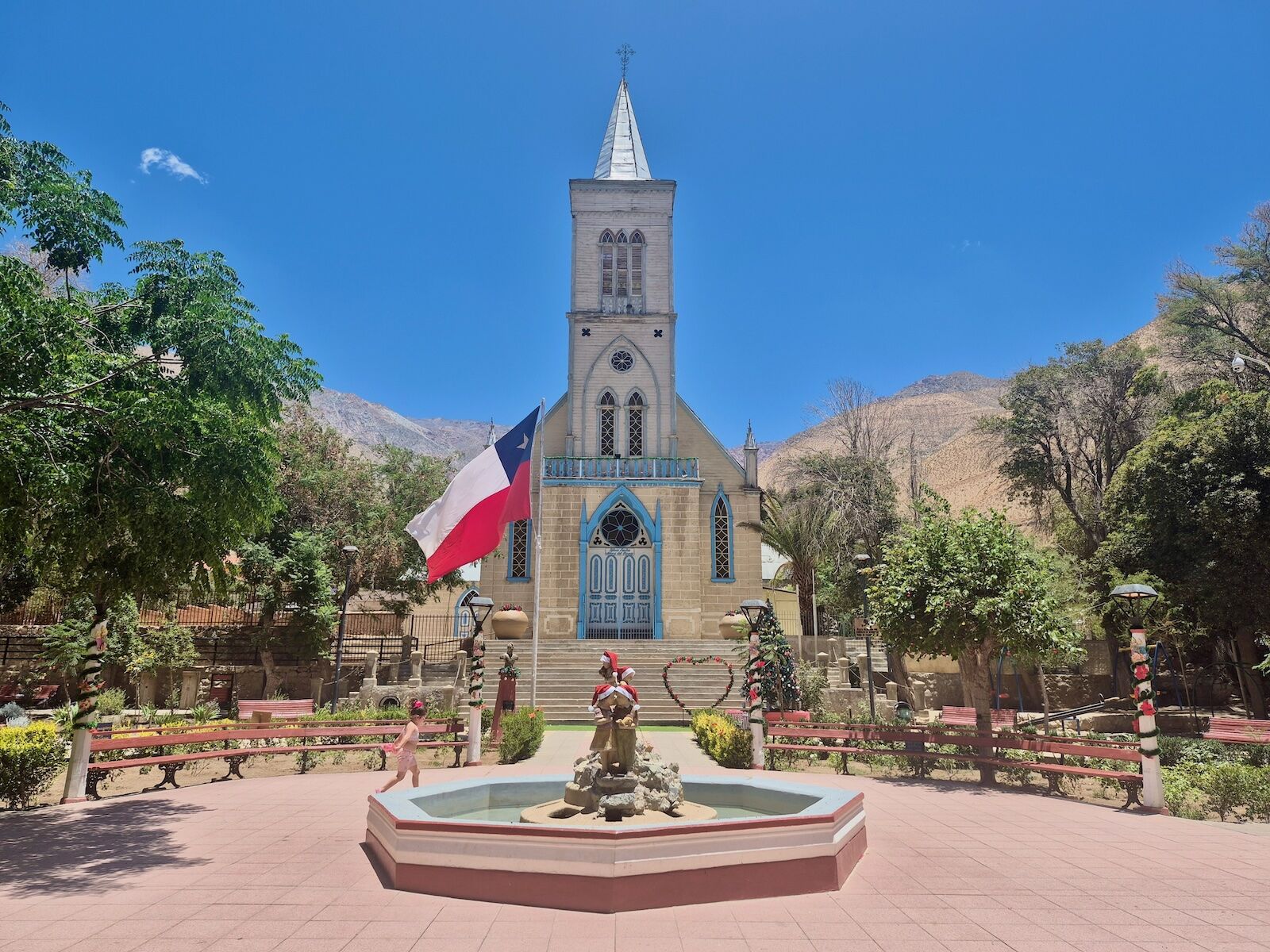
Accommodation is scattered across the Elqui Valley’s villages, with an array of secluded cabins, camping sites, boutique guest houses, and a clutch of luxury hotels. Vicuña, the largest town, has you covered for amenities and is more practical for travelers without a car. However, the real beauty lies in the Paiguano province in the towns of Pisco Elqui, Monte Grande, Cochiguaz, and Alcoguaz.

Hotel Dorys de Lourdes is the most lavish place to hang your hat near Pisco Elqui. Modern rooms have terraces, and the property has a spa, pool, and mini golf course. For off-the-grid bliss, stay at the Puma Cottage in Horcón, which is a short drive from Alcoguaz, a lush green corridor at the southernmost end of the valley. This self-contained adobe home hides amid a private vineyard and has a wood-fired hot tub and telescope exclusively for the guests. The host couple, both fluent in English, reside in a separate building and are proactive at sharing local tips.

Closer to Vicuña, this cabin under the stars has a mini observatory in the loft, with a pullout couch for stargazing in comfort. As one of three side-by-side rentals sharing a communal garden with hammocks, this is a good shout for either a couple or a group. Breakfast and bicycles are available for an additional fee. Hotel Halley is a charming hotel in the heart of town, with historic architecture and rooms overlooking a quiet street. The grounds have a shared barbecue area and swimming pool.

As the Elqui Valley experiences year-round sunshine and steady temperatures, it can be visited in all seasons. Winter evenings (June-August) are brisk, but these months, avoiding the full moon, have top-tier stargazing. Summer (December-February) is best for river bathing and camping, while spring and fall are most suitable for hiking, biking, and horseback riding. Early spring can coincide with seeing Chile’s flowering desert in Llanos de Challe National Park.

Discover Matador

Save Bookmark

We use cookies for analytics tracking and advertising from our partners.

For more information read our privacy policy.