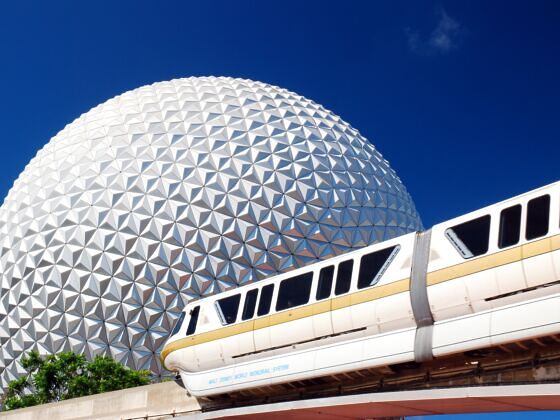
The monorail glided in silence above the central Florida palms, and I didn’t think much about it. I was seventeen, sunburned, and entirely preoccupied with the girl who had just stepped on the train behind me. Her name was Melissa. She was sixteen, from Pennsylvania, with curly brown hair and a laugh so uncontained it carried clear across the monorail stop. I heard it before I ever saw her face. She’d arrived with her best friend, whose family made an annual pilgrimage to Walt Disney World in Orlando. I’d come with two guys from my high school, one of whose family held a timeshare at the resort. We were strangers tossed together in the sweat of a Florida summer, connected by nothing more than a train stop on a humid morning and a mutual plan to spend the day at Epcot, the future forward theme park that was intended as Walt Disney’s vision of what cities could be. And of course, a charming laugh that made a seventeen-year-old turn around.
The New Case for Epcot: Disney's Vision of the Future Is More Necessary Than Ever
She clearly noticed she’d caught my attention. We spent four or five days together. Vivid, fleeting days I’d never again match in young love. 25 years later I visited Epcot again during a work trip to Florida, inspired to learn more about Disney’s vision of an urban utopia as much as by the desire to eat Moroccan flatbread and then walk a block to drink a German beer at the park’s World Showcase.
Memories of my prior trip popped up as I passed by where they’d happened – riding Spaceship Earth together, strolling the international pavilions hand in hand. But here is what strikes me now, looking back: the train that brought us together was part of something Disney had genuinely believed in. Disney World’s internal transit network includes the monorail, ferry boats, gondolas, and miles of bus routes. It moves roughly 50 million visitors a year across a property the size of San Francisco. The system is, by any reasonable measure, one of the most successful transit systems in the United States. The park at its center, Epcot, was built to be the proof of concept for something far more ambitious: a working city where highly mobile citizens could finally live the way Disney believed they should.
Walt Disney designed Epcot to be a future-city prototype
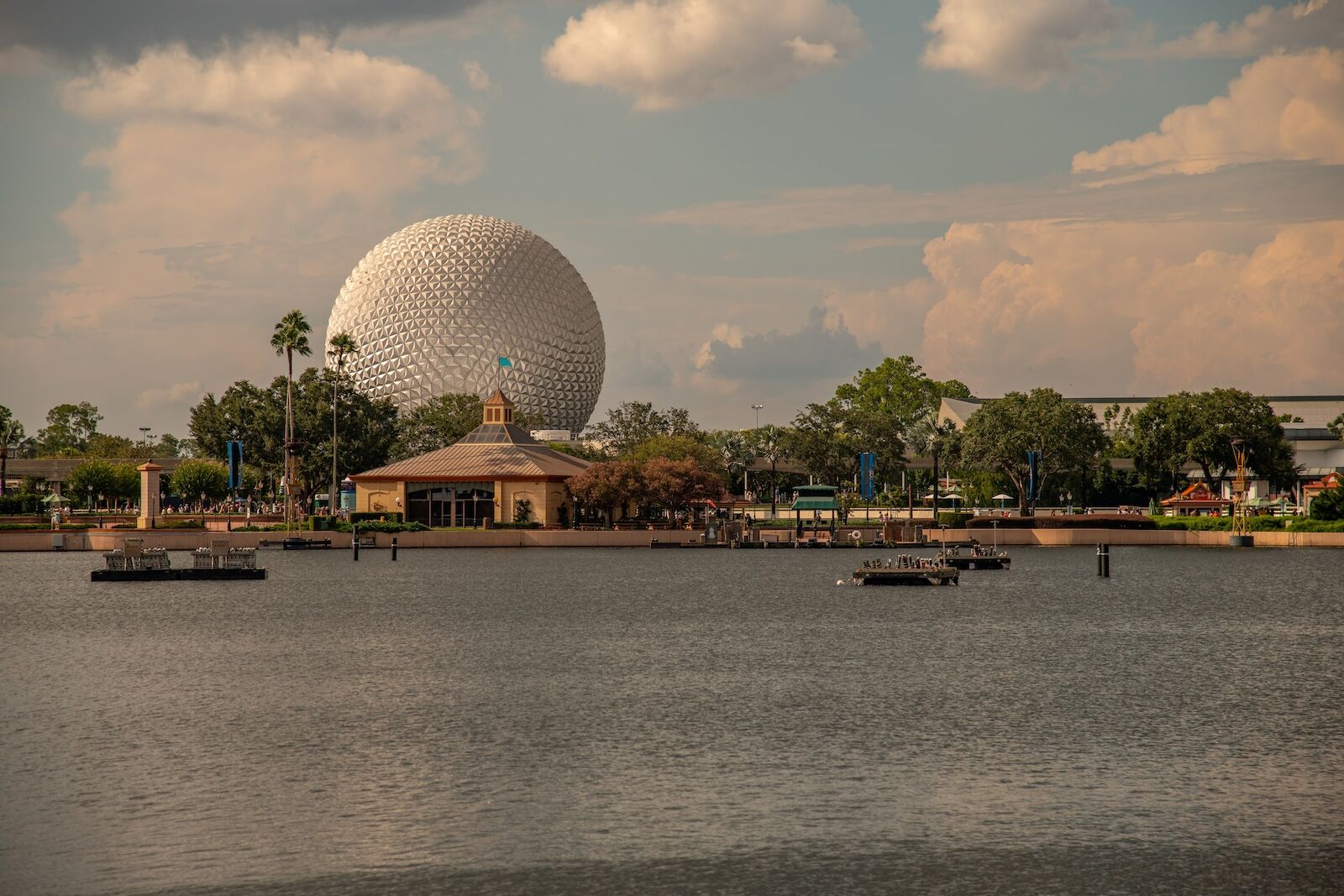
Photo: dorengo5 /Shutterstock
Disney’s Experimental Prototype Community of Tomorrow (EPCOT) was intended to be an actual city that would constantly evolve, showcasing the best of urban planning from around the world alongside incorporating advanced transportation and continuous innovation. That vision never materialized into an actual city, but the park that’s there now stands as a testament to Disney’s vision of harmonious living. Given the current hellscape of headlines we’re bombarded with daily, this vision seems far beyond reach. But this is why, beyond my own nostalgia, Epcot feels more relevant now than it must have when it opened in 1982.
In the final years of his life, Disney became consumed by the problems of American cities: the congestion, the sprawl, the racial division, the complete capitulation to the automobile. He’d watched Los Angeles hollow itself out in service of the freeway, and thought we could do better.
His vision was a living city of 20,000 residents built on the Florida swampland he’d quietly assembled. It would be climate-controlled, dense at its center and green at its edges, its residents zipping beneath streets on a network of automated PeopleMovers while pedestrians claimed the surface above. Private cars would be necessary only for “weekend pleasure trips,” as Disney himself put it. No unemployment, Disney promised, with characteristic audacity. No slums. A radial layout that kept work close to home and open space everywhere. In short, Disney did not envision Epcot as an amusement park, but as anecdote to what he saw as the decline of American cities.
Disney died in December 1966, before a single acre of Florida ground was broken. Without him, the company had no appetite for the liability of governing an actual city. The Florida legislature had already granted Disney extraordinary powers of self-governance, but managing real residents with real complaints was a different matter than managing vacationers. What opened in October 1982 was a World’s Fair made permanent: a circle of pavilions, half devoted to technological optimism and half to an idealized international village, surrounding a silver geodesic sphere that housed a gentle ride through the history of human communication.
Why Epcot is the most important US theme park to visit
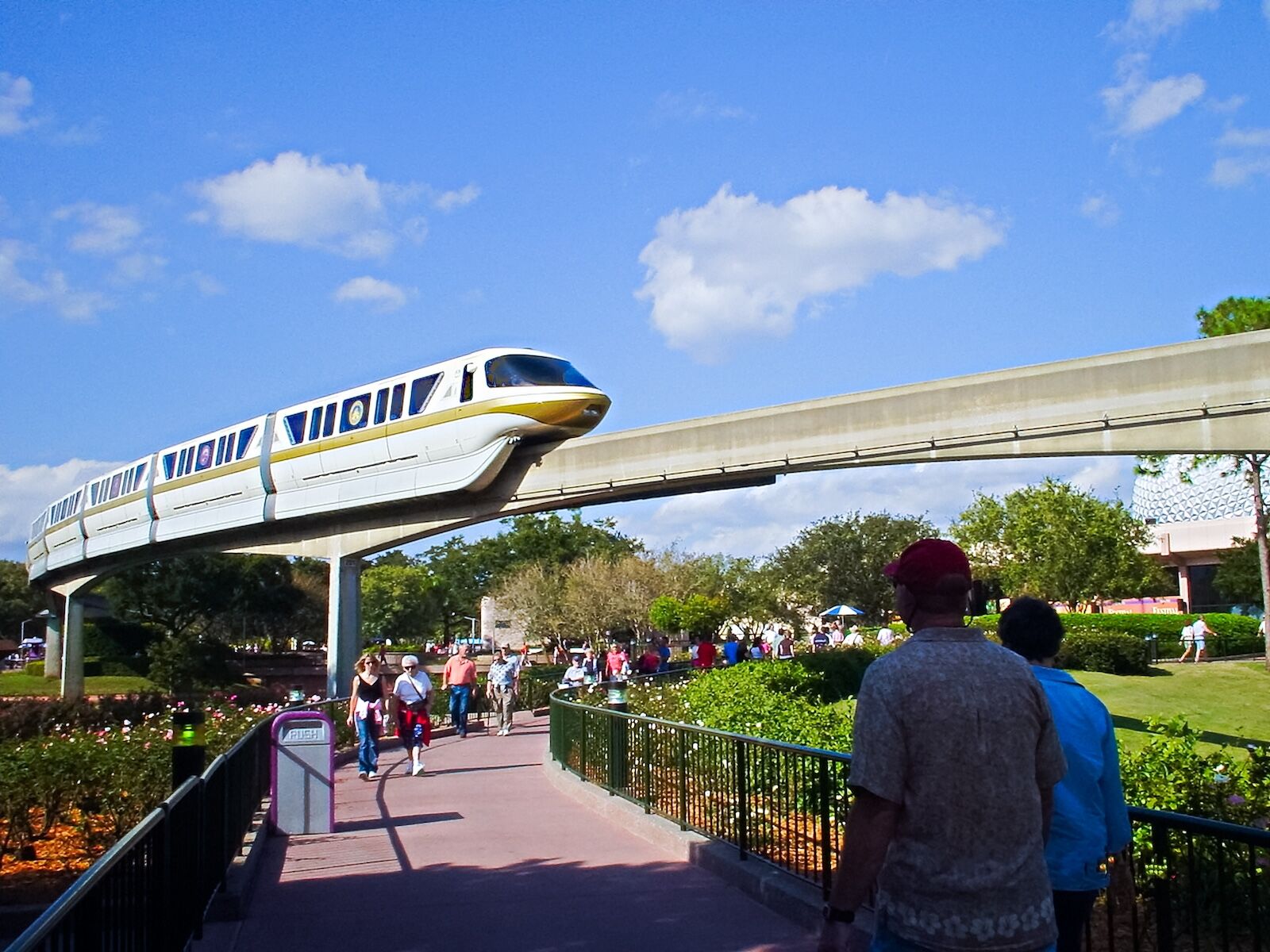
Walt Disney envisioned a radial city connected by electric transit and featuring extensive pedestrian pathways. Photo: Usa-Pyon /Shutterstock
Spaceship Earth was, and remains, remarkable. The ride now concludes with a vision of the future of work – once where lifestyle design and personal passion plays as big a role as the skillset on the offer. As I rode through the sphere I felt the same tinge of hope I felt while digital nomading in Bali or the day the solar panels were installed on the roof of my house in Colorado: that I do have a choice in the future, and that my values can, in fact, create lasting change.
I found the rest of Epcot equally inspiring. The theme park that exists today still manages to demonstrate much of Walt’s original thesis (minus, obviously, the permanent residents). Consider what Epcot actually is: a walkable, mixed-use environment where tens of thousands of people spend entire days on foot, moving between attractions, restaurants, and public gathering spaces without once touching a car.
The transit that delivers them is clean, frequent, and free. The park’s famous World Showcase brings eleven nations into a single promenade, their pavilions staffed largely by citizens of those countries, their food and drink genuinely representative (in an obviously basic manner) of somewhere real. On any given evening, you can drink a German Märzen at the Biergarten, walk a hundred yards to knock back a Kirin at the Japan pavilion, then argue about which was crisper over a crêpe in France. The international village that American cities talked about building and never did is here, if in theme-park miniature, operating at scale every day.
Experiencing Disney’s vision on a day trip to Epcot
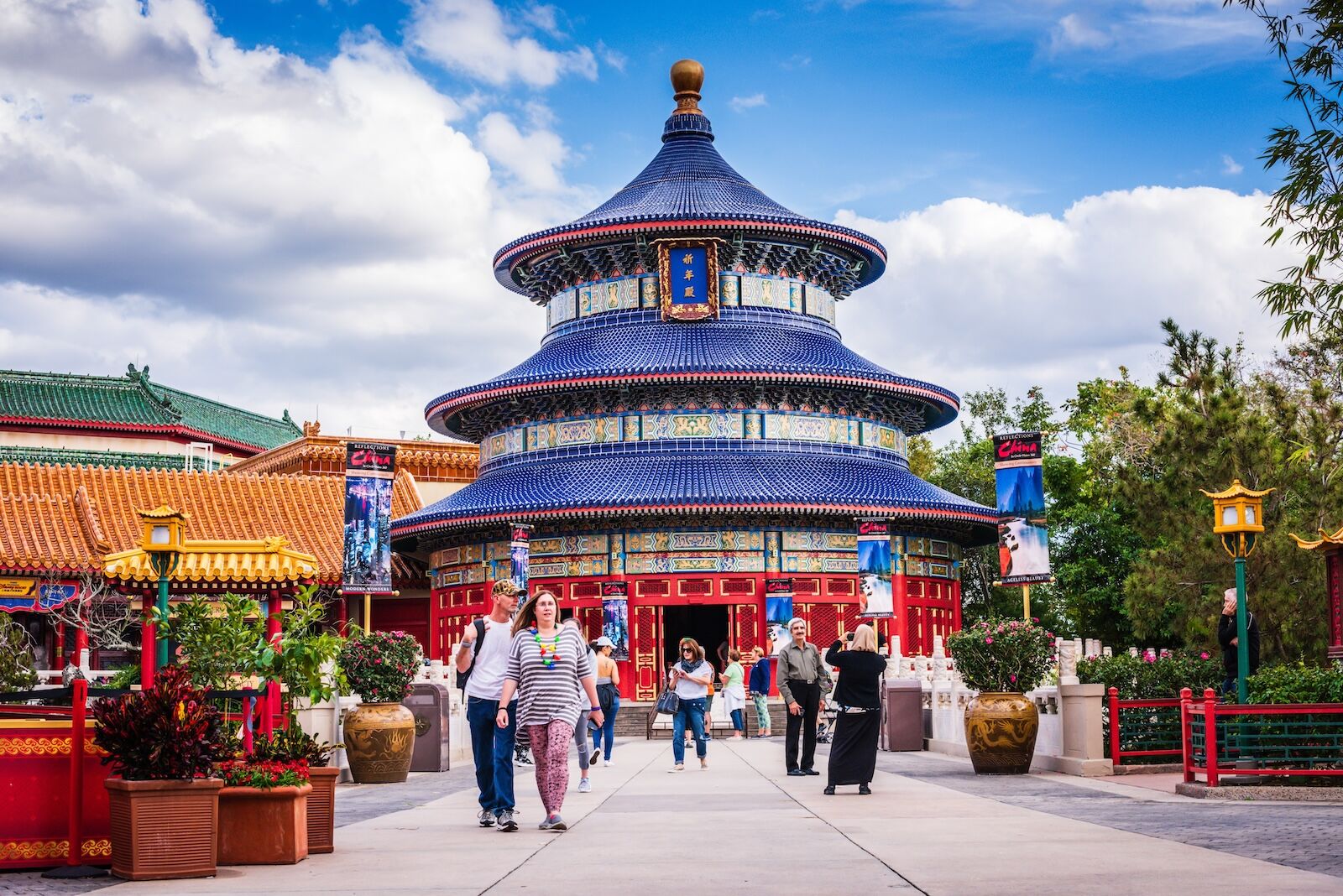
Photo: Sandra Foyt /Shutterstock
Back inside Epcot’s silver sphere, the ride called Spaceship Earth carries you slowly through tableaux of human history: Phoenician sailors, medieval monks, Renaissance printers, twentieth-century broadcasters. The narration is earnest to a fault, its faith in human ingenuity and collective progress easy to mock but hard to dismiss. Near the top, just before the descent, you pass a family watching a flickering television, and the ride asks you to imagine what comes next.
What comes next, in the park itself, is Test Track, an automotive simulation that culminates in a run around a high-speed circuit, your virtual concept car whizzing along a curvy track before depositing you in a showroom housing the future of electric transportation. Nearby, the Guardians of the Galaxy coaster launches riders backward into darkness as clips featuring characters from the franchise play across on giant screens. This was the ride the group I attended with most wanted to do, and we got there right at opening to beat the line.
The World Showcase, located on the other side of the park, hosts 11 permanent pavilions, each demonstrating the food, drink, and wares of one country. The castle-like architecture depicting the Fairmont hotel brand towers above the Canadian pavilion. The Japanese pavilion features a zen garden. It’d be tough to leave any without wanting to visit the country itself, or at least do a deep dive into its cuisine. Empathy and acceptance are center stage throughout. The showcase and park’s other attractions offer the same underlying premise that Spaceship Earth does: the future is something you design, not something that happens to you. That, and the pillar of human decency, which is that we’re all in this together, so we may as well celebrate each other.
That’s the argument Epcot has always been making. Cities don’t have to be the way they are. Differences don’t have to define us. The monorail car that Melissa and I shared that summer morning back in 2001 wasn’t inherently special. We were teenagers and had a day of unguarded adventure on our minds. But the Disney transit network did what good transit always does: it put two people in the same place at the same time who had no other reason to meet, and it let something happen.
This is why Epcot, and Walt Disney World more broadly, is such an important place to visit, even if theme parks and big crowds aren’t your thing. Epcot is a place designed for people to be together in public, having the experience of a world that is larger and stranger and more delicious than any one drive-thru window. It’s proof that broad perspectives help humanity move past its differences, and that innovation and ingenuity can solve great challenges. Disney’s city never got built, but the argument for it gets stronger every year. 