After more than a century of being entirely off limits, a beautiful stretch of the Northern California coastline is once again open to the public. The Estero Americano Coast Preserve, a 547-acre swath of undeveloped bluffs, tidal wetlands, and sloping grasslands, is a win for conservation, located just south of rural Bodega Bay in Sonoma County. Prior to the opening, the land was private ranchland — but now, it’s an opportunity to walk through one of Northern California’s most well-preserved coastal landscapes.
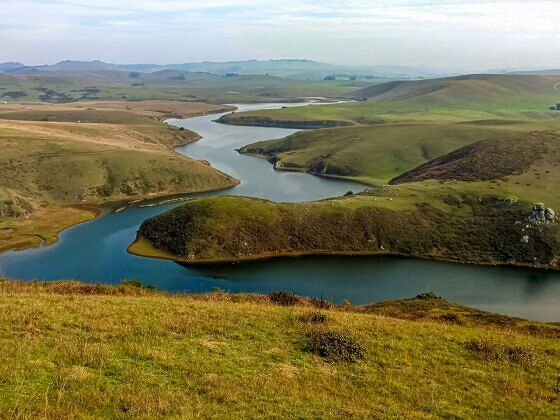
Photo: The Wildlands Conservancy
After 100 Years, a Protected Stretch of Sonoma Coastline Reopens to the Public
The reserve was closed for more than 100 years
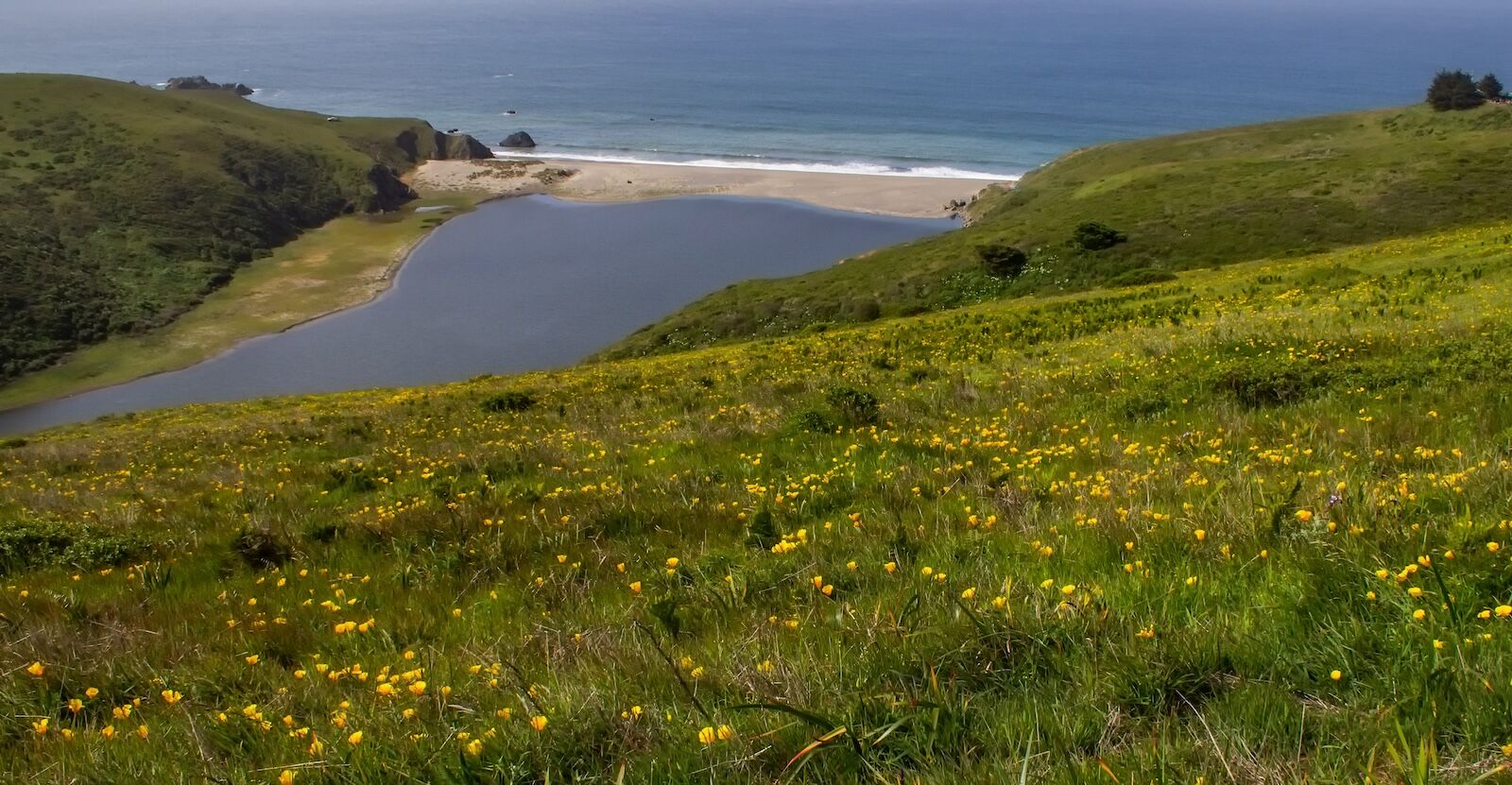
Photo: The Wildlands Conservancy
What is now the Estero Americano Coast Preserve was long part of a private agricultural holding called “Bottarini Ranch” or “Estero Ranch,” depending on the record. During this time, it was closed to access, offering only ranchers and their cattle the opportunity to take in the dramatic views. But in 2015, the Wildlands Conservancy (a nonprofit responsible for many large-scale conservation projects across California) purchased the land using a combination of private donations and public grants. It ran a trial run in 2024 and opened permanently to the public on January 10, 2026.
What makes the preserve special?
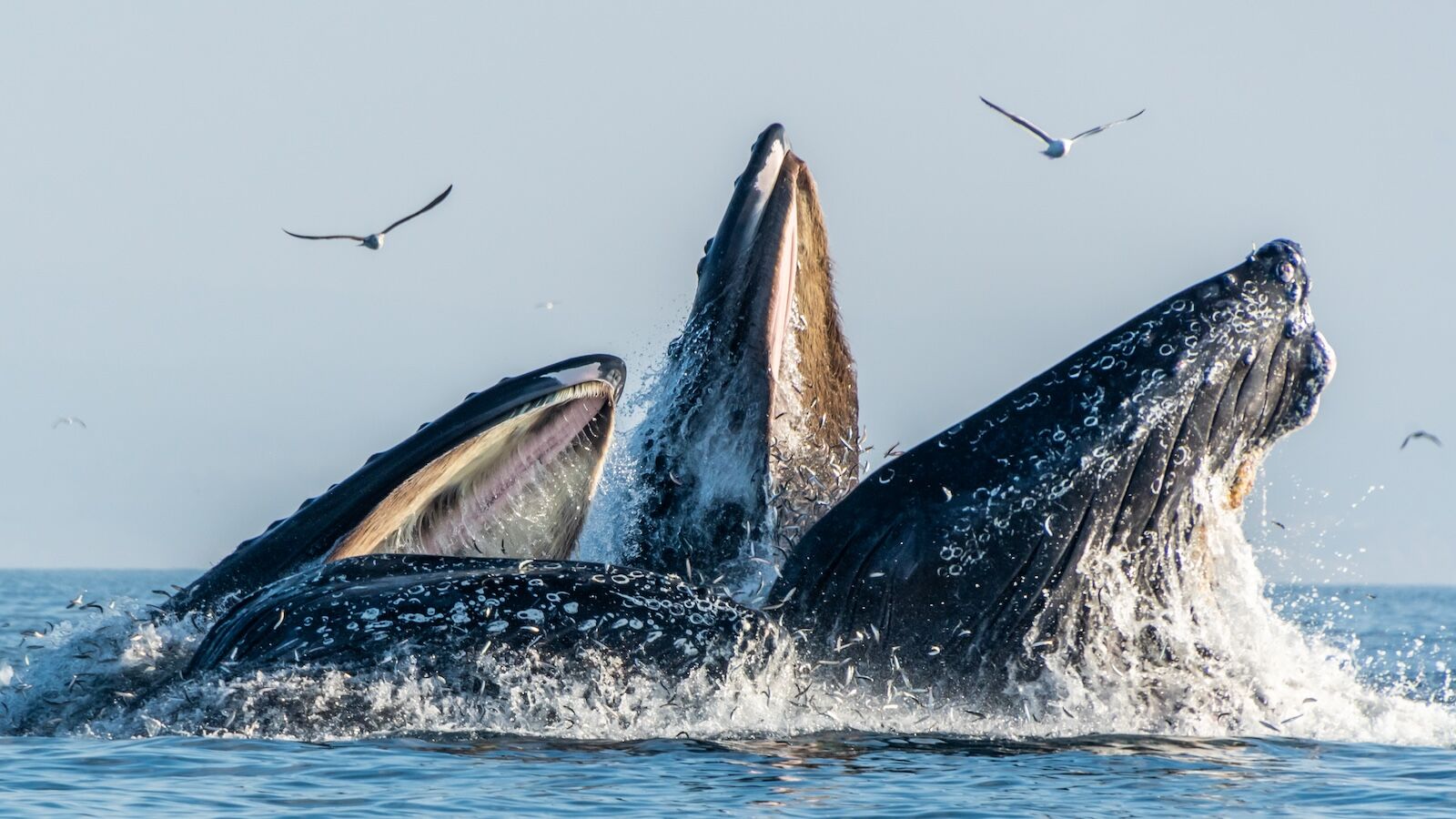
Humpback whales traveling through the Greater Farallones National Marine Sanctuary. Photo: Greater Farallones National Marine Sanctuary/Douglas Croft
The new reserve offers views from vantage points previously off limits to hikers. From the highest point of the reserve, views open south toward Point Reyes National Seashore, and it offers easy access to a sandy beach at the mouth of the estuary that divides Sonoma and Marin counties.
The reserve is in the Farallones National Marine Sanctuary, a federally protected stretch of the Pacific that protects everything from open ocean to rocky reefs and kelp forests. The sanctuary is known for its cold water that brings nutrients to the surface, supporting a complicated marine food web. However, that food web is heavily impacted by what flows into the ocean from land, and protecting the grasslands and wetlands on land leads to healthier ecosystems offshore.
Estero Americano also contains one of the last undeveloped coastal estuaries in Northern California. Essentially, it’s a transition zone between freshwater streams, tidal marshes, and open Pacific Ocean. These areas are rare and important to both land and ocean ecosystems, serving as nurseries for fish, feeding grounds for birds, and migration corridors for species that move between waterways. The land also protects some of the last remaining habitat for species on the Endangered Species List, such as Central California Coast steelhead and tidewater goby.
How to visit the Estero Americano Coast Preserve
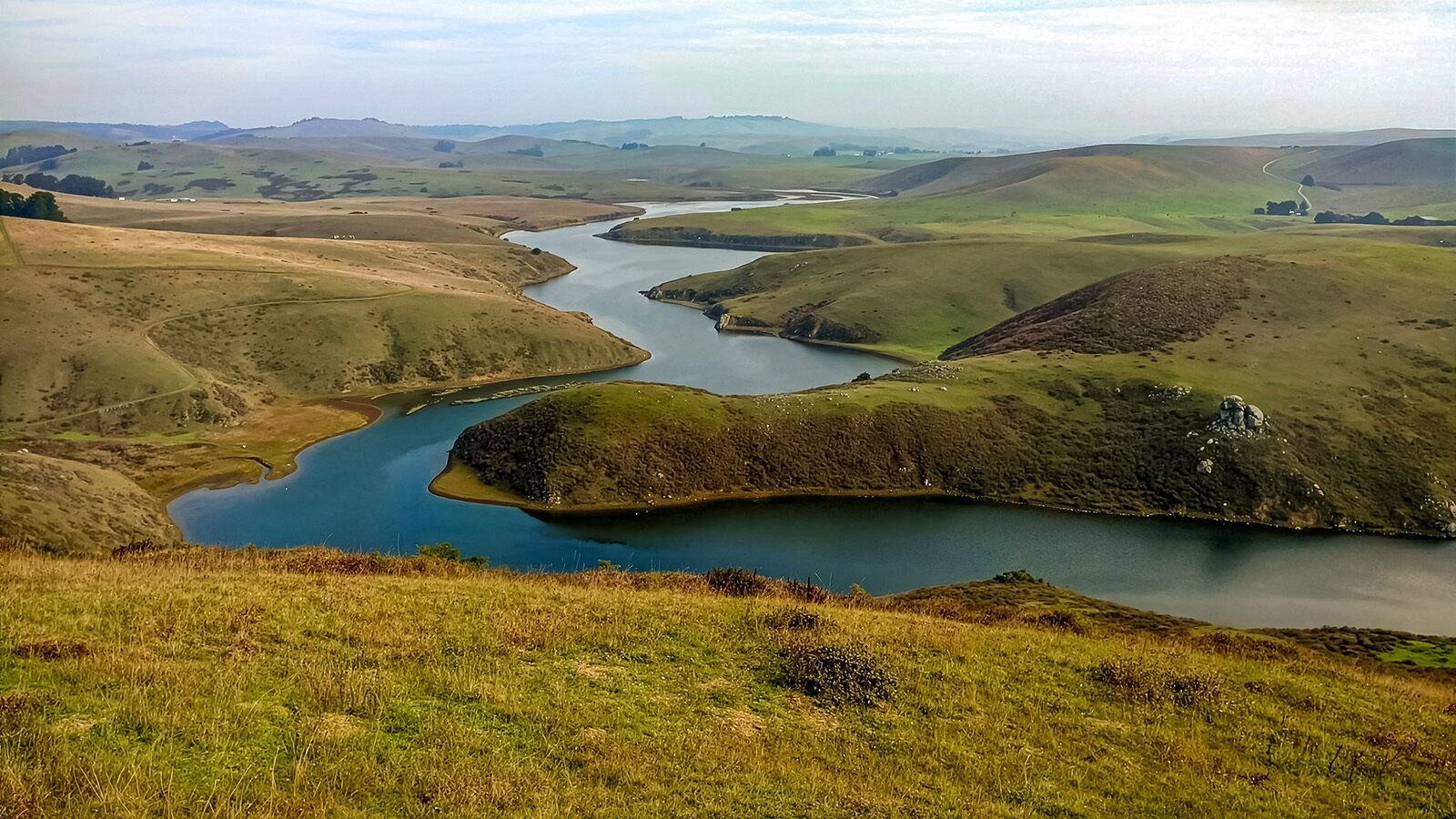
Photo: The Wildlands Conservancy
Visiting the preserve is easy to do for anyone traveling along the Sonoma Coast. It’s accessed by foot via the Shorttail Gulch Coastal Access Trail in Sonoma County Regional Park. The parking lot is just off California’s famous Highway 1, and Wildlands Conservancy signs lead to the border of the Estero Americano.
While in the park, plan to spend a few hours walking, rather than exploring amenities. There are about five miles of signed hiking trails across wide open prairies and overlooks with coastal views. There are a few picnic spots and portable restrooms scattered throughout the reserve, but no water. Camping, biking, and horseback riding are not allowed, and there’s no concession area or visitor center. Bring everything you need, and pack out everything you pack in.
It’s an ideal place for soft-adventure activities, with blooming wildflowers in spring, whale watching in winter, and excellent tidepooling at the shore. Uphill trails lead to sweeping ocean views, while lower trails lead to mudflats and marshes. This also makes it an ideal birding location, especially for raptors, shorebirds, and seabirds such as western snowy plovers and whistling swans. For visitors who don’t want to hike, Sonoma Land Trust periodically runs separate guided kayak and raptor‑watching outings that meet just north of the preserve. Dates and details are usually listed on the Trust’s event page.
There’s no entry fee, and leashed dogs are allowed, though parts of the preserve may have grazing cattle. The park is open from sunrise to sunset, and visitors should expect little shade and potentially strong winds. Late spring to early fall offer the best visitor conditions, but fog and mud are possible year-round. 