Photo: Radu Razvan/Shutterstock

I've Attended the Tour de France Four Times. Here's What I Wish I'd Known.

France Sporting Events Cycling
by Laura Cooke Jun 1, 2026

There’s something about the Tour de France that has always captured my imagination. Watching scores of endurance athletes push themselves up brutal mountain climbs and bounce through pretty cobblestoned villages in the grueling July heat has always felt like compulsory viewing, even for a committed non-cyclist like me.

I’ve traveled across France to see various stages of the race during its three-week run on four separate Tours, with and without children in tow. During these trips, I’ve witnessed the chaos, excitement, and unforgettable sense of occasion that follows the Tour from town to town. But following the Tour has also proved a steep learning curve. It’s far more difficult than just showing up to the location of whatever leg you want to see.
I admire anyone who has the physical strength and fortitude to tackle Mont Ventoux — the legendary 6,263-foot-elevation mountain that serves as one of the most difficult climbs of the Tour. But this guide is for armchair fans without a shred of lycra in their closets.

So while I can’t advise the best routes to explore on two wheels, I can share the tips I’ve learned on making your first Tour de France-viewing trip one to remember — and as headache-free as possible.

Fail to plan, plan to fail

first time tour de france - men in paris

Men on the final stretch of the Tour de France. Photo: Victor Velter/Shutterstock

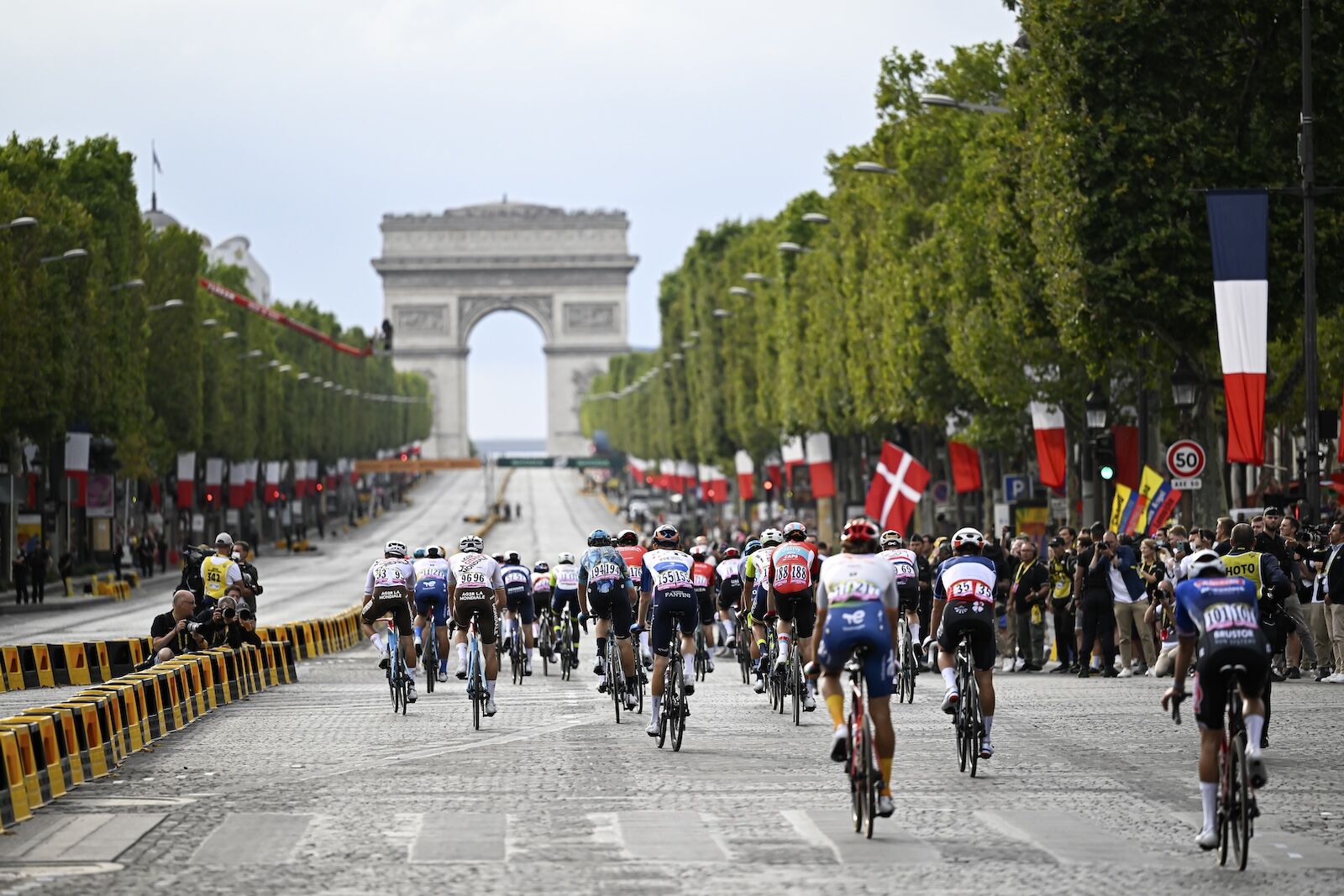
The Tour de France traditionally starts on the first weekend of July and runs for three weeks, culminating in the grand finale along the famed Champs-Élysées in Paris.

The location for this final stage is set in stone, but the other 20 stages of the tour vary from year to year. When the official Tour de France route is announced in October, you’ll need to quickly book your lodging along the route as hotels and other options generally get booked quickly. You don’t need tickets to spectate, unless you want access to some of the fenced off VIP and hospitality sections along the course.

If you’re planning multiple stops on your trip, consider whether you need to rent a car, bike, e-bike, or even an RV. Although taking the train or bus is the sustainable option, in some parts of rural France, public transport can be anywhere from sparse to virtually non-existent. Take note of the race rest days to help plan your travel or sightseeing, and do non-race-related activities on those days. Details about rest days can be found on the official Tour de France website when the route is announced.

If you’re planning to camp or take an RV in the mountains, make sure you get there a couple of days before the race is due to pass through to snag the best spot. Most towns have some designated camp areas, but you can also pitch up on the side of the road (as long as you’re not in the way of the race) to soak up the atmosphere and get a front-row seat for when the race passes through. Don’t forget that the weather in the Alps and Pyrenees can be highly unpredictable. Afternoon thunderstorms are common in July, and temperatures can vary greatly depending on the elevation. So make sure you’re prepared for anything Mother Nature can throw at you.

As a side note, it pays to be open-minded when booking accommodation. We decided on a last-minute trip to watch a stage in far-north Calais in 2022, and a lack of lodging options meant we ended up in an apartment within a senior living complex. Fortunately, the company operating this complex was also a major sponsor of the race at the time, and the lobby hosted a pop-up exhibition full of top-tier Tour memorabilia that we would have missed if we had stayed elsewhere.

Pay close attention to road closures

tour de france mountain pass

Fans crowding riders on a mountain segment of the Tour de France. Photo: rui vale sousa/Shutterstock

It’s important to pay close attention to road closures along the route. These are usually finalized in the weeks before the Tour comes to town. You can find details on road closures by keeping an eye on the official website, Tour social channels, or by downloading the Waze app. Alternatively, local tourism websites may be able to give you a breakdown on road closures and diversions for the area you are in.

Roads usually close between four and six hours before the riders come through, but mountain stages may close the night before. It varies from stage to stage.

However, even armed with details about road closures, you may find unexpected obstacles. For example, we meticulously planned our second trip to the Tour de France with our toddler and four-month-old baby, booking various accommodations along the route, taking road closures into account. But when we arrived at our rural hotel in the Alsace region, we discovered it had closed the on-site restaurant before and during the race. The nearest supermarket was closed, and the early morning road closure would have prevented us from getting to the store before it reopened. So we ended up cutting our losses and moving on to our next stop a day early, which was preferable to facing the unmatched wrath of a hungry toddler. Being flexible is key.

Choose your vantage point wisely

first-time tour de france guide - riders at start

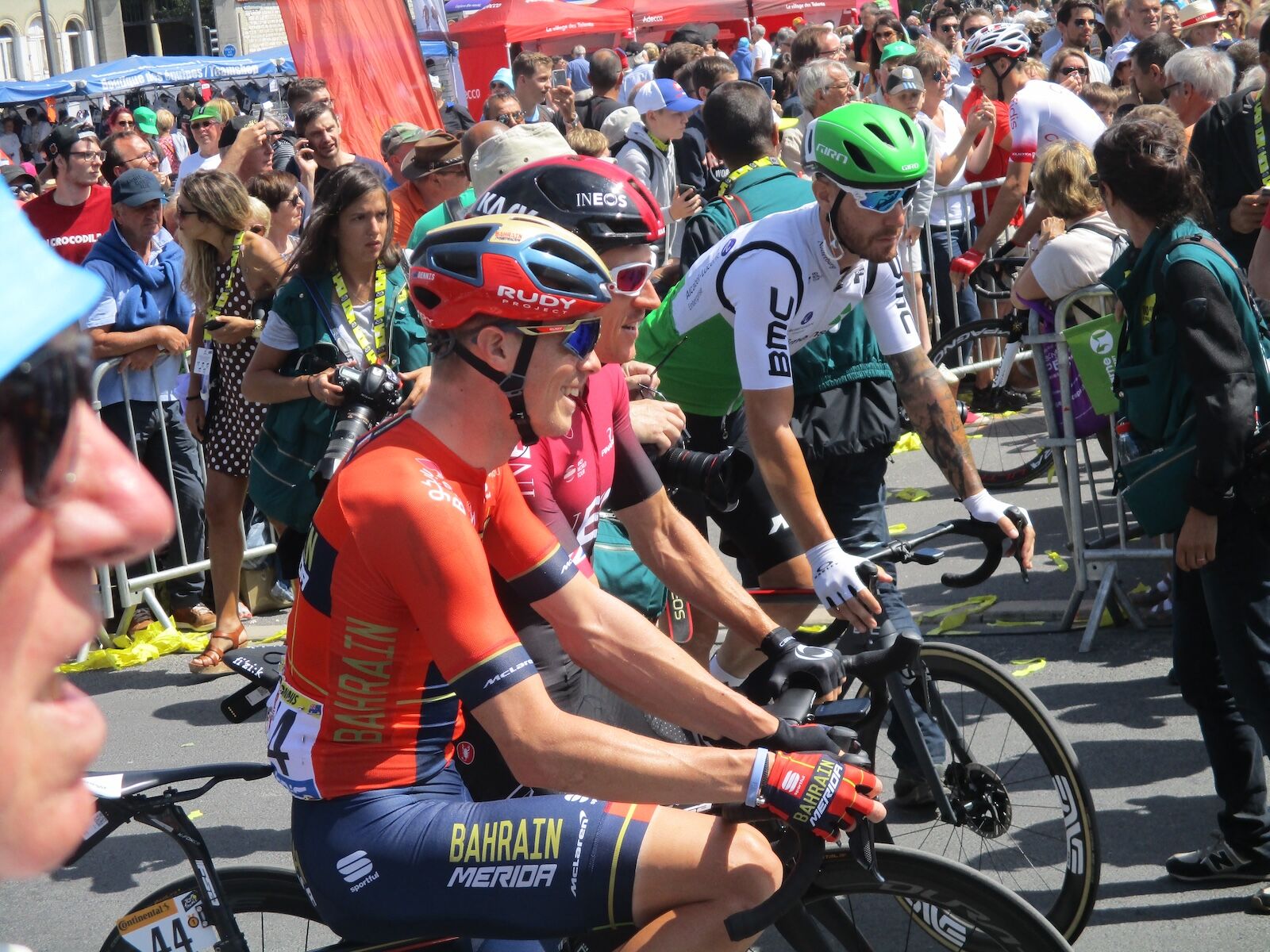
Stage starts are crowded, fun, and festive. Photo: Laura Cooke

Stage starts have a fun, festive vibe, while the stage finishes see the crowds whipped into a frenzy as riders sprint for the finish line. While both are busy, it is generally easy to get a prime spot if you arrive early enough – usually, you’ll want to arrive a few hours before the roads are closed to traffic. If you are coming by car, check the official Tour website or local tourist information sites for details of what parking lots are available for day visitors.

However, if you can, it’s highly encouraged to park further afield and make the final push to the race on foot or via public transportation. We usually try to stay near the route, arrive the day before, and walk to the course. Walking to the stage also gives you a chance to soak up the atmosphere in each town, check out the merch stalls and food trucks along the way, and even bag a few freebies from sponsors, which usually have representatives floating around each stage. If you play your cards right, you can even score a whole free meal from this. We fed our entire family of four with pesto pasta, bananas, chocolate cookies, and non-alcoholic fruity beers during a particularly fruitful trip to watch a stage pass through Boulogne-sur-Mer. It’s a great way to save a few bucks if you’re traveling on a budget.

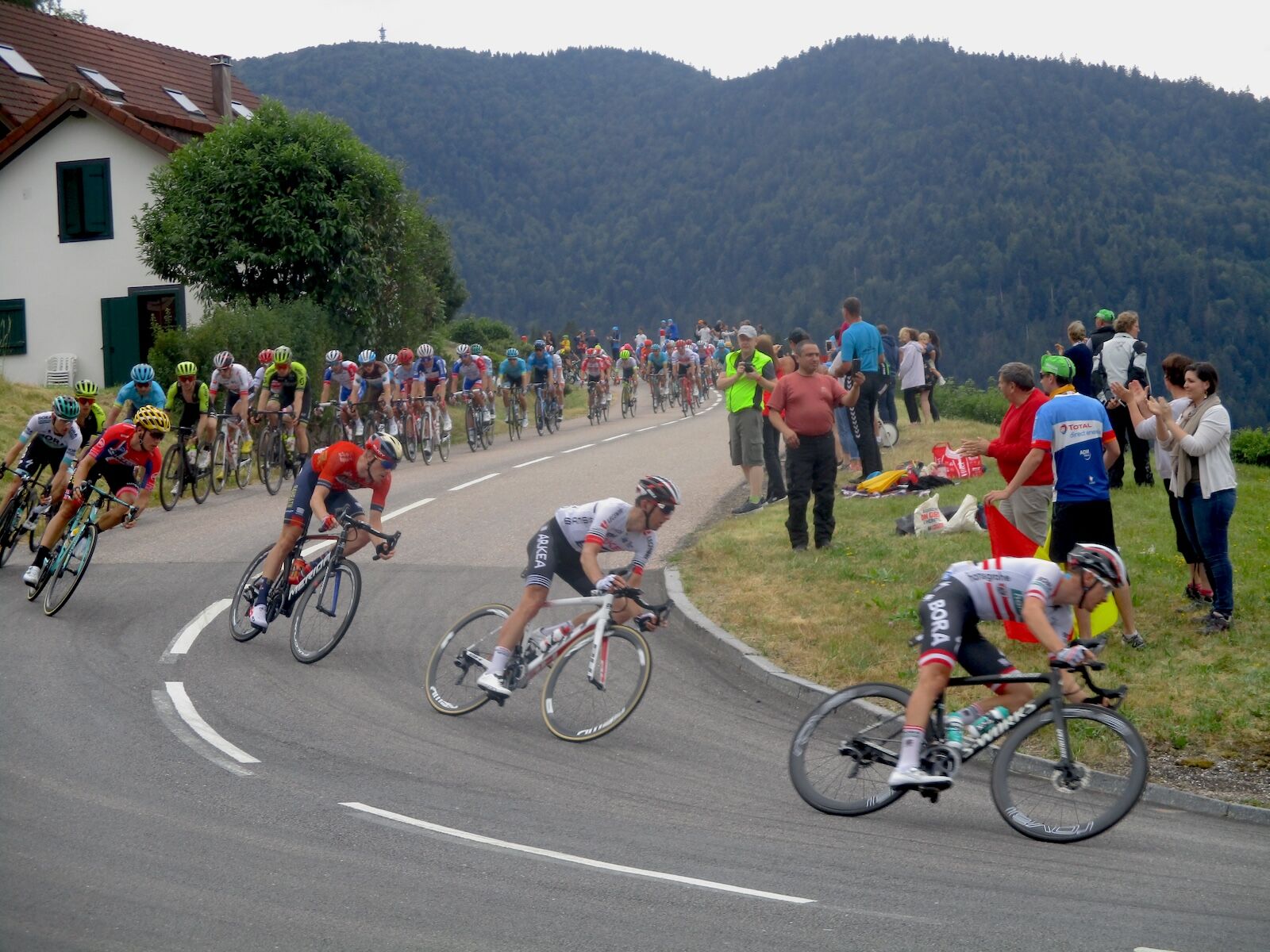
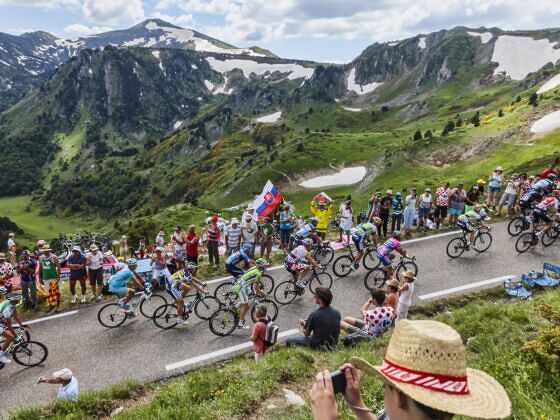
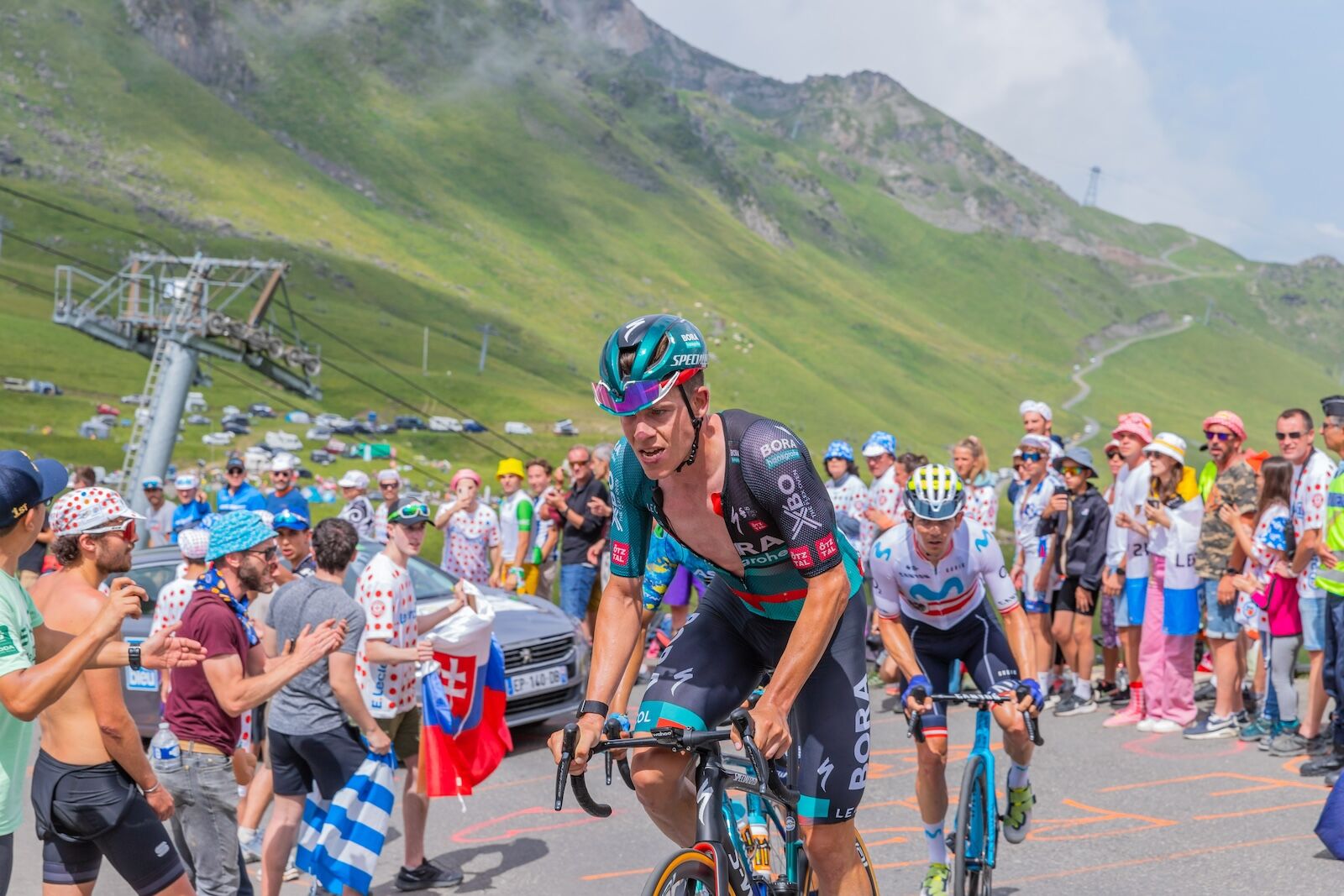
If you want to see more of the action, watch the race from near the top of a mountain pass, when the cyclists are climbing and moving at a slower pace. On flat and downhill sections, athletes are going at a blink-and-you’ll-miss-it blur. The section that includes Alpe d’Huez is a great place to watch riders climb (and has a reputation for its party atmosphere), but you’ll need to get there a few days in advance, as it gets very busy.

first-time tour de france guide - downhill segment

Watch from a fast or downhill section, and the athletes will go flying by. Photo: Laura Cooke

However, mountain stages are not for the faint-hearted. Organizers forego physical barriers as the riders approach the summit (simply because the route is too long and remote to secure them), meaning crowds on the sides naturally narrow in around the cyclists. It can put not just the riders but also the fans at risk of injury. Don’t be the fan who ends up on the news for causing a crash by brandishing a homemade sign too close to the action.

On one trip, we hiked from our hotel in the Pyrenean town of Gourette to the Col d’Aubisque mountain pass (about 5 miles round trip), but found it too crowded, too hot, and too exposed – especially for our one-year-old in a carrier. So we went back and watched as the race passed through the town instead, which meant less jostling for prime position, more shelter from the elements, and a better view of the riders. If you aren’t a fan of crowds, you may want to try a mid-stage viewing location on one of the more rural sections (if you can navigate the road closures to get out there, of course).

Don’t miss the parade pandemonium

first-time tour de france guide - parade

Photo: Laura Cooke

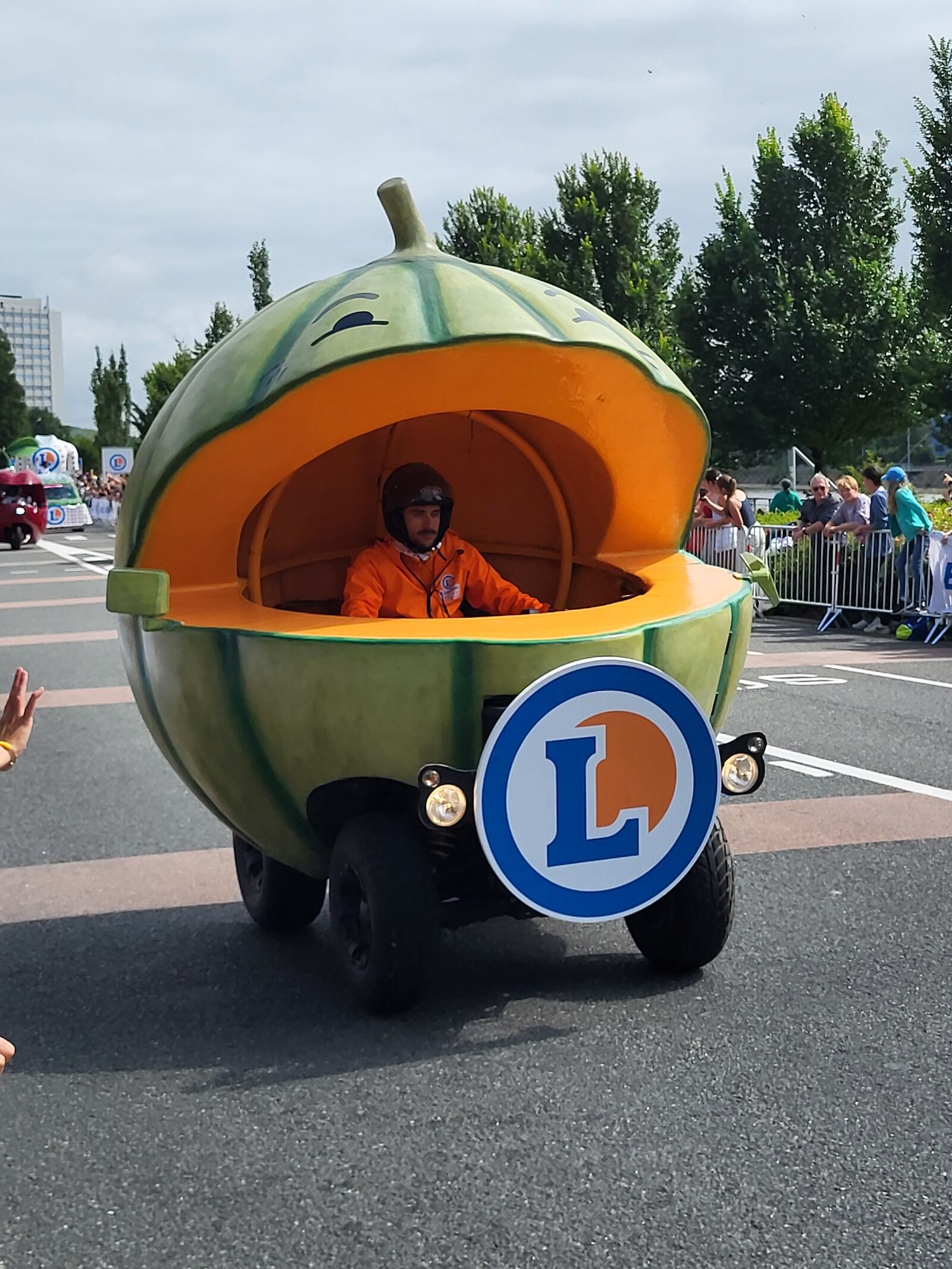
While the peloton thundering into view is a thrilling sight, don’t underestimate how much excitement a man driving a quad bike disguised as a cantaloupe can invoke in a crowd.

The bike race may be the main event, but if you’re traveling all the way to France, you won’t get the full Tour de France experience if you miss the spectacle of the publicity caravan: a colorful parade of floats featuring the Tour’s sponsors.

When the caravan appears on the horizon, usually about two hours ahead of the cyclists, social norms fly out the window as bags of candy, hats, T-shirts, bandanas, and all sorts of other goodies are liberally tossed into the crowds, accompanied by a pumping baseline and lots of cheering. Fewer crowds mean fewer strangers to tussle with, so choosing a quieter mid-stage spot away from the popular mountain climbs will maximize your chances of snagging as many freebies as possible.

In crowded areas, collecting freebies is a full-on sport. Once, a fully grown man lifted our stroller, toddler still inside, in his quest for a stray madeleine cookie that slid under the wheels. Another year, I ended up scuffling with a stranger in a bush over a Stroopwafel as my bemused kids looked on.

But is it really worth leaving your dignity in the gutter for a bag of gummy bears, and a novelty rain poncho designed to look like a giant chicken?

Answer: almost always yes.

Enjoy the art

first-time tour de france guide - winners statues

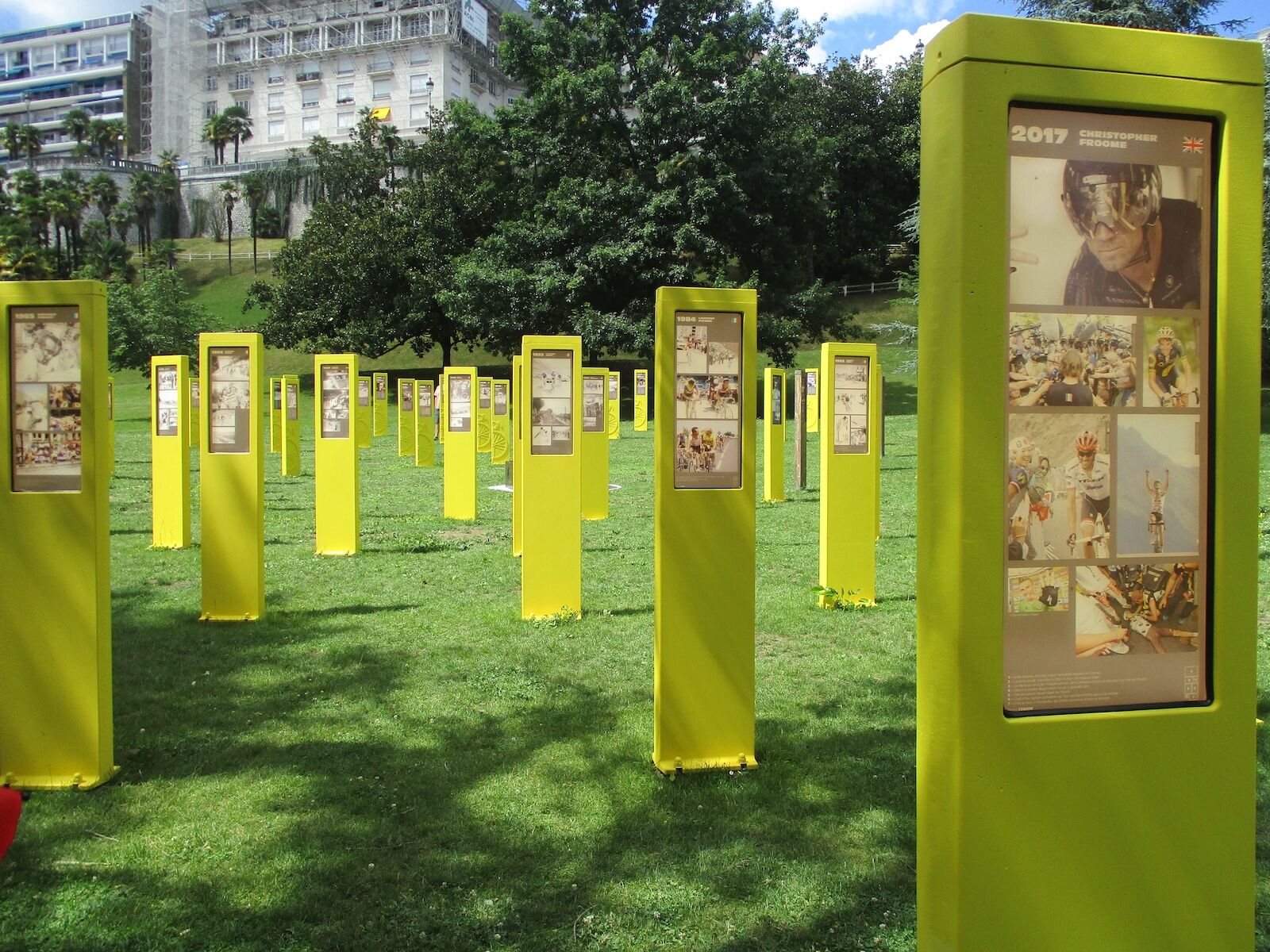
Photo: Laura Cooke

One thing you can’t fail to notice when visiting the Tour is the huge number of cycling-themed works of art dotted along the route and scattered throughout the host towns and villages. From towering metal bike sculptures to elaborate art in farmers’ fields made from everything from hay bales to tractors, there’s art everywhere you turn.

Some of the works are officially commissioned for the race, while others are done ad hoc by creative locals. Take time to enjoy the artwork, whether temporary or permanent. It’s all part of the Tour experience.

We also enjoyed visiting the Tour des Géants at Bois Louis in Pau, one of the towns most visited by the Tour during its long history. Each past tour winner is represented by a monument with stats, facts, and iconic images. You’ll see winners from the days of handlebar mustaches and wool jerseys, and learn about British cyclist Chris Froome, who ran up Mont Ventoux when a replacement bike failed to materialize following his 2016 crash. A new aluminum-and-glass display is added to the display each year.

And finally, if you’re still in France by early August, don’t miss the women’s race, the Tour de France Femmes. The race is shorter, and the route varies from the men’s event, so you’ll get to see even more of the country’s beautiful scenery. Plus, with smaller crowds, you’ll have a fighting chance at more of those caravan freebies.

Discover Matador

Save Bookmark

We use cookies for analytics tracking and advertising from our partners.

For more information read our privacy policy.