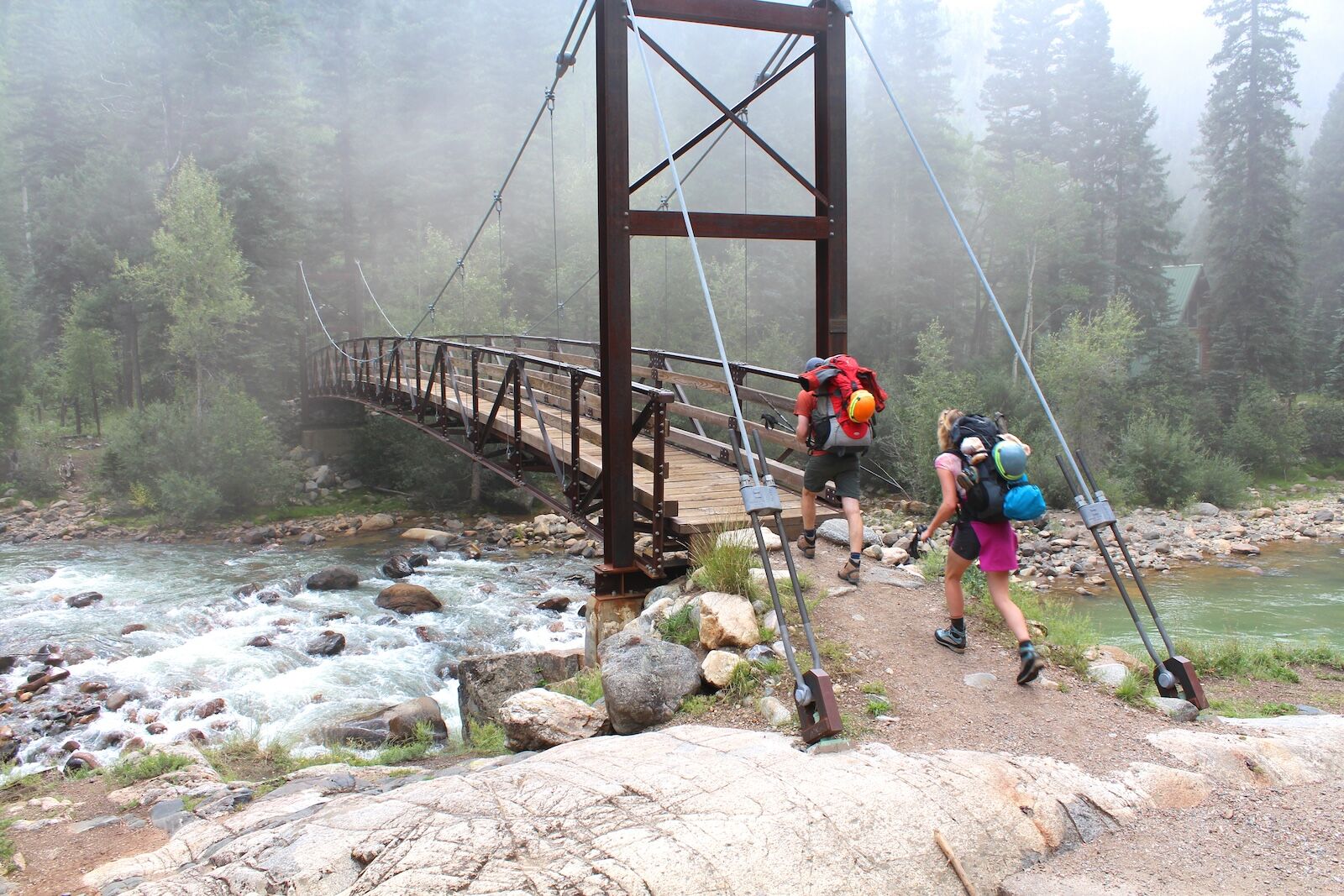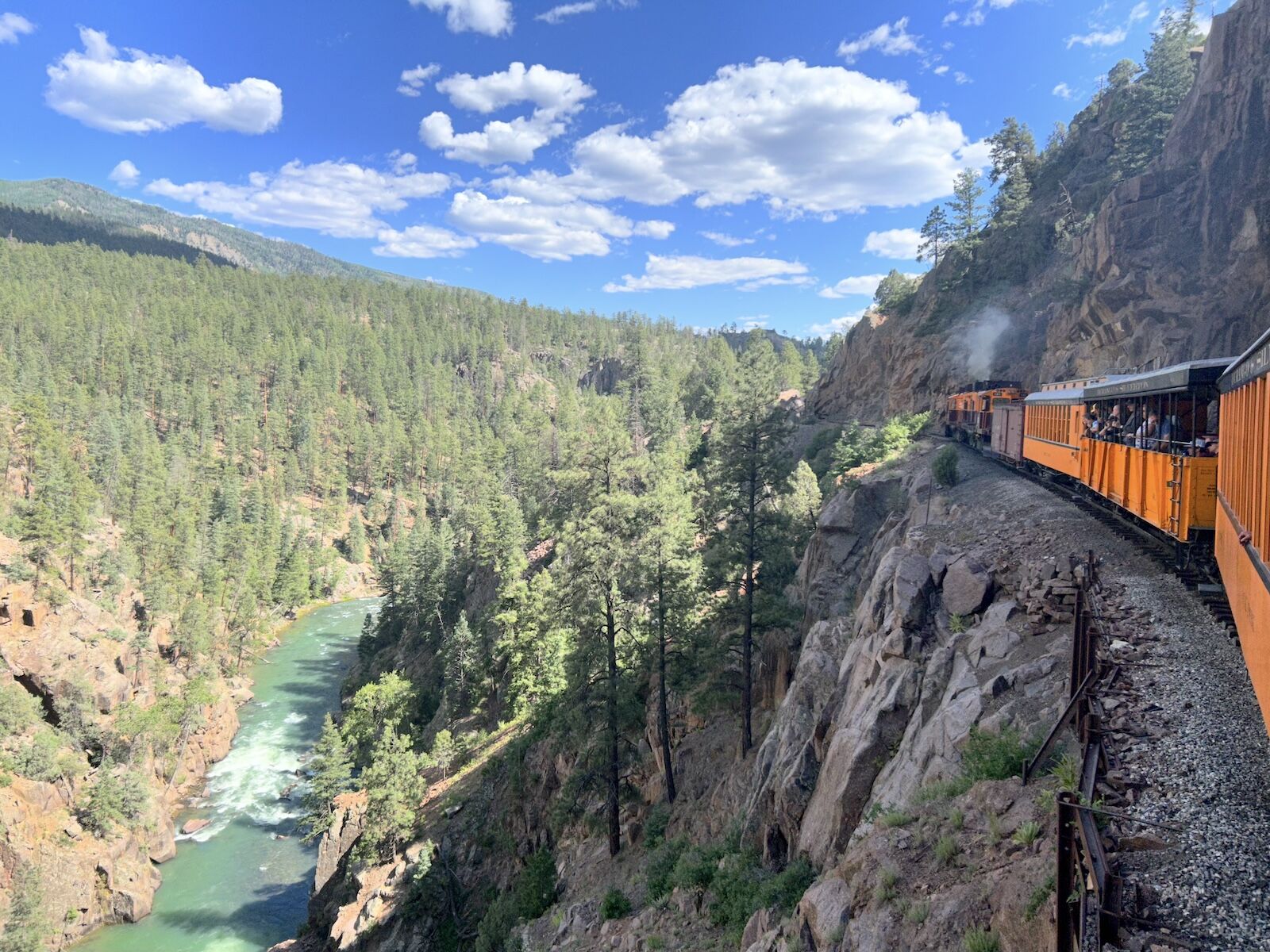
Early morning on the train between Silverton and Durango, Colorado. Photo: Bob Pool/Shutterstock

The Old-School Train Hack for Accessing Remote Wilderness Hikes

Colorado Train Travel National Parks
by Molly O'Brien Apr 3, 2026

In most places, getting into the wilderness means driving to a trailhead, strapping on hiking boots, and following a map. But in Colorado, it can mean something else entirely: flagging down a train, hopping off miles from the nearest road, and heading out into terrain you can’t reach any other way.

For hikers who want to disconnect in the wilderness and go somewhere that feels mostly undeveloped, the few flag stop options like this that exist around North America are truly unique ways to travel. They provide access to places you can’t reach by car, but don’t need to hike for days to reach, either.
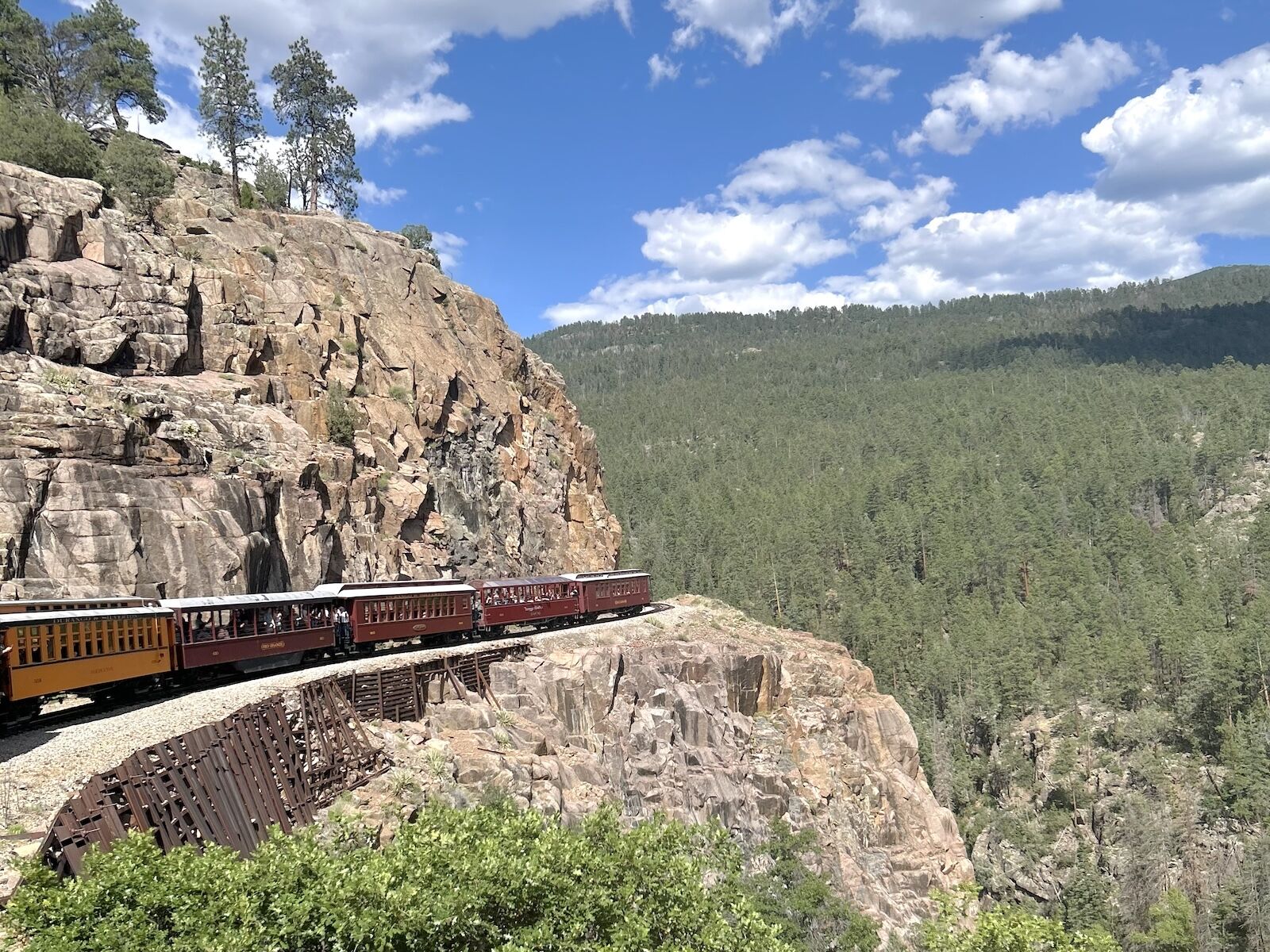
flag stop train service - train on cliff

Photo: Abigail Bliss

In Durango, Colorado, the Durango & Silverton Narrow Gauge Railroad (D&SNGRR) takes passengers on a ride through the stunning scenery of San Juan National Forest and the Weminuche Wilderness. But its flag stop option offers a little-known way to explore all that protected, undeveloped terrain.

“Flag stop” is a technical term for a location where a train can stop to pick up passengers along the route, but it’s not a traditional station – and it’s almost always available only by request. They’re typically in remote locations and were used as primary modes of transportation for Americans living in rural areas in the 19th and early 20th centuries.

Today, flag stop services are scarce due to modern infrastructure, the proliferation of roads and automobiles, and modern travel technology. Most people live in areas with roads and few travel exclusively by train. But the service does still exist, as with Alaska Railroad’s Hurricane Turn route, still operating on a classic flag stop model in remote areas of the Last Frontier. A similar service is offered via Canada’s VIA Rail, which lets riders request a stop anywhere along specific routes as long as the ticket is purchased at least 48 hours in advance.

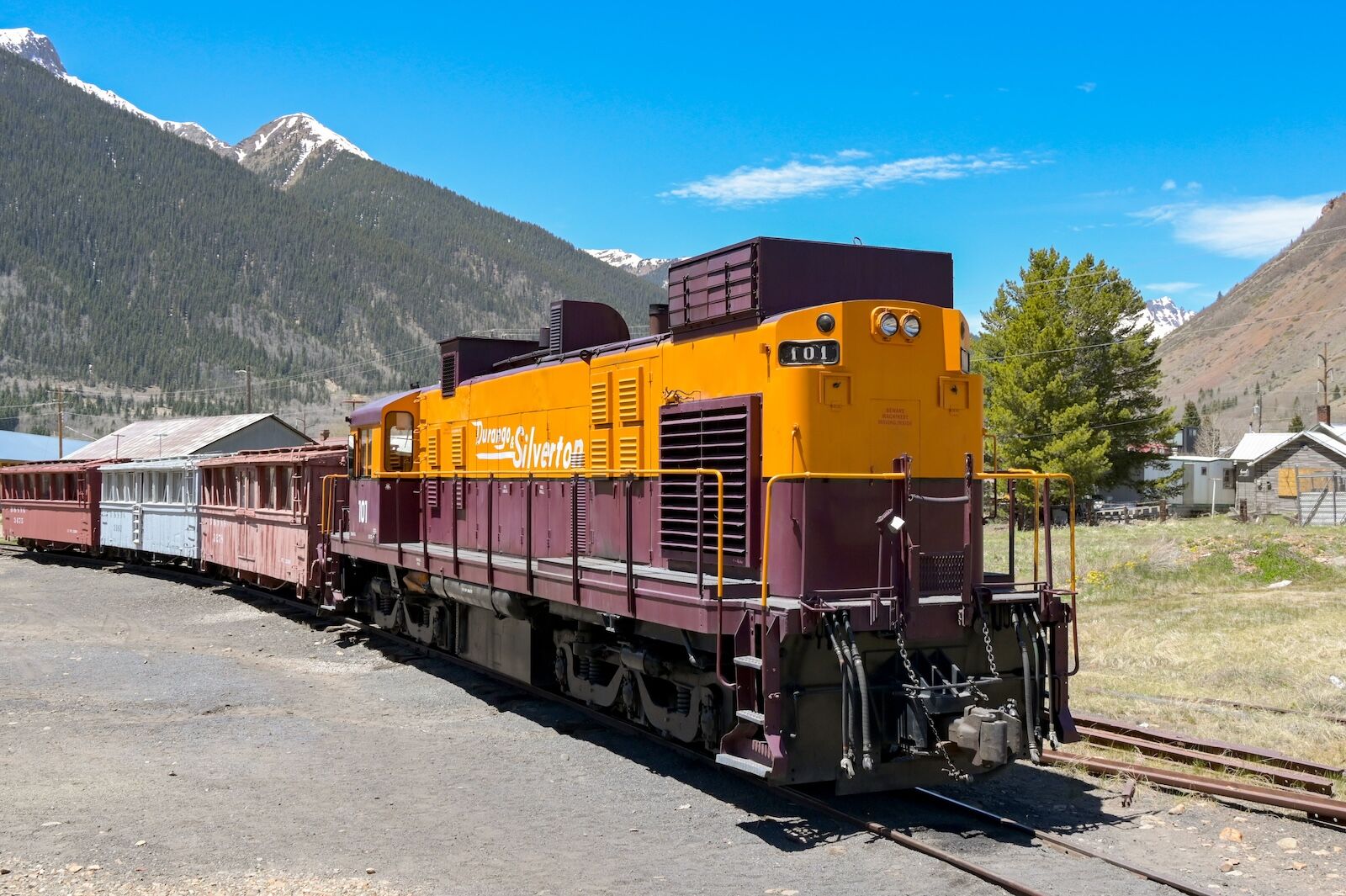
flag stop train service  -silverton diesel train

Photo: Ceri Breeze/Shutterstock

In Colorado, D&SNGRR’s seasonal Flag Stop service operates more form than function, used mostly by hikers and recreationists. The railway carries hikers, backpackers, climbers, fishers, and other outdoor enthusiasts into backcountry territory unreachable by car. The service is offered loosely from May through October to avoid avalanche hazards in winter, and runs via the historic Silverton Diesel Train, a locomotive that’s been running for 144 years and serves as one of the last existing examples of 19th-century narrow-gauge railroad operations.

With a bit of advanced planning, using this vintage train travel strategy can be a great way to explore the backcountry for those short on time. Taking the train one-way allows you to get the feeling of a remote wilderness adventure with the convenience of riding the rails back to your car. Here’s how to make the adventure work.

How flag stop services work

hikers entering san juan national forest

Hikers entering San Juan National Forest. Photo: MisterStock/Shutterstock

Since the timing for pick-ups and drop-offs varies each year depending on weather, in true old-school travel fashion, you won’t be able to make arrangements online.

In Colorado, the best way to make a reservation is to call the railway’s reservations and ticketing phone number (1-888-872-4607) and speak with a live person. This allows the D&SNGRR to help control how many people are in fragile backcountry areas at any given time, and allows them to raise the alarm if you don’t make it back when you’re supposed to be. In Alaska, the system is even more low-key – passengers simply wave a white flag to indicate they’d like the train to stop and pick them up, buying their ticket when they board. On Canada’s VIA rail, you’ll also need to speak with a real person to buy a ticket and arrange your drop-off and pick-up locations in advance – you can’t board from the wilderness without prior arrangements.

It’s crucial to be mindful of your safety and remain respectful of your natural surroundings in the wilderness. Let a friend or partner know where you’ll be going and when you should be back, and consider investing in technology like a satellite beacon to ensure you won’t be left without emergency assistance, as cell phone service is rare. Don’t rely only on iPhone satellite texting.

You’ll also need to know how to let the train know to stop. In Alaska, you’ll wave a white flag, and in Canada, you’ll already have arranged your pickup. But in Colorado, there’s a different strategy: “flagging” down the train. It’s different from simply waving at it, as anyone who’s been on a train knows that hundreds of smiling people wave at trains as they go by.


To formally flag the D&SNGRR train, wave your hands in a “criss cross” motion in front of your knees. It’s akin to the “bees knees” dance move popular during the 1920s Charleston dance craze. It might look ridiculous – but fail to do it, and there’s no solid guarantee the train will know to stop.

On most trains, including Colorado’s, those returning from the wilderness will pay for their ticket when they board, even if they’ve already made the reservation. On the D&SNGRR, tickets are $35 per person, payable in cash only. There’s also an extra fee for hiking packs in some cases, so ask when you make your reservation about any additional fees.

In Alaska and Canada, you can board and disembark almost anywhere along the line. But in Colorado, if you’re returning from the wilderness, there are two main backcountry flag stops: the Needleton stop, used as a base for hiking three 14ers (Sunlight Peak, Mount Eolis and Windom Peak), and the Elk Park flag stop. The latter is the only stop available for southbound travelers, but those headed north can use either one.

Those planning a bucket list-level wilderness trip should know there’s a 15-person limit to each group, and a “freight charge” for extra gear. Items like fishing poles, large climbing gear, mountaineering gear, or rafting devices are stored away from the passenger area in a special cargo area only the crew can access, so have a small daypack you can keep with you if you’ll need to have certain items handy en route. If you hike with your dog, you’ll need to leave them at home for these trips, as pets aren’t allowed on the train.

The reality of a flag-stop adventure

flag stop train service - colorado

Photo: Abigail Bliss

Experienced Colorada-based travel journalist Abigail Bliss decided to make the most of a short trip to Durango by hiking into the wilderness one way, then using the train for the return trip back. “The train is really the most practical, and in a lot of cases, the only way to get to those trail heads,” she says. After all, there are no roads to these destinations.

Bliss hiked into the Weminuche Wilderness on a day trip, and took the train back to Durango via the Elk Park train stop. She hiked 11 miles total, including parts of the popular Colorado Trail from Molas Pass. While it’s not an expert-only hike, it does require some routefinding and navigation skills, she says.

“You’re not going to be able to follow a crowd,” she advises. “You want to feel really confident on where you’re going before you just venture off into the wilderness without cell phone service. Unless you’ve planned for it, definitely stay on your trail. If you’re not prepared, it could turn into a bad situation.”

Bliss used the AllTrails app to track her route and navigate back to the flag stop, marked by a weather-beaten trail marker. “There was just a sign that said, ‘train pick up,’” she says. “A little wooden sign nailed into a tree.” When she arrived, there were two other people waiting to catch the train. But being the only person wasting to board isn’t unusual.


Once Bliss was safely aboard the train she felt like somewhat of a celebrity as curious passengers peppered her with questions about her adventure.

“There’s a lot of happy energy in the air,” says Bliss. “Most of the passengers on the train are riding between Durango and Silverton in the summertime, doing the full experience. Naturally, she says, they’re curious about who you are, why the train stopped for you in the middle of nowhere, and what your adventure was like.

She got a lot of questions from other patrons on the train wanting to hear about her experience from the day.

“I immediately went and got a beer to celebrate the fun adventure,” she says. And from the train, “the views are spectacular.”

While anyone venturing into the backcountry is responsible for knowing and following wilderness regulations, the option of flag-stop travel does open up access to a greater swath of hikers. “You’re really out there,” says Bliss. “I just think [these flag stops] are so unique in the way that you can get out into the wilderness in a way that’s very accessible. The train really allows you to access something that otherwise would require so much time and effort.”

Discover Matador

Save Bookmark

We use cookies for analytics tracking and advertising from our partners.

For more information read our privacy policy.