Photo: Hurtigruten/Stian Klo

Meet the World's First 'Chief Aurora Chaser'

Norway Cruises Astronomy
by Sarah Kuta Feb 17, 2026

On a chilly winter night in the early 1990s, Tom Kerss stood on a beach on Scotland’s northeast coast. Then just five years old, Kerss noticed something mysterious on the horizon: a faint, otherworldly glow.

It wasn’t the dazzling, dancing, ribbon-like aurora so often seen in photos today. But the strange glimmer captured his imagination all the same. Later, when he asked his parents about what he’d witnessed, his father suggested he’d seen the northern lights.
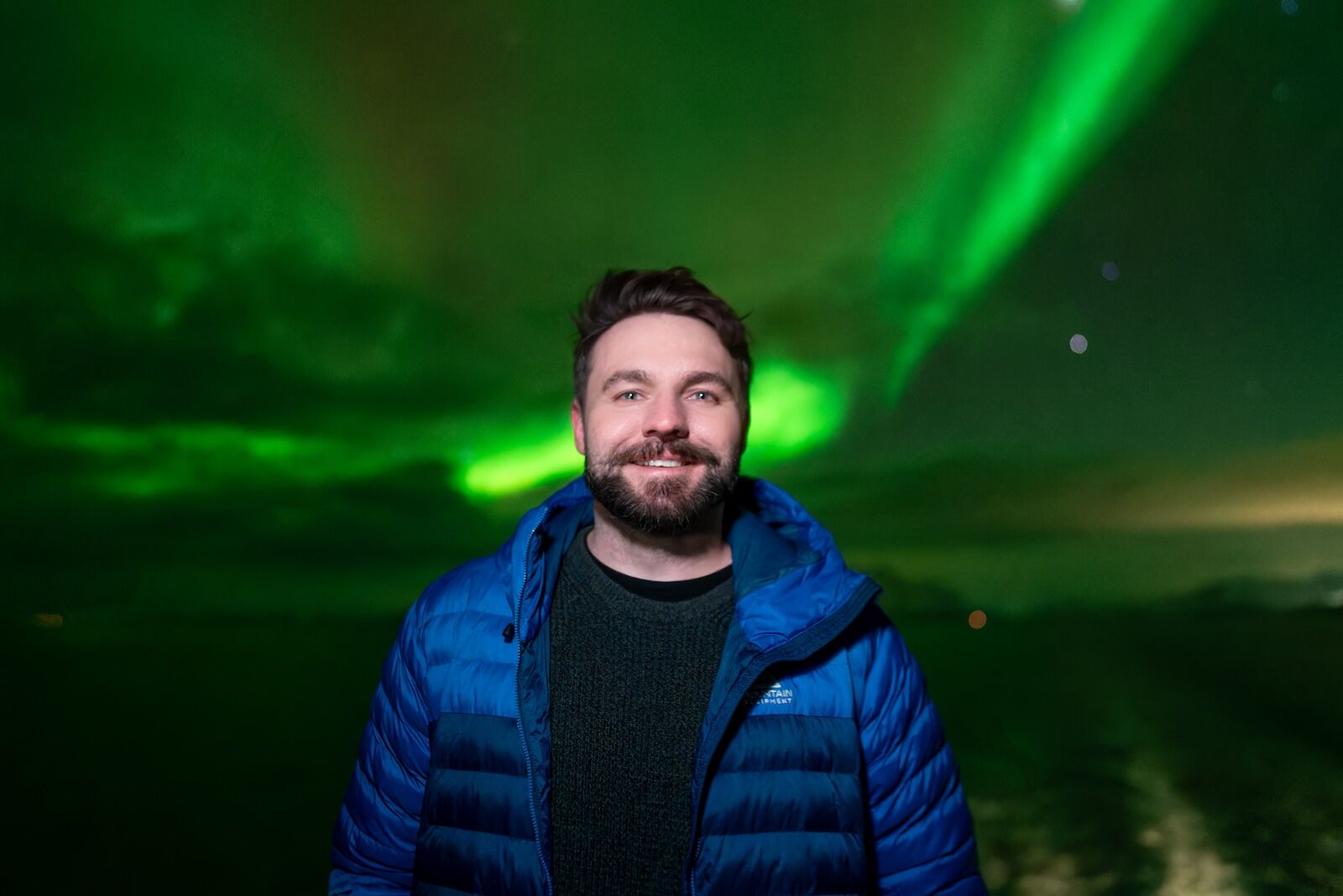
That early experience stayed with Kerss, sparking a lifelong curiosity about the cosmos. Today, that childhood wonder defines his career: He’s an astronomer and author who serves as the “chief aurora chaser” for Hurtigruten, a cruise line that has transported people and goods along Norway’s fjord-lined coastline for more than 130 years.

In his newly created role with Hurtigruten – the first of its kind, according to the company – Kerss accompanies skygazers to northern Norway to see the lights that first captivated him decades ago. His role reflects the growing popularity of astrotourism, with more and more travelers planning trips around dark skies and celestial spectacles.

“[Astronomy] fills a hole that is increasingly growing in the world we live in, which is very mechanical and inhuman,” says Kerss, 39. “People want to have something that’s real and ancient and inexplicable, and that’s what the sky offers.”

‘A very easy job’


hurtigruten aurora chaser

Tom Kerss, Chief Aurora Chaser. Photo: Hurtigruten


Kerss was born in England, but moved all over the United Kingdom as a child due to his father’s job as a fighter pilot in the Royal Air Force. One of the most memorable places the family lived was Lossiemouth, Scotland, he says, where he first spotted the northern lights. His fascination deepened whenever his father described seeing the aurora from the cockpit of his plane.

Years later, Kerss earned degrees in astrophysics and spacecraft engineering. After finishing school, he took a job at the Royal Observatory in Greenwich, London – one of the world’s most storied centers of astronomy, famous for interpreting the stars for more than 350 years. Around the same time, he began writing astronomy books and taking groups to see the northern lights in Iceland.

In 2023, Kerss began working for Hurtigruten, serving as one of the onboard astronomy experts who enlighten passengers on voyages up and down the coast of Norway. “And then before I knew it, I found myself spiraling into a strange opportunity to start a new kind of role, which we call the chief aurora chaser,” he says.

northern lights as seen from norway

Photo: Hurtigruten/Stian Klo

Hurtigruten created the position for Kerss in 2024 as a nod to his deep northern lights expertise. Kerss joins select sailings and shares insights via lectures, workshops, activities, late-night stargazing sessions, and casual conversations around the ship. Most of the programming is centered around the northern lights, but Kerss also lectures on a variety of related topics, such as the moon, astrophotography, art and pop culture, aliens, and other astronomical wonders like solar eclipses and meteor showers.

“They pay me to talk about the thing that I love the most in the world, and that’s a very easy job, really,” he says.

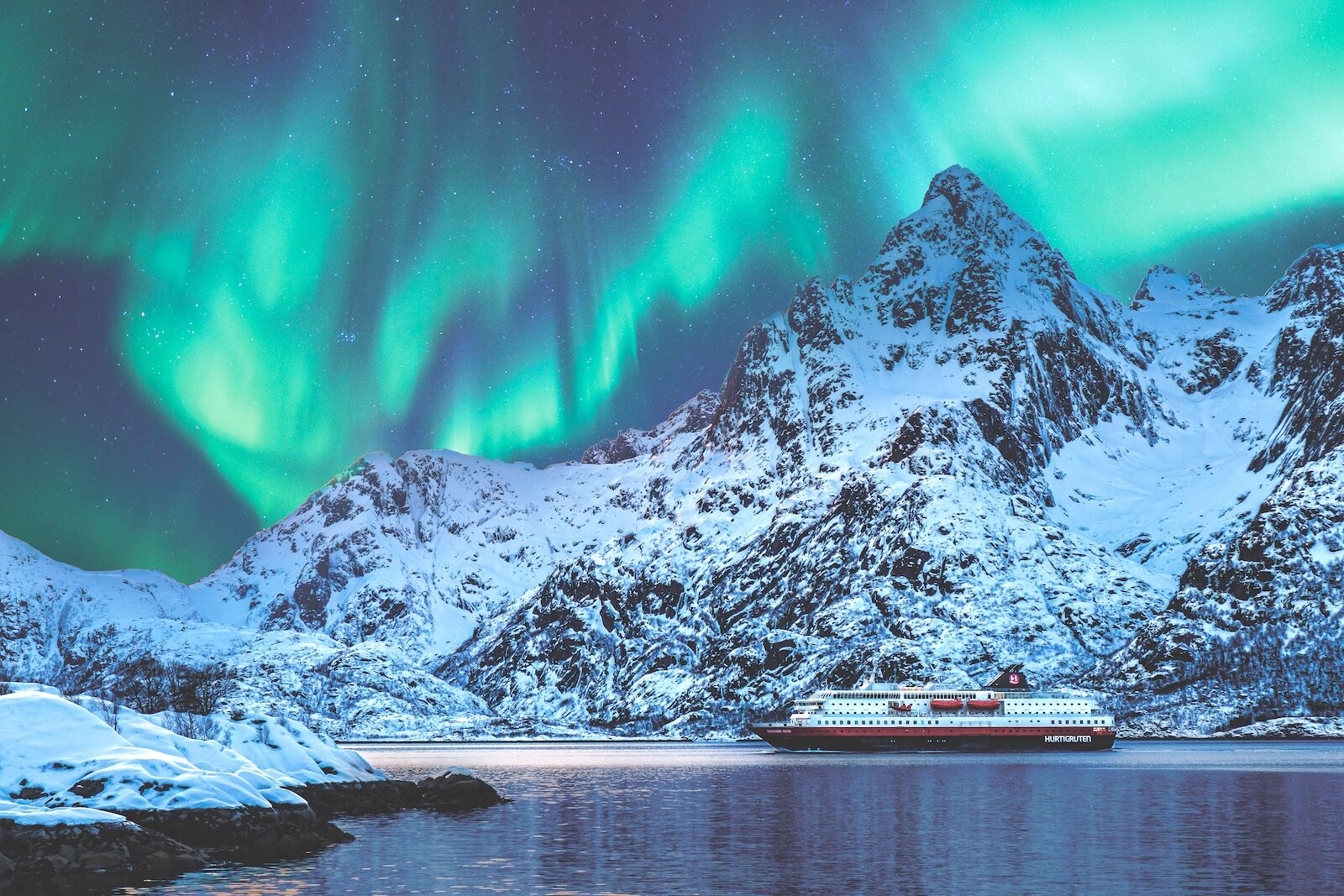
Hurtigruten, which means “the fast route” in Norwegian, has sailed Norway’s coast since 1893. It began as a vital source of transportation and connection for the many remote communities nestled among Norway’s coastal fjords. Today, the company is known primarily for its tourist-focused, all-inclusive cruises, but also still operates the original “Coastal Express” route, calling at 34 ports over 12 days.

The line has offered astronomy-themed voyages since 2008. Hurtigruten is so confident the aurora borealis will make an appearance during fall, winter, and early spring sailings that it offers a “Northern Lights Promise:” If the aurora isn’t visible at any point during the voyage, guests can take another cruise for free. (The fine print: Departures must be between late September and late March, and the cruise must be 11 days or longer.)

Why Kerss looks to northern Norway for the best aurora chasing


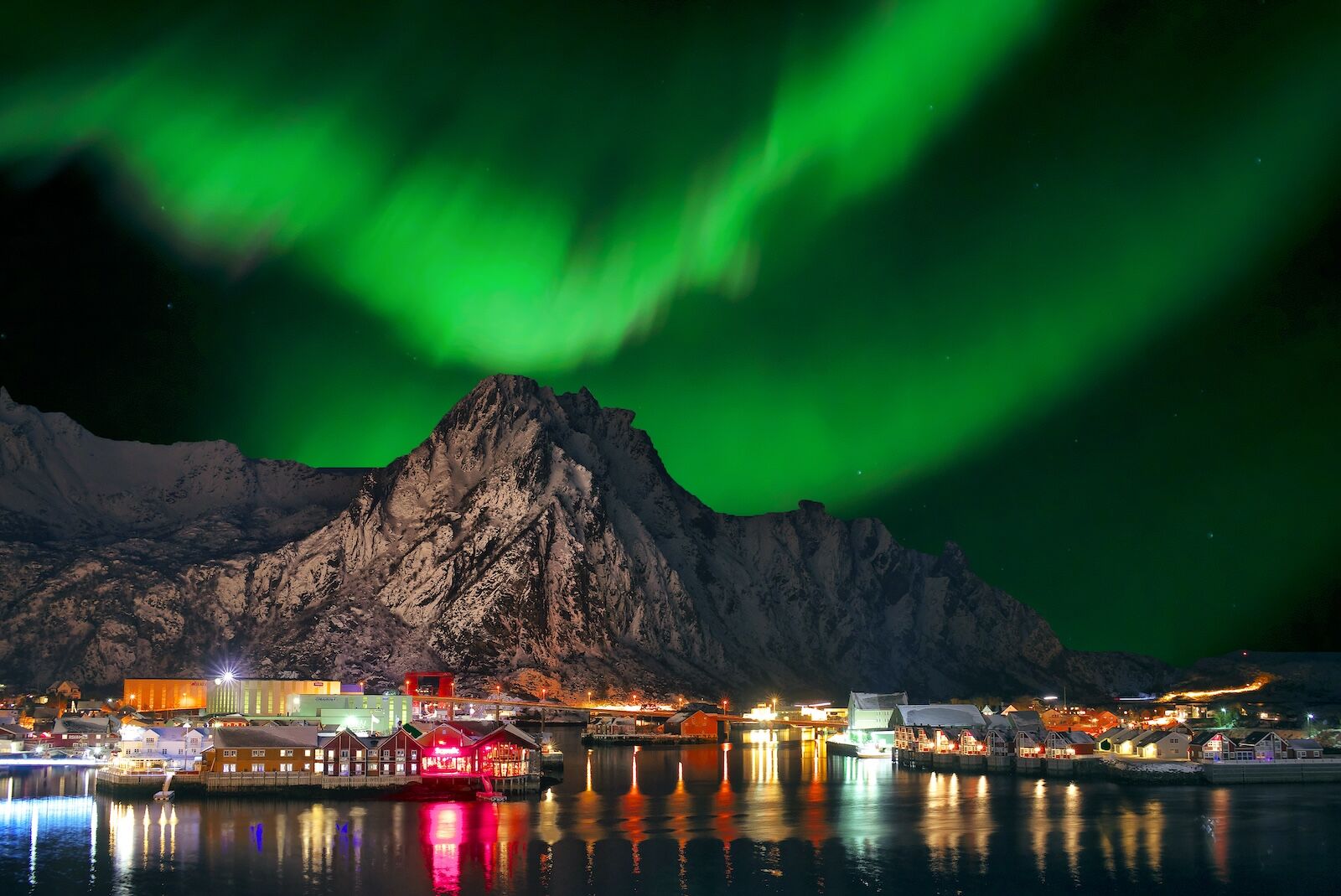
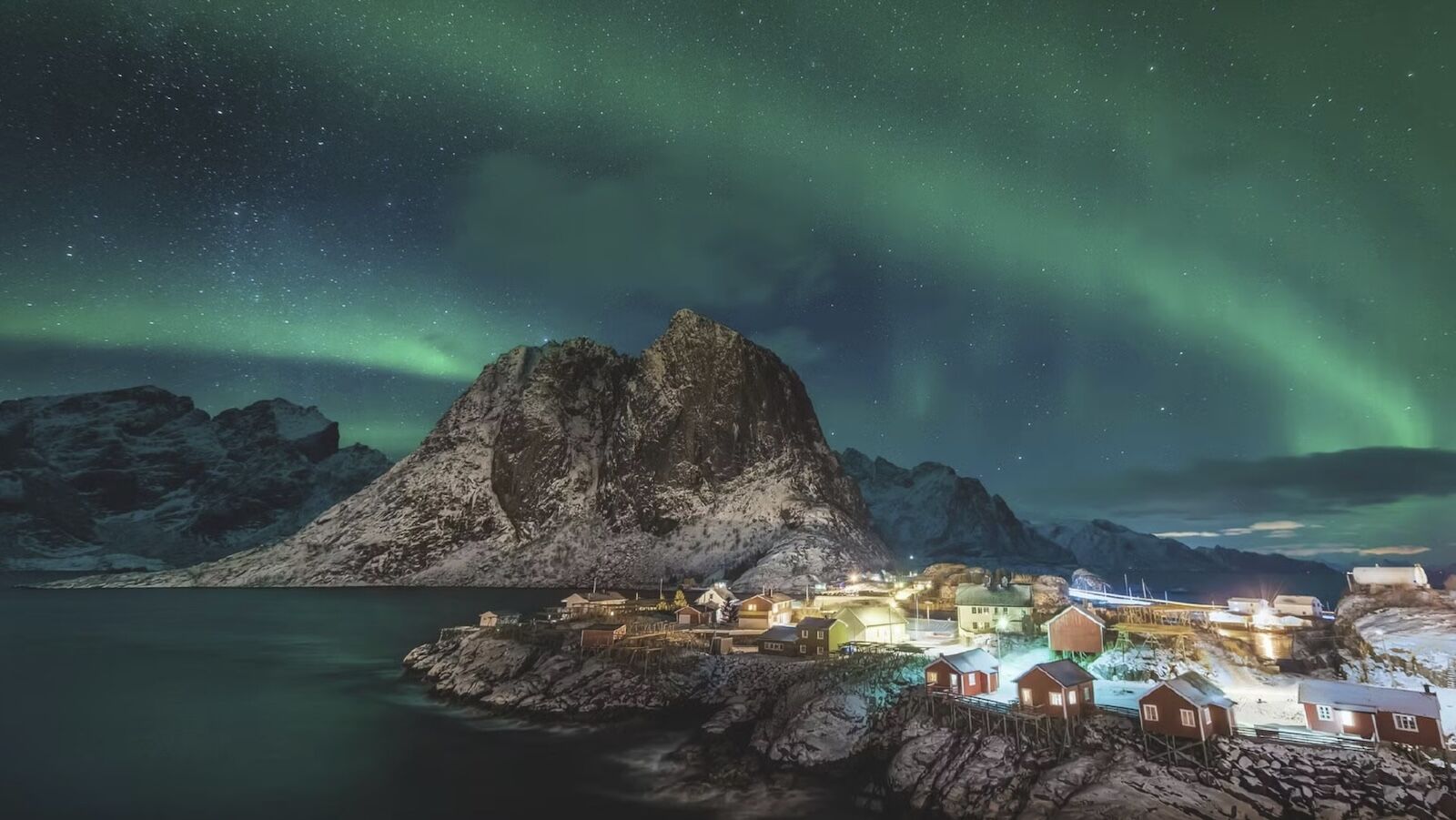
Kerss has traveled all over the world, chasing solar eclipses, ultra-dark skies, and the aurora. But, to him, northern Norway stands apart. The region sits directly below the aurora oval – the zone surrounding Earth’s magnetic north pole that experiences the highest levels of auroral activity. But beyond that, Kerss also loves the topography.

“It’s because of where the sea and the sky meet on the coast of Norway. It’s so unique,” he says. “It’s a beautiful coastline. A massive, mountainous, extraordinary, alien coastline with this huge sky overhead. Probably the most beautiful land that sits under the [aurora] oval is the north of Norway.”

The landscape in this region offers more than just beauty, though – it also creates especially good aurora-viewing conditions. Clouds are often the biggest impediment to seeing the northern lights in the far north. But even on evenings with heavy clouds, the mountains usually help break up and thin out that cover, Kerss says. The region was also a primary hub for scientists trying to unravel the mysteries of the northern lights around the turn of the 20th century, he adds.

hurtigruten aurora chaser  - guests on board

Photo: Hurtigruten/Tommy Simonsen

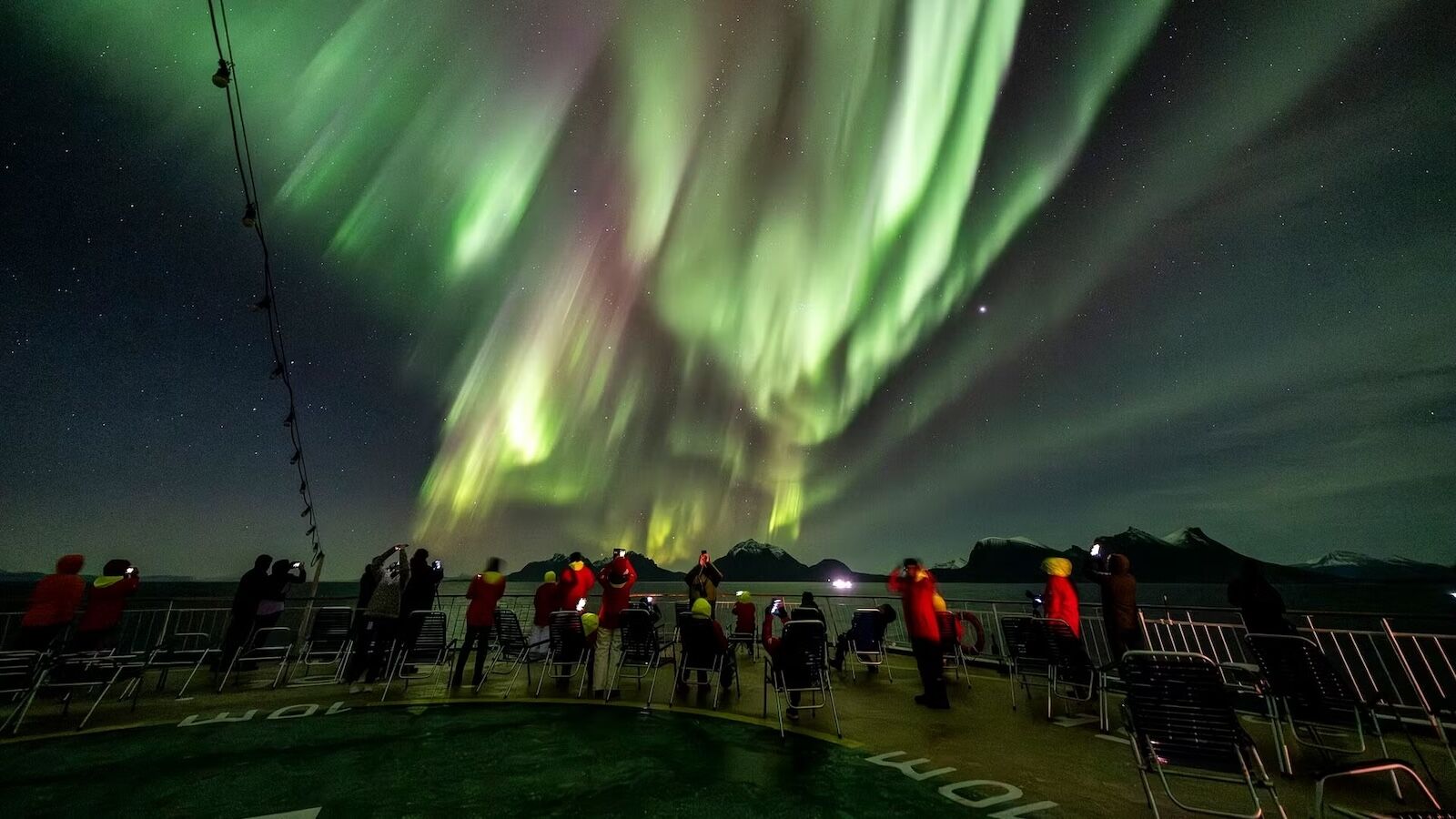
Hurtigruten’s ships, meanwhile, are like floating observatories “where the view changes constantly,” says Kerss. If the weather is not cooperating, travelers only need to wait a day or two, because their vessel will be sailing somewhere new with different conditions. The view of the night sky also changes as their ship heads north or south, giving passengers varying perspectives throughout the sailing. Some ships, like the recently renovated MS Trollfjord, are strategically equipped with red lights on the top deck, allowing passengers to safely navigate while their eyes remain adjusted to the dark.

There also tends to be a deep sense of camaraderie and bonding among Hurtigruten’s astronomy-focused travelers, who typically spend 12 to 15 days together depending on the itinerary. Most ground-based northern lights tours, by contrast, last just a few hours.

“Everyone gets really excited and there’s just a lot of conversation, a lot of shared experiences,” says Kerss. “After you see the northern lights, maybe later that night in the bar or the next morning at breakfast, you’re chatting to people about it. You make these memories with people who you might never see again, because you have this really long, immersive, deep experience with them.”

No two aurorae are exactly the same


By his calculations, Kerss has seen thousands of northern lights displays. Yet he’s still experiencing the aurora in new and different ways because “someone’s always having their first experience,” he says. “It’s like I get to live vicariously through them.”

He also feels a deep connection to the many humans throughout history who have admired the aurora. Although scientists only explained the northern lights in the early 1900s, cultures around the world have documented, mythologized, and revered them for millennia. Kerss believes a large part of the appeal, both past and present, stems from the lights’ ethereal nature.

“We understand auroras at a scientific level, so they’ve lost some of their mystery, but I would say they have lost none of their magic,” says Kerss. “The way they impact us, the way they impress themselves onto our eyes, is no less impactful.”

“We do touch the same experience that ancient people had when we see the aurora. We do struggle to explain and to quantify them, [but] we’re beguiled by them in the same way. That fascination’s been the same forever.”

Discover Matador

Save Bookmark

We use cookies for analytics tracking and advertising from our partners.

For more information read our privacy policy.