For as long as most people have known Lake Nakuru‘s name, they’ve known it for one thing: a lake in Kenya’s Rift Valley so densely packed with flamingos that the shoreline looked like a single moving mass of pink, the water beneath it barely visible. It became one of the defining images of East Africa — the kind that lands on postcards and opens scenes to nature documentaries.
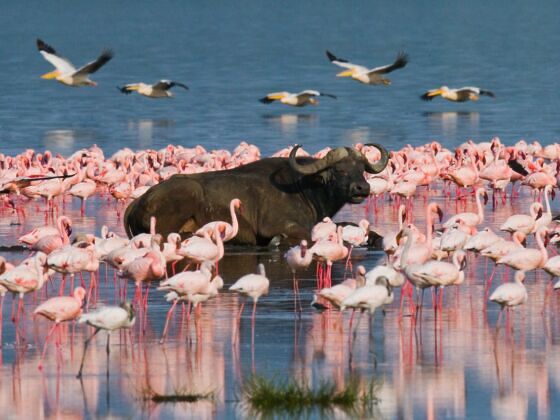
Photo: GUDKOV ANDREY/Shutterstock
Chasing Lake Nakuru's Flamingos in a Changing East Africa
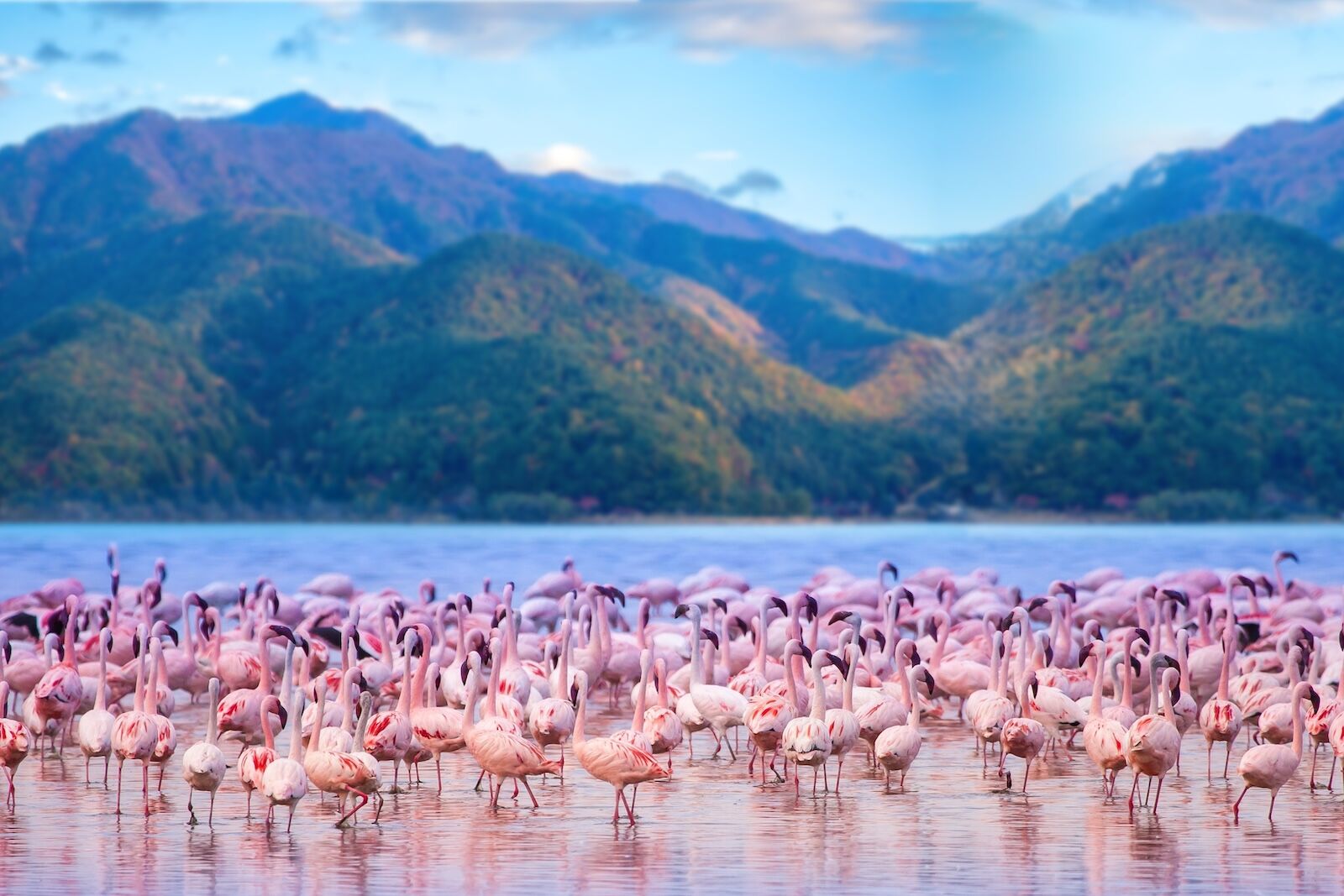
That image is getting harder to find. Flamingos still gather at Nakuru, sometimes by the tens of thousands. But the reliable wall-to-wall spectacle that made the lake famous has grown far less predictable. And the reason has everything to do with the lake itself.
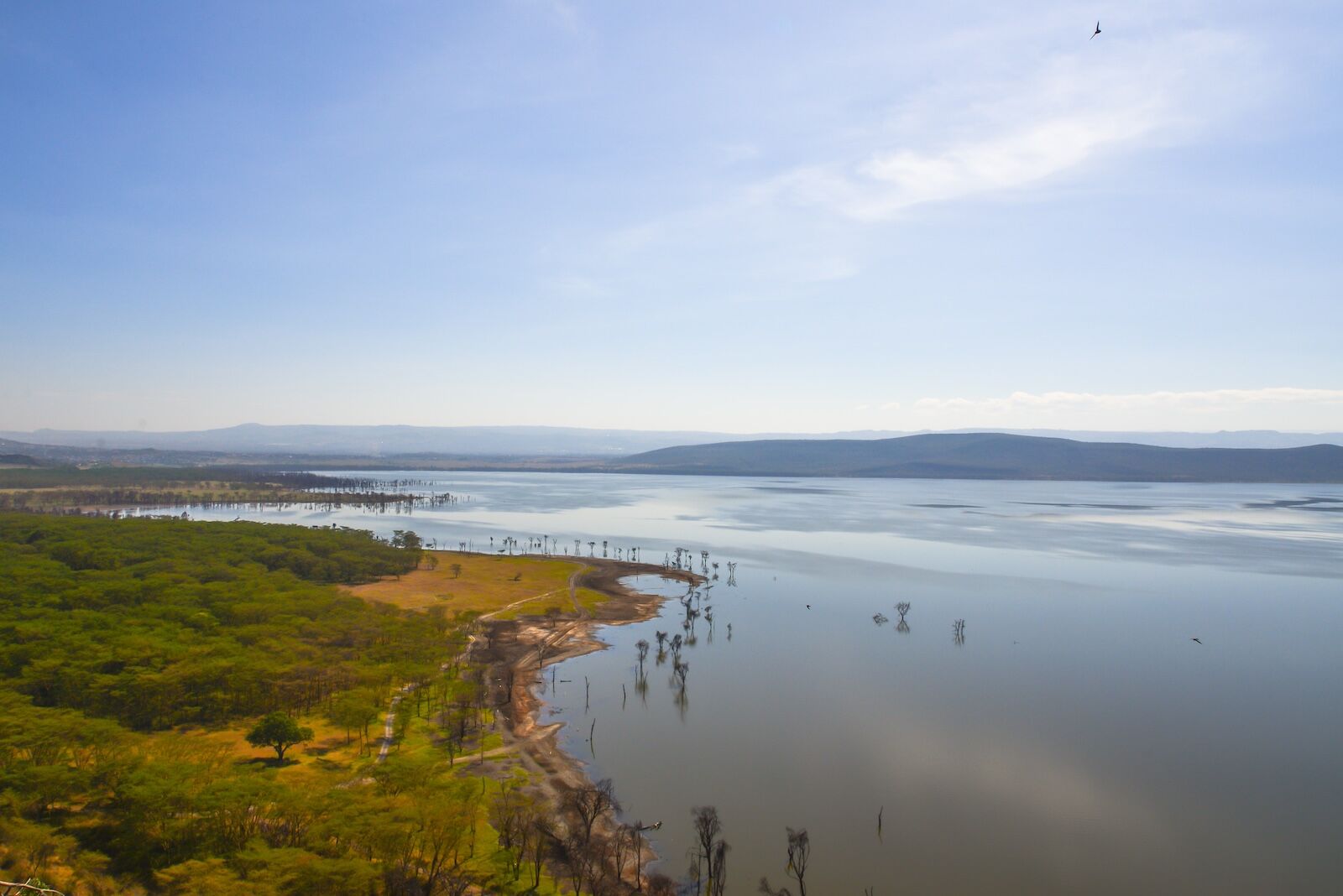
A 2024 study published in Current Biology used 20 years of satellite data to monitor several lakes throughout East Africa known for their high populations of flamingos. The study found that rising water levels have diluted the water, leading the pH to fall and the water to shift from extremely alkaline toward neutral. That shift is enough to kill the specialized algae in lakes the birds feed on. As that algae thins, the birds leave to find food elsewhere. Nakuru showed the pattern in an extreme sense: between 2009 and 2022 the lake grew by 91 percent in surface area while the algae flamingos feed on likely dropped by about half.
Flamingos at Lake Nakuru. Photo: FOTOGRIN/Shutterstock
The park’s own staff describe the same shift. Senior warden Edward Karanja said at a conference in 2022 that rising water “has altered the flamingo habitat which has lead to reduced number of flamingos in the lake.” It’s something leading researchers have tied directly to climate change, as a warmer atmosphere holds more water vapor. So when it rains, more rain can fall.
The second cause for rising water levels pointed to by scientists is human development on high ground near the lake. When forests are cleared, rainfall runs off the bare ground straight into the lake instead of being absorbed, held, and released slowly by vegetation and soil. Development in the area has been on a general upward curve, especially around the Mau forest complex that feeds the lake.
The flamingos have been moving to Lake Bogoria or Lake Elementaita, also within the Rift Valley, and across the border to Lake Natron in Tanzania, their main breeding site. Even that may be temporary, though, as those lakes face some of the same pressures.
The research is ongoing
Lake Nakuru, as shot in 2024. Photo: Subair Cheerathodi/Shutterstock
Research on the situation is still ongoing, and where flamingos are found could shift year to year. “Flamingo numbers are declining at the historically important feeding lakes Bogoria and Nakuru,” Aidan Byrne, lead author on a 2024 study of Rift Valley lakes, told Africa Geographic. Local monitoring has recorded lesser flamingo numbers at Nakuru, falling from hundreds of thousands in earlier years to only thousands during periods of high water. But “more regular and widespread counts are required” Byrne advises, to get the full story. There’s no live tracker that tells you what’s there this week.
Is Nakuru still worth visiting?
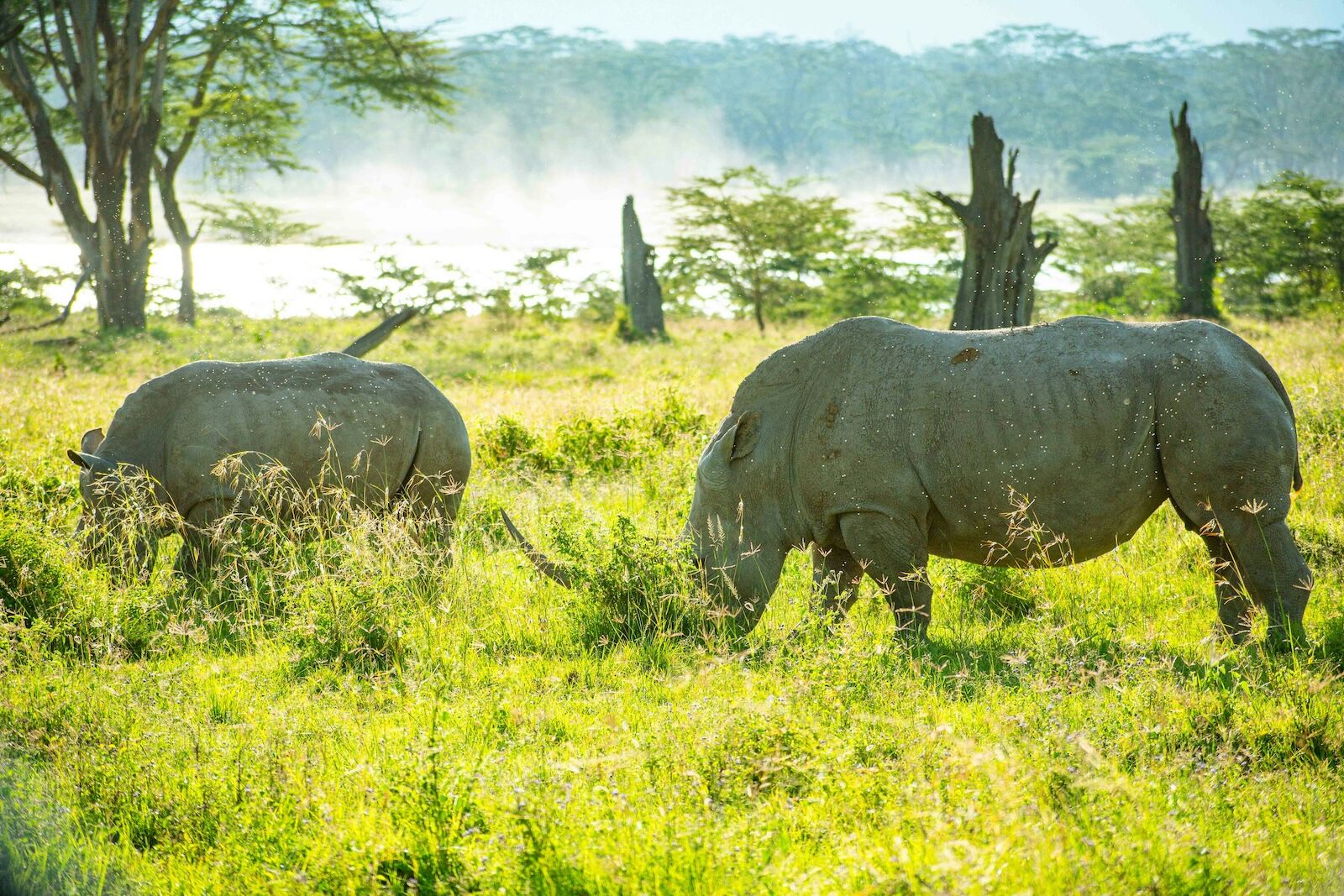
Photo: Brian Kungu/Unsplash
A trip to Lake Nakuru is still worth a top spot on your safari bucket list as long as you go for the park rather than a guaranteed pink shoreline. Even on a quiet flamingo day, Nakuru is one of Kenya’s best places to see rhinos. It was designated the country’s first rhino sanctuary in the 1980s and now protects both black and white rhinos, along with Rothschild’s giraffe, lions, leopards, and several hundred bird species across 73 square miles. The viewpoints at Baboon Cliff and Lion Hill open onto the whole lake, and they’re worth the climb whether or not the water is fringed with pink that day.
If flamingos are the point of the trip, plan around a certain time of year and build in a backup. Your best chance at seeing large flocks runs roughly January through March, while July through October brings more moderate numbers but drier conditions and cleaner light. Fall and spring are rainy, which can be a great time for other safari trips, but not necessarily at the lake, as that makes water levels rise. Since the birds move more as a flock than individually, it’s worth planning trips to lakes Bogoria or Elementaita as part of a wider Rift Valley loop: when one lake is empty, another is often full.
How to visit
Lake Nakuru sits about 100 miles northwest of Nairobi, making it about a two-to-three-hour drive via the Nairobi–Nakuru highway. That makes it one of the few national parks you can see in a day from the capital without flying, though staying inside or near the park will make it much more worthwhile. The lodges in the park are Sarova Lion Hill (the most luxurious, on the edge of Lake Nakuru), Lake Nakuru Lodge and Sopa Lodge (both solid mid-range options), and Flamingo Hill Camp, a tented camp on the edge of the forest. Packages that include game drives and meals can range from the low $100s per night up to $300-plus per night. More budget travelers should look at guesthouses in the town of Nakuru just outside the park gate.
Entry fees are $90 per person for non-residents (good for 24 hours), or about $50 for kids. You can’t pay at the gate, so you’ll need to pay online through the KWS eCitizen portal. Set up an account, pick the non-resident category, and pay online before you go. You’ll want to do it at your lodge or somewhere you have solid WiFi, as you’ll get a downloadable e-ticket to show at the gate.
You don’t need a guided tour to go. The park’s roads are well maintained and routes around the lake are clearly marked, so self-driving is fairly easy. That said, guides usually have the local knowledge to help you find rhinos, cats, and any current flamingo flocks, so it may be worth hiring one. They’re usually fairly inexpensive and available at the gate, able to ride along with you in your car. Plenty of guides are available to book online in advance as well. 