Photo: Andrea Izzotti/Shutterstock

Matador Network Awards 2025: Wildlife Destination

Baja California Wildlife
by Matador Creators Dec 5, 2025


Explore all of Matador Network’s
2025 award winners

At one end of North America, where desert mountains fall into two very different bodies of water, Baja California is like a wildlife corridor you can road-trip. Gray whales put on a show, blue whales surface off islands, whale sharks cruise not far from cities, and mobula rays gather in clouds so dense they change the color of the water.
This is one of the richest marine regions on the planet. UNESCO lists both the Whale Sanctuary of El Vizcaíno on the Pacific side and the Islands and Protected Areas of the Gulf of California on the Sea of Cortez as World Heritage sites for their exceptional biodiversity and whale, sea lion, and sea turtle habitat.

Baja California Sur has doubled down on wildlife tourism in recent years. Operators in places like La Paz now work under some of Mexico’s strictest whale shark regulations, with tours paused when animal numbers drop below agreed thresholds, while gray-whale lagoons use daily boat caps and time limits to keep encounters tightly controlled.

It’s this combination of abundance, access, and evolving protections that makes Baja California Matador’s pick for Best Wildlife Destination 2025.

Where gray whales come to you

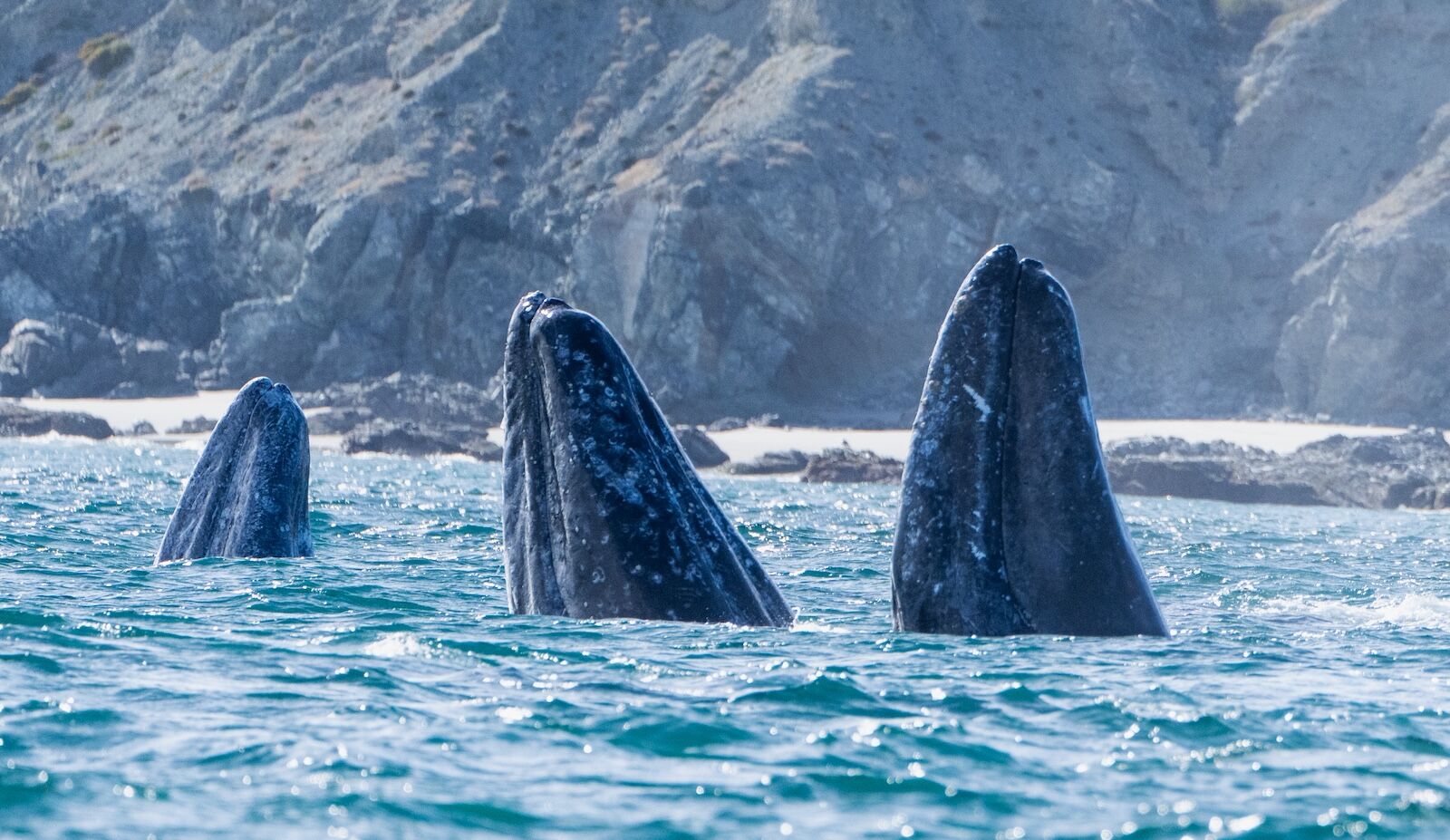
California Gray Whales gather during the winter months in large numbers in the bays along the Pacific side of Baja California. The rare photo of three whales spyhopping--I call The Three Amigos.

Photo: Charles Bergman/Shutterstock

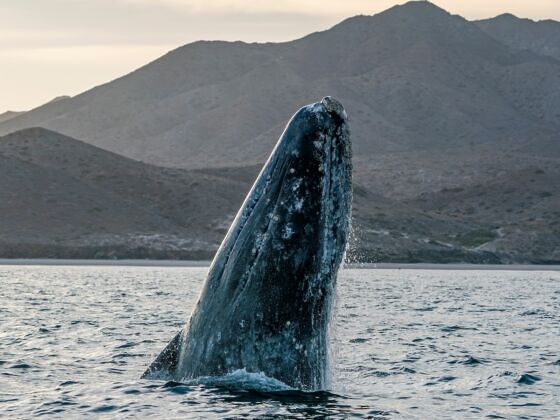
Every winter, thousands of gray whales leave Arctic feeding grounds for Baja after migrating thousands of miles over a couple of months — one of the longest mammal migrations on Earth. From roughly January to early April, three main sites host the action: Ojo de Liebre near Guerrero Negro, San Ignacio Lagoon, and Bahía Magdalena.

Ojo de Liebre and San Ignacio form the core of the Whale Sanctuary of El Vizcaíno, a UNESCO World Heritage site that also protects harbor-seal, sea lion, elephant-seal, blue-whale, and sea-turtle populations. Decades of careful management and low-speed panga traffic have created conditions where some mothers and calves routinely approach boats, rolling sideways or surfacing close enough for passengers to see barnacles and eyelashes. Independent whale-watching guides and NGOs routinely describe this “friendly whale” behavior as unique to Baja.

Those encounters are tightly regulated. At San Ignacio, for example, access to the core observation zone is controlled by a patrol boat, and only a limited number of pangas are allowed inside, with strict time slots and approach rules.

The “aquarium of the world” in real time

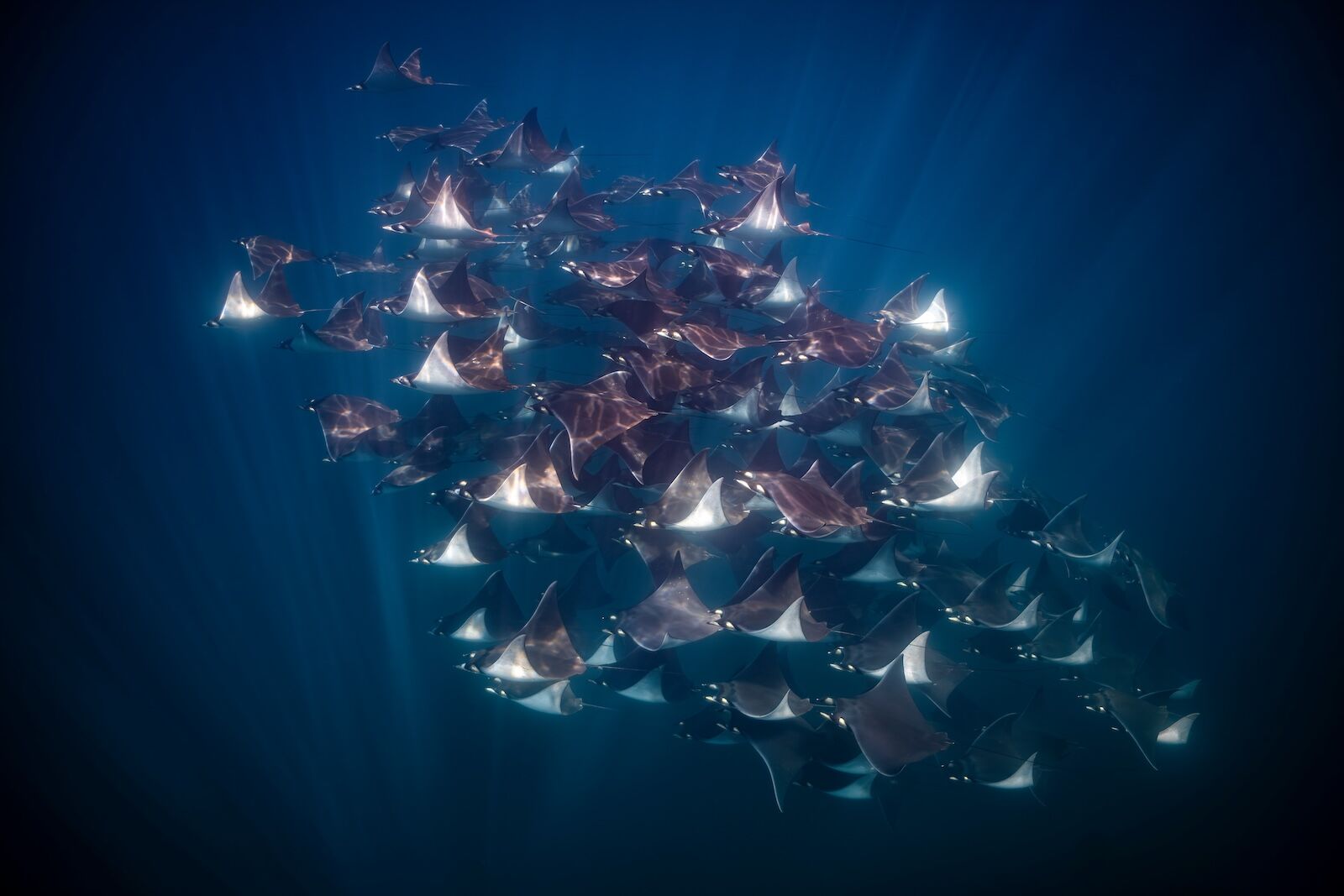
A large group of mobula rays glides through the clear blue waters off Baja California. Their elegant movements create a stunning display as sunlight filters down.

Photo: Subphoto.com/Shutterstock

The Gulf of California, often called the “aquarium of the world,” holds 244 protected islands and coastal zones, with huge colonies of California sea lions, at least 10 whale species, and five dolphin species among its headline residents.

Just off La Paz, Isla Espíritu Santo concentrates a lot of that life into one compact, boat-accessible national park. The island and surrounding sea are part of a UNESCO-listed biosphere reserve and World Heritage site, recognized for volcanic landscapes, turquoise bays, and high levels of endemic species.

Farther north around Loreto and the midriff islands, the Sea of Cortez turns into a highway for blue, fin, humpback, and sperm whales that feed in nutrient-rich upwellings. Wildlife operators describe Loreto as one of the best places in Baja to reliably see blue whales in season, often alongside dolphins and seabirds in search of the same food.

In La Paz Bay, juvenile whale sharks arrive most years between October and April to feed on plankton blooms in shallow water, turning the city’s waterfront into one of the easiest places on Earth to see the world’s largest fish. Operators work under strict permits, timed departures, and limits on how many swimmers can be in the water with each shark. For visitors, that can mean more flexibility is needed around weather delays and last-minute cancellations, but the trade-off is an experience with far less crowding and much more emphasis on the animals’ well-being.

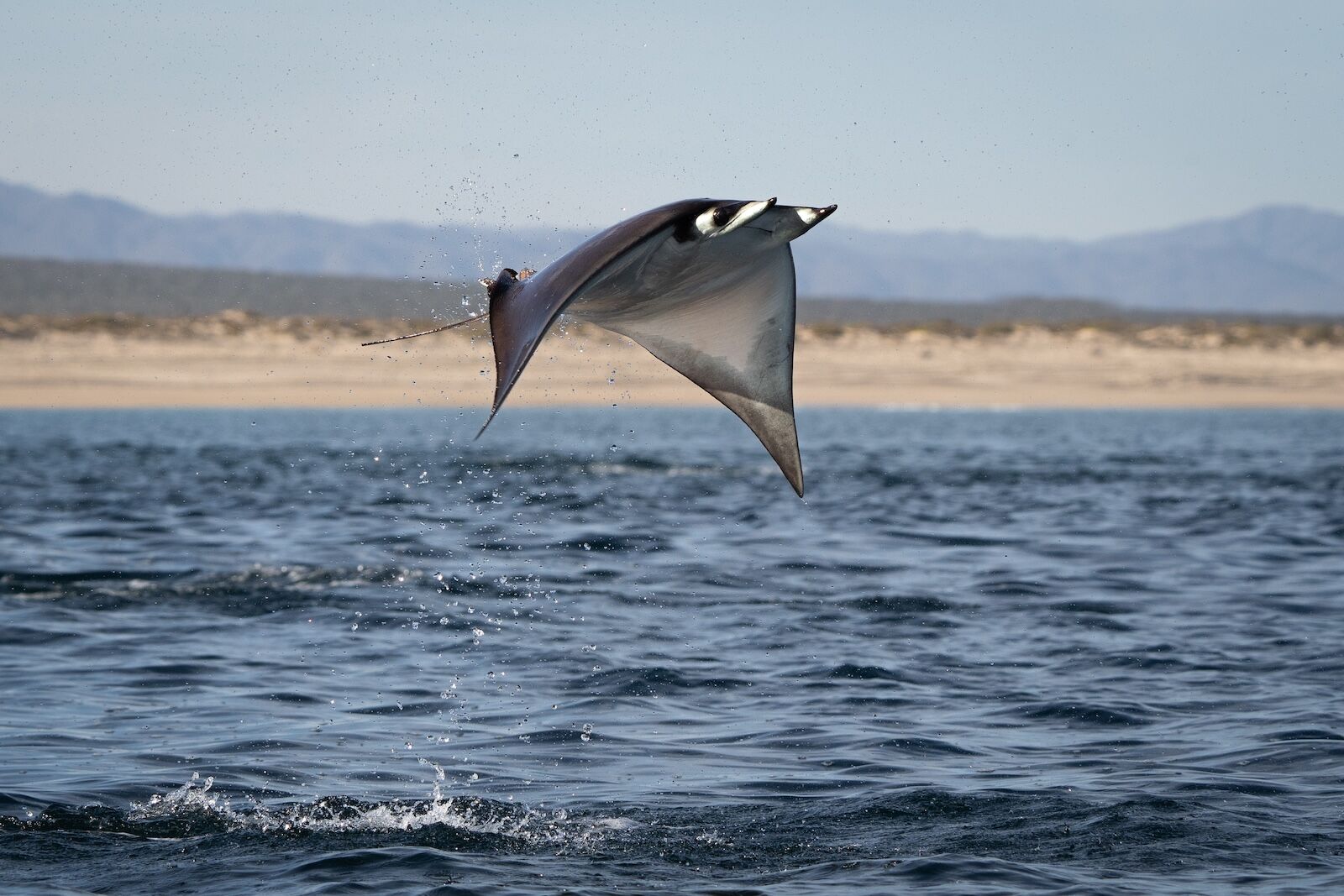
In spring and early summer, another giant arrives: mobula rays. Along the coastlines between La Paz, Cabo Pulmo, and the Cerralvo / La Ventana corridor, tens of thousands of rays gather in dense shoals, leaping from the water in synchronized bursts that have become one of Baja’s most photographed wildlife events. Citizen-science expeditions now invite divers and freedivers to help document those aggregations, tying tourism dollars directly to research on species that are globally threatened by bycatch and trade.

Desert, birds, and life above the tideline

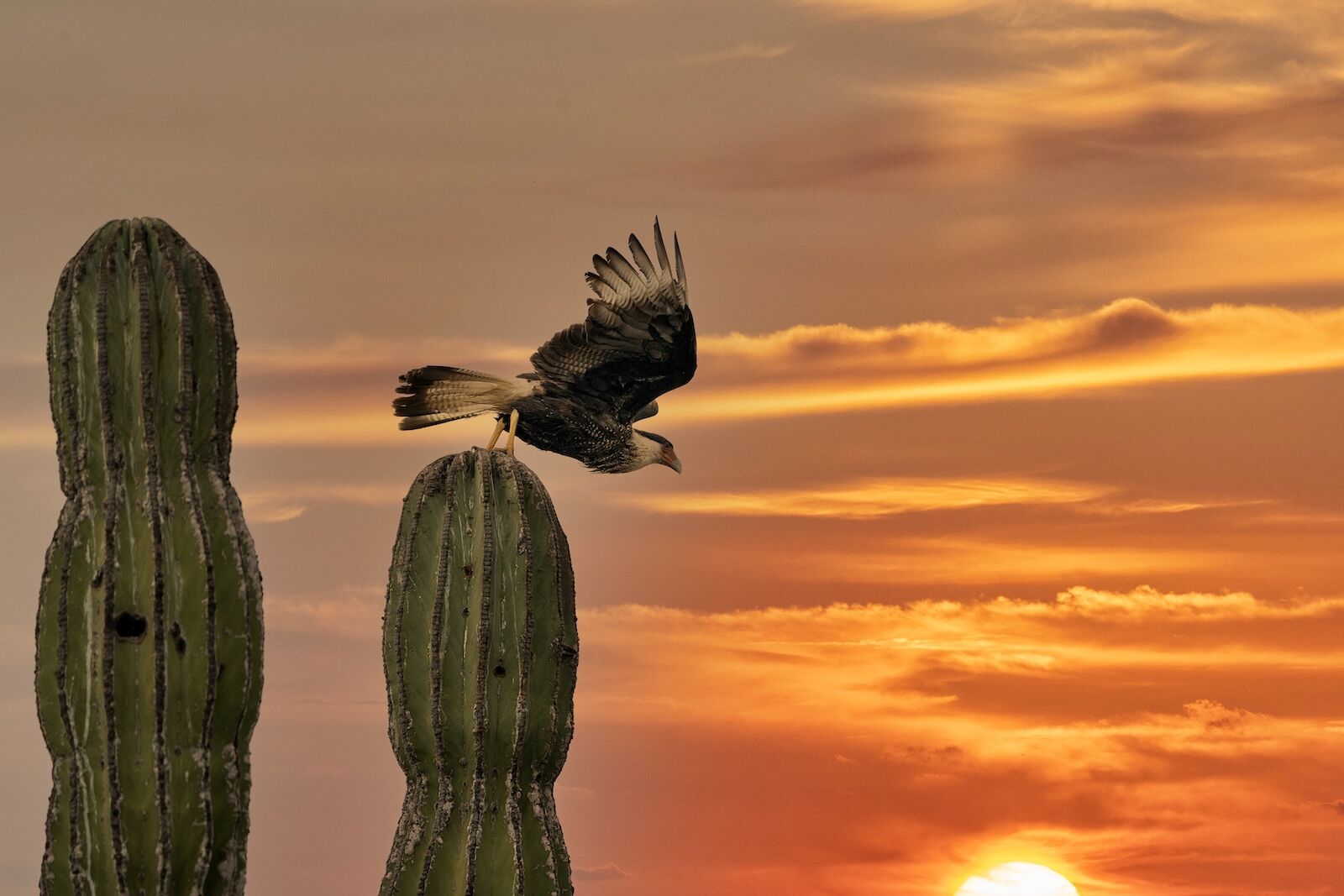
Caracara cheriway crested falcon on cactus in Baja California Mexico

Photo: Andrea Izzotti/Shutterstock

Baja’s terrestrial and bird life also make the peninsula feel wild. The same UNESCO-protected Gulf islands that shelter whales and sea lions also host some of the tallest cacti on Earth, an estimated 700 plant species, and major breeding colonies of seabirds like Heermann’s gulls, blue-footed boobies, and storm petrels.

Onshore, desert reserves and biosphere areas add pronghorn, bighorn sheep, endemic lizards, and raptor migrations to the checklist. The Pacific lagoons that host gray whales also support four endangered species of sea turtle, underscoring how much life is bundled into these shallow, protected waters.

For travelers, this means that even non-boat days can feel wild with sunrise birding on mudflats, cactus-framed hikes to cardón forests, and desert-camping under skies bright with stars.

How to make Baja your next wildlife trip

Mobula Ray Jumping in Baja California

Photo: Chris Vyvyan-Robinson/Shutterstock

Time your visit with the animals that you’re most interested in seeing. Gray whales peak in February and early March, while whale sharks are in season October through April. Blue and humpback whales in the Sea of Cortez and the Cabo area overlap with gray whale season between December and April. In spring and early summer, the mobula rays come in their biggest aggregations.

Make San Ignacio or Puerto San Carlos your base for Pacific gray-whale sightings, and La Paz for whale sharks. Sea lion fans will be at their happiest at nearby Espíritu Santo. Rays, dolphins, and other whales can be spotted in the wider bay here as well. Blue whales are most common near Loreto, while Cabo San Lucas is prime for humpbacks abd mobula rays.

It’s important to know that you’ll just have to accepting weather and wildlife-based cancellations. And always skip unregulated “swim with orcas” trips.

How we made our pick

Nominations for the 2025 Matador Network Wildlife Destination Award were sourced from across the well-traveled Matador Network team. The nominees were judged based on accessibility, range of experiences, sustainability, health of the ecosystem, affordability, local adherence to traditions and practices, community enrichment, and responsible wildlife viewing standards.

Our other top nominees, in no particular order:

  • Nebraska
  • Manitoba, Canada
  • Rwanda Volcanoes National Park
  • Assateague Island, Maryland
  • Campbell Island, BC
  • Great Bear Rainforest, BC
  • Galapagos
  • The Pantanal, Brazil
  • Yellowstone National Park
  • Nairobi National Park, Kenya
  • Tonga
  • South Luangwa, Zambia
  • South Georgia and the Falklands
  • Sri Lanka
  • New Zealand
  • El Rosario Sanctuary, Mexico

Discover Matador

Save Bookmark

We use cookies for analytics tracking and advertising from our partners.

For more information read our privacy policy.