As I pulled into the dusty gravel parking lot at the Nevada State Prison in Carson City, it was hot. Early evening in July still means plenty of heat, and I could feel it, even with the A/C in my car running. The second thing I noticed was a coyote jauntily crossing between me and the old entrance gate, giving me a quick glance as if to remind me these days, this is his territory — it’s humans who don’t belong. And in some ways, the coyote was right, as the now shuttered prison no longer houses people. But depending on who you ask, it does house ghosts. And plenty of them.
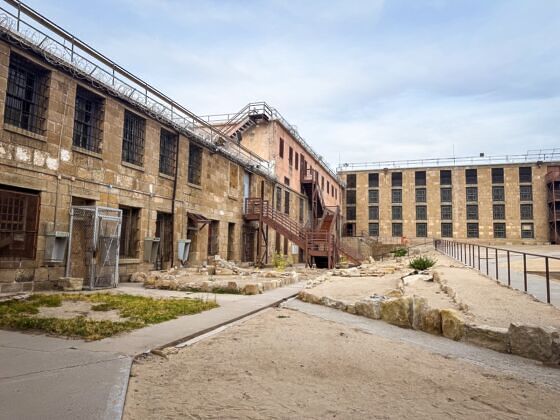
The courtyard in early evening. Photo: Suzie Dundas
At Nevada's Abandoned State Prison, the Ghosts Pay the Bills
Nevada shut this prison in 2012 and never fully decided what to do with it next. The state still owns the building, but it stopped paying to run the place the day the last inmates were bused out. What it didn’t do was demolish it. The sandstone walls, the guard tower, the cell blocks, and even the gas chamber where the country carried out its first execution by lethal gas are all still standing.
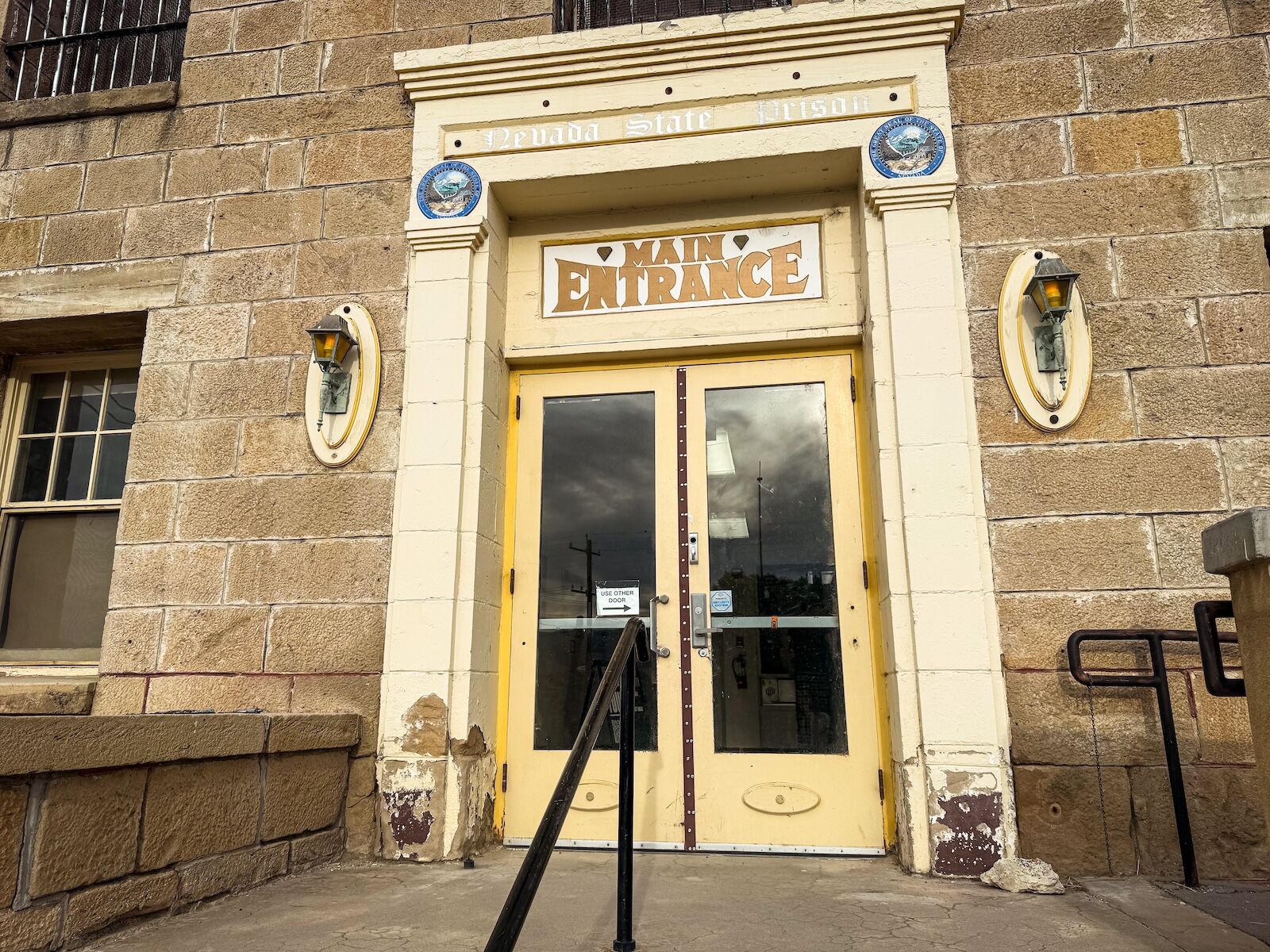
Photo: Suzie Dundas
Since then, a volunteer-led nonprofit called the Nevada State Prison Preservation Society has taken on the work the state stopped doing, like keeping the buildings intact and open to the public. While it hosts expected activities, like history tours and outdoor movies in the central courtyard, what it’s becoming more and more known for is how much it embraces the paranormal. I’d come for not just an evening ghost walk, but an evening paranormal investigation. On paper, according to those who know and study ghosts, the prison has every reason to be haunted.
The building is old and falling apart in parts. It opened in 1862, before Nevada was a state, and ran for roughly 150 years, making it one of the oldest operating prisons in the country when it finally closed surprisingly recently. It was built from stone from the on-site quarry. Recently, researchers have found all kinds of fossils in the quarry, as this area was once a low-lying sea. But that’s another story.
A semi-legal casino operated inside the walls from 1932 to 1967. In 1924, the prison executed an inmate called Gee Jon in what is widely cited as the first use of a gas chamber for a death sentence in the United States. It’s one of 23 states where the death penalty is still allowed, but no one has been executed in Nevada in 20 years. Parts of the prison burned to the ground on at least two occasions, and the movie An Innocent Man was filmed there in 1989, with some inmates as extras. The site was added to the National Register of Historic Places in 2015.
The ghost walk
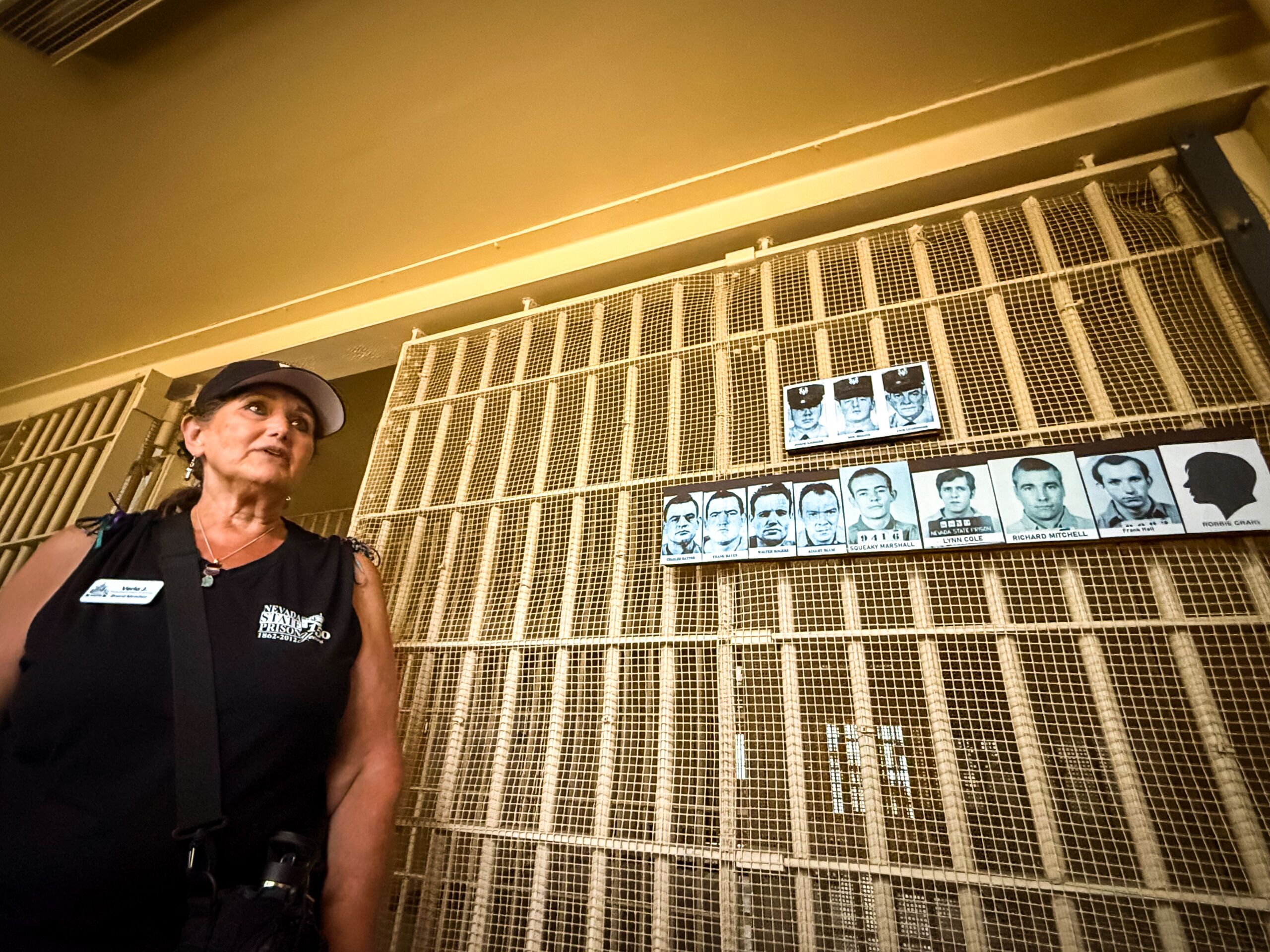
Jackson explaining the history of some of the prison’s most famous inmates. Photo: Suzie Dundas
The Ghost Walk starts at 7 PM, promptly, and the rules you agree to at check-in tell you something about the place before the tour does. No blue jeans, because the inmates wore blue and it’s better if the ghosts don’t think you’re one of them. No one under 15 is allowed, and you sign a waiver agreeing that the tours aren’t entirely safe — it’s a crumbling building, after all. Other requirements include closed-toe shoes and a flashlight. And, on this day in July, it was recommended that we bring a full bottle of water. “It’s hot as the humps of hell in there,” advised our guide Verla Jackson. She sits on the preservation society’s board and has long been interested in paranormal activity. She also offers “dimensional connection” services when not at the prison, joking that she’s trained in “all things woo.”
The Society frames the Ghost Walk as “Paranormal 101”– an introduction, rather than a full investigation. Our group ran about 20, and over the course of roughly 90 minutes, covered much of the prison. We started in the yard then moved through the commissary and mess hall, which hosted one of the worst prison riots in Nevada’s history, in 1971. Then it was through the kitchen and some of the outdoor hallways, known to be among the most dangerous areas as they were blocked from surveillance camera views. We then went into the prison, passing cell blocks, showers, storage rooms, and the eerie execution chamber room, which looks like it could still be used today.
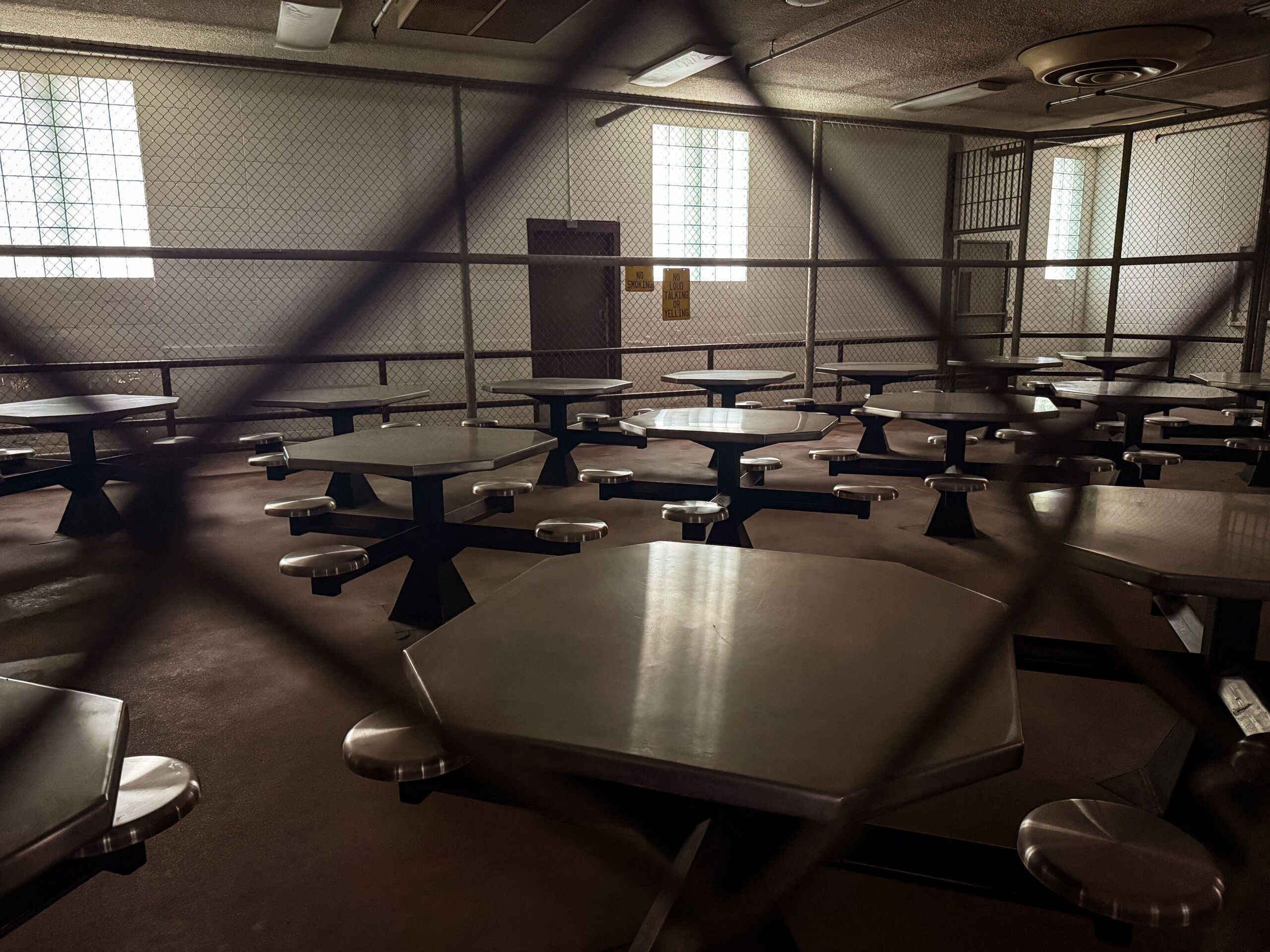
The mess hall. Photo: Suzie Dundas
During this time, Jackson shares tales of the prison’s most infamous inmates and her own experiences leading paranormal tours here. While we’re stopped in front of “the Hole” — the prison’s early solitary confinement chamber in a dark cave in the quarry — she explains that many ghosts are here simply because they haven’t crossed over. That includes the ghost of a man who spent seven straight years in the Hole. Because she’s able to communicate with spirits, she says, she can help them find peace.
“Is it easy to cross over a spirit?” I asked, expecting a tale of what goes into the process. Turns out I was wrong.
“Actually, it is pretty easy,” she shrugged. “But they have to ask for it.”
This part of the tour runs from 7 PM to 9:30 PM, and after the tour, we had a chance to watch Jackson work her magic. We returned to the mess hall, where dowsing rods and other common paranormal tools were placed on the table. Jackson began using the rods to try to make contact with a spirit which, she says, can range from recently deceased inmates to guests of the Warm Springs Hotel that sat on this site before the prison was built in 1861. When Jackson does make contact, she’s able to do tarot readings for the spirits. As a skeptic, I can’t say I’m convinced we’ve really connected to the beyond, but I enjoyed the experience and came away convinced I’d at least like to hire Jackson to a tarot reading for me, while I’m still alive to enjoy it.
The investigation
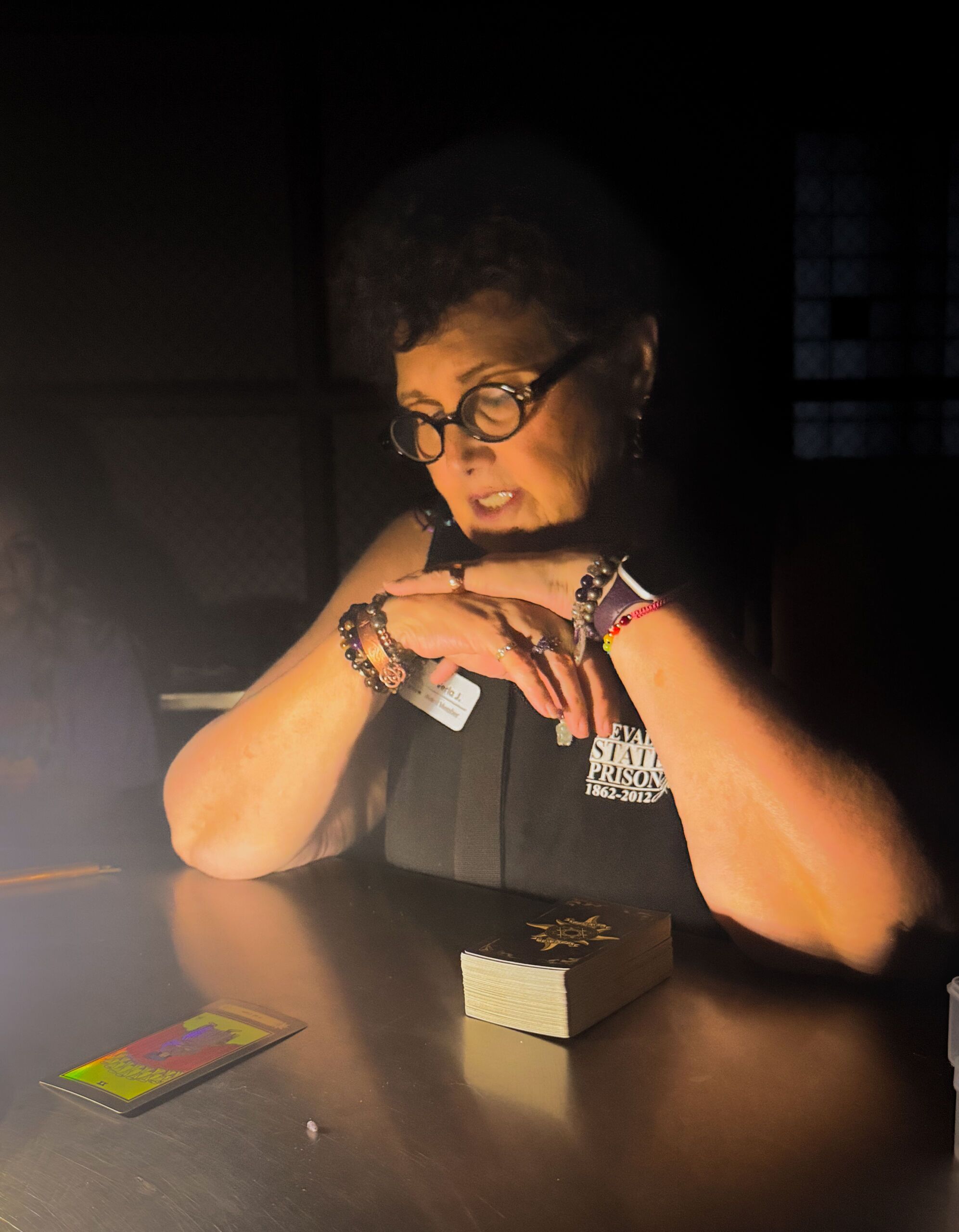
Jackson starting a tarot card reading with a resident spirit. Photo: Suzie Dundas
At 9:30 PM, the walk gives way to the add-on: a two-hour paranormal investigation for the people who want to stay. This is where the night stops being a tour and becomes the thing the society sells as its specialty. The group thinned and then split, so only five of us ended up in the courtroom building. It was used for hearings while the prison was operational but now serves as the meeting space for the preservation society. The gear was modest: handheld EMF detectors and a couple of phone apps that turn ambient signals into spoken words. We brought out the dowsing rods, then went around the table posing questions to the spirits, everyone watching the EMF detectors to see if there’d be an answer.
After about an hour, during which time we may or may not have made contact with a ghost — his incarceration timeline, reported via the app, didn’t exactly line up with prison records — we headed into the older part of the prison itself and settled in the second-floor women’s cell block.
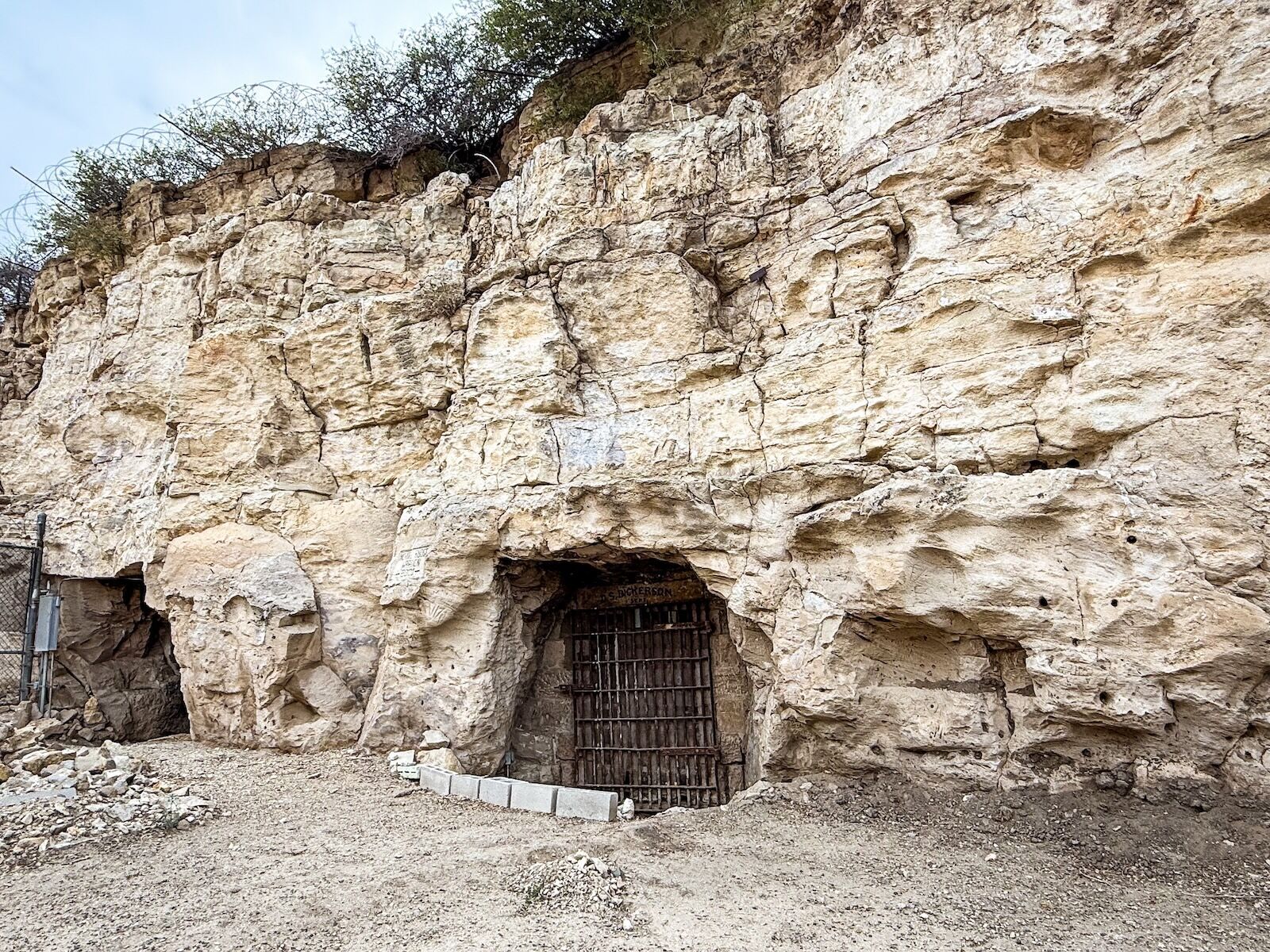
No ghosts in “The Hole,” used for solitary confinement in the prison’s early days. Photo: Suzie Dundas
We didn’t get much in either location. The EMF detectors lit up a few times in the courtroom, and every so often, one of the ghost-voice apps pushed out a word. It’s the kind of thing that lands if you want it to. But EMF meters react to plenty that isn’t a ghost, and I did find it a little suspicious that the ghost-voice apps couldn’t agree on what the “ghosts” were supposedly saying. In the women’s pen we got nothing at all, which Jackson chalked up to a quiet night. The ghosts, we were told, hadn’t been very active. Can’t argue with that. I assume it’s a lot like wildlife watching — maybe you see them, maybe you don’t.
That’s what struck me the most about the evening — not a cold spot or a shadowy figure or a voice on an app, but the guides. For a thing marketed on the paranormal, nobody working the night oversold it. When the women’s pen gave us nothing, the leader said so, and left it at that. When the courtroom meters ticked, no one leaned in to jump to conclusions. There was no showmanship, no fabricated payoff for the group that tended toward believers and likely could have been drawn in.
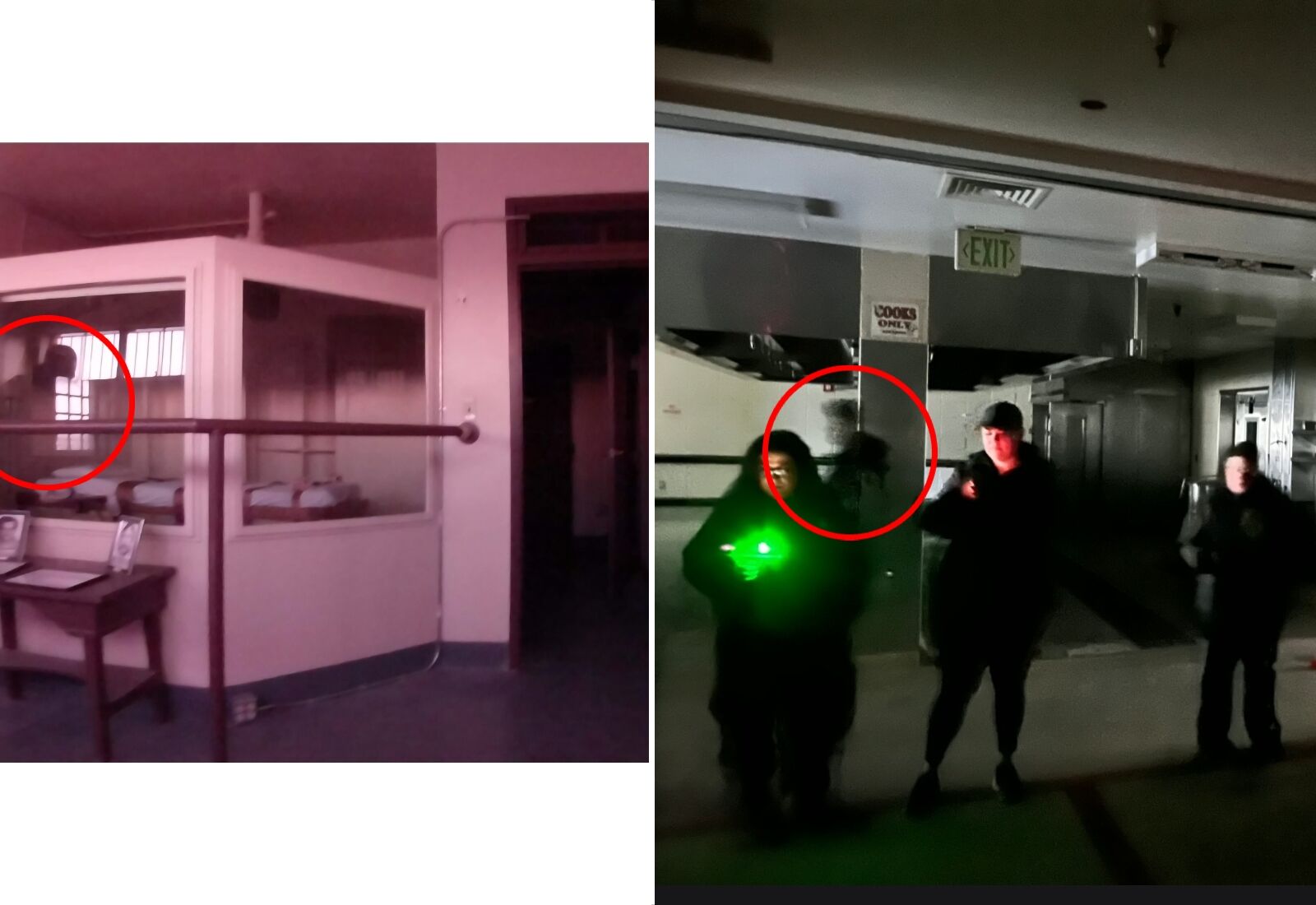
Photos from past investigations that have revealed a little more. Photos: Nevada State Prison Preservation Society
At first, the questions felt a little dumb. The guides weren’t demanding names or dates or criminal information or dramatic proof of existence, even. They were asking about everyday life, like whether anyone wanted to talk, where they were from, and what their favorite food was. But partway through, it started to make sense: they want the kind of conversations they’d have had when they were alive. “They find it easy to communicate with me because I don’t antagonize,” Jackson told me. “They just want to talk. They don’t care about what.”
What came through instead was something closer to respect, both for the people who lived and died here, and for the ghosts themselves. They were treated less like a gimmick to observe, and more like former residents who might still be around and were owed a little courtesy.
How ghosts keep the prison going into the 21st century
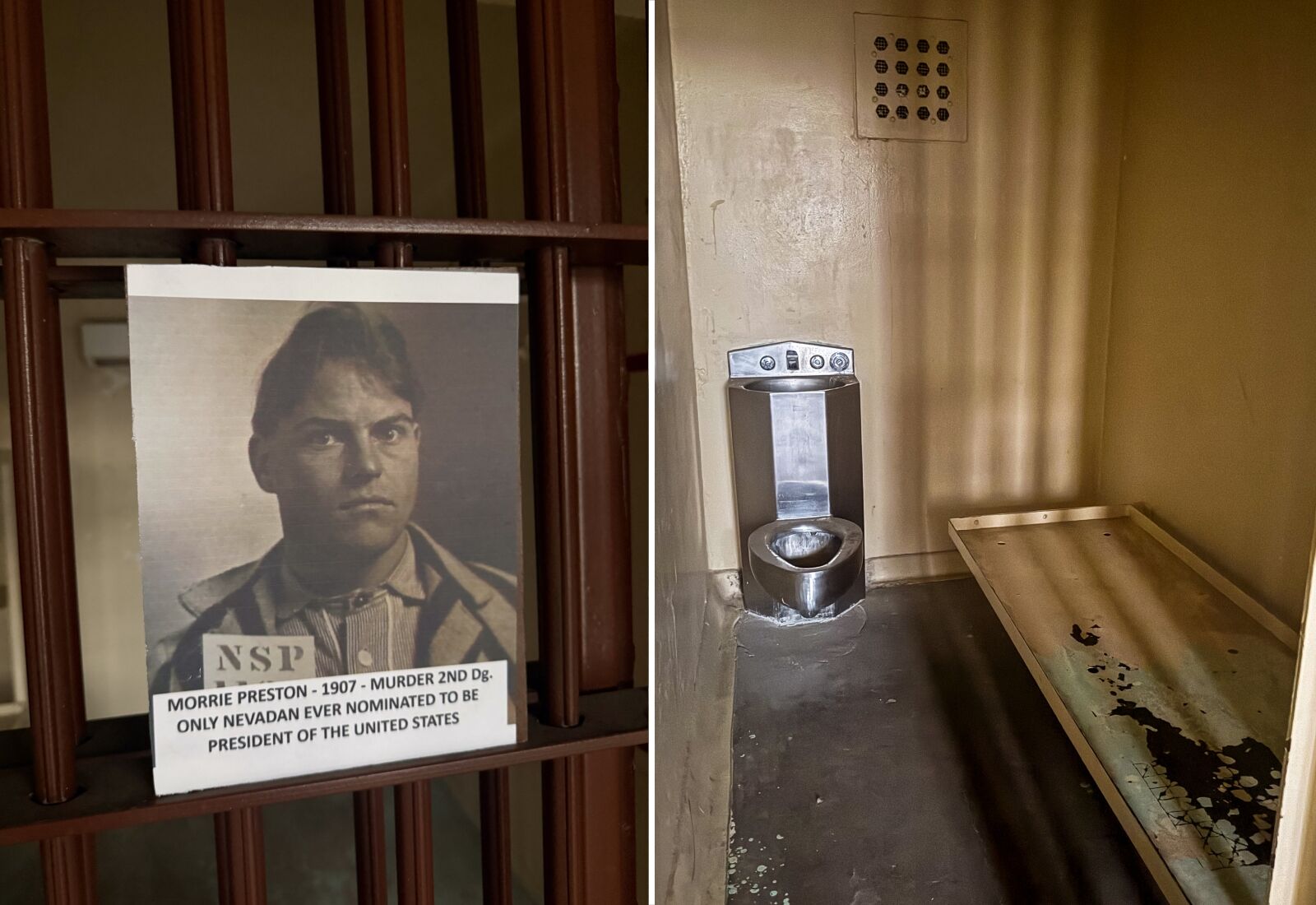
Historical information is guaranteed. Ghosts? Not so much. Photo: Suzie Dundas
While it’s unclear if the tour finds ghosts regularly, it does find money. The state built the prison, used it for 150 years, and then closed it rather quickly. A 2015 law gave the preservation society a framework to maintain and use the grounds, but it didn’t come with an operating budget. Keeping the lights on and the building semi-operational, continuing to research the site’s history, and trying to remember this part of Nevada’s story, as good or bad as it may have been, has a cost. The ghost walks run $50 a head and the paranormal add-on is an extra $100. Enterprising ghost hunters can even stay in the prison overnight at $125 per person with a minimum of four people. Letting these curious ghost hunters linger in the gas chamber and stand in the cells of infamous gunslingers and train robbers helps keep this part of western Nevada’s history alive.
Nevada isn’t alone in this. The same arrangement has kept other decommissioned prisons upright: the Ohio State Reformatory in Mansfield was saved and run by a preservation society funded on tours (some of which are paranormal), and the West Virginia Penitentiary, closed in 1995, follows a similar model.
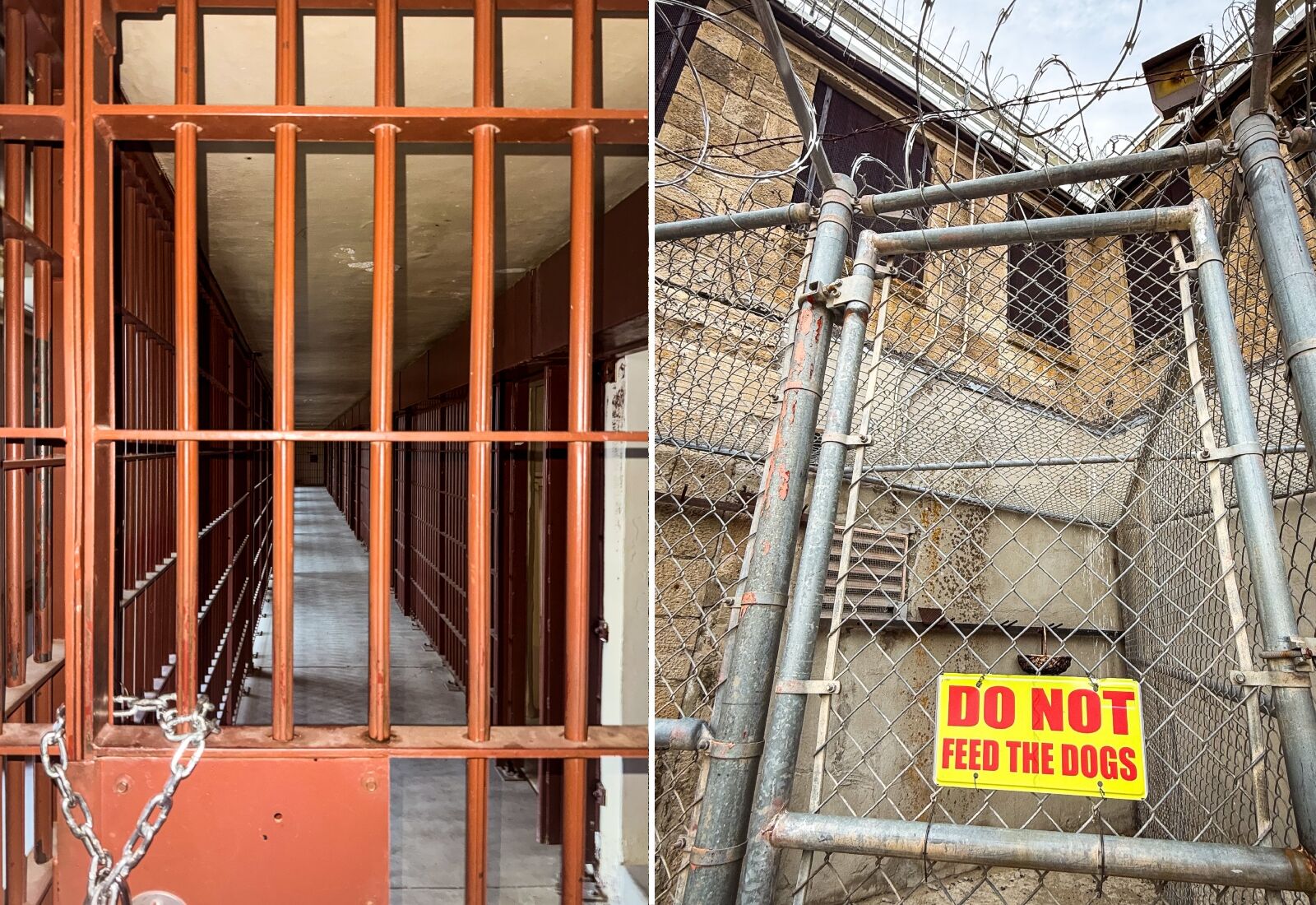
I didn’t spot any ghosts — but I also learned that may be beside the point of the tours, anyway. Photo: Suzie Dundas
Of course, not everyone will agree that selling the prospect of communicating with deceased inmates, guilty or not, is the most palatable way to save a historic building. A historic-preservation scholar at West Virginia University put the worry plainly last fall. “There’s value in keeping history visible,” researcher Sophie Slaughter said. “But we have to make sure that in telling these stories, we’re honoring the humanity of the people who lived and died there, not just their ghosts.” Which feels exactly like what my experience at the Nevada State Prison was doing. The people running the night could have given the believers in the room a bit of fabrication, and they didn’t. They didn’t even seem to care when skeptics like me showed up to watch.
Sure, reverence and respect for the unknown of the Great Beyond don’t pay the bills. Ticket sales to the curious do. But at the Nevada State Prison, that balance felt like it was kept in check by guides who seem to understand the difference between a good story and a real one.
By the time I pulled back out of the lot just after midnight to drive home, it was fully dark and the temperature finally back down into the double digits. There was no coyote this time, but I didn’t take that to mean anything. If I’d learned anything on this night, it was that not seeing it didn’t mean it wasn’t there. 