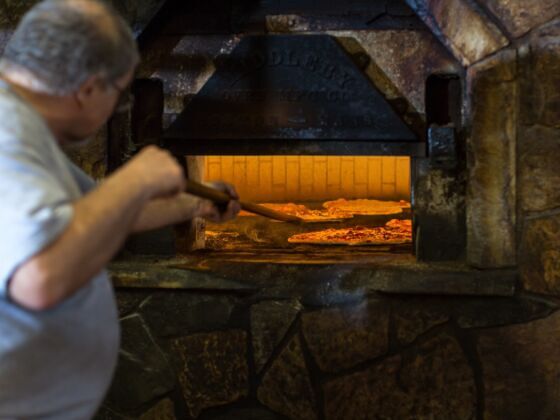
Photo: Visit New Haven

I Used to Think NY-Style Pizza Was the Best. Now, I'm Questioning Everything.

Restaurants + Bars
by Eben Diskin Apr 30, 2026

As a pizza enthusiast with parents from Brooklyn, growing up in Massachusetts was pretty difficult for me, food-wise. From an early age, I remember hearing murmurs at least once a week of “you just can’t get good pizza around here,” and eventually, the idea seeped into my bloodstream.

If my corner of New England did have a signature type of pizza, it’d be Greek: baked in a pan with an abundance of oil, resulting in a spongy, oily crust, and cheese drenched in grease. I, however, was raised to elevate New York-style pizza above all others, with its signature thin crust, slightly sweeter tomato sauce, and large, foldable slices.

That’s why, when I visited New Haven, Connecticut, and learned the town calls itself the “Pizza Capital of America,” I was incredulous. It felt akin to Derek Jeter comparing himself to the legendary Babe Ruth.
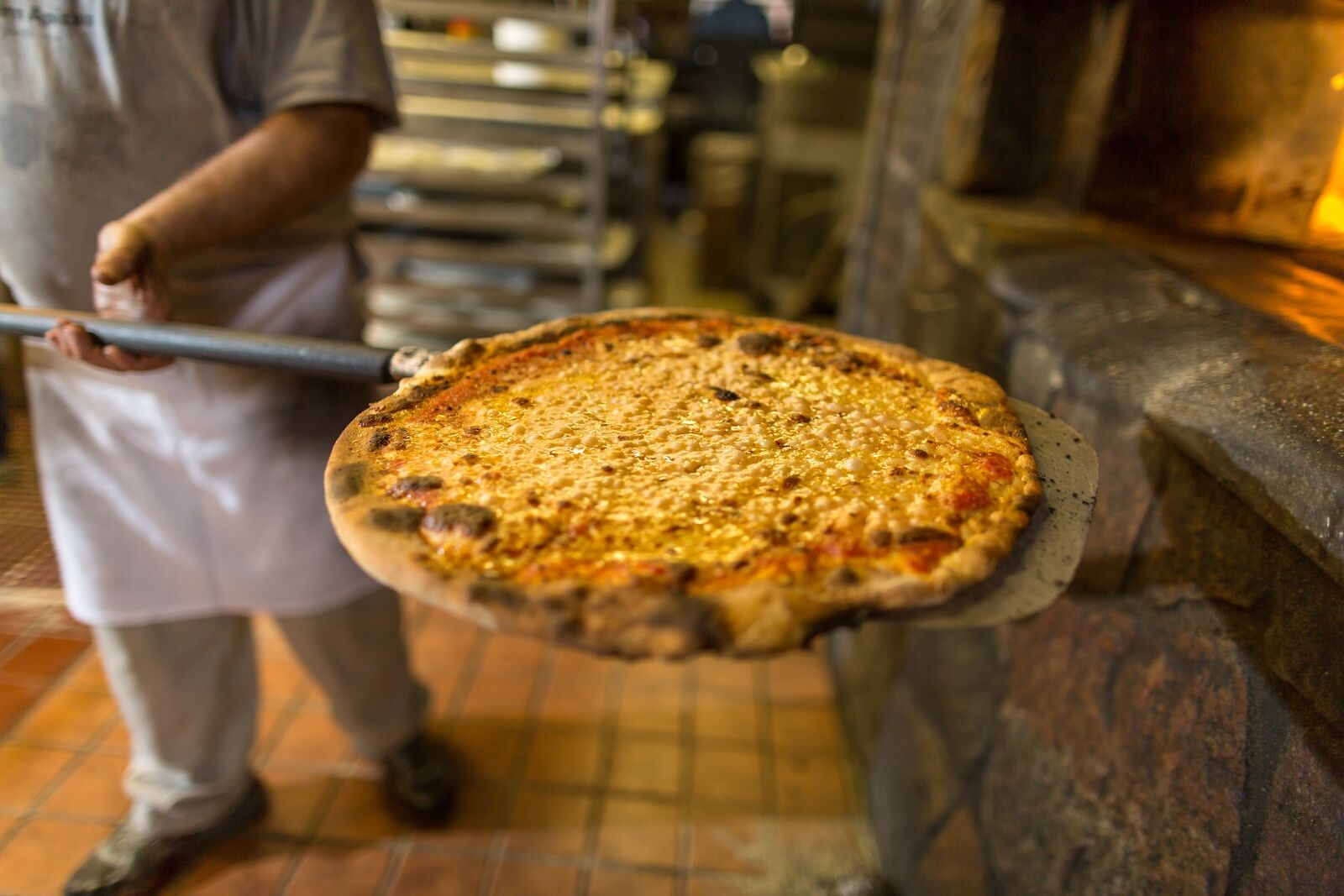
It’s pronounced ah-beetz

I assumed pizza heavyweights were usually major cities, like New York, Chicago, Detroit, or Naples, the actual birthplace of pizza. New Haven, however, has a population of less than 140,000 people. I knew it was home to Yale University, but that’s about it. Luckily, I had Colin Caplan, New Haven’s resident pizza expert and historian, and founder of Taste of New Haven, to explain to me what, exactly, New Haven-style pizza is, and why the locals take such fierce pride in their pies.

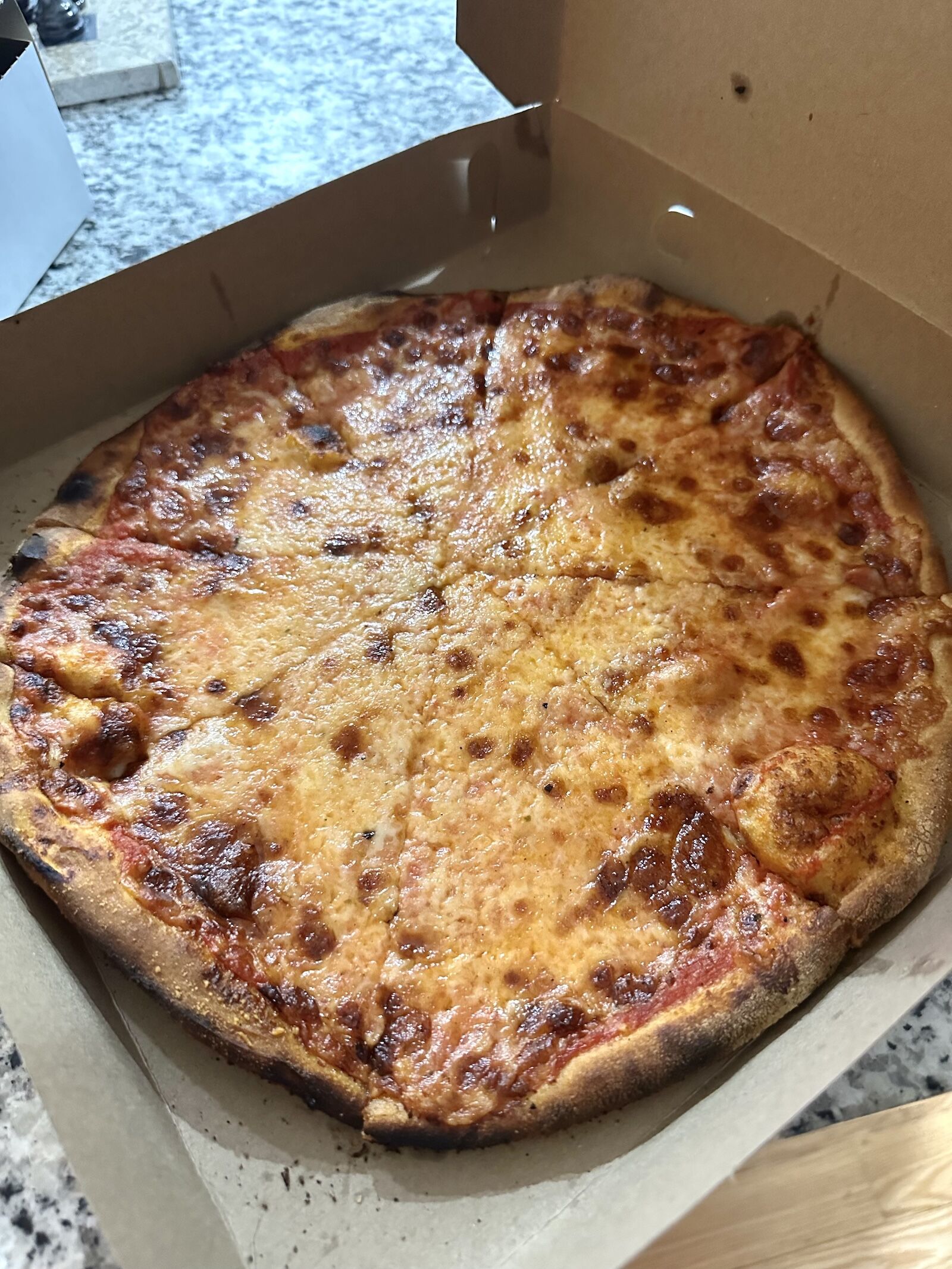
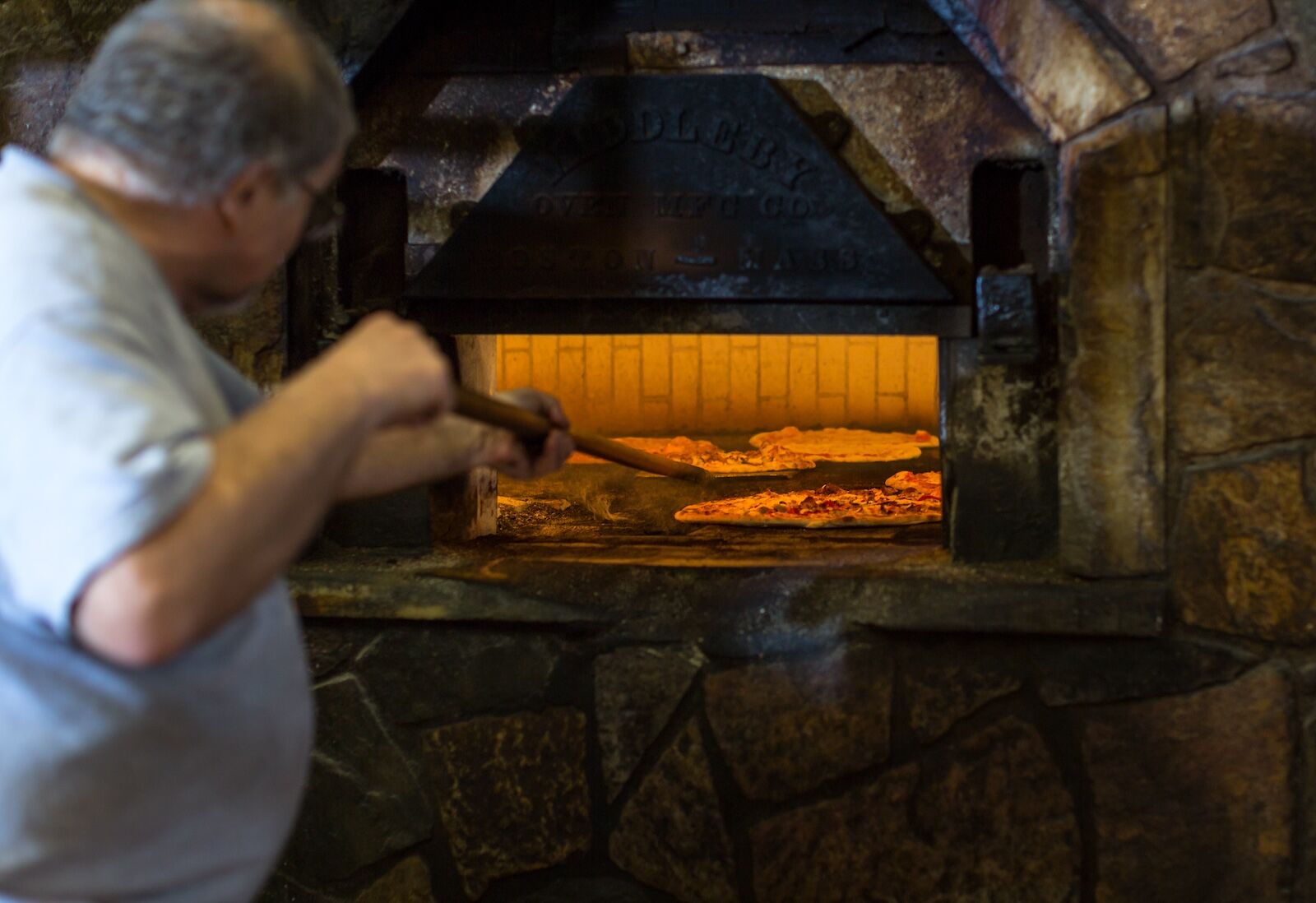
New Haven pizza is as much about the oven as the ingredients, Caplan explained. Distinguished by its oblong shape and thin, charred crust, it cooks at high temperatures in a coal-fired oven. It wasn’t until I met Caplan that I heard the term “sauce forward,” describing a pizza with a lighter layer of mozzarella cheese and a focus on a tangy sauce. That’s bad news for the cheese-lovers out there, but good news for sauce aficionados (and, perhaps, the lactose intolerant). New Haven pies are also typically served whole, rather than by the slice, as is common in New York City.

“Don’t you get sick of eating pizza all the time?” I asked Caplan, whose literal job is eating pizza with visitors.

He looked at me quizzically. “Not apizza. I usually have at least a slice or two a day. I never get tired of it.”

One of the most unique features of New Haven pizza is that it’s not even called pizza. It’s called “apizza” and pronounced somewhat like “ah-beetz.” It’s a remnant of the Neapolitan dialect used by immigrants when they first came to New Haven in the early 1900s. You might feel a little ridiculous the first few times you say it, but if you want to fit in in New Haven, you’ll get used to it.

Frank Pepe’s Pizzeria Napoletana

new haven pizza tour - clam pie

Photo: Eben Diskin

If there’s one institution that captures the essence of pizza in New Haven, it’s Frank Pepe’s Pizzeria Napoletana. It’s arguably the most famous of New Haven’s storied pizzeries, opened more than a century ago, and regularly has lines stretching down the street. It’s also said that Frank Pepe himself pioneered the modern pizza box, with documented use as early as 1936.

The first thing I noticed about Pepe’s was the coal-fired oven, easily three times larger than any oven I’d ever seen and covering an entire wall. The second thing I noticed was the staff, several of whom Caplan stopped to chat with. One of Pepe’s managers started working there in high school, and our server had been working there for more than 20 years. I could tell they both took great pride in their Pepe’s roots.

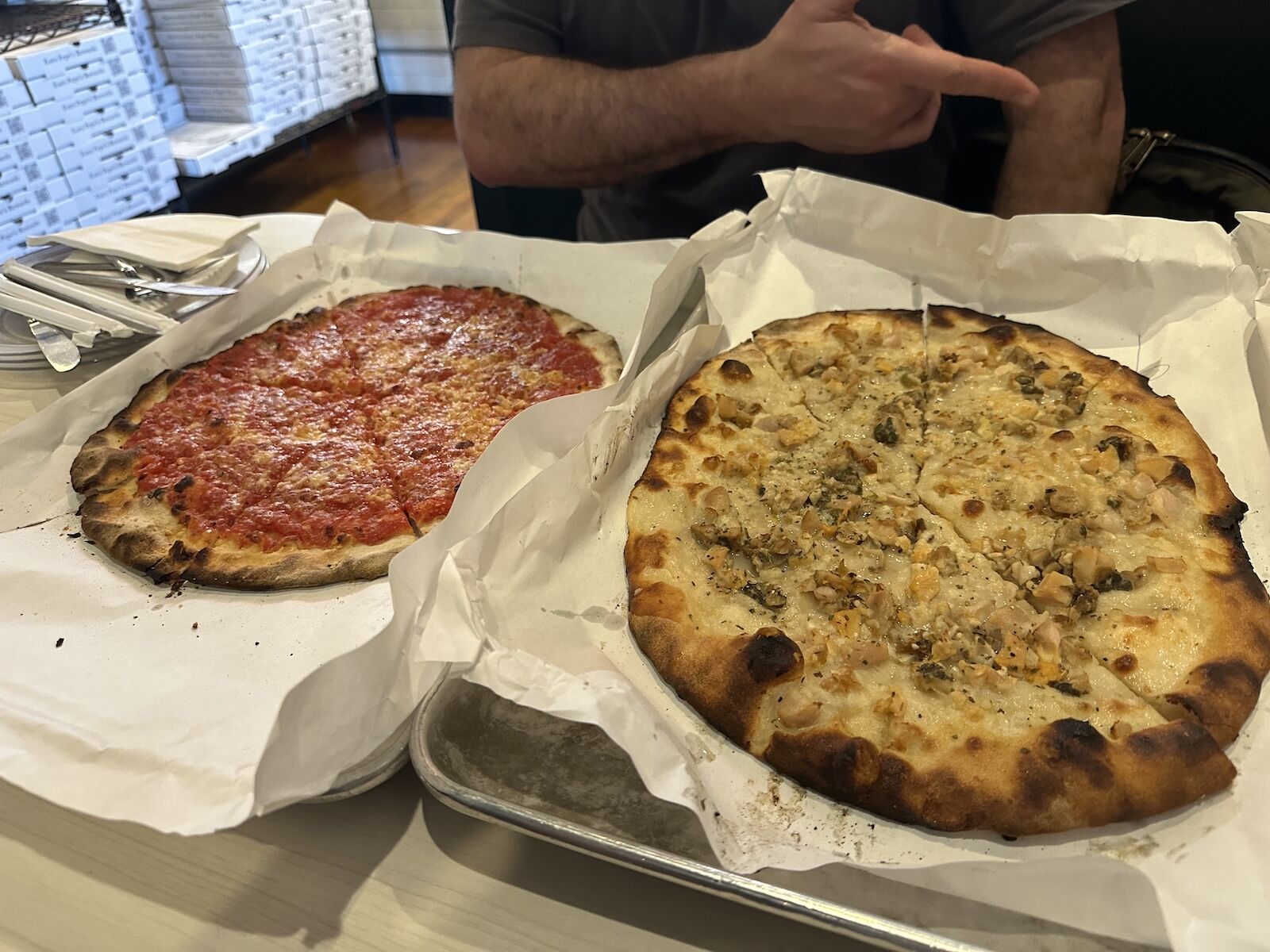
It wasn’t long before they brought out a tomato pie and a clam pie, both New Haven staples. The tomato pie is exactly what it sounds like: tomato sauce, garlic, olive oil, and a very small amount of grated Pecorino Romano cheese. For a sauce-forward guy like me, the beauty was in the simplicity. That’s why I approached the clam pie not unlike how a dog may sniff out a stranger they haven’t met. The white pizza was topped with littleneck clams, garlic, oregano, grated Pecorino Romano, and olive oil. It ended up being a winning combination, and I’d highly recommend it for anyone who wants to try New England clams without wasting your time at a seafood restaurant (that probably doesn’t even serve pizza).

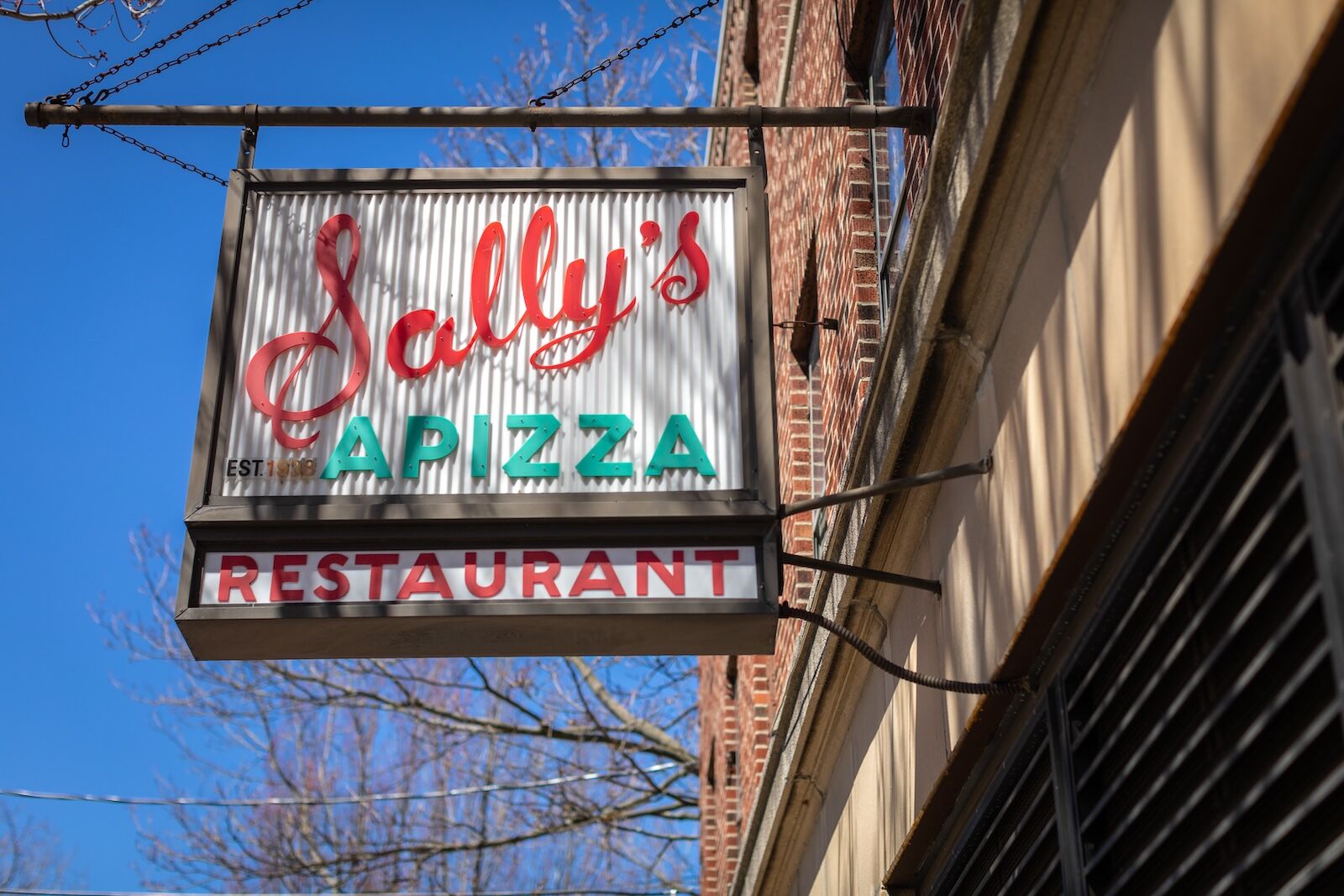
Sally’s Apizza

Wooster Street was really proving itself to be the Vegas Strip of pizza. Just a few blocks from Pepe’s, we arrived at Sally’s Apizza. It was founded in 1938 by Salvatore “Sal” Consiglio, the nephew of Frank Pepe; the staff insisted there was no bad blood.

The inside of Sally’s is exactly what an old-school pizzeria should look like. With a much smaller dining room than Pepe’s, Sally’s decor is dominated by autographed memorabilia on the walls of celebrities who have visited the restaurant. That includes Frank Sinatra – a high school friend of Sal’s brother who famously ate at Sally’s after a gig in 1940, and continued to patronize the pizzeria for many years.

It was here where Caplan started to gain respect for my pizza obsession. When he asked if I wanted a Foxon Park soda (a local brand sold mostly in New Haven), I politely declined.

“If I drink soda, I’ll have less room for food,” I explained. “I’ll stick to water.”

He seemed surprised, but then nodded with sober esteem for my decision. “I get it,” he said.

There’s still variety within New Haven-style pizzas

new haven pizza tour - modern apizza

Photo: Eben Diskin

About a 20-minute walk away on State Street, Modern Apizza might sound like the contemporary younger brother of Pepe’s and Sally’s, but it’s actually been around since 1934. Though it has the town’s distinctive char, it serves up pies with a slightly thicker crust and heavier helping of cheese, making it more similar to a New York slice. It also uses a pizza oven heated by oil, rather than coal, resulting in a slightly less smoky-tasting crust.

After a quick stop at Libby’s Italian Pastry shop, where Caplan diabolically insisted I try zeppole (fried dough balls filled with custard), we visited another restaurant that departs slightly from New Haven’s traditional style. The pizza at Zeneli Pizzeria e Cucina Napoletana will be familiar to anyone who’s traveled to Italy. Pizzas are topped with mozzarella cheese made with buffalo milk, and pizzas are cooked in a wood-fired oven, giving them a slightly less smoky finish.

You can find non-traditional options, too

new haven pizza tour - bar new haven

Photo: Eben Diskin

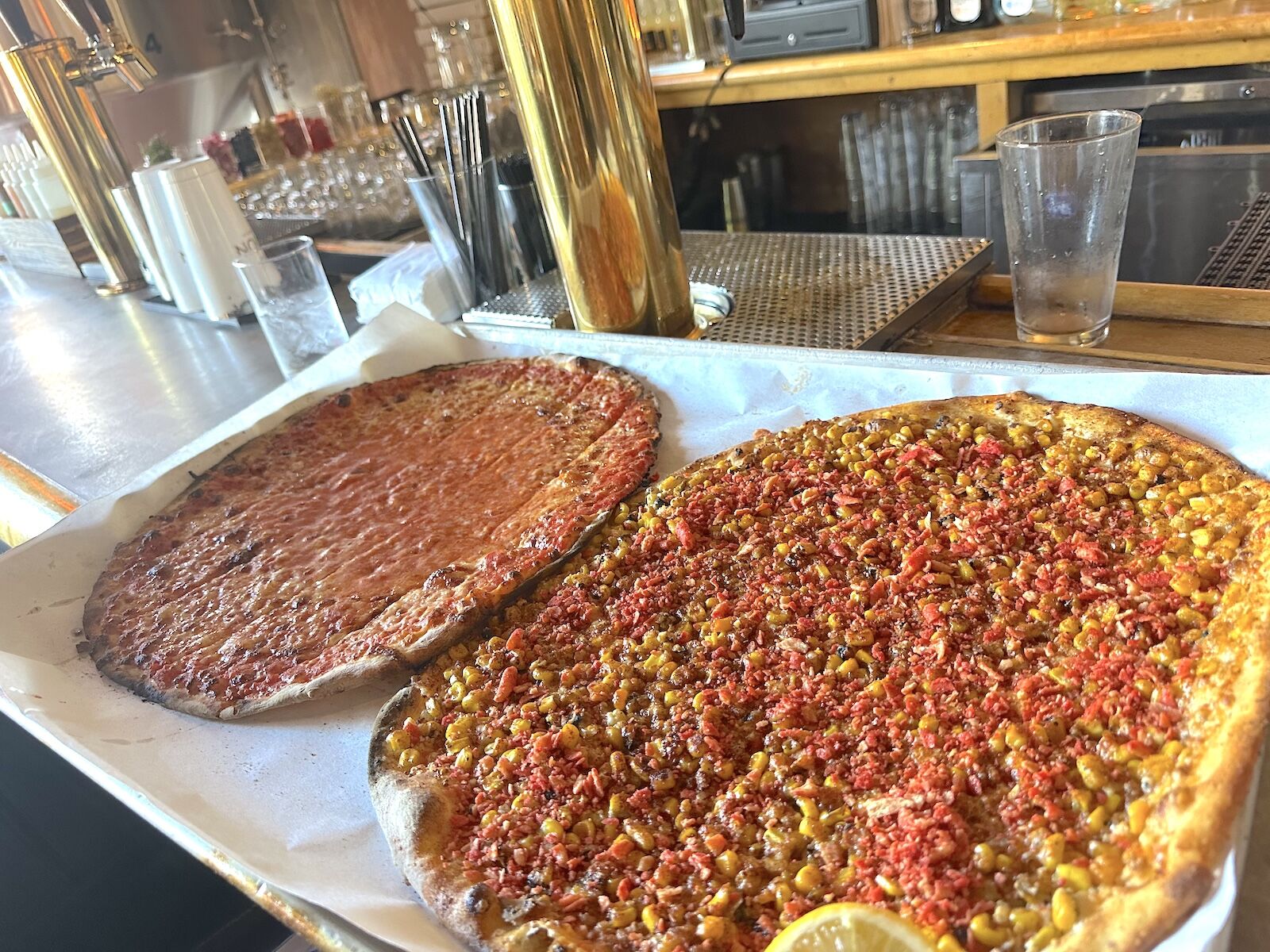
After tasting a few New Haven staples, Caplan took me somewhere a little different: Bar New Haven. The place is high energy, acting as equal parts pizzeria, brewery, and nightclub. Fittingly, we sat at the bar, and I put my fate in Caplan’s hands as he ordered a Mexican street corn pizza — a white pizza topped with mozzarella, queso fresco, chipotle mayo, corn, and, unexpectedly, crushed Takis tortilla chips.

Though I felt like I’d hit a wall after trying so much pizza, I wanted to give the cracker-thin, wood-fired pizza a try. It was one of the best specialty pizzas I’d ever had, prompting Caplan to ask about the various types of pizza I’d tried in my job as a travel writer.

Like other people might show off pictures of their children, I whipped out my phone and showed Caplan my photo album of international pizzas, which he browsed with more interest than I could ever feign for family photos. At that moment, I realized that perhaps I had more in common with New Haven’s pizza die-hards than I ever would have thought.

A city that lives for pizza

Anyone who appreciates good pizza needs to visit New Haven at least once, even if you don’t have a dedicated album on your phone just for pizza. But if you do, visiting is akin to a baseball fan making a pilgrimage to Cooperstown. The fact that New Haven pioneered the deliciously distinct apizza and churns out myriad other high-quality styles is a testament to its well-rounded mastery of the art of pizza.

Though the recommendations above are classics in the town, Caplan keeps track of every New Haven-style pizza place in the world via a handy online map. Unsurprisingly, apizza-style pizza is proliferating rapidly. After visiting, I see why.

After leaving Bar New Haven, I headed back to my hotel and was in the room for no more than an hour when an unexpected feeling swept over me: I wanted more pizza. And for me, that cinched it: I’m now all about New Haven-style pizza. I can’t think of another food where, even after four hours of tasting it, I’ve still wanted more. It’s what makes New Haven pizza so special, and what convinced me to betray my allegiance to New York-style pizza – at least when I’m in the “Pizza Capital of America.”

Discover Matador

Save Bookmark

We use cookies for analytics tracking and advertising from our partners.

For more information read our privacy policy.