A five-star hotel should integrate seamlessly into its neighborhood as well as its guests itinerary, providing a full-circle respite while remaining integrated to the social fabric of the city and its transportation network. The Park Hyatt Tokyo exemplifies this in a city known for its hospitality as much as for its cuisine, and the hotel defined my family’s recent visit to the Japanese capital. The hotel reopened in December 2025 following a 19-month remodel that included a refresh for its iconic dining and drink options as well as the two-story Club on the Park. The views of Tokyo made famous by the film “Lost in Translation,” starring Bill Murray and Scarlett Johansson, are accessible from nearly everywhere on the property and remain a defining experience here. But the remodel ups the ante for Tokyo hotels, turning what has long been a landmark attraction into an excellent place to base yourself for an exciting stay in the city. I visited in January with my wife and four-year-old daughter, and each experience over the course of our stay accentuated why this hotel is poised to remain among Tokyo’s most iconic.
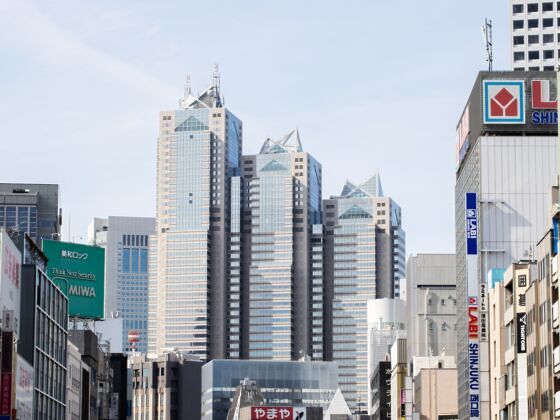
Lost in Translation Made This Tokyo Hotel Famous. Its New Remodel Makes It Iconic.
We hope you love the Park Hyatt Tokyo! Just so you know, Matador may collect a small commission from the links on this page if you decide to book a stay.
A fresh look for Park Hyatt Tokyo
The Park Hyatt Tokyo’s remodel is the most comprehensive in the hotel’s 30-year history. Led by Paris-based Studio Jouin Manku, the project set out to “listen” to what time had revealed in the original John Morford interiors and Kenzo Tange architecture, while keeping in tact the allure that brought director Sofia Coppola to film Lost In Translation here in the first place – it’s ability to convey the majestic impermanence of a traveler’s time in a great city like Tokyo. The firm preserved the landmark’s cinematically celebrated profile atop Shinjuku Park Tower through softening forms and warming materials, as well as expanding sightlines to Mt. Fuji beyond the city itself. Our room, a Deluxe King on the 43rd floor, faced west towards the volcano, its dramatic rise above the city skyline illuminated by the sunset to a crisped snow-capped white striking almost beyond comprehension.
The design team focused on rekindling the hotel’s quiet strength and sense of serenity, what co-founding principal Sanjit Manku called in a press release announcing the remodel “silence as a form of luxury” in an intensely vibrant city. I felt this immediately upon entering the common areas. Rather than hitting guests with a curated vibe of playlists and posturing, the hotel instead lets its setting do the talking. All 171 rooms got the treatment, intended to help them flow and with a stronger emphasis on contemporary Japanese art, including works by the artist Yoshitaka Echizenya.
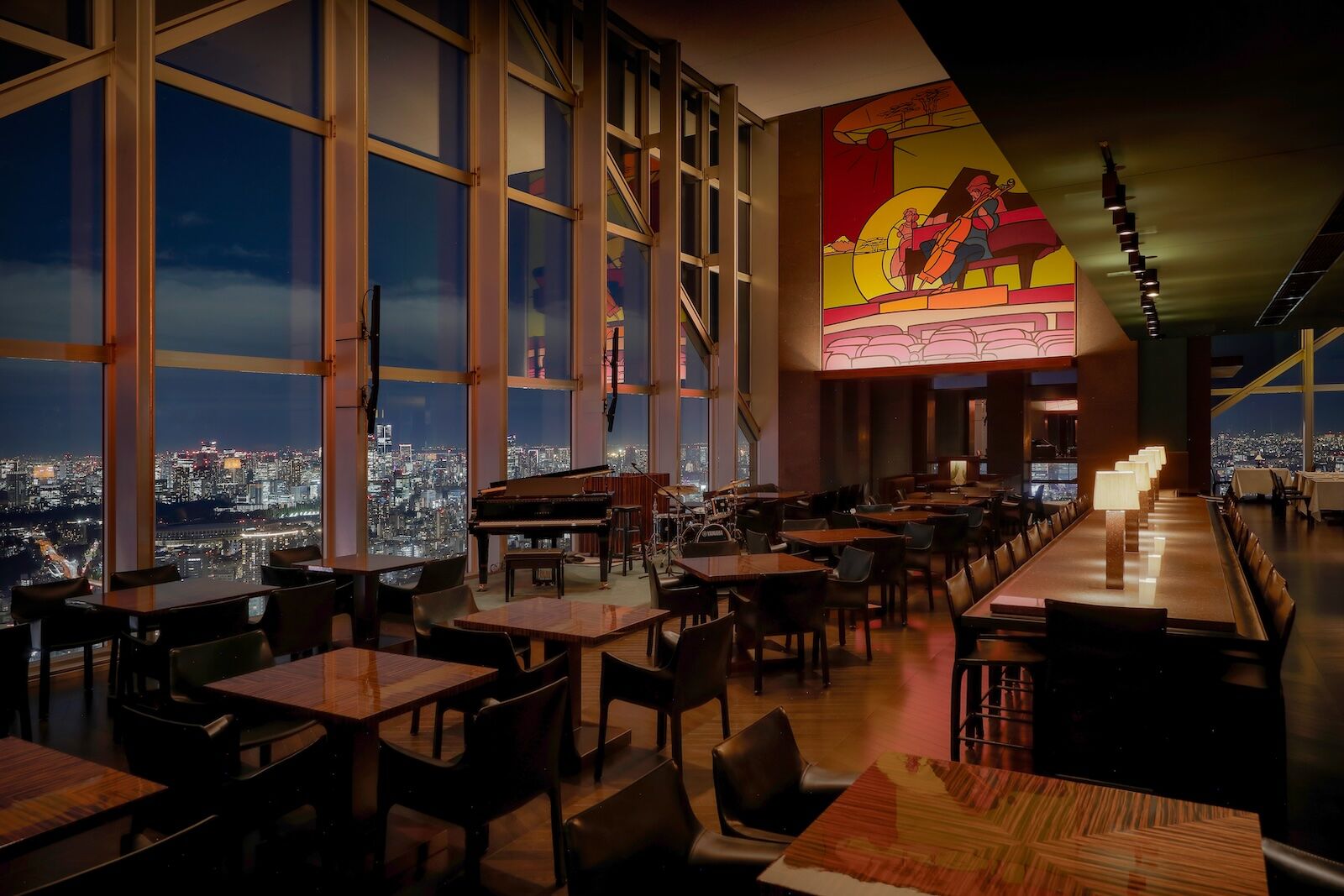
Designed to emulate a New York jazz club, the New York Bar at the Park Hyatt Tokyo is where Bob first met Charlotte in Lost in Translation.
Public spaces and dining venues were also rethought. Girandole by Alain Ducasse introduces a Parisian brasserie concept with Japanese produce. The Peak Lounge & Bar, in the glass-lined 39th-floor atrium prior to the lobby, is the first part of the hotel a guest passes through when checking in, and it’s worth a stop for its monolithic marble bar and “Six Prefectures, One Skyline” cocktail program (the views match the name).
New York Grill & Bar – where Bob Harriss, played by Bill Murray, and Charlotte, played by Scarlett Johansson, first meet in “Lost In Translation” – retains its knack for sparking emotional connections. Bob and Charlotte bonded here over live jazz and Suntory whiskey, discovering a level of emotional intimacy to rival Tony and Maria of “West Side Story” or Rick and Ilsa of “Casablanca.” I had my own revelation here, over a pour of Suntory and the bar’s famed view of the Tokyo skyline: ambiance is everything. I’m no film star, but it would be impossible not to feel a touch of prominence when sipping fine Japanese whiskey in a setting like this.
Heightened kaiseki at Kozue
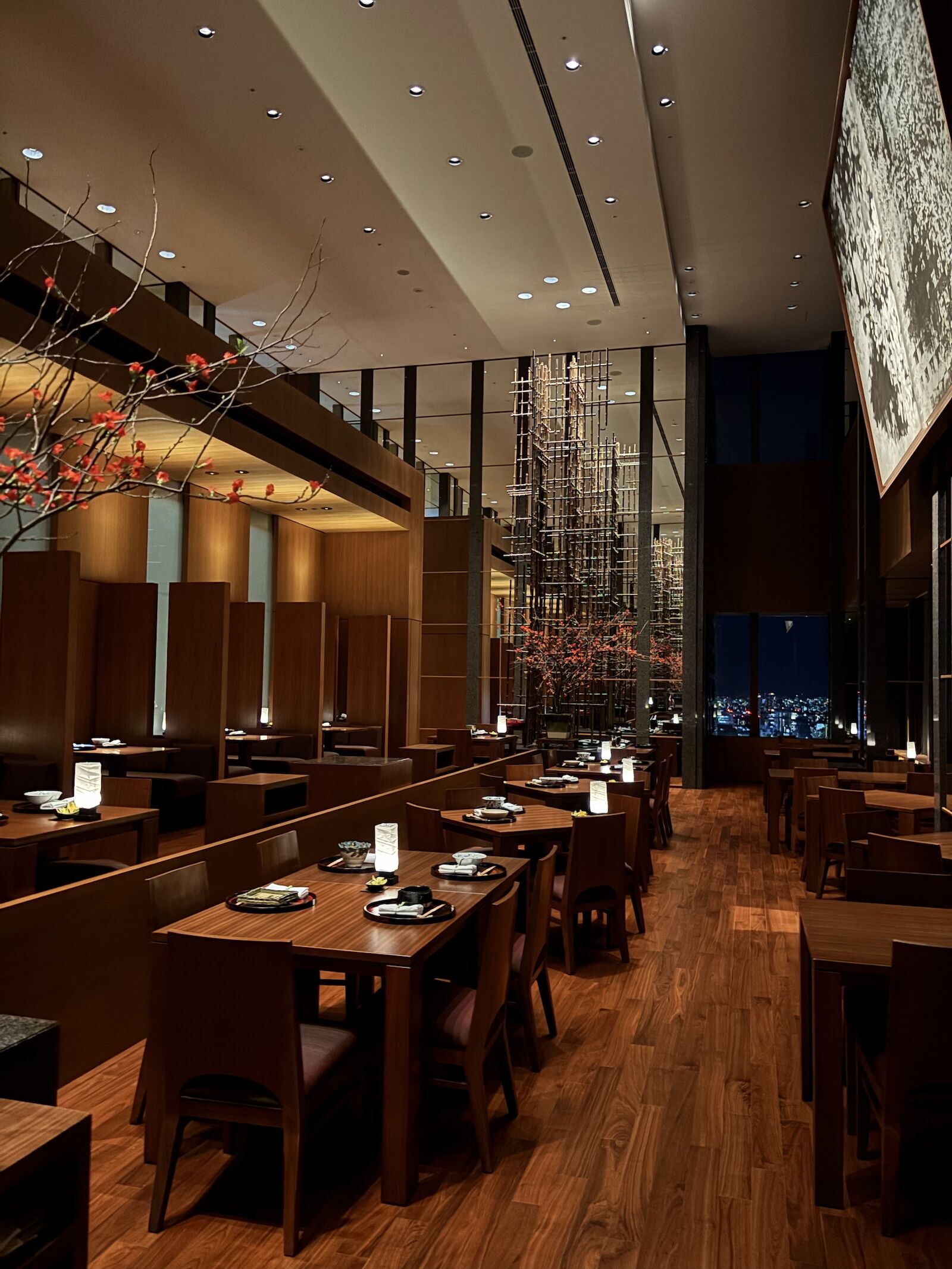
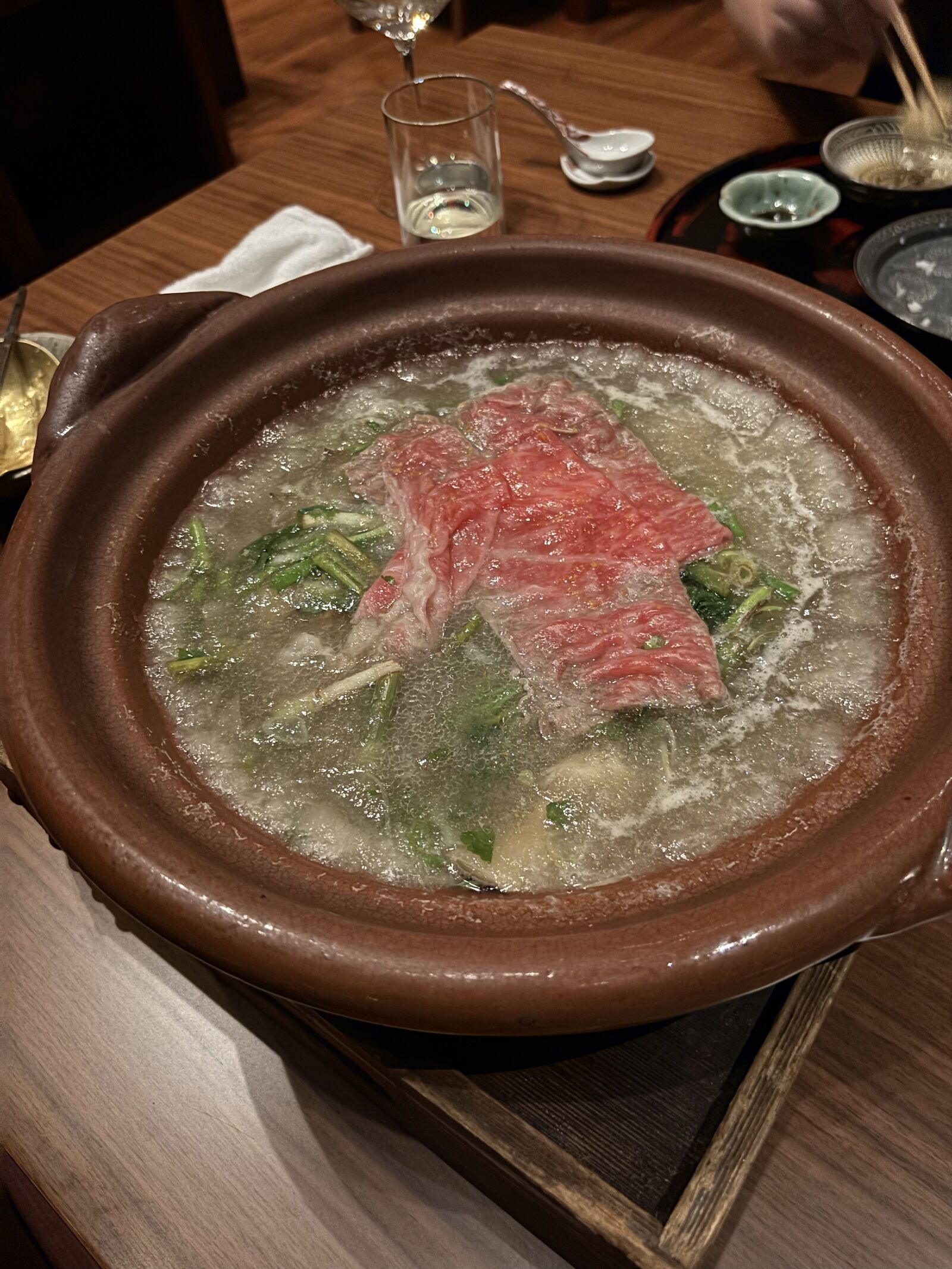
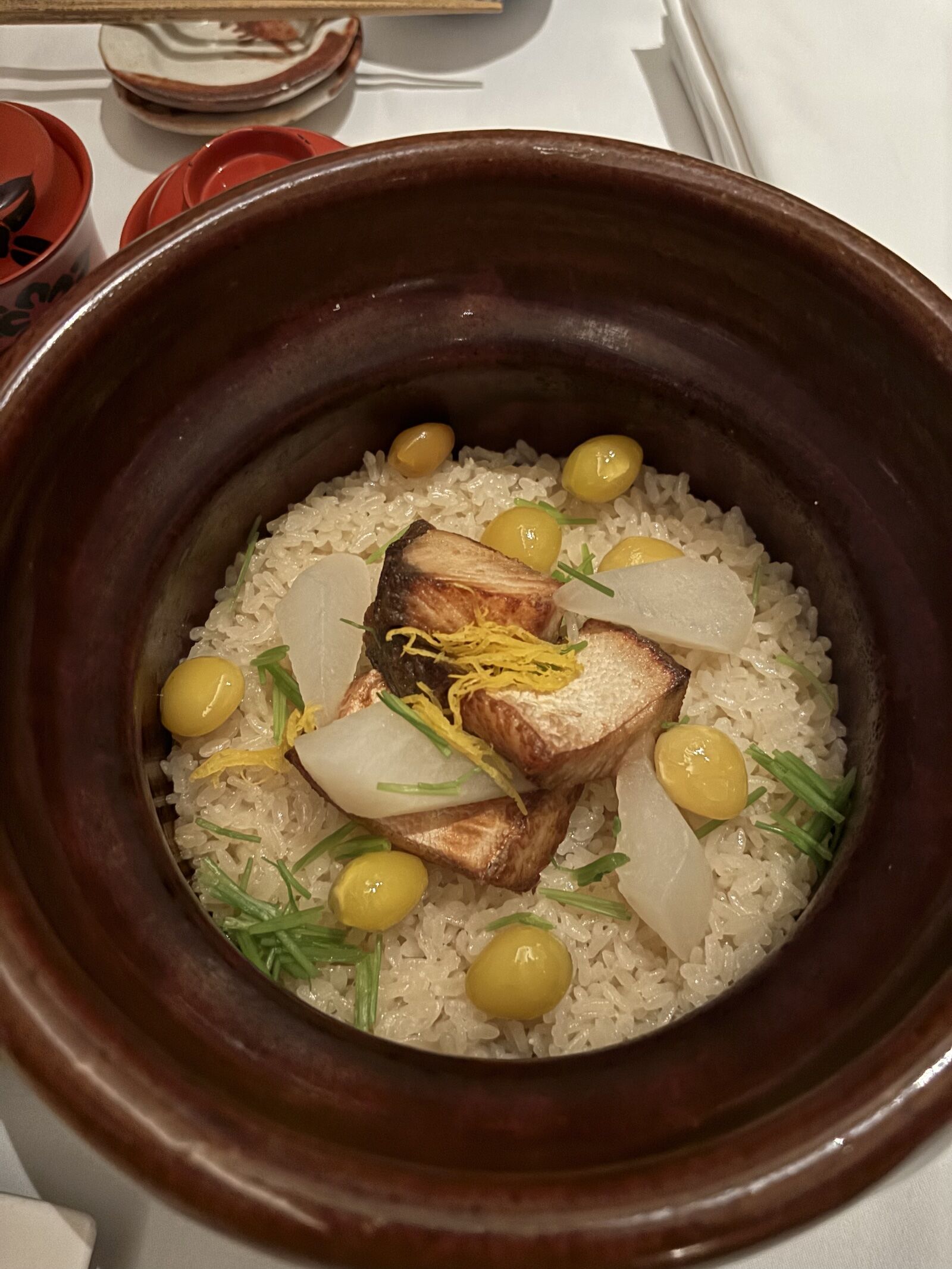
A proper first night in Tokyo should include a lot of seafood. As such, my wife, daughter, and I took a window-side table in Kozue shortly after checking in. The hotel’s upscale Kaiseki restaurant serves a set course of locally-sourced fish and flavors. Bamboo artworks by John Morford and the deep tones of Hinoki, a Japanese Cypress tree, set the tone for a meal that is iconically Japanese. We had the Raku course, launched by simmered abalone with sea urchin and headlined by steamed rice served in a clay pot with yellowtail and radish. My favorite dish in the course was the tuna, grouper, and sweet prawn sashimi, the tuna cubed to be bite-size and so fresh the raw bluefin maintained an aroma of the salty waters of its home in the Tsugaru Strait, between Japan’s main island of Honshu and the northern island of Hokkaido. The hot pot dish served with Japanese sirloin was a hit with my family as well, particularly with my four-year-old.
The multi-course Kaiseki tradition is at the heart of Japanese fine dining, Kozue standing as a fine example built on excellent seafood and service to match. Us three Americans, including a young child, arriving just off long-haul needed a lot of explaining and a bit of coaching, and the meal stood out as the highlight of our stay at the Park Hyatt Tokyo. We took the dessert course, a sake lees mouse, in our room after the meal and its mandarin white wine compote and matcha glaze settled our first night in sheer bliss.
Our room and experience at Park Hyatt Tokyo
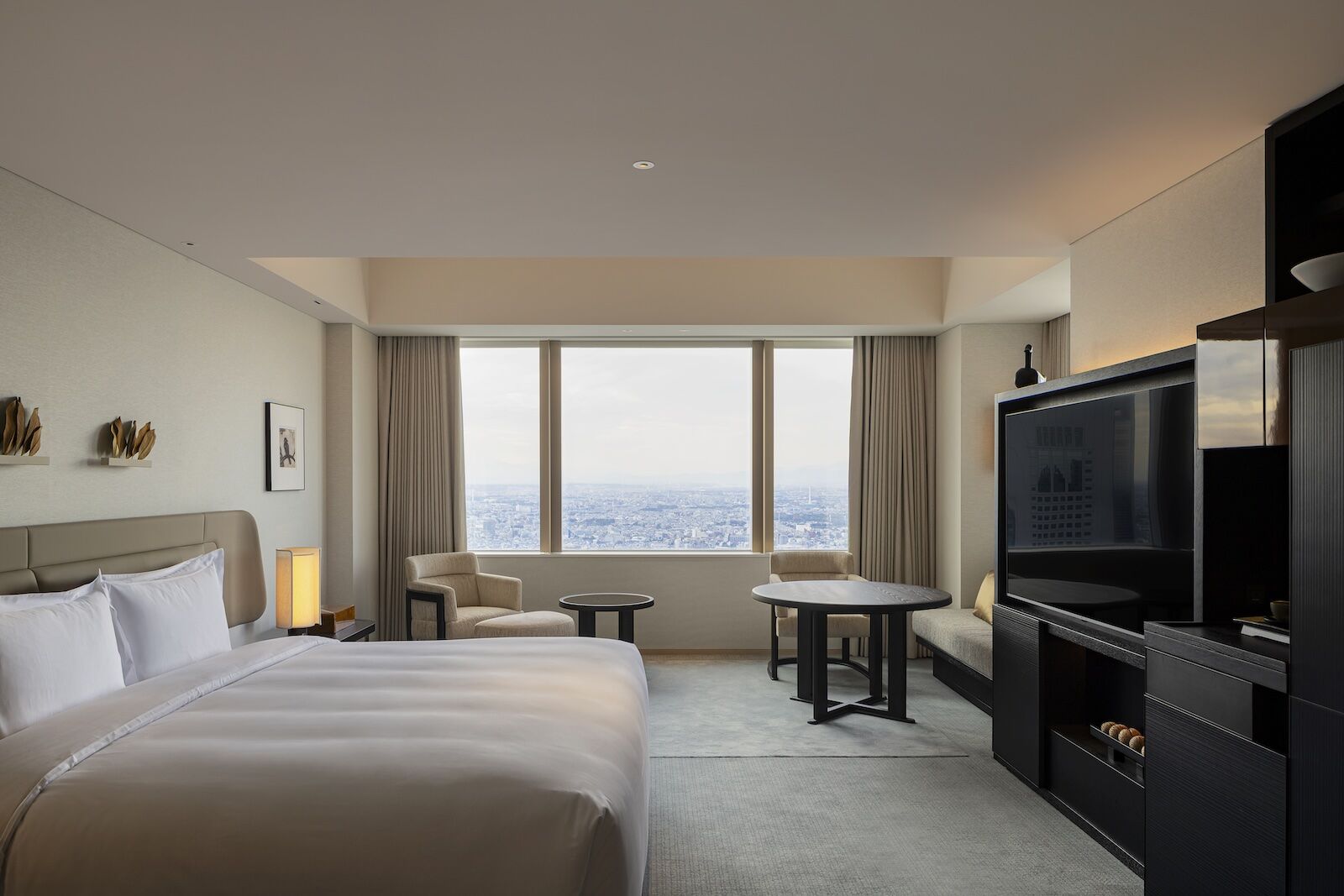
Photo: Park Hyatt Tokyo
After check-in, staff helped us to our Deluxe King Room, available from about $1,032 per night. The view through the large windows is immediate and impactful – 43 floors below us one of the world’s largest cities hums with constant rhythm; in-room we were mere observers. The room includes a dining table to sit four that, for us, doubled as a laptop work station. There was a reading chair next to the window, and the flow throughout the space felt natural and well-put-together.
The room included a large, walk-in open closet that fit luggage for the three of us as well as our suitcases. We took advantage of the provided robes and slippers while lounging in the room, and they matched particularly well with the washroom’s expansive shower and double-vanity. Settling onto the heated seat in the bathroom, with its automated bidet to follow, is nearly worth the trip in itself, the system’s controls attached to the wall so there’s never a reason for your hands to touch the toilet itself.
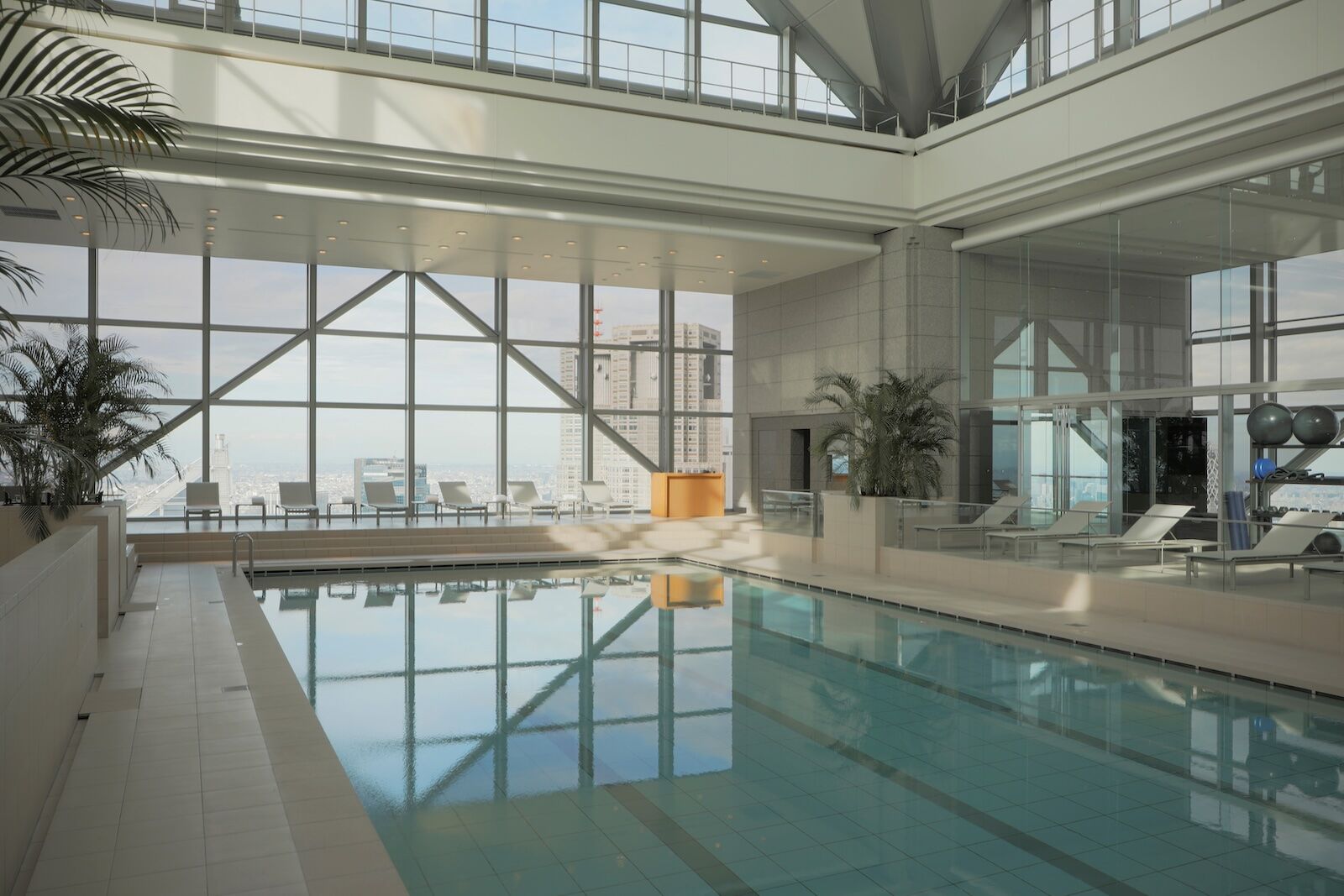
The pool at Club on the Park. Photo: Park Hyatt Tokyo
Our king bed was soft and fit the three of us with ease (our daughter often sleeps with us when in hotels). The room’s decor was understated, letting the view do the talking, though the mini-bar was fully stocked and the Nespresso machine worked flawlessly. The overall effect is that of a quiet retreat above the business of Shinjuko, enhanced not just by ease of access to the surrounding neighborhood but by the comfortable bed and lighting that felt warm but not dim.
On our second morning we took our daughter to swim in the Club on the Park. The club offers both lap swimming and open swim, with kids allowed during the day in the open-swim area. A large fitness center surrounds the pool area on the 47th floor, with the hotel’s spa (and its acclaimed Restorative Retreat service that blends Japanese and Western techniques of massage, stretching, acupuncture, and drainage) available on the 45th floor.
How to get to the Park Hyatt Tokyo from Narita or Haneda airport
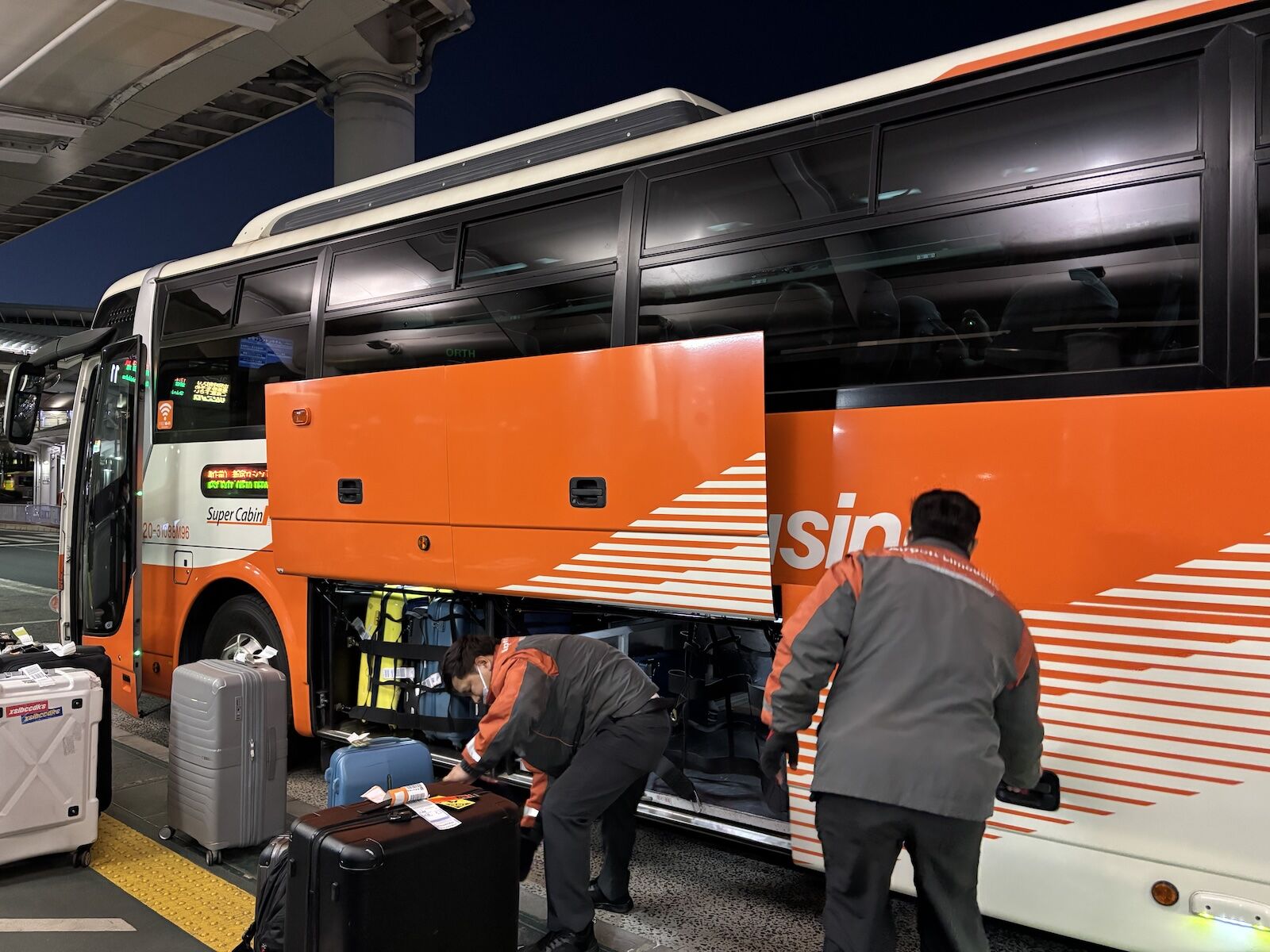
The Airport Limousine Bus is efficient, comfortable, and has plenty of luggage space. Photo: Tim Wenger
The easiest way to reach the Park Hyatt Tokyo from either Tokyo Narita or Haneda International Airports is via the Airport Limousine Bus. The bus is a comfortable coach bus with ample luggage storage underneath, as opposed to a limousine as its name may imply I initially planned to hire a private car to pick up my family because I felt that taking public transit or a bus service might be too much for my four-year-old after a 12-hour flight. However, after reading and hearing several recommendations for the bus (and taking into consideration that buying three seats came out to about 10 percent of the cost of a private car), I opted for the bus knowing that it will be driving the same route as a car and therefore the car wouldn’t save any time. Also, I regularly ride public transit with my daughter and she loves it, often handling bus rides better than car rides anyhow.
The bus departs from just outside the arrivals terminal. We flew into Narita and the entire process from gate to bus took about 30 minutes, including customs and gathering bags. I’d booked a bus about an hour after landing so we had a bit of time to catch our breath before the two-hour ride into the city. The bus drops off outside the entrance to the Shinjuku Park Tower. From there a staff member assisted with our bags as we took the elevator up to the 41st-floor check-in lobby, where we momentarily exchanged our passports for a glass of champagne and the key to our Deluxe King Room.
A taxi line-up is available throughout the day and night right outside the building. We took taxis to and from DisneySea and, after check-out, to the train station to take the Shinkansen to Kyoto and our large family suitcase and individual bags fit just fine in the trunk. The valet staff here can call or arrange any additional transport you may need. 