When Route 66 opened in 1926, it was one of the first times in the US that the point of travel was the drive, not the destination. You weren’t so much using Route 66 to get to a specific place, but cruising Route 66 to check out the series of sights along the way. And for much of its history, that meant families and road trippers staying in classic, neon-lit motels or themed motels designed to lure drivers off the road.
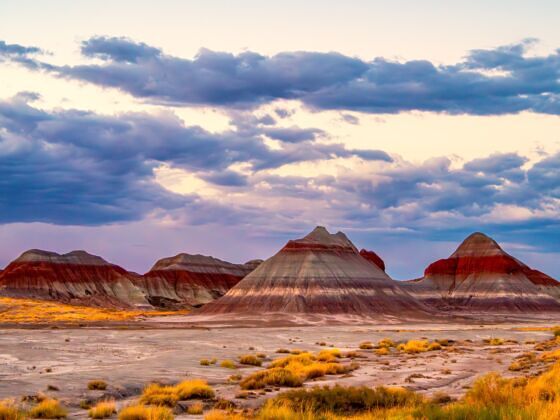
Photo: Visit Arizona
10 of the Most Memorable Places to Camp Along Route 66
But that’s not all the route offers. That’s especially true today, when many drivers use modern highways instead of the classic Route 66 roads. That means many of the original Route 66 roads have fewer cars, creating fantastic opportunities for dispersed, vintage, and remote camping that you can usually reserve the same day (or don’t need to reserve at all). The original Route 66 crosses rivers and plains, hugs mountain ranges, dips into canyons, and winds through high desert and forests — and almost all of these landscapes have areas to camp out in nature.
Camping along Route 66 offers a different version of the road trip, trading parking lots for open spaces and letting travelers sleep under the stars rather than under neon lights.
There are 10 of the best places to camp along Route 66, from amenity-heavy campgrounds to remote swaths of desert where you’ll be the only tent in sight.
Meramec State Park (Sullivan, Missouri)
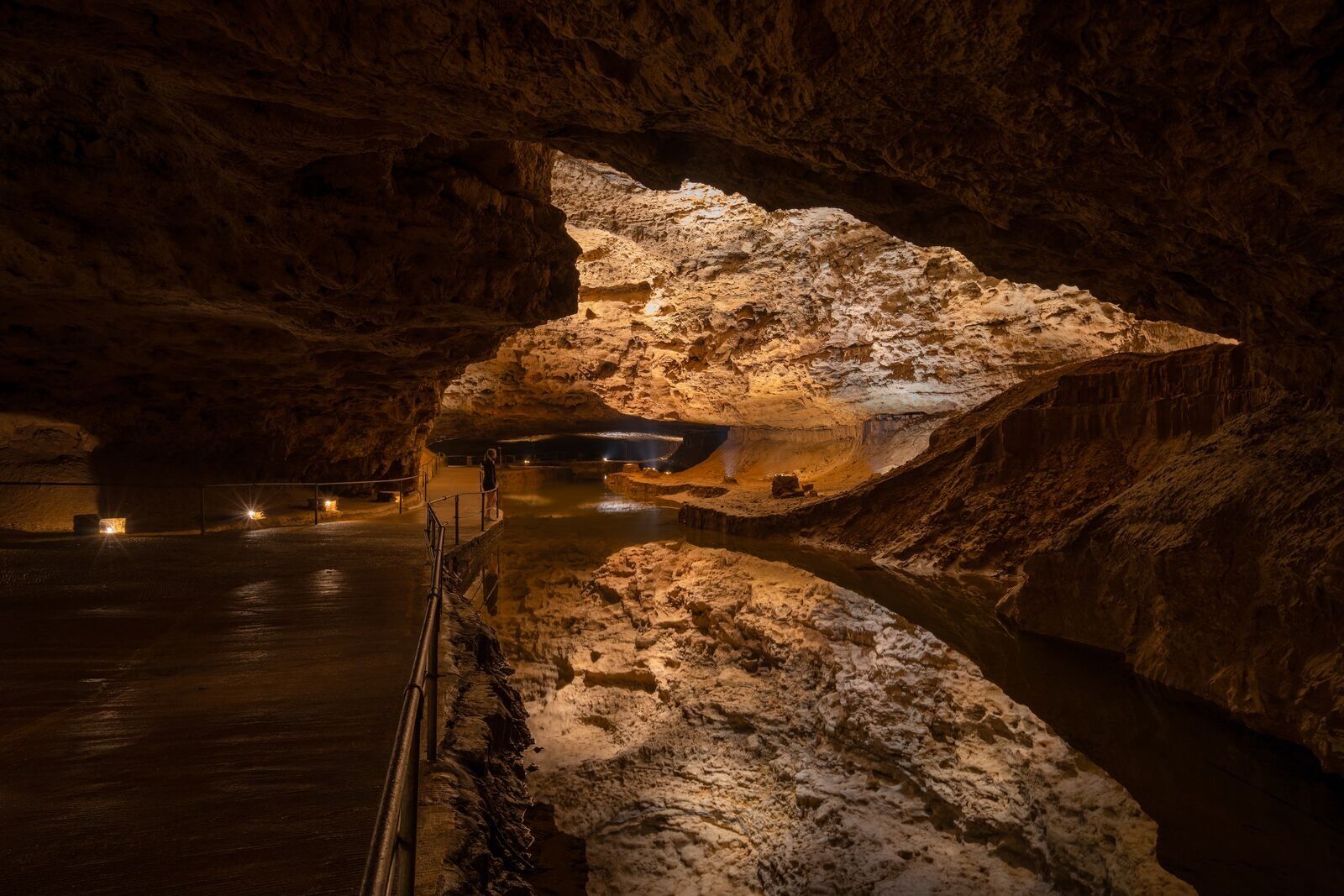
Photo: Visit Missouri
- Detour off Route 66: 2 miles
- Nightly rate: From $12
- Reservable online? Yes
The Meramec River flows past bluffs in this 6,896-acre park, home to more than 40 caves — more than any other state park in Missouri. The river creates plenty of opportunities for swimming and floating, but one can’t-miss locale in the park is the Fisher Cave, where you can still see ancient bear claw marks on the walls (accessible via guided tour only). Within the campground, options range from standard tent sites to RV sites and furnished cabins. Waterfront sites include numbers six through 20 in Section 2, and numbers 114 to 125 in Section 1. Campground Section 1 has the fewest amenities but it’s closest to the accessible caves.
Flagstaff KOA Holiday (Flagstaff, Arizona)
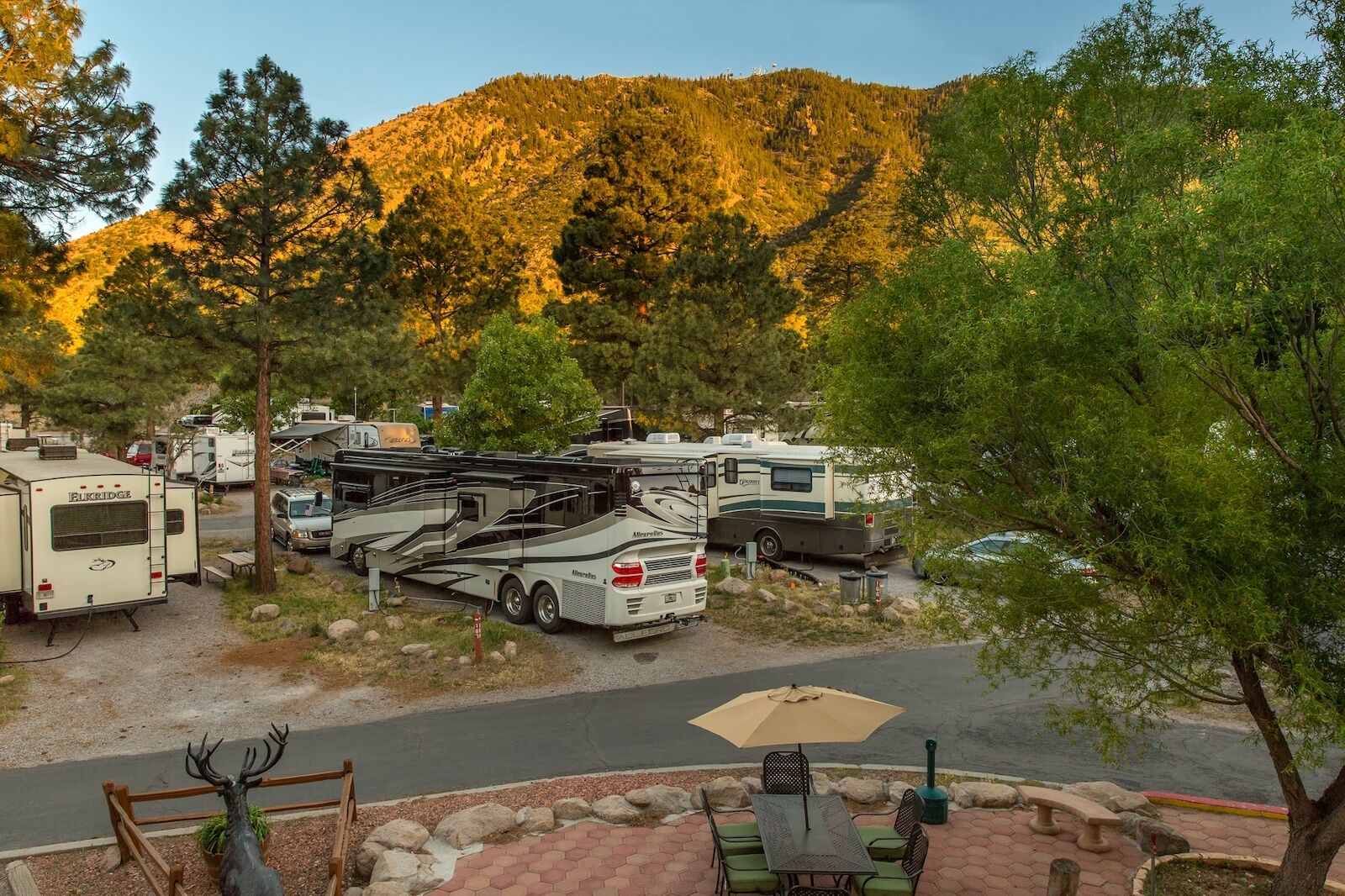
Photo: Flagstaff KOA
- Detour off Route 66: None
- Nightly rate: From $55
- Reservable online? Yes
Camping along Route 66 doesn’t always mean desert dust and wide-open views. At the Flagstaff KOA, it’s all tall pines, cool mountain air, and a forested setting you don’t necessarily expect to find in Arizona. The campground sits at about 7,000 feet above sea level at the base of the San Francisco Peaks, and thanks to dense clusters of ponderosa pines, it feels more alpine than desert.
The setting feels quiet, tucked into the forest. But the campground itself can feel busy, especially in peak season, with closely spaced sites and lots of RV families. Of course, there’s a reason it’s popular, with plenty of comfort-focused amenities. There are tent and RV sites, cabins, comfortable restroom facilities, hot showers, bike rentals, a camp store, not to mention stunning hiking trails available from the property. Bring a jacket, as mornings and evenings tend to be brisk.
This KOA isn’t particularly remote or rugged, but it’s a pretty and easy place to camp within easy reach of places like the Grand Canyon , Sunset Crater, and Walnut Canyon. And it’s a nice change of pace to wake up in a cool, green forest, while still being just a few miles away from Route 66. It feels like a little escape, not just a place to sleep.
Bennett Spring State Park (Lebanon, Missouri)
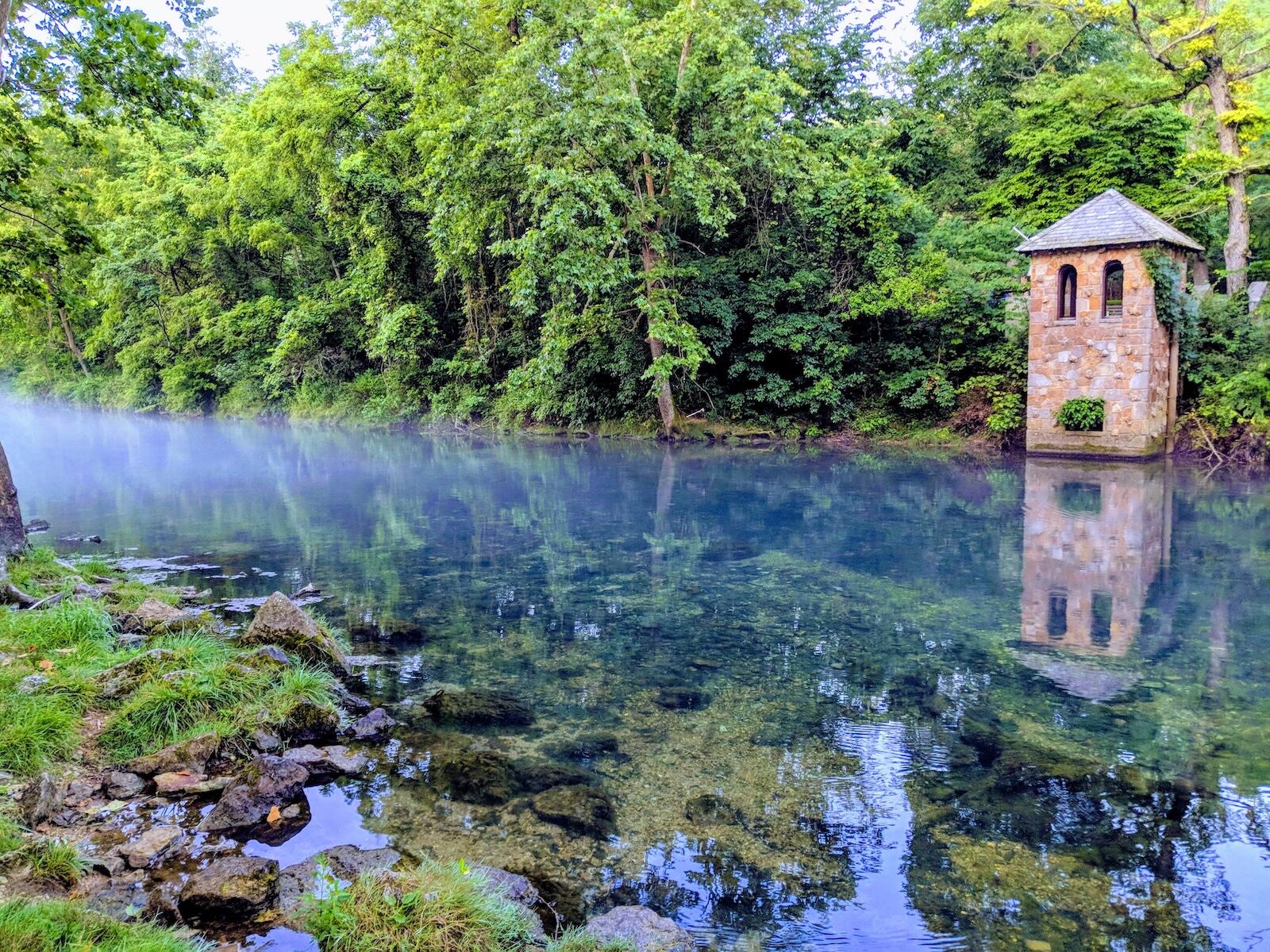
Photo: Amwank/Shutterstock
- Detour off Route 66: 15 miles
- Nightly rate: From $15
- Reservable online? Yes
Bennett Spring is Ozark camping at its best. It has 12 miles of hiking trails, including a seven-mile route leading to a 296-foot natural tunnel formed by a cave collapse. The Civilian Conservation Corps built much of what you’ll see here in the 1930s, including the rustic dining lodge, complete with wrought-iron chandeliers. Campers have access to public swimming pool, canoe rentals on the Niangua River, a nature center, and nearly 200 campsites. You can also rent cabins if you prefer not to carry all your own camping gear. Fishing is popular here, but the impossibly blue-green water of the spring is worth a look for anyone, angler or not.
Two Guns Ghost Town (Two Guns, Arizona)
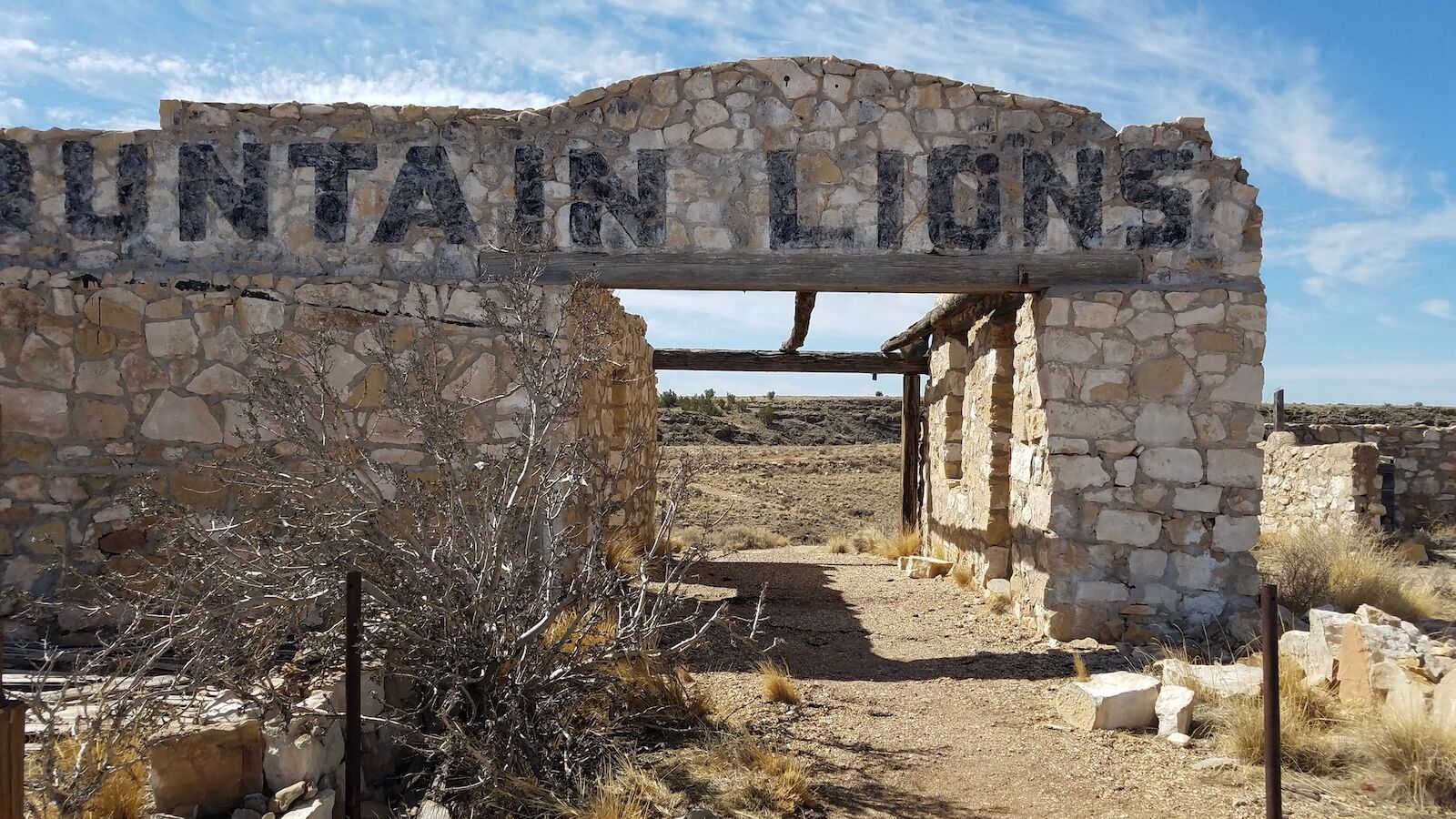
Photo: Angela Feltes/Shutterstock
- Detour off Route 66: None
- Nightly rate: Free
- Reservable online? No
This one is decidedly not for everyone, and that’s the point. Two Guns was once a bizarre roadside attraction that had a zoo with mountain lions, cougars, snakes, and Gila monsters, run by a con man who called himself “Chief Crazy Thunder” and claimed to be full-blooded Apache. He offered tours to the nearby Apache Death Cave, where 42 Apache warriors were murdered by asphyxiation in the 1800s, and sold what he said were skeletal remains to passing tourists along the way. The whole operation shut down after a gas station fire in 1971.
What’s left is a ghost town you can camp in for free, with crumbling ruins, an abandoned 1970s KOA with a graffiti-covered pool, stone zoo enclosures, and the death cave itself. It’s dispersed camping with no amenities, so bring everything you’ll need, including water. Watch for rattlesnakes and consider bringing an eyemask, as it sits very close to I-40. Pay attention to signage and make sure you camp on BLM land, not on some of the private lots nearby.
Santa Rosa Lake State Park (Santa Rosa, New Mexico)
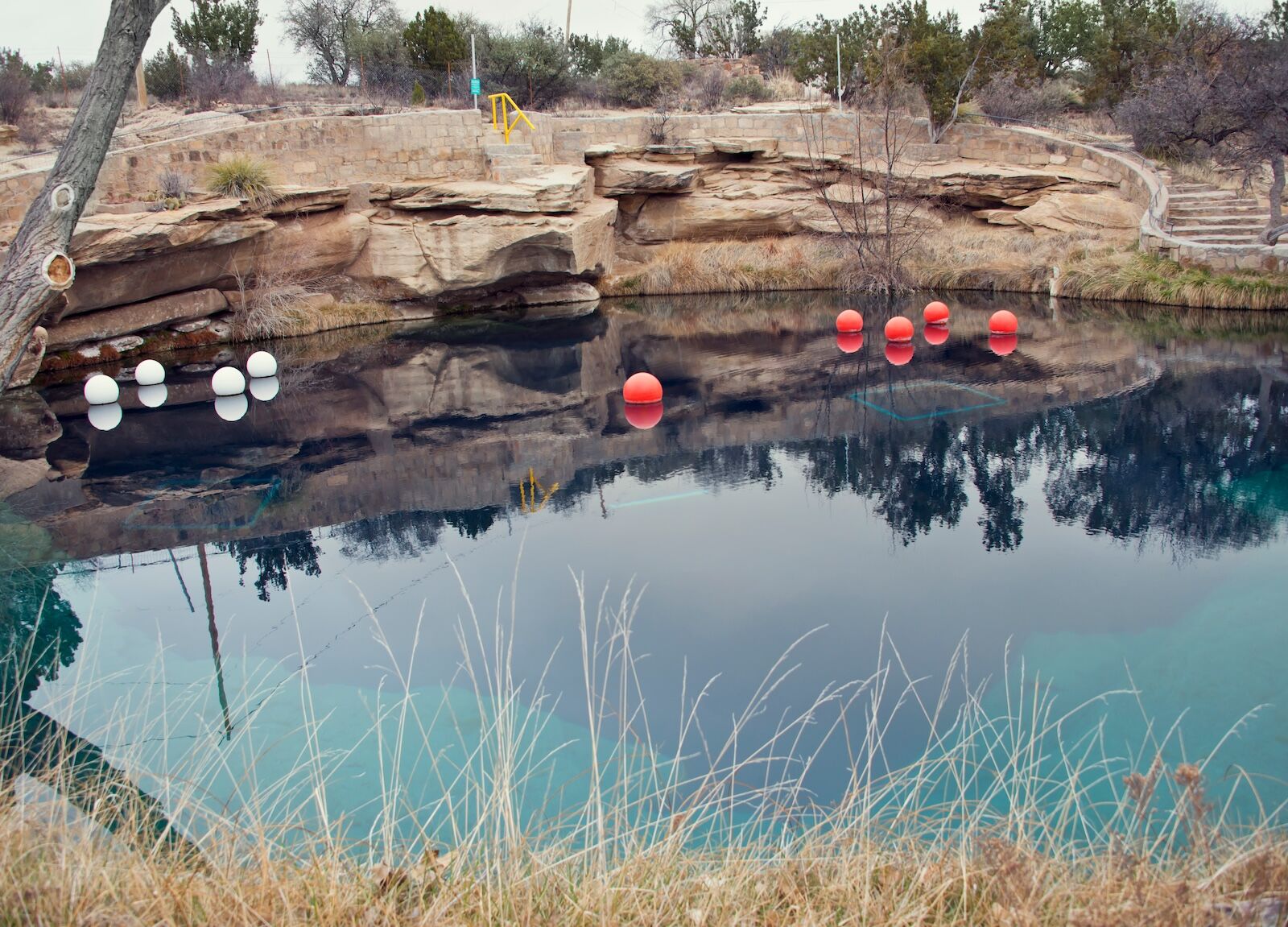
Photo: Svetlana Foote/Shutterstock
- Detour off Route 66: 7 miles
- Nightly rate: From $10
- Reservable online? Yes
The best thing about Santa Rosa Lake is how unbelievably out of place it seems. You’ll be driving through ochre-colored, arid, high desert New Mexico for hours, and then out of nowhere, the lake appears. It sits in the upper Pecos River, just outside Santa Rosa — a town called ‘the City of Natural Lakes’ for its freakishly blue natural sinkholes and spring-fed lakes. With the right lighting, it looks like it belongs in the Caribbean, not New Mexico.
This is a great spot to camp if you love wildlife (related: secure all your food properly), as the park has public wildlife viewing blinds — places you can sit without being seen by wildlife. Seeing coyotes is not unusual, especially around dusk. The primitive Los Tanos sites on the far end of the park offer the most quiet and the best views of the lake at sunrise.
Williams/Circle Pines KOA Holiday (Williams, Arizona)
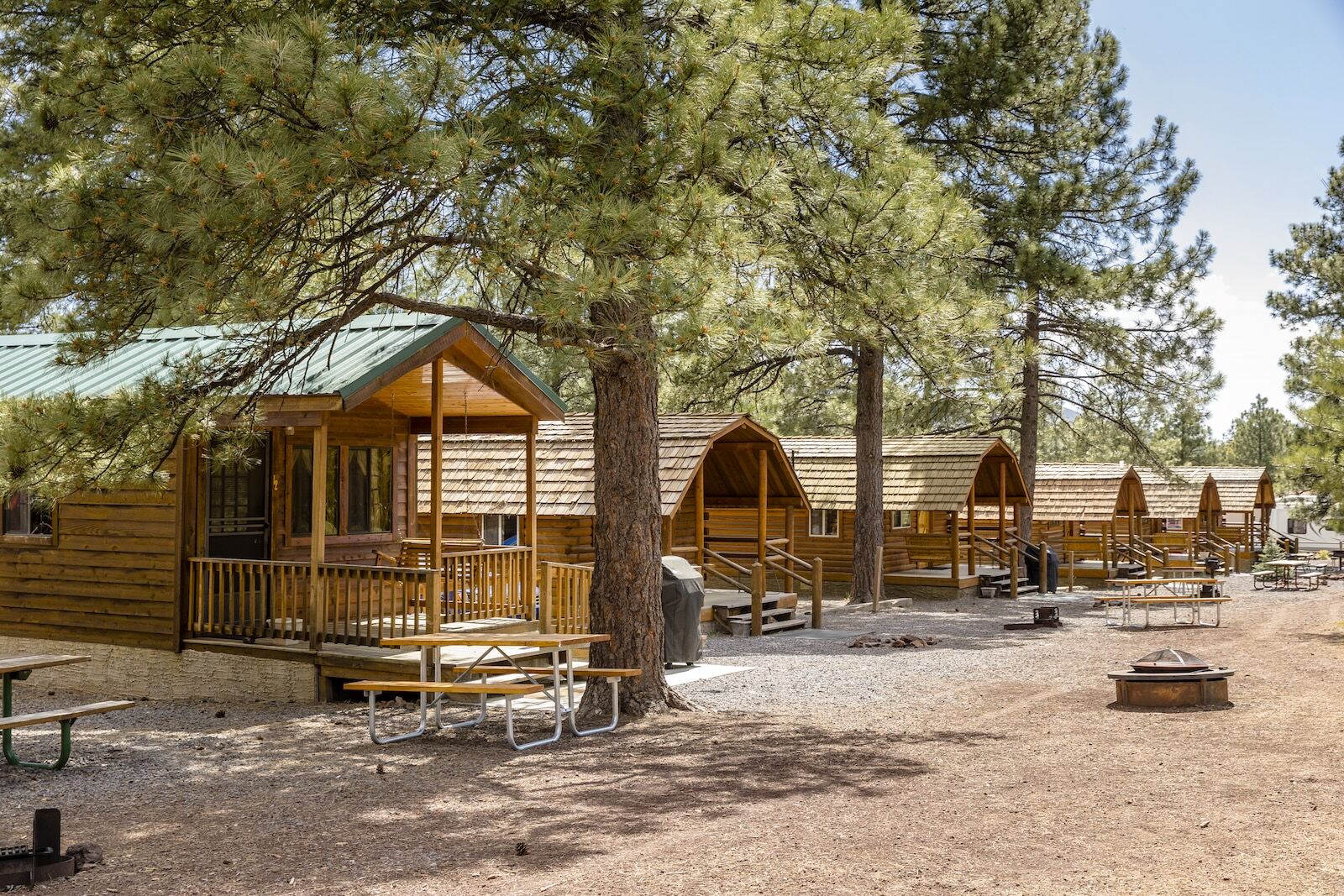
Photo: Williams/Circle Pines KOA
- Detour off Route 66: None
- Nightly rate: From $68
- Reservable online? Yes
Surrounded by pine trees and high enough in elevation that summer averages are around 78 degrees Fahrenheit, this amenity-packed KOA has enough to justify spending an extra day or two. There’s an indoor swimming pool, an on-site Go-Kart track, a gem and fossil mining station, an 18-hole mini-golf course, bike and ATV rentals, a hot tub, and a sauna. In the fall, you can even jump aboard a tractor-pulled hayride.
While it accommodates tents and RVs and has different types of cabins, it’s the unique options that make it one of the most fun places to camp for an Old West twist. Visitors can book teepees, glamping tents, or covered Conestoga wagons, all in the $100-$200-a-night range. No matter where you sleep, consider grabbing a quick meal at the on-site pizzeria, which has surprisingly good reviews for being a campground dining hall.
Palo Duro Canyon State Park (Canyon, Texas)
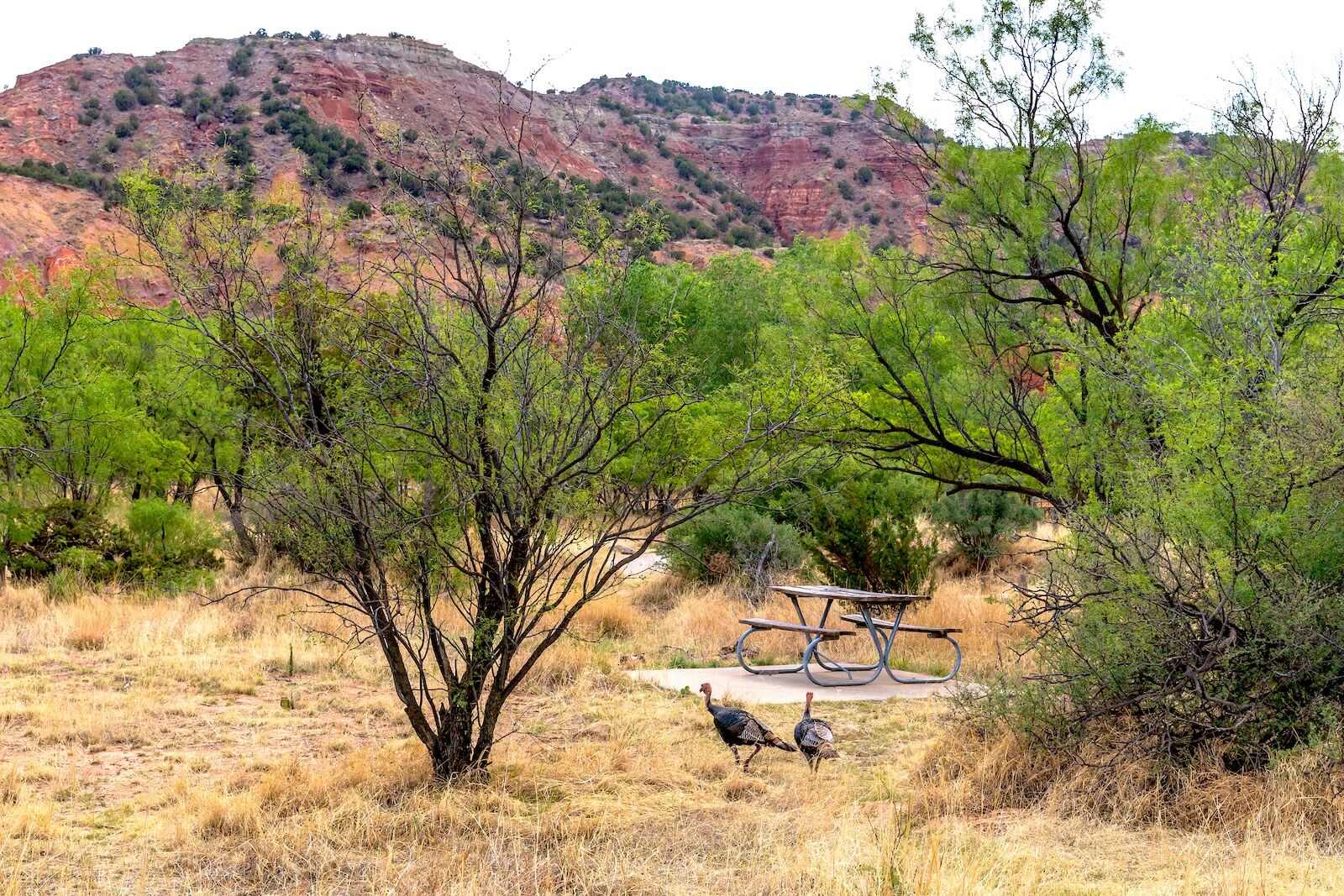
Photo: Travel Texas
- Detour off Route 66: 25 miles
- Nightly rate: From $16
- Reservable online? Yes
Everyone on Route 66 drives through Amarillo, but almost no one stops for what’s 25 miles south of it: Palo Duro Canyon, the second-largest canyon in the United States. It’s 800 feet deep and 120 miles long, with walls in shades of reds, oranges, and purples that shift as the light changes throughout the day. It’s extremely under-visited compared to the Grand Canyon, despite being genuinely comparable in drama.
Like the Grand Canyon, you can camp on the canyon floor — but sites at the Juniper, Mesquite, and Sagebrush campgrounds are much easier to get than at the national park. If you want as much quiet as possible, opt for a drive-in site in the Fortress Cliff area, reserved for tent camping only. All frontcountry sites, including Fortress Cliff, have potable water, but you’ll need to bring your own if you opt for a hike-in site. When you’re not stargazing or hanging at camp, the park has more than 30 miles of trails, and temperatures in the canyon can be much cooler in summer (read: more pleasant) than the surrounding Texas panhandle.
El Malpais National Conservation Area (New Mexico)
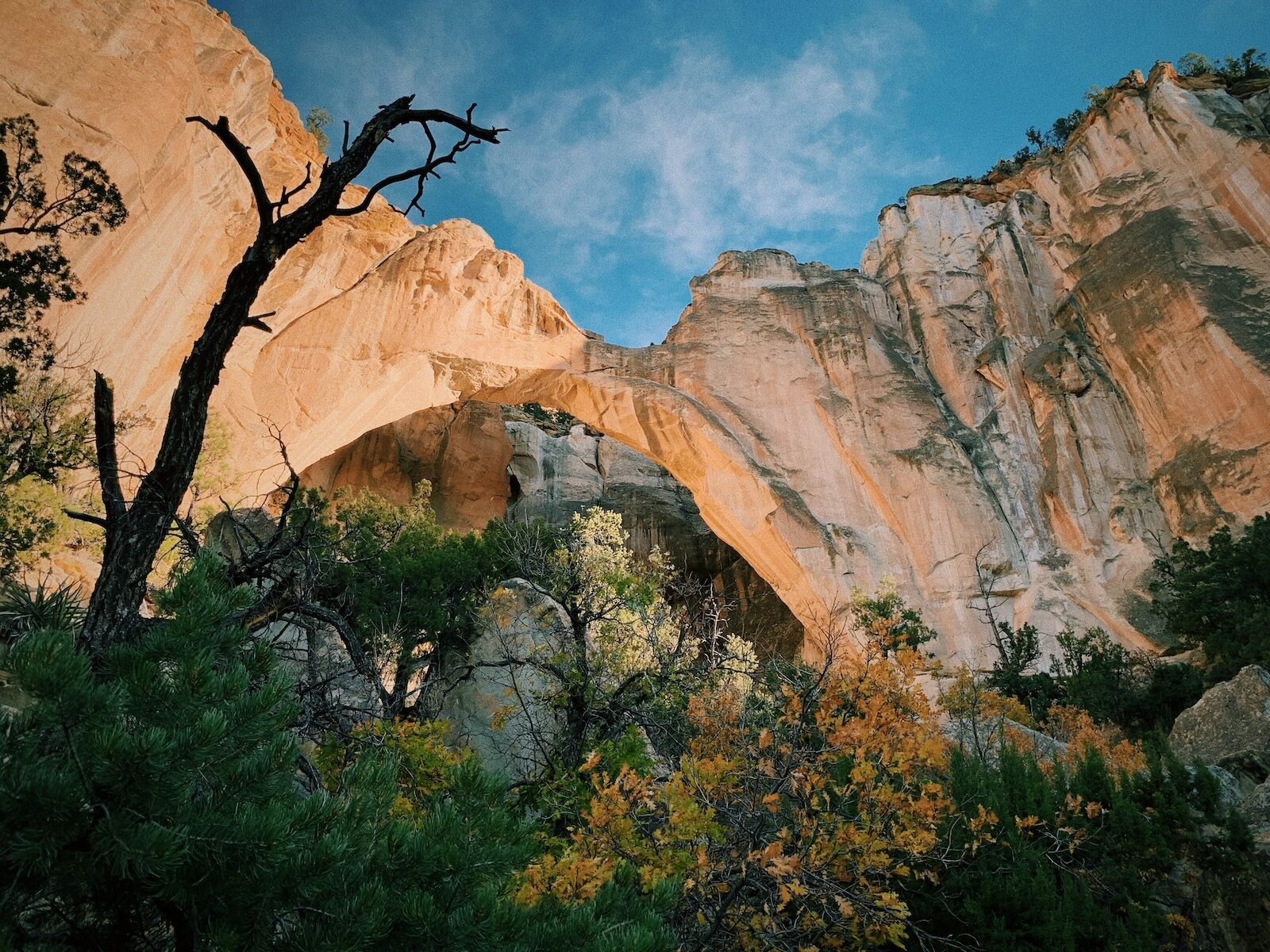
Photo: BScottyG/Shutterstock
- Detour off Route 66: 10–15 miles
- Cost: Free
- Reservations: No
Camping in El Malpais feels like pitching a tent on another planet. The landscape is covered with ancient lava flows, black rock fields, and collapsed lava tubes formed by volcanic activity thousands of years ago. Camping in the monument itself is limited to backcountry (not car) camping, but the greater El Malpais National Conservation Area has more options. There’s the primitive but established the Joe Skeen Campground, with vault toilets, and most of the surrounding BLM land allows dispersed camping. Just pull over and find any flat spot you like, taking care not to camp in the lava flows and being sure to follow a few other simple rules.
Don’t expect much shade, but you will get some of the darkest skies on Route 66 and a landscape that feels distinct from the rest of Arizona.
Grand Canyon Caverns (Peach Springs, Arizona)
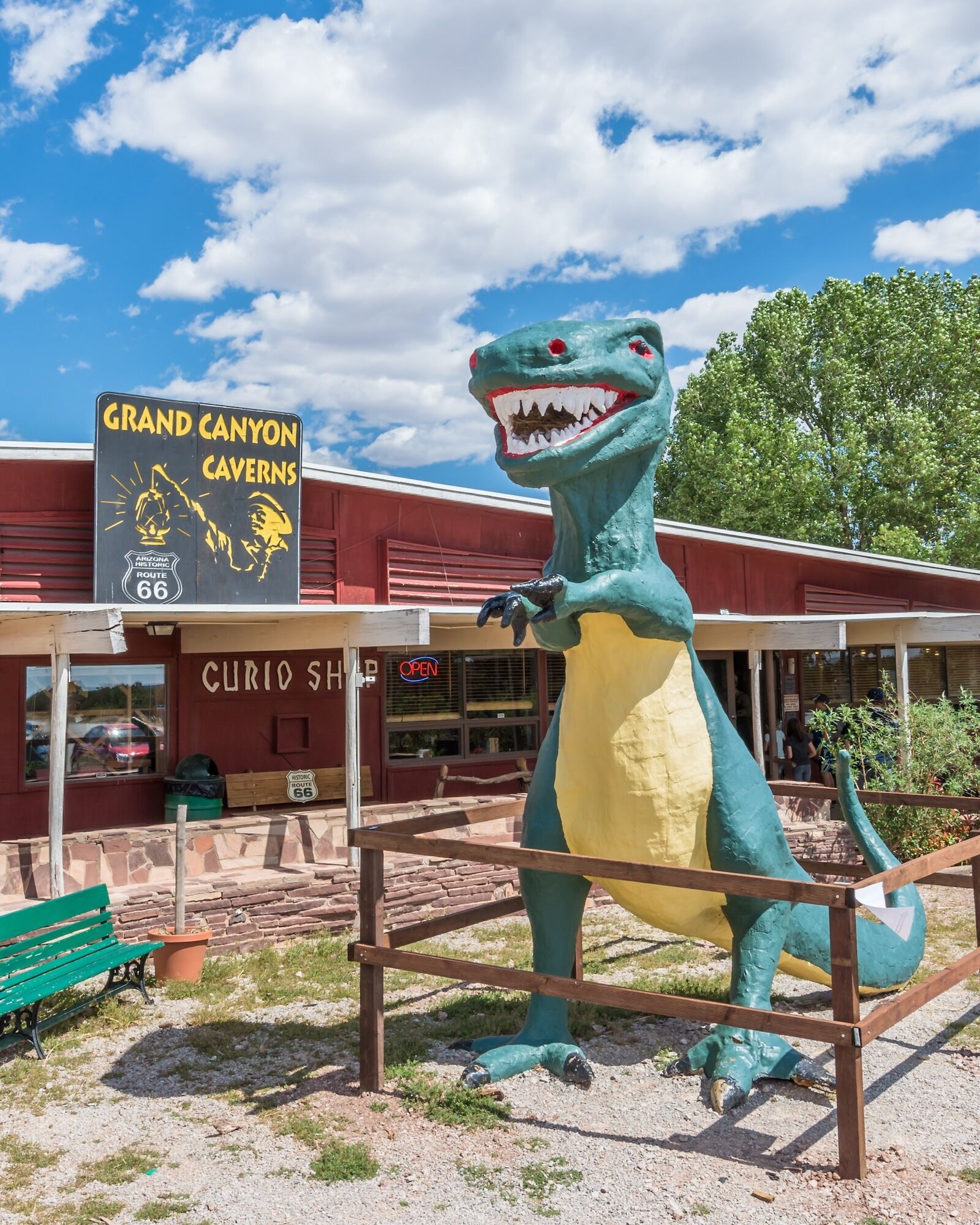
Photo: Steve Lagreca/Shutterstock
- Detour off Route 66: None
- Nightly rate: From $22
- Reservable online? Yes
At Grand Canyon Caverns, you’ll find tent and RV sites in the high desert on the Hualapai reservation, which has virtually no light pollution. Sites come with picnic tables, fire rings, flush toilets, and access to a heated pool, though for many people, stargazing is the main draw. The destination also has a motel, restaurant, and gift shop that feels like it hasn’t changed much since the 1960s. By this point on your Route 66 road trip, you may not be surprised to learn it also has a dinosaur-themed mini-golf course, naturally.
However, another great reason to camp here is 200 feet underground. The Grand Canyon Caverns are among the largest dry caverns in the United States, with virtually no stalactites or stalagmites because of how dry it is (meaning there’s no water to carry the elements that form stalactites or stalagmites). Tours are available every day, ranging from a 30-minute tour to an extended three-hour spelunking experience. Unfortunately, you can no longer sleep in the cave, but you can still swing by for lunch or dinner at the underground restaurant. Make reservations if you can, as Grand Canyon Caverns is close to the starting point for backpacking trips to Havasu Falls, with many visitors opting to stay there before or after their hikes.
Petrified Forest National Park Backcountry (Holbrook, Arizona)
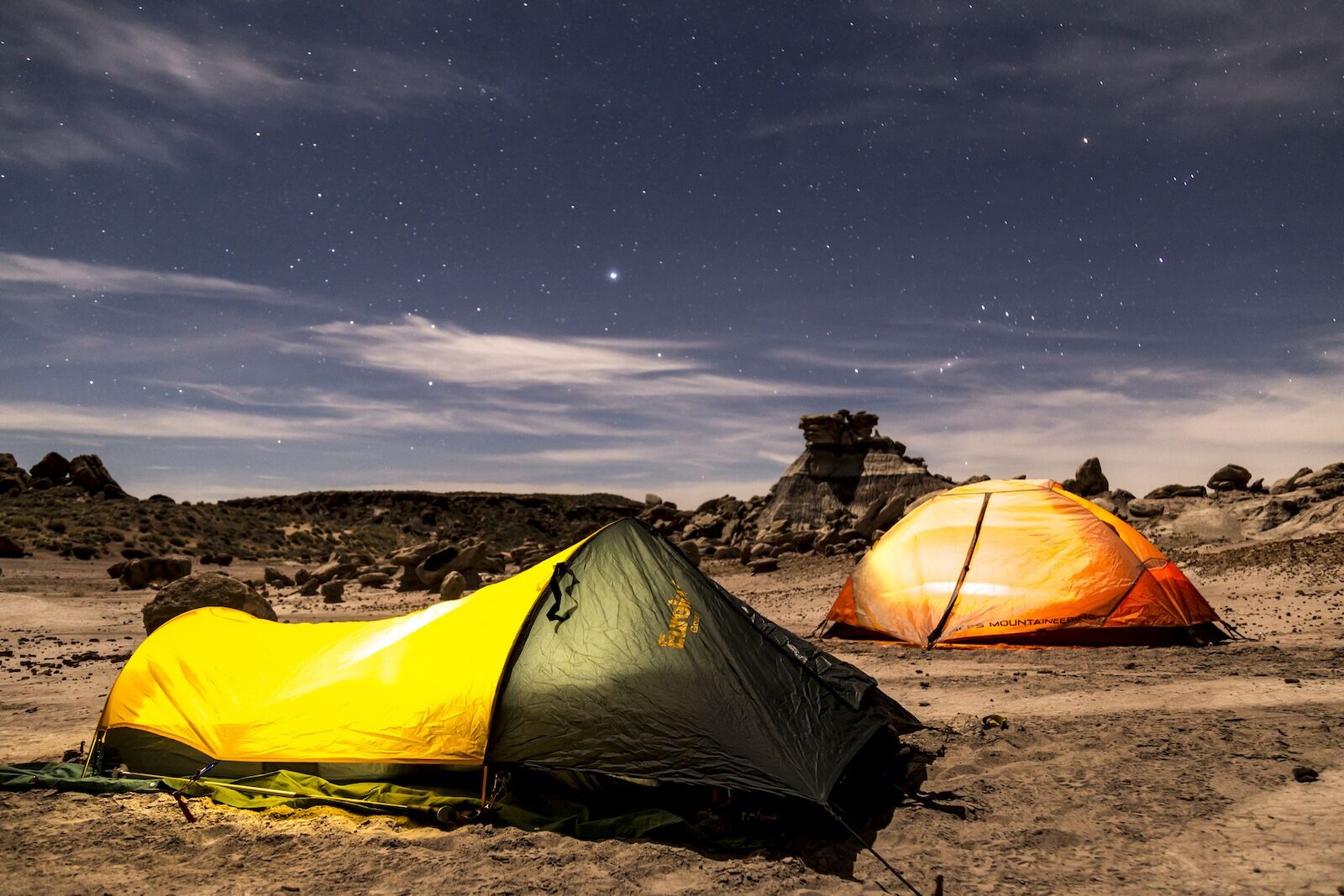
Photo: NPS/Jacob Holgerson
- Detour off Route 66: None
- Nightly rate: Free
- Reservable online? No
Petrified Forest is one of the least-crowded national parks outside of Alaska, making it one of the easiest places to go backcountry camping in a national park without tons of advanced planning. It was a subtropical forest roughly 200 million years ago, but now, it’s full of fossilized trees that look like they’ve turned to stone — with the colorful backdrop of the Painted Desert behind them.
Don’t expect facilities or established campsites; you can pitch your tent almost anywhere you want, with some caveats. Note that it allows hike-in camping only. Granted, you only need to hike about half a mile in some cases, but you can’t just pull over and car camp, either. If that sounds good, get to a visitor center before 4:30 PM on the day you want to camp to snag a free, walk-in permit, and you’re good to go.
Be prepared for feeling you have the whole desert to yourself, with the sounds of wind howling through the desert. On most days, sunrise and sunset turn the Painted Desert into a borderline-hallucinogenic display of color, and the stargazing is some of the best you’ll find in the American Southwest. Remember, you’ll need to be entirely self-sufficient. Bring in everything you need, bring out everything you carried in, and bring out any trash you happen to see while you’re out there, too. 