Historic Route 66 is the most famous road in America, thanks to the famous song written by Bobby Troup but popularized by jazz legend Nat King Cole. Stretching from Chicago to LA, it’s called America’s “Mother Road” and it runs through some of the most iconic cities and towns in America. You can learn about America’s seismic Dust Bowl migration in Amarillo, see the neon motels in Albuquerque that helped popularize the concept of a multi-day road trip, or stop in Tulsa, or stop in Tulsa, where stars like Elvis Presley and Johnny Cash played at Cain’s Ballroom — a venue that’s still hosting shows today.
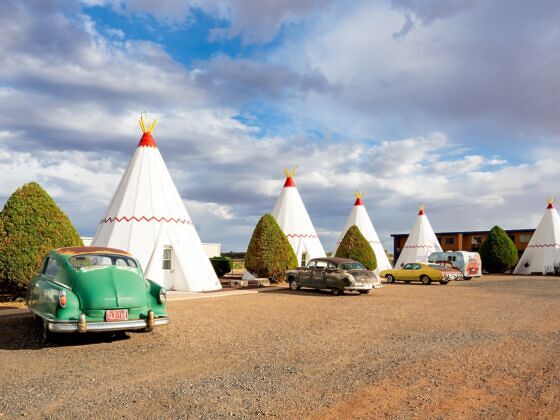
Photo: Visit Arizona/AN PHAM
12 Quirky, Artsy, and Delightfully Weird Roadside Attractions Along Route 66
And en route between the popular stops, you’ll experience various cultural cross-sections of America that blend nostalgia, adventure, beauty, and history into one delightfully vintage trip.
But that’s not all you’ll find on Route 66. With a few detours, you’ll find the famously kitschy and quirky Americana landmarks for which Route 66 is known today. These are 12 of the most unique, most Americana, most one-of-a-kind places you’ll need to pull over if you’re planning to get your kicks on Route 66.
Cadillac Ranch
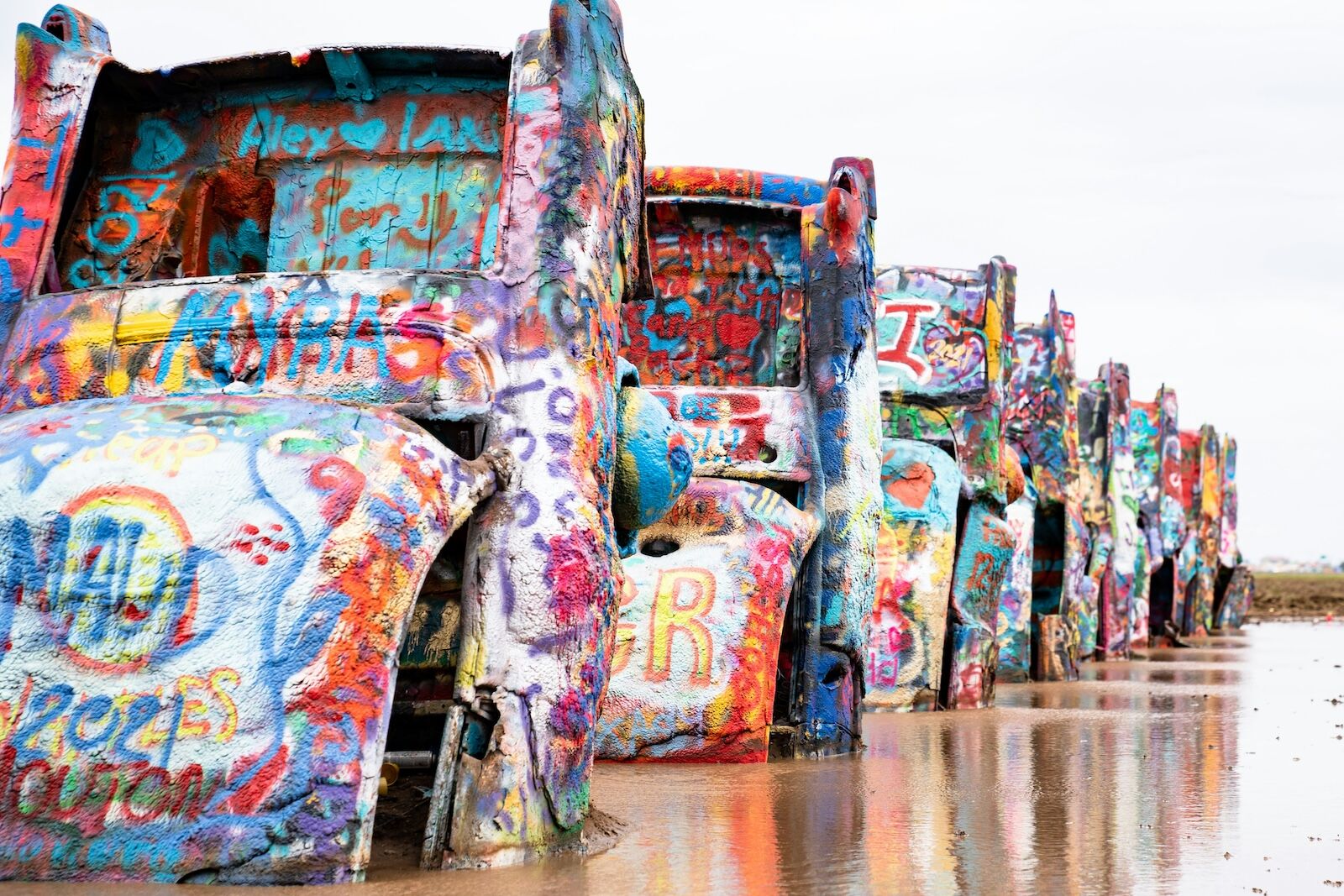
Photo: Steve Wrzeszczynski/Unsplash
Probably the most iconic example of Route 66 Americana kitsch is Cadillac Ranch. It’s a row of 10 vintage Cadillacs buried hood-first just off Interstate 40 (about 10 miles west of Amarillo, Texas). It’s not a museum or formal access point. Rather, you park along the road, walk through a gate, and cross a dirt field to reach the cars. It was created in 1974 and visitors are encouraged to bring spray paint and contribute to the decor. The site is free to visit and open 24/7, with no facilities, shade, or any type of tourist amenity.
Address: 13651 I-40 Frontage Road, Amarillo, TX 79124
The Painted Desert
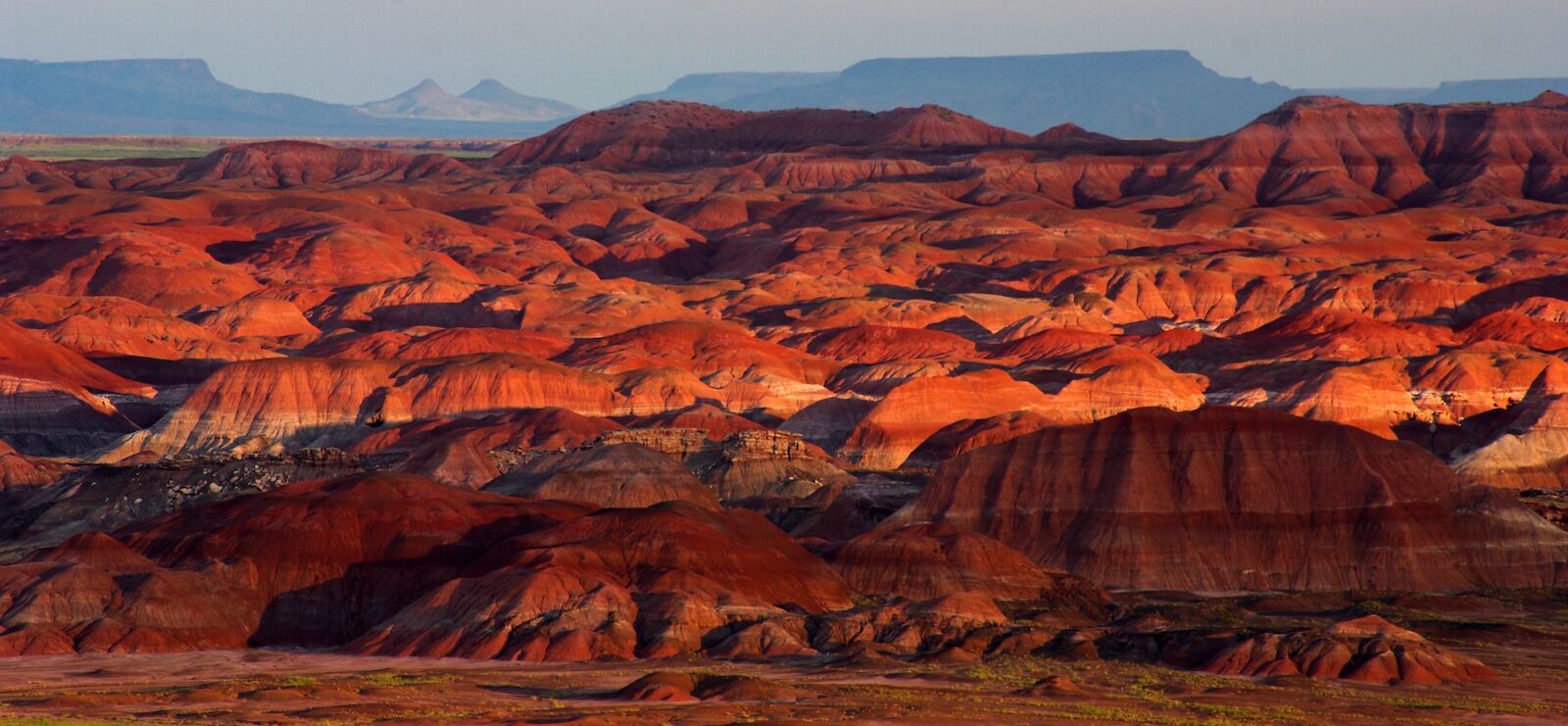
Photo: NPS/Stuart Holmes/Public Domain
Of course, not all of the allure of traveling Route 66 is kitsch and 1950s memorabilia — it’s the Western landscapes. One of the most striking stretches is in northern Arizona, where Route 66 goes directly through what is now Petrified Forest National Park. You can follow the route by driving the park’s 28-mile scenic road. Along the way are overlooks, short hiking trails, and even remnants of the original highway marked by old telephone poles stretching across the desert.
Address: 1 Park Rd., Petrified Forest National Park, AZ 86028
Ed Galloway’s Totem Pole Park
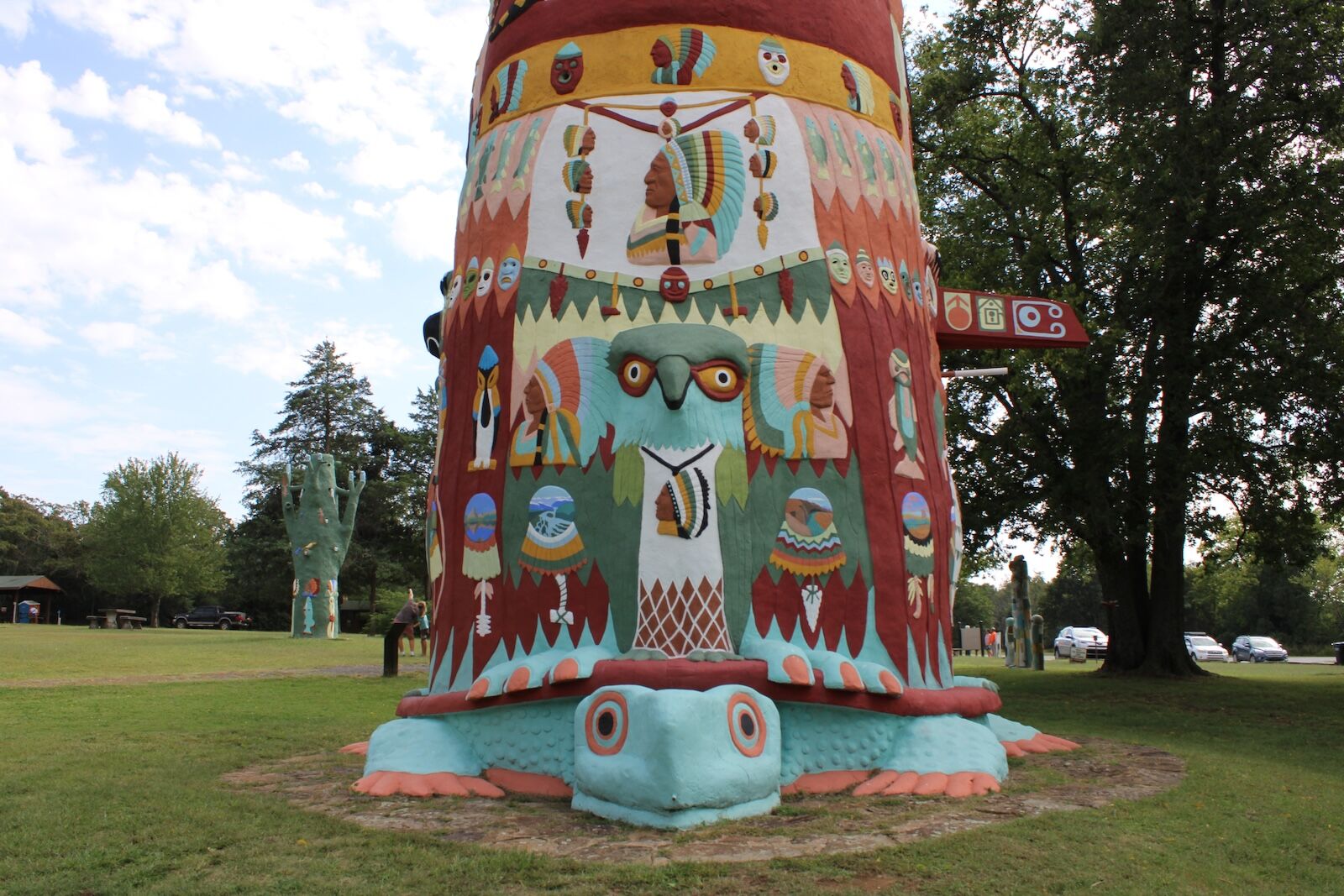
Photo: Magic Alberto/Shutterstock
An offbeat and artistic stop along Route 66 is Ed Galloway’s Totem Pole Park, a sprawling folk-art site just off the highway near Foyil, Oklahoma. Built between 1937 and 1948 by self-taught artist Ed Galloway, the park’s main feature is a 90-foot-tall concrete totem pole surrounded by smaller towers, carved animals, and an eccentric museum known as the “Fiddle House.” The park is free and open daily from dawn to dusk, with the Fiddle House museum typically open March to December. Unlike many roadside stops, this one feels less like a quick photo op and more like wandering through one-man’s expression of installation art. It’s a great stop whether you’re into unique art, or just want to stretch your legs a bit.
Address: 21300 OK-28 A, Chelsea, OK 74016
Shea’s Gas Station Museum
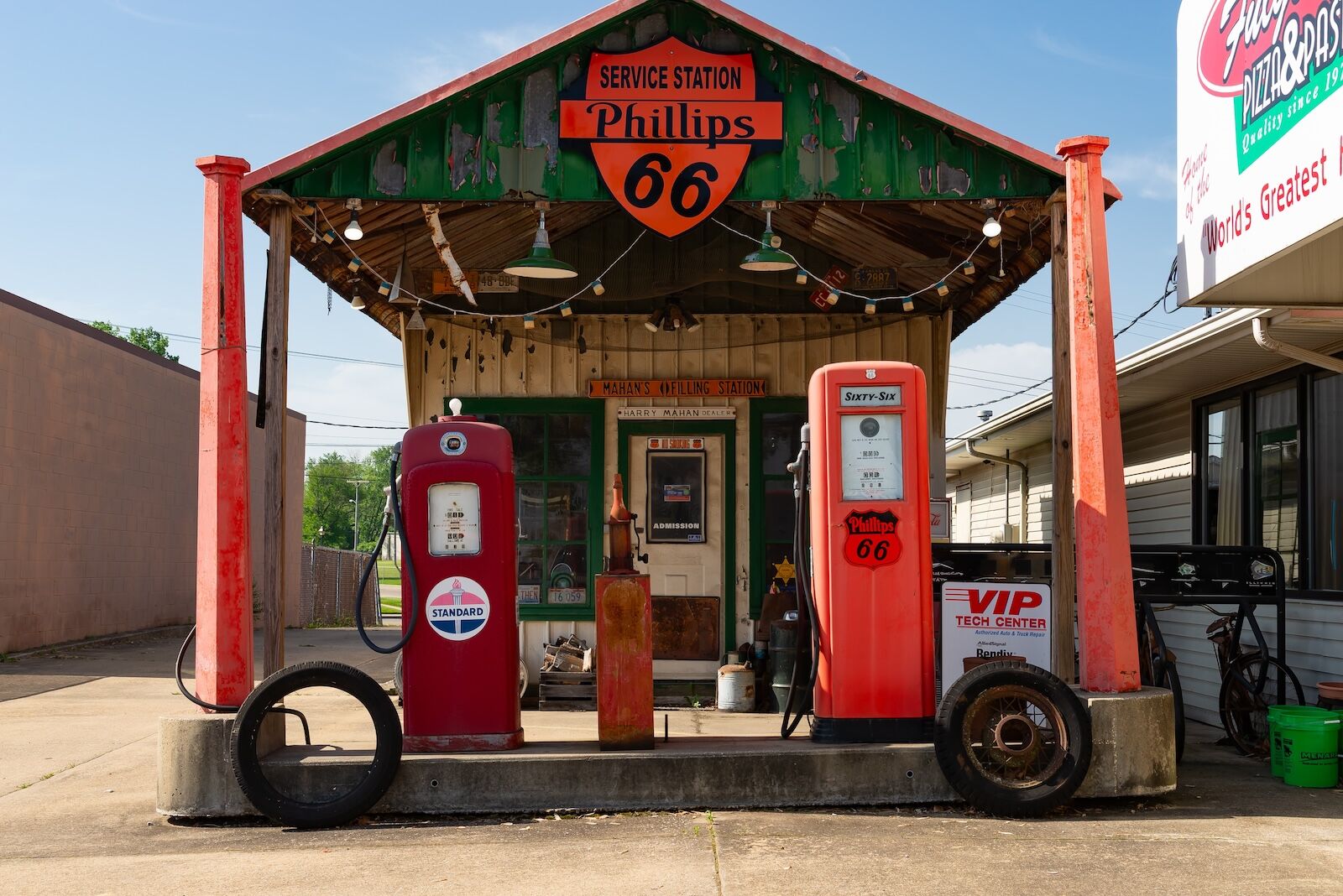
Photo: Eddie J. Rodriquez/Shutterstock
Another stop that leans into Route 66 nostalgia is Shea’s Gas Station Museum in Springfield, Illinois — or at least what’s left of it. It was originally a working Texaco (and later Marathon) gas station from 1946 to 1982. In the 1980s, the owner turned it into a vintage museum with old gas pumps, signage, and roadside memorabilia. However, the museum has been mostly closed since the owner died in 2013, and much of the contents were auctioned off. Today, it’s more of a pull-over photo stop, but the current owner does occasionally try to open it when he can. You can message the owner via Facebook, though he has posted he’ll try to open it more during Route 66’s birthday year (2026).
Address: 2075 N Peoria Rd., Springfield, Illinois 62702
The Leaning Tower of Texas
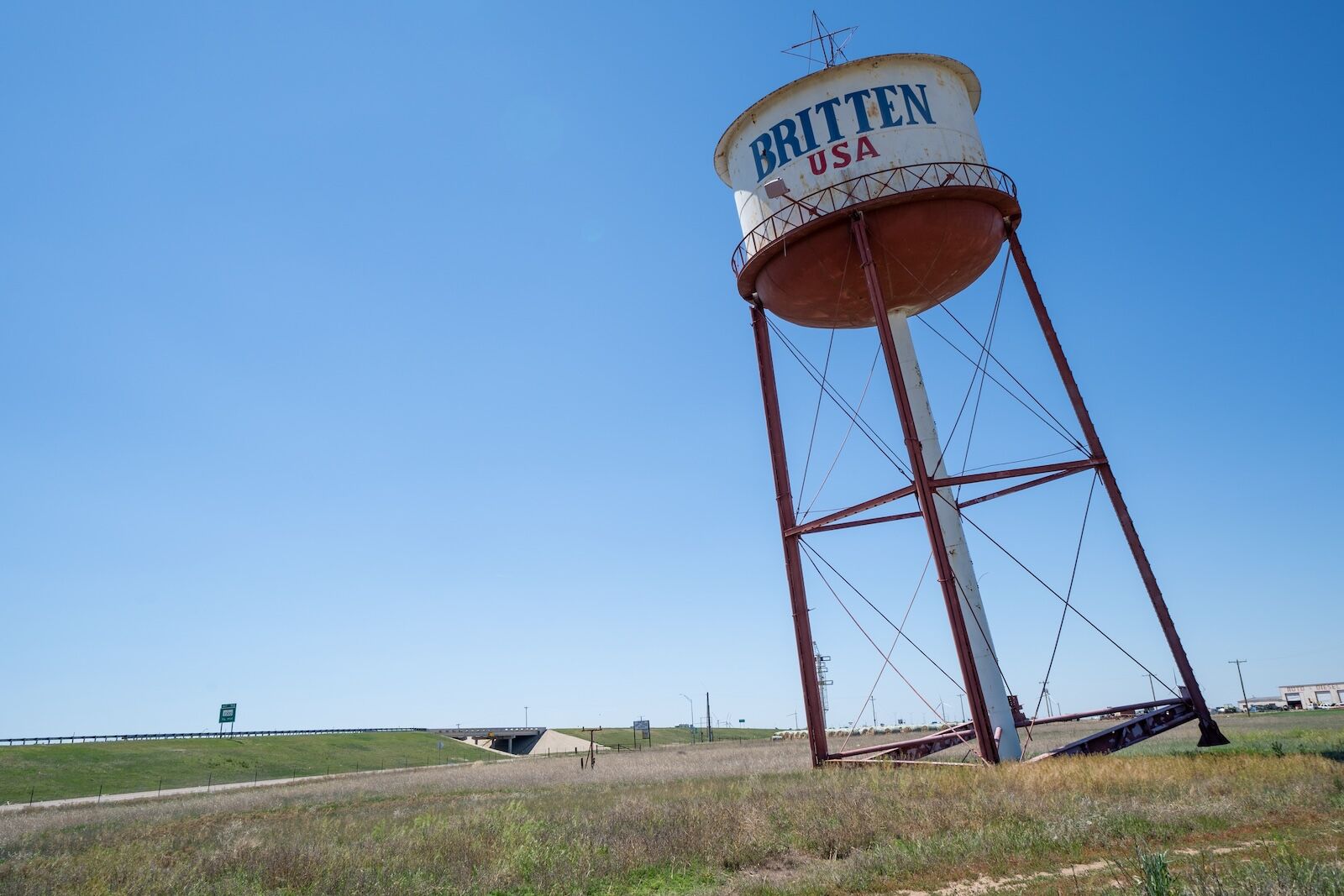
Photo: melissamn/Shutterstock
One of the strangest roadside illusions on Route 66 is the Leaning Tower of Texas — a water tower sitting just off Interstate 40 in the tiny town of Groom, Texas. From a distance, it looks like it’s about to collapse, but don’t worry: it was built that way on purpose. In a former life, the tower was a water tank, but it was bought and repurposed as the leaning tower, designed to lure drivers off the road and into the nearby truck stop. Today, the truck stop is gone, but the tower is still a classic Route 66 photo op. It sits off Exit 114 and there’s a small gravel pullout where you park to walk up and take a closer look.
GPS coordinates: 35.19816, -101.08190.
The former world’s largest rocking chair
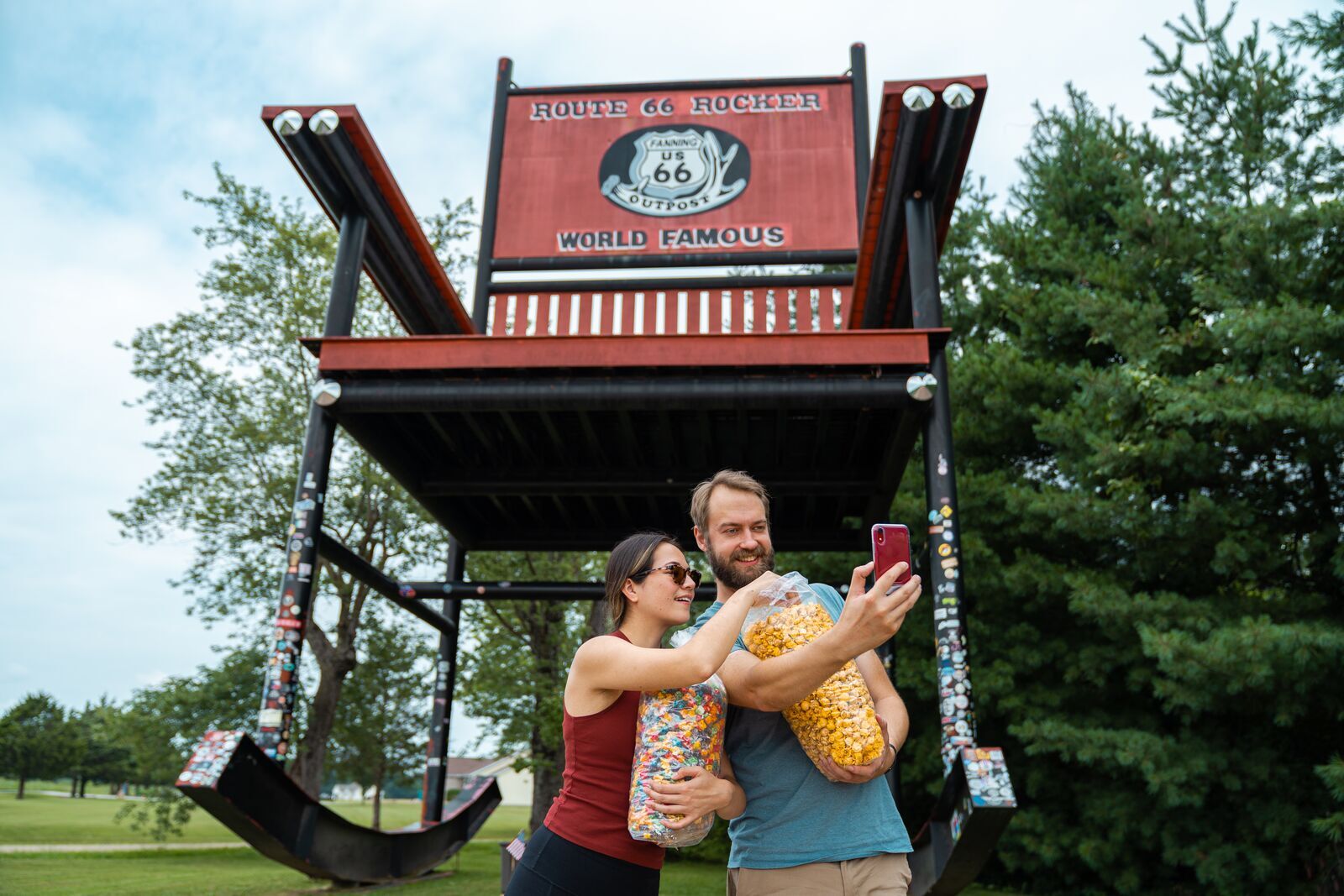
Photo: Visit Missouri
One of the most absurd roadside attractions on Route 66 is the former world’s largest rocking chair, a 42-foot-tall chair towering over Fanning, Missouri. It’s visible from a distance and impossible to ignore, which is pretty much the whole point. It has no real function, other than getting drivers to pull over for a photo and maybe buy some snacks. The site is free and open year-round, with a small shop (that sells homemade snacks) and rest stop nearby if you want to linger. It’s a perfect example of Route 66 quirkiness: make something big and ridiculous and wait for drivers to arrive.
And if you’re thinking “wait, former largest chair?,” well, yes. Someone saw this chair and felt the need to build an even bigger one. But that’s not on Route 66. Instead, it’s in Casey, Illinois, and stretches 56 feet into the sky. However, like the one in Fanning, it also has no point other than just being there.
Address: 5957 State Hwy ZZ, Cuba, MO 65453
The world’s largest ketchup bottle
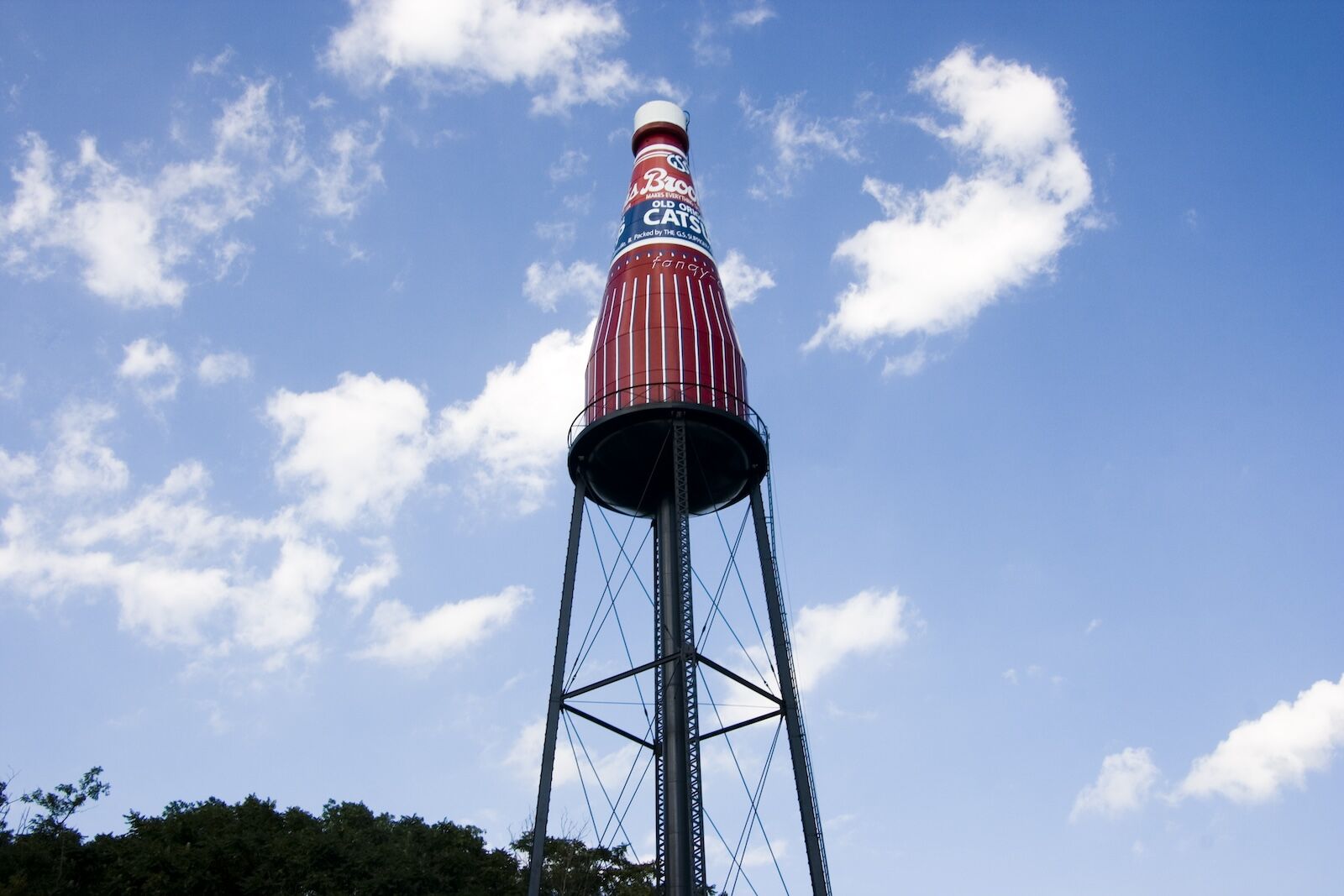
Photo: Illinois Office of Tourism
A 42-foot rocking chair isn’t tall enough for you, you say? Well, then up the stakes by taking a quick (10-minute) detour to the world’s largest bottle of ketchup. It’s a 170-foot-tall water tower shaped like a giant ketchup bottle in Collinsville, Illinois. It was built in 1949 for a nearby Brooks ketchup (or catsup, your choice) plant, designed to advertise exactly what was made inside — and be a quirky piece of mid-century novelty architecture. At the bottle, there’s a small pull-off nearby where you can stop for photos, and it’s open 24/7 for camera-toting visitors. If you need even more info, never fear, as this quirky attraction even has its own website: catsupbottle.com.
Address: 800 S. Morrison Ave, Collinsville, Illinois 62234
Roy’s Motel and Cafe
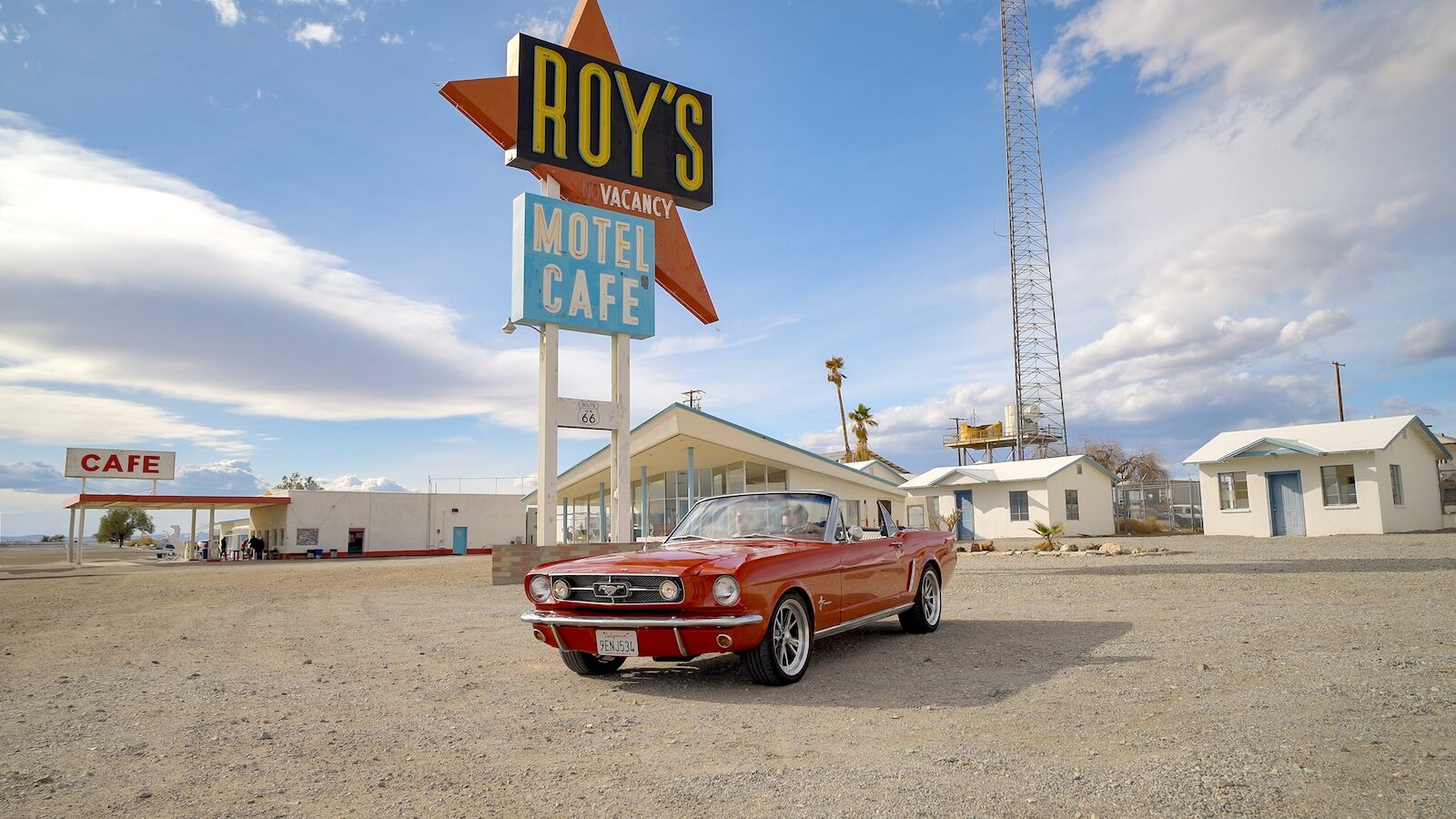
Photo: Visit California
In the Mojave Desert, basically in the middle of nowhere, is where you’ll find Roy’s Motel and Cafe. It was built in 1938 along Route 66 and soon expanded into a full complex with a gas station, cafe, and motor court, designed to serve travelers headed both ways through the otherwise empty desert.
Architecturally, Roy’s is one of the best surviving examples of Googie architecture, a mid-century style influenced by the promised “Space Age” and the need to grab the attention of drivers as they sped along the highway. It was designed to be seen from a distance, before neon billboards appeared to do the job.
Today, the motel and cafe are being restored but the gas station and shop are open. There’s plenty of room to pull over, walk around, and take photos, with nothing but open desert in every direction.
Address: 87520 National Trails Hwy, Amboy, CA 92304
The Wigwam Motel
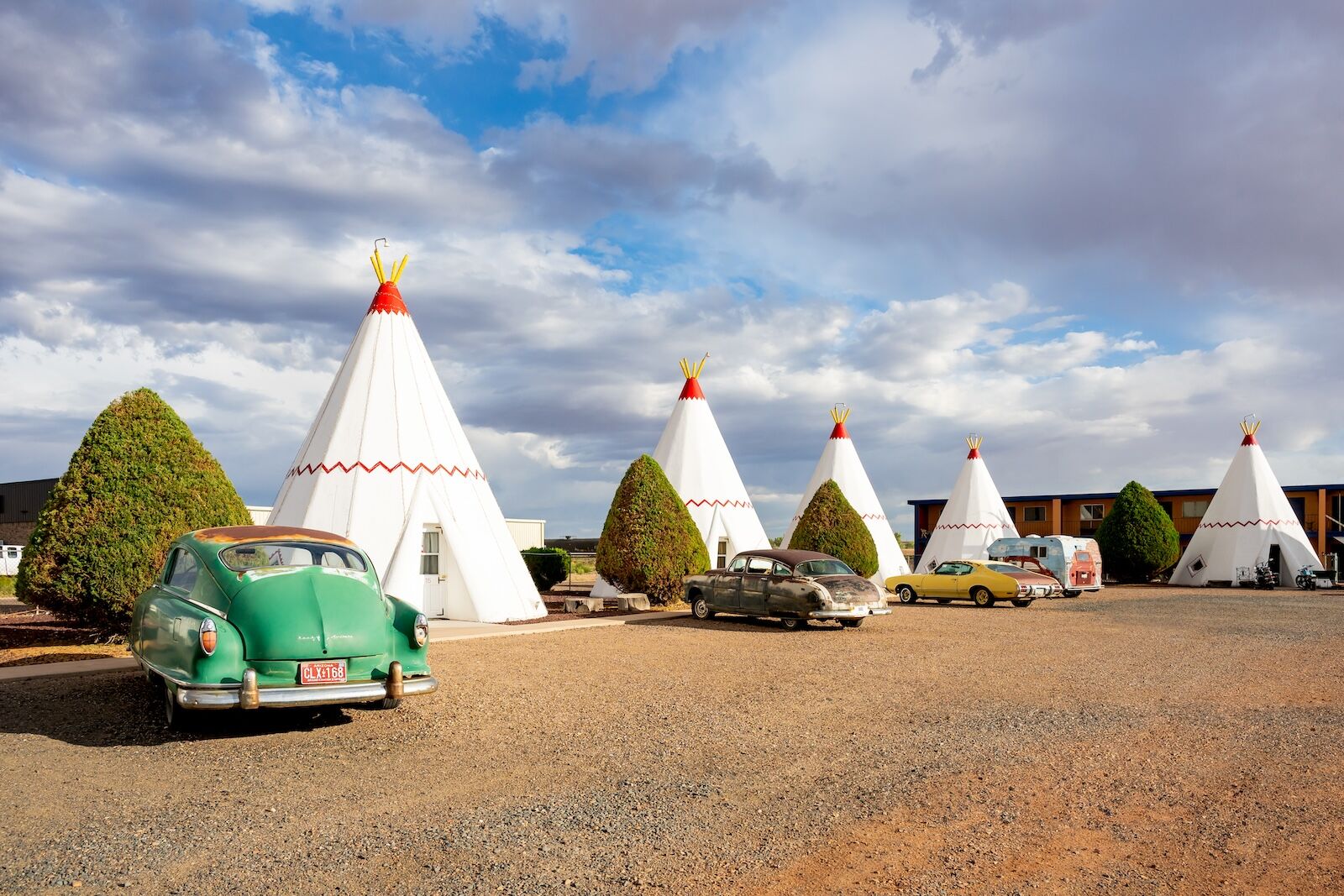
Photo: Visit Arizona/AN PHAM
One of the most recognizable places to stay on Route 66 is the Wigwam Motel in Holbrook, Arizona, where guests sleep inside concrete “wigwams” (even though they’re technically shaped like teepees, not wigwams). It was built in 1950 as part of a small chain of themed roadside motels and is now one of only two surviving on Route 66. The other is in Rialto, California.
The Holbrook motel is one of the best roadside attractions on Route 66 that requires absolutely no detour, as it’s on the main route (and within driving distance of Petrified Forest National Park). The layout hasn’t changed much in the last 70 years, with 15 individual teepee rooms, each of which has a small bathroom and vintage decor. Visitors can spend the night (reservations recommended) or just pull in to take photos and check out the various classic cars from 1950s and ’60s. It’s a departure from other stops on the list as it’s still functional, offering the unique chance to sleep inside a piece of Route 66 history.
Address: 811 W Hopi Dr, Holbrook, AZ 86025
Jack Rabbit Trading Post
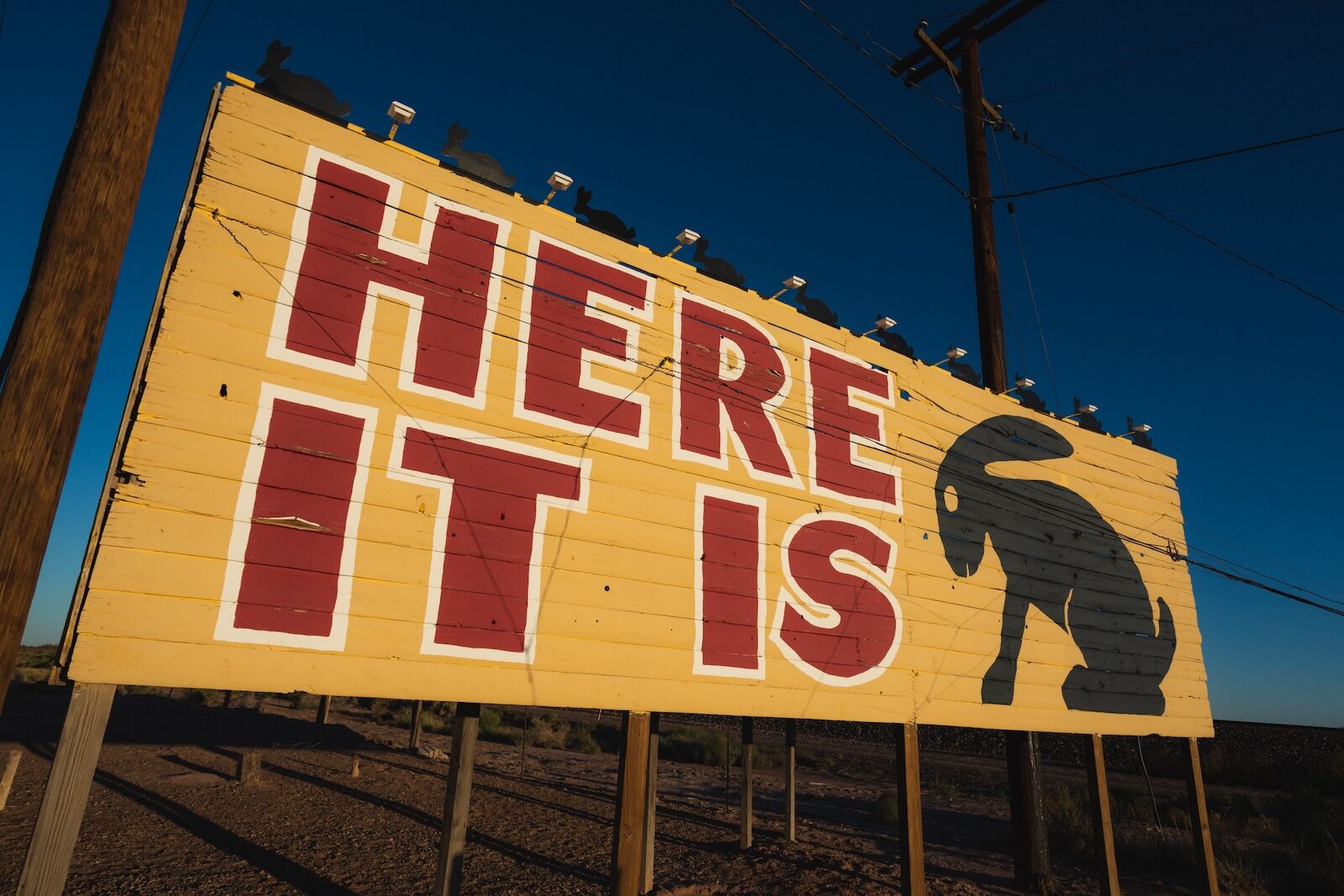
Photo: Logan Bush/Shutterstock
Jack Rabbit Trading Post isn’t necessarily famous for what it is, as there are plenty of small gift shops along Route 66. Instead, it became famous for how it was advertised. It opened in 1949 along Route 66 near Joseph City, Arizona, but became a must-stop destination as it placed dozens of bright yellow billboards for hundreds of miles in either direction, counting down the distance to the store. It’s a strategy today famously used by “South of the Border,” the quirky Mexico-themed pit stop between North Carolina and South Carolina.
Drivers on Route 66 would see the billboards and eventually arrive to a giant sign that said “Here it is,” plus a huge fiberglass jack rabbit that children (and adults) were welcome to climb on. Today, the shop is still open 9 AM to 5 PM Monday through Saturday, and 10 AM to 4 PM on Sundays. Whether you buy anything or not, it’s a fascinating place to get out and browse the packed shelves for a few minutes. And yes, you can still take photos with the famous signs.
Address: 3386 U.S. Rte 66, Joseph City, AZ 86032
Red Oak II
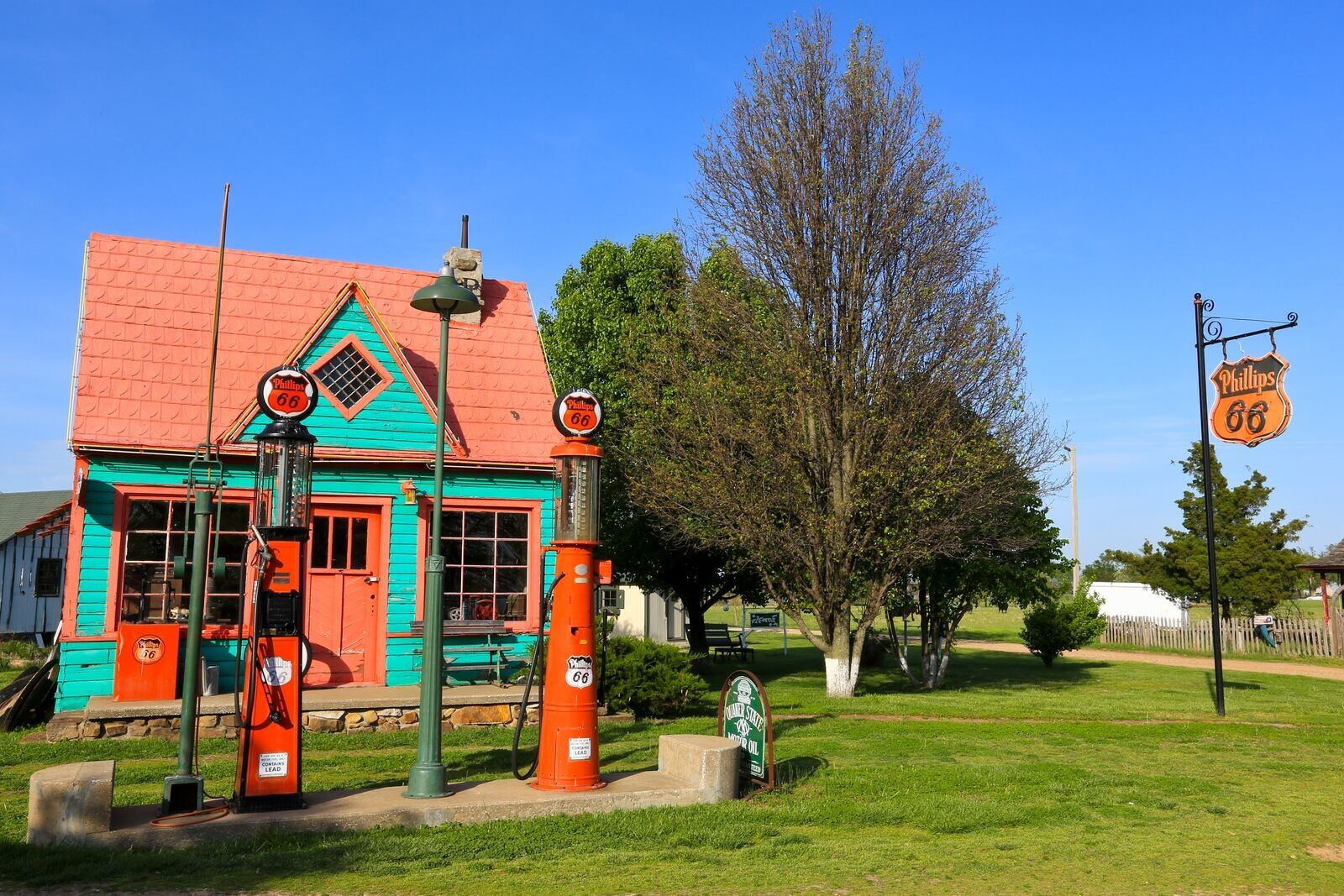
Photo: Visit Missouri
Red Oak II isn’t a ghost town — but it kind of looks like one. It’s a quick detour off Route 66 near Carthage, Missouri, and is a 60-acre site created by artist Lowell Davis, who spent decades relocating and restoring dozens of abandoned buildings from his original hometown of Red Oak, about 20 miles away, to the current location of Red Oak II. The result is a fully reconstructed early 1900s town, complete with a general store, a classic Phillips 66 gas station, a schoolhouse, a church, and even a cemetery, all arranged across open farmland.
Cell service in the area isn’t always great, so download the map before you leave the highway. But it’s a quick detour, and once you arrive, you can park along the gravel road and walk through the town on foot. Admission is free, as there’s no formal entrance gate. But if you appreciate the effort, there’s an optional donation box posted near the front. When you walk around, remember that although it’s sort of a museum, it’s also a private community, and a few people live full time in the town. So you’re welcome to walk around, take photos, and explore open buildings, but don’t peer into windows or treat it like an empty town. And please, don’t cut through lawns or take pictures of residents.
It’s quiet, a little eerie, and a little unusual among Route 66 attractions.
Address: 10917 County Loop 122, Carthage, MO 64836
Shaffer’s Fish Bowl/Shaffer Springs
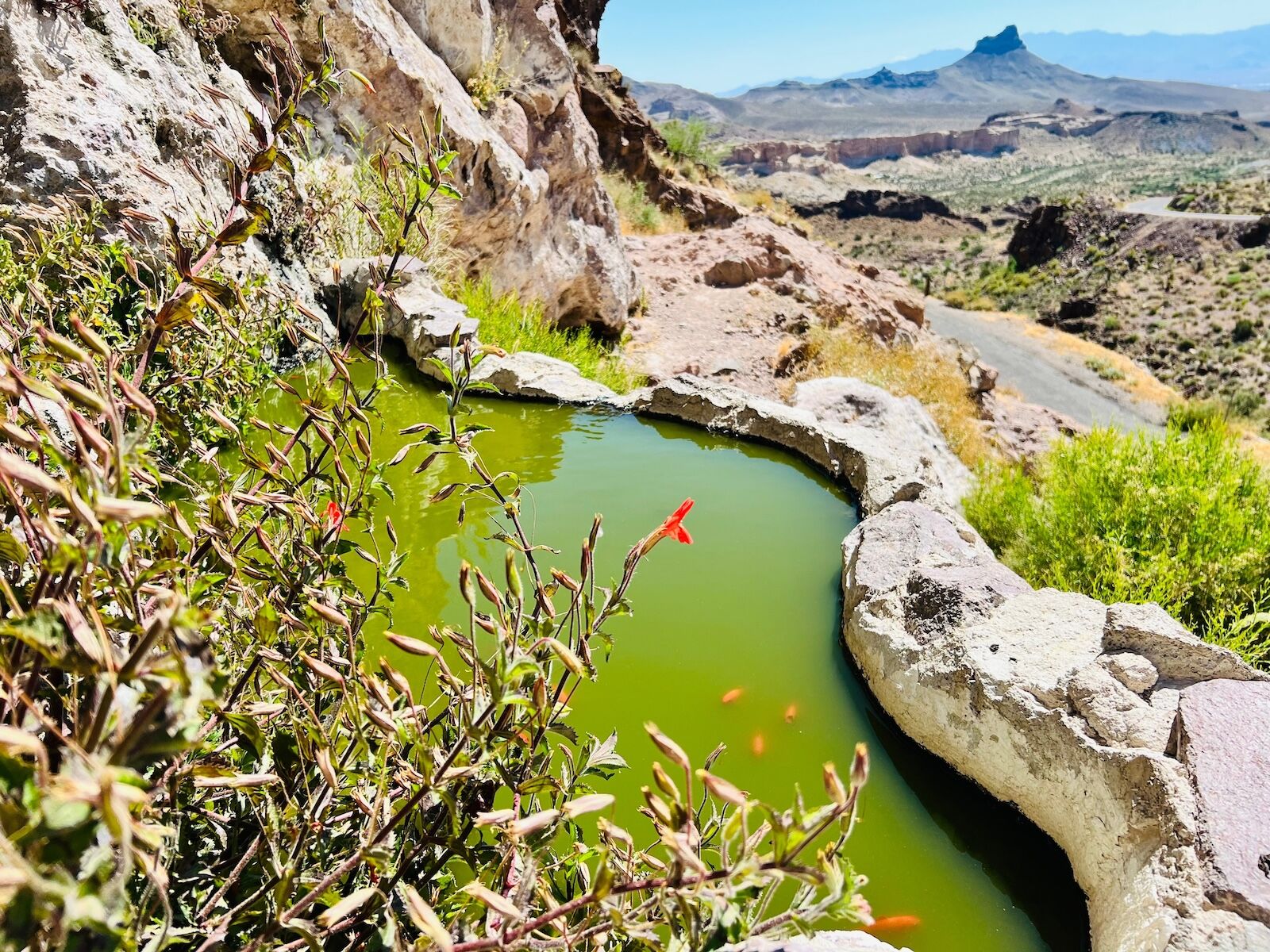
Photo: RichAndLisa/Shutterstock
Shaffer’s Fish Bowl may be one of the least-known roadside attractions on Route 66 — it’s certainly one of the more unusual. It’s not a giant object or a manmade structure, but rather, a small pool of water in the middle of the Arizona desert that just so happens to be full of goldfish. It’s a natural spring that sits on an older stretch of Route 66 (it was rerouted a few times) in Arizona between the towns of Kingman and Oatman. At some point, someone stocked it with goldfish, and they’re still there, swimming in what feels like a very unlikely setting. The spring also serves as a water source for wild burros in the area, which makes for some unusual photo opportunities if they’re there when you arrive.
To visit, you’ll need to drive the older, curvier section of the old Route 66. There’s no sign, so you’ll need to just watch the scenery and pull over on the shoulder when you see it. It’s not necessarily impressive in terms of scale or design, but it’s just plain weird. It’s the kind of destination where you get out, scratch your head, look around, and think to yourself “what the heck is this doing here?” And the answer is: no one really knows.
GPS coordinates: 35.0386°N 114.35662°W 