A warm wind whipped through my hair as my group drove in an open-air, khaki-colored Jeep from Mfuwe International Airport in southern Zambia. We chatted as we got to know each other, while our guide Suzyo Zimba was at the wheel, cruising down the long main street of the village of Mfuwe. As the sunlight faded, we passed several soccer matches at full throttle. We could hear the shouts of players rising above the field, along with the muffled snorts of hippos in the nearby South Luangwa River. This was South Luangwa National Park, where the walking safari was born — and where the soccer team that Zimba runs was born, too. It’s called Mfuwe Resource Center Football Club, and had a similar start to the casual games we were driving past.
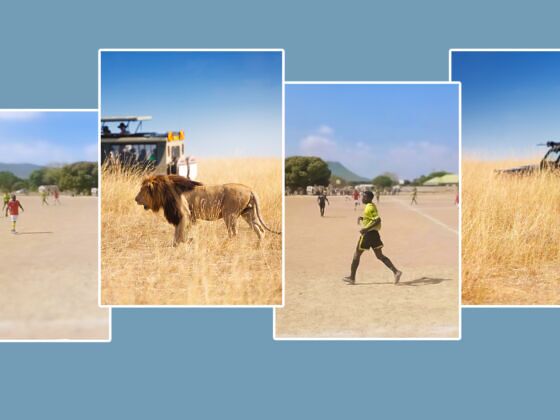
Photos: Suzyo Zimba and Sergey Novikov/Shutterstock
Lions by Day, Soccer by Night: The Secret Lives of Zambian Safari Guides
Over the coming week, I learned that Zambia’s professional safari guides aren’t just masters of the bush. Many, like Zimba, lead double lives — working as skilled professional naturalists by day, and running serious football teams that are shaping the future of the sport in rural Africa after the tourists have gone home.
From tracking lions to tracking goals
I first met Zimba on that ride from the airport as he took us to KuKaya, the first of several camps planned for my week-long trip with the Bushcamp Company. The Bushcamp Company encourages guests and guides to mingle, and I was thrilled to have Zimba as company during most meals. It’s not every day that you get to break bread with a man who’s been charged by a leopard.
One morning, I asked if he knew rugby scores from the night before, and he told me that soccer is a much more popular sport in Zambia. He told me about his team, now in Division One. It took a beat before I realized he’s not talking about a team he follows, the same way I’d say the South African Springboks are my team. No, he actually runs the soccer team, along with Shadreck Njobvu, another Bushcamp Company guide. Over the next few days, even as we moved to new, gorgeous camps like KuKaya and Chindeni, I found myself just as fascinated by Zimba’s secret life as a soccer promoter and organizer as I was by the wildlife of South Luangwa.
“You own a soccer team?” I asked, incredulously. By that point in the trip he’d already seamlessly navigated river crossings alongside buffalo herds, kept us safe on foot within a stone’s throw of hippos, handled two mock elephant charges, found a pride of lions on the move at night, and gotten us close to two leopard brothers warring over a baboon kill. I was already wildly impressed with him as an expert guide, and was unsurprised to hear he holds the title of chairman of the South Luangwa Professional Safari Guide Association. But to know he is a professional soccer club owner on top of all that made my jaw drop.
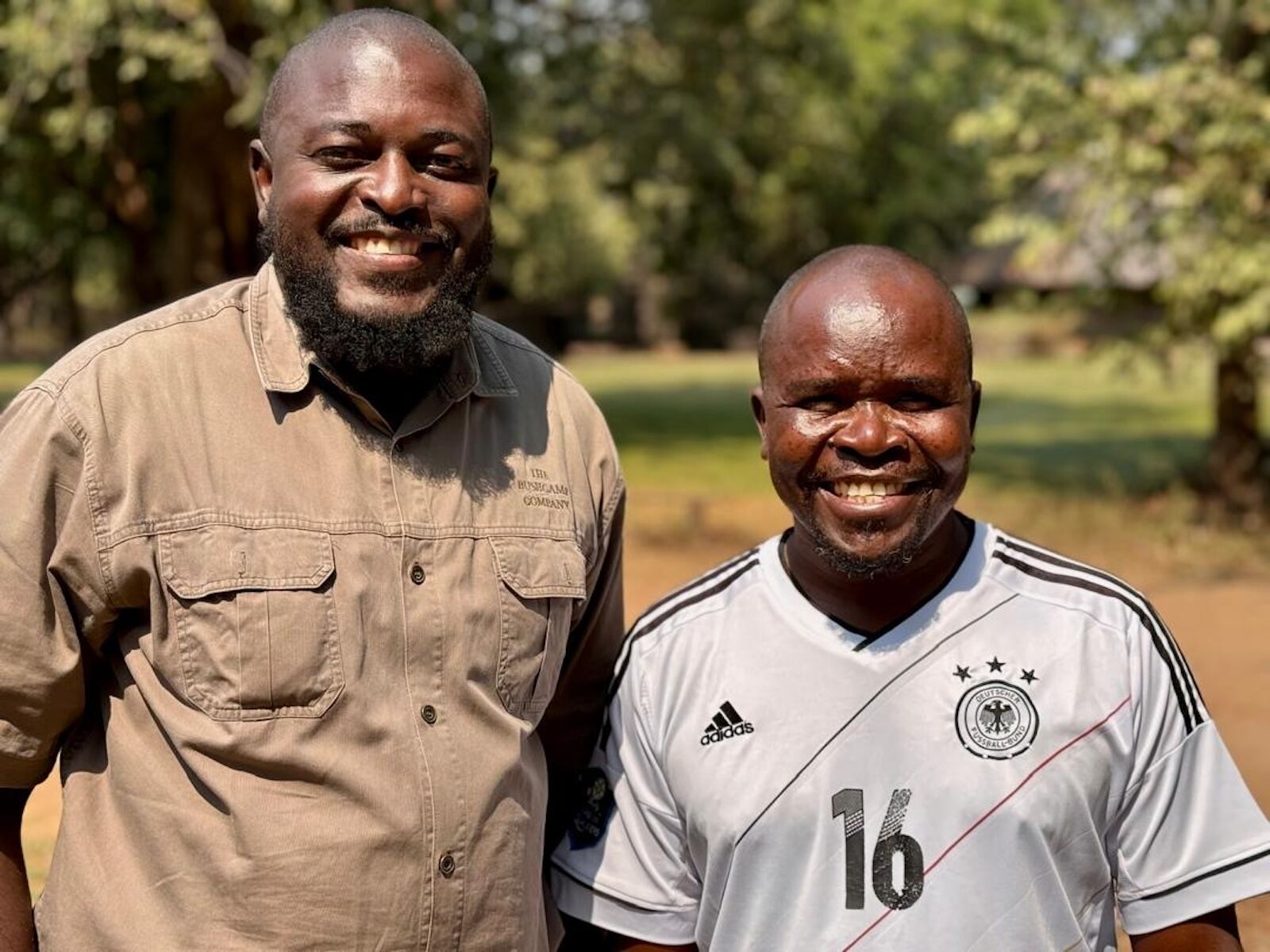
Suzyo, left, and Shadreck, right. Photo: Suzyo Zimba.
Zimba is quick to refute the label of him and Njobvu as club owners. “It’s not owned by an individual; it’s owned by an executive committee of Mfuwe villagers,” he told me. “We’re all part of it. We’re proud of it.” He takes care of the team’s finances, while Njobvu is more hands-on with operational responsibilities, though they help with each other’s responsibilities when guiding duties take priority.
Zimba refers to his past clients as friends, and told me two longtime friends from California asked him years ago how they could get more involved in the local community after their stay. The Bushcamp Company supports and leads plenty of significant community initiatives: digging wells to bring clean water to more than 75,000 area residents, building 44 classrooms in the area, and sponsoring 1,300 children and teens to finish school. Since 1999, it’s raised more than $7 million for conservation and community projects in the South Luangwa area. So Zimba felt free to think big.
Those guests wanted Zimba’s guidance and ideas, eventually turning their funding into a small community resource center. “It’s all possible because of the Bushcamp Company encouraging community development as a major project,” Zimba said. He requested that the building include a satellite dish, so young kids had a safe place to watch soccer instead of heading to a village bar, where they would be exposed to opportunities for underage drinking.
“I thought that would be most beneficial for the community,” he explained. But it was also because soccer was already booming there, as Njobvu had started a small soccer club years before. “He loves soccer even more than I do,” Zimba told me, laughing. Soon after, the duo paired up, combining the club with the resource center. In 2016, Mfuwe Resource Center FC was born. “It progressed from being a small soccer team to now competing on a regional level in Division One,” Zimba told me with pride.
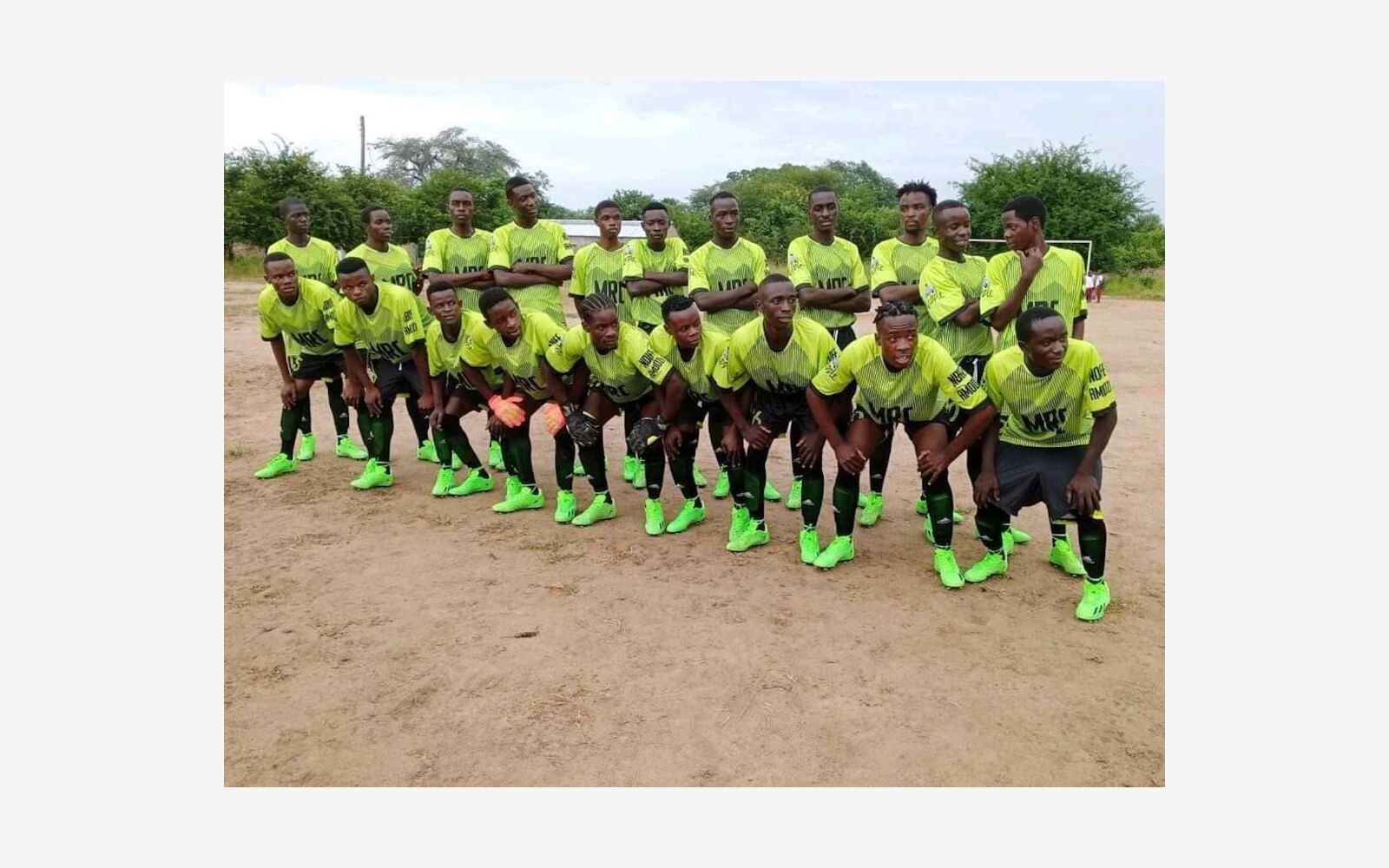
Mfuwe Resource Center FC. Photo: Suzyo Zimba.
I’m not sure what made Zimba prouder: when he showed me the photo of his team in their first year compared to now, or when we tagged along as he spent several hours successfully tracking male lions by their paw prints in the sand. He pointed at one of the teens in the photo from 2016, telling me it’s Noah, Njobvu’s son, who is now training as a naturalist guide and spotter at Mfuwe Lodge. “He’s following in his father’s footsteps,” he said.
Mfuwe Resource Center FC is now in the big leagues, and with that comes more pressure. “Division One is much more competitive, playing against teams from all over eastern Zambia,” Zimba said. The team often drives up to several hours for a match, bringing supporters from the village with them when there’s space on the transport.
View this post on Instagram
Toward the end of our stay, we were at the flagship Mfuwe Lodge that’s famous for the elephants that roam through the reception in search of juicy mangos. It’s here that I saw the overlap between Zimba’s wilderness skills and soccer management skills. From our safari vehicle, we gawked as a lion pride demolished a huge buffalo, starting with the face, the jaw bones already stripped bare. Despite growing up in South Africa, I’d never seen a kill this close.
Vehicles from various other camps also lined up for a better look, and Zimba immediately took charge. He reminded them of the park’s viewing limitation policy to minimize the number of game drive vehicles at a single site. His voice was calm and firm, and I wondered if this is the same tone he takes with his soccer players. They didn’t get to Division One through luck, after all.
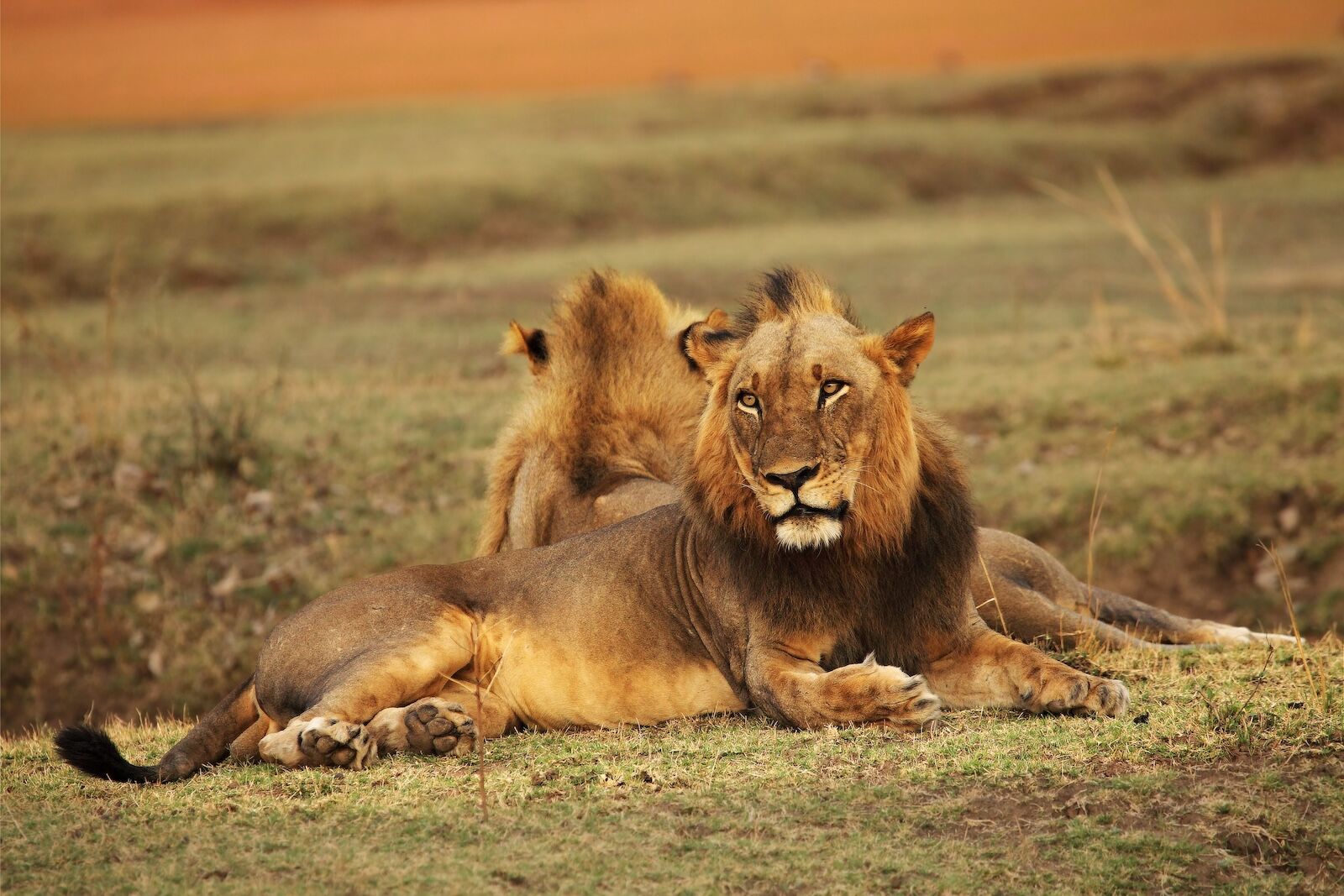
Two lions in South Luangwa National Park, Zambia. Photo: Jan Hejda/Shutterstock
Slowly, some vehicles moved away. It was strangely uncomfortable to see other vehicles at all. We hadn’t seen anyone else in the area around the remote camps of Bilimungwe and Chindeni, as the Bushcamp Company is the only operator in that southern region of South Luangwa National Park.
How travelers can support the home team
Fortunately, the guides’ not-so-secret lives as soccer managers are slowly coming into the light, and travelers seeking to get involved need only ask (or delve a little deeper on the website). “If they are interested and want to know more about the community or what guides are involved in, then we share,” Zimba said. “Unless guests ask, we don’t really talk about it.”
Luckily, guests tend to be the curious sort. Over the years, the Mfuwe Resource Center FC has benefited from funding and donations from individuals and Dazzle Africa, providing the team with cleats, jerseys, soccer balls, and other equipment as well as financial assistance for transportation to league away matches.
“It’s a pity you’re not here for longer,” Zimba said. “We could have gone to a match.” Turns out, match attendance is as simple as planning ahead and then simply asking for it. There are no tickets – you just show up and enjoy the game, though you might have to forgo one of the two daily game drives to make it happen.
Zimba has big dreams for the club. “We hope to reach the national level and see our players recognized in the national team and professional clubs outside the country,” he told me as he unpacked coffee urns and freshly baked biscuits during a bush breakfast on the last game drive of the trip. We were in a clearing, with swaying branches and noisy baboons playing overhead. “The valley doesn’t offer a lot in terms of employment, but your talent can earn you a living,” he said.
He’s excited about new developments, like a sports complex being built in the village. “Soccer is the community itself,” Zimba said. “It brings people together. It means a lot to everyone, so we’re so proud to be playing on a professional level. It’s an inspiration to the younger generations that follow.”
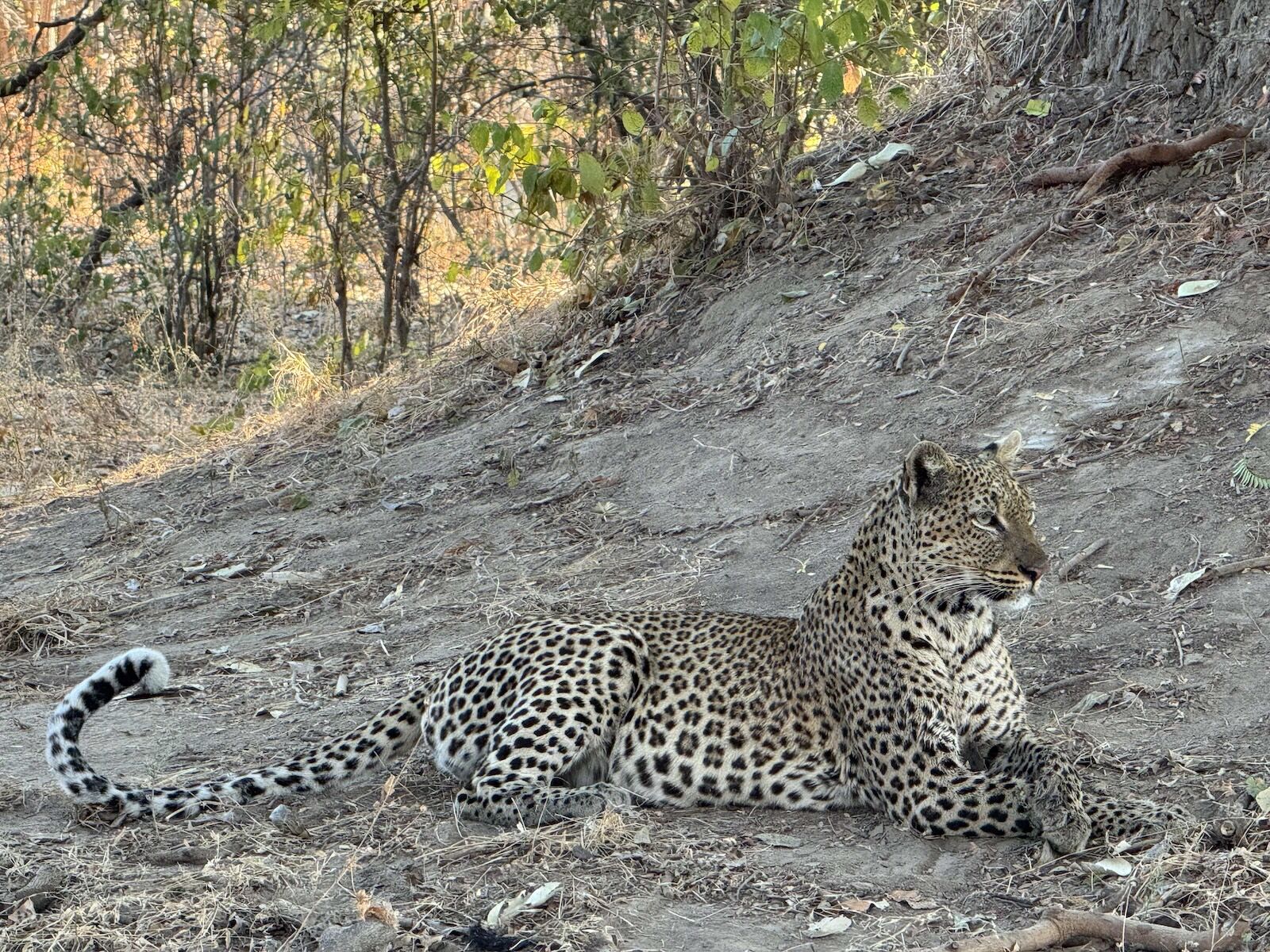
Photo: Tayla Blaire
He told me about this as I ambled about, coffee in hand, balancing on fallen tree trunks with leaves lightly falling from the baboons’ play. Out of nowhere, a cacophony erupted and Zimba froze, his head whipping to the side. “Into the vehicle,” he said. We clambered in as fast as we could. When Zimba says move, you move. “A leopard just made a kill. Right here, by us.” His grin widened. “One of the baboons…Do you hear them shouting? Come. Let’s find it.”
With days full of incredible animal sightings and conversations full of learning about Zimba and Njobvu’s lives as guides and soccer managers, the trip flew by. All too soon, we were en route to the Mfuwe Airport to catch our flight back to Zambia’s capital. During the drive, we passed a soccer match, ending the trip as it began. We trudged into the airport, and while we were reluctant to leave, Zimba found it hard to hide his excitement to get back to the leopard kill.
We waved farewell, departing as yet another group of his friends. I plan to return, this time with a match on the itinerary. I know a guy who can get me the best seat in the house. 