For the first time in more than a century, the Seine — the famous river running through the heart of Paris, France — is open again to swimmers. On Saturday, July 5, Parisians and visitors stood along the riverbanks at 8 AM, waiting for the green flag to signal that the water was safe. When it did, they plunged into the current, just a stone’s throw from the Eiffel Tower. It marked the end of a prohibition that dated to 1923, when authorities banned bathing in the Seine due to both pollution hazards, and dangers from boat accidents along the river.
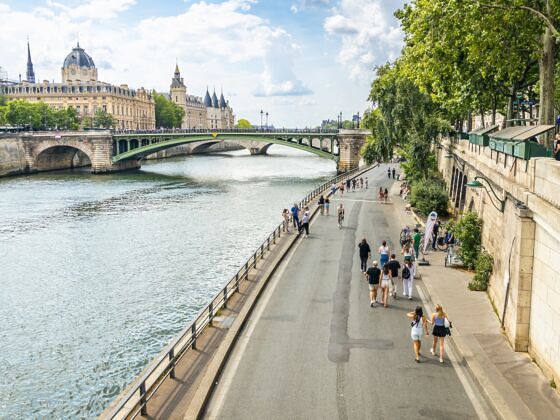
Photo: Shutterstock
After a 100-Year Ban, You Can Now Swim in Paris’ Seine River
The reopening follows decades of discussions in the political and civic sectors, as well as a 1.4 billion euro (about $1.55 billion) cleanup—an effort. The 2024 Olympic and Paralympic Games made swimming in the Seine a national issue, as open-water swimmers and triathletes swam in the Seine, though it had been off-limits for generations. But with the opening, there are now three supervised swimming zones: Bras Marie near Île Saint-Louis, Bras de Grenelle (by the Eiffel Tower), and Bercy in eastern Paris. Each one is open through August and has changing rooms, showers, and lifeguards donning fluorescent vests.
The complicated history of swimming in the Seine
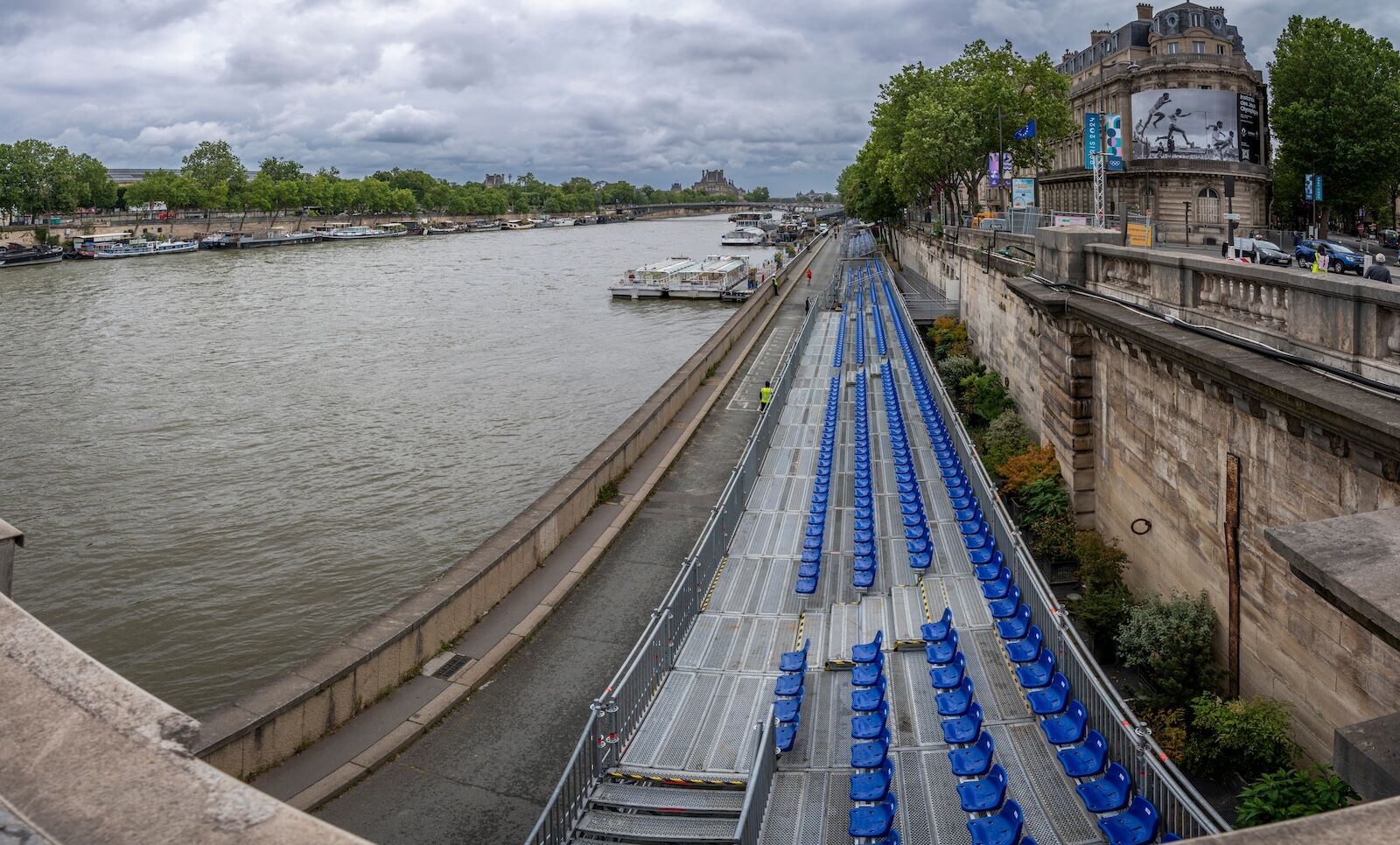
Viewing platforms along the Seine to watch swimming during the 2024 Summer Olympic Games. Photo: Shutterstock
Paris’ relationship with the Seine hasn’t always been one of passive attention. Before the ban, swimming in the river was a popular summer pastime, with Parisians across income levels flocking to its banks to cool off. But as the city grew, so did its waste. By the late 1900s, the Seine was more a symbol of urban neglect, with bacteria, sewage overflows, industrial runoff, and storm and rainwater, making it murky, dirty, and unsafe. Multiple politicians promised to clean it — in fact, in 1988, Jacques Chirac famously pledged to swim in the Seine within three years to prove it could be clean again. He never did, but the promise began to spur the idea in a more serious way.
Preparations for the Olympic deadline finally forced action. The city of Paris connected many historic and older homes to modern sewage systems, upgraded its water treatment plants, and built reservoirs to prevent flooding and overflow during storms. Now, it does daily checks for water cleanliness to determine if the three swimming zones will open, marking them with a green flag when they’re ready for bathers.
Swimmers need to stay in designated areas, with fines for swimming outside the approved areas. It averages a depth of about 11 feet, and the current is gentle but constant, so it’s not the same as swimming in a chlorinated, controlled pool. Swimmers will have to pass a test supervised by one of one of 27 lifeguards, proving they have the necessary safety knowledge and skills. Swimmers who pass will get a bracelet they’ll need to wear every time they want to go in the water this summer. There’s no cost to use the swimming areas, or take the swimming assessment.
How to swim in the Seine
Swimming in the Seine doesn’t involve traditional pools or sandy beaches. Each of the three areas has temporary facilities, including sun decks and floating platforms. The Bercy location is the largest, with two large swimming areas and space for about 300 people in the lounge area and another 300 or so in the water.
On arrival, visitors will need to demonstrate their swimming ability before getting access to the water. Swimmers have to wear provided flotation rings, and children under 14 must be with an adult. Lifeguards are always on duty, and entry is free of charge for the summer 2025 season. The swimming areas will be open until August 31, and all beaches operate on a first-come, first-served basis, with no reservations available. 