Cold ruins a day on the mountain faster than ice on a lift tower. I’m a Colorado native and after 30 years of snowboarding in everything from bluebird spring weather to sideways blizzards, I’ve learned that staying warm is less about suffering through bulk and more about building a smart system — starting with your socks. The layering playbook below is the same one I use every winter to keep riding when everyone else is headed for the lodge.
Just so you know, Matador may collect a small commission from the links on this page.
Shop Stance Ski & Snowboard Socks
Start with your feet
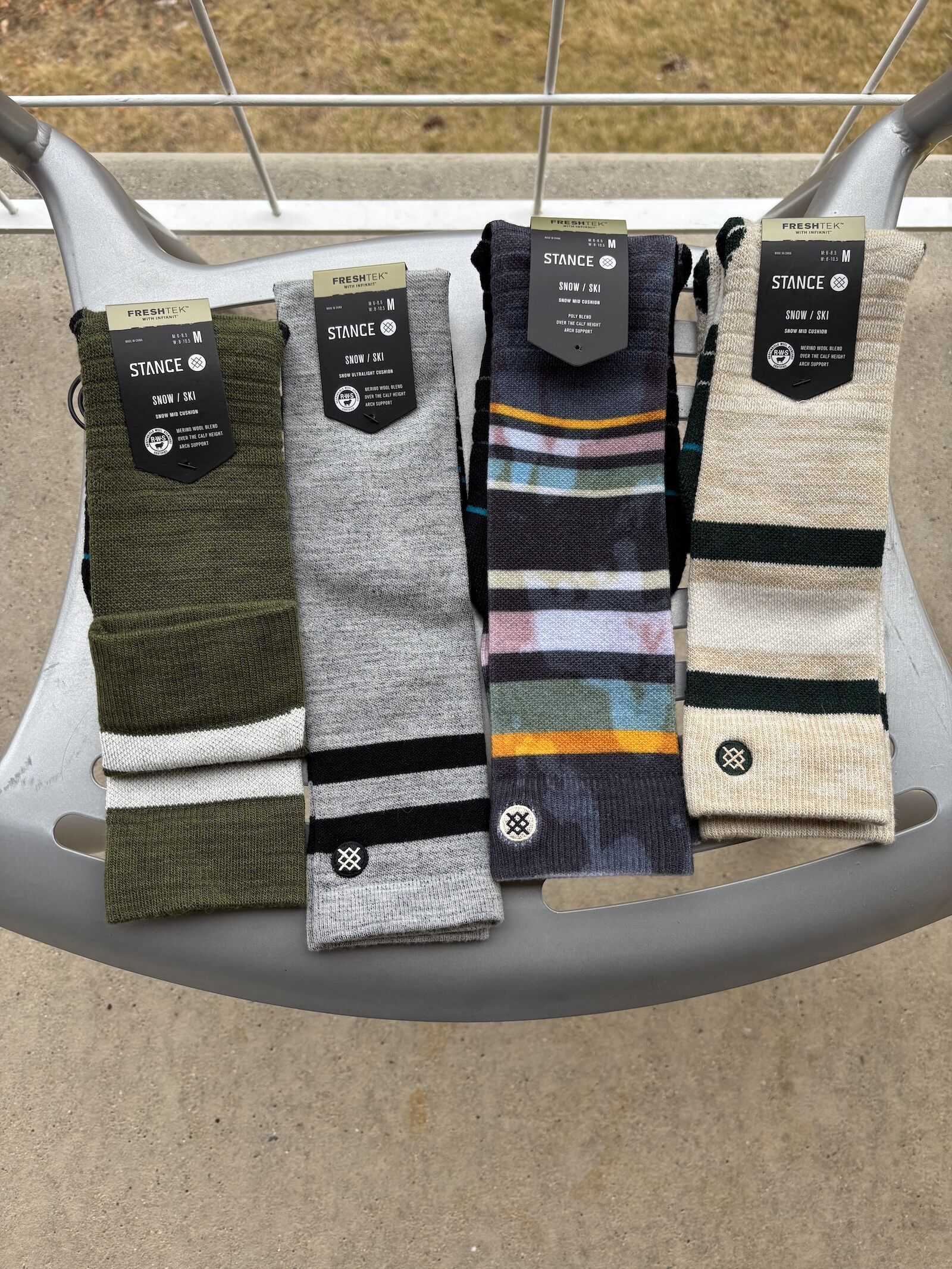
The 2025-26 Stance OTC sock line includes both Poly and Wool options. Photo: Alisha Wenger
I cannot overemphasize the importance of warm ski socks. If your feet are cold, the rest of your layering barely matters. Tight boots, sweaty cotton socks, and bunched-up seams will shut down circulation and turn your toes into ice in a couple of runs.
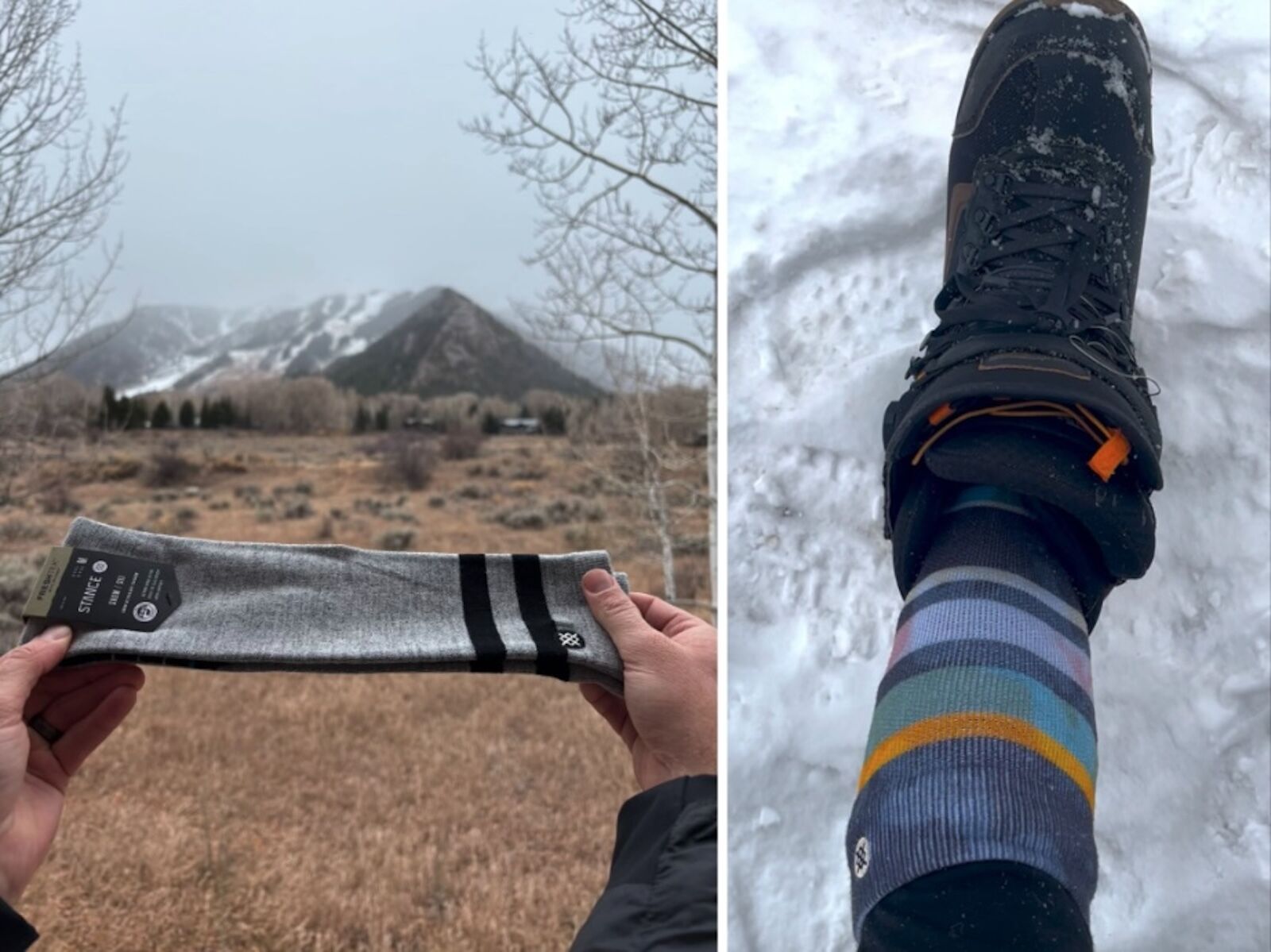
The goal: a thin to medium, technical over-the-calf sock that keeps your feet dry, supported, and comfortably locked into your ski or snowboard boots. I use Stance Ultralight Performance Wool Snow Over The Calf Socks for most days (I keep a few pair on-hand with my ski gear when on trips). They’re warm and flexible, accommodating my bunioned right foot (and the resulting fact that my feet are both a different size) by stretching with the foot as I put them on.
For backcountry touring and days when I know I’ll need more flexibility, Stance’s Poly OTC Snow Socks — part of the Medium Poly Snow OTC line — are built exactly for that job. They use a polyester blend with medium cushioning and performance mesh, plus Stance’s FreshTek moisture and odor control finish to move sweat away and keep your feet feeling dry throughout the day. Infiknit reinforcement in the heel and toe adds durability in the highest-friction areas, which matters when you’re flexing and unflexing boots for hours. Channeled air cushioning and performance arch support help your foot sit evenly in the boot, reducing hot spots and pressure.
If you prefer natural fibers, as I do for most situations, the Stance Wool OTC Snow Socks (from the Medium Performance Wool Snow OTC line) lean on a merino wool blend with thermoregulating fibers. That means better temperature control as you move between cold lifts, windy ridgelines, and warm gondola cabins. They also use FreshTek, Infiknit durability, medium cushioning, performance mesh, and graduated sport compression to support circulation and recovery — all in an over-the-calf height that seals the gap between boot and base layer
A few hard-earned foot rules:
- One pair of socks only. Doubling up cuts circulation.
- Make sure your boots are snug but not crushed when you buckle them over thicker, cushioned performance socks.
- Pull the sock completely smooth — no wrinkles over the heel or instep. That’s the difference between “all-day warm” and “second-run blister.”
Dial in a real base layer
Photos: Tim Wenger
Once your feet are sorted, the next line of defense is your base layer. This is the layer that sits right against your skin, so its main job is to move moisture away, not provide heavy insulation. Look for a synthetic or merino base layer top and bottom with a snug, second-skin fit. If it’s baggy, warm air leaks out; if it’s too tight, you restrict movement and trap sweat.
Key things to prioritize:
- Fabric that wicks sweat — avoid cotton.
- A crew or half-zip top you can vent on warmer laps.
- Full-length bottoms that meet, or slightly overlap, the top of your socks so you avoid cold gaps at the boot cuff.
- If you run cold, you can size the weight of your base layer up slightly, but don’t try to get all your warmth from this layer. Its job is to keep you dry so the rest of your system can work.
Choose a mid-layer that actually works
The puffy and the fleece, together in harmony. Photo: Tim Wenger
Your mid-layer is where you start to add real warmth. For most days, a good fleece does more work than people give it credit for.
I look for a mid-layer that:
Insulates without feeling bulky under a shell.
Breathes well so you don’t overheat the moment you start hiking or riding hard.
Has a zip you can open wide before you get back on the lift.
A medium-weight fleece or technical grid fleece checks those boxes for most resort days. It traps warm air, maintains breathability, and slides comfortably under a shell without binding at the shoulders.
If you’re out in storm cycles or riding a lot of early-season cold, consider a slightly warmer mid-layer but stay within that “still comfortable inside the lodge” range. If you’re sweating as you walk from the parking lot, you’ve gone too heavy.
Puffy plus shell: my armor against the storm
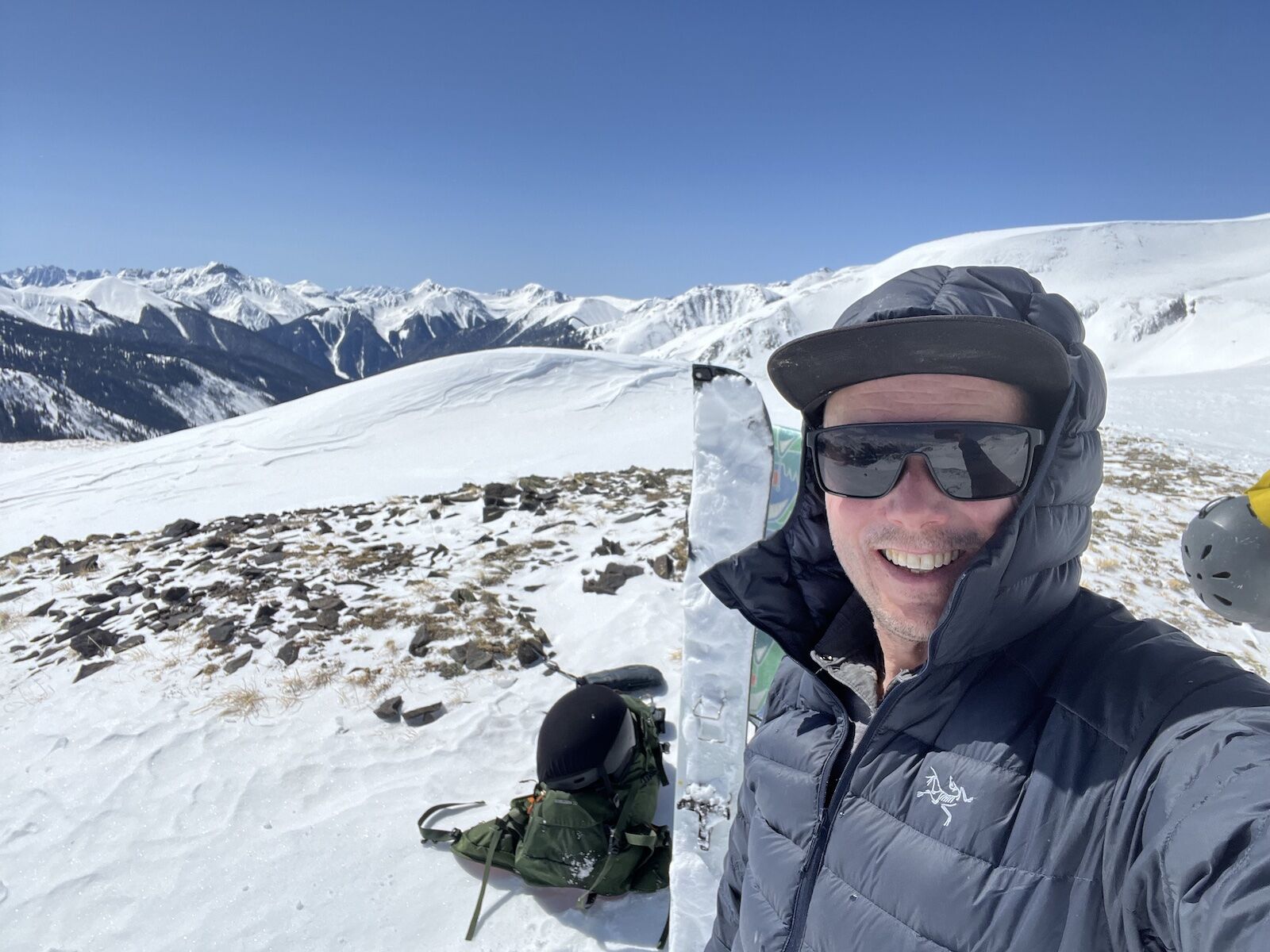
All smiles at the summit. Photo: Tim Wenger
Up top, you’re building a two-part system: insulation and weather protection. A puffy jacket — synthetic or down — adds a big warmth boost while staying surprisingly light. Synthetic insulation tends to handle wet storms and repeated layering better; down is lighter and more compressible for very cold, dry conditions. Either way, keep it mid-weight for resort riding so you can still move easily. I try as hard as I can to buy eco-friendly gear, and the good news these days is that recycled poly and other synthetic materials are incredibly easy to find from most major brands.
I’m aware that wearing a puffy under another jacket on anything but the coldest days might sound like overkill. This has been pointed out to me numerous times on chairlifts, touring ascents, and elsewhere. My defense is that I’m not opting for a summit puffy, just a routine daily wear one, and if the layer above it is breathable then I won’t sweat profusely. Just a basic waterproof, breathable shell is my shield against wind, snow, and lift-ride spray.
Features that actually matter on the hill:
- A hood that fits over your helmet and moves with your head.
- Long pit zips so you can dump heat without stripping layers.
- Powder skirt and wrist gaiters to block spindrift and wind.
- Enough pocket space for gloves, snacks, and a phone without feeling like you’re wearing luggage.
On spring days, I’ll swap the puffy for just a fleece under the shell. On deep winter days, the full stack — base, fleece, puffy, shell — lets me regulate heat simply by opening vents and front zips, rather than adding or removing pieces on every break.
Managing moisture, breaks, and chairlift chill

After a full tour, my feet felt warm and comfortable. Photo: Tim Wenger
The best layering system in the world fails if you let sweat sit on your body. The pattern on a cold day should look like this:
- Open vents and main zips before you start a hard run, traverse, or short hike.
- Close them as soon as you stop moving, especially before getting on a chairlift.
- Keep gloves, neck gaiter, and beanie or hood dry; swap if they get soaked.
Your socks matter here too. The moisture-wicking blends and FreshTek treatment in both the Stance Poly and Wool OTC Snow Socks are designed to reduce the “sweaty in the boots, frozen on the chair” cycle by pulling sweat off your skin and helping it evaporate through performance mesh zones. That keeps your foot environment more stable and reduces the chills that hit once you stop moving.
On breaks, resist the urge to pull boots off unless you’re truly done for the day. Popping buckles a notch looser is usually enough. Opening boots completely lets warm air escape and forces your feet to reheat from scratch.
Small details that keep you skiing or riding longer
Once your core system is dialed, a few details make a big difference in how long you can stay out:
- Hands: Go for insulated, waterproof gloves or mittens with a liner. Mittens generally stay warmer.
- Head and neck: A thin, breathable balaclava or neck tube plus a helmet does far more than a thick beanie alone.
- Hydration and food: Dehydration and low calories make you cold. Drink water, not just coffee, and keep a snack in your pocket.
- Fit over bulk: If any layer is so tight it restricts movement or blood flow, it’ll make you colder, not warmer.
But if there’s one thing I’d tell every new rider — and plenty of experienced ones — it’s this: start by upgrading your socks. A properly cushioned, over-the-calf, moisture-wicking sock like the Stance Poly or Wool OTC Snow Sock lines turns your boots from “tolerable for a couple hours” into “comfortable all day,” and that unlocks everything else you love about time on snow. Get your feet warm, build the right layers on top, and the storm stops being something you endure. It becomes the reason you’re out there. 