I’ve spent my whole life on Colorado snow, and somewhere along the way I stopped judging ski towns by just the size of their mountains. In Colorado, that’s the easy part. Any place with enough vertical and a decent snow year can sell you a good day on the hill. What I pay attention to now is what’s waiting when I clip out of my bindings at the bottom, and by that measure, Steamboat Springs has slowly become one of my favorite ski towns in the state.
I Came to Steamboat to Ski. I Stayed for Everything Else.
Part of it is just getting there, and I don’t say that the way people usually complain about a long drive. Getting to Steamboat means skipping the I-70 corridor — the stretch of interstate that can turn a Denver ski day into four hours of brake lights and ski racks. Instead, you point the car northwest out of Denver and drive about three hours up and over Rabbit Ears Pass. The pass gets hammered when a storm rolls through, so I’ve learned to check conditions before I leave and give myself the extra time rather than try to beat the weather over the top. But the payoff on the far side is a town that still behaves like the ranching community it’s always been, one that happens to have a ski area attached, rather than a resort that showed up and bought the whole valley.
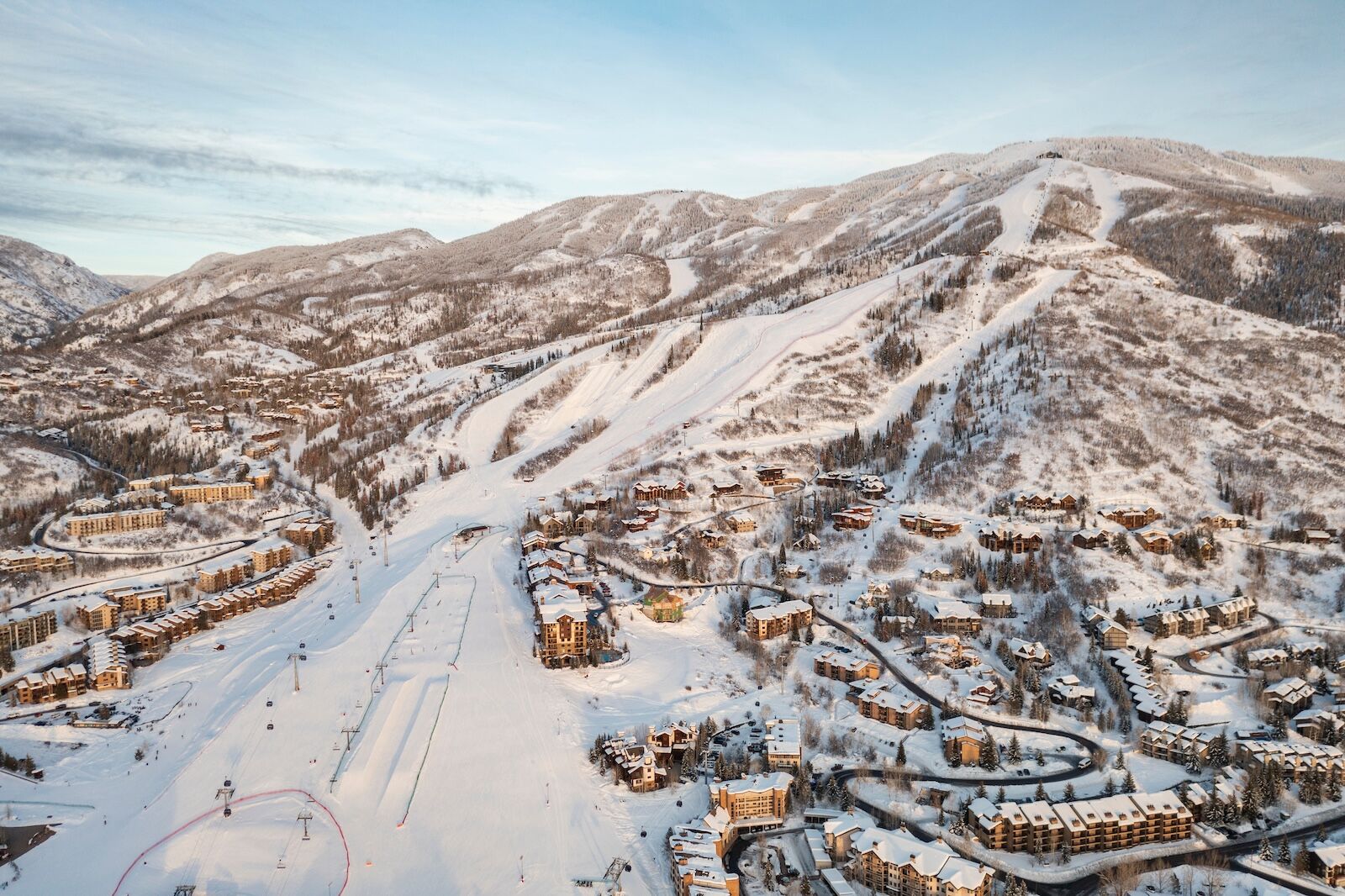
Photo: Joshua Lehew/Shutterstock
You feel the history here before you can explain it. Steamboat leans hard into the “Ski Town USA” nickname, and it has sent more athletes to the Winter Olympics than any other town in the country. It’s easy to see why that is when you’re standing at the base of Howelsen Hill. Howelsen has been running since 1915, making it the oldest continuously operating ski area in Colorado, and it was built by a Norwegian ski jumper named Carl Howelsen, also known as the Flying Norseman. It’s small and weathered and sits next to downtown, and on any given winter afternoon, it’s full of local kids throwing themselves off the jumps, training the exact way Steamboat kids have trained for more than a hundred years. You don’t have to just watch, either. It’s open from late November into April with night skiing until 8 PM, and lift tickets are free on Sundays if you reserve a spot ahead of time. I can’t think of another place where you can ski the hill that produced a town’s worth of Olympians for the price of showing up.
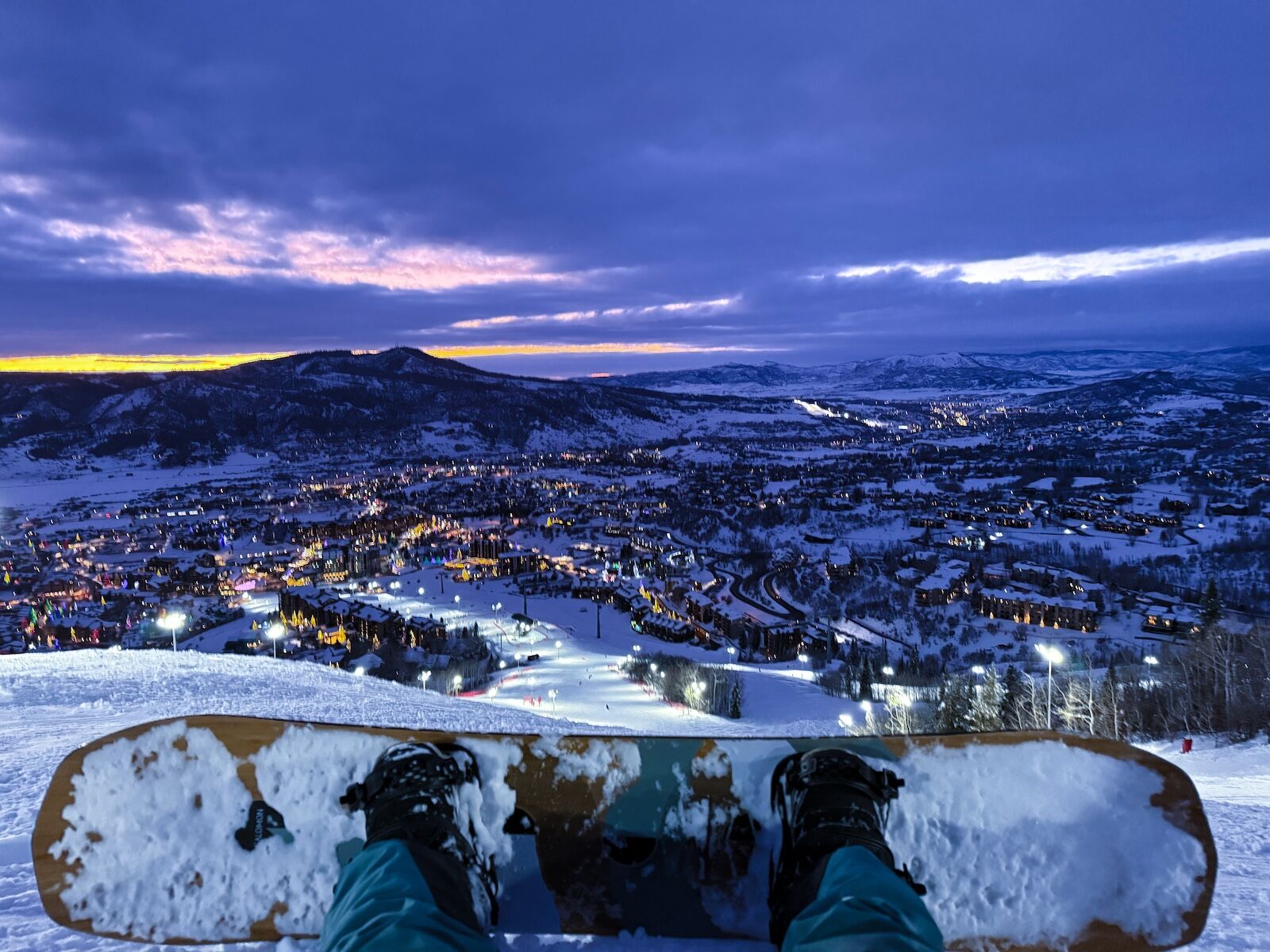
Photo: Erica Meier Creative/Shutterstock
The ranching side of Steamboat shows up on the snow, too. Every January, the Cowboy Downhill turns the mountain into something I still can’t quite believe is real: a ski race for working rodeo cowboys from the pro circuits who come to town for the National Western Stock Show and point themselves downhill in full Western gear. It’s basically a rodeo on the slopes, and it tells you everything about how this town sees itself. The same spirit runs through the Winter Carnival, a Steamboat tradition going back more than a century that spills onto Lincoln Avenue downtown, and the Tread of Pioneers Museum keeps all of it straight in its Ski Town USA exhibit if you want the full lineage.
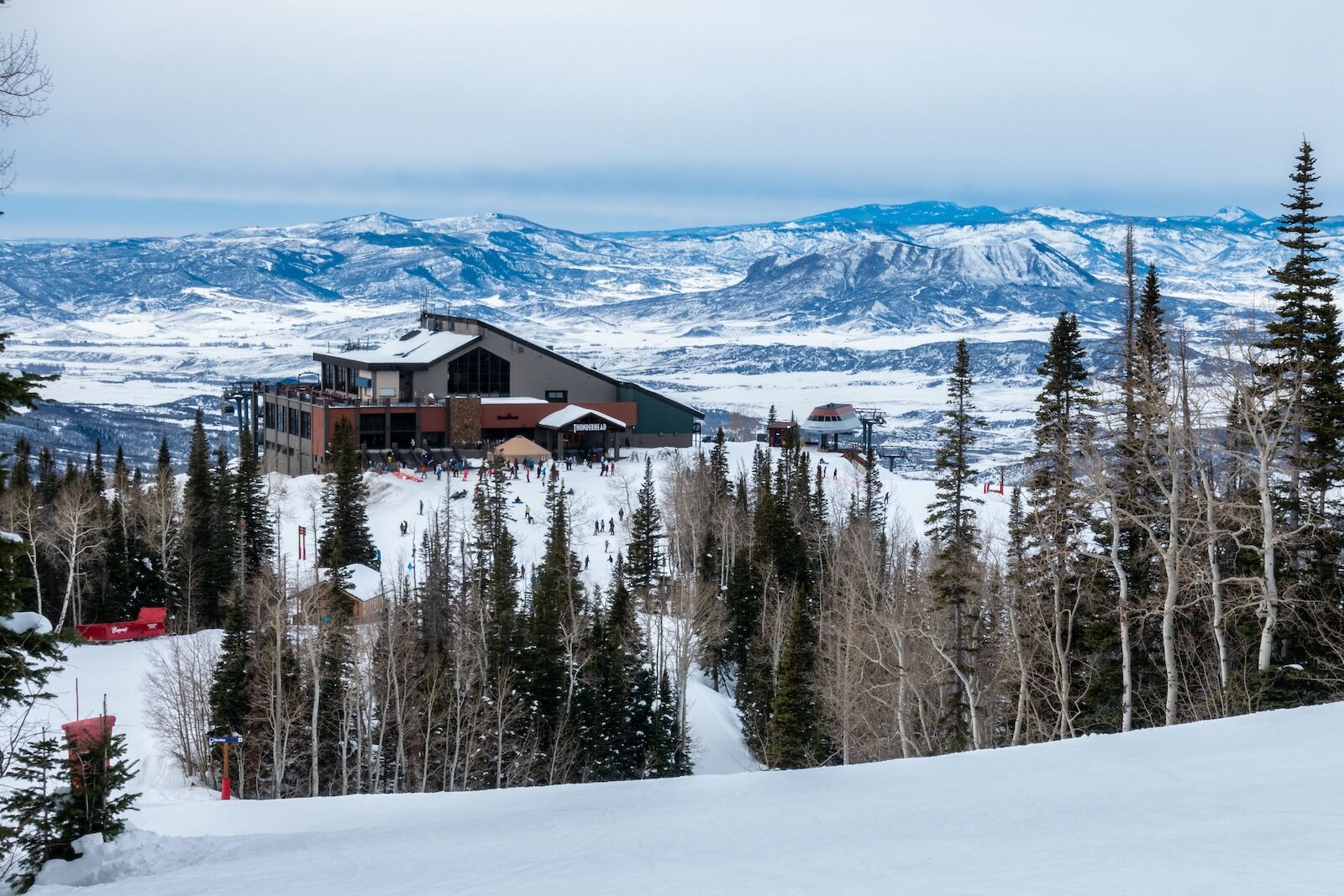
Photo: David A Litman/Shutterstock
The town also keeps its legends close. At the top of Mount Werner, where Buddy’s Run comes off the shoulder, there’s a bust of Buddy Werner, a local Olympic racer who died in an avalanche in 1964. The tradition is to grab a handful of snow and toss it on him as you go by. I’ve always liked that Steamboat built its memorial into the fall line instead of bolting a plaque to a lodge wall. You pay your respects mid-run, in motion, which feels like the right way to remember someone who skied.
But here’s the part I wish somebody had told me years ago: you don’t have to ski a single turn to get up on that mountain. The gondola is open for sightseeing, and on Thursday afternoons, Thunderhead Lodge throws a gondola happy hour with the sun dropping west over the Yampa Valley. It happens in summer and winter. Down at the base, locals and visitors gather at Slopeside Grill for pub food and beer beginning in the early afternoons. A short hike uphill from Slopeside is the T-Bar, as close to a Euro-style après-ski vibe as you’ll find this side of the Atlantic. Grab a chair outside, watch the skiers fly by, and maybe dance on your seat to 1990s rock, hip-hop, and dance classics.

Photo: Table 79
If Steamboat were only the mountain, I’d still make the drive. But the food is what snuck up on me and changed how I think about the place. This is the town that gave the outdoor world brands like Big Agnes, Honey Stinger, and Smartwool, so there’s a tinkering, build-it-better streak running through it. And lately, that same energy has landed on the plates. Table 79 Foodbar, at the south end of downtown, runs a modern Western menu with vegetarian options that are actually dishes rather than afterthoughts.
I celebrated my engagement with a small crew over homemade pasta and cocktails at Mambo Italiano on Christmas Eve 2014. The spot is classic mountain town fine dining — think “The Inn” from the movie “Out Cold,” but with Italian food. The staff is on point, the food is excellent, and its Lincoln Avenue location is walkable from anywhere downtown. If you want a good night, this is the spot. Laundry Kitchen & Cocktails does shareable, tapas-style plates inside a building that used to be an actual laundromat, and the name stuck. It’s also worth a leisurely evening.
When dinner’s done, the town doesn’t fold up. Schmiggity’s brings in local and touring bands, with a dance floor for anyone with the legs left for it. More often, though, I end up at Sunpie’s, a local dive bar on Yampa Street that has somehow kept its soul. I’ve spent many evenings in here over cold draft beers, recounting a day on the hill. It’s a local spot that’s friendly to visitors like me, and what’s a ski town trip without a good dive bar?

Photo: Teri Virbickis/Shutterstock
However, between the skiing and eating, there’s a spot I never miss: Strawberry Park Natural Hot Springs. It’s a series of sulfurous, stone-lined soaking tubs, with cabins and campsites if you want to make a night of it. It becomes clothing optional after dark, but only if you want, and there’s a specific kind of comfort that comes from lowering yourself into hot mineral water with cold Colorado air on your face and the smell of sulfur and pine around you. On my first visit, I sat in the upper pool in board shorts for a good 20 minutes, working up the nerve to switch to my birthday suit until I realized I was the only person in the water wearing anything at all. Once my trunks got tossed on the rocks with everyone else’s towels, the whole calculation flipped. Nobody cared. It’s dark, the steam is thick, and the only thing anyone is actually watching is their footing on the icy stone between pools. I’ve never bothered with the shorts again, which I realize is a strange thing to brag about in a travel article, but there it is.
That’s the thing about Steamboat that took me years and a lot of other ski towns to understand. The mountain is genuinely great — the kind of terrain that would be worth the drive even without the town at its base. But I don’t keep going back for the terrain. I go back for the three hours of quiet it takes to get there, for the handful of snow I throw on Buddy Werner on my way down, for the laundromat that turned into one of the better dinners in the valley, and for the long soak in the dark at the end of it all. The skiing is the reason everyone comes to Steamboat, but by now, it’s hardly the reason I keep coming back. 