The most radical thing about Sugar House Hotel is how ordinary it feels. The 115-room hotel in Winooski, just across the river from Burlington, is entirely electric. Its designed around sustainability, yet nothing about a stay here is gimmicky. It feels like Vermont: maple trees in the lobby and a creemee at check-in, with a nature park out the back window. That balance may turn out to be its biggest innovation. I visited the hotel and found my stay to be exactly what I’d expect from a boutique property targeting visitors to a state rife with outdoor adventure and a booming local-first mandate. Its ability to hit that mark without sacrificing sustainability is an inspiring look into the future of hotels. Here’s what its like to stay here.
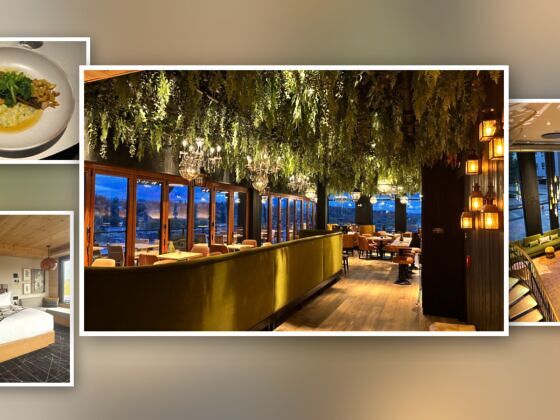
Inside Sugar House Hotel, Marriott’s All-Electric Bet on the Future of Hospitality
A hotel experience built on doing things the right way
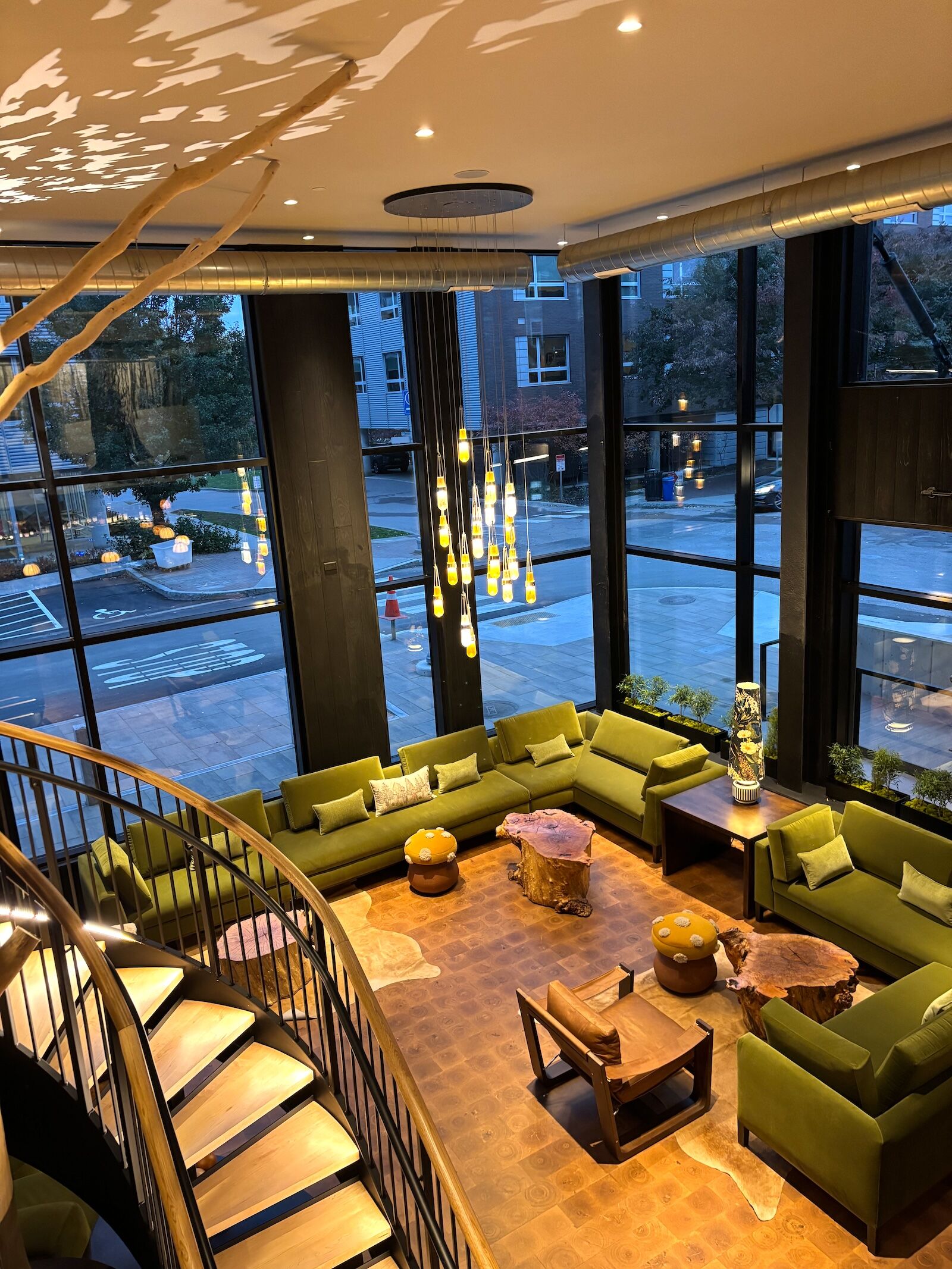
Biophilic design gives the lobby an open, nature-inspired feel that is incredibly calming. Photo: Tim Wenger
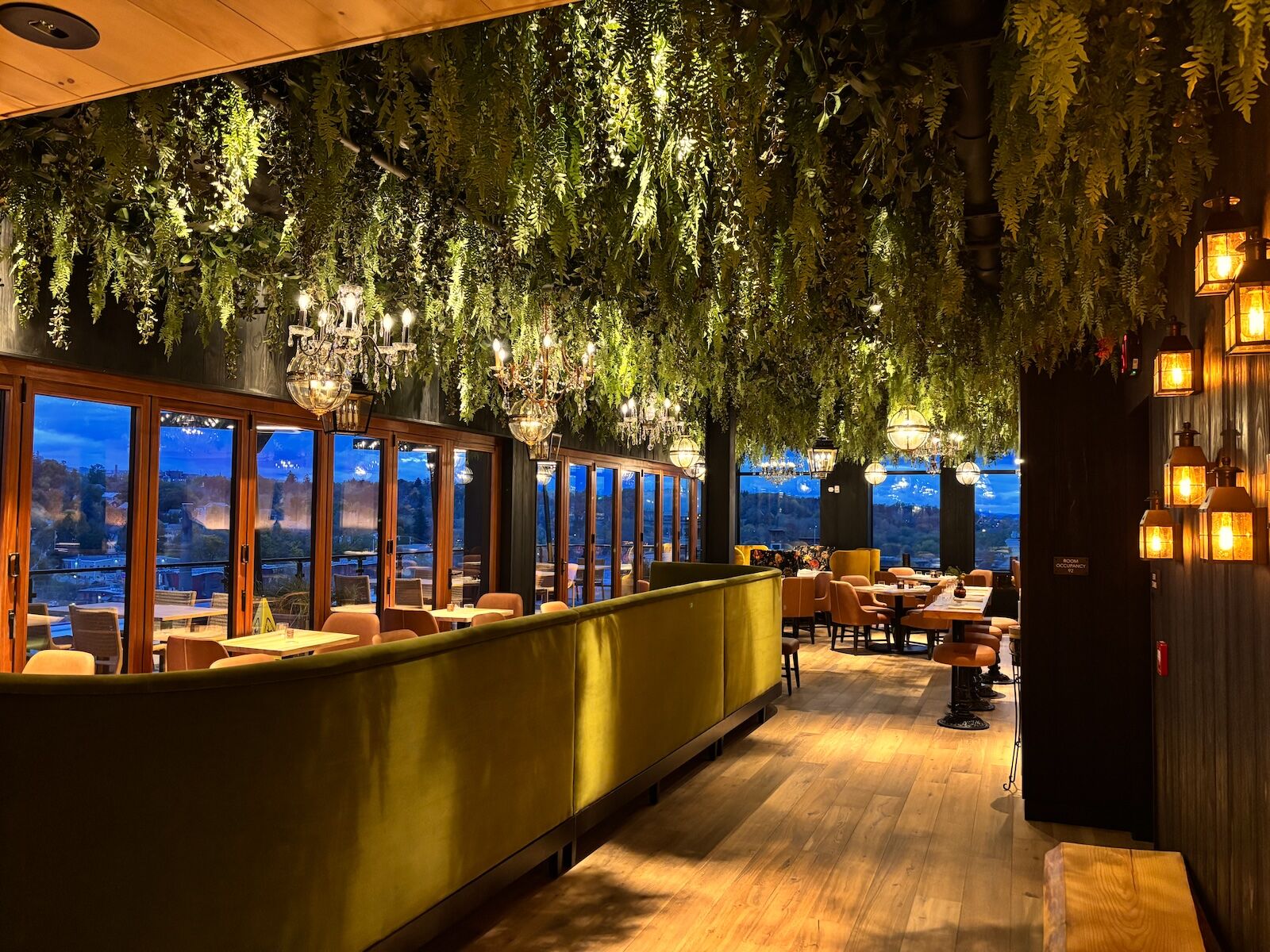
The same biophilic design carries into the hotel's top-floor restaurant, Treetops. Photo: Tim Wenger
Developer Doug Nedde and his team are pursuing LEED Zero Energy certification, and the building is designed to use 54 percent less energy than a standard code-compliant hotel of the same size. Rather than rely on offsets, the hotel went all-electric. There’s no gas anywhere on property, including in the restaurant kitchen. Onsite solar supplies part of the power, while a geothermal well system behind the hotel, beside the adjacent wildlife area, handles heating and cooling.
“There’s no economic case study to whether investing that extra money towards LEED certification and all the sustainability initiatives is going to pay off,” Nedde told me on a tour of the property.” But I think five, 10 years down the line this will be the norm.”
Nedde’s modeling projects an 82 percent reduction in heating energy, a 69 percent reduction in HVAC energy use, and 65 percent lower emissions than similar-sized hotels. Low-flow fixtures keep water use down, and reclaimed water helps restore the wetlands in the Casavant Nature Park. Running new buildings on renewable energy is increasingly common in city centers; doing it at a full-service hotel with a restaurant and event space is a significant undertaking.
When I first learned about Sugar House Hotel, I wrote in Matador’s Substack newsletter about why this project matters, not only for the Burlington area but for hospitality as a whole. By adding the hotel to its heavily curated Tribute Portfolio collection, Marriott, the world’s largest hotel company, signaled that it’s willing to test a lower-impact model. If it succeeds, expect the company to bring the concept to other locations. In effect, Sugar House could become proof that sustainability works at scale, for individual owners and corporate boardrooms alike.
Nedde and the team plan to add local excursions to the slate of offerings, including a sleighride through Casavant Nature Park and an in-house sugaring experience.
“We really want to tell the story of sugaring in Vermont,” Nedde says.
The guest experience at Sugar House Hotel
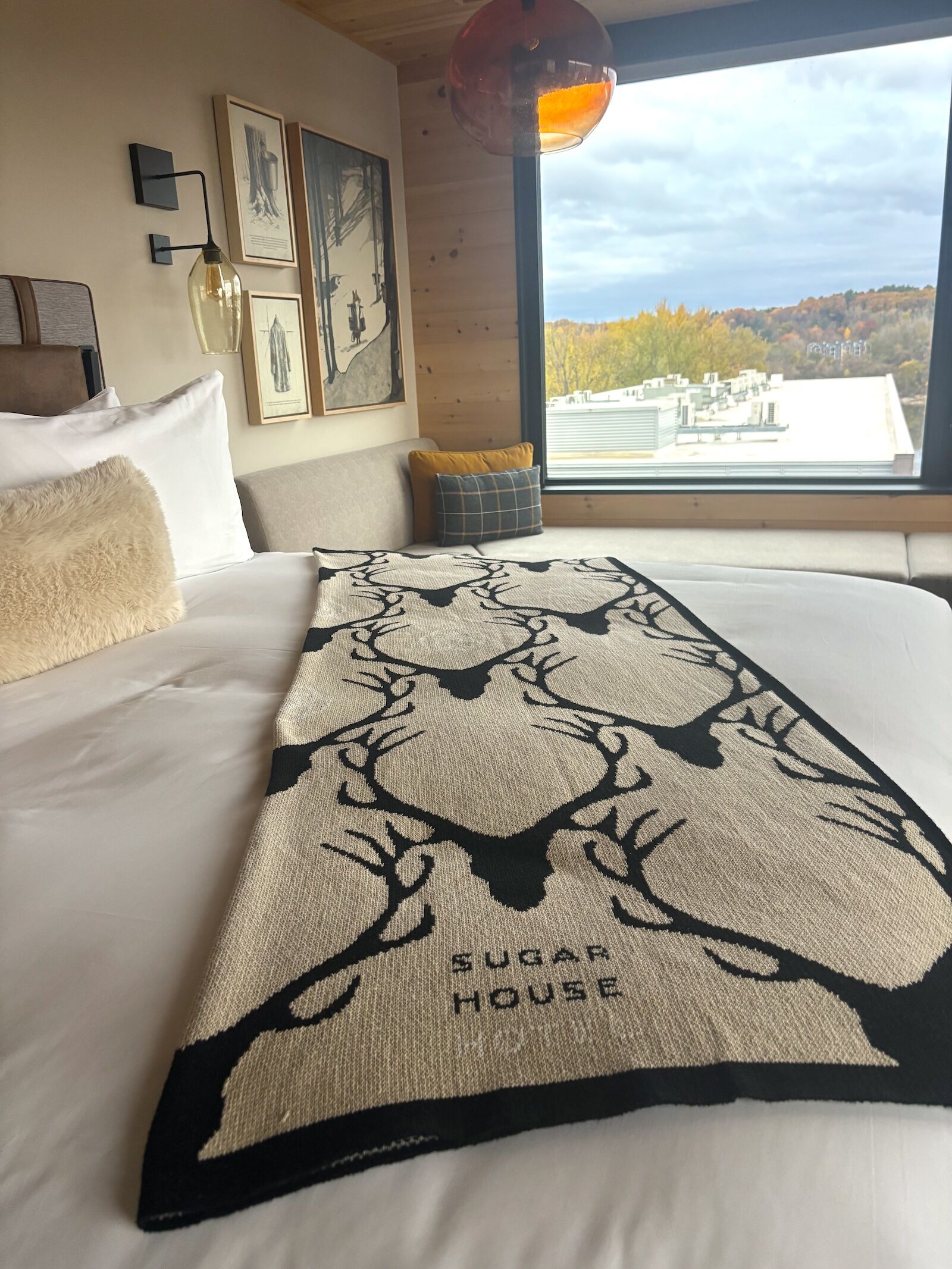
The throw blankets are made of repurposed textiles. Photo: Tim Wenger
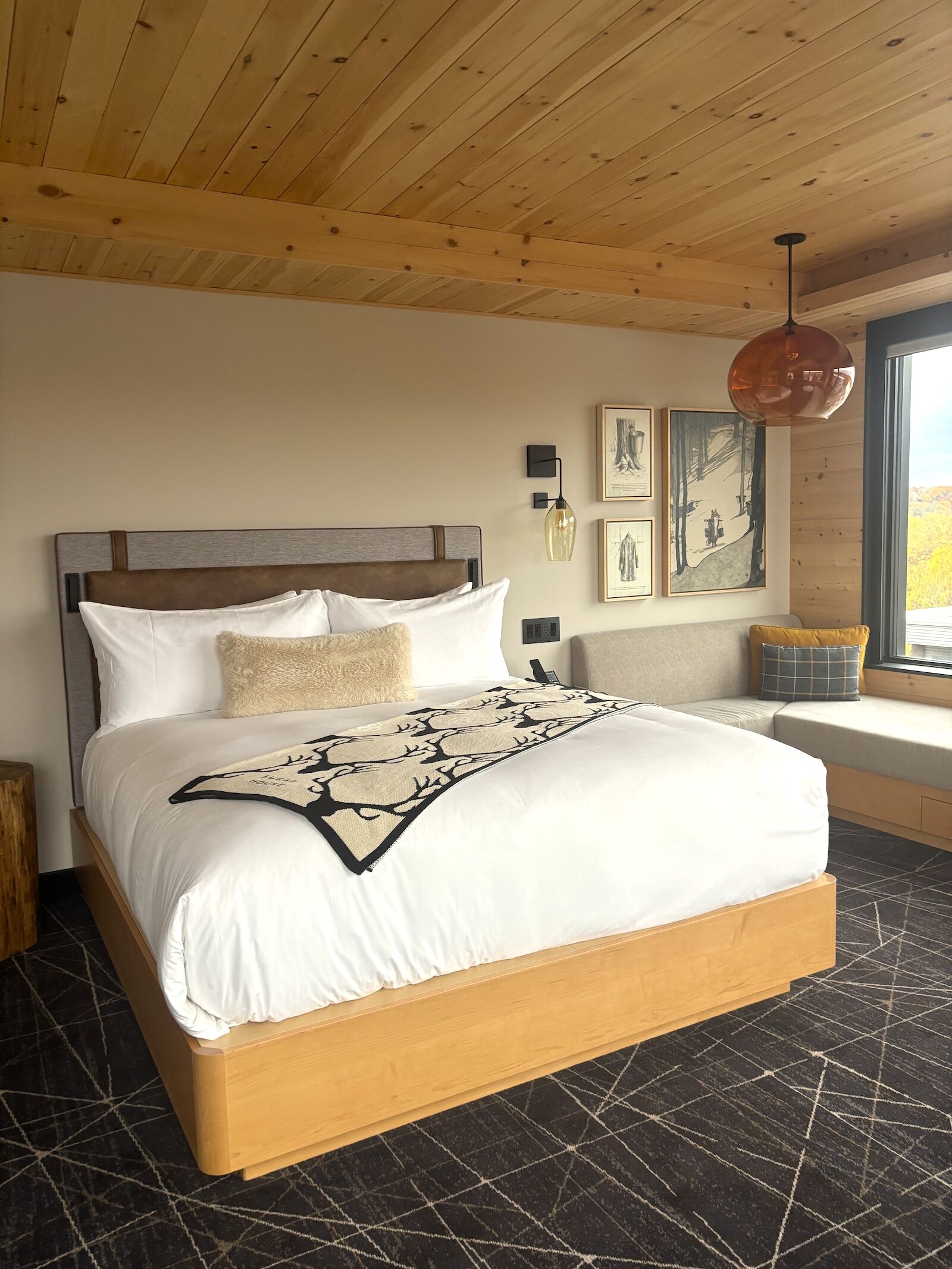
My room was spacious and comfortable. I didn't have the kitchenette, but Treetops was right upstairs. Photo: Tim Wenger
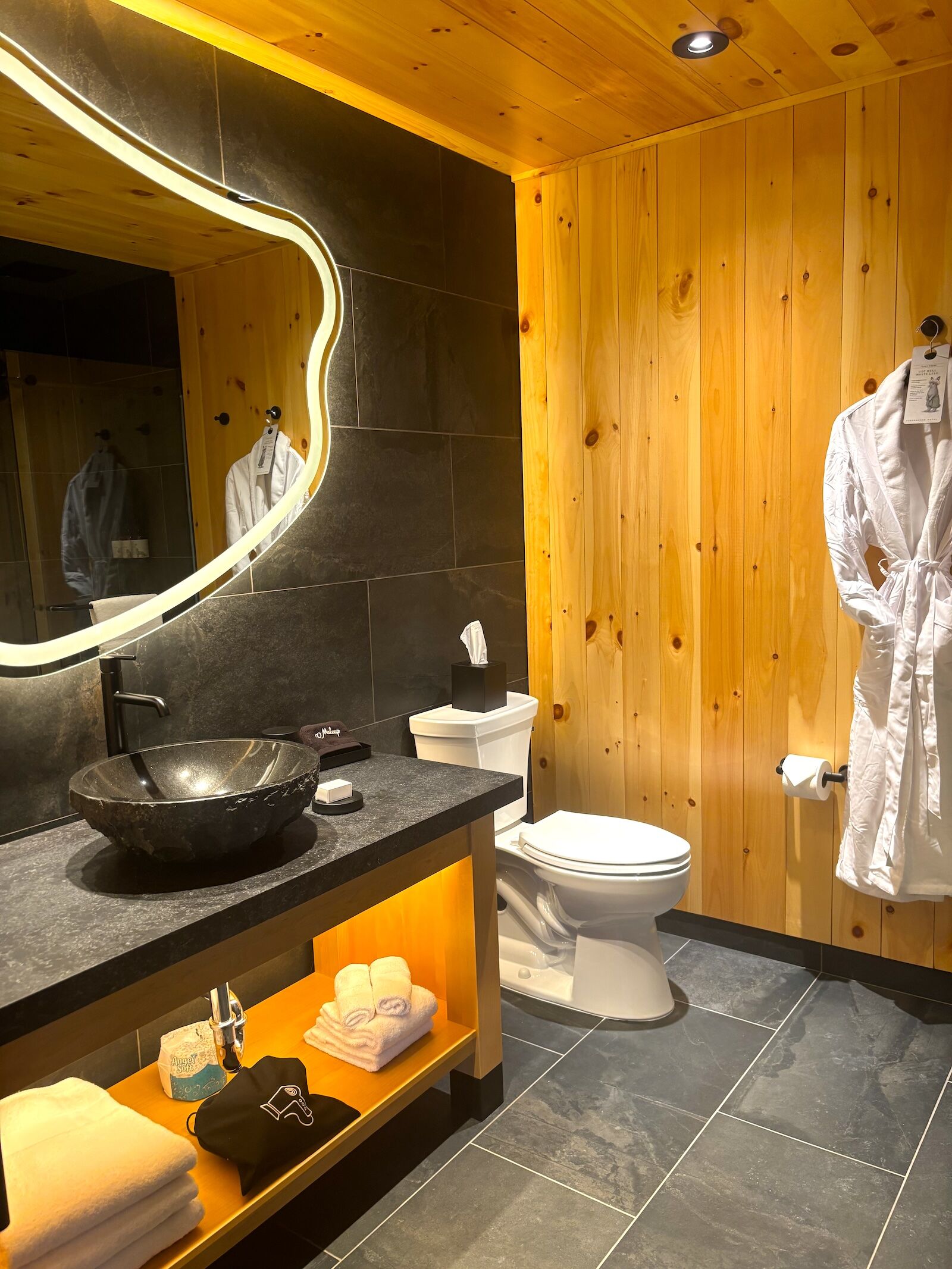
I keep telling myself I should start using hotel robes more. Photo: Tim Wenger
The sugar maple defines the building’s look from the front entrance on. Two large maple trunks, one from Nedde’s property and the other from a neighbor’s, anchor the staircase from the lobby to the second-floor reading area. A wall of maple syrup jars backs the front desk, and the adjacent gift shop sells Vermont’s most famous foodstuff alongside a collection of locally made goods. The lobby hearth, shaped like the state of Vermont, incorporates the mantel of a historic Vermont barn, and reclaimed farmhouse wood appears throughout the property.
I was picked up at the airport in an electric VW ID Buzz van emblazoned with the word “MAPLE” in large letters on its side. Nedde told me that a second van is coming that will read “SUGAR,” and that he plans to park them in line out front of the hotel. Rooms at the hotel start around $234 per night.
After check-in, I was invited to try a creemee, Vermont’s signature maple soft serve, as velvety as it was sweet. The machine in the lobby is open to guests throughout their stay, the attendant told me. I wished I could bring some home to my five-year-old daughter; a jar of maple syrup had to suffice.
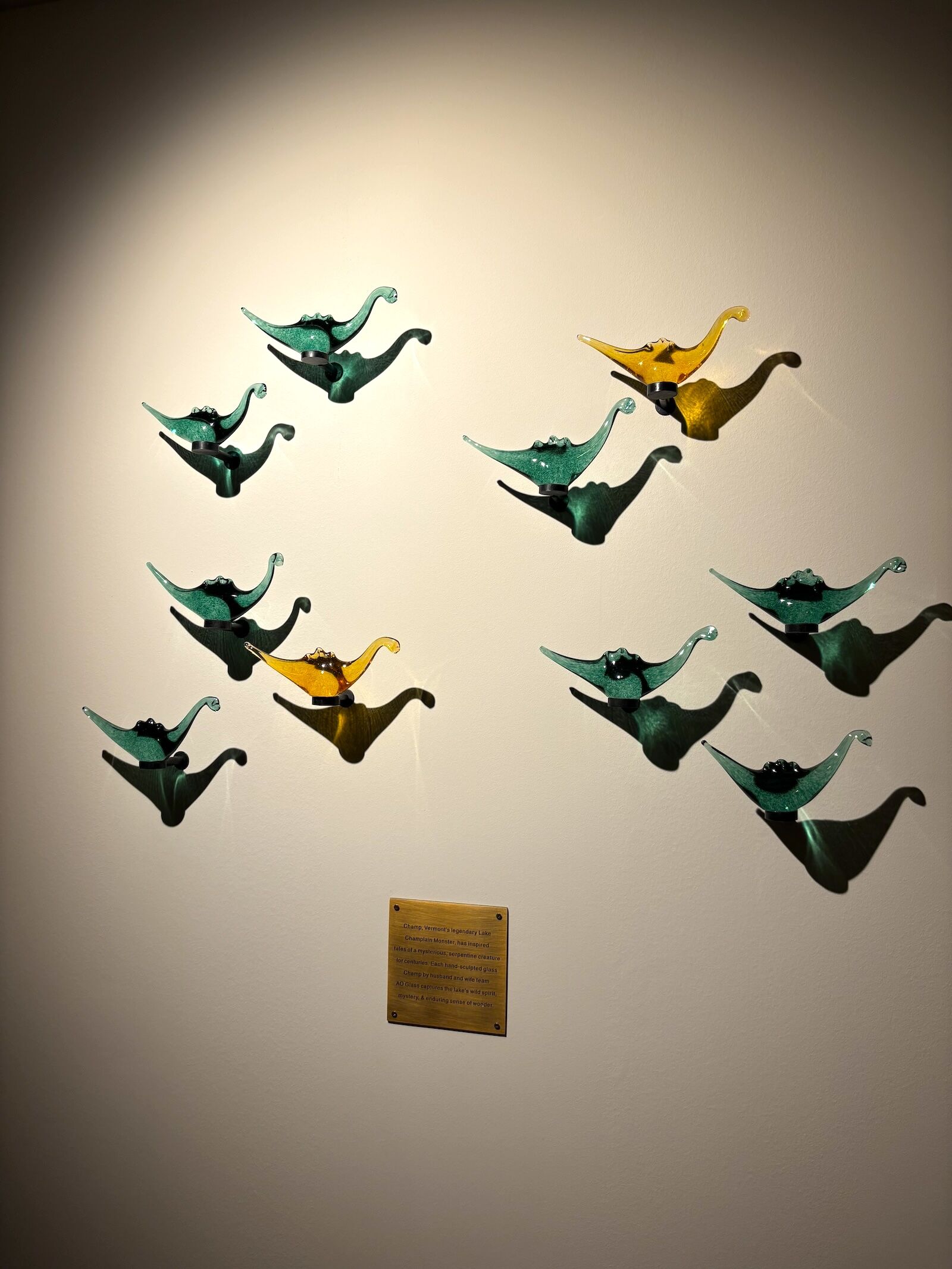
Restrooms on the restaurant level feature handblown glass artwork. Photo: Tim Wenger
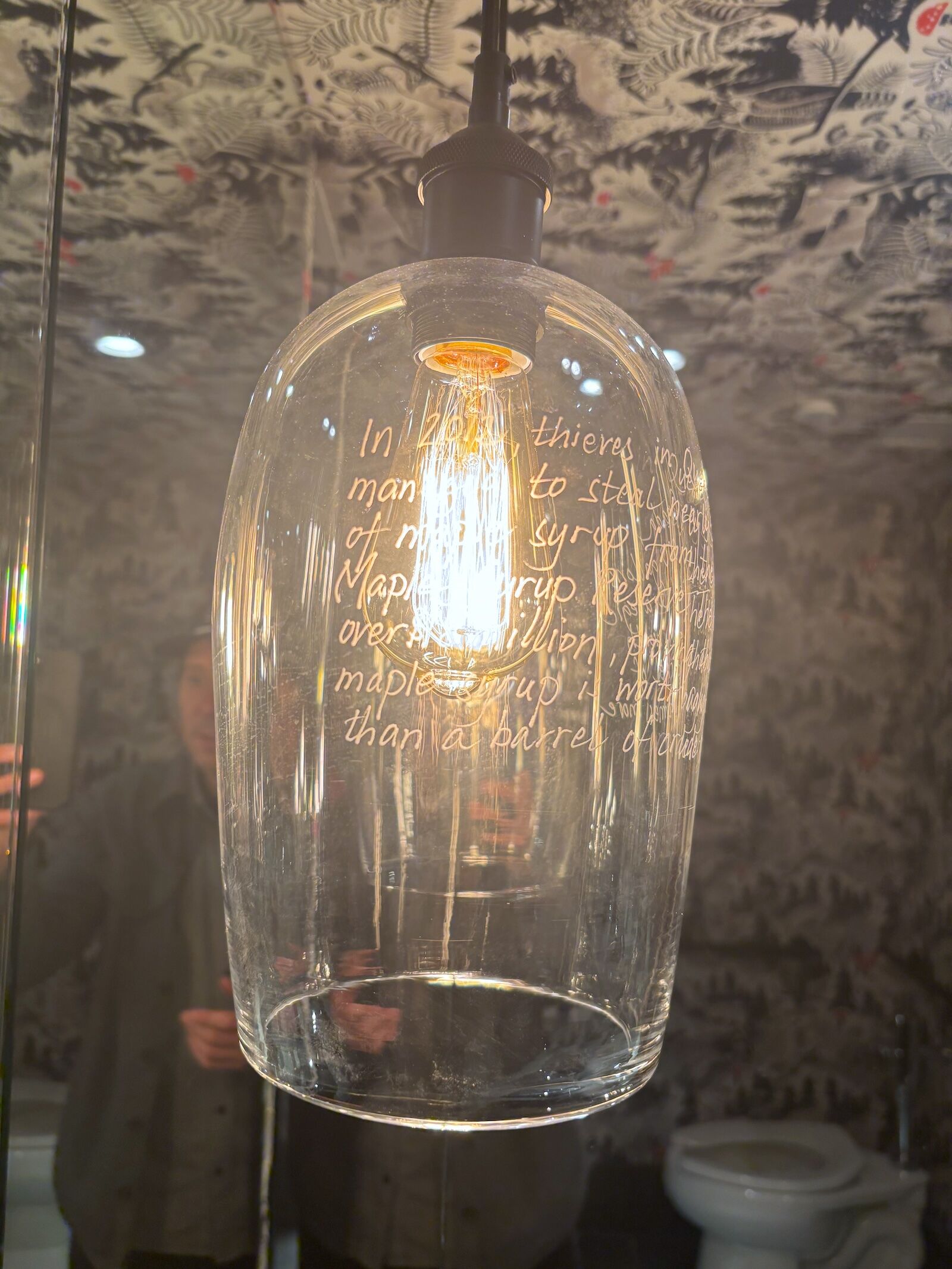
Burlington glass blowing studio AO Glass blew light fixtures engraved stories of sugaring. Photo: Tim Wenger
Each room is named after a Vermont sugar house. Mine, room 702, Beldock’s Sugar House, had windows on two sides: to the east, a panoramic view over downtown Winooski and across the river to the University of Vermont campus; to the north, the Casavant Nature Park. Nedde’s slogan for the hotel is “city out front, nature out back,” and I can’t think of a more fitting line. The local aesthetic carries inside, too. On the bed was a custom throw blanket made from repurposed materials, and I slept soundly both nights on the plush queen mattress. A bench runs beneath the window along one wall, beside a dining table that doubles as a laptop desk.
An afternoon walk through the nature park felt like a near-complete escape from the town center. As a Coloradan, I recognized the town-to-trail lifestyle the two states share, and this hotel puts it on fine display.
The bathroom has a single vanity and a walk-in shower that heats quickly, and an armoire holds jackets and clothes and offers a spot to set a bag down on the way in. In the shower is house-branded shampoo, body wash, and conditioner commisioned from local materials. My one gripe: the in-room Keurig came with only single-use plastic pods. Commercially compostable pods, or a reusable K-Cup with a jar of ground coffee, would be a welcome upgrade. Water and coffee are also available at the elevator landing, and house-brewed coffee is served downstairs at Moss Cafe & Bar. When the weather allows, a cup on the cafe’s patio is a great way to start the morning.
On Level 2 there’s a gym and dog wash as well as tables and seating ideal for posting up on a laptop or with a book. From here, I was able to look out over the lobby and feel the energy of the space from above. Some rooms include a kitchenette and a separate bedroom, and this does feel like the type of place one could spend some time, if their budget allowed.
Making sustainability a mandate
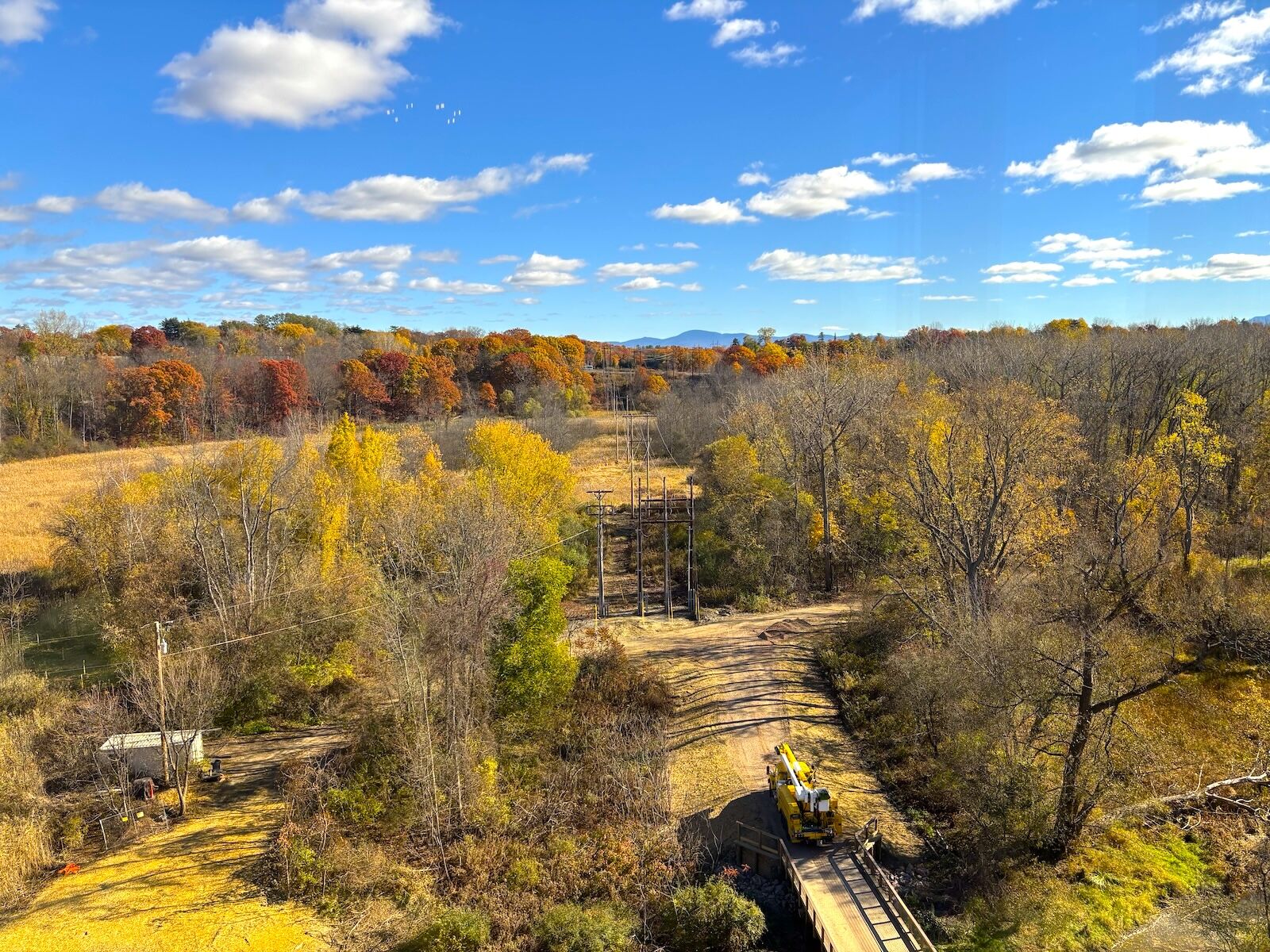
The hotel is powered partly by rooftop solar and partly by a geothermal heat well in the adjacent Casavant Nature Area. A trail rings the acreage, and the hotel built a bridge connecting its property to the nature area as part of its efforts to revitalize of the watershed – sending people over the creek rather than through it. Photo: Tim Wenger
The top floor holds event space and Treetops, the hotel’s restaurant, where I ate on my first night. I had the local trout, and our crew split several appetizers; the lentil cakes were my favorite. Diners who look for locally sourced ingredients or plant-based dishes will find plenty to choose from. Craft beer culture is another thing Vermont and Colorado share, and I enjoyed sampling a few local brews over the course of the meal. The bar itself is built from reclaimed timber from a historic drawbridge to North Hero Island, north of the city.
Biophilic design is seen in both the restaurant and the lobby, each rich in greenery and repurposed wood. It’s incredible how calming it is to walk into an open lobby and know that its designed around the best of local artisans and materials — I felt this sitting in the lounge at Moss, and while going through emails in the admittedly quirky-named Poetry Nook (ample locally-inspired literature is available for read, so the name does earn its keep).
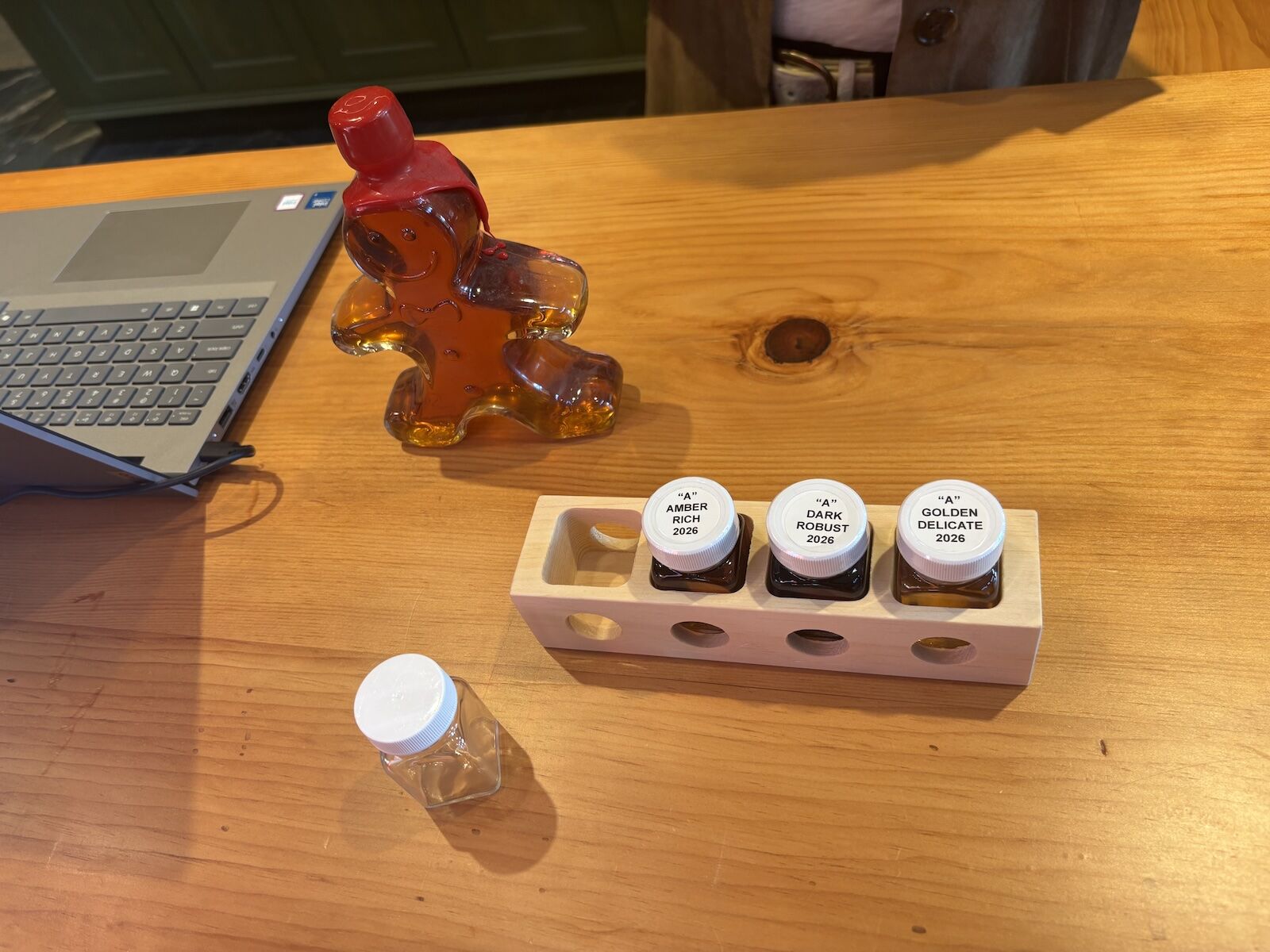
A maple syrup tasting is available in the lobby. Also, my five-year-old daughter loved her “maple syrup gingerbread man.” Photo: Tim Wenger
Zero-emission hotels aren’t brand new. Populus, a brand conceived by Denver-based developer Urban Villages, runs what it calls “carbon positive” hotels in Denver and Seattle. I’ve stayed at both, and while Sugar House shares their ethos, it differs in one notable way: Nedde and his team built a hotel that lives its purpose without overstating it. The low-impact features are easy to spot if you know what to look for, but the first impression is simply that of a thoughtfully curated boutique hotel.
Outwardly, the vibe is more “Vermont” than “sustainable.” This is the hotel’s innovation. For low-impact business operations to become a societal norm, they must be presented not as an outlier but as simply the best way to do business. Sustainability shouldn’t be a marketing gimmick so much as a smart long-term investment. Nedde projects that the all-electric design will cut the hotel’s energy costs by 62 percent, and he believes the extra up-front investment will pay off and give other developers a case study to build from.
Nedde, a developer and former owner of the small Bolton Valley ski resort east of Burlington, extends the environmental mandate beyond the hotel itself. He also built an affordable housing complex next door, where some of the hotel’s staff now live, cutting commutes and giving employees a stake in the neighborhood they serve. It’s a reminder that sustainability means people as much as power sources.
I left Winooski with that jar of maple syrup for my daughter and found myself thinking about the hotels she’ll stay in someday. If Sugar House works the way Nedde expects, she may never think to ask whether they run on gas or geothermal – they’ll just be good places to stay. Progress is inevitable in every industry, and that progress requires forward-thinking businesses to take calculated risks. In my view, that calculation leads to easy math, and Sugar House will be the innovator that solved the equation. 