My first visit to Natchez was in 1976 for the inaugural cruise of the Mississippi Queen. That’s when I heard the tale of a young riverman named Samuel Clemens who was said to have stopped in the oldest city on the mighty Mississippi. Natchez must have made quite an impression on the curious fella. He later wrote fascinating novels about the river and the folks who lived along it. Of course, he chose a pen name for his writings: Mark Twain.
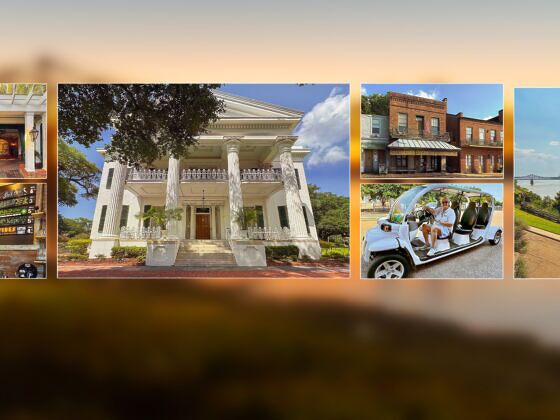
Where to Play, Eat, and Stay in Natchez, the ‘Birthplace of Mississippi’
For Twain and so many others, it was always the river that drew people to Natchez. After all, that’s why Natchez (pop. 14,520) was founded, and it’s one of the reasons why travelers have always headed to this beautiful river city. My recent two days in Natchez went far too quickly, but I still had plenty of time to plenty of its attractions. Here’s where to play, eat, and stay in the oldest city on the Mississippi River on a visit of your own.
Things to do in Natchez
Open Air Tours

Photo: Jackie Sheckler Finch
Hop in a six-seat, open-air electric cart to get a good overview of Natchez. Born and raised in Natchez, tour guide Sally Durkin got my attention immediately when she promised her hour-long trip around town would provide only accurate information, which I’ve learned is not always the case. Sally delivered, driving us around downtown Natchez and sharing so much knowledge about the city’s history and making it fascinating.
I picked up my Open Air Tours at the Natchez Visitor Center. I arrived about 45 minutes early so I could watch the free half-hour film “Natchez: From Past to Present” at the visitor center. Shown on a big screen, the film was very informative and good preparation for my Open Air Tours ride.
Sally is obviously well-known and well-liked in town, as folks kept waving to her and calling hello. One woman walking down the street proclaimed to us that Sally offers the very best tour in Natchez. It costs $25 and is well worth the time and money to ride.
Open Air Tours: 200 N. Broadway St., Natchez, MS 39120
Visit Natchez at The Depot: 200 N. Broadway St., Natchez, MS 39120
Stanton Hall
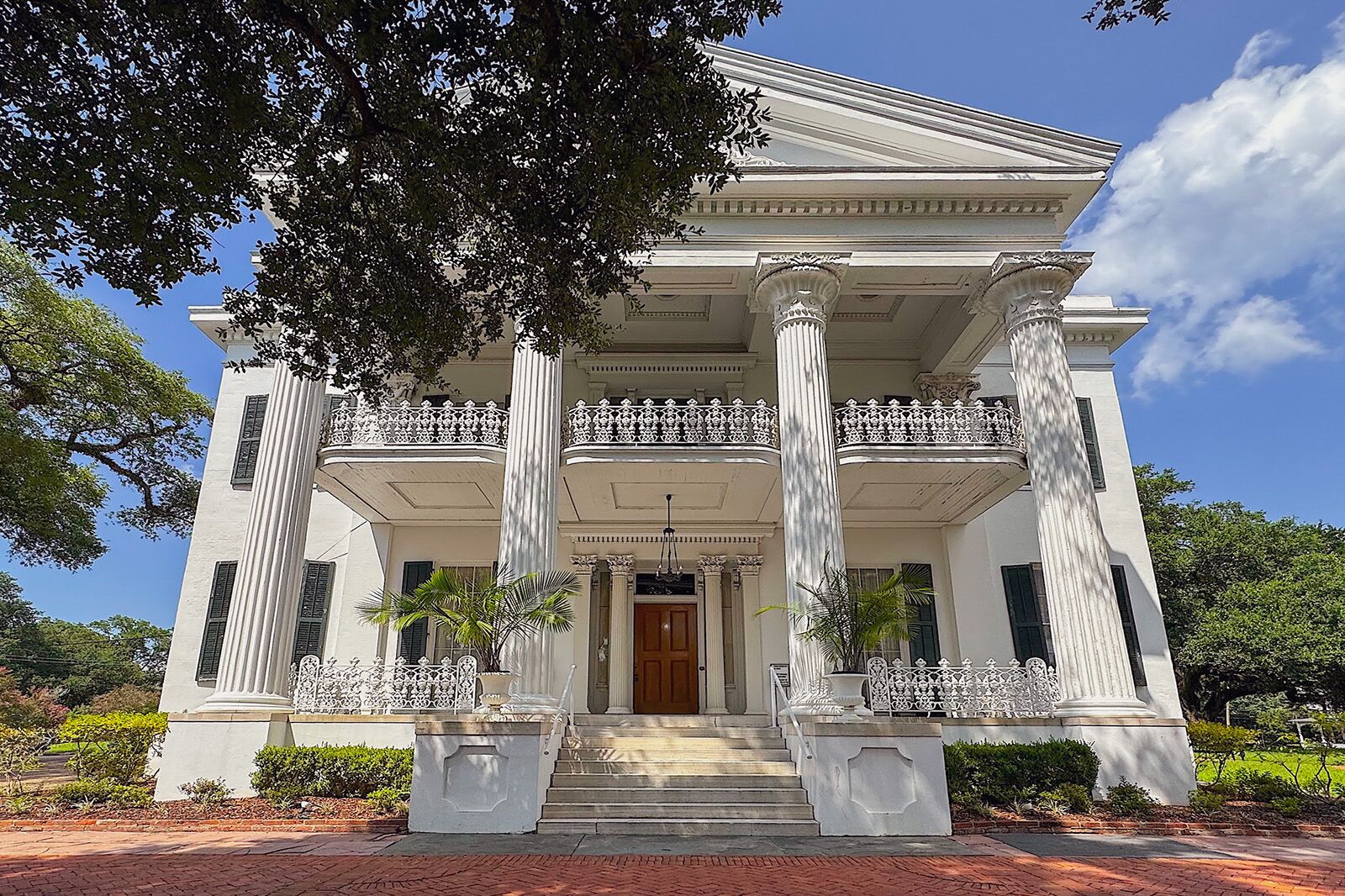
Photo: Jackie Sheckler Finch
One of most visited National Historic Landmarks in the US, Stanton Hall was constructed between 1851 and 1857 for Frederick Stanton. After coming from Ireland to Natchez in 1815, Stanton made a fortune in cotton and became one of the wealthiest men in the area.
The Greek Revival-style mansion occupies nearly an entire city block and is surrounded by live oak trees more than a century old. Stanton and his wife, Hulda Helm, furnished their home with the finest (although Stanton only lived in the house for nine months before dying of yellow fever at age 64). After his death, the mansion became too expensive for his widow to maintain. In 1890, it became Stanton College for Young Ladies. Then, in 1940, the local Pilgrimage Garden Club bought the house to share with the public as a museum.
I admired Stanton family heirlooms in the house, including the family’s cherished dishes and Stanton’s chair — an exquisitely carved wooden chair with flowery upholstery. (Surprisingly, the legs of the chair rest very close to the floor — men in the 1800s were not as tall as today; neither were women.)
If Stanton Hall looks familiar, it was a filming location for the 1985 TV miniseries North and South, including the honeymoon scene featuring Patrick Swayze.
Stanton Hall: 401 High St., Natchez, MS 39120
Under the Hill Saloon
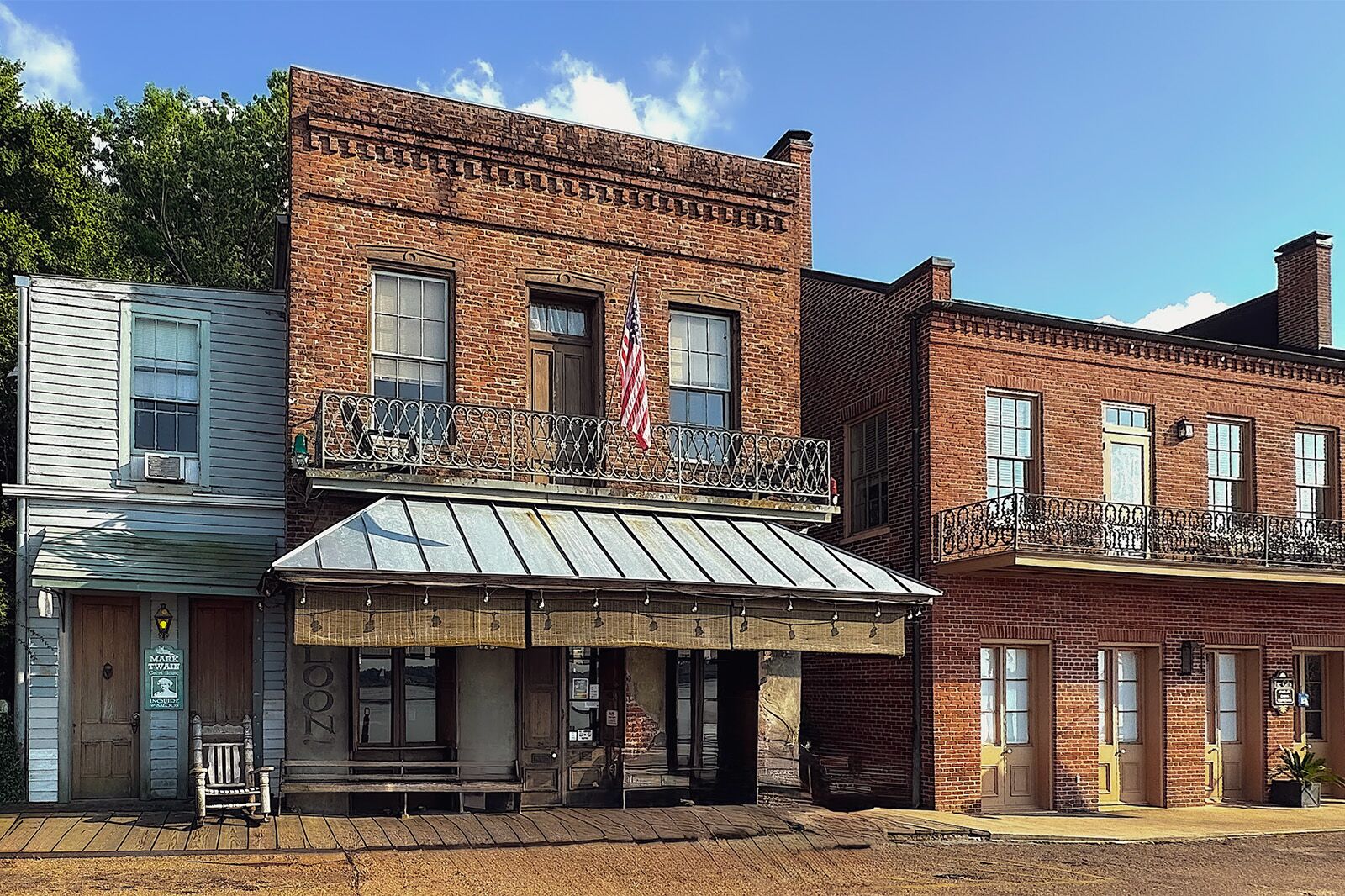
Photo: Jackie Sheckler Finch
The oldest saloon on the entire Mississippi River, Under the Hill Saloon has been around for 200 years. Back in the day, upper Natchez was the prominent place to live for respectable people. Natchez Under the Hill was home to taverns and brothels where rowdy rivermen, gamblers, pirates, and other characters would gather.
In his 1883 book, Life on the Mississippi, Mark Twain described Natchez Under the Hill as having “a desperate reputation, morally, in the old-keel boating and early steam-boating times — plenty of drinking, carousing, fisticuffing, and killing there, among the riff-raff of the river, in those days.”
The Under the Hill Saloon is all that remains of the town’s rough-and-tumble past. Above the saloon, the Mark Twain Guest House offers three simple rooms that share a common bathroom. I’m told it can be mighty noisy up there, especially late at night on the weekend.
Stepping into the saloon is a bit like entering a different time. Filled with memorabilia, the bar is dark with dollar bills dotting the ceiling. A man in the bar showed me how to put $1 on the ceiling: fold a quarter and a thumbtack into a dollar bill and fling it forcibly toward the ceiling so it will stick in the wood. The man said that once a year, the money is taken down to fund a community cookout.
Be sure to check the back rooms of the saloon. You can play a game of darts, have your picture taken on an elephant carved from one piece of wood, and see a large photograph of two riverboats that used to dock in Natchez: the Mississippi Queen and her sister the Delta Queen.
Cruise ships still dock in Natchez and offer popular local shore excursions. Book a cruise on the Viking Mississippi or the American Melody, American Symphony, American Serenade, American Splendor, or American Heritage, all operated by American Cruise Lines. Splendor and Heritage are paddlewheelers to give you more of a feeling of those old-time days.
Under the Hill Saloon: 25 Silver St., Natchez, MS 39120
Forks of the Road
Before the Civil War, Natchez was the location of the second busiest slave trading market in the Deep South. The site was known as Forks of the Road. Today, the small site consists primarily of free-standing exhibits and information panels.
Active for 30 years, the slave trade market operated until the arrival of the Union Army in 1863. The Union Army was joined by the 58th Regiment of the US Colored Troops, many of whom were formerly enslaved. Together, they tore down the slave pens. The 2.5 acres at Forks of the Road remind visitors of this tragic chapter in American history.
Forks of the Road: 232 Saint Catherine St., Natchez, MS 39120
Grand Village of the Natchez Indians
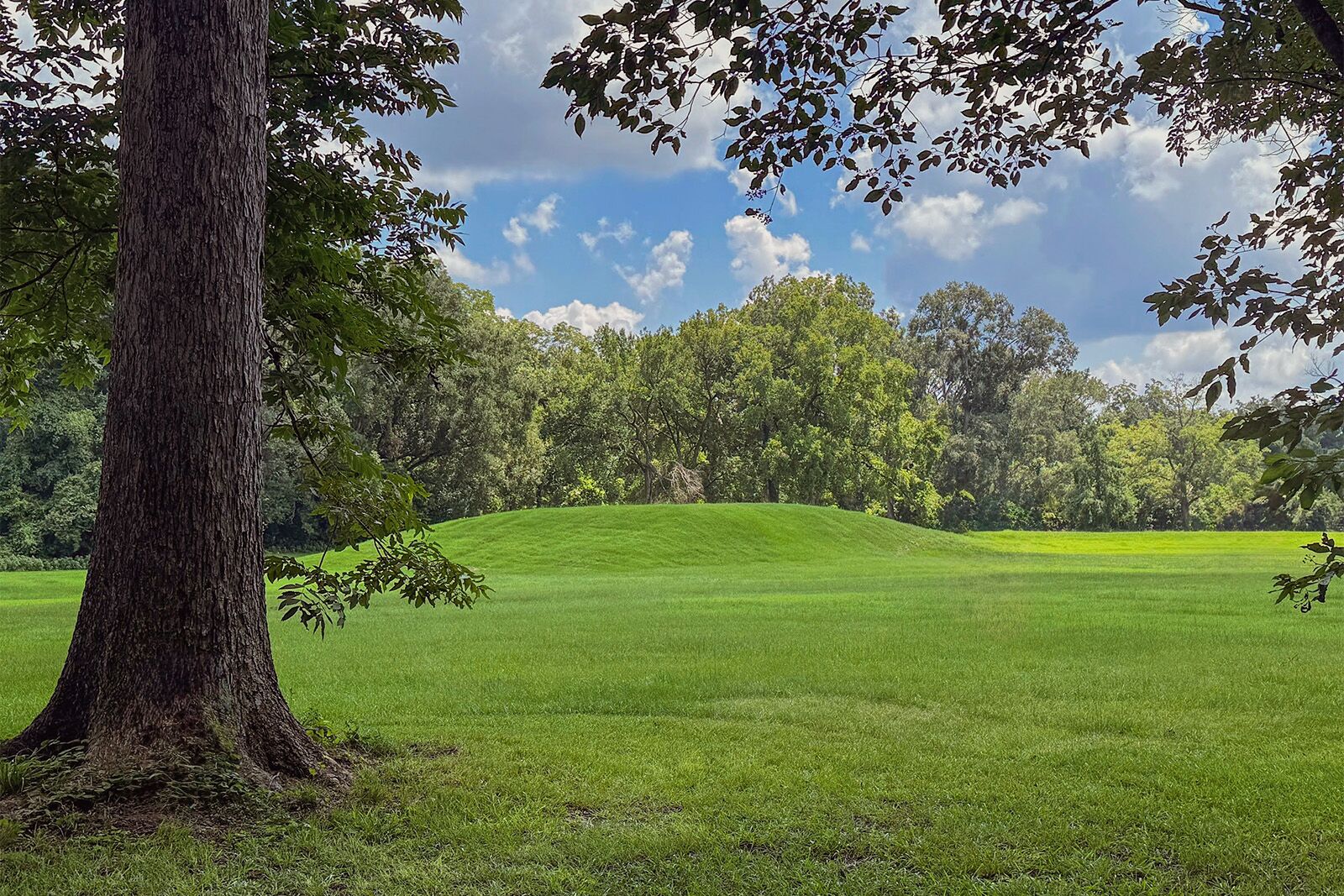
Photo: Jackie Sheckler Finch
At The Grand Village of the Natchez Indians, the 128-acre site has three prehistoric Native American mounds as well as a reconstructed Natchez Indian house. A museum features artifacts from the site and a gift shop that sells Indigenous crafts. A nature trail is a peaceful place to get in some exercise while considering the talented original residents of this area.
Visitors can walk out to the mounds and learn the history of why they were there and how they were used. Mound A had as many as four structures on top of it in the early 1700s. The tallest and largest house at Grand Village was home of the Great Sun, the tribe’s divine ruler. The Great Sun’s home was built on top of the Great Sun’s Mound. Each time a Great Sun died, his house would be demolished and a new structure was built for the new leader.
The Temple Mound, of course, was where the temple for the Natchez people stood, its roof topped with large wooden birds. Natchez leaders were buried in the temple and people brought gifts of food to honor their ancestors. However, only the Great Sun, high nobles, and temple keepers were allowed inside the sacred place.
Grand Village of the Natchez Indians: 400 Jefferson David Blvd., Natchez, MS 39120
William Johnson House
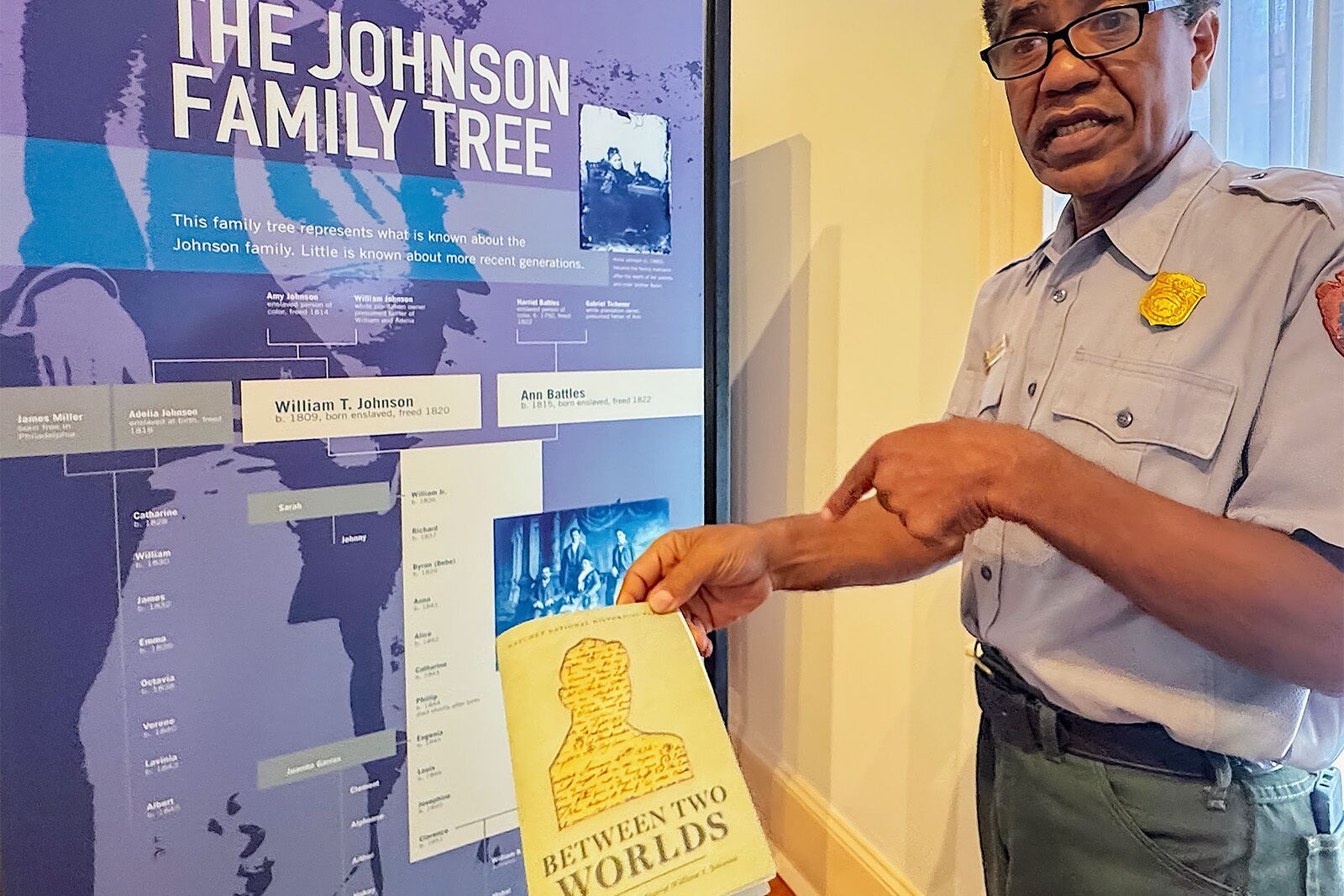
Photo: Jackie Sheckler Finch
When I walked into the big brick William Johnson House, National Park Ranger Eric Howard was holding a book, Between Two Worlds. The true story, Howard said, best described the life of the man known as the “barber of Natchez.”
Born a slave in 1809, Johnson was emancipated at age 11 by his white slave owner, also named William Johnson and believed to be the boy’s father. Trained to be a barber by his sister’s husband, Johnson opened his first barber shop in Natchez in 1830. He would eventually own and operate three barbershops and a bathhouse in Natchez and became a slave master himself.
Although most people didn’t know it, Johnson also kept a diary covering 16 years of his life from 1835 until his death in 1851. He wrote about daily events and business accounts as well as town tales and local townsfolk. Becoming a successful and well-respected businessman, Johnson still walked a fine line between the full rights of a white citizen and a freed Black man. In early 1851, Johnson had some property he owned surveyed because a neighbor, Baylor Winn, was reportedly selling timber from the site.
On June 16, 1851, Winn ambushed Johnson and shot him in the back. Johnson died the next morning, but not before he identified his murderer. Winn was arrested but eventually set free. As for Johnson’s diaries, for more than 75 years, they sat inside a trunk in the attic of his Greek Revival townhouse. Finally, Louisiana State University bought the diaries in 1938 and published them in 1951, giving a rare glimpse into the life of a free person of color in his own words.
The Johnson home is now a museum and displays copies of his diary as well as some of the family’s original pieces of furniture, including an ornate Rococo Revival carved and gilded mirror that once stood in Johnson’s barbershop and home. Johnson and his wife Ann and their 10 children lived upstairs in what is now the museum. The downstairs was used for commercial enterprises. As has been said, Johnson was a smart businessman.
William Johnson House: 210 State St., Natchez, MS 39120
Natchez Museum of African American History and Culture
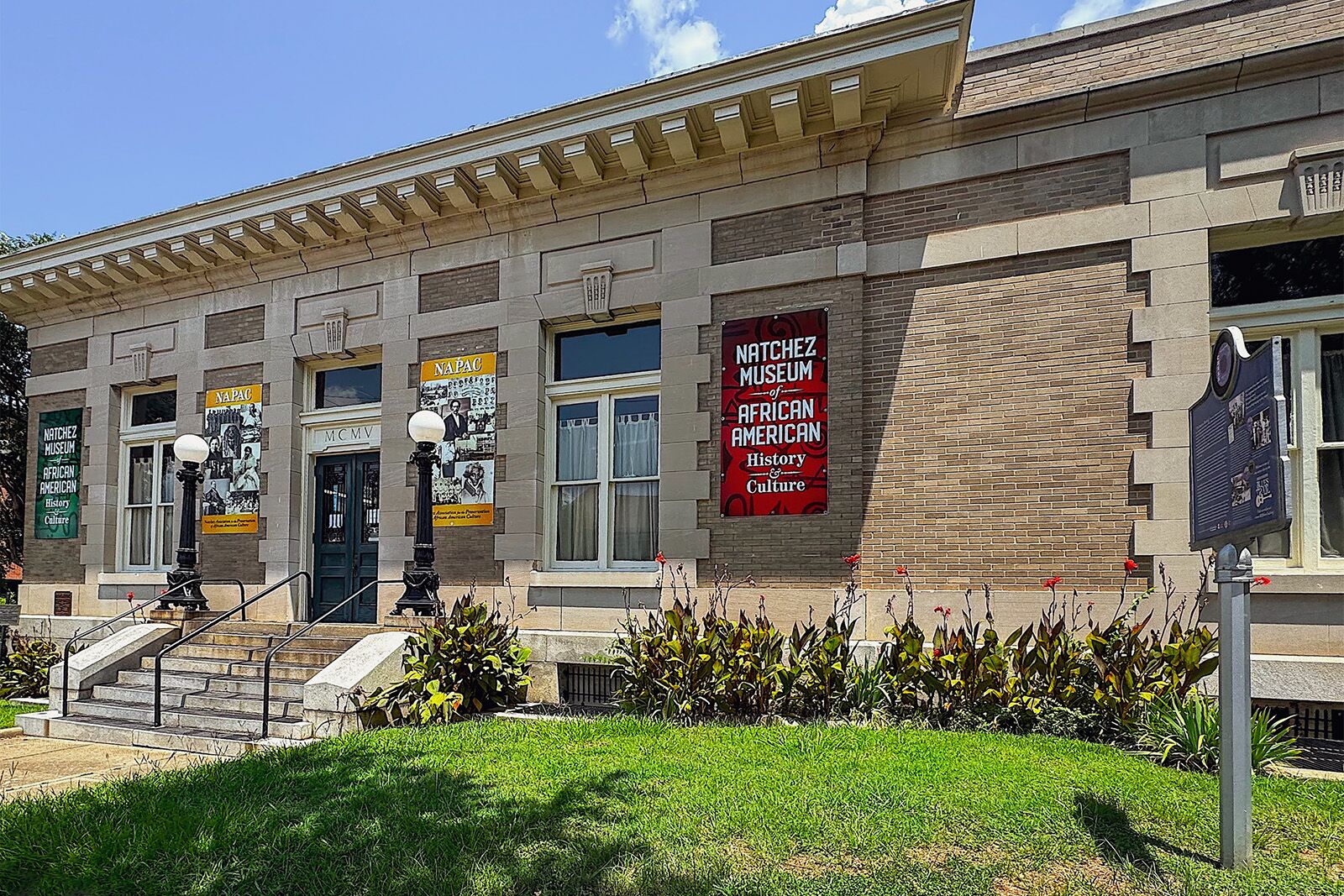
Photo: Jackie Sheckler Finch
Excitement reigned supreme. Chicago jazzman Walter Barnes and his dance orchestra were coming to town. On the night of April 23, 1940, an estimated 750 folks from the Natchez African American community gathered at the Rhythm Club on St. Catherine Street for the big event.
The large wooden building encased in corrugated iron was festooned with decorative Spanish moss hanging from the ceiling. The moss had been sprayed with Flit, a petroleum-based insecticide. To prevent gatecrashers, all exits but the front door were boarded.
The story goes that a man was smoking inside the club. Told to discard his cigarette, the man tossed it aside, setting the Spanish moss on fire. Suddenly, the Rhythm Club was a blazing inferno. Frantic patrons stormed the only door where victims were burned, suffocated, or crushed to death.
Bandleader Barnes was hailed as a hero for trying to calm the crowd while he and his band continued to play the song “Marie.” Barnes and nine of his band members perished in the fire that’s said to have claimed 209 identified victims. Many were buried in a mass grave in Watkins Street Cemetery.
A historical marker at the Natchez Museum of African American History and Culture details the event. Visit the museum to learn more about what was known as one of the deadliest fires in American history and that led to major revisions in fire safety protocol nationwide.
Natchez Museum of African American History and Culture: 301 Main St., Natchez, MS 39120
Where to eat and drink in Natchez
Frankie’s on Main
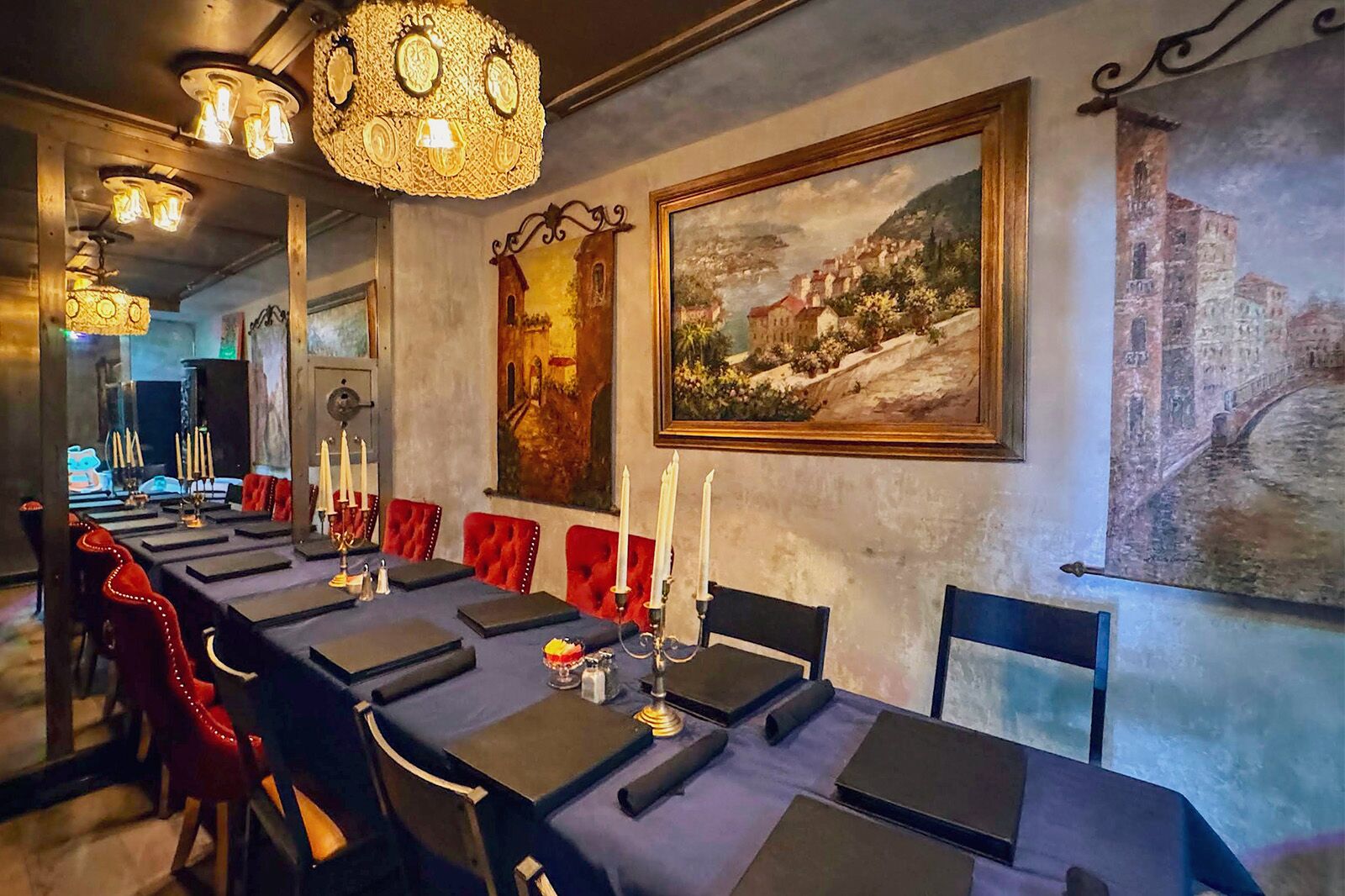
Photo: Jackie Sheckler Finch
Formerly a bank, this restaurant has kept the bank look and serves food and craft cocktails. Diners can even choose to eat in the vault. Built in 1826, the Greek Revival-style building opened as a restaurant in 2023 and quickly became one of the city’s most popular dining spots.
The décor is bright and quirky and happy. The menu is diverse and so delightfully offbeat that I was having a difficult time narrowing down my dinner choice. How about the bao buns, steamed buns that taste slightly sweet and are filled with grilled pork belly or peppered brisket or shrimp? Maybe grilled redfish served over carrot puree topped with buttered crab?
When server Mattie brought my Coke and water, I asked her opinion and she definitely steered me right. I hadn’t even considered the bourbon salmon, bacon, lettuce, and tomato with sliced avocado on sourdough bread, served with fries. Scrumptious.
Frankie’s on Main: 422 Main St., Natchez, MS 39120
Biscuits & Blues
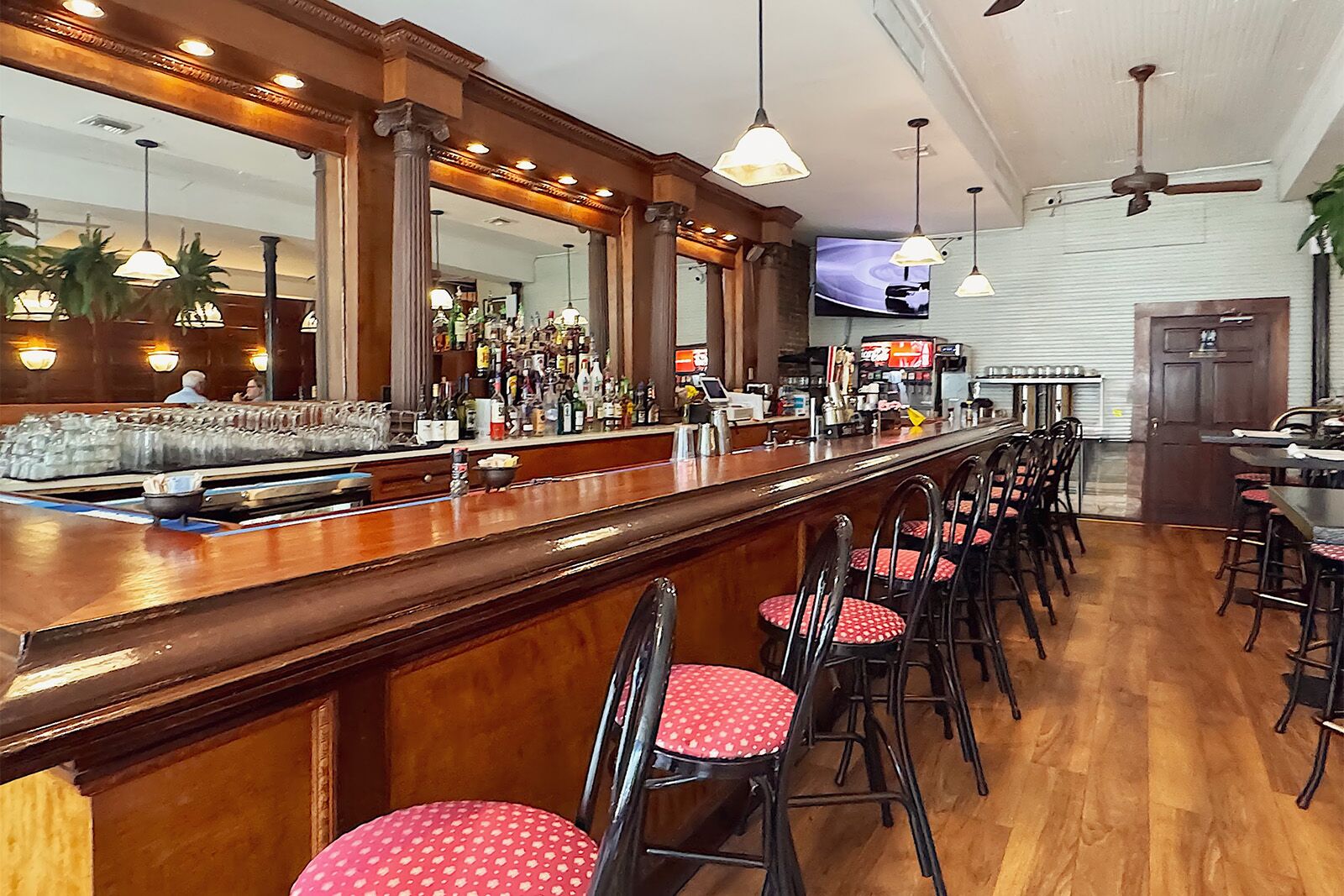
Photo: Jackie Sheckler Finch
With a slogan like “Hot Biscuits & Cool Blues,” you know this must be a happening place. I went for lunch on a weekday so no music (I was told live music was usually on the weekend).
I ordered the specialty biscuits with apricot butter and had an oyster po’boy with Cajun fries. It was quite good, including the fries considering I’m not a real spicy person. In fact, the fries that I had at Biscuits & Blues and at Frankie’s on Main are among the best I’ve ever had.
Biscuits & Blues’ décor is simple but comfy with a long wooden bar with curved back stools. The menu features Southern comfort food like gumbo, crawfish etouffee, red beans and rice, and crawfish and mushroom beignets.
Biscuits & Blues: 315 Main St., Natchez, MS 39120
Natchez Brewing Company
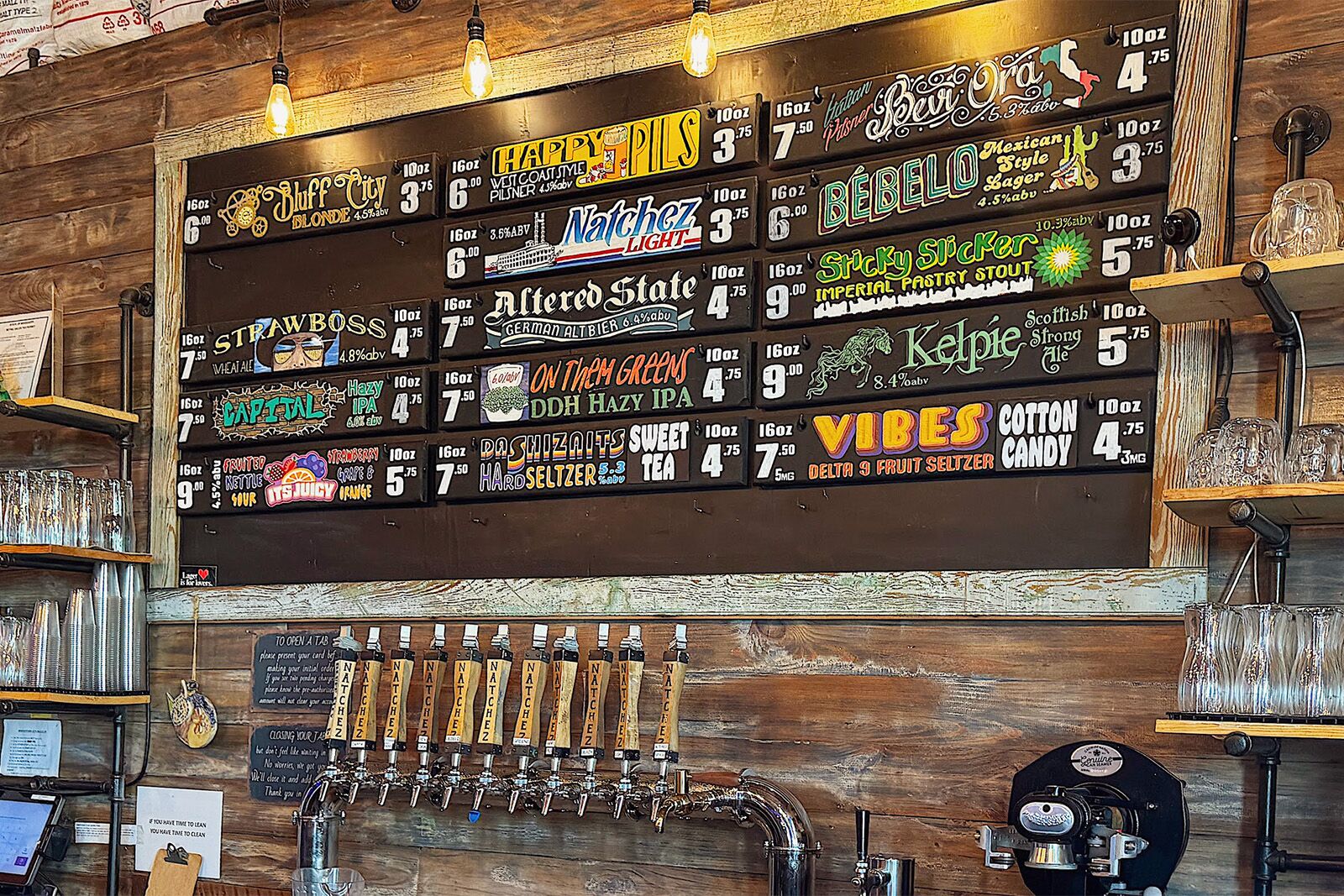
Photo: Jackie Sheckler Finch
Pizza and beer. Natchez Brewing Company offers a tasty combo served by a charming man named Daniel. Established in 2014, Natchez Brewing Company is proud of both its beer and its hometown. Just look at the company logo, a paddlewheel riverboat, or check out the company website. It has a history of Natchez steamboats from Natchez I to Natchez VIII, when they were launched, and what happened to them.
Lisa Miller is the company owner and founder. Her husband, Patrick Miller, is the brew master. He creates the recipes and the brews. I stopped by Natchez Brewing Company for dinner after a long touring day. I passed on the beer because I was driving, but I did savor some delicious pizza and one of the best Greek salads I’ve ever had — loaded with black and green olives and plenty of feta cheese, just the way I like it.
The menu also includes many other beer-friendly foods, like calzones, brats and franks, and a bunch of savory snacks like pretzels, kettle-cooked chips, and cheesy garlic bread.
Natchez Brewing Company: 207 High Street, Natchez, MS 39120
Bowie’s Rabbit Hole
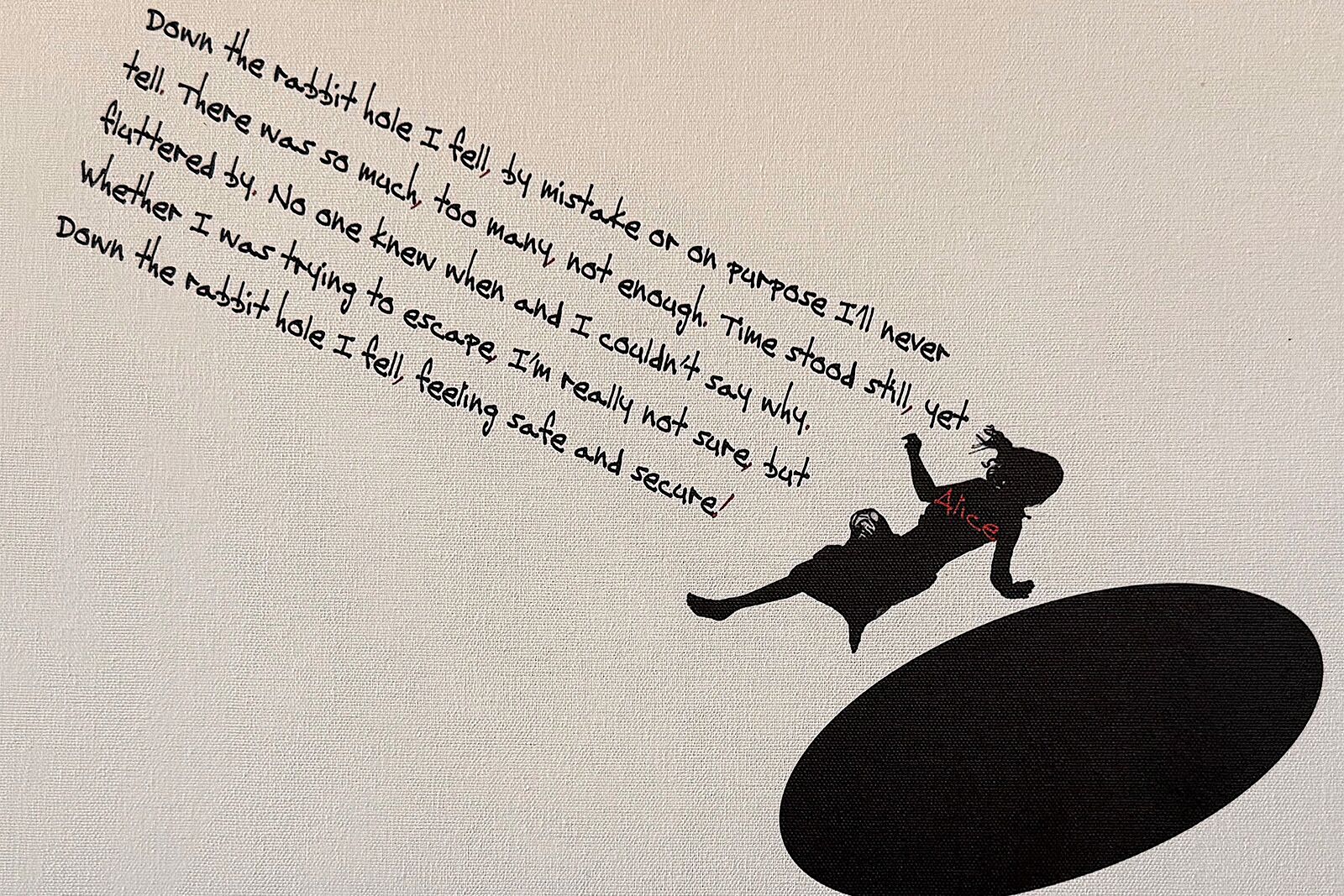
Photo: Jackie Sheckler Finch
More than a restaurant or a bar, Bowie’s Rabbit Hole is an entertainment center. Rabbit Hole serves lunch and dinner along with plenty of beer and cocktails like the Off With Your Head cocktail — a delicious mix of vodka, rum, peach schnapps, triple sec, orange juice, pineapple juice, cranberry juice, and grenadine.
A game room features retro-arcade gems, darts, and air hockey. Live music usually rocks the place every Friday and Saturday night. A big bonus is the Rabbit Hole’s location: right across from the bluff and gazebo overlooking the Mississippi River — a perfect place to catch one of Natchez’s glorious sunsets.
Bowie’s Rabbit Hole: 100 Main St., Natchez, MS 39120
Where to stay in Natchez
Weymouth Hall
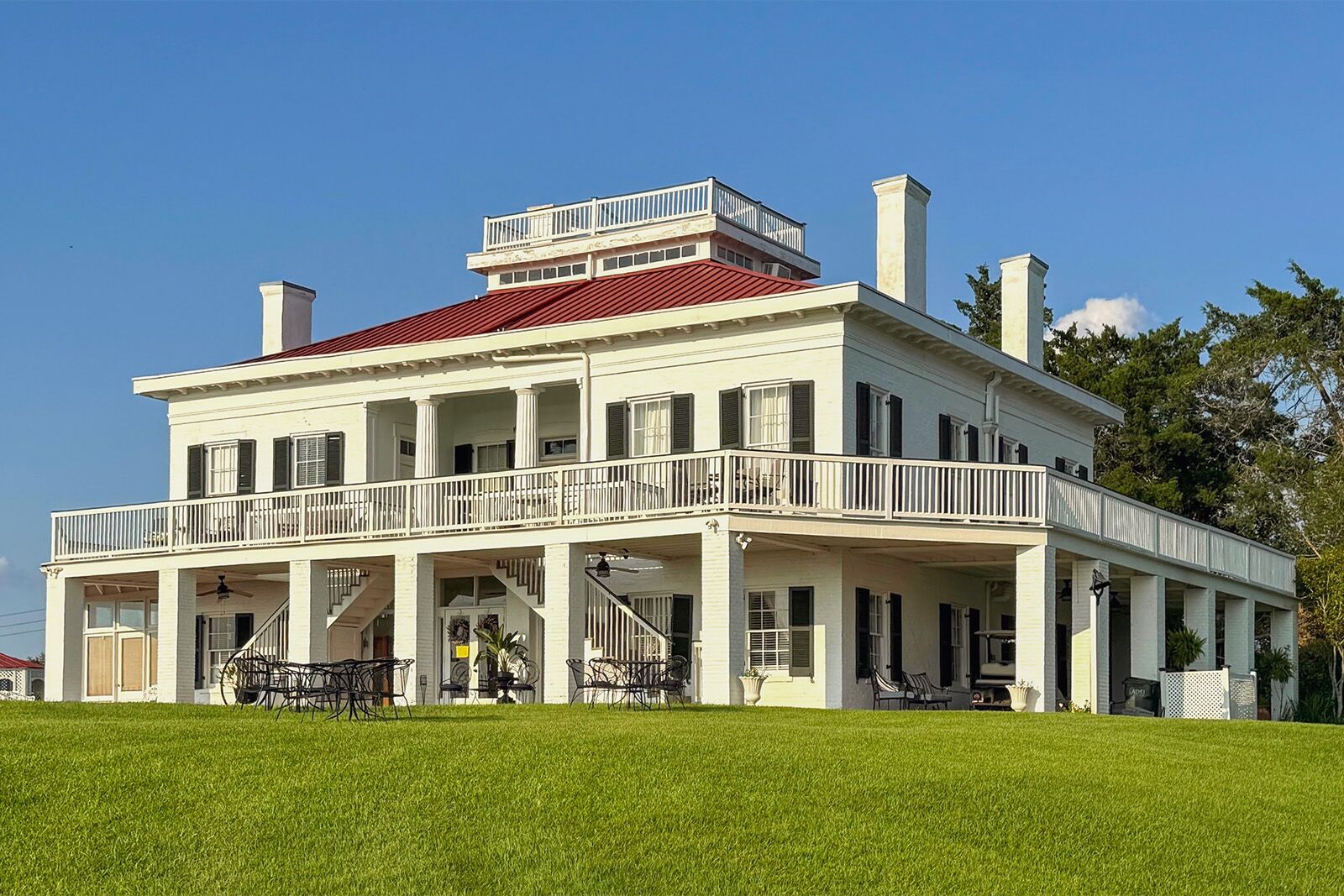
Photo: Jackie Sheckler Finch
For my two-night stay, I checked into Weymouth Hall Bed & Breakfast, located only minutes from downtown Natchez. Sitting atop one of Natchez’s highest bluffs, Weymouth Hall rises high over the Mississippi River and brings a spellbinding panorama any time of day or night.
Built in the 1850s, the mansion was named for former owner John Weymouth. My room had period furniture including a big comfy four-poster bed, a private bathroom, a flat-screen TV with satellite channels, air conditioning, a mini-fridge, free WiFi, and a coffee maker in the hallway outside my room.
Weymouth Hall also has a large free parking lot and a lovely swimming pool. One of the things I most enjoyed? No noise. When I went to bed, I immediately fell asleep and slept soundly until the next morning. A gift for a tired traveler.
Weymouth Hall: 1 Cemetery Rd., Natchez, MS 39120
Monmouth Historic Inn & Gardens
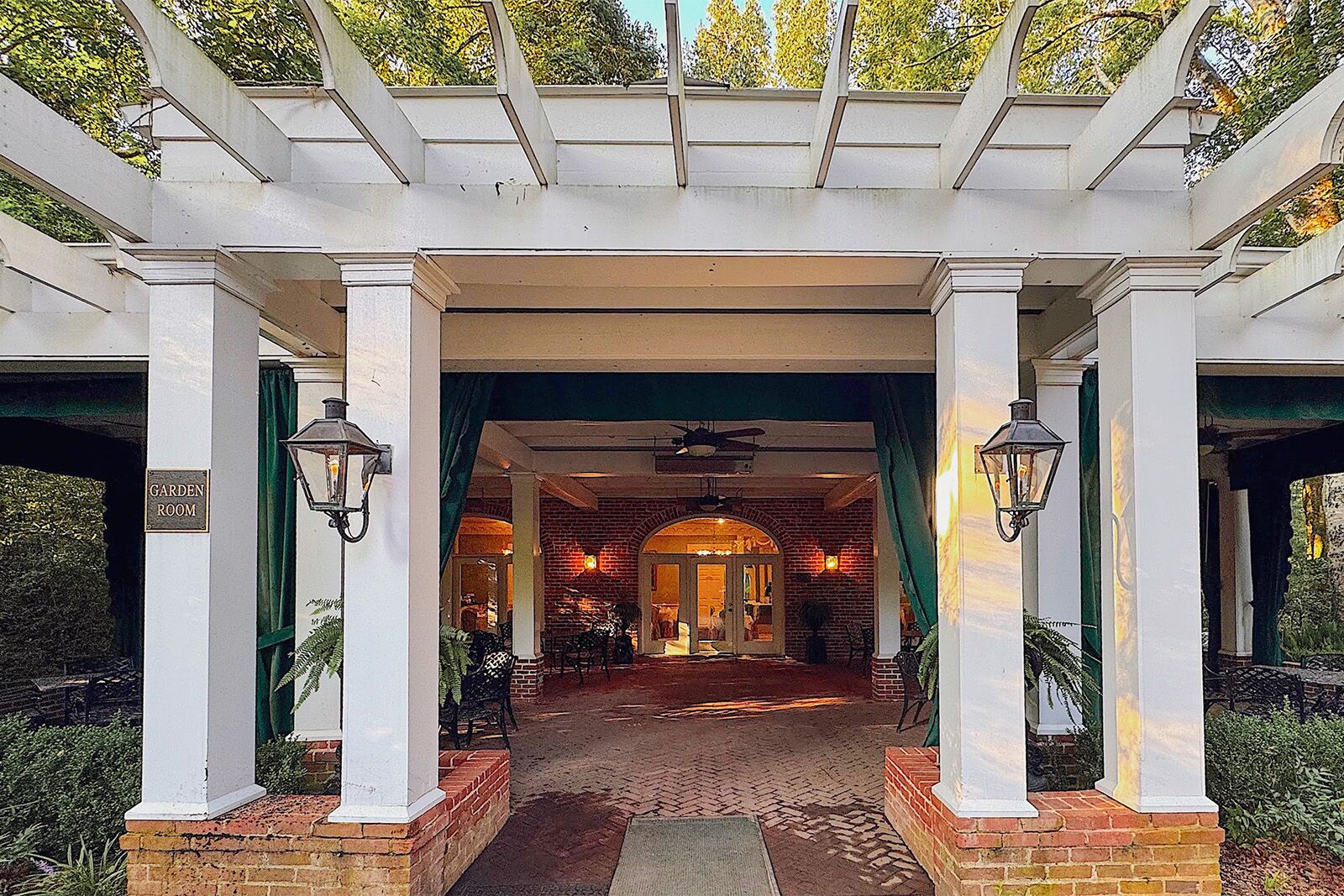
Photo: Jackie Sheckler Finch
In a nice arrangement, my breakfast the next morning was at Monmouth Historic Inn & Gardens a short drive away. Weymouth Hall gave me a voucher for a complimentary breakfast at Monmouth, so it was like getting to admire two historic homes in one.
Built in 1818 by postmaster John Hankinson, the Greek Revival Monmouth home was named after his home in Monmouth County, New Jersey. Set in 26 acres of manicured gardens, Monmouth has 30 rooms and suites. I didn’t tour the house but did walk through some of the glorious gardens on my way to the elegant Garden Room where breakfast was served.
In the Garden Room, a sideboard was filled with fruit, yogurt, pastries, and juice. Plus, I had a choice of two entrees: a Monmouth Southern Breakfast with two eggs cooked to my liking with grits, biscuit, and bacon or ham, or Ms. Mary’s Stuffed French Toast —deep fried French toast stuffed with cream cheese and served with bacon or ham. I chose the Southern Breakfast with bacon and was not disappointed.
Monmouth Historic Inn: 1358 John A. Quitman Blvd., Natchez, MS 39120
When to visit Natchez
Spring and autumn are ideal times to visit the oldest city on the Mississippi River. Temperatures are not too hot, not too cold. Natchez in spring brings the annual Spring Pilgrimages in March and April. Since 1932, homeowners have opened the doors of their magnificent homes for public tours. Natchez has two garden clubs that offer historic home tours: the Natchez Garden Club and The Pilgrimage Garden Club. More than 30 homes were featured on the 2025 spring pilgrimage. Spring Pilgrimage guides often dress in historical clothing, including hoop skirts for women. Natchez also offers a Fall Pilgrimage in September and October.
In late September, fall foliage begins to arrive. While it’s impossible to predict the peak time to see colors along the Natchez Trace Parkway and in Natchez, generally mid-October to early November is the best time to see the most vibrant colors.
Getting to and around Natchez
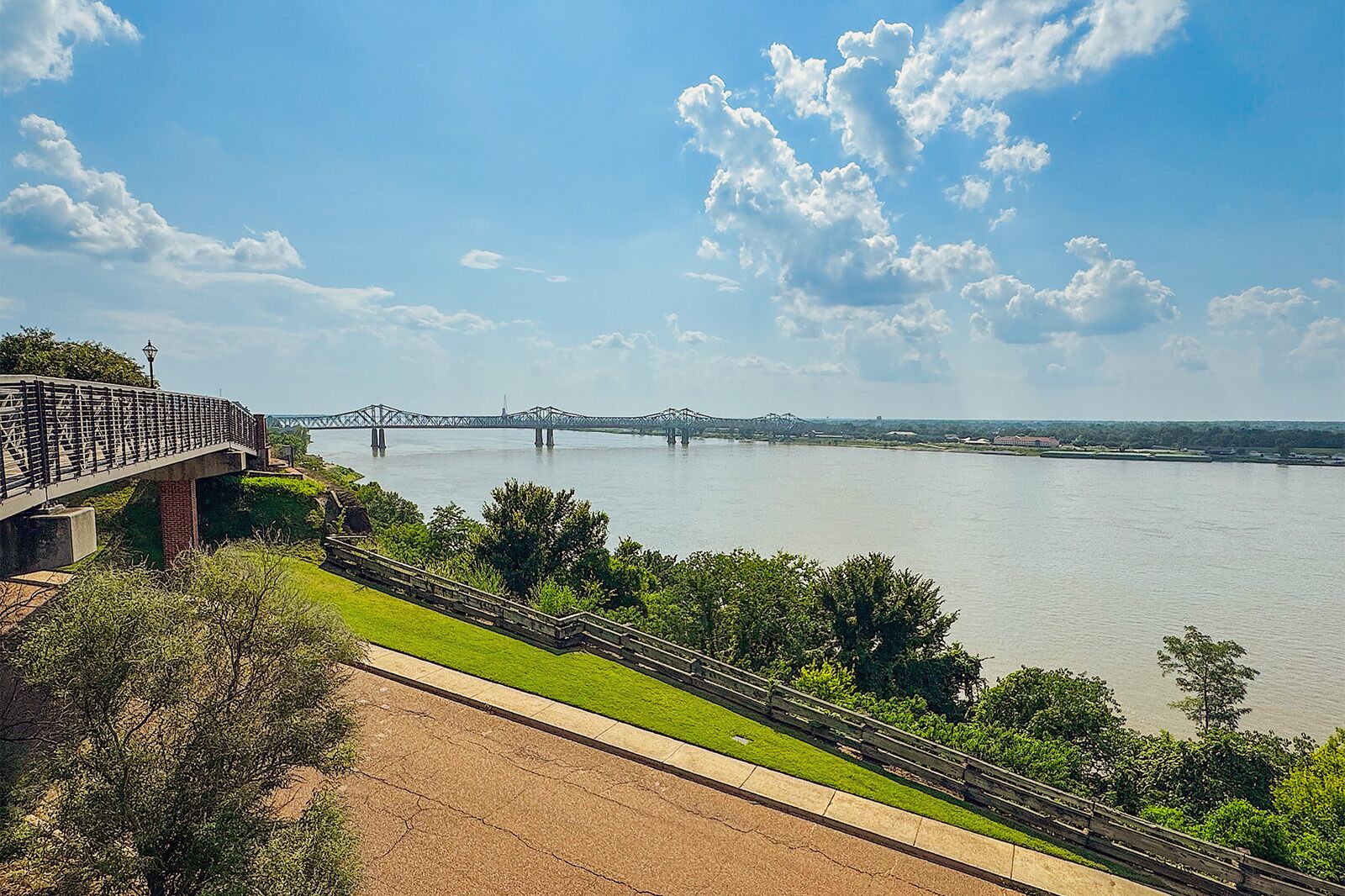
Photo: Jackie Sheckler Finch
For my August trip, I flew into Baton Rouge Metropolitan Airport (BTR) which is about a 90-minute drive to Natchez along Highway 61. The airport is very small and clean with pleasant and helpful employees. A nice touch was several free books stands at the airport. The books were for all ages. In front of one book stand, I saw a happy youngster and his parents watching as he chose a colorful book about a dog’s adventures.
Driving from Baton Rouge was easy. Not much traffic. Mostly a straight scenic drive from the airport. Natchez is a very walkable city, and I had no problems finding parking spots when I was driving around Natchez.
For my ride, I picked up a rental car at the airport. I was traveling alone and wanted the freedom to see as much of Natchez as I could in my two days there. When I got my rental, the license plate made me smile as though I were getting a greeting, sort of a sign that this trip would be special. The letters on the license plate – WJF – were the initials of my late husband: William Joseph Finch.
Indeed, my Natchez visit was glorious. As street department worker Kenny noted when we went past his work site on my Open Air Tours, “We come into this world with nothing and we go out of this world with nothing. So it is important to enjoy the time that we have here.”
I most certainly did enjoy my time in Natchez. 