The first time I heard of Turkish delight — a soft and gelatinous candy cube with an eternity’s worth of flavor options — I was reading The Lion, the Witch, and the Wardrobe by C.S. Lewis, the first book in the Chronicles of Narnia. Edmund, one of the children who visits Narnia, is tempted by the White Witch to eat a bewitched Turkish delight. Edmund instantly loves it, and (spoiler!) betrays his siblings in desperation for more by selling them out to the bad guys.
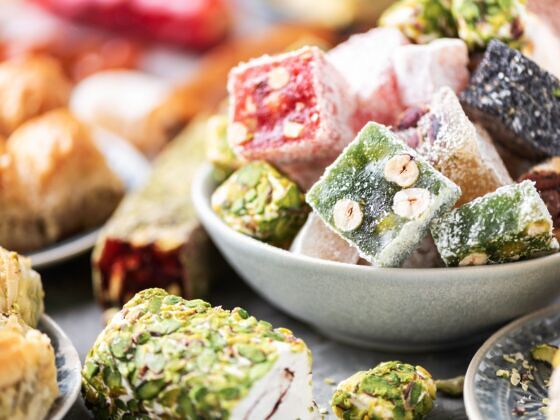
Photo: j.chizhe/Shutterstock
From Istanbul to Narnia: The Colorful History of Turkish Delight
To be honest, I probably would have done something similar (sorry, siblings). I love Turkish delight, and as a child, I associated it with the best parts of Narnia: an enchanted world of snow, fanciful creations, and delectable treats.
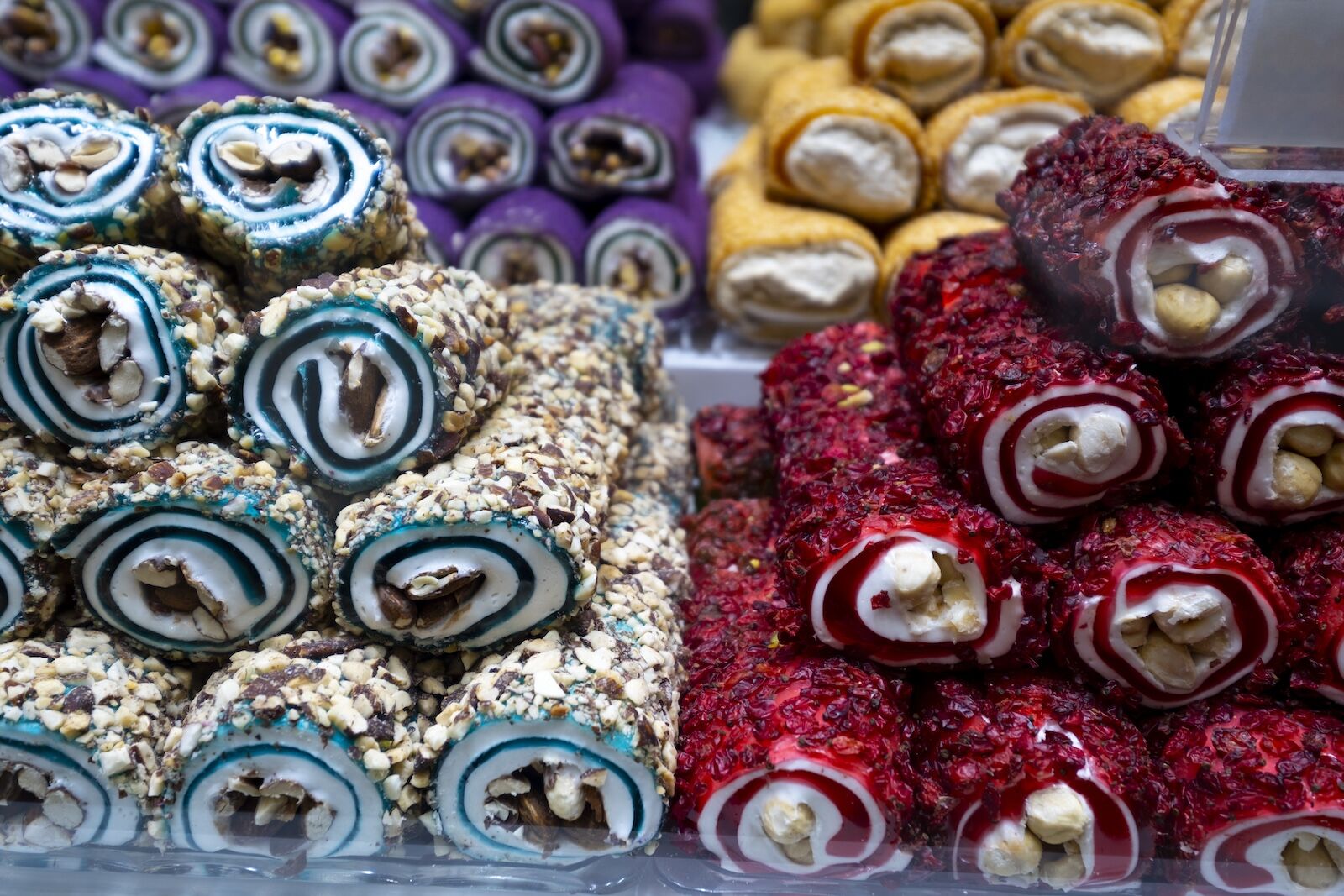
Photo: Giftlokum
I was reminded of the Chronicles of Narnia when I walked into my own delectable wonderland at Kafkasli, a Turkish delight factory in Selçuk, Türkiye. The shop opened in 1955 and has been going strong ever since, packed practically to the rafters with Turkish delight, baklava, halva (a sweet, nutty dessert), olive oil, and other products for which Türkiye is famous. Every item in the store sits behind an open container, allowing visitors to try anything they’d like. (Don’t ask how many pieces of Turkish delight I tried.)
However, the best part of the store is what’s along the back wall: the factory. Visitors can watch candymakers making all the varieties on offer. Employees are available on request to talk visitors through the process for free, whether production is going or not, while they snack on the shop’s specialty flavor: pomegranate pistachio black currant. It’s one of 55 varieties the store produces.
At its most un-frilled, Turkish delight is a combination of only a handful of ingredients: sugar, water, cornstarch, citric acid, and rosewater. The recipe is a bit tricky, however, and requires some knowledge of candymaking. First, the sugar, water, and citric acid are boiled together until they reach the “soft ball” stage — when dropping the mix in cold water makes it form a soft, malleable ball. Then, cornstarch and water are added as it continues to cook, followed by rosewater, and sometimes food coloring for extra color. Then it’s spread into a dish and left to cool overnight. It’s not as tricky as macarons, but still takes some skill.
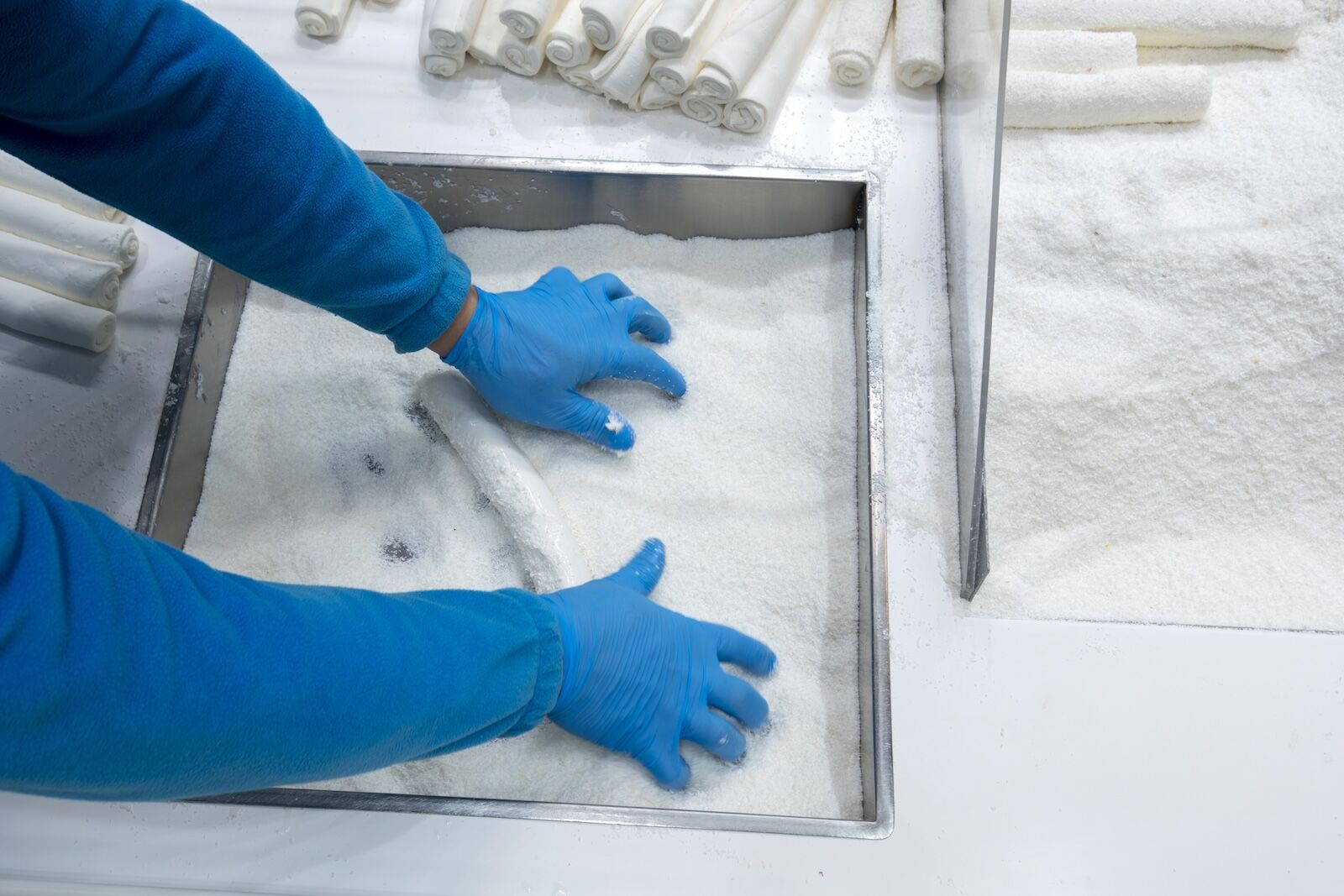
An expert rolling Turkish delight dough. Photo: Giftlokum
The treat was supposedly invented in 1777 by a confectioner named Haci Bekir Effendi, who opened his shop, Haci Bekir, in Constantinople (now Istanbul). In 1820, the Ottoman ruler Sultan Mahmud II learned of the confection’s popularity, tried it, loved it, and appointed Effendi as the palace’s chief confectioner. Effendi’s family held that title until 1920, when Ottoman rule ended. That means that in 2027, Turkish delight will turn 250 years old.
The Haci Bekir storefront is still in the same location in Istanbul, along with several other shops throughout the city, and visitors can still try Turkish delight made from Effendi’s original recipe. The shop is still in the family, currently run by the fifth and sixth generations. But unlike at Kafkasli, you can’t watch the family make its Turkish delights – the recipe is a closely held family secret.
“There were just a few types at the beginning and the most common one was plain covered with icing sugar,” said Melike Akkent, founder of Turkish delight company lil’giftlokum in Afyon, Türkiye. “The producers are now using so many materials for covering and also different flavors, natural colorants, and filling creams are used.” The way it’s made hasn’t changed much through history, she says, at least when it comes to the basic ingredients, though modern producers have started getting creative when it comes to extra ingredients, shapes, and flavors.
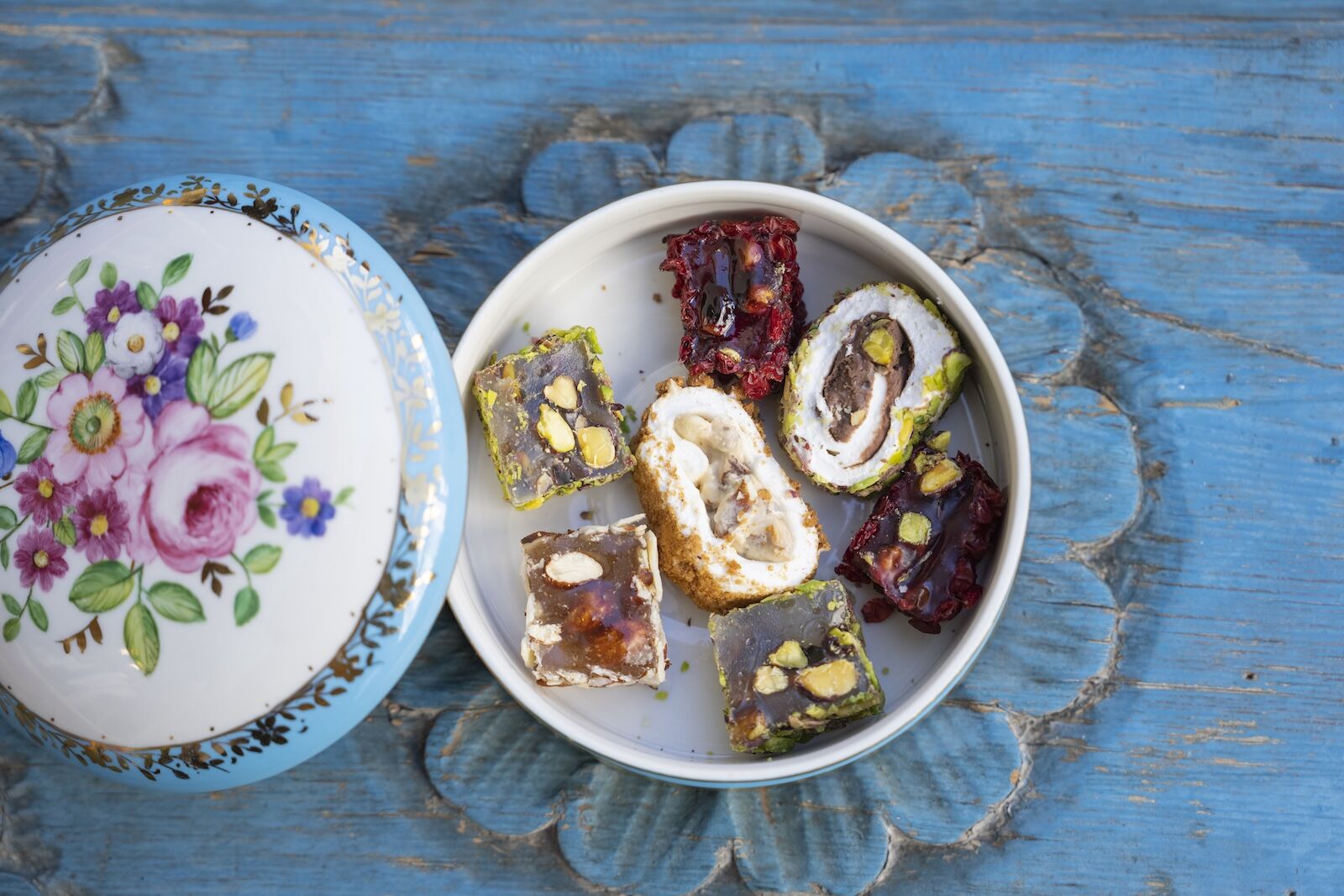
Photo: Giftlokum
So how did Turkish delight make its way to England and become popular enough to feature in C.S. Lewis’s work? Well, it depends who you ask. According to the Haci Bekir website, a businessman from England tried the sweet treat at the shop and loved it so much that he brought some home, simply referring to it as “Turkish delight.” From that one businessman, the treat swept across Britain.
But that’s not the only story. In 2017, National Public Radio (NPR) published a different history. According to the writer’s research, two Armenian businessmen named Armen Tertsagian and Mark Balaban immigrated to Washington, where they bought an orchard. They’d grown up eating Turkish delight and wanted to share the joy with Americans. So they created their own, initially calling the variations “aplets” and “cotlets.” Then came C.S. Lewis, who popularized the name “Turkish delight.”
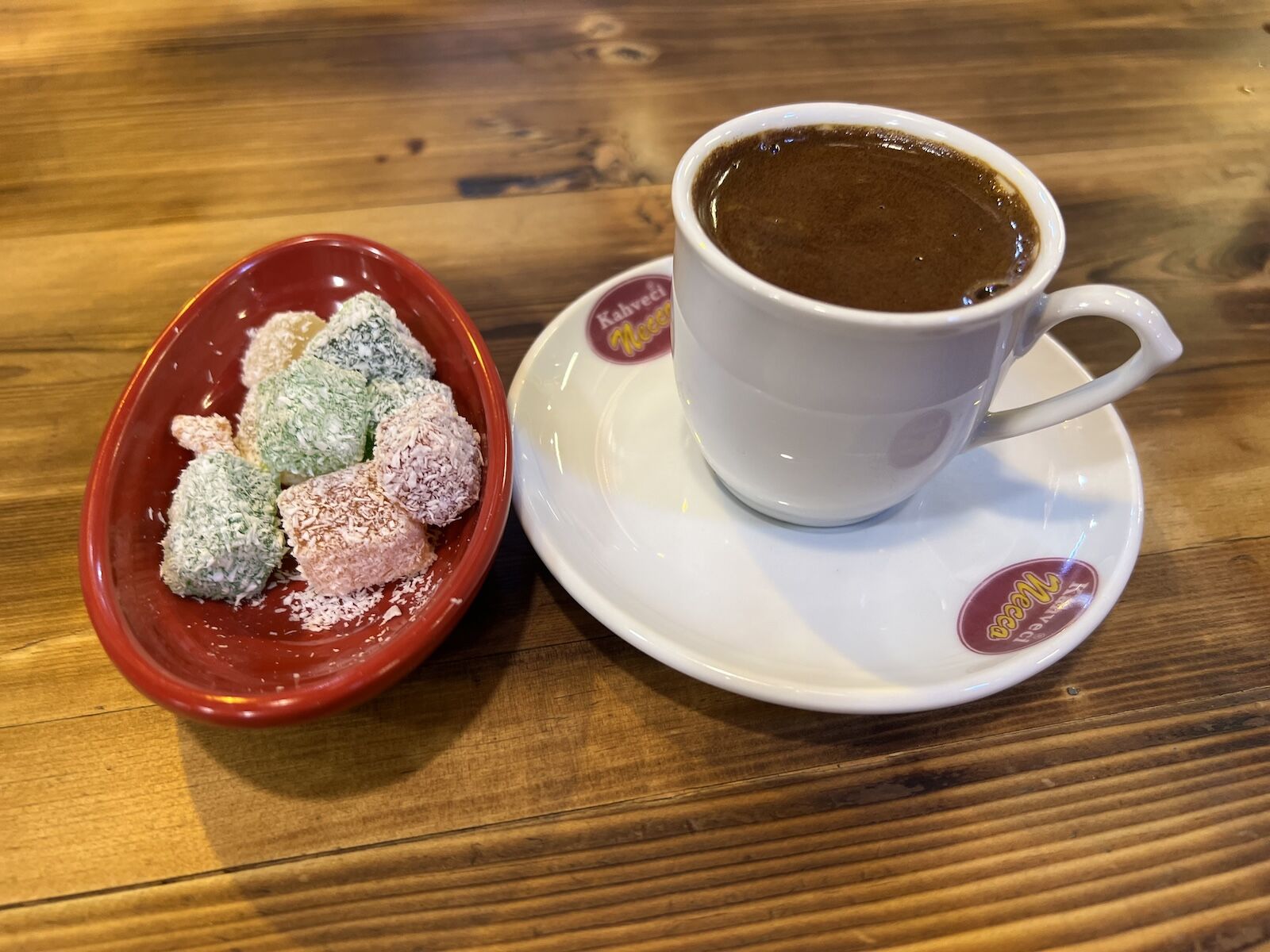
Coffee and Turkish delight. Photo: Jen Billock
Throughout its history in Türkiye, Turkish delight has been imbued with cultural significance, and the practice of giving it to loved ones and visitors is as old as the candy itself. It’s a symbol of the country’s history and culture, often used to break fasts at the end of Ramadan. “We serve Turkish delight, especially at our religious fests,” Akkent says. “Also, we distribute it at our funerals to our guests.” It’s often served with Turkish coffee on everyday social occasions.
At Kafkasli, and indeed, throughout Türkiye, visitors will find thousands of flavor options. Akkent’s store alone sells more than 500 styles. My favorites so far as a former pastry chef (and Turkish delight eater for decades) are hazelnut, bergamot, pistachio, and chocolate banana. Sadly for Kafkasli (because I know they certainly care about my opinion), I think black currants are from the devil, so I can’t speak too highly of their signature flavor. That didn’t stop me, though, from leaving with five boxes of other styles.
Akkent’s store is in the city of Afyonkarahisar, usually just called Afyon. Its unique style of Turkish delight makes it one of the more well-known Turkish delight destinations within the country, and travelers can find shops at many street corners in town. Afyon’s local Turkish delight variety adds kaymak — essentially, clotted cream; Akkent describes it as the cream that forms in a thick layer on top of boiled milk. Turkish delight from Afyon is either layered on top of kaymak, or has the kaymak blended as an ingredient to make the snack creamier.
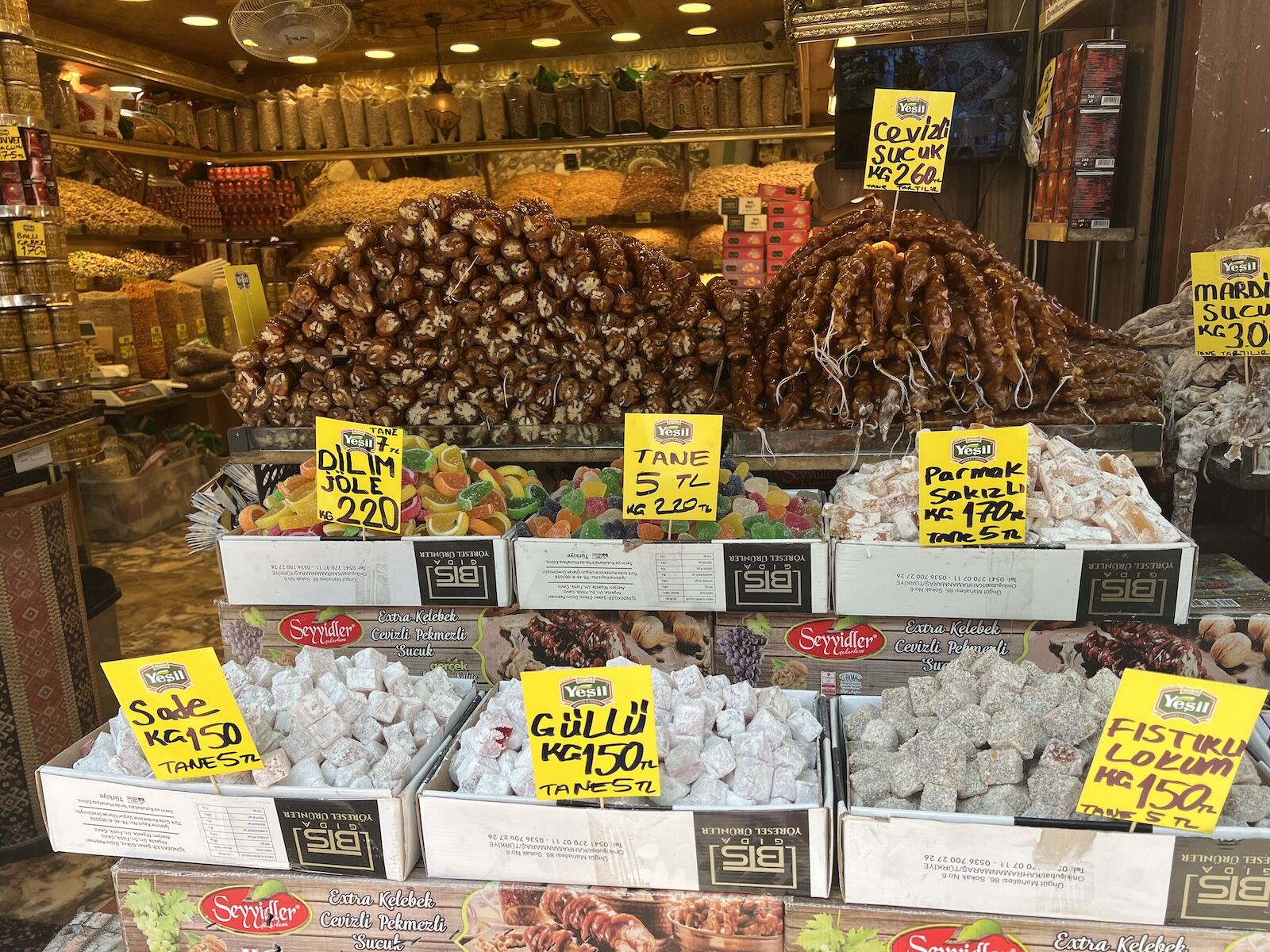
Snacks and treats for sale in Turkiye. Photo: Jen Billock
In Türkiye, the dessert is called by its Turkish name, lokum. I learned this by accident, when I was trying to find it in one of the markets near Izmir. I asked Hüseyin Demir, my guide, where I could find Turkish delight.
“Which one?” he responded, not sure which of Türkiye’s many delightful treats I was referring to.
He’s not wrong. Nearly all the desserts I tried during my time in Türkiye were delightful. But lokum? It’s a taste and texture that remains unmatched. No wonder C.S. Lewis considered it so bewitching. 