United Airlines is bringing a couch-like option to the back of the plane. The airline’s Boeing 787-9 Dreamliner planes used on select long-haul international routes will be outfitted with its new Elevated interior, which includes seat rows that transform into a couch-like situation, particularly useful for families traveling with small children. One of the most obvious questions, what it will cost, remains unanswered.
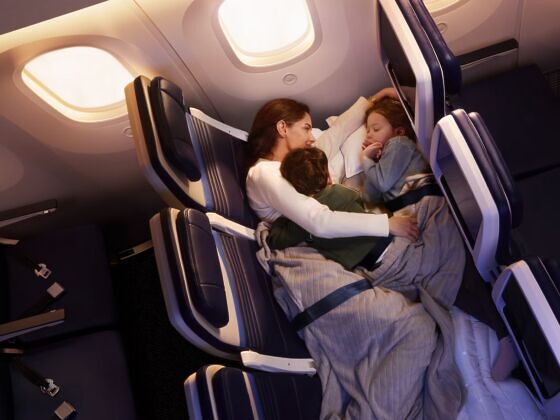
Photo: United
United’s New Relax Row Promises a 'Couch' in Coach
“We’re constantly pioneering new ways to differentiate our customers’ experience in every seat, and we’re confident they will love it,” Andrew Nocella, United’s executive vice president and chief commercial officer, said in the airline’s March 19 announcement.
The product, marketed on United’s site as “Relax Row,” is aimed at long-haul international flying. United says the seat will turn a row of three economy seats into a couch-style space for stretching out or sleeping, using adjustable leg rests, with bedding and extra pillows included. The airline plans to begin the rollout in 2027 on Boeing 787 and 777 aircraft, with as many as 12 Relax Rows on a plane and installations on more than 200 widebody jets by 2030, according to multiple reports published March 25.
What to know about United’s ‘Relax Row’ seating
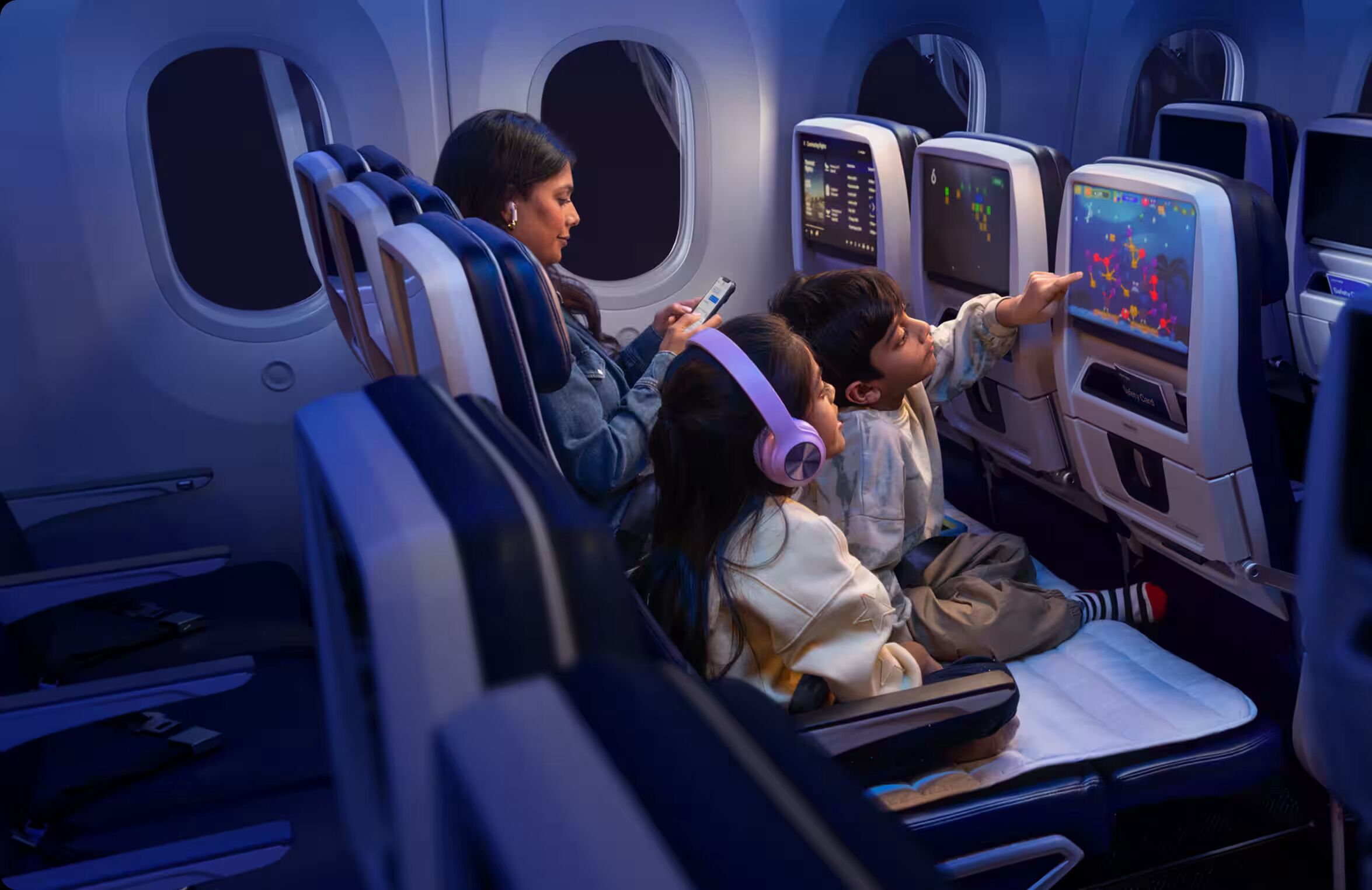
Photo: United
What United has disclosed in its own press materials is broader. The carrier’s Elevated interior, first unveiled in May 2025 and now on sale for its first international flights beginning April 22, adds 99 premium seats on the new Dreamliner, including new Polaris Studio suites, upgraded Polaris seats, refreshed Premium Plus, and updated economy cabins with 13-inch 4K OLED screens and Bluetooth connectivity. The inaugural international route is San Francisco to Singapore, followed by San Francisco to London on April 30.
The Relax Row is part of that larger strategy: give travelers more ways to buy up from standard coach without paying business-class fares. In the May 2025 unveiling, United said the first deliveries of its reconfigured 787-9s would carry 33 Economy Plus seats and 90 standard economy seats, down from 39 Economy Plus and 149 economy seats on current versions of the aircraft. By March 19, as the first aircraft went on sale, United said that configuration had shifted again to 39 Economy Plus and 84 economy seats.
That reduction in standard coach seats matters. Relax Row is not simply a nicer pillow or a larger screen. It is another example of airlines carving the cabin into more distinct price points, and monetizing comfort that once came only with an upgrade or a lucky empty row. United is arriving later than some overseas carriers. Business Insider noted that Air New Zealand, Lufthansa, ANA, and Vietnam Airlines already offer comparable couch, sleeper-row, or sofa-style products in economy or premium economy.
As for price, United has not said. Neither the March 19 release tied to the first Elevated Dreamliner sales nor the May 2025 unveiling included a fare, surcharge, or range for Relax Row. Coverage published Wednesday said pricing has not yet been disclosed.
How ‘Relax Row’ works for families and couples
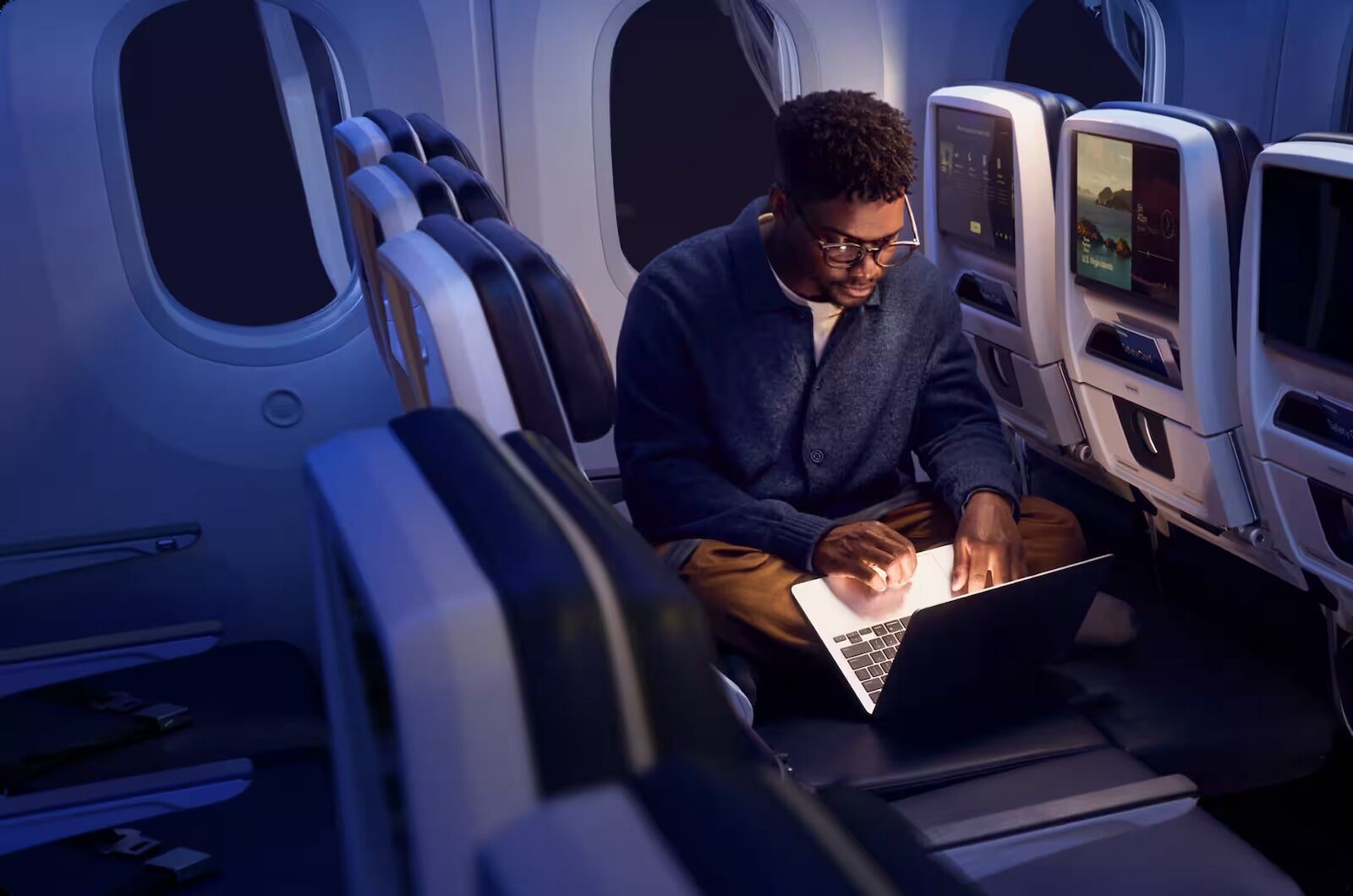
Photo: United
The same is true for a question many couples will ask immediately: can two people split the cost if they plan to share the row and snuggle? United has positioned the product for “families, couples, and solo travelers,” according to coverage, but it has not published booking rules explaining whether the charge is attached to one passenger, two passengers on the same reservation, or the row itself, nor whether two travelers on separate tickets could divide that cost. Until United releases terms, that remains unclear.
The seat belt question is also unresolved in United’s public materials. The airline has not yet published a Relax Row-specific safety explanation for turbulence. What is clear is the baseline federal rule: passengers are safest when belted in their seats. The FAA says turbulence can strike unexpectedly and advises travelers to keep their seat belt buckled at all times while seated. Federal regulations also require aircraft to have signs telling passengers when safety belts must be fastened. In practice, that means if United introduces a lie-flat style row in economy, the airline will need a defined procedure for how occupants return to a belted seating position when the seat belt sign comes on. United has not publicly detailed that procedure yet.
For travelers, then, the headline is straightforward. United is adding a new middle-ground product between regular economy and premium cabins, and it is betting that more passengers will pay for space, sleep, and flexibility on long flights. But the practical details that will determine whether Relax Row feels clever or cumbersome including the price, the booking rules, and the turbulence protocol, are still missing. 