Photo: Martin Sun/Shutterstock

This Caribbean Island Barely Has Beaches, But You Won’t Miss Them

Caribbean Outdoor
by Kayla Dungee Sep 15, 2026

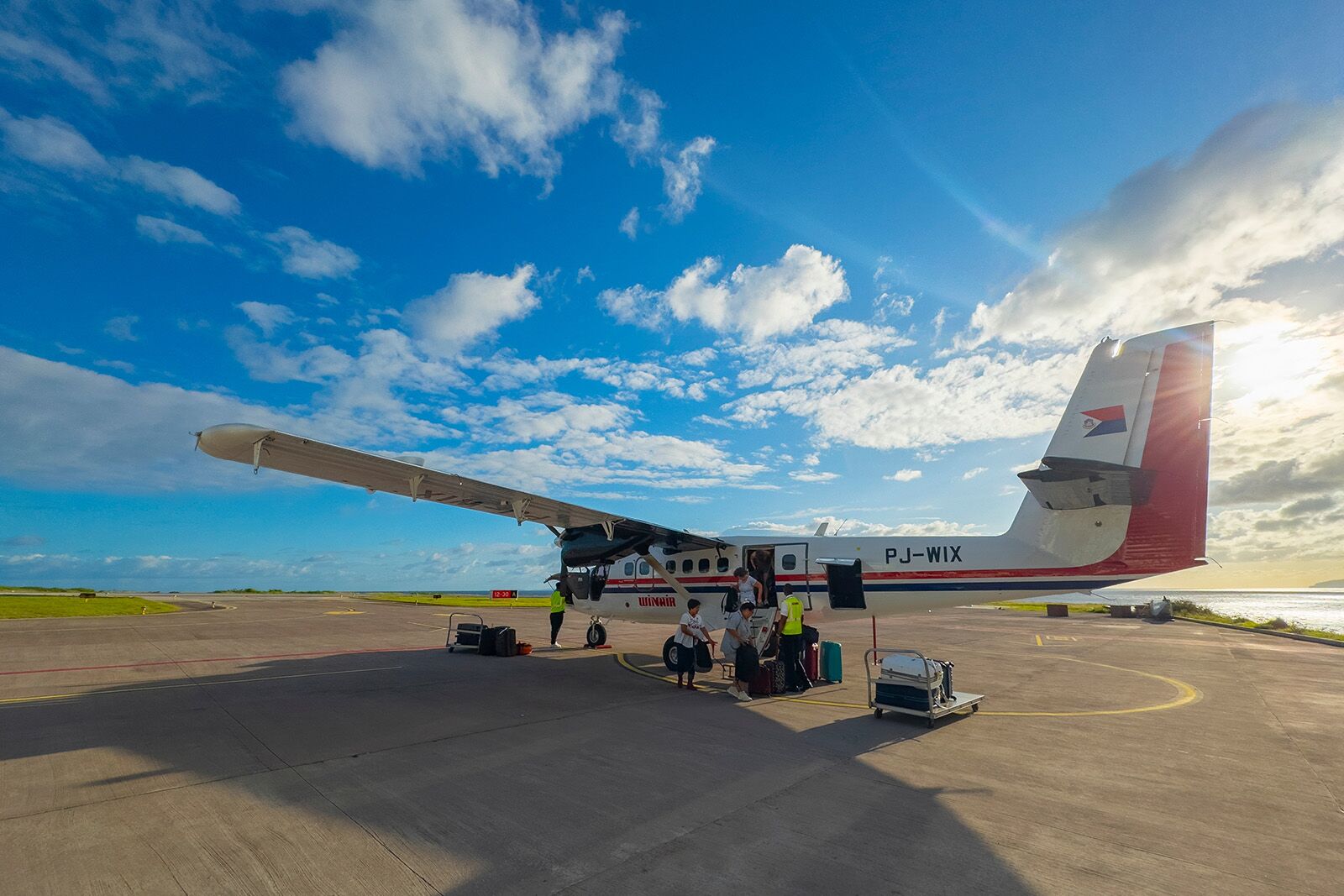
Touching down in a 19-seater Twin Otter on a cliffside strip feels more like a Fear Factor episode than a vacation, but this was my first introduction to Saba, one of the Caribbean’s smallest inhabited islands and home to the world’s shortest commercial airstrip.

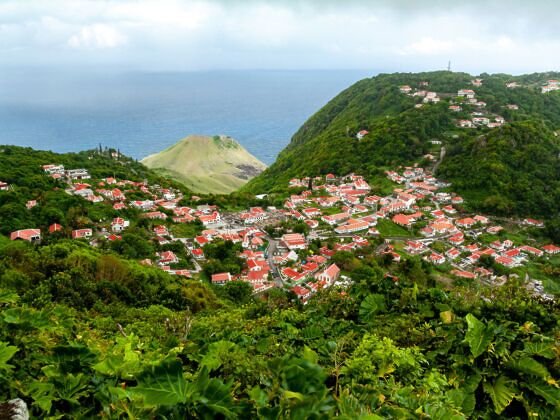
I stepped out onto the mere 1,300-foot runway at Juancho E. Yrausquin Airport to cliff and ocean views, quickly realizing that this Dutch Caribbean island isn’t for the faint of heart. Saba has steep hills, no real beaches, and a single road for a population of some 2,000 people. It’s not exactly PTO material on paper, but there are also no traffic lights or crowds to fight for a view. Just five square miles of volcanic rock, coral reefs, steep-stepped villages, and a version of the Caribbean most people miss because they don’t know it’s there.
Limited development protects the island and lets you experience it

visit saba

Photo: Wangkun Jia/Shutterstock

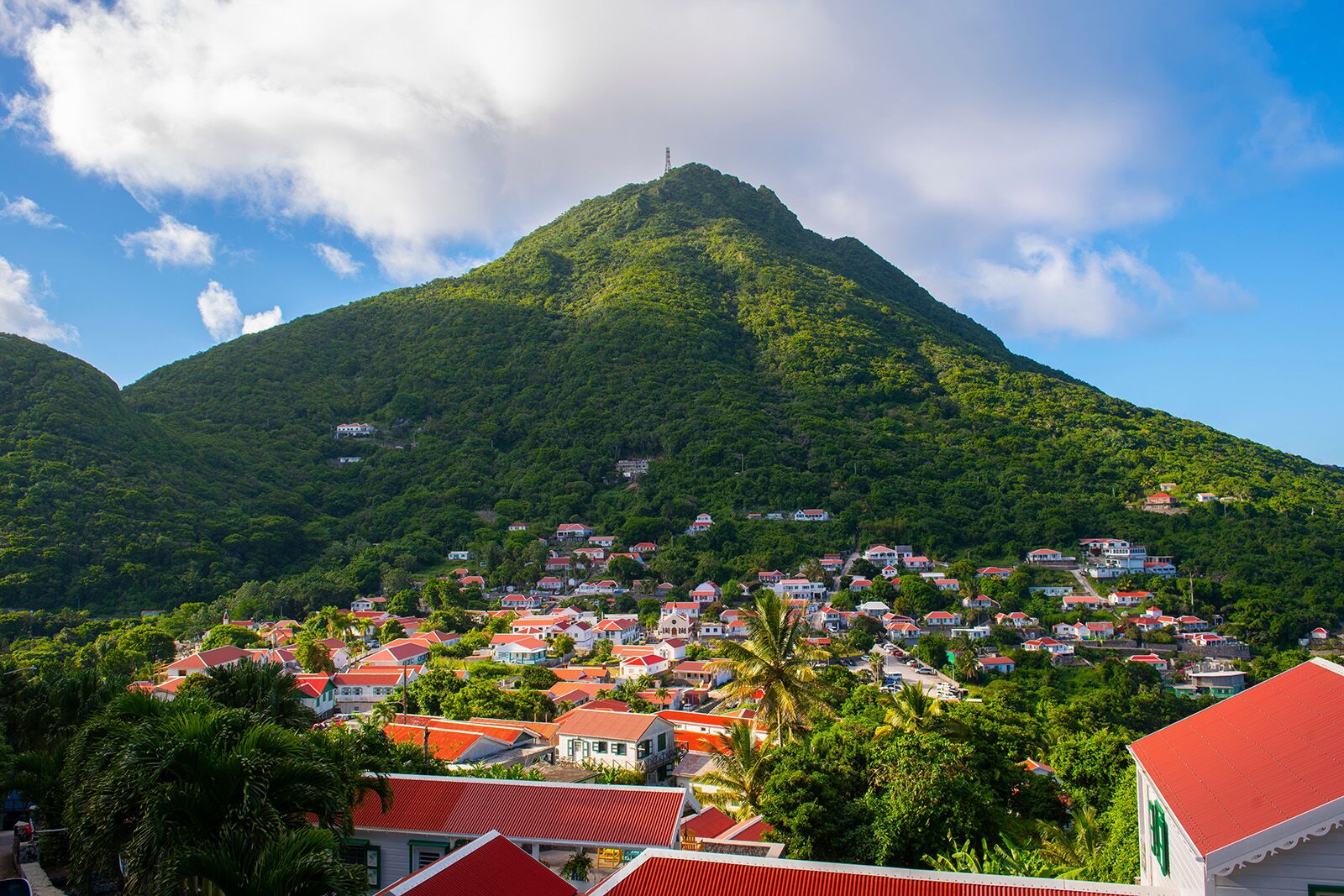
With a third of Saba’s land protected as national parkland — split between Mount Scenery National Park, Saba National Marine Park, and Saba Bank National Park — there’s a total lack of sprawling resorts and beachfronts that define so much of the region. It’s part of the reason Saba has earned the nickname the Unspoiled Queen of the Caribbean.

Tom Brokke, a Senior National Park Officer with the Saba Conservation Foundation, told me that keeping it that way is deliberate.

“What makes Saba special is its natural beauty, the dramatic landscapes, and the fact that development has remained relatively small-scale and in character with the island. The small boutique hotels and locally owned businesses actually add to that identity rather than taking away from it,” he said.

From the airstrip, a shuttle whisked me straight up the volcanic peak to Windwardside via The Road, the island’s only paved route and one that outside engineers once deemed too steep to build. Sabans took matters into their own hands, teaching themselves road construction and building it by hand, finally finishing in 1963. The sharp turns with limited visibility made me grateful that transportation to and from the airport was included.

One of the first pieces of advice I got before coming to Saba was to leave the heels at home. Saba’s roads unintentionally turn every day into leg day. It’s part of what Brokke calls Saba’s appeal as a “hidden gem.” Reachable only through St. Maarten, he said, the island “feels quite remote and undiscovered.” Those morning exploratory walks alone were enough to prep me for one of the island’s 20 hiking trails.

visit saba

Photo: Wangkun Jia/Shutterstock

While I initially felt wary of taking on Mount Scenery, the highest point in the Kingdom of the Netherlands at over 2,900 feet, the Mas’Cohones Trail offered a slightly less strenuous alternative. Thanks to Saba’s dramatic altitude shifts, the climate transitioned from dry to wet rainforest along the way, with striking, distinct flora in each zone. At the summit, I was rewarded with a panoramic view of Windwardside and the ocean beyond, without a cloud in sight. (Pro tip: hiking boots will be your best friend on Saba’s trails, especially on the wet, uneven terrain.)

But Saba’s beauty isn’t just what you see from the top; some hides below the surface. I once thought if I’d snorkeled once, I’d snorkeled everywhere. Boy, did the Sea Saba dive shop have something to prove. The reef was the most colorful I’ve seen anywhere in the Caribbean. Saba Marine Park has protected these waters since 1987, and the visibility showed it. Schools of fish wove through volcanic rock formations, sea turtles picked at sponges, and nurse sharks rested under coral ledges. With all that beauty visible just snorkeling, I can only imagine what the divers on our boat saw.

The women keeping Saban traditions alive

When I asked Brokke what makes Saba beautiful, he didn’t start with the cliffs or the cloud forest.

“It is also the people who make the island special,” he said. “I don’t think a camera can really capture what it feels like to actually live here.”

It was in small workshops in Windwardside that I came face-to-face with Saba’s cultural traditions. Saba lace, or drawn threadwork, arrived on the island in the 1870s, when most of Saba’s men were away at sea working as sailors and ship captains. Left to sustain the economy on their own, the women turned lace into a mail-order business.

“We used to ship it to America, Barbados, England, Canada, anywhere,” said Peggy Barnes, who now leads Saba’s weekly Thursday lace-making workshop as one of the island’s Lace Ladies. Until the 1950s, the trade carried Saba’s local economy — part of why the island also earned the moniker The Island of Lace.

Barnes learned the craft from her mother at age seven, back when the island still had no electricity.

“We was doing the Saba lace-making by the kerosene lamp,” she said.

Even as the trade has faded, the Lace Ladies have kept it going, teaching a new generation to carry it forward. I got a fuller picture of that history at the Saba Heritage Center in Windwardside, which traces the island’s full story.

Barnes now teaches for free. “I have lots of children I’m teaching,” she said. “Sometimes I go into school and the library and they bring them there.” Her reasoning is simple: “No barriers to entry. We always make room for whoever wants to come.”

That same instinct to preserve tradition drives Marie Petit, who’s working to bring the nearly lost art of plaiting back to Saba.

“I have gone as far as New Zealand and Fiji trying to get local knowledge, since people on this island don’t know how to do it anymore,” she said.

She works out of her Windwardside workshop, which doubles as her home, using materials she gathers herself: seeds from her garden for jewelry, dried palm fronds for the woven pieces she’s reviving. I sat down with Petit for one of her workshops and left with a small palm-woven bird, a souvenir that meant more knowing the hands and history behind it.

Getting there, staying, and eating well

visit saba

Photo: Wangkun Jia/Shutterstock

There’s no direct commercial route to Saba. Every trip starts with a flight to St. Maarten, where Winair operates four roughly 15-minute flights to Saba’s Juancho E. Yrausquin Airport (SAB) daily. The alternative is the Makana Ferry, a 90-minute crossing from St. Maarten to Fort Bay Harbor that can get rough. Either way, taxis meet every flight and ferry, and most hotels can arrange pickup in advance.

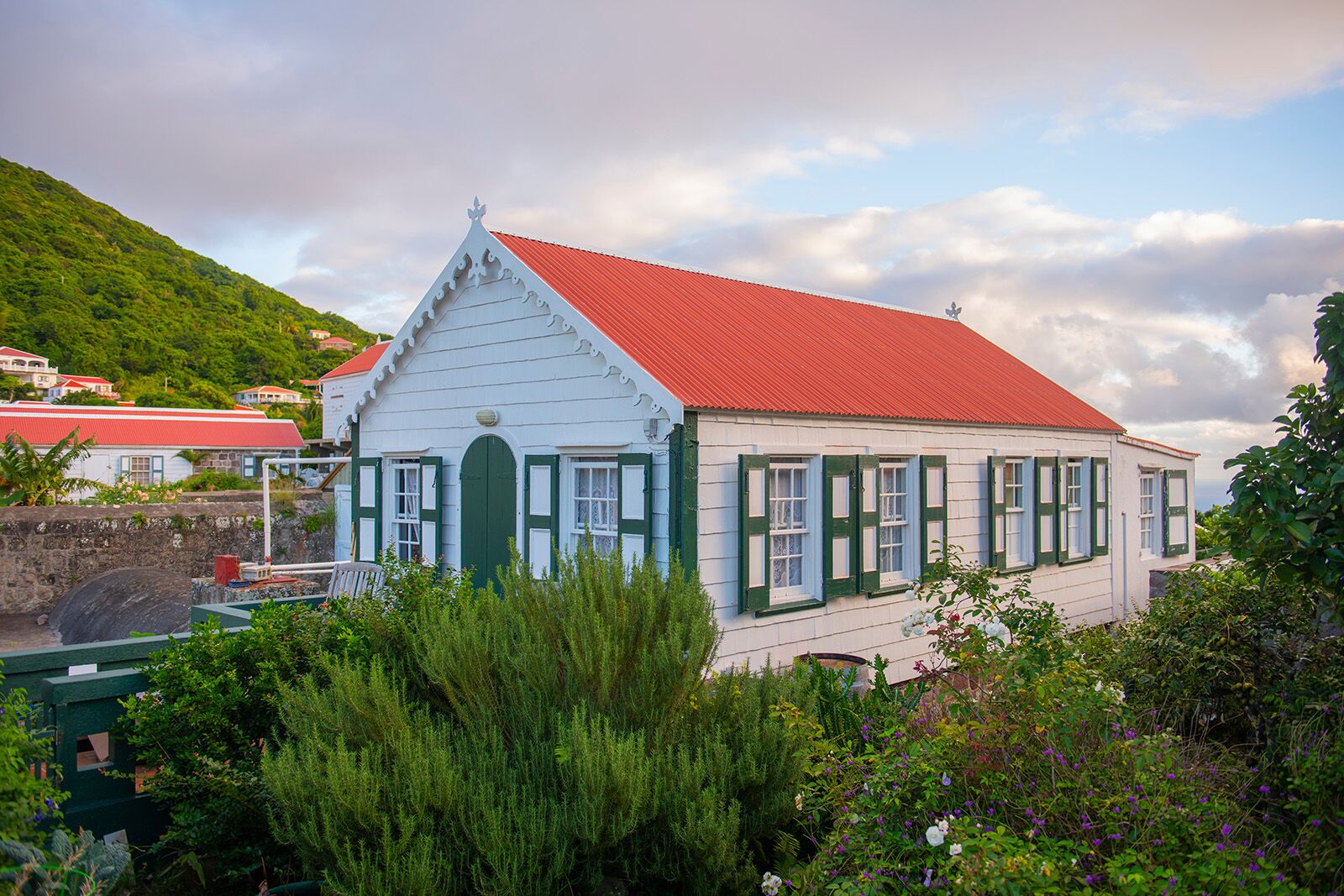
With only five hotels on the entire island, I found myself at Juliana’s Hotel, a family-run property with traditional Saban-style accommodations. The island has a code that dictates nearly every home’s appearance: white walls, red shingled roofs, and shutters painted green and white or red and white, with gingerbread trim finishing off the look. My room, the Lily Pond Cottage, matched the style and was surrounded by lush gardens, lily ponds, and a covered outdoor patio. It starts at $285 per night, while garden rooms start at $205 per night.

Juliana’s on-site restaurant, Tropics Cafe, is just steps away no matter which room you book. It serves fresh, in-house farmed ingredients. The poke bowl and red curry shrimp tasted like they were caught moments before I was served. Elsewhere on the island, Island Paradise Cafe was my go-to for its lineup of flavored matchas, while Colibri Cafe was the spot for craft cocktails amid a rainforest backdrop.

For a full meal, The Hideaway, a local favorite in Windwardside, serves giant portions with no pretense; my pound of mussels, plated with plantain and salad, was enough for the hungriest traveler. Also in Windwardside, Brigadoon, Saba’s longest-running restaurant, blends Continental, Mediterranean, and French influences with a Caribbean edge. The salmon with mango sauce was an instant classic, though the Saban lobster, caught in the protected waters of the Saba Bank, was the clear favorite among my group.

Discover Matador

Save Bookmark

We use cookies for analytics tracking and advertising from our partners.

For more information read our privacy policy.