Previous Next

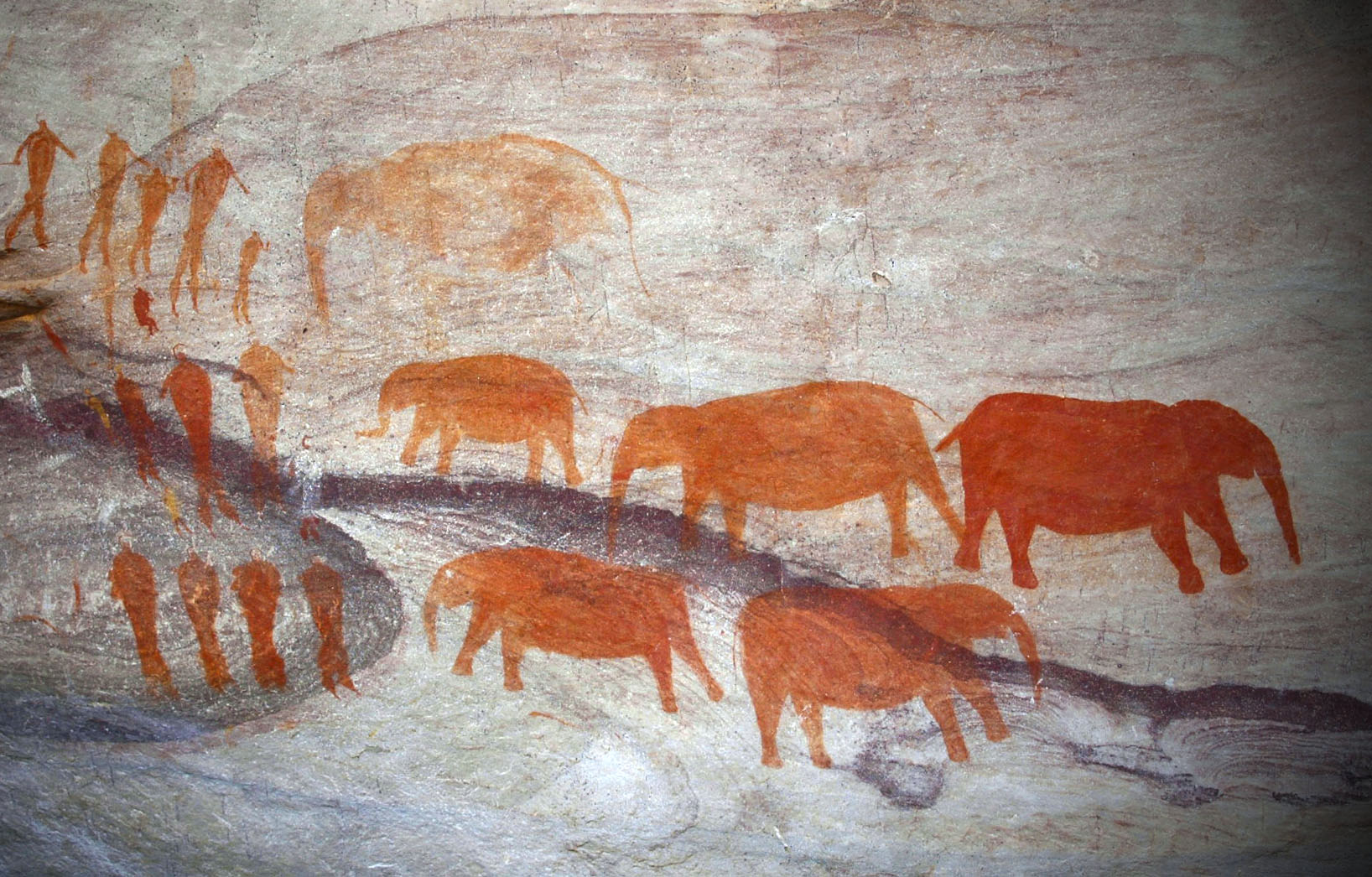
Cave painting by the San people depicting an elephant hunt taken in South Africa

A controversial interview with author and ex-vegan Lierre Keith on how a vegetarian diet is not the answer to save our ailing planet.

ON THE ONE HAND, a locally grown steak, from a cow raised on grass and without hormones. On the other hand, a highly-processed soy burger that was grown somewhere far away, with many ingredients I cannot pronounce.

Up until a few weeks ago, the choice would have been easy. As a vegetarian, the soy burger is the ‘moral’ choice – relying on the least amount of animal suffering, the least amount of carbon/water use, and the best way for me to sleep at night.
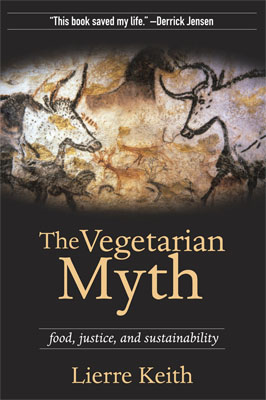
After reading Lierre Keith’s stunning and personal book “The Vegetarian Myth” now I’m not so sure.

I consider myself a fairly well-informed eater. I’ve read the works of food activists Michael Pollan and Jonathan Safran Foer. I’ve seen Food Inc. and watched Gary Yourofsky’s blistering attack on eating meat.

And yet, in her concise and poetic manifesto, ex-vegan Lierre argues that vegetarians and vegans have been led astray. We’ve been told that we can have a “killing-free” existence, and the path is paved with entirely vegetable diets. But herein lies the myth:

The truth is that agriculture is the most destructive thing humans have done to the planet, and more of the same won’t save us. The truth is that agriculture requires the wholesale destruction of entire ecosystems. The truth is also that life isn’t possible without death, that no matter what you eat, someone has to die to feed you.

After reading the book, I had to interview Lierre about it and how we truly come to know our food.

BNT: Why did you feel this book had to be written?

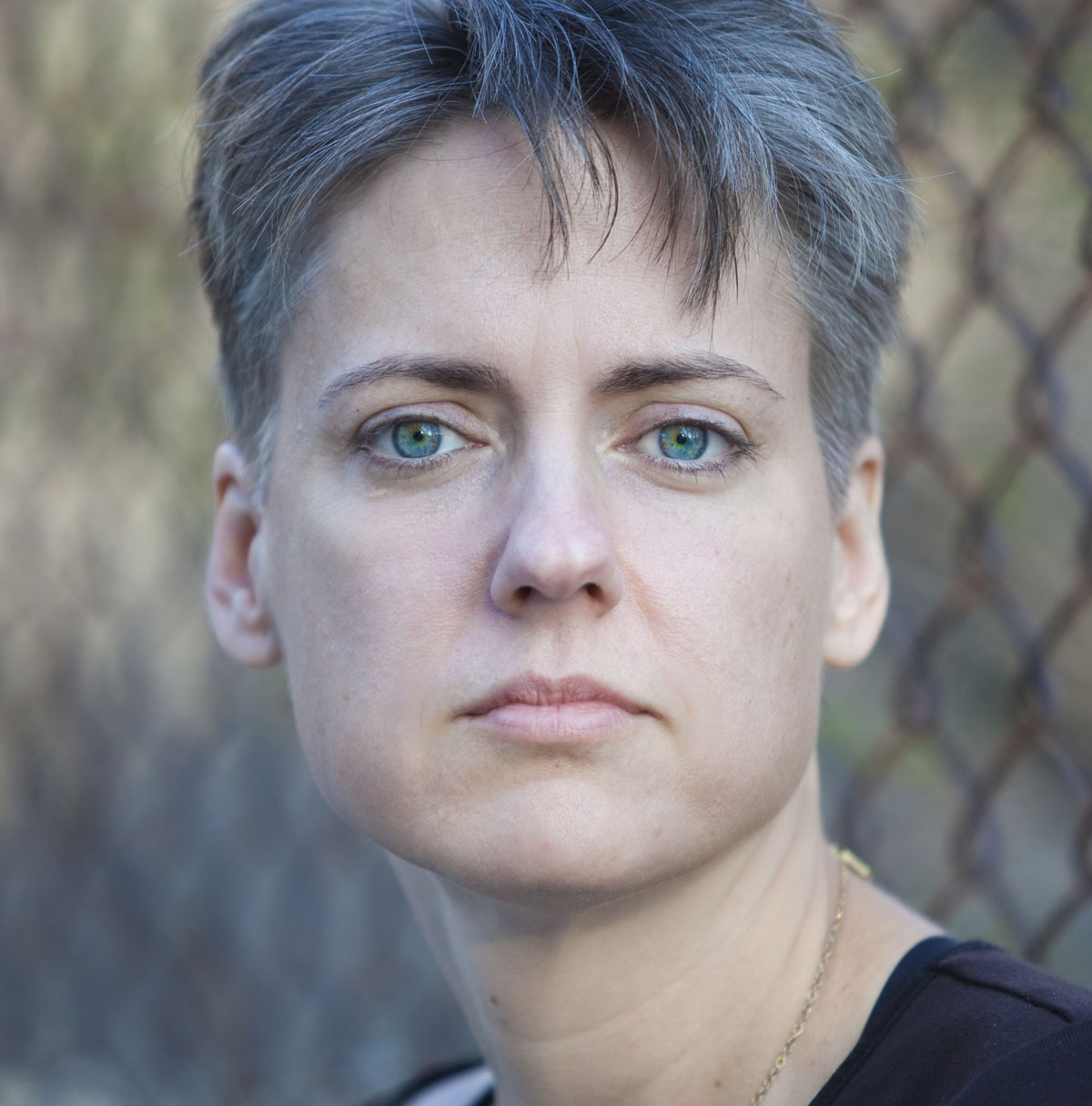
Author Lierre Keith

LIERRE KEITH: The most important reason is that the planet is being destroyed by the social arrangement called civilization. And agriculture is the activity at the base of civilization. Agriculture is, in fact, the most destructive thing that people have done to the planet. Yet the people who should care the most — environmentalists — don’t even identify agriculture as a problem.

And it gets even more bizarre in that it’s those very agricultural foods that are promoted as the way to save the planet. So I wanted to reach the people most impassioned about the state of our planet and try to explain that we have gotten this wrong for a generation. It’s not the values that are wrong, it’s purely informational.

The second reason is that I didn’t want a whole new group of idealistic young people to destroy their health. A vegetarian diet — and especially a vegan diet — does not provide for the long-term maintenance and repair of the human body. So vegetarians are on drawdown of their biological reserves.

Eventually, the rubber hits the road. There is a whole generation of us here who believed in it and tried it until we did permanent damage to our bodies. It was all for nothing. It’s pointless suffering. And I want to stop the young ones from doing the same thing.

BNT: You divide each type of vegetarian/vegan into three camps: the moral, political, and nutritional. Can you (briefly) outline the beliefs of each?

The moral vegetarians believe that it’s possible to eat a diet that includes no animal suffering or animal deaths. The political vegetarians believe that if everyone was a vegetarian, we could feed the world and stop various kinds of environmental destruction. And the nutritional vegetarians think that animal products are the root of all dietary evil and lead to heart disease and cancer.

BNT: I fall into the moral/political vegetarian category – in your book you reveal how this “activism” will not save the world, or produce less animal suffering. Can you explain?

First of all, lifestyle is not politics. The left has completely collapsed into these kinds of lifestyle adjustments, abandoning the concept of organizing to confront power. There are no personal solutions to political problems. Only political movements can confront and dismantle unjust systems of power.

Specifically, agriculture is biotic cleansing. It requires taking over entire living communities and clearing them away, then planting the land for just humans. All of that is a long way of saying “extinction.” None of us can live without a place to live, without habitat. An activity that has destroyed 98% of most animals’ habitat can hardly be claimed to be animal-friendly.

BNT: You write “It’s not killing that’s domination: it’s agriculture.” (p246) and “agriculture is more like a war than anything else…” (p36) Can you explain how agriculture is the true “villain” in our goals toward a more just and sustainable world?

You take a piece of land and you clear every living thing off it–and I mean down to the bacteria. That’s what agriculture is. Richard Manning has this great line, “A wheat field is a clear-cut of the grass forest.” He’s right.

Besides the mass extinction, it’s inherently unsustainable. When you remove the perennial polyculture–the grassland or the forest–the soil is exposed and it dies. It turns to desert ultimately.

Northern Africa once fed the Roman Empire. Iraq was forests so thick that sunlight never touched the ground–no one in their right mind would call it the “Fertile Crescent” now. The dust storms in China are so bad that the soil is literally blowing across the Pacific Ocean and over the continent until it hits the Rocky Mountains, where it’s causing asthma in children in Denver.

The planet has been skinned alive. And the only reason we have not hit complete collapse is because we’ve been eating fossil fuel since 1950. This is not a plan with a future as peak oil is probably behind us and we are on the downside of Hubbert’s curve.

BNT: You write “no one told me that life is only possible through death, that our bodies are a gift from the world, and that our final gift is to feed each other.” (p236) Can you elaborate on this truth, and how we can apply this ethos to our lives and the food we eat?

There is no death-free option. The only options we have are the death that’s a part of the cycle of life and the death that’s destroying the cycle of life. Agriculture is the latter.

If our planet has any hope, it will be because we repair the perennial polycultures–the grasslands, the forests, the wetlands–and take our place once again as participants in those biotic communities, instead of as destroyers of them. That’s what we did for our first four million years–we were participants in living communities. It’s only in the last 10,000 that we’ve become monsters.

BNT: Since your book’s publication in 2009, were you surprised by the reactions from the vegan/vegetarian community?

I was in the vegan world for twenty years, but I did not realize that vegans would stalk, harass, and assault me. I didn’t realize that I was dealing with people who are that cult-like and fundamentalist in their mentality. I can’t speak in public without security now. And they have let me know that they know where I live.

They have, ironically, proved my point about the psychology of veganism better than my words ever could. I don’t give in to bullies, and besides, my planet is at stake. So I’m not going to stop. But there is a very scary psychology running through this community.

BNT: On the other hand, did any unforeseen allies reach out afterward that you didn’t expect?

I get emails every day from ex-vegans, thanking me for saving their lives. That makes it worth it. And I’ve also met farmers who have given up annual monocrops and are restoring their land to prairies and savannahs, in part because of my book. There are birds nesting on those lands that haven’t been seen for over a hundred years. That definitely makes it worth it. I’ll take the hostility of vegans in exchange for a nest of fledglings any day. It’s amazing to think that my work has had that kind of an impact.

BNT: Given the response, is there anything you would have argued differently looking back?

No.

BNT: “In order to save the world we must know it.” (p247) You write that much of the destruction we inflict on the world is a result of our disconnection. How can each of us truly come to know the world?

We have to build relationships with the creatures that make our lives possible and with whom we share this planet. And that’s all of them–the bacteria, the plants, the insects, the birds. Not just the mammals. Everybody else. Animals are only 15% of life.

In a biological sense, this is a planet of bacteria. They are the people doing the basic work of life. They keep the basic cycles going–the carbon cycle, the nitrogen cycle, without which no animals would be here. We need to get profoundly humble before the incredible activities they do that make our lives possible. That humility needs to be the basis of our culture, our religion, our reality.

BNT: You write “If you hear nothing else in this book, hear this: there is no personal solution.” (p264) Also, “the task of an activist is not to negotiate systems of power with as much personal integrity as possible – it’s to dismantle those systems.” (p265) Why do you feel the mainstream emphasizes personal lifestyle choices as the main path to a better future, and why do you believe this path is misleading?

It’s misleading because it’s useless. The mainstream has taken this up because it’s easy. It requires no risk. Direct confrontations with power, on the other hand, require serious courage.

As Frederick Douglass wrote, “Power concedes nothing without a demand. It never did and it never will.” Saving this planet will require a serious resistance movement to industrial capitalism and ultimately to civilization.

BNT: You state in your book that you avoid “easy answers” to complex resistance, but you still offer some basic guidelines. One powerful question you offer is to ask “what grows where you live?” Why is this so important?

I offered those guidelines about what to eat because I knew people would want to know. I did not call them resistance, because they’re not resistance.

The question about “What grows where you live?” is important because to answer it you have to know the place that you live. You also have to know what activities and what actors are destroying it. I would hope that from there, people would be moved to defend their homes.

BNT: Finally, as we move into an uncertain future, you state the importance of “inoculating people against future fascism” (p268) Why do you see this as crucially important?

In times of social collapse, desperate people can do very ugly things. Since the book was released, we’ve seen the rise of the Tea Party movement, who have successfully run candidates for office. The public discourse has turned more and more to violence, Gabby Giffords was shot and others killed.

People are getting desperate in this country as the wealthy have destroyed first the working class, then the middle class. All that’s left are the poor, the old, and the sick, and now the republicans are going after Social Security and Medicaid. Rick Perry is running for president, and he is a Dominionist Christian who truly believes that the United States should be a religious theocracy. We need to get active or we will be living under the christian Taliban.

Grab a copy of Lierre Keith’s book ‘The Vegetarian Myth.”

What do you think of Lierre’s argument? Share your thoughts/reactions to Lierre’s argument.

Sustainability Vegetarian


About The Author

Ian MacKenzie

Ian MacKenzie is the founder and former editor of Brave New Traveler. He is Head of Video at Matador Network. Ian is also an independent filmmaker, with his first feature (One Week Job) released in 2010. His more recent projects include Sacred Economics and Occupy Love.

Archived Responses to Why vegetarianism will not save the world

  1. Lakshmi Nair says:

    I was raised as a Hindu vegetarian and so I might make up a 4th category of vegetarian….cultural/spiritual vegetarian. Though this article probably won’t change my lifestyle habits or spiritual beliefs, I actually see her point. The way we live on the planet today is wrong. It makes me reconsider my traditions which come from one of the first large-scale agricultural civilizations. I’ve always thought that if I were living amongst people where vegetarian food was scarce and respect for life and death were strong, I wouldn’t necessarily hold fast to my vegetarianism. I think true respect for nature trumps the worthy ideal of ahimsa.

    • Amy MacKenzie says:

      Thank you posting that Lakshmi, I really needed to read that now. I am facing a moral dilemma in regards to the food I consume these days and was considering following my daughter’s choice of becoming vegetarian. I have always supported the eating of meat. It was one of the turning points in human evolution, we are who we are because we started eating meat. However we ate lean, naturally fed animals, not the forced corn-fed montrosities we eat today. I ABHOR the pork, cattle, and poultry industries on how they treat these beings and the false food they are feeding us. After reading that article I feel that the best I can do is eat reasonably. (Which is good on so many levels since I am also a food addict, and am finally at healthy weight.) Eat local, naturally, healthily, as much as you can economically. It does cost more to eat better raised food, but the more we do the more it will become norm. The best way to fight these evil conglomerates is via the almighty dollar. Slowly but surely we will get and do what is right.

    • Godan Nambudiripad says:

      We all know we started manipulating the eco-system when we started agriculture. The real solution is to go back to the days before agriculture, shall we?

    • Lakshmi Nair says:

      Godan uncle, I’m not arguing against vegetarianism or veganism at all…given the world we live in today, I still feel like those are some of the best options we have. But I do see her point and I don’t see the kind of meat-eating that exists in tribal cultures to be spiritually inferior to our agrarian vegetarianism…that’s all. Who knows…at some point we may be forced to return to the days before agriculture due to our own ceaseless manipulations of the environment?

  2. Valeria Saavedra says:

    Not an easy debate, but in my opinion both parts have good reasons. Agriculture is destructive, yes, as well as animal farming, both are actually things that have to be changed. As well as veganism is a movement to defeat the exploitation of animals, there are environmental movements to defeat the monocultures and promote better ways of agriculture. I don´t thing there is an ultimate solution no “save the world”, there are a bunch of solutions that together will make a better world. The most important solutions are those implemented by us, consumers. Decide what you buy and eat according to your knowledge and principles, that’s the best you can do.

  3. Jan Steinman says:

    Although I am a lacto-ovo vegetarian, this article resonates with me.

    Self-righteous moral vegans have never watched the vultures and crows following an industrial agriculture combine through a soybean field, feasting on the rodents and snakes killed by the machinery.

    Self-righteous political vegans compare the caloric value of their industrial monoculture crops to industrial meat feedlots, when they should acknowledge that grazed animals in small herds can “gather calories” for us on marginal lands that could not provide any calories otherwise.

    Self-righteous nutritional vegans point out the poor food value of industrially-raised grain-fed beef, while ignoring that ruminants on a natural diet provide superb nutrition in a way that pre-dates conventional agriculture.

    Sense a theme here? It’s industrial food we must do away with, whether meat- or plant-based! And broadly speaking, that includes agriculture as we know it, but not necessarily horticulture and pastoralism.

    A middle path is possible. The Masai consume the milk and blood of their animals without killing them. We use quick rotation with our dairy goats, which provide us with healthy milk, high in Omega-3 fat, which provide us with manure for a limited annual garden and a more extensive polyculture perennial Permaculture garden.

    In a much hotter world, humans may be forced back to pastoralism, herding their animals north and south with the seasons. Alan Savoy thinks this could sequester lots of carbon. It would be ironic if human-induced climate change forced us to be the change-agents of climate un-change!

  4. Maneesh Jain says:

    Beign a vegetatian, vegan, meat- or sea-food eater is a matter of personal choice. However, to give unreasonable, unbalanced and baseless arguments to support one or denounce forms of dietery preferences is both undesirable and unacceptable. Blame it on vegetarians, the vast expanse of cornfields to feed livestock and poultry; the disappearing species of fishes in world oceans; the impact of fishing industry on forest ecosystem. Of course how can we ignore the health benifits of hamburgers and steaks, and thier contribution to human health in form of diabitis and obesity…

    • Rudra Dubey says:

      It’s something like whether early or late riser would change the length of a day; it’s too myopic to look at the balance of nature which is just from the perspective of single habit of one organism. Other than we derive pride in our eating habits, for the confined perspective of human’s sustenance, the natural selection yet to prove which one is better!

    • Rudra Dubey says:

      It’s something like whether early or late riser would change the length of a day; it’s too myopic to look at the balance of nature which is just from the perspective of single habit of one organism. Other than we derive pride in our eating habits, for the confined perspective of human’s sustenance, the natural selection yet to prove which one is better!

  5. Anonymous says:

    Hey Stella,

    Thanks for sharing your views. You said a few things which I’d like to share a different perspective on.

    “Growing crops to feed farmed animals is extremely harmful to the earth. It takes far more intensive  and destructive agriculture to feed and
    house animals for food than to grow vegetables for food.”

    I think this is too simplistic a generalization, in several ways. First, this ignores that the book is arguing against agriculture – in my understanding after having read the book, Lierre argues in favor of perennial polycultures, which include animals. Specifically, the book argues for the native praries to be returned to their original states or as close as possible; with the buffalo being allowed to return to the praries, and the native ecosystems the globe over to be restored to what can be recovered of their original states. This would not require harming the earth to grow crops to feed animals – agriculture; both plant and animal, is harmful. The antidote is to allow nature to function in the way it was meant to.

    “The UN has
    done studies and made reports advocating a vegetarian diet to save our
    planet from destruction. Yes, human civilization in general is very
    destructive to the planet, but letting fields go wild is not going to
    return the earth to a time when everyone hunted and gathered.  There is
    simply not enough arable land to provide habitat to enough animals to
    meet projected meat demands if the world’s population continues to eat a
    meat laden diet.”

    I think the solution to the problem that the earth no longer has enough land to feed its population sustainably and nutritiously are twofold; first – to stop, not reduce or manage, but to stop the destruction of the biosphere and to allow to recovery of global ecosystems to the fullest extent possible. This means re-learning how to live in balance with our own local ecosystems, which requires a healthy functioning ecosystem; and secondly we need to curtail birth rates not by forced sterilization as has sometimes been done by racist and genocidal regimes in the past – but by educating people on birth control methods, educating women in the third world and elsewhere where they don’t yet have access so that they can find and read the information they need to have in order to protect themselves from unwanted pregnancies, and dismantling the oppressive systems of patriarchy, industrialism and capitalism which produce such skyrocketing birth rates amongst a population already too large for the planet it lives on. We can address the population problem humanely, but we cannot just ignore the problem and allow world population to continue to grow exponentially, or no starvation diet is going to save us.
     

    “Perhaps this article has not clearly captured
    Keith’s arguments. I think there is more to what she has to say than
    just, it’s ok to eat meat and not bother being vegetarian, which seems
    to be what people are rightly protesting.  There needs to be a radical
    shift in our perception of animals and all life on earth in order for us
    all to survive. However, until that shift has occurred, and there are
    other moral and ethical choices, it makes sense to practice a vegetarian
    diet.  The more people who respect the animals and earth, the more
    likely such a radical shift in perception will happen.”

    This article has clearly captured some of Lierre’s ideas, but it is after all only an article. The book does present a radical shift in perspective – that agriculture itself is harmful and should be abandoned (that includes growing crops in order to feed them to farmed animals). The radical shift you say we must wait for is what is being presented in the book, but you can only uncover it by taking the time to read the book. The book asks us to strive for the needed radical shift, rather than waiting for it; and the book clearly shows that “that shift has occurred and there are other moral and ethical choices;” and it makes very clear why it is actually nutritionally, environmentally and morally counterproductive to practice an agriculture-reliant vegetarian diet.

    “If people
    take away from her book that’s it’s ok to go to the store and buy their
    plastic wrapped, mass-produced, farmed meat and feel good about being
    part of that process, I think they are missing her point entirely.”

    I agree, but you seem to keep assuming that her ideas are not well-supported, when you clearly have not read her book; like in the next sentence of your post where you say:

    “The
    fact of the matter is almost all of our meat currently falls into that
    category. Even if one eats organically grown, “ethical” meat, it still
    takes a lot more agricultural energy than a vegetarian diet.”

    But in my understanding the book argues for grass fed, pastured, free range, and ultimately bringing back wild meat on fully (or as close as possible) regenerated native ecosystems. “The fact of the matter” it is very clear that you haven’t read the book, as the book makes clear the types of meat which are “ethical” and why, and meat which is merely “organically grown” does not even come close to qualifying as “ethically raised” in the author’s perspective. Lierre states clearly that ruminants (not necessarily cattle) must be allowed to eat native grasses, which does not kill the grass but in fact makes the grass stronger. This does not require agriculture; it requires allowing nature to recover from the vicious onslaught of industrialism and agriculture which have reduced the total amount of “arable” (by which I imagine you meant fertile) ground while causing an explosion in world human population while simultaneously causing the greatest mass extinction in the history of the planet.

    “I also
    don’t think it’s practical or completely ethical for everyone to eat
    wild meat. Insects may offer somewhat more morally acceptable “animal
    source” protein, but I don’t think people are going to be keen to make
    that switch too soon. So, it is irresponsible of the author to sing the
    virtues of meat eating when she is saying that if the world was a
    different place, it wouldn’t be a problem.  Unfortunately, the world is
    what it is right now, and it needs to change dramatically.  The best way
    to achieve the needed changes would seem to be vegetarianism/veganism.”

    No, it is irresponsible to assume that you understand what the author of the book has to say in her book without reading the book, and it is irresponsible to assume that just because people aren’t going to be “keen” on making a switch to making a necessary change means that someone arguing for the necessary change is irresponsible. The best way to achieve the needed changes would not seem to be vegetarianism or veganism, and the reasons for this can be found in the pages of Lierre’s book, which you really should read before criticizing Lierre’s vision which she has been kind enough to share and you haven’t been kind enough to take into consideration before criticizing it.

    “Regarding
    the health matters, I have yet to find any reputable studies showing
    that meat is needed to maintain long term health and have seen many
    other studies showing the health benefits of vegan and vegetarian diets.”

    Oh, I think I can help you out there as well. In Lierre’s book, should you ever care to read it, you will find plenty of studies referenced in the bibliography. You can also visit the Weston A. Price Foundation, they have tons of information about the health problems arising from grain and carbohydrate-based diets, as well as lots of information about the essential role of animal fats in nutrition.

Miller, who launched the America's Most Literate Cities study in 2003, examines six...
Expats looking for some action this Canada Day, check out our guide to events around the...
While the hot springs exist in such a marked variety of environments, hot spring culture...
Go from city to town to village and find yourself a lover to enjoy it with. Do the love...
Though graffiti purists may call out legal graffiti as not real tagging, the luxury of...
Wanna get high? Matt Scott gives the goods on some dope spots.
A mission to the big waves and stoked community of the Ottawa River Valley.
Eagles emerge from the fog. Some are old, some new with brightly coloured wings.
We’re going to the Duke of Duckworth for some fish ‘n chips, because you can’t...
You can easily tour the main sights in Quebec City by bike.
The beverage should not even be called coffee.
Mixed vegetables with cow snout, smothered in black shrimp paste.