Previous Next

Photo by the author

Before you run off to do good, it’s worth stopping to consider some ethical basics.

NOBODY DECIDES to travel halfway around the world to spend weeks or months of their life undermining a local community. But voluntourism – like that famous quote about the paving on the road to hell – often comes close. The debate about the practice, like most things in life, is far more ethically nuanced than many organisations facilitating such experiences often let on.

Voluntourism has gained an appeal amongst travelers with a wide range of motivations, time, and skills, from volunteers in organised groups such as the Kiva Fellows to handfuls of backpackers stopping off for a week in Siem Reap. The appeal of wanting to get involved in ‘making things better’ for local groups, orphanages, schools or other projects is the glue that holds many different strains of voluntourism together. And the ground on which fierce debates have raged for a few years already on whether particular flavours of voluntourism are helpful, ethically bankrupt, or simply benign.

If you are intending to do some good on your next journey abroad, you have a responsibility to be aware of some of the practical and ethical questions that you are likely to confront on the way. Although, in the end, how and where you decide to volunteer is ultimately going to be up to you, if you have some degree of dedication to the idea of doing good (you are volunteering after all), then these questions matter.

Let’s start from the top. I want to volunteer at an orphanage…
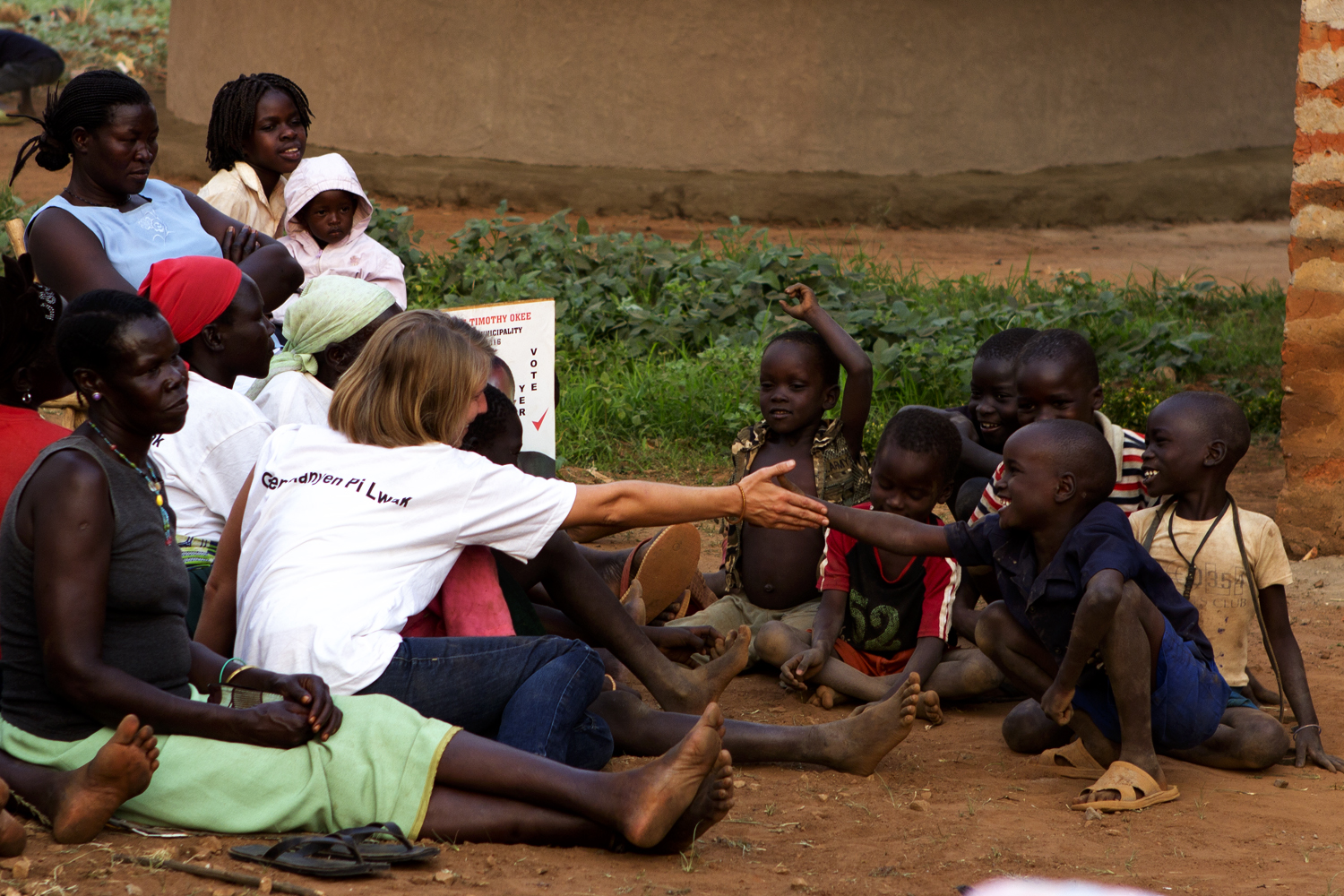
If your prospective NGO/local partner tells you about going to an orphanage and hugging/playing/otherwise interacting with local children, walk away. Orphanage love programs, while fantastic for pulling at the heart strings of travelers, positively overflow with ethical and practical problems.

In the first instance – and particularly in areas of extreme poverty – foreigners paying money either to operators or to orphanages directly for the privilege of interacting actually serves to create a market for orphans. Yes, that’s right. It can incentivize places to find orphans purely for the purpose of leeching dollars from gullible folk who feel they are helping to fix the facilities/feed the children/do general good.

Orphanage love programs, while fantastic for pulling at the heart strings of travelers, positively overflow with ethical and practical problems.

By way of example, Siem Reap in Cambodia was briefly exposed not too long ago for having orphanages that were actually full of children with real parents. It was cost effective for orphanage-pimps to rent them off their parents for the day so that they could play or perform for gullible tourists for a healthy profit in donations. A quick google search for ‘siem riep orphanage volunteer’ on Google suggests that this sordid market remains well-supplied with the cash of well-intentioned travelers.

Research on fraudulent orphanages (yes, it’s enough of a problem to be researched) suggests that pretty much anywhere that appears to have a proliferation of orphanages should be treated with more than a little suspicion. After the tsunami in Aceh, for example, only 60 in 6,000 – 10,000 minors was found to be truly orphaned (in the sense that they had no close family to foster them and were genuinely in need of institutional care).

None of this is to say that orphans don’t exist, or are rarer than unicorns. It does mean that when arriving in a tourist hotspot and being offered the chance to ‘assist’ at one of a handful (or more) of orphanages, you should be a little cynical.

“OK”, you might ask, “but if an orphanage was legitimate, surely helping out there would be a good idea?”

Sadly, and again according to research, the answer is no. It is emphatically no. And it is ‘no’ for at least two very good reasons.

Firstly, for children growing up in an institutionalized, orphanage-type setting, it is of the utmost importance that children be able to develop a stable, long term attachment to their caregivers. Allowing troops of travelers to come in and hug, play and laugh with the kids every few weeks has precisely the opposite effect. Just as it was useful for you as a child to develop long term, stable bonds with the people who cared for you, so it is important for those children. To take part in orphanage volunteering is to take part in a cycle of creating and abandoning relationships that helps nobody emotionally except you.

Secondly, unless the agency you are volunteering with has done background checks on the lot of you, they are being superbly irresponsible in allowing you carte blanche to enter the institution and interact with the kids. No sane orphanage that has the interests of its children at heart would allow hundreds of complete strangers to play with their children each year. Any that does is failing in their duty of care and should not have you as an accomplice in doing so.

These are just the ethical objections to orphanages, mind you. But it should serve to raise questions that may apply to wider sets of projects regarding children.

OK, so no orphanages. What about a building project in…
Building projects, whether helping to paint murals or erect whole structures in places such as Peru may not be quite as obviously fraught with problems as orphanages, but nevertheless deserve a pause and reflection on your part as participant.

It’s useful, for example, to take a look at how the project is structured. Who are you working with? How are you working with them? Is it part of a larger plan?

spending a hundred dollars in an impoverished community painting the inside of a school is never developmental, no matter what the voluntourism coordinator told you.

While NGOs exist that have an exceptional track record of building useful, useable structures, there are equally as many fly by night operations more concerned with giving you something to do than with actually helping a community. A more ethical project will likely have chosen what it is that they will be working on after consultations with the community they are working in, and it will form part of a larger project plan. A one-library project, while satisfying for those who volunteer to build it, is not development if done in isolation. Equally, spending a hundred dollars in an impoverished community painting the inside of a school is never developmental, no matter what the voluntourism coordinator told you.

Check that your partner NGO, or their partner, has a development plan for the community. One in which the work you will be doing is a meaningful contribution. And check that the long term plan that they have for a community’s development sounds legit. Lots of talk about rebuilding community spirit probably means that there isn’t one. A long term plan centered on water and sanitation, housing and infrastructure probably means that someone has put a great deal more thought into it.

It can be as simple as contacting your prospective voluntourism organisation and asking them how they choose their projects and what their overall plan is for the communities they deal with. Or hop onto Google and check them out. If they have been around for a while, odds are good that somewhere, someone has blogged, reviewed or otherwise talked about them. Finding such feedback from previous participants can give you an excellent outline of whether they are a responsibly-run group doing the kind of work that you are interested in doing.

Follow the money. The ethics of the economics
Also worth considering are the economic consequences of your volunteering. At the most basic level, interrogate the operator about how much of the cash you might be paying to volunteer is actually going to the community. You might be impressed or disgusted with the answer. If they can’t tell you, then they are either hiding something or they don’t know. Either way, it makes them a poor choice of local partner.

Beyond questions of how much money though, are questions of where the money is being spent. If you are working on a building project, how much of the materials were bought from local businesses? Development starts with supporting what services and materials the community can provide already, not destroying local initiative by bringing in tools, materials and skills from outside that are currently available in the local economy.

Odds are good, for example, that basic building supplies exist for sale in the area, and that there are people already skilled in masonry and other artisinal practices nearby. Where situations like this exist, your participation as a (probably) unskilled participant might be best directed at doing work that will allow local community members to practice their professions in a paid capacity onsite. Such approaches promote employment, get things built faster, and support the local economy.

Development starts with supporting what services and materials the community can provide already, not destroying local initiative by bringing in tools, materials and skills that are currently available.

Unfortunately, such projects typically mean that you will find yourself a manual labourer working under a local foreman. Which might not be what you bargained for. As Alexia Nestoria, a voluntourism industry consultant and the voice behind the Voluntourism Gal blog points out, an overwhelming proportion of volunteer projects don’t actually need volunteers to do the work that they are volunteering to do. Not only are there often local people willing and able to undertake the projects, but the time required to actually train and monitor unskilled well-wishers often detracts from effort that communities could otherwise put into just getting on with implementing projects themselves.

The reason for taking volunteers on despite their relative inefficiency is generally because those volunteers are funding the projects. Volunteers are seldom willing to send their cash, but stay at home themselves. Even when it would be a more rational and efficient approach.

So the question that you need to then ask yourself is:

Why am I doing this?
If you are purely interested in doing good, to the exclusion of all other aims, then simply donating your volunteering money to a decent and efficient local organisation may well achieve those aims best.

But simply wanting to do good in the abstract is seldom the motivation for those who travel to volunteer. Many would-be voluntourists have a desire to be a physical part of the project and to have a hand in making the world – quite literally – a better place. Here, a voluntourist needs to make some practical decisions about where their assistance will be most helpful (or minimally troublesome) for a community.

If you have particular specialist skills that are not easily available locally, then consider partnering with organisations that can use those skills. Sure, making a website for a local NGO may not be as sexy as getting your hands dirty building a school, but other people may be able to build walls. Not everyone can set up a decent website, and that makes your contribution necessary and valuable in a way that your grunt labour isn’t.

…and who am I doing this for?
No good volunteerism project works by making heroes out of foreigners in the local community – it’s about working with local groups to achieve development aims as directly and usefully as possible. If that means that you aren’t the top dog on the building site, and the local guy who actually knows how mortar and bricks go together is, then so be it.

Putting the power of the free market to efficiently satisfy demands together with narcissistic fantasies of helping the impoverished is a recipe for disaster.

That said, there is a school of thought that says that voluntourism should be approached from the point of view of the customer. That people want to feel good about themselves, and that should be catered to as much as possible because the free market will work to weed out the poor projects from the good (watch the first few minutes of this conference, for example) and a growth in good volunteer-centered projects will ensue.

The danger here however, is that the kind of voluntourism project that appeals to a naive traveler’s ego is precisely the project that is unlikely to be developmentally helpful to communities. Projects that are primarily about you as the participant tend to be short lived, low-effort and frequently without a long term goal – since the ‘goal’ is not developmental at all. It’s about making you feel good. Putting the power of the free market to efficiently satisfy demands together with narcissistic fantasies of helping the impoverished is a recipe for disaster.

Oh god. Can I do no right?!
You can. And there are many reasons that you should. But it’s important to pay attention to the fine detail. Questions about where the money goes and the intricacies of your relationship to the community you serve are absolutely fundamental to directing your energies wisely. If you are taking the trouble to go out of your comfort zone to make life better for others, the least you can do is your homework, and to be aware of the complexity of the questions you need to ask.

Voluntourism wouldn’t exist as an industry if travelers were happy to efficiently donate money for local organisations to do the work themselves. For better or worse, many folk want to have a hand in the process of helping communities. That desire can be a useful (or at least benign) learning experience, or it can be wholly unhelpful. To what degree your next journey to volunteer abroad will be one or the other depends a great deal on how you are able to honestly confront some difficult questions about why you are going, who you are going for, and whether you are participating in a project that – in the fine detail – is going to be a force for good.

You may find yourself surprised at how quickly the most straightforward school-building project can become an exercise in self-analysis. It’s uncomfortable, but it’s also absolutely necessary.

Volunteer Guides


About The Author

Richard Stupart

Richard lives and works in South Africa, exploring as often as possible the strange and unknown places that his continent is so rich in. What stories of far flung places and mischief he is able to trap and bring home are mounted on his blog. Where the Road Goes.

Archived Responses to Why you shouldn’t participate in voluntourism

  1. good article. Yes it’s frustrating when ‘voluntourism’ doesn’t lead to sustainable development. I would change the headline to: ‘Why you should do you research before participating in voluntourism.’

    In my 12 years experience working between community tourism (you’re on holiday and can see how you’re money is spent responsibly and learn and share new skills) and voluntourism (you’re here to work and make a positive impact) the big difference is EXPECTATION – both for the volunteer/tourist and community/local NGO. 

    When expectations and experience are not balanced the outcome is not sustainable development – and far too often wasted time and money, and in the worst cases – exploitation. When expectations are balanced with experiences on both sides – the outcome is usually positive for all involved. 

    I set-up @tribewanted:disqus  to focus on how community tourism in a few locations over a period of time  that can deliver sustainable development (as well as meaingful experiences). 6 years later it’s something I feel the effort has been worthwhile for and it’s important this happens not just in the ‘developing world’ to make sure experiential impact spreads. 

    For voluntourism I support @fairtradev:twitter a new start-up campaign to showcase volunteer orgs that get it right. 

  2. Daniel Quilter says:

    This a good article but as many have said ‘one should balance the argument’. After I founded Ecoteer.com I have found hundreds of good NGO’s around the world that have a good plan in place and want volunteers to help in terms of labour and funds.

    In general if you want to go for a short term volunteering programme you must be well managed whilst on the project and help with jobs that most people can do ie beach cleans, turtle watching, cleaning cages, help with classes BUT NOT LEAD THEM. If you want to do a teaching role then you should stay for at least 1 month at the VERY least.

    We have had volunteers help with beach cleans everyday and the cumulative effect of all these volunteers is the removal of thousands of cig butts and plastic bottles from the beaches in Malaysia, they have also clocked up over 2000 hours of turtle watch hours which has helped to almost 100% eliminate turtle egg poaching on our beach in Malaysia. This would not be possible without volunteers as the project doesn’t have funding from the government.

  3. A World to Travel says:

    Controversial but def worth reading.

  4. C.R.E.E.R says:

    Excellent piece, thank you!

    We’re hoping to have C.R.E.E.R built at the beginning of 2014 & had many people asking if we’ll take volunteers. We’re not creating a zoo but a residential vocational centre for trafficked children & our standpoint always has been generally ‘anti’ voluntourism.

    However, we are looking to take ‘experts’ in certain fields & will ask for a 3 month period to stay on site with a minimal charge for food & a deposit taken to ensure they stay on site to work with us. We hope this will work well for both the volunteer & in regards to the children’s pyschological situation.

    We will be in need of experts and as most NGO’s – we’re not a bank & can’t necessarily afford them! Time will tell if this is a viable option but some stories we’ve read makes us very aware of what can go badly wrong!

  5. Daniela, that looks like a very worthy project, but I am currently based in West Africa. One aspect of my work is that I visit the projects and showcase them on my blog with first person documentation through media and words. Someone you might want to get in touch with, though, is Rizwan Tayabali. He does pro bono consultation work for organizations like that and I believe he is currently in Malaysia, but he gets around. You can read more about him here: http://social-explorer.blogspot.com/ 

    Richard, yes! And also organizations that are framed less as someone helping another, and more as a partnership with mutual interests – this is ideal. if you want to check out the project, you can go here: http://howtodrawcamels.com/ 

  6. Richard says:

    Totally agree – that exoticism point is really important to many people’s ideas of voluntourism. It should really be called out for what it is. It would be fascinating to examine the extent to which people volunteer in many countries with a real commitment to learning, vs wanting to recreate the stereotypes they expected before they left.

  7. Mary Taylor says:

    Oh there is plenty of satire on people wanting to recreate the stereotypes, like in Stuff White People Like or http://gurlgoestoafrica.tumblr.com/. Or guy in my training group (who eventually got kicked out for spending more time smoking ganja than teaching) who got up an apologized on behalf of all white people to a panel discussion about the legacy of European colonialism in Latin America. 

    The stereotypes are bi-directional, as one of the issues Peace Corps volunteers who are African-American, Chicano/Latino/Hispanic, and Asian-American sometimes run into are people thinking they aren’t a representative of the organization because they aren’t white. 

  8. Anonymous says:

    Thanks Marianne – and yeah, it’s a problem made worse when it becomes OK to settle on creating ‘volunteer-oriented’ projects and an entire industry around it. 

  9. Anonymous says:

    Jupiter’s Travels arrived in the post today – I’m looking forward to reading it :)

  10. Anonymous says:

    Let me know what you think! I am a slow reader owing to my penchant for
    simultaneously reading 5 books at once – you may finish it before me :)

  11. Anonymous says:

    Awesome – thanks for the link Ken! I’ve been wondering lately about that tension between giving yourself warm fuzzies and doing what is rationally best. Neither staying at home and sending your money to a wel-researched charity, nor painting walls that achieves nothing seems ideal. But where in the ground between those poles best practice lies is a really, really tough question.

Leaping headlong into South America to begin a year of volunteering can seem daunting....
Hal Amen identifies 5 reasons why taking a break isn't such a bad idea.
If you enter into the volunteer experience with unrealistic expectations, says seasoned...
Get tips from a former Peace Corps volunteer about making the most of the "toughest job...
"In Pakistan, you will not find short-term volunteer opportunities that cater to the...
Jacqui Bryant rounds up volunteering opportunities in Boston.
Thinking of joining the Peace Corps? Think harder.
Guide book author Jantra Jacobs presents volunteer opportunities in Chiang Mai, Thailand.
Volunteering for relief work? Here are some considerations.
Graham volunteers for a month with Education For The Children at their school in...
It's hard to not want to join the ranks of the rock-star volunteer.
How do you find a sponsoring organization? How do you choose an opportunity? Read on....
How culinary professionals are immersed in volunteer projects with local communities.