All photos by Ian MacKenzie

Thinking of heading to Colombia’s Caribbean coast for the rip-roaring Carnaval? Read this handy first timer’s guide to prepare for the party.

You can’t escape the beat. It permeates every street corner, every shop, and every footstep.

From the taxi drivers tapping their fingers on the steering wheel as they weave through traffic, to the hotel clerks salsa-stepping as they transport bags for the tourists – the silent music hums just beneath the surface of Barranquilla, Colombia.
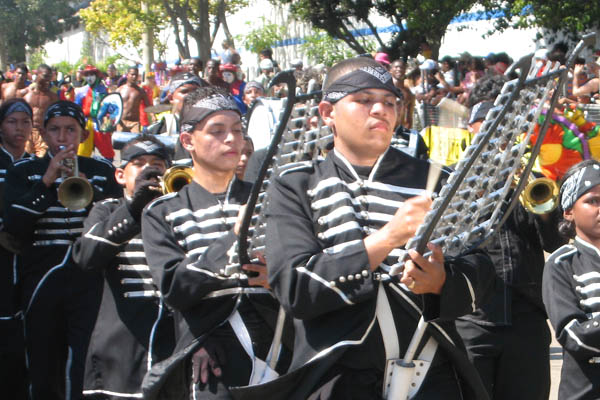
This modern city sprawls along the delta of the Magdalena River, a few miles shy of the Caribbean coast. Renowned as an industrial giant, Colombia’s fourth largest city is also home of the Carnaval de Barranquilla, a four day festival second only to Rio’s legendary bash of the same name.

I’d come to the Carnaval with little knowledge of what to expect.

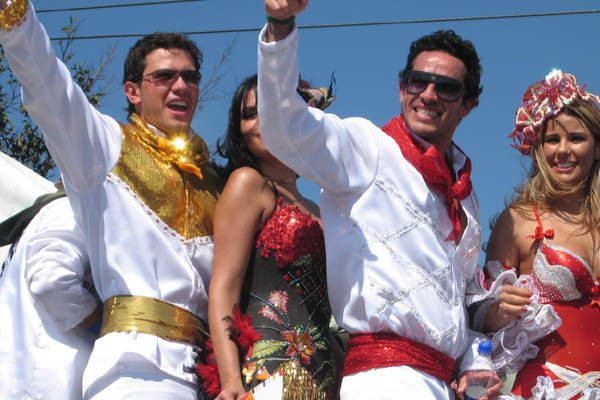
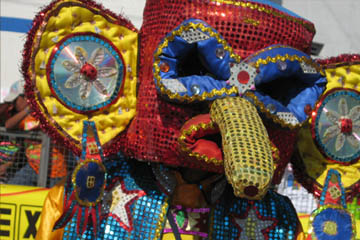
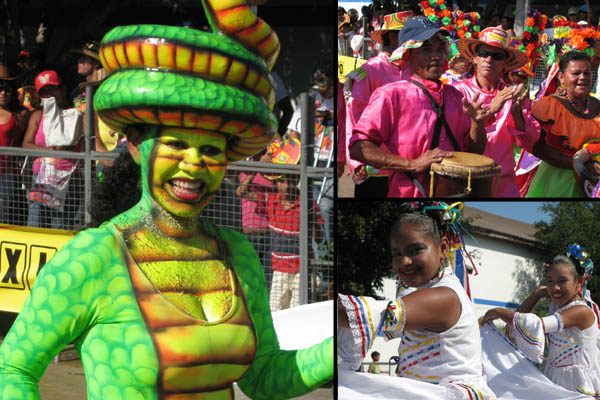
The rumours spoke of colourful costumes, hip-shaking music, and scantily clad dancers, along with unrivaled partying, fueled by good vibrations and litres of free flowing rum. But I quickly found the festival isn’t just an excuse to drink booze and “foam” unsuspecting strangers in the crowd.

There’s a spiritual and cultural dimension as well.

History of the Carnaval

Held four days before Ash Wednesday, the Carnaval is the last opportunity for the predominantly Catholic population to indulge before Lent. While the exact date of the first festival is unknown, many believe the traditional started as early as 1888.

Perhaps even more significant, the Carnaval de Barranquilla is a celebration of the three cultures that dominate the Colombian coast: Spanish, Native, and African.

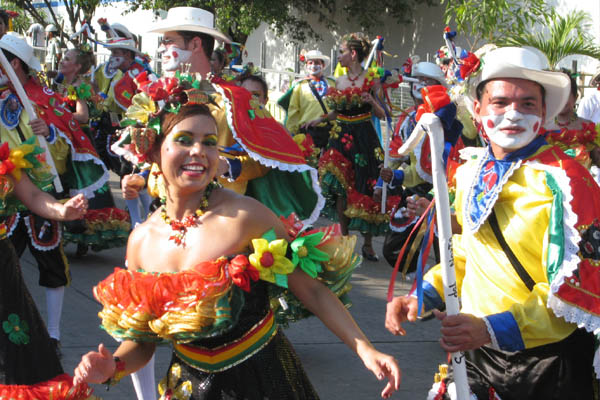
Each group participates in the festival through traditional song, lavish dancing, and intricate costumes. In 2003, UNESCO honoured the Carnaval by adding it to the ranks of Masterpieces of the Oral and Intangible Heritage of Humanity.

Interested in joining the throngs of revelers yourself? Read on for the definitive first timer’s guide to the Barranquilla Carnaval.

How To Get There

While it’s possible to fly directly to Barranquilla from a few destinations outside Colombia, it’s more likely you’ll arrive via Bogota. Avianca airlines offers relatively cheap flights from the capital. Or for the more adventurous, the bus is a much cheaper alternative.

What To Bring

Barranquilla’s weather is hot and humid. Unfortunately the main parade route offers little shade unless you buy your way into a private section. Either way, make sure you bring a hat, or buy a traditional sombrero vueltiao (twisted hat) from the numerous vendors roaming the grounds.

Where To Get Tickets

The main parades are held on Via 40, a relatively bland avenue that is unfortunately the only place in the city to accommodate the estimated 550,000 paraders that dance, jig, twitch, and sashay their way past thousands of viewers crowding the edges of the route.

The route is broken up into sections, each rented out by different companies and hotels. This means you generally need a ticket to score a good seat for the action.

Theoretically, you could just show up and fight with the masses for the few available “public” areas – but be prepared for a battle.

The Main Events

Outlined below are the main events of the Carnaval.

Keep in mind these are only a small portion of the entire festival – in the weeks leading up to the show, the entire city is awash with mini parades, concerts, and impromptu dance parties. No matter where you are in the city, chances are you’ll find a crowd having a good time.

Day 1: La Batalla de Flores (The Battle of Flowers)

This is the big show. Thousands of participants kick off the Carnaval with a bang, interspersed with massive floats hooked to ear-splitting sound systems. Musicians, dancers, costumes, and (some say unfortunately) corporate sponsors are on display, rousing the crowd and pushing the party to new heights.

Day 2: La Gran Parada

Slightly toned down from the first day, La Gran Parada is dedicated to the dancers. Scores of troupes perform traditional dances like cumbia, congo, and paloteo, competing against each other for the coveted prize of gaining the honour of performing in La Batalla de Flores the following year. Costumes and musicians also abound, with the floats noticeably absent from the previous day.

Day 3: El Festival de Orquestas

A cacophony of Caribbean music groups. El Festival de Orquestas showcases the variety of musical influences that make up Colombia’s coast – all guaranteed to keep your feet moving and hips swinging.

Day 4: Joselito se va con las cenizas

The end of the Carnaval is symbolically closed with the “death of Joselito.” Numerous groups of participants pick a person to play dead, while the rest of them wail and weep down the parade route. Like all good things, even the partying must come to an end.

Chances are, you’ll want to find a nice quiet chill out spot to recover from the festivities. I suggest the idyllic fishing village of Taganga, only 4 hours away by bus.

For more information on the Carnaval:

About The Author

Ian MacKenzie

Ian MacKenzie is the founder and former editor of Brave New Traveler. He is a now a contributing editor to Matador, and the network's architect. Ian is also a documentary filmmaker, with his first feature (One Week Job) released in 2010.

  • Tim Patterson

    Sounds awesome. Here's a link to show your friends and parents who think Colombia is dangerous….it's not. ” target=”_blank”>http://thetravelersnotebook.com/destination-guide…

  • http://www.gobackpacking.com/Blog Dave

    I was there for the 2009 Carnaval and was rather clueless upon arrival as well. I stayed at Hotel Olimpico which was referenced on the Wiki page for Barranquilla. I met a bunch of backpackers there and we hit the parade route.

    My favorite experience was the second night, all of us following a friendly Colombian guy acting as our tour guide. We couldn’t find a club, but we did find a house party….which was really in the street. We crashed it and they welcomed us with open arms. There we are – dancing and drinking and laughing with the Colombians in some random city barrio. It was not a moment I take for granted, and far better than some crowded club.

    Oh, and they were sure to spray us with foam and whack us with talcom powder too!

    I wrote about it and posted some of the messy photos on my blog:

    http://www.gobackpacking.com/Blog/2009/03/11/carnaval-day-2-dancing-in-the-streets/

  • http://MaxTheITpro.com Maxwell

    Carnivals are such fun!! Toronto has the annual Caribana around August that takes over the entire city bringing in tourists from everywhere. We have a pretty good one in Barbados (CropOver) and it’s a blast too.
    It’d be nice to bring that carnival atmosphere here to Kenya. Heck, East Africa.

    Thanks for posting.

  • http://www.travelcolombia.org Adriana Campbell

    Great info, slowly but surely people are learning about traveling to Colomiba and South America. The photos and the internet are wonderfull, along with the thousands of blogs with first hand experience. Open your mind, Colombia is the fastest rising on the tourism scene. its a hidden gem!

  • http://MaxTheITpro.com Max – The IT pro

    Me thinks Colombia might be stealing all of Mexico’s skeerd tourists. lol! :-) Cancun has gone to the pits thanks to those damn drug cartels and the ensuing violence.

  • Angela C

    I am soo excited I want to go there next year, but does anyone know which is the best hotel to stay at? as in the closest to the parades?? and how do you but a tickeck or a private section? i hope its not too expensive :D

Culture and Art Festivals →

The stampede of hooves and sprinting feet were making the cheers inaudible. I’m going...

Culture and Art Festivals →

The 4th of July and New Year's Eve aren't the only times to see great fireworks shows.

Culture and Art Festivals →

As a first timer, I was unprepared for the creative chaos I witnessed.

Culture and Art Festivals →

In Transit's Peter Bragiel finds himself in Mazatlan during Carnival and is swept up into...

Culture and Art Festivals →

Rio's not the only Carnival in Brazil, and for many Brazilians it's not even the most...

Drink →

Sedilo is a characteristic farmer’s hamlet, quiet except during the three days devoted...

Culture + Religion →

Second only to Rio Carnival, Brazil's Boi Bumbá festival is an exercise in trippy...

Culture and Art Festivals →

The talent that comes as a result is on the edge of something - we won't know of what...

Culture and Art Festivals →

Hot air ballooning is a literal interpretation of the traveler's creed "go where the wind...

Culture and Art Festivals →

From Colombia and Bolivia to the home base, Brazil, we’ve been bringing you some...

Culture and Art Festivals →

Oruro, a tiny town the other 50 weeks of the year, draws crowds from Bolivia and beyond...

Beer →

Everything from tent selection, where to go and stay, plus key Oktoberfest phraseology.