Everyone enjoys music festivals , New Year’s Eve celebrations, and traditional parades, but there’s one problem with those traditional events — you don’t get to throw stuff at people. Sure, you can throw beads during Mardi Gras, but that’s nothing compared to the unbridled mayhem of the festivals where the whole point is to pelt fellow participants with a variety of messy substances. From a food fight with oranges in Italy to tomatoes in Spain, here are seven of the most outrageous festivals around the world where people throw things at each other.
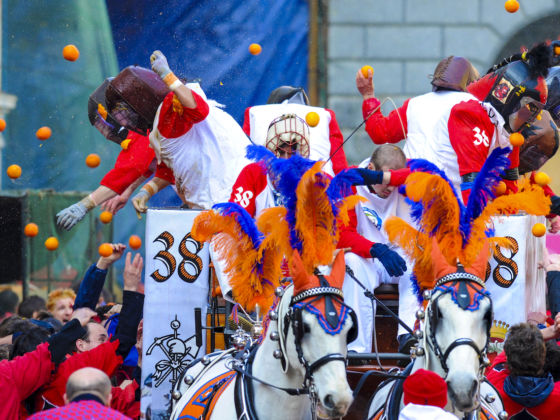
Photo: Paolo Bona/Shutterstock
The World's Best Festivals for Throwing Things at People
La Tomatina — Buñol, Spain
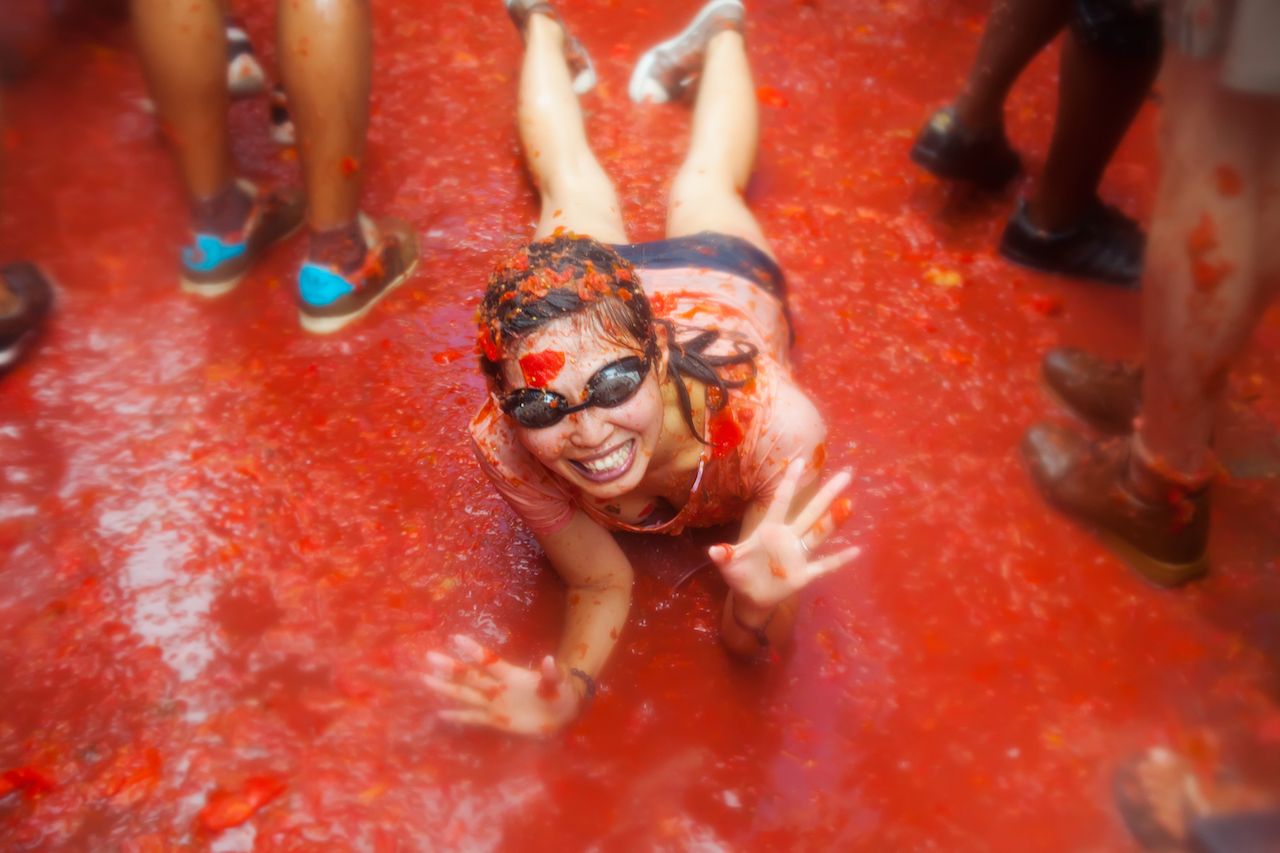
Photo: Iakov Filimonov/Shutterstock
Every year on the last Wednesday in August, 20,000 people gather in the town of Buñol, about 25 miles inland from Valencia to throw squashed tomatoes at each other. Most accounts trace the origin to 1945, when a group of local youths disrupted a parade in Buñol’s town square — though, as with most origin stories born from a spontaneous brawl, the exact details remain contested. What we know is that it’s one of the most fun celebrations anywhere in the world, but if the festival itself is not enough excitement for you, there’s also parties at a nearby club before and after the event. Entry is ticketed and capped at 20,000 people — down from the 50,000 who once crammed into the same streets — so book well in advance. Basic entry costs around $16 and goes on sale on the official festival site in January or February; in recent years everything has sold out by May. The majority of visitors base themselves in Valencia and make a day trip of it.
Songkran Festival — Thailand
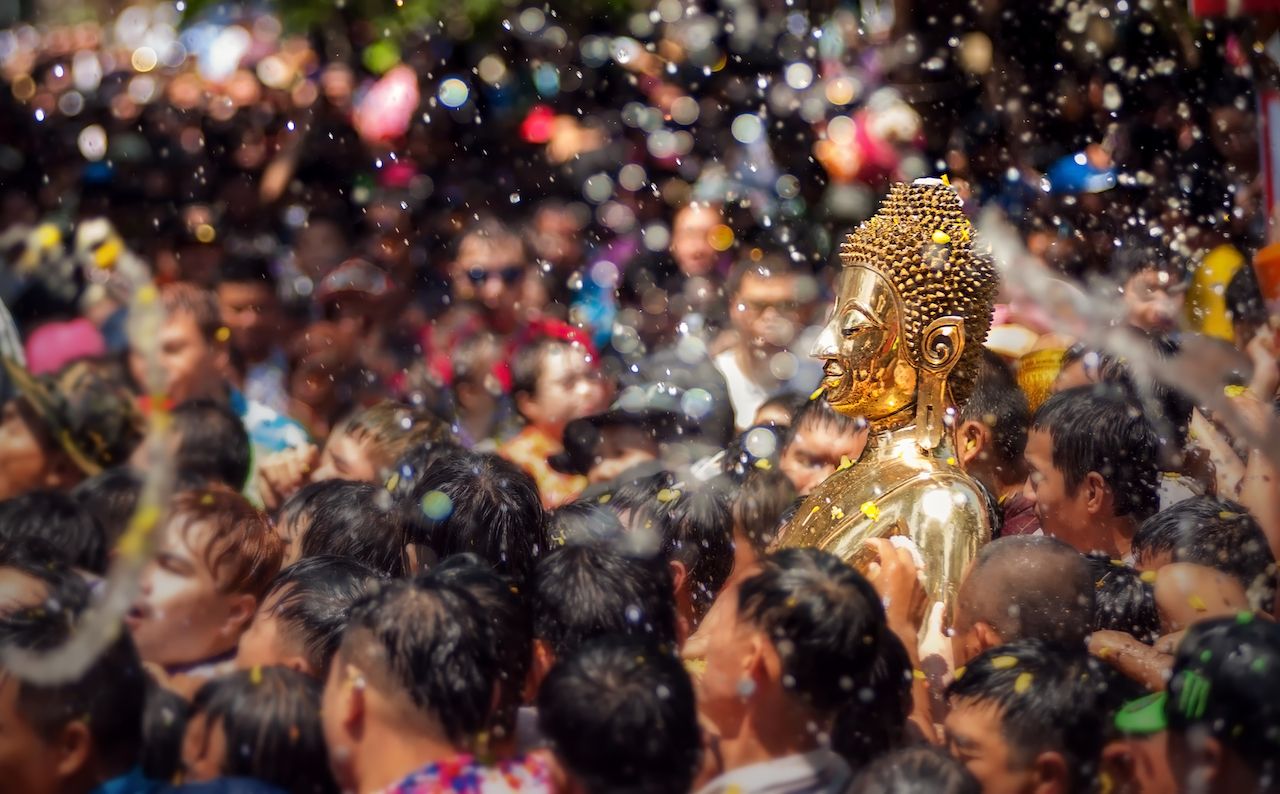
Photo: Suriya99/Shutterstock
If you’re looking for an excuse to return to the summers of your youth, and play with water balloons and Super Soakers, then you need to get yourself to Thailand between April 13 and 15. At the Songkran Festival, mainly taking place in Chiang Mai, Bangkok, and Phuket, people take to the streets to soak each other with water guns, hoses, and buckets. The word songkran derives from the Sanskrit sankranti, marking the sun’s passage into a new astrological sign — a tradition that predates Buddhism. As Theravada Buddhism spread through Thailand, the water rituals were absorbed into the faith and grew into what the festival is today. The water symbolizes purification, washing away the misfortunes of the previous year and making room for what’s next, a tradition meaningful enough that in 2023, UNESCO added Songkran to its Representative List of Intangible Cultural Heritage of Humanity. In Chiang Mai, the celebrations stretch well beyond the official three days, with the moat that rings the old city becoming the center of a week-long battle. Wrap your phone, wear clothes you won’t mind destroying, and don’t expect to stay dry for a single minute outside.
The Battle of the Oranges — Ivrea, Italy
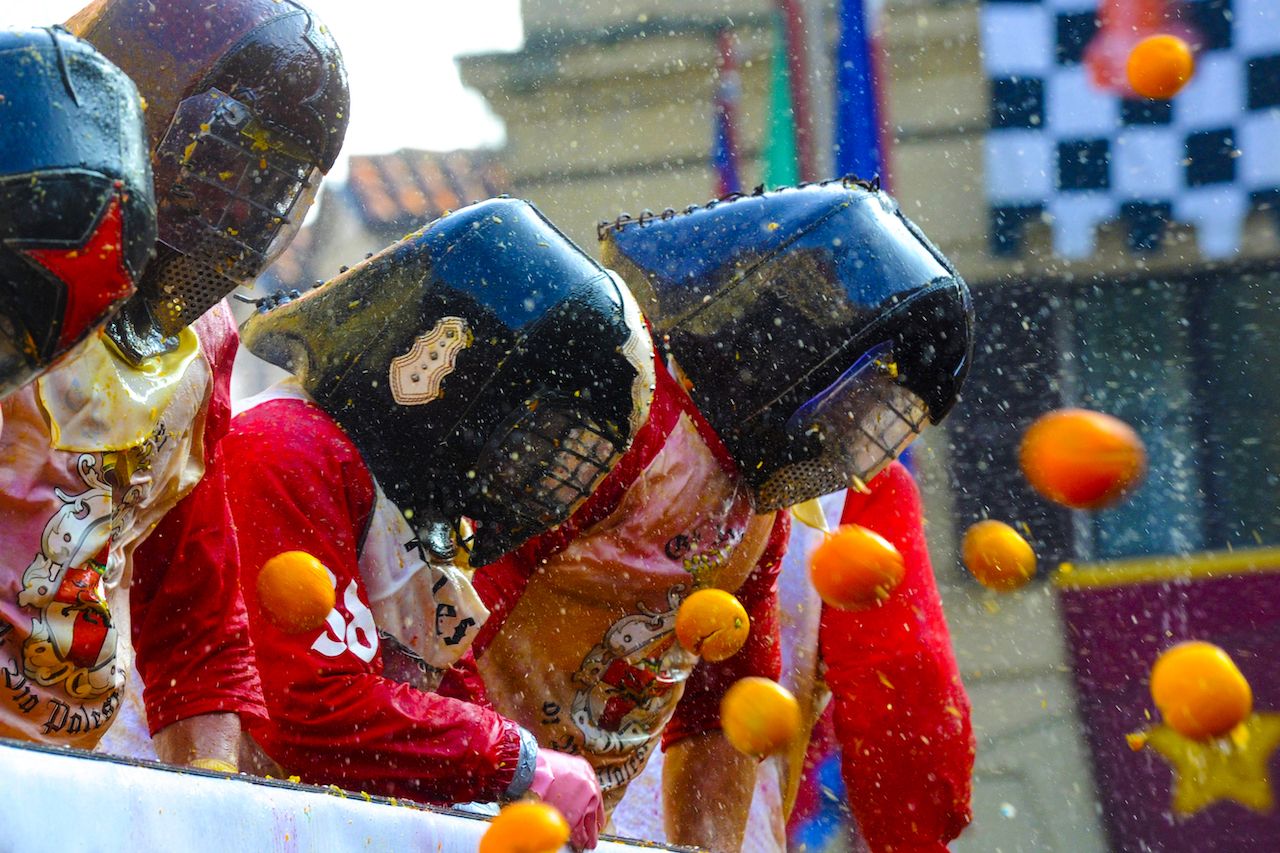
Photo: Paolo Bona/Shutterstock
Ivrea is a small town at the foot of the Italian Alps in Piedmont, about an hour’s drive north of Turin, that gathers over a million pounds of oranges each year for its annual Battle of the Oranges. The battle is made up of squads of orange throwers on foot and groups in carts representing the tyrant’s forces, defending their vehicles from the throwers. In total, there are around 4,000 competitors who spend the day hurling oranges at each other, a tradition with roots stretching back to a medieval revolt. The event commemorates the uprising of the people of Ivrea against a tyrannical baron who claimed the right to sleep with every bride in the town on her wedding night. The miller’s daughter refused, beheaded him, and held his head up from the castle balcony for the townspeople to see, and the revolt that followed brought the whole regime down. The battle takes place over the three afternoons before Shrove Tuesday, always the Sunday, Monday, and Tuesday of Carnival week, which shifts annually with the Catholic calendar, so check the carnival site for current dates. If you don’t feel like taking an orange to the face, you can choose to be a spectator, but you will need to wear a red Phrygian cap to signal that you’re not a combatant. Without one, you’re fair game.
Haro Wine Festival — La Rioja, Spain
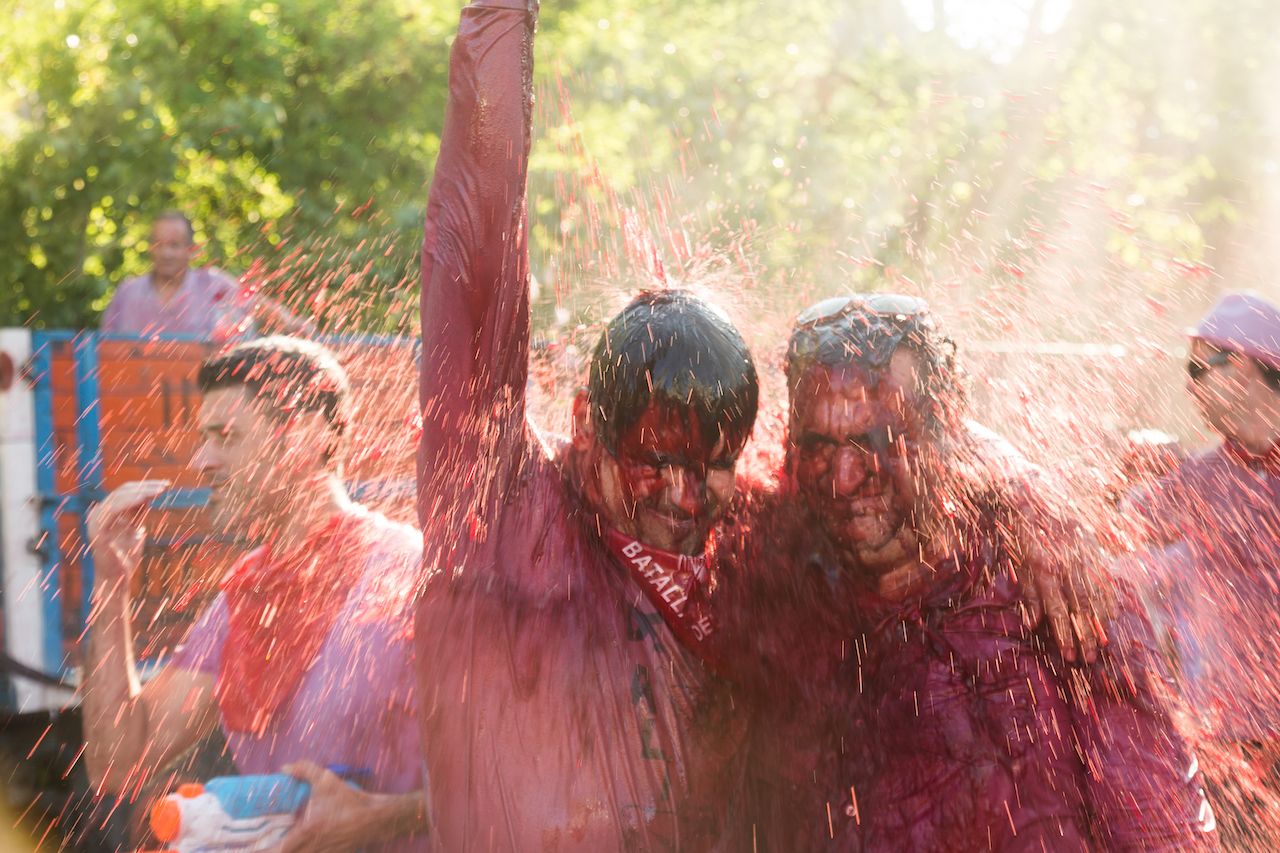
Photo: Iakov Filimonov/Shutterstock
The Haro Wine Festival in La Rioja, Spain’s most celebrated wine region about two hours by car from Bilbao, sees thousands of people equipped with plastic buckets, water pistols, and traditional leather wine skins called botas filled with red wine climb a set of cliffs to pour it all over each other. The celebration’s roots trace to a 13th-century land dispute between Haro and the neighboring town of Miranda de Ebro over ownership of the Riscos de Bilibio cliffs, with Haro’s townspeople required to make a symbolic pilgrimage to the site every Saint Peter’s Day to mark their territory. The wine fight grew out of that annual trek over the centuries. The event takes place every June 29 from around 8:00 AM — there’s no better way to start the day. When the wine dousing is done, the day is capped off by traditional dancing in Haro’s Plaza de la Paz below the cliffs. Wear white, it’s traditional, and the Rioja red that soaks through will create a permanent memento. Admission to the battle is free so bring your own vessel and expect to leave several shades of purple.
Holi — India
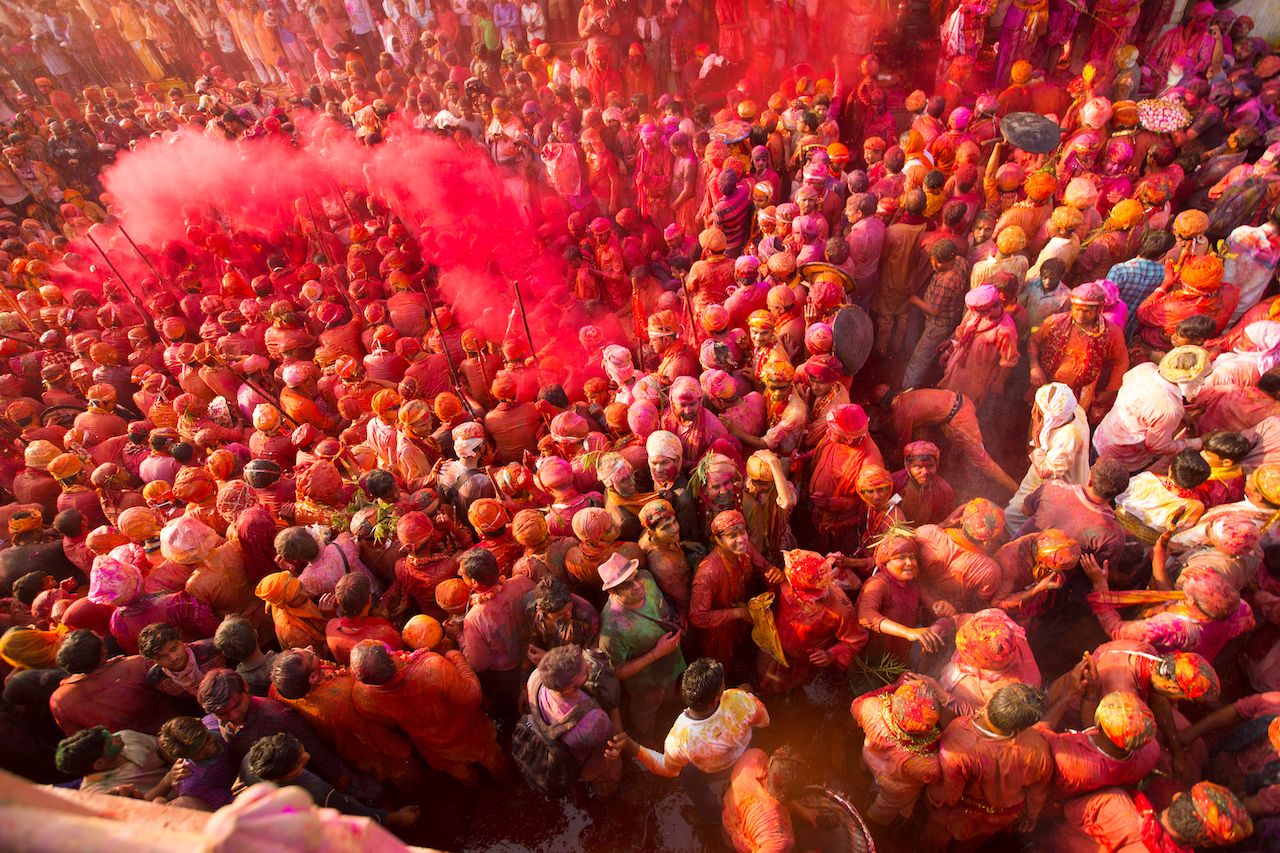
Photo: SatpalSingh/Shutterstock
One of the most joyful and widely celebrated festivals on the Hindu calendar, Holi is called the Festival of Colors for good reason. It falls each year on the full moon of the Hindu month of Phalguna, typically in late February or early March, so check the current year’s date before booking. On the second day of Holi, participants converge in massive numbers all across India to cover each other with bright powdered dye. This tradition is rooted in the Hindu story of Krishna, who complained to his mother Yashoda about his dark complexion against the fairness of his beloved Radha. She suggested he go and paint Radha’s face whatever color he wished, and from that playful act the tradition of throwing color is said to have grown. The colors used during Holi carry meaning; red dye symbolizes love, fertility, and matrimony, while blue represents Krishna. Holi is one of the two most significant festivals on the Hindu calendar alongside Diwali, so if you’re joining as a visitor, bring the same respect you’d bring to any sacred occasion. For the most devotional experience, head to the Braj region, particularly Mathura and Vrindavan in the state of Uttar Pradesh, about three hours south of Delhi, where festivities begin nearly a week before the main day.
World Custard Pie Championship — Coxheath, England
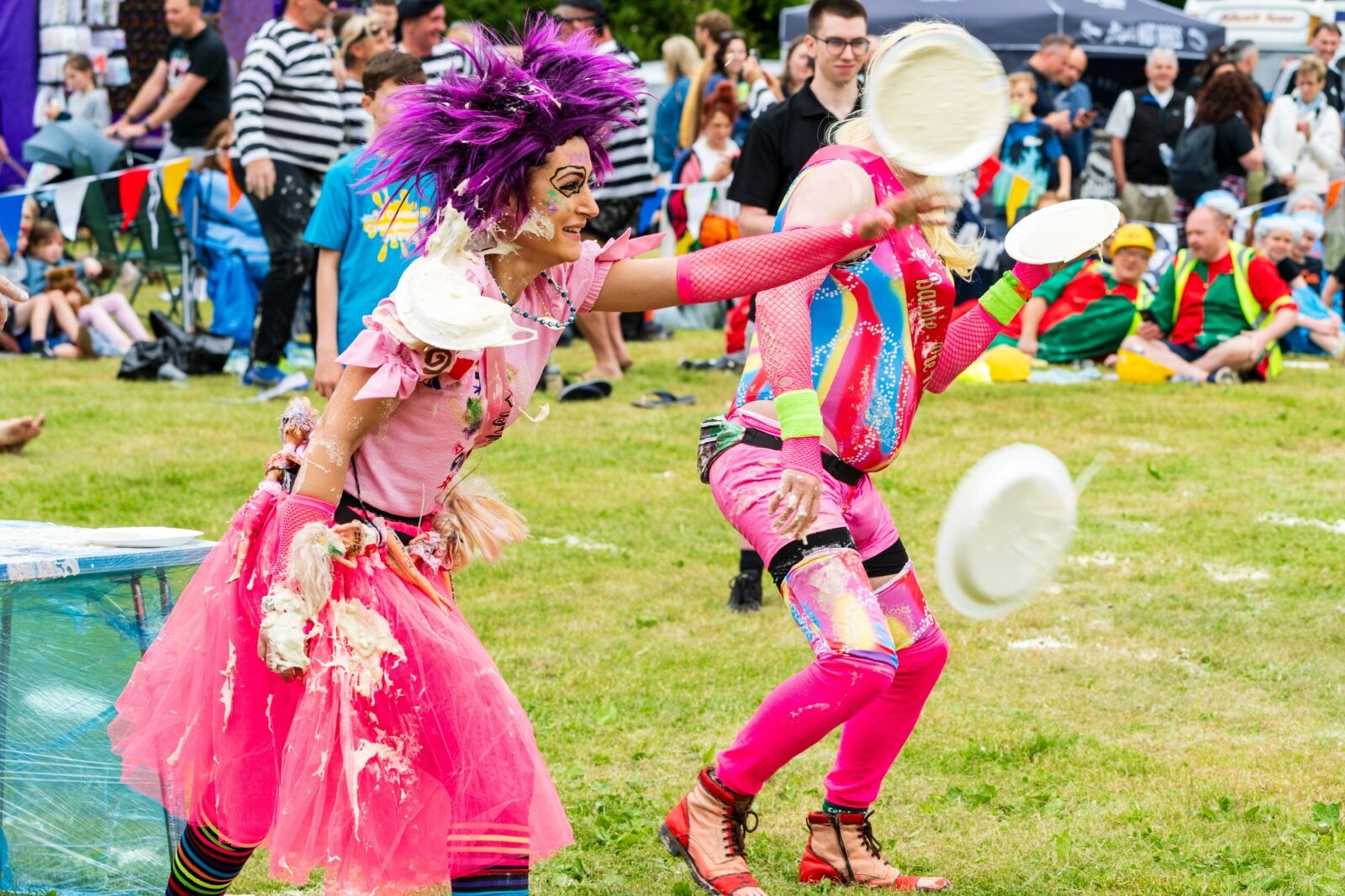
Photo: Malcolm Fairman/Shutterstock
While many might see this festival as a tragic waste of dessert, the British seem to revel in the opportunity to throw pies at their fellow countrymen. The whole thing was the idea of local councillor Mike FitzGerald, who in 1967 decided the village hall in Coxheath, a small village in Kent about an hour southeast of London, needed funding and that Charlie Chaplin’s slapstick legacy was the answer. What most people don’t know is that the pies in those old comedy films were never made with real custard. Real custard is too liquid and splatters unpredictably, so the secret formula turned out to be flour and water, and with that the World Custard Pie Championship was born. The competition now attracts participants from around the world. Players are divided into teams of four, throwing only with their left hand, with judges awarding six points to those who strike their opponents directly in the face, three for a hit on the chest, and one for a hit on the arms. All teams compete in fancy dress, with costumes ranging from fairies and pirates to zombies and musketeers, though by the end of the day everyone is wearing custard regardless. The event has been held annually since 1967 and organizers make up around 1,500 pies each year. The 2026 championship is expected on June 13, but verify at the festival site before traveling as the date can shift.
7. Setsubun Bean-Throwing Festival — Japan
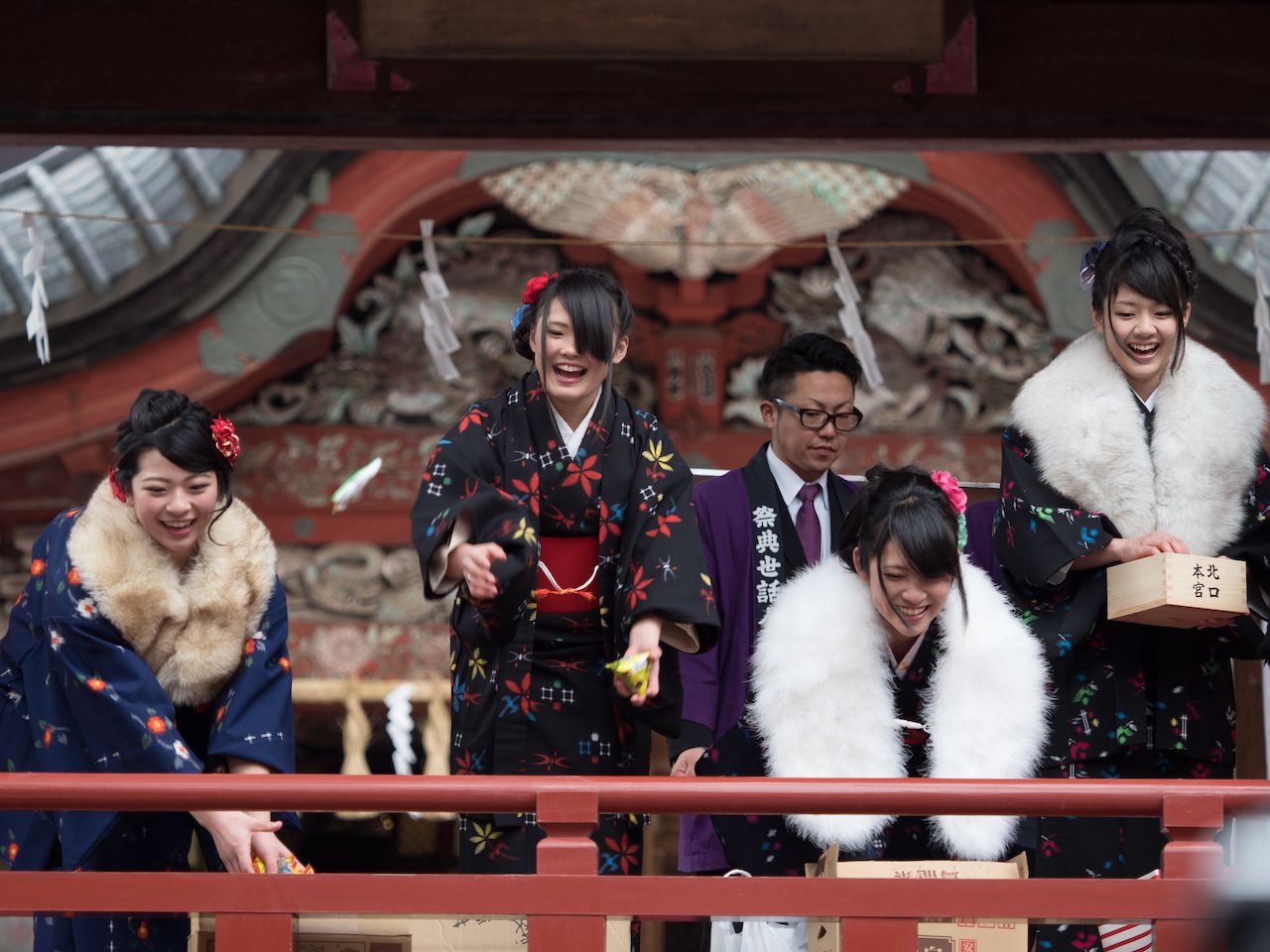
Photo: mcnegative/Shutterstock
This Japanese festival traditionally marks the beginning of spring, though it has nothing to do with cherry blossoms. On or around February 3 each year, people all over Japan take roasted soybeans and either throw them out the window or at members of their family dressed as demons, all while shouting “Oni wa soto! Fuku wa uchi!” which translates as “Demons out! Good fortune in!” Since beans are thought to represent vitality and purity, the throwing is believed to cleanse the evil of the previous year and mark the start of a fresh new year. The ritual arrived in Japan from China during the Heian period between the 8th and 12th centuries as a court ceremony, and the bean-throwing tradition as most people know it today took hold during the Muromachi period between the 14th and 16th centuries. It’s still a favorite, especially with children. If you happen to be in Japan in early February, major shrines and temples across the country hold public ceremonies on the day where celebrities, sumo wrestlers, and kabuki actors join in the throwing, with beans, sweets, and small gifts flung into the crowd. Arrive at least a couple of hours early at popular venues as tens of thousands of people turn out for the bigger ceremonies. 