Photo: Suzie Dundas

Inside the 'Cheese Cathedral’ Hidden Beneath Gstaad, Switzerland

Food + Drink Cultural Traditions
by Suzie Dundas Jun 4, 2026

“You call me ‘Your Majesty,’” laughs René Ryser, as we stand halfway up a grassy slope overlooking the small town of Gstaad, Switzerland. “Because I am the king of cheese.”

Ryser’s official title is “Managing Director of the Dairy Cooperative of the Municipality of Gstaad” (and “Head of the Molkerei Gstaad,” or Gstaad Dairy). But ask anyone around town, and they’ll likely know him by aristocratic moniker more than anything else. And while he may not oversee a castle, to many of the region’s farmers and food-focused tourists, it’s far more treasured. It has no turrets or towers, and you won’t see it from a distance — or even from directly in front of it. Because Ryser’s domain is under our feet, in the form of a three-story underground bunker affectionately known as the “cheese grotto.” Though perhaps cheese cathedral would be more accurate.
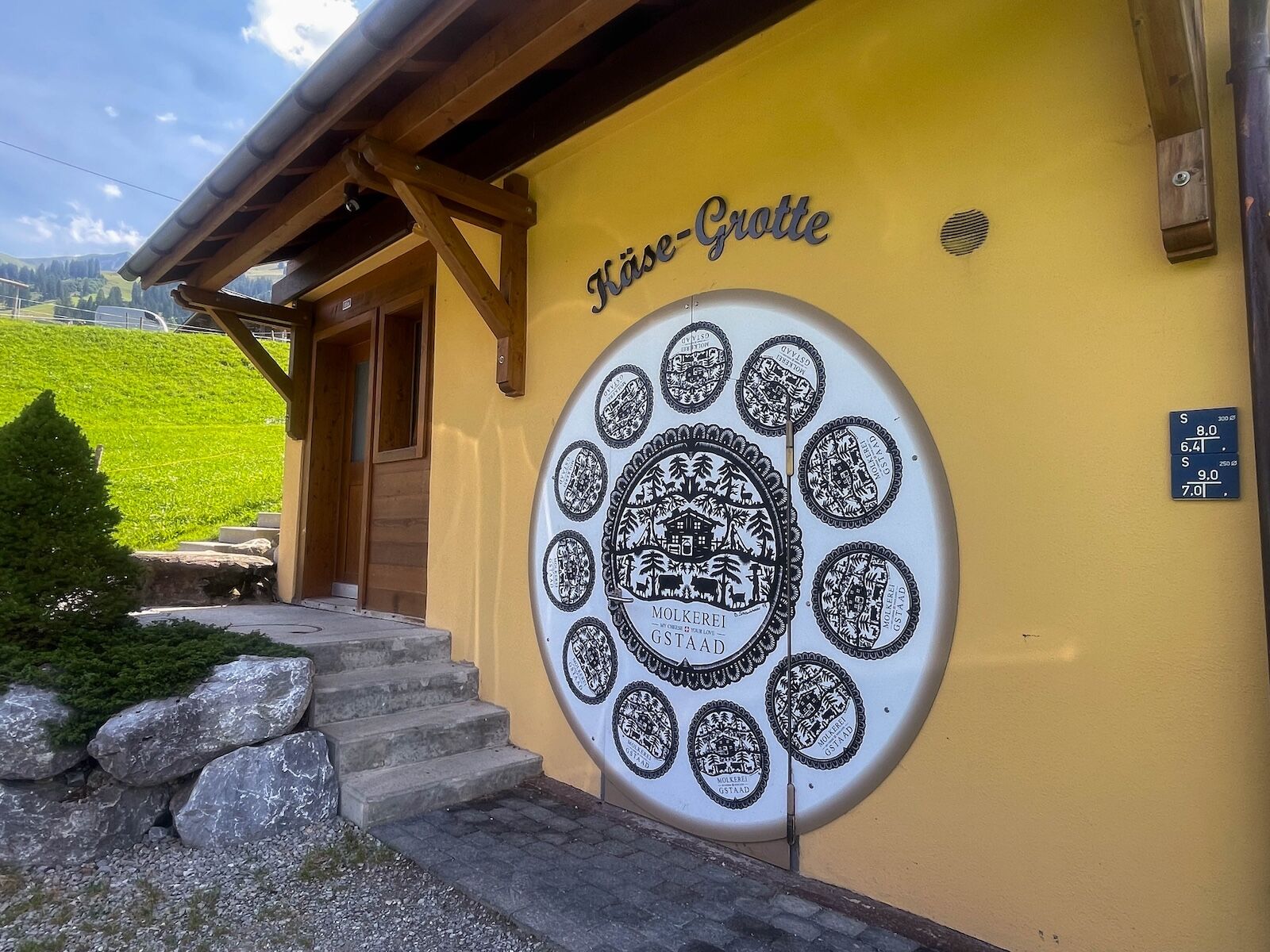
swiss cheese grotto - entrance

The entrance to the underground cheese grotto. Photo: Suzie Dundas

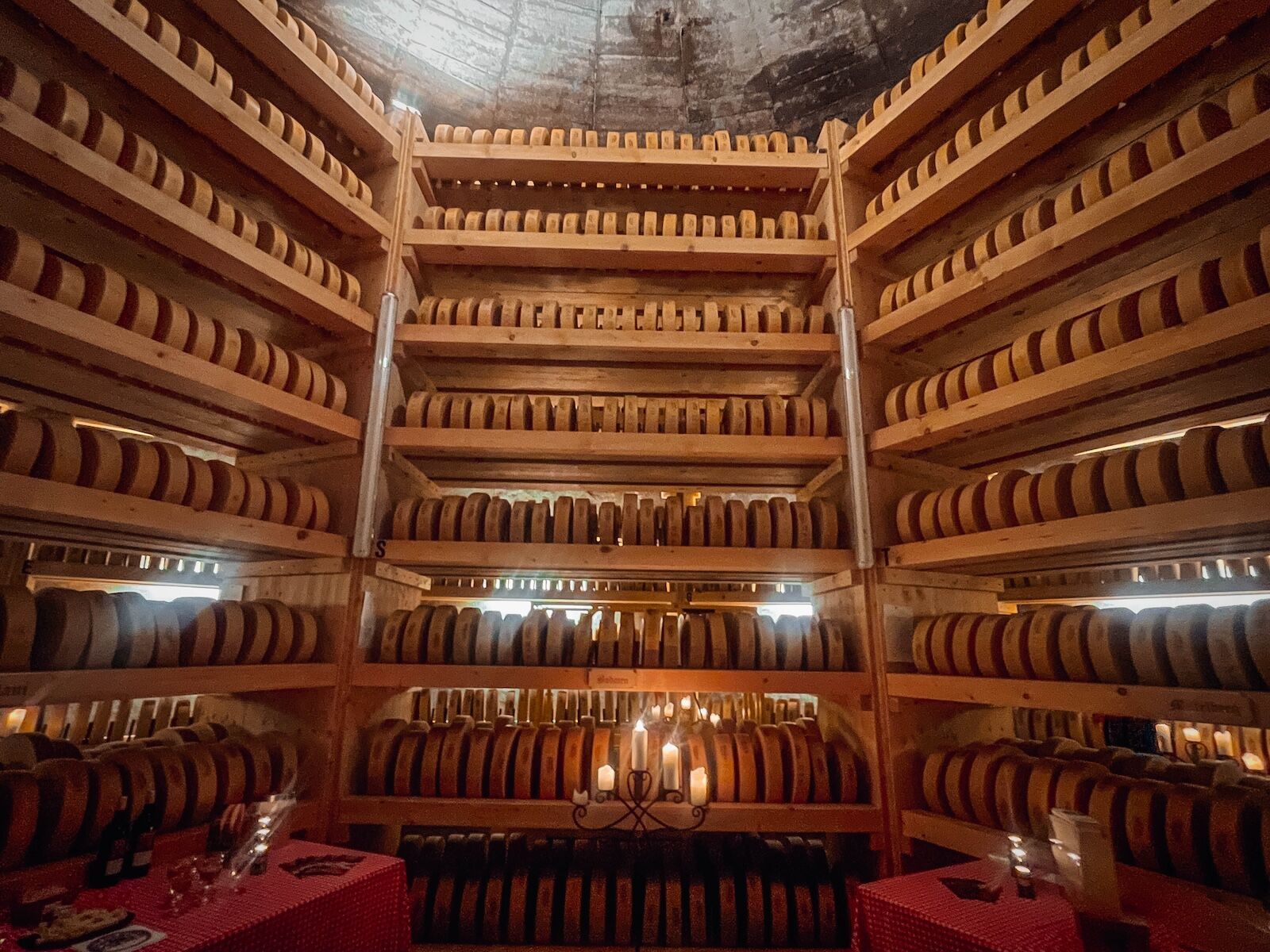
The cheese grotto’s entrance is hidden behind a mural on what looks more like a garage for a lawnmower than a fromagerie repository. But when you descend into the cool stone chamber, lit by dozens of candelabras, and see more than 3,000 wheels of cheese stacked top to bottom, it’s clear this is not your average backyard shed. Ryser estimates that the grotto holds about 1 million CHF worth of cheese (roughly $1,118,000 USD), including the grotto’s oldest specimen: a cheese wheel produced in 1931. He keeps it to show how long the cheese can age without spoiling, though he wouldn’t advise digging in for most mainstream pallets. “The fat turns rancid, and the taste is no longer as good,” he says.

Ryser explains what we’re seeing — and smelling; the grotto has a pungent, muggy aroma. Most wheels are alpenkäse, or alpine cheese,” made during the summer when farmers and their cows are at high-elevation farmsteads. To be considered alpenkäse, it must be made on the hillsides of the town’s surrounding Swiss Alps over an open fire in a copper kettle. However, some wheels are hobelkäse —- what alpenkäse becomes after 18 months of aging.

swiss cheese grotto - types of cheese

Photo: Suzie Dundas

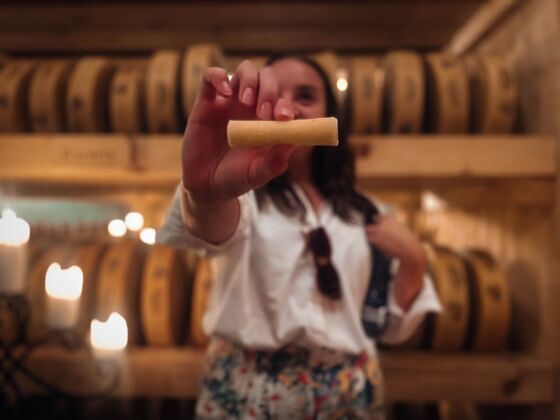
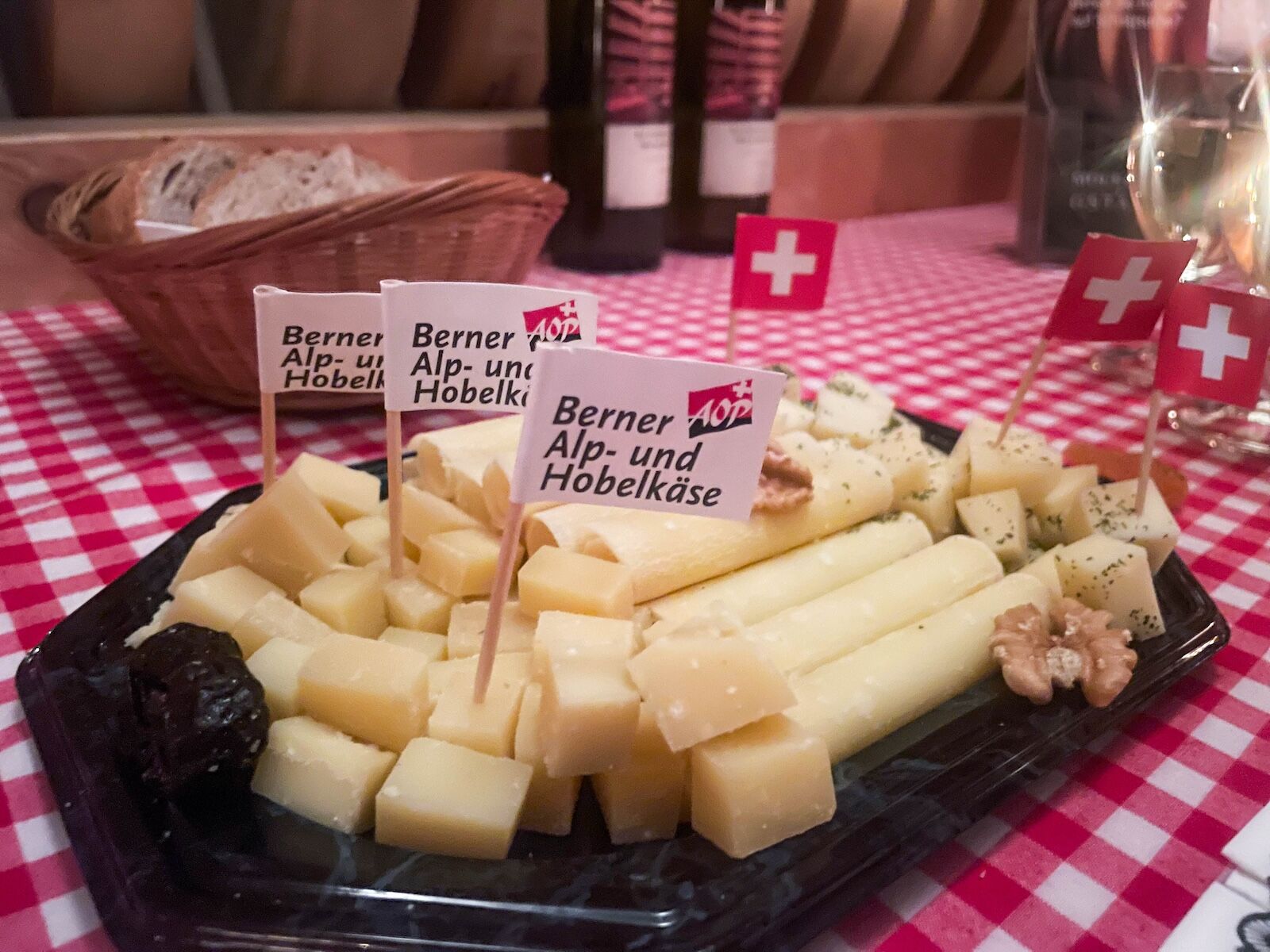
“Hobelkäse has a more distinct and robust flavor,” Ryser explains, “because it is older. Over time, the water content decreases, and the salt content increases.” That gives hobelkäse a richer flavor and dryer texture, as Ryser shows us while using a cheese slicer. Hobelkäse is too brittle to cut with a knife, so it’s usually served in thin, rolled tubes. Ryser prepared a tasting table for us, laden with extra-hard Berner Hobelkäse, cubes of one-year-aged alpenkäse, and fresh alpenkäse with herbs, as well as water and glasses of chasselas, a white wine from the shores of nearby Lake Geneva.

Though the grotto has only housed cheese since 2005 — it was a community water reservoir before that — the alchemy of aging cheese is a centuries-old tradition Ryser is tasked with preserving. Before the advent of refrigeration, Swiss farmers discovered that the cool and constant temperatures of natural caves around Gstaad offered ideal cheese-aging conditions. Each wheel in the grotto is made by one of about 50 small-scale cooperative member creameries, using milk from cows that graze on alpine wildflowers, herbs, and grasses. This diverse diet infuses the milk — and, ultimately, the cheese — with a distinctive regional terroir unique to Gstaad. It’s a key reason why the aging process is so crucial.

Swiss Cheese grotto inside - stacks

Photo: Suzie Dundas

Labor-intensive as cheesemaking by hand is, aging is equally demanding. Farmers need to rotate the hefty, 24-pound wheel regularly to ensure proper airflow, and for the first few weeks, the organic production methods of alpenkäse demand daily salt baths to avoid unwanted bacteria. It then needs to age anywhere from 18 to 36 months, with each wheel demanding a slightly different timetable. Fortunately for cooperative member farmers, the laborious aging process is in the hands of Ryser, who manages the grotto with over 40 years of expertise. How does he know when each wheel has reached its peak? “That’s my secret,” he says with a grin, though he hints that it’s a mix of texture, aroma, consistency, and keeping a sharp eye on Europe’s fluctuating cheese economies.

“The main export market is Germany, where Swiss cheese is expensive,” he says. “So we maybe don’t sell when the German market is bad, but sell more when prices are good.” Farmers can sell their cheese to the cooperative, which manages packaging and distribution to markets and restaurants, or they can retrieve their matured wheels to sell independently, often at local festivals.

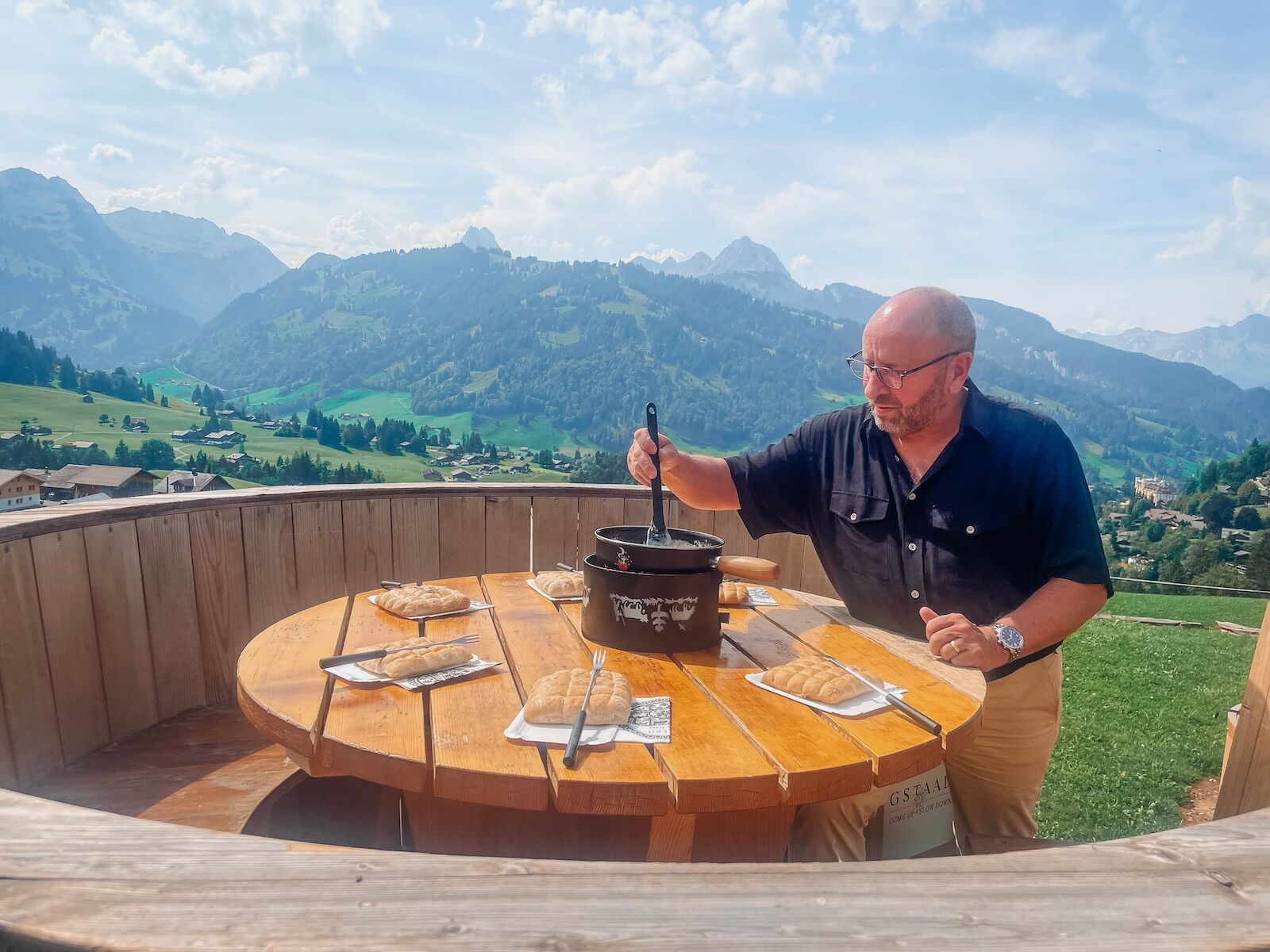
swiss cheese grotto - outdoor fondue

Ryser preparing fondue outdoors in a human-sized fondue pot. Photo: Suzie Dundas

Visits to the grotto, including tastings, are open with advanced reservations for 28 CHF (about $33). There’s a discount for guests who have a Gstaad tourist card, given to everyone who stays overnight in town. But those eager to immerse themselves in the region’s most famous cheese dish, almost literally, may want to add on an additional experience: having fondue in the human-sized fondue pot just above the grotto, designed for outdoor picnics with sweeping views of Gstaad’s Saanen Valley. Visitors can rent a fondue backpack from several dairies in town (or at the grotto), containing all the essentials for an al fresco fondue session while overlooking the pastoral landscape and grazing cows. Grotto visits must be scheduled in advance, but the fondue pots are first-come, first-served. Sharing is encouraged and required, as fondue is inherently a communal tradition.

As we leave the grotto, mesmerized by its sacrosanct towers of cheese, someone asks Ryser if anyone has ever gotten married in the so-called cheese cathedral. “Ah, no,” he laughs. He makes a face and gestures between his nose and the thick, earthy aroma of cheese in the air. “But maybe divorced.”

Discover Matador

Save Bookmark

We use cookies for analytics tracking and advertising from our partners.

For more information read our privacy policy.