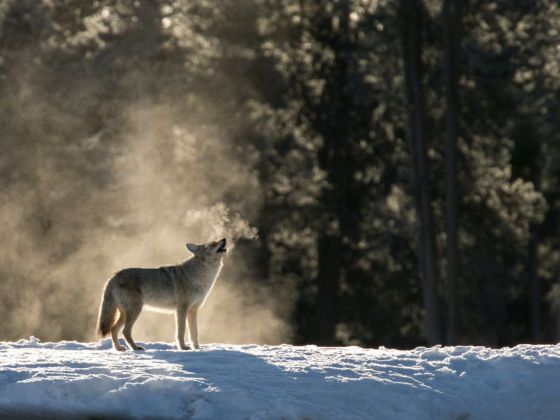
A career as a wildlife biologist conjures up visions of tracking Sumatran tigers in Indonesia or climbing trees to collect data on Bald Eagle nestlings.

THIS JOB APPEALS TO THOSE who are passionate about the outdoors, and to those who feel more than a little wild themselves. But aside from the romance, what can you really expect from this career?

There are many types of wildlife biologists. Some sit at a desk all day. If you prefer a job in the field, look into field biologist or research biologist positions.

Education

Fifty years ago if you knew the wilderness and had a passion for hunting, you could’ve walked out of high school and easily procured a job. Not anymore. Today, the educational requirements require a minimum of a bachelors degree, and many agencies won’t consider hiring you if you don’t have a masters degree for research biologist positions.

When researching specific schools, dig deep to see what they have to offer you. Do they have a strong research program where there are internship opportunities? What kind of job can you expect from a four year college degree? Some schools offer very specific programs tailored to wildlife management and wildlife biologist positions, while others offer more generalized programs such as Environmental Studies. Take a long range view of their program and what it has to offer you.

Field Experience

The key to getting a permanent position as a wildlife biologist is racking up as much diversity, or perhaps, specificity, in field experience opportunities as you can. It all depends on where your interests lie. If you are in school look into the various jobs that master’s students in your program of study might offer. Many times they need apprentices in order to help them with their research, and can pay you a small stipend. Don’t neglect volunteer positions either, you can add these work skills to your resume. Do a good job and you will have an excellent reference that you could add to your resume.

Communication Skills

While you are in school think about taking courses in writing, journalism, or education. These classes may set you ahead of the pack. Many people think that dealing with the public is a remote possibility when you have a job in a faraway place as a field biologist. Think again. The public is hungry for your knowledge and expertise, and they want to hear what you have to say. Also, many people are very opinionated when it comes to managing wildlife populations and will want you to consider their ideas. You will often be in the position to educate the public about sound scientific research and practices. If you can demonstrate that knowledge to an employer, you are golden.

How Much Will I Make?

You probably won’t get rich as a biologist, and when you’re just starting out you might not make much more then minimum wage. But it’s a passion for the work and freedom in the field that will give you the greatest job satisfaction. State agencies tend to pay the most, while the federal government’s payscale is lower. Non-profit agencies, such as The Nature Conservancy, also have limited budgets and do not pay well.

Where You Can Find Work

Competition for jobs is fierce. Yet you will be surprised to learn that there are a wide variety of places to find work. Consulting firms such as Griffith Wildlife Biology, hire wildlife biologists for specific projects. In America, look into state government job listings. The federal government also hires wildlife biologists. Don’t neglect opportunities closer to home either, such as local conservation agencies.

Another good source of job opportunities is through the Wildlife Society. Also, check out Ranger 146′s site, where you can get the lowdown on the life of a seasonal wildlife biologist along with job listings. If you want to work overseas, check into World Wildlife Fund or International Wildlife Coalition. But don’t stop there. You will have to root around like a wild boar in the muck to uncover a good position.


About The Author

Ellen Wilson

Ellen Wilson is a freelance writer and photographer. Formerly trained as a wildlife biologist, she has returned to school to obtain teaching credentials.

  • http://maderak.wordpress.com Seb

    Heya! Thanks for posting/stumbling this, I will be sending this to my g/f…this is her dream! lol…

  • http://www.RuralSystem.com Robert Giles

    Good article.

    I taught wildlife management for many years. You might like to see my notes on such work at http://fwie.fw.vt.edu/rhgiles/modernwildfauna/yourfuture.htm

    There is more on future possibilities within http://www.RuralSystem.com and my free Internet book linkable there.

  • http://www.wranglingrhinos.com N. Chrystine Olson

    I worked as a range ecologist for 13 years with the U.S. Forest Service, and although not quite as “sexy” as the wildlife title, my duties included helping re-introduce elk into the Bruneau River Basin in NE Nevada, assisting the state game agencies with bighorn sheep transplants and gathering wild horses. Another angle to get in the great outdoors with less competition. All those critters need habitat and food and my job was to make certain they had the right conditions to survive. I found the pay very livable and lived in some absolutely gorgeous locations. Just a thought….

  • http://www.wilsonswordsandpictures.com Ellen Wilson

    Thanks for adding that Chyrstine.

    There are a lot of different positions (ecologist, ornitologist, etc.) that perform essentially the same tasks as a traditional wildlife biologist does.

    That was something I should have mentioned.

    Ellen

  • Allison

    I am currently enrolled at a university in the south and I am seeking a degree in Biology with a focus in wildlife. Right now, as I type, I am having a hard time in Chemistry, so how much chemistry do you have to know to become a wildlife biologist. I have heard from little to everything you do is chemistry.

  • Corey

    I am a highschool student and I want to be a wildlife biologist. I would like to do field work. I am taking as many science classes as I can. Does anyone have any suggestions to help me out? I need as much help as i can get.

  • Corey

    Thanks. I will defiantly consider doing that. It sounds nice and interesting.

  • Damaris

    Hi I don’t have any advice because I am only 10, but I really want to be a wildlife bioligist so maybe you could give me a little info.You can reach me at “chipmunkgrimes11@gmail.com.

  • http://www.uu.edu/dept/biology/ConservationBiology.cfm Mark Bolyard

    Union University (Jackson, TN) has a major in Conservation Biology that can lead to certification as a Wildlife Biologist. We’d love to talk to any interested students!

  • Shaelee

    hey thank you for posting this. i hope u dont mind if i use it for my high school report. its sounds so cool to be a wildlife biologist! :)

  • Sophie

    Ive always wanted to work with animals and working in the field as a wildlife biologist is my dream.
    But I live in the UK so i don’t know if they will have many places to do the courses in university :)
    I have to take my options first though :L

  • CHang

    I am now choosing between a Vet and a Wildlife Biologist.

    I dont know what to choose, but I want my career to be corelate with animals.

    Anyone can give me any advices?

    I also have a lot of questions, so I would appreciate it if anyone can step up to help me out a bit =(

    chang_wat@hotmail.com

    I need help! Im a senior! FAST

  • http://www.uu.edu/dept/biology/ConservationBiology.cfm Mark Bolyard

    I think one thing to think about in choosing between a vet and a wildlife biologist is whether you prefer to spend more time outside in the field or in the clinic. The wildlife biologist would be more involved in the interaction among animals in the wild, whereas a vet, particularly a small animal vet, would deal primarily with pets, although there are vets that deal with large animals and vets that will work with fish and wildlife agencies. Hope that helps! Do you have some colleges in mind?

  • Michael

    Hey, this websire is great! I am really interested in being a wildelife biologist. It is my dream to help animals and be around them. For those of you who already know alot about being a wildlife biologist, it would be cool if you could tell me more.

  • Andrea

    I am a college professor and I trained to do field work in the tropics and now advise students who are interested in careers like this. The most successful candidates for such a career path have a passion for wild places and creatures and that is reflected in deep experience with a particular place, or a particular taxa. Being crazy about birds, insects, plants, frogs, reptiles, fish, moss OR any group of organisms or habitat to the point that you actually have a working vocabulary and taxonomic knowledge is the ticket to such a career. My recommendation….get outside and learn something about living organisms on your own and then apply to college or graduate school with a “toolbox” of knowledge.
    (By the way, chemistry is important to understanding how plants defend themselves from herbivores, how herbivores choose food, how soils develop, water quality and so much!)

  • Saran

    Hi That was really a nice post!!!

    My self engineered in Information Technology field based in India & do not have any eductaion back ground related to Environment , But I have strong desire to work for the Nature & Wild life Conservation & Research programs…

    Can you kindly sugeest me or guide me how I can go forward in this field? , & It will be great help if you can provide information for Indian Sub Continent.

    Thanks in advance for the kind support & valueable information!!!!

  • Hadril

    You guys are doing a great thing helping people like me with little knwolegde about wildlife biology.you have lightend up my candle and continue doing so.
    From ZAMBIA

  • Hadril

    Prof. Am hadril.I am jst trying to find out how challenging is the wildlife biology course and how wide is it? And which college are you are at?

  • Somchai

    What a great post!

    I spend a lot of time in the National Forests of Colorado, looking at (and esepecially looking for) animals. It is the excelent stewardship of the biologists at the state Division of Wildlife that creates the abundance and diversity I see.

    And to think that all that wildlife is managed through the money raised by hunting licenses, no tax dollars!

    A big thank you to wildlife biologists every where.

  • Michelle

    thanks so much for this information! I am a junior in college and I am searching for graduate schools, and also trying to see where exactly I can work, and what it will be like! I’ve looked into the World Wildlife Fund and the IWC but thanks so much on the heads up about state vs federal!

  • kelsey

    hey my name is Kelsey and i really loved your post; I also along with most of the people who have commented you want to be a wildlife biologist. I am from florida but i love traveling, And on some of the links you had most of them explain how you move alot, Which just gives me another reason to believe that a position in wildlife bology would fit me perfectly.The only down fall is i dont realy know how to perpare for doing so, I am only in highscool do you think anyone could possibly give me some advice on how to perpare, Or maybe some good colleges to look into.
    Thanks so much
    *********Kelsey

  • Alex Shupinski

    Thank you for the information. You live the life I’m hoping for, wildlife biologist, writing and photography. I’m looking at a few colleges but it’s difficult to determine exactly what they offer just from their websites. How often do you travel in your job as a wildlife biologist? And do you travel to a variety of places? And is there a possibility to focus on one specific animal?

  • Lindsay

    I loved reading everyone’s comments.

    I’m in high school right now and i adore animals. I want to have a career that studies them and maybe even interact with them. But my biggest problem is that i refuse to hurt an animal. I would hate to do tests or anything that might hurt them. If it’s not right to do to a human being, I don’t want to do it to them. So would I be able to be a wildlife biologist?

  • http://www.birdingsykeholidays.com paul

    Am from Kenya and i have been in Ornithologist for the last 9 Years.Wildlife biology is quite exiting, when in the field tracking birds i always wonder ‘is this my job?’ and the answer is some people are not crazy enough to chase the feathered creatures hence.To me it is all about peace of mind that brings satisfaction.

  • Chavah

    I’ve been wanting 2 b a wildlife bio 4 a while.
    It’s nice 2 know that others feel the same way.

    Chavah

  • NJW

    I work as an ecologist (which is pretty much the same as a wildlife biologist) in a UK private consultancy. My work i would say at the moment is mostly office based in the winter (as much of my work atm is with protected mammals and bats which hibernate then) and 50/50 office and field based in spring/summer.
    Its not easy getting this kind of job but it is worth it. I studied at univeristy for 5 years, obtaining an Bsc Hon in Environmental Biology, then an Msc in Ecology, (though many i work with have Phds). After that i had to do volunteering work before my CV would even be considered. After constant and persistant applying, i finally landed my dream role.
    In the UK pay really depends on the company, but consultancy is a good way to start at least, it is good for a person who wants to balance office work (GIS, reports etc), with freedom in the field. Pay is ok, about average for a profesional job, but the big bucks are in freelance work, they can make £300 a day, but it takes years to get to that level.
    I recommend joining local wildlife group as soon as possible and volunteering as often as you can, this means you build up great experience, great contacts and great knowledge…its also really fun.
    Its been mentioned before but there are times when i think….am i really getting paid to do this? Its hard work, but once you get there, you’ll know it was worth it.

  • Maria Salinas

    Im really thinking of majoring in wildlife biology, my goal would ultimately be working in for the BLM in their Wild Horses and Burros program. I however have no idea where to start researching where to start to get into that program or if im heading in the right direction. Someone PLEASE help me, im starting college soon and I want to have an idea of what im doing email me. m_salinas28@yahoo.com if you can help or have advice please

  • Arthur Lynch

    I have wanted to be a wildlife biologist since I was about six. My dream is to travel around the world to work with exotic animals and in different ecosystems. I am about to recieve my two year degree this spring in science. I was just wondering if anyone had any good ideas for schools offering good research and internship opportunities? Is it a good idea to specialize in a certain class of animals instead of trying to tackle all of them?

  • Shane Ravan

    I have just recently started researching the steps I need to do to become a wildlife biologist or something of this sort. I am 22 years old and I am a Sgt. in the Marine Corps. It has always been my dream career to be a game warden or wildlife biologist, but lost focus on my goal along the way. I am currently getting all my math, english, and such classes out of the way and planning on getting a degree in biology. I’m not real familiar with college so any advise for my situation would be much appreciated. I am sure that I do not want to have a desk job and I want to spend as much time in the woods as possible. Thank you for your time.

    Warm Regards,
    Shane Ravan

  • courtney

    hey. im a junior in highschool and i have been and outdoors girl all my life. i love to hunt, fish, and play in the dirt. For the last few years i feel i have a calling to do something with wild life and the outdoors. I live in Florida. Im just now looking into different colleges and i was reading some of the comments and would like to know if any of you could point me in the right direction.? I have a passion for the outdoors and would love any advice about how to start my career.

    thanks!

  • stay out of bio

    STAY AWAY FROM THE BIO FIELD, I have my degree in Biology with a concentration in conservation and there isn’t a day that goes by that I don’t regret that decision.

    Don’t listen to the “follow your dreams” people that posted in here, this field is just god awful

    1. The pay is extremely low, I’ve seen postings for marine bio jobs that require three years of experience and a masters that pay less that the high school drops that work at the plant I’m working at.

    2. Yes in this day we’re living in a master’s is absolutely required so expect to spend all that money getting through a master’s for that low paying job, imagine paying off tens of thousands of dollar making only 11 dollars per hour.

    3. Your degree HAS ZERO VALUE. Experience is all that matters, hell lie if you have to just make sure yo can back it up. Its funny many jobs posted now require “professional experience” meaning that the volunteering you did doesn’t count.

    4. The best paying jobs are in private industry and involve destroying the environment, ie working for construction companies environmental consulting.

    5. Most states right now are on a hiring freeze, my state Florida is. Many jobs in bio require government funding and things are really bad right now, its a horrible time to go into the field demand is low and qualified people are in abundance.

    6. If you must follow this route BY ALL MEANS LEARN GIS. I never heard the words GIS while getting my degree but every biology job will require it. The funny things a GIS tech can making 100k inputting and doing the same thing a bio person doing GIS is while the bio person is making 10 dollars an hour.

    7. Good luck to you. It seems that luck is also a major factor in the bio field. The few that make it are lucky but a majority of people aren’t

    so good luck

  • stay out of bio

    my first suggestion is stay out of biology all together,

    The second is figure out what kind of biology you like and focus on that, molecular, ecology, fish, conservation, wildlife etc

    If you want to be in wildlife biology go to a specific wildlife biology program, there is usually one university per state that offers this, ie UF is the only university in floridia that offers one, so stop for a second there only one per state that must me there’s not a lot of jobs out and hell there isn’t

    ok back on track do really well in undergrad take as many research opportunites as possible

    Next after 4 years plan on graduate school, hope your army college fund is there for you at this point, and yes your not gonna get hired as wildlife biologist unless you have a masters, oh and plan on getting paid poorly for at least four years as a biologist until you move up

    ps if you really want to be a game warden, find out who your local or state game warden’s are and write them some letters, in fact find as many game wardens and offices as possible and write them, they’ll be able to tell some really good info

    pps good luck

  • Chris D.

    i am really thinking about becoming a wildlife biologist i am itrested in animals and i would love to work with them, i heard you can work with one particular animal? i would love to work with penguins. thats always been a dream of mine.

  • Michael

    I didn’t realize you could choose what animal you get to work with! I LOVE red pandas and have wanted to help them because no one really knows much about them and their habitat is being overrun with people.

  • Brigette

    I didn’t realize that so many people wanted to be wildlife biologists but anyways I also really want to major in wildlife biology and go on to study wildlife in all different countries. Does anyone have any suggestions going into it?
    Also what is the difference between a wildlife biologist and a zoologist?

  • jessica

    Hi my name is Jessica and im 15, my dream is to become a wildlife biologist in field work and I was wondering what university and collage degrees or coures I would need inorder to become a biologist and do any universities offer scholarships for this range of biology work.

  • http://matadortrips.com/snowshoeing-and-wildlife-watching-in-glacier-national-park Snowshoeing and Wildlife Watching in Glacier National Park

    [...] Birds and chipmunks chattered in the trees, and we stopped to examine deer, snowshoe hare, and even a cougar tracks. With fresh powder covering road and trail, winter makes it easy to track wildlife. [...]

  • Wanya

    My name is Wanya I am 17 and graduate next year I want to know are there any scholarships I can get since I want to be a wildlife biologist if you could let me know that would be great thanks

  • Wanya

    Hello My name is Wanya I am 17 years old and graduate next year I want to know are there any scholarships I can get since I want to be a wildlife biologist if you could let me know that would be great thank you

  • Yunsuk Lee

    Hi I’m 18 and I attend to highschool in south korea right now. because of my father’s job i had chance to live in usa for one and a half year. and at there i expersienced how great wildlife was. so i got a dream of becoming a wildlife biologist from then. However, korea’s not that advanced in wildlife studying, so i am thinking to attend university in there. do you think it’s going to be hard for some one from abroad to work as a wildlife biologist in usa or other contries? could u give me some advices by mailing me? your posting really helped me alot.

  • Yunsuk Lee

    Hi I live in South Korea and I attend to highschool. When I was 13years old, I had a chance to live in US for one and a half year. And from that time on, I realized how interesting the wildlife was, and I got a dream to be a wildlife biologist. But in Korea, there’s not much natural resources, so wildlife ecology is not advanced and common here. Because of these reasons, I’m planning to attend university in USA. Do you know what university is best for this field? Would it be possible for me to get a job in US or other countries although I am not their citizen? Are there many foreign people working as wildlife biologists? Could you give me advices by maiing me? Thanks for posting this. It really helped me alot. Being a wildlife biogist was a obscure thing, but this made it somehow apparent.

  • Mckenzie Rose

    Thank u sooooo much! I have a report on this because this is what i wanted to do ever since i was born/talk (and understand what a job was) because i just loooooove animals! i have 3 dogs, 1 fish, 2 ferrets and a bunny!!! Also can you help me by telling me the colleges,high schools, and diploma’s i will need….. TY TY TY TY TY TY SOOOOOOOOOOOOOOOOOOOOOOOOOOOO MUUUUUCCCCCHHHH!!!!!!!!!!

  • BeauHomme

    Merci pour tel que article.
    C’était tellement utile pour me aider en cherchant un empli dans cet sector..
    J’espère que je travaillerai pour le gouvernement canadienne quelque jour.

  • BeauHomme

    Hello Yunsuk

    USA is’nt the only place that offers such programs. In Canada you can surley attend university and become an ”international student”. The government then gives you a visa i believe until you finish your studies here. So basically you can surely come here on excuse of your studying. You can take environmental science or anything else realkted to this, there are many to choose. And don’t worry, every year millions of kids like you come to Canada and study from abroad, and they’re not even citizens. It wont be hard. All long as you know English or French you’ll be fine. Universities in Guelph, Montréal, Toronto…etc…offer excellent programs..
    And i believe Canada is cheaper too than the states, and better. Mail me or reply and ill help you out more.!

  • monika

    hey guyz !!! plz tell me a career which is related to wildlife, i love biology n am eager to do my career in dis feild, ur answers r needed.plz mail me on my id

    thanks in advance!!!!!!!!!!!!!

  • Taslima

    Hey i m Taslima from India & i m doing bachelor’s degree in zoology. I have a great passion for wildlife biology but there are very less job prospects here and few colleges offers MSc in wildlife bio. Could u plz suggest me some good colleges offering this course in India because i will not be allowed to go abroad. Plz help me out.. I will be looking for ur reply with lots of anticipation. Plz mail me at
    tassie_xyz@rocketmail.com

    thanks….

  • Randi

    I’m a single mom and a couple years into college. I still have a chance to choose exactly which path I’m going to take. I used to live in Yosemite and it inspired me to want to do something helping the environment. I wish I could participate in the black bear vs tourist issue, now, since I was a huge witness to it. I want to pursue a reasonable path. I love all aspects of nature. The number one is wildlife, however, I keep hearing that there is much traveling and not much money in wildlife biology. Were I single I’d gladly take it, but I have my little one to consider. I’ve thought about environmental science, geoscience, hydrology, ecology, wildlife and fisheries, etc. I wonder if anyone has any realistic advice for me. I’m willing to go for my master’s as well. Some suggest I start off as a science teacher. Oh, and I’d be willing to see if I could live in a latin or asian country seasonaly- which I thought the teacher position may come in handy for the summers. Any suggestions?

  • Amber

    Very practical advice. I really appreciate your candidness. There is always the question – what will set me apart? I think this answers that question well. I do have a question though…
    I haven’t spoken with anyone about this, and maybe you will not know the answer, but I thought I would try. I have my degree in something completely NON-biology related. English, Theatre and Speech, in fact. Would it still be most practical to get some working knowledge and then apply to a graduate program? Or would I need to go back to undergrad school and get some more Bio and Chem credits? Like I said, I am a little naive about this as I have not spoken to anyone about it.
    Thanks for helping me with a dream!

  • Madison

    Hey! this is an amazing website to learn more about Wildlife Biology. I am one who would love to become a Wilidlife Biologist and travel the world. Maybe setting up preserves for animals threatened. I am only 14 and is interested in the field very much. I plan to go to CSU (Colorado State University) for college, i heard it can provide me with the help i need to become successful with Wildlife Biology. Does anyone have any advice to give me? I’m going to need all the advice I can get. Maybe on colleges, programs, and what i should do to get far and take the career as a Wildlife Biologist. You can reach me at jcjagz@yahoo.com email or reply to my comment. Thanks :)

  • Federalist45

    I am a high school junior. I want to work in wildlife biology (wildlife sciences), and want to write about it. I have looked into “science writing” and “science journalism,” but I have yet to find the perfect college program. I have looked especially at VT, Cal, UC Davis, and Cornell. Any other suggestions for the best colleges for a program in which I can study wildlife sciences and prepare for a career in writing about it?

  • govind nair

    greetings to whomever reading this comment. i am a mechanical engineer and to be frank enuff i do not have much interest in the same. but i love animals & nature and want to study about them in depth. i wanna be a wildlife researcher. could anyone suggest me a course or some sort of higher studies so that i can make a career out of it. its not just work i am looking for …its a deep passion/desire inside me to go “into the wild” and study about the same. can anyone help me in finding some interesting courses related to the nature & environment that a mechanical engineer can do…thanks a lot….

  • http://thetravelersnotebook.com Luna

    Thank you so much for the notes. I have always wanted to be a wildlife biologist. The makes my descion reven more clear!!!!!!!!!!!!

  • Leah

    University of Guelph has an incredibly strong Wildlife Biology program. I was there just for that. Guelph not only has an intense curriculum but there’s so much research going on there that I felt like every door was open to me. I didn’t get to stay long as I developed a chronic illness and have returned to Arkansas to have my family help me out. Compared to the university here, Canada is MUCH more challenging. What you do in four years at Guelph or another major university it would take a masters at most US schools. Since I have duel citizenship, some schools I was looking at in high school were the ones with strong zoology departments: Oregon State, Colorado State, Uni. of Victoria, Uni. of Guelph, Oklahoma State, Uni. of Alberta, Uni. of British Columbia, Uni. of California in Davis is good if you can afford it. I didn’t want to move to eastern US or Quebec but there are good ones there. As for key classes, I was always told that being familiar with GIS and remote sensing goes a long way, technical writing/communication, political science/economics. Advisors emphasize non-biology skills to get ahead. It’s not a job for loners anymore, you got to prove you understand people, communications, and how policy works. Sad but true. Biology courses themselves depend on your interests, but I know population ecology tends to be encouraged. Otherwise you have to get research experience and go to field schools during the summer.

  • Leah

    Also, Canada and other countries participate with Operation Wallacea (www.opwall.com), an organisation that offers dissertation projects for graduate students and training for undergrad/high school students. They have stations in Cuba, Egypt, South Africa, Madagascar, Indonesia, Peru, and Honduras right now. Programs have different lengths, but usually 4–two spent on land surveying and two spent in dive training. It doesn’t matter which school you’re from, but if your school is a partner then you usually get fund-raising and don’t have to pay out of your own pocket.

  • Kyle

    Hey i am only a freshman in highschool but i am very interested in Wildlife biology. It has always been a dream to get to work with animals in there natural habitats for me. I would like to know some colleges that offer good programs for me to look into. If anyone has any college names send me an email plz.
    gorsetail_95@yahoo.com

  • Erin

    Hey I was wondering if anyone knows any good schools to go to for wildlife biology or a bachelor’s degree in biological science? I live in New Jersey and would like to stay as close as possible. Really don’t want to go farther south then Virginia, seeing as my family maybe moving there soon

  • Tabitha

    Hi, i am young but, I think it would benefit me in the future to already know what i want to be.I strongly wanted to work as a zoologist but, doing some research i have found out that their pay is alot lower than i exspected.So, i have opened my options up and i’m know considering being a wildlife biologist. I would want to work outside,and also work with mammals or even a specific type of mammal. What type of classes would i need to take in high school and/or in college to get to do what i want to do in the future?

    Thanks for reading,
    Tabitha =)

  • Kassi

    Hi, I think I am interested in what you did. What did you have to major in for this career?

  • Macayla

    im still in highschool and thinking about getting into the Wildlife Bio. I love the outdoors and could spend every minute out there. I make a low B average right now in my biology class.. any suggestions if i should consder this field or not?

  • Nik

    I’m a Highschool Senior and I’ve always wanted to be a wildlife conservationalist!!!I’ve taken as many science classes as I could! I’ve been told by my family and friends that I’d make a great botanist, but I am looking forward to a career that involves adventure and any oppurtunity to research on somthing exciting(mainly somthing involving animals!!!) :D Please can someone reccomend me some great colleges that offer programs and majors for this kind of job? I really love being outdoors and in nature, that is like my life, if I end up working in some boring cubicle I might just explode with despair! Also thank you for the awesome web sites links! I now feel one step closer to a wonderful dream!!!!! :D It’d be nice if someone tells me of a great place to start! :D :D :D

  • Nik

    Hi Madison, I’m a High School Senior (who also loves wildlife and adventure), I just wanted to support your dream of becoming a wildlife conservationalist. I’ve been looking into some colleges, and found that University of Washington has some good wildlife programs. If you are into marine sciences, the University of Hawaii at Hilo Campus (the college i may be going to) has many scientific programs and also offers many travel oppurtunities! I hope this helped even by a little bit. Oh have you ever heard of the Semester at Sea programs? If you did well then that’s awesome!!! :D I wish you good luck and happiness in your quest!

  • cindy

    Paul…your last sentence brought tears to my eyes…

  • jimneybob

    hey, im in year 9 and am choosing my options soon, but im not sure wether i qualify for being a biologist because i have athsma. Also im not sure what i need a degree in or what to choose for my GCSEs! HELP!

  • Harry Potter

    This is a nice article, I’m glad I found it. I currently attend Cornell University, majoring in Natural Resources with a concentration in Applied Ecology. It’s a good department, for any high school seniors looking for places to go!

    I started as pre-vet and realized after working with vets for a summer that I DID NOT LIKE CLINIC WORK AT ALL!!! I always found myself looking out the window! It’s so great to know for sure that I do not want to be a vet.

    Anyways, this is a great article that I will give to my parents…. Just to get them familiar with what wildlife biology is. I’m having a hard time explaining what my future career will be like

    Thanks!

  • http://matadornetwork.com/tv/monday-moment-of-zen-the-perfect-silhouette/ Monday Moment of Zen ~ The Perfect Silhouette

    [...] CONNECTION Wildlife spotting can be thrilling, it doesn’t matter whether you are on a African safari or exploring a local [...]

  • Luna

    I’m a freshman in high school and i have been studying gray wolves since I watched Balto when i was four. I am straight A student in all exell classes and i am interested in becoming a field biologist to study gray wolves. I know if I were, I would be traveling to British Columbia, Alaska, Montana, and such places so do I have to have extra experiance with the geogrphy of the areas? What kind of class should i apply for that? What languages do I need to know? What classes do I really need? Ecology? Biology? Natural Chemistry? Please, I need some help.

  • Isaac L. Tincher

    Amazing!! My name Is Isaac L. Tincher and I’m in the 7th grade. I’m interested in working in Kenya, Namibia, or Uganda with Lions or Cheetas and I looked at other websites to see what they had to say about Wildlife Biology, and they all lead me to think that I wouldn’t be able to work in a foreign country, but I read this and it gave me hope again!!! 5 stars!!!

  • KJJ

    Luna,

    My advice for you as a freshman in high school is to yes, get good grades in all your courses, not just the sciences but also to gain as much hands on experience as possible. Take advantage of your summers and weekends and volunteer or intern at a zoo or any where else you can gain animal care experience. Start building an awesome and competitive resume.

    Also, even tho I realize that freshman year is a little early to look into college but do it, getting it done early, figure out what college you can go to that will have the best program for a wolf biologist. As for majors I suggest Wildlife Biology, Ecology, Zoology….

    If your really serious about a future in science and field biology start reading journal articles… believe me the earlier you start to understand scientific writing and learn to love/appreciate it, the better, you”ll see a lot of it in the future.

    Looking back I wish someone had given me this advice when i was a freshman in high school, but I am happy to be able to pass on the knowledge and wisdom I have learned in my Zoology Career. Good luck!

  • nahid

    i m a student of class 12 in notre dame college in bangladesh..i like wildlife a lot..i want to be an widlife biologist..but i dont know the process to make my dream work..i need some information about study on this subject..

  • Swayam Chowdhary

    Hi, I am a computer engineer, currently pursuing Post Graduate Diploma in Forest Management from Indian Institute Of Forest Management. I am very much interested in wildlife conservation and would like to learn more about the behavior of wild animals, which is very much the job of a wildlife biologist. Can you please tell me how to gain such knowledge and also about some wildlife courses which can be pursued, keeping in regard my background?

  • anon

    Luna, as for lanugage, you might need french if you want the work at a national park in BC, otherwise, English is all you want

  • Brandon

    Hi i am in grade ten and i am looking to become a wildlife biologist. i was wondering what courses I needed to take to get me there,and were(the job) would take me.

  • Phil

    Luna: I am kind of in the same boat as you are in. After high school I attended a local college in pursuing a Teaching Certification in Language Arts, but with one year left I decided to change my career asperations in working with wildlife (mainly terrestrial carnivores). Not only did I change colleges, but I also changed my degree into Biological Sciences, but because I transferred in more then 140 credit hours, most in the Education aspect, I was invited into a special program at the university I transferred to. The program is set up to where the individual can create their own degree. First: the student must apply to the program. Second: If accepted, then the student must take the general education classes and core classes related to the program that accumulate to 44 credit hours. I want to work with terrestrial carnivores across the globe, especially gray wolves, along with tigers, lions, cheetahs, leopards, jaguars, etc. Most of the terrestrial carnivores I want to work with do not reside in North America, so I took classes in Africa, Russia and South America, along with a number of classes in Animal Biology. The reason I took the classes in Africa, South America and Russia is because I wanted to have a degree resume that fulfills almost all of the categories that relate to my career path. I needed to know something about the politics, environment, citizens, history, etc of the different regions/continents/countries of the areas I intend to do work in before actually working in those areas. The great aspect of my degree is that I do not have to take all of the Chemistry, Psychology, etc classes that a normal degree in Biology requires. I have taken such Math classes (such as Statistics) and Science classes that directly relate to working in the field, but not the other ones that do not directly relate.

  • Phil

    Luna: KJJ is absolutely right in volunteering and working an internship at your local zoo. The experience of observing the animals behaviors and putting your time into working with animals without getting paid for it shows that you have determination in what you want to do. Just like yourself, I have a passion in working with wolves. Our local zoo does not have wolves there, but the zoo does have African Wild dogs, which are very similar in, social behavior, traits, instinctive and learned behaviors, etc to wolves. Begin networking with experts in your field. I live in Michigan, and I constantly email and recieve emails from one of the pronouned wolf experts in the state. I have learned a tromendous amount from him, as I have learned from my sponsor for my internship from my university, and the Curator of Mammals at the local zoo. These individuals can also be a valuable reference for the job you are applying for when you finish school. I cannot remember who mentioned it on here, but if you want to search for jobs related to the field you want to get into, go to the Wildlife Society website and research the qualifications and such in each job posted by organizations there. Not only can you research job positions posted by federal and non-federal organizations, but you can also post your resume and cover letter there so that the organizations can find you.

  • Isaac Lewis Tincher

    What is the best organization to join if I want to work in Botswana or in Kenya, Africa? I want to be in the field and study the animals up close.

  • http://NA liomba

    I am a unversity student at Midlands State University In Gweru Zimbabwe.i am doing biological science degree and i am looking forward to becoming a wildlife research biologist after i get my degree and a master of science in wildlife conservation . i am very much passionate when it cimes to wildlife and many people have realised that and told me . where best can i work in this category ?

    thanks for this nice website which help us get good direction.

  • http://matadornetwork.com/change/great-migrations-sandhill-cranes-at-rowe-sanctuary-in-nebraska Great Migrations: Sandhill Cranes at Rowe Sanctuary in Nebraska

    [...] you can’t get enough of wildlife conservation, check out How to Become a Wildlife Biologist. And for more on birds, there’s 10 Birding Hotspots. var ids = new Array; ids.push(6435); [...]

  • Allison

    I just came accross this great article and it made me think about whether i am persuing the right education. I am currently attending a community college for a bio transfer A.S. Would it be more useful to get an associates as a Vet tech then move on to a bachelors progam? it seems it might give me more appropriate experience? What is your opinion?

  • kunal ahuja

    i want to become a wildlife ranger as i love to see animals or to take their pictures. but their is no scope in india . i am in 11th class and living in india and want to work with brady barr because i am a big fan of him.I watch nat geo or discovery every day and my parents always tell me why i watch these channels every day.I always think that when will i benome a wild life ranger.

  • nadia

    i love animals and ive always wanted to work with wild animals but im only in 8th grade so i have alot of time to choose my job

  • Genie

    Hi,

    I’ve always been fascinated with animals and adventure, for I’ve always been around nature and animals and my favorite video game growing up was Tomb Raider, a game about a female protagonist who travelled the world in search of rare artefacts.

    Since I was little, I’ve wanted to study tigers, and help stabilize the ever decreasing population. However, I am not a straight A student, and my weakest point is mathematics. I am absolutely terrible at math and am in a special program called “essentials”, which teaches basic math skills. I do have a gift in writing, though, and have written a couple of short novels for myself =)

    I’m only in the eighth grade, so what you recommed to me? I’ve taken notes on this article, but I’m not aware of any college programs that offer the sort of Wildlife Biology that interest me in Canada.

    If you or anyone else could help me out it would be greatly appreciated. Any general advice and whatnot?

    I hope to be a field biologist.

  • http://matadornetwork.com/trips/by-air-land-and-sea-10-great-animal-migrations-to-witness By Air, Land, and Sea: 10 Great Animal Migrations to Witness

    [...] If you want to spend your life studying wildlife, check out How to Become a Wildlife Biologist. [...]

  • Melissa Espinal

    Hey! I have always loved nature and being outdoors hiking near mountains, swimming hometown rivers, and observing my surroundings and learning from it.

    I’m freshman year and I have decided that in the future I would like to be a Wildlife Biologist and be able to work on field.

    I have very high grades on Biology (sometimes A- but most of the times A+) and I’m most of the time writting down observations of the nature that is around me!

    I live in the Dominican Republic on the country side where it is posible for me to adapt myself as a wildlife biologist, cause of all the nature! But it isint easy cause my highschool is not well equipped… let’s say it does not have the equipments for me to put to practice my skills. Most of the information that I have gained as been on my own or doing researches on internet at home. And I would really like to learn a lot more and gain a lot more of experience about the wildlife for future occasions.

    I would like to hear about your personal opinions and advices!
    Thank your for your attention!

  • Michelle

    I’m a highschool junior , and one of my dreams growing up was to help animals and save them from the cruelty of humans. And I want to know how I can do that. I want to be in the wild saving cheetahs and elephants and so many more. My grades are really good , but I dont know how to be able to do all those. I dont know which course for college is the best one to be able to help the animals. And i also would love to travel around the world. What should I do? What course should I take

  • Been there, done that

    Many people that go to college for a degree in wildlife management or wildlife biology end up working for other industries because the demand for biologists and managers is much less than the interest in our society.  If you are looking for a career of your interest, you may want to consider other opportunities.  However, if you insist on trying to get a wildlife job, I highly recommend going into the military first so you can get veterans preference since our government, both state and federal, have to hire veterans before civilians, since our society believes veterans are heroes and deserve jobs more than civilians.

  • Jasonrallmon

    I’m a High school graduate and am in love with being in nature, field biologist sounds most appealing to me, any environment. I am going to begin college hunting in Virginia for the best option, if anyone can help that would be much appreciated 

  • Ashleigh cydrus

    I’m a sophomore in high school , I plan on graduating as a junior , I want a job as a wild life biologist or a zoologist and I want to work in africa , what do you think ?

  • Looney789

    i am very smart to i have A+A+A+B+A+B-, i like wolves and lions and other animals if you are smart answer this question if you saw a dill pickle and a doe what would you get answer please

  • Nadia Truelock

    I’m a freshmen in high school and would like to be a wildlife biologist what should I do

  • tyler

    i am also a junior as well. and have the same passion as you do i love working with exotic animals and want to be a wildlife biologist. after college you should do lots of valenteer work to get your foot in the door. then youll get hired by just about anyone. good luck in college..

  • Donniethree

    Thank you. This was very helpful information.

  • Twinsoulz23us

    Why you got to hate on the Veterans? You sound a little bitter up there buddy, you need a hug?

  • Twinsoulz23us

    Why you got to hate on the Veterans? You sound a little bitter up there buddy, you need a hug?

  • Tyler L

    does a wildlife biologists have to travel around the world or can you do research and stuff around your state??

  • Christopher

    Hello, I have worked with the forest service for 4-going on 5 years now. To obtain a
     degree and the grades to go with it are crutial I won’t lie. Here’s the deal, you can
    total turn it around, becoming serious with your grades now in present time. I
    would say every little bit counts like community service at local animal shelters to
    educating yourself on the topic in spair time. One of the most important
    things one learns is the habit of reading and research. OSU has one of the best programs for wildlife biology, they have ties with the Forest Service, BLM, and Fish and Wildlife. In case you were wondering the acronym OSU stands for Oregon State University. Go to there web-site and roam around it. Look for the program and look at prehaps what you would need for credits and so forth. Contact the college and tell them you need and want a phone conversation about the matter.

    I hope this helps, and don’t let anything stand in your way of getting what you want. If everything were easy we would all be millionaires.    Good Day To You…

  • Christopher

    Hello, I have worked with the forest service for 4-going on 5 years now. To obtain a
     degree and the grades to go with it are crutial I won’t lie. Here’s the deal, you can
    total turn it around, becoming serious with your grades now in present time. I
    would say every little bit counts like community service at local animal shelters to
    educating yourself on the topic in spair time. One of the most important
    things one learns is the habit of reading and research. OSU has one of the best programs for wildlife biology, they have ties with the Forest Service, BLM, and Fish and Wildlife. In case you were wondering the acronym OSU stands for Oregon State University. Go to there web-site and roam around it. Look for the program and look at prehaps what you would need for credits and so forth. Contact the college and tell them you need and want a phone conversation about the matter.

    I hope this helps, and don’t let anything stand in your way of getting what you want. If everything were easy we would all be millionaires.    Good Day To You…

  • Chris_puckett123

    The answer is to say the least inappropriate… So there for crude jokes such as these need not to be said.

  • Chris_puckett123

    That is not always the case sir or miss. Within the Forest Service, BLM, Fish and Wildlife, being of a differnt ethnicity also takes the cake along with being female. The only real downer is perhaps if you are a white male such as myself. But the trick with that is you can change your last name and or just put down that you are hispanic or latino. I have done this and also have friends that have done so. I have worked for the Forest Service for five years and have a pretty good understanding of the system that is in affect. And the powers that be cannot question your race it is illegal and contradicts the rule of hiring preference. aka HR acronym Human Resources…

  • Chris_puckett123

    That is not always the case sir or miss. Within the Forest Service, BLM, Fish and Wildlife, being of a differnt ethnicity also takes the cake along with being female. The only real downer is perhaps if you are a white male such as myself. But the trick with that is you can change your last name and or just put down that you are hispanic or latino. I have done this and also have friends that have done so. I have worked for the Forest Service for five years and have a pretty good understanding of the system that is in affect. And the powers that be cannot question your race it is illegal and contradicts the rule of hiring preference. aka HR acronym Human Resources…

  • goose

    I am 12 years old and i love being outside. I have always wanted to be a wildlife biologist because you get to be around animals. I am also a big hunter and fisher. I think i can aply my hunting skills i.e.(traking, Population estimates and so forth) in the field

Travel and Adventure Jobs →

Working at international resorts is one way to live and work abroad in a variety of...

Travel and Adventure Jobs →

We've been brainstorming jobs and careers that work well with travel writing.

Travel and Adventure Jobs →

Upload your videos, scour the job board and get paid on Tripfilms.com

Travel and Adventure Jobs →

As an au pair in Amsterdam, I’ve seen the good, the bad and the ugly.

Travel and Adventure Jobs →

Everyone at Matador has been so amped on community member Pat the Digital Vagabond's...

Travel and Adventure Jobs →

There are countless job opportunities for people who love to travel. Here are 10 you...

Travel and Adventure Jobs →

You aren’t held to the same social standards of a regular boss, and occasionally you...

Travel and Adventure Jobs →

A summer to kill, a hankering for adventure, and wouldn't mind saving some pristine...