Previous Next
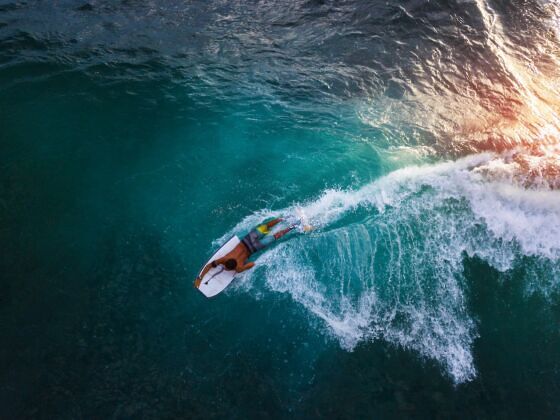
Desiree Bilon interviews surfer / filmmaker / activist Kyle Theirmann right before his recent Brower Youth Award win.

KYLE THEIRMANN IS surfing for change.

His inspiration? Travel.

The sponsored surfer from Santa Cruz, California, is catching waves around the world and making films about social and environmental issues. In his Surfing For Change series, Thiermann puts current natural resource and social justice conflicts into perspective by focusing on simple solutions, helped by how short his films are (all under five minutes).

Recently, while compiling research for an upcoming trip in Sri Lanka, I stumbled across Kyle’s work. I was surprised to learn that even though he is only 21 and still in college, Kyle has already inspired fellow athletes to be activists through his work. As a dedicated surfer (and, therefore, clean water advocate) this resonated with me. I felt compelled to reach out to Kyle to learn more about his organization and specifically about his second film: Buy Local, Surf Global that took place in Sri Lanka.

[DB:] Where do you go to university, and what are you studying?

[KT:] I am getting my BS in Green Business through Gaia University; it’s the coolest school ever! Gaia accredits you to do real social and environmental change work in the world. Students do it from all over the world. I graduate this September.

When did you start the following activities and why?

Surfing: I started surfing when I was like 10 years old. It’s weird to think that I’ve been surfing for 11 years, wow. I just love what a challenge surfing is every time you go out. Every surf session is new because no two waves are the same.

Making films: My parents make movies so they taught me how to do it from a really young age. I just love storytelling and making movies is a great way to tell a story.

Being an activist: I think traveling inspired my activism. It allowed me to see how other people live and how my daily decisions were having an effect on their lives.

“The world is a book, and those who don’t travel read only one page.”

You have filmed four documentaries. Can you summarize each of them in one sentence?

Claim Your Change: Chile. Stop funding coal, and start supporting your community through local banking

Buy Local, Surf Global: Sri Lanka. The power we have to change people’s lives through our shopping choices.

BP, You, and Me: Who are BP’s funders and who should you be banking with?

Where Is ‘Away?: Solving Plastic Pollution in 4 Minutes: Where does your plastic bag go–maybe Oahu?

What projects are you currently working on?

I’m going to South Africa next to do my next movie on nuclear energy.

How else do you think traveling is important [for your work or for you personally]?

Traveling has helped me because it’s allowed me to be exposed to different cultures and to see how many different kinds of people there are in the world. Traveling was what inspired me to start my online TV series, Surfing For Change. I’ve been fortunate enough to travel from a really young age, all through Latin America, some in Asia like Indonesia and Sri Lanka.

Tell me about your trip to Sri Lanka. Do you have any recommendations for travelers going there?

Sri Lanka is awesome! I visited clothing manufacturing companies and did a story on how we at home have an effect on Sri Lankans’ working conditions through the clothes we buy. Check out the movie at Surfing for Change. [And] if you ever have a chance to go to Sri Lanka, check out Arugam Bay and stay at the Freedom Cabanas. Tell them Kyle sent you!

Hikkaduwa, Sri Lanka. Photo: AnnieGreenSprings

What kind of relationships did you establish with the local residents, and what is it like to do work in places like Sri Lanka?

In Sri Lanka, I made a bunch of friends who I still stay in touch with. I think it’s great exposure to see how other people live. The world is a book, and those who don’t travel read only one page.

What awards have you received for your activism? [Note: I interviewed Kyle just weeks before he won the Earth Island Institute's Brower Youth Award, which provides a cash prize, a week of activities in San Francisco, ongoing leadership support and mentoring and project sponsorship to young environmental leaders.]

Um, yeah I got a big one last year called the Peter Benchley Blue Vision Award. Not in activism, [but] I won a ping pong tournament in Santa Cruz recently. It was just a bunch of our friends… I was stoked though.

What kind of lasting influence do you think your effort has had?

Today, I was getting out of the water, and this kid walked up to me and told me that he wants to do a project on solving plastic pollution because of me. That made my day.

What else is part of a typical day in your life? [Note: His answer made me jealous.]

6:30 AM: Walk down the street and look at the waves.
7:00 AM: Read the news or watch a TED Talk
8:00 – 11:00 AM: Surf
12:00 – 2:00 PM: Research for my next project on nuclear power
3:00-5:00 PM: Surf
6:00-9:00 PM: BBQ with friends
9:00-10:00 PM: Answer this interview

Who would you want to thank for all their support, and what are some final thoughts?

Thank you [to] Patagonia, Sector 9, Pacific Wave Surf Shop, FCS, Screwball Surfboards!

***

If you are feeling inspired, follow Kyle’s three easy steps to make a difference on a daily basis.
1. Bank locally
2. Shop Locally
3. Support Responsible Companies

Activism + Politics SurfInterviews


About The Author

Desiree Bilon

Desiree Bilon is a writer, translator, and a surf tour guide. After traveling and living abroad for most of her adult life, she now calls Mexico home. Desiree occasionally manages to use both of her Masters degrees: International Relations and Translating/Interpreting. Her writing has appeared in surf and action sport magazines in English, Italian and Spanish.

More By This Author

view all →

Archived Response to Surfing for change: Pro-surfing activist Kyle Theirmann

  1. Michael says:

    Great Job!
    Desiree has really shown a Kyle that is as real as a person can get.

    I wonder if Kyle would like to produce my movie?

    While
    few books ever achieve the legendary status of Harper Lee’s Pulitzer
    Prize winning “To Kill a Mockingbird,” one thing I think we all can
    agree upon is that it’s just a matter of time before one does. In 1960,
    rape and racial prejudice were relevant social issues. In 1980, AIDS
    gave vigilante status to hate crimes. And while attitudes are changing
    going into 2012, issues such as gay marriage and religious abomination
    still generate much controversy. What if Atticus Fitch, “the most
    enduring
    fictional image of racial heroism,” were to return in the form of a
    close knit Catholic family who never let social or religious opposition
    interfere
    with their love and support of one another? I believe the Anderson
    family’s story can depict such a model of integrity for American
    families and all individuals to have hope and faith.

    Based
    loosely on the author’s observations of his own family, friends and
    neighbors in rural Minnesota and Minneapolis, “Equal To God” (God is all
    love, we also can love unconditionally if we choose.) begins with a
    debilitating automobile accident involving Michael, the Anderson
    family’s gay son. Their unconditional love and support for Michael is
    undaunted, the hospital staff are amazed not only at the love of the
    family, but also as two gay men begin fighting over an almost dead man.
    It is while Michael lies in a coma that readers get a glimpse of his
    past through a series of
    vignettes spanning decades of honor. The first vignette recreates his
    dishonorable discharge from the Air Force in the late 70’s when
    Michael test out his wings and takes on the Air Force challenging honor
    and discovers honor through his own morals.  This was also the time
    when “manly men” were heralded for beating fags within an inch of their
    life just so they could pick through their wallets and have enough beer
    money for the weekend. Subsequent vignettes outline the vigilante status
    hate crimes achieved due to the AIDS scare in the 80’s and even into
    the 90’s when one could still be fired for their sexual preference. Fear
    is where Michael gets the legal attention of corporate Northwest
    Airlines as Michael who remains anonymous. This is also the time frame
    where Michael steps out of the closet and takes on the role of hero as
    he advances to head of a court ordered diversity panel at Northwest
    Airlines affecting change not only for himself, but for many others.
    Getting Northwest to be the first domestic air carrier to join the
    International Gay Travel Association in 1994
    changed aviation history. And as the accident seemingly brings all of
    this to a halt, readers will then discover Michael’s real beginning. The
    injuries from his accident have left him physically impaired but his
    refusal to buy into everyone’s pity makes him even more influential
    than ever. It is then that Michael’s real faith in God is expressed
    more clearly and shown.  No, Michael
    hasn’t come out of his coma with the psychic ability of “Johnny Smith”
    (Stephan King’s “The Dead Zone”) Michael emerges with an even greater
    power – a power to affect positive change in countless others based
    simply on his interaction with them. While this power may not be psychic
    or magical it is, none-the-less, miraculous.

    “Equal To God, Find
    Your Own (Damn) Way Home.
    “Home” is the greater glory of
    the soul fully realized. 
    Check out my website http://www.equaltogod.com

Stories abound of people who came for a weekend of 'holidarity' and stayed for months.
I stayed five days in Tel Aviv with a group of anarchists.
"It’s more about a need to go out and create content, not just consuming media."
Robert Hirschfield sees once again that we all walk together, alone.
Cody Forest Doucette and his brother Kitt ride the aftermath of a storm in the Chilean...