I’ve never been a great sleeper. The slightest snore wakes me up, and even low-volume music or conversation emanating from the next room as I attempt to fall asleep sends me into a flailing fit of despair. College life was, as you can therefore imagine, a rough go for me on the rest front. Over the years I’ve tried sleep medicine, cannabis, and even had a brief run with Jeff Bridges’ sleeping tapes. None provided consistent (or healthy) success, not even the soothing voice of The Dude. As it turns out, the most effective sleep intervention I’ve found wasn’t hidden in a medicine cabinet or sold by a wellness influencer. It was a reserved campsite, a flowing river, and a bedtime that followed the sun.
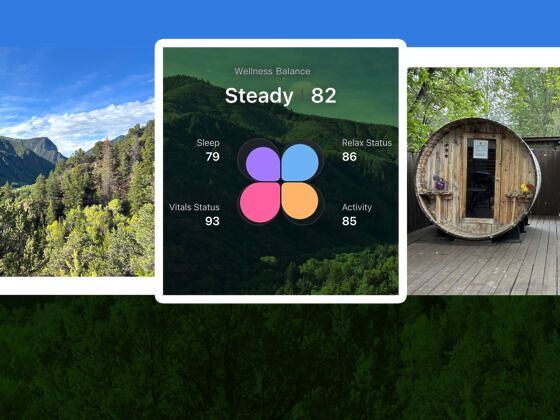
'Nature Heals' Sounds Hokey, but I Have Sleep-Tracking Data to Prove It
Finding calm through the simplicity
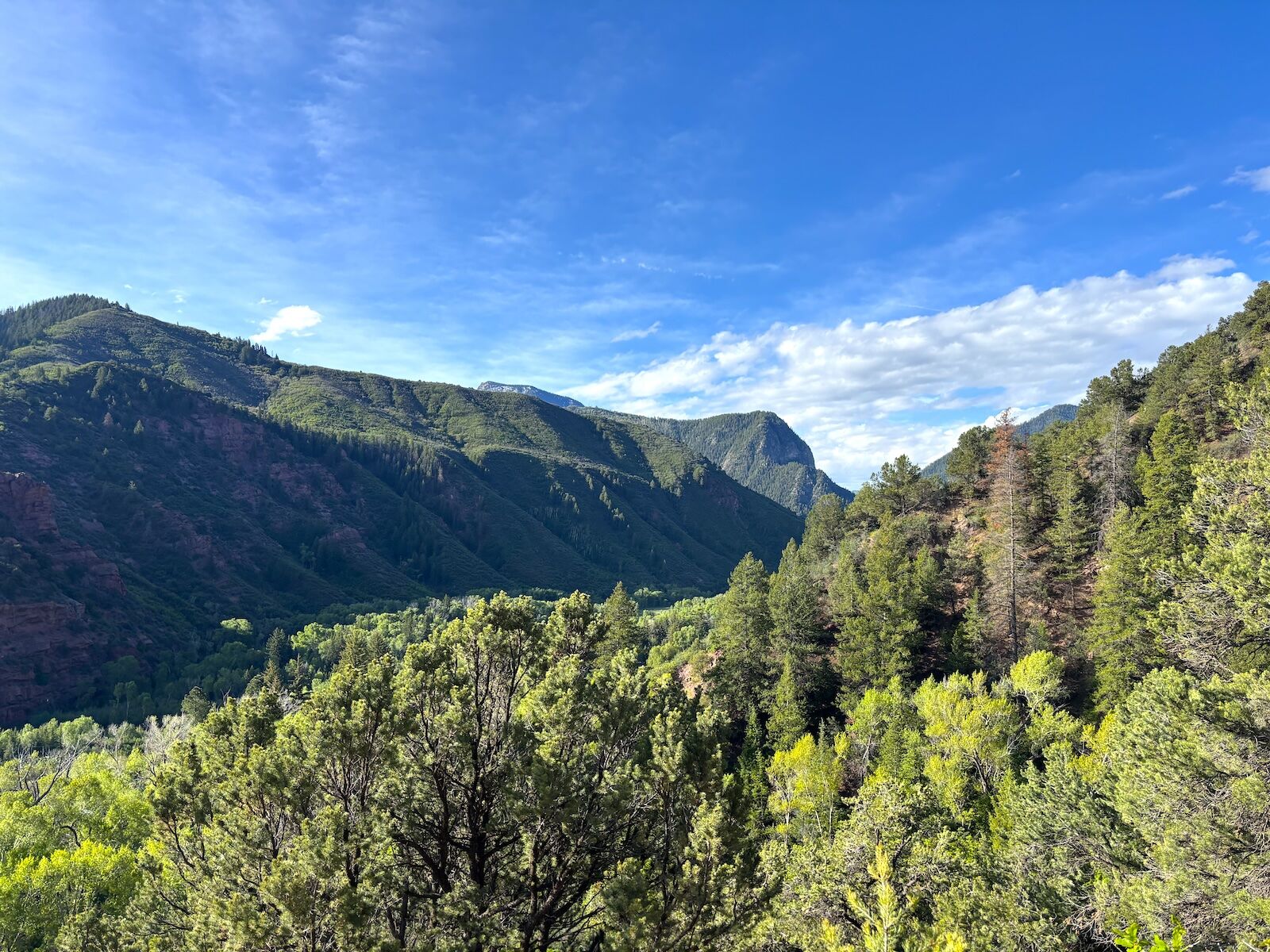
It’s easy to relax with this view from the Perham Creek Trail. Photo: Tim Wenger
I’ve been an avid camper since my teenage years. Until becoming a parent I’d shunned formal campgrounds as the bastion of those not well-camped enough to locate and set up a proper backcountry camp spot. I didn’t need that picnic table or gas-powered grill, thanks. Now in my early 40s and with a four-year-old, I’ve come around to their predictability when camping with someone far less predictable. I still appreciate a good dispersed site, but the comfort of knowing I have a spot waiting for me on arrival frequently beats the fear of having to spend an hour driving through the woods at dusk trying to find an available and suitable place to set up for the night. You could say I’ve officially entered the “dad camp” phase. This has, to the chagrin of my 25-year-old self, been the best thing to happen to my sleep since my daughter first made it through an entire night.
Campground operator KOA recently released a massive report documenting the impacts of camping — economically, socially, and in terms of wellness. Eighty-one percent of campers, according to the data, experience better sleep and reduced stress after spending time outdoors. This was exactly what I needed. If I could prove to myself that committing to regular camp trips is not only fun but also beneficial to my sleep and health, I’d have no excuse not to get out more often. KOA’s study backs that up, finding that 67 percent of campers would camp more often if data showed them that their health was improving. This seemed to me the perfect time to kickstart that concept in my own life.
I recently acquired one of those sleep-tracking rings after reading about the “biohacking in nature” trend (I am, admittedly, a sucker for outdoor-related trends). This theory claims that because human biology is fundamentally adapted to the rhythms of the natural world, and as such, realigning one’s schedule to flow with natural light and seasonality is the best way to optimize physical and mental performance. I wanted to use the ring to test whether that worked for my hectic work and family life on top of my generally poor sleep record. I can’t bail out into the wilderness for weeks to reset, but I can get away for a few days in the name of research. The parameters of my test: I’d wear the ring for two weeks of normal day-to-day. Then, I’d head to a campsite to spend a couple days going to bed early and waking up naturally. No alarm, no snooze button, but rather a determination to get up and moving when my eyes opened. Then, back to the routine.
During those two weeks my sleep score hovered around 60 out of 100 according to the results on the RingConn app. Not great, and a metric I was confident I could improve quickly once I got out of town. There were, however, a few nights that scored slightly higher, and those were the nights I went to sleep before 10 PM, settling in after putting my daughter to sleep around 9 PM.
A biohacking paradise just outside Carbondale
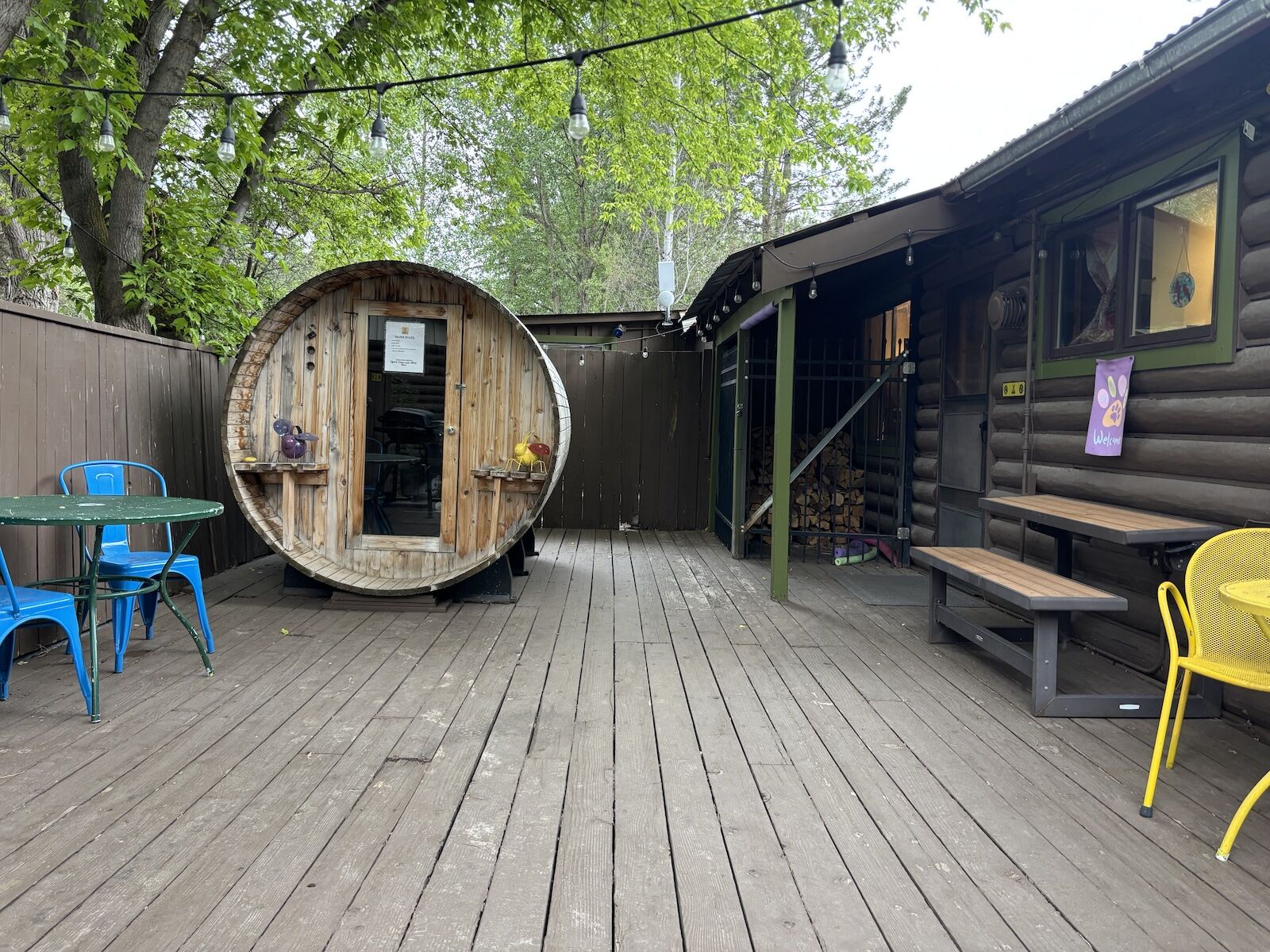
Tough to beat the relaxation of a barrel sauna Photo: Tim Wenger
I wanted to get my number up to an 80. Inspired by KOA’s wellness report, I picked the Carbondale/Crystal River KOA Holiday campground, about seven minutes outside Carbondale in Colorado’s Roaring Fork Valley, because campsites were available right on the river. That, and it’s less than two hours from my home in Palisade. I’d never stayed at a KOA campground before, and hoped I wouldn’t pull into a raucous RV park where peace wouldn’t come until quiet hours. Quite the opposite happened. The place was beautiful – Narrowleaf Cottonwoods and various pine trees surrounded the tent camping sites where I stayed. The campground also offers cabins and RV sites. After setting up camp I visited the barrel sauna and thought about taking a swim in the pool but decided to stay dry. It may just be the Coloradan in me but I’ve always found the smell of dinner cooked over a campfire to be quite inspiring, and indeed enjoyed that here.
The campground is just east of Mt. Sopris, and as the sun began to set over the 12,965-foot summit massif, I sat by the Crystal River and journaled. By 9 PM it was dark, and I fell asleep shortly thereafter to the sound of the river gurgling over small rapids. My sleep score was a 79, with 7 hours and 35 minutes of interrupted sleep time: the best numbers I’d had since I first put on the ring. This was after only one night. KOA’s data about soundscapes and camping suggest that 57 percent of campers said they would choose a campground solely based on its soundscape, and that 65 percent said relaxing by the river is a top way to improve their physical health. I hadn’t considered that before but thinking back beyond this past night I realized that many of the most memorable places I’ve camped weren’t just surrounded by beautiful scenery but also were located riverside, oceanside, or in a place with rich wildlife (waking to the sounds of chirping birds is just as soothing as falling asleep to the rushing river).
Embracing the ‘hack’
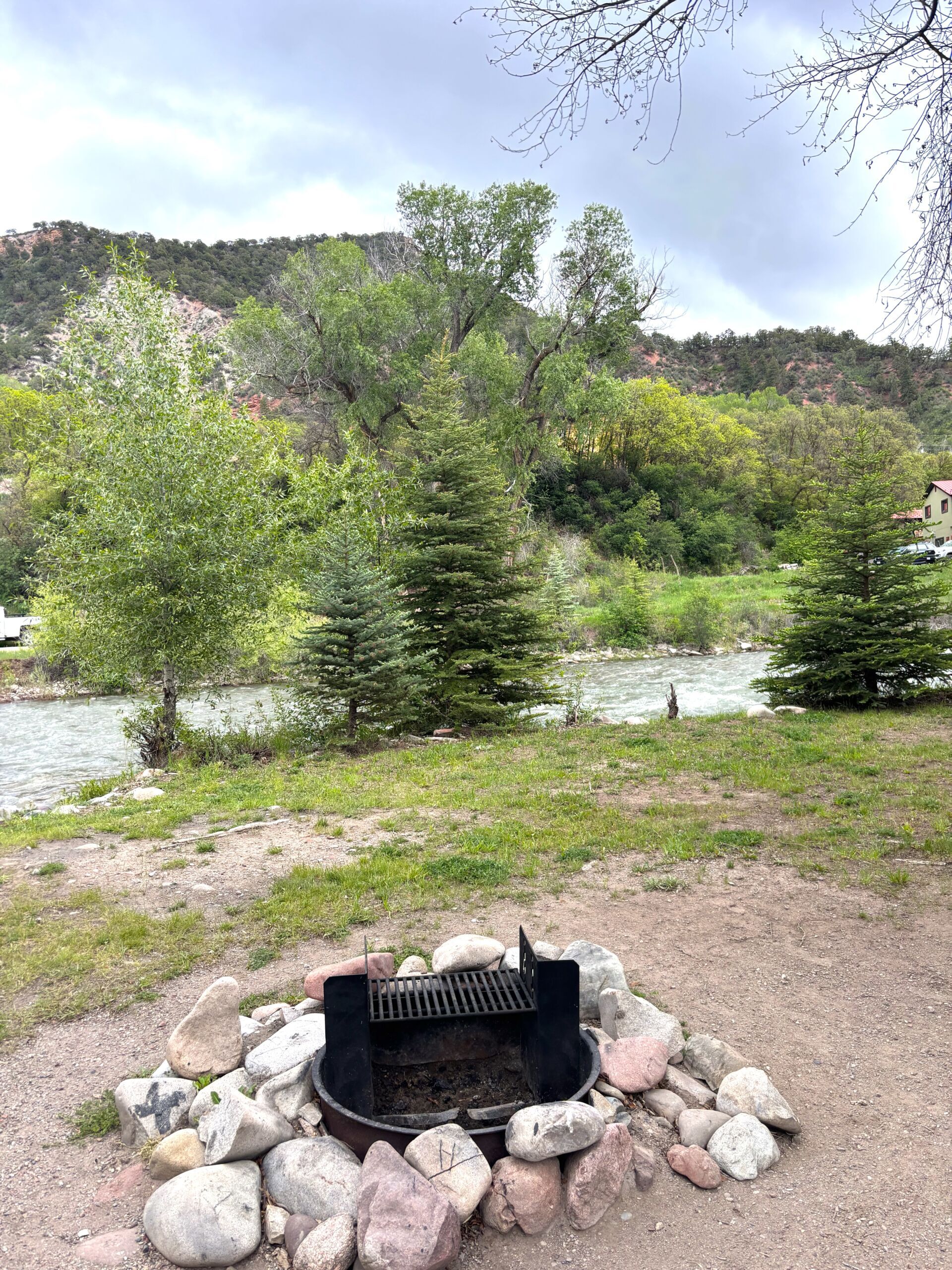
There’s something special about sleeping to the sound of a moving river. Photo: Tim Wenger
I woke the next morning around 6 AM, before the sun had crested the ridgeline to the east. Good enough to satisfy the demands of biohacking literature. Being in a campsite meant no scramble and no instinctive grab for the phone. I made coffee on the camp stove, walked the loop along the river and around the campsite, and didn’t look at a screen until well after the sun was fully up. I’d read that morning light, ideally within the first hour of waking, is the single most useful thing a person can do to regulate their circadian rhythm. Whether or not the science is as clean as the influencers make it sound, it’s hard to argue with a cottonwood-filtered sunrise.
The first big thing I did that day was hike up the Perham Creek Trail about 10 minutes from the campground. The ring also measures activity as part of a user’s overall score, and the 8,000+ steps I logged with moderate elevation gain would sure to help both that and my sleep that night. Then, a short drive into Carbondale for lunch at a coffee shop, then back to the campground to sit by the river and read. By dinner I was already drowsy. I cooked, ate, and let the sun go down over the high country. I was in the tent by 9:30, asleep maybe fifteen minutes after that.
Night two: an 84. Eight hours and twelve minutes of sleep, the longest uninterrupted stretch the ring had ever logged on my finger, and a deep-sleep number nearly double my two-week average. Whatever I’d paid for the campsite, it felt like the cheapest sleep aid I’d ever bought.
Back home, with the data to prove it
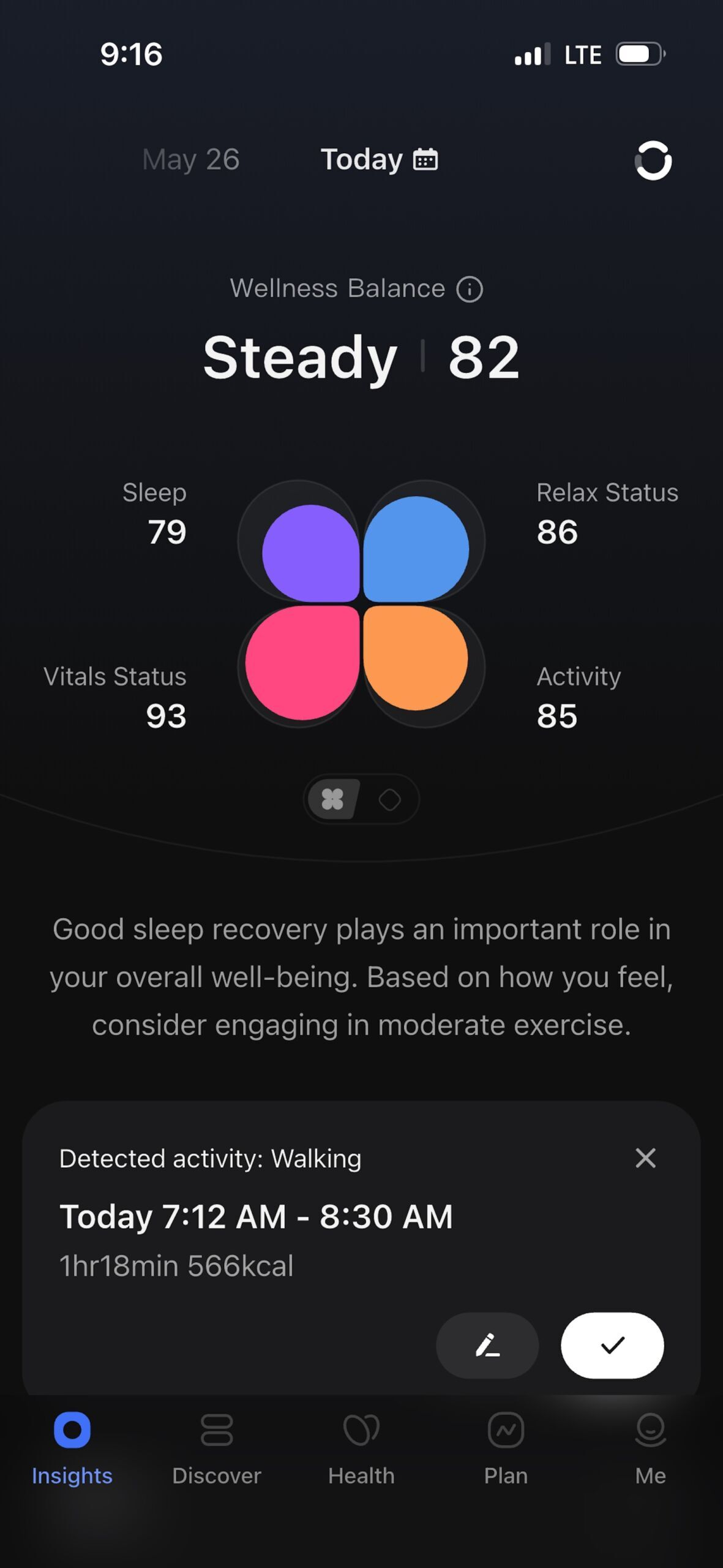
I sleep better following a natural rhythm, and have the numbers to prove it. Photo: Screenshot from the RingConn app
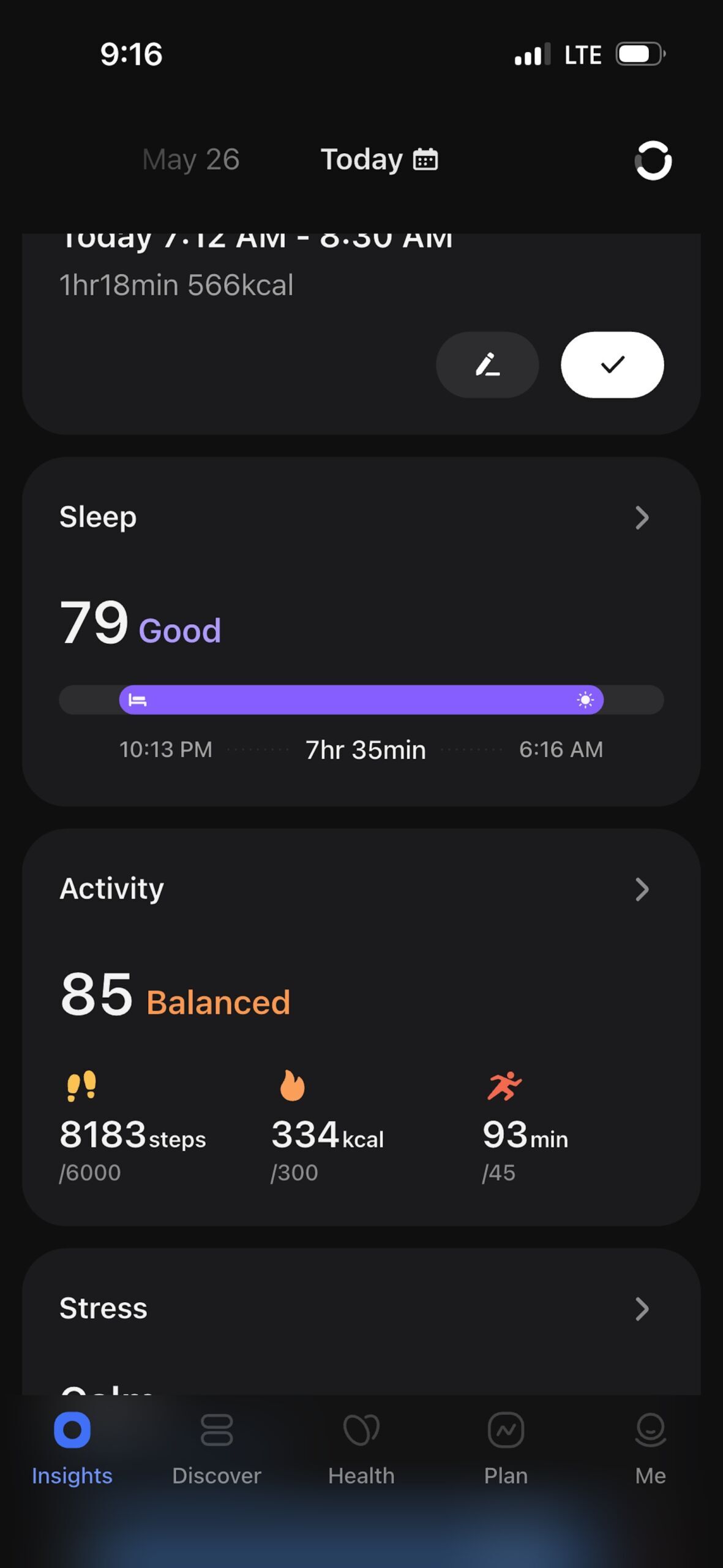
After one night my sleep score improved by nearly 20 points. Photo: Screenshot from the RingConn app.
I drove back to Palisade the next afternoon. By that evening I was back in the rhythm I’d left — laptop open after dinner, a scroll before bed, falling asleep to thoughts of the next morning’s task list. My sleep score sank into the low 60s within two nights, which was both predictable and, honestly, instructive. The ring was useful, but it wasn’t the variable. The variable was where I’d been.
I don’t believe there’s any real “hack” to biohacking in nature. What a campground escape confirmed for me is what I think most people already suspect: getting outside, away from screens, adjacent to moving water and within sight of a real horizon line is the most reliable reset available to a busy person who rarely finds the time to get away. The term is just modern society’s layering on top of a fairly simple truth.
What surprised me was how much the campground actually helped. I could have done this on a dispersed site somewhere up the Crystal but the Carbondale/Crystal River KOA Holiday made the whole experiment easy in a way that, in my parental brain, I really value. I didn’t spend an hour at dusk hunting for a level patch of ground. I didn’t worry about whether I’d be next to a generator. The site was reserved, the river was right there, the sauna was warm, the cottonwoods did what cottonwoods do, and Mt. Sopris delivered a beautiful sunset. Of course, I can’t do this all the time. I have a career and a kid. But having even a bit of data to convince myself that getting away and listening to nature now and then is worth the effort is a solid takeaway. If the dad-camp era of my life is going to look like this, I’ll take it. 