Photo: Lars Kleukers/Shutterstock

9 of the Hardest National Park Campgrounds Reservations to Snag

United States National Parks Camping
by Alex Bresler May 5, 2026

We’ve all been there. One minute you’re enjoying the fresh air on a warm summer day, looking ahead to a free weekend, when suddenly the mood to go camping strikes — only to find that every site worth having is already taken.

Securing a place to pitch a tent can be tough between Memorial Day and Labor Day, or at other times of the year for parks that are too hot to visit in summer. America’s most coveted campgrounds generally start taking reservations anywhere from six to nine months in advance, usually on a rolling basis. The catch is that the most competitive sites — the ones inside Yellowstone, Yosemite, and Zion — can disappear within minutes of the booking window opening. Start on each park’s official camping page, follow the reservation link for that specific campground, and get your account registered well before your target date drops. Then set an alarm.

Here are nine of America’s hardest national park campground reservations to snag.

Blackwoods — Acadia National Park, Maine

Blackwoods sits within a 10-minute walk of this stretch of rocky Atlantic coastline. Photo: Romiana Lee/Shutterstock

Location: Mount Desert Island, five miles south of Bar Harbor
Reservation window: 90 percent of sites open six months in advance on the first of each month at 10:00 AM EST; remaining 10 percent open 14 days ahead on a rolling basis
Facilities: Flush toilets, potable water, dump station, fire rings, picnic tables; no hookups, no on-site showers (fee showers a half-mile away)
Best for: Tent campers and smaller RVs wanting direct access to Acadia’s eastern trails and coastline

Acadia protects a mosaic of granite peaks, hardwood forests, and rocky Atlantic shoreline across Mount Desert Island and several smaller islands — and Blackwoods is where most people want to sleep. All 281 sites are wooded and within a 10-minute walk of the ocean, with the southern ridge trailhead for Cadillac Mountain starting right from the campground. The reservation system rewards precision: 90 percent of sites drop on the first of each month at 10:00 AM EST, six months out; the remaining 10 percent follow 14 days before your arrival date. Know your dates, set your alarm, and be ready. Seawall Campground, on the island’s quieter western side near Bass Harbor Lighthouse, is worth a look if Blackwoods is already gone — it draws less competition and puts you on a completely different side of the island, forested and closer to the working fishing harbor at Bass Harbor.

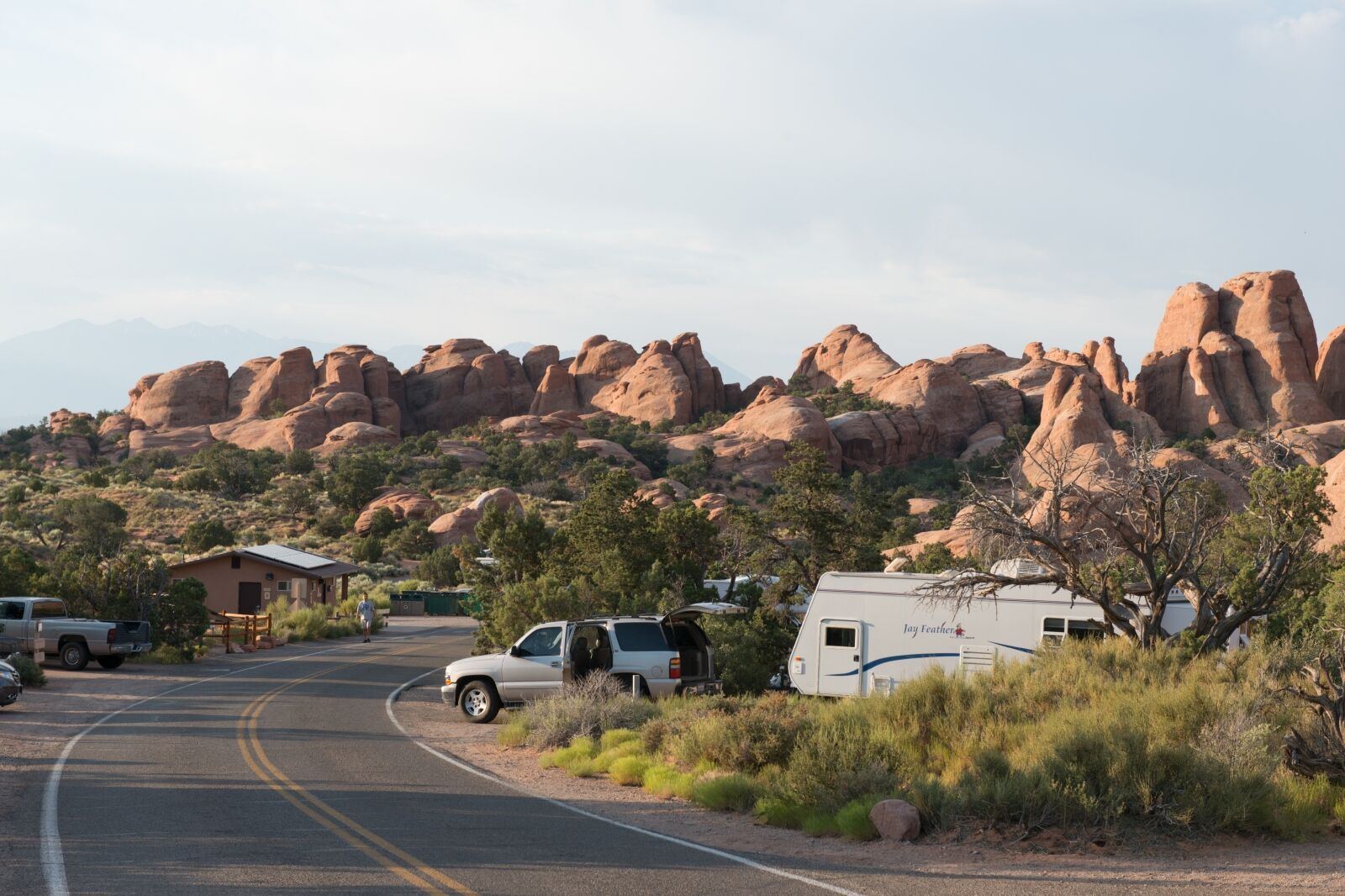
Devils Garden Campground — Arches National Park, Utah

The campsites at Devils Garden sit directly among the sandstone fins and rock formations that make Arches famous. Photo: National Park Service/Chris Wonderly

Location: 18 miles from the park entrance, 23 miles north of Moab, Utah; elevation 5,200 feet
Reservation window: Six months in advance; reservations required March 1 through October 31
Facilities: Flush toilets, potable water, fire rings, picnic tables, bear boxes; no hookups, no showers, no dump station
Best for: Hikers and photographers wanting to sleep inside the park among the red rock formations

Devils Garden is the only campground inside Arches National Park, and its 51 sites sit among sandstone fins and slickrock outcroppings 18 miles from the entrance. The Devils Garden Trail starts directly from the campground, giving access to Landscape Arch, Double O Arch, and six other named arches within a few miles. The park holds the highest concentration of natural arches in the world, and camping here puts you inside that landscape after the day visitors have left. Demand outstrips supply on most nights from March through October. The six-month reservation window is the one to watch; if you miss it, you are camping outside the park. November through February flips to first-come, first-served, which brings cooler temperatures, emptier trails, and some of the best stargazing the desert Southwest offers.

Elkmont — Great Smoky National Park, Tennessee

Each late May and early June, Elkmont hosts one of the only places in the US where synchronous fireflies light up the forest. Photo: Dave Allen Photography/Shutterstock

Location: Eight miles from Gatlinburg, Tennessee, along Little River Road
Reservation window: Six months in advance on a rolling basis; off-season sites available first-come, first-served at reduced rates
Facilities: Flush toilets, potable water, fire rings, picnic tables, camp store, amphitheater; no hookups, no showers on site
Best for: Families, anglers, and hikers wanting a central base on the Tennessee side of the park

Elkmont is the largest and busiest campground in Great Smoky Mountains National Park, with 220 sites: 200 standard tent and RV sites and 20 walk-in sites for tent campers only. The Little River and Jakes Creek run directly through the campground, putting fishing and summer wading within a short walk of most sites, and the riverfront spots are the first to go when reservations open. Three trailheads leave directly from camp: Little River Trail, Jakes Creek Trail, and the Elkmont Nature Trail. Laurel Falls, one of the most popular short hikes in the park, is a quick drive away. The Elkmont Historical District adds another layer of interest — the remains of a logging camp and an early-twentieth-century resort community, including the old Appalachian Club, sit within walking distance of the campsites. Reservations open six months out on a rolling basis and move fast. Peak summer weekends and October, when fall color draws heavy crowds, book up within hours of the window opening.

Fish Creek and St. Mary — Glacier National Park, Montana

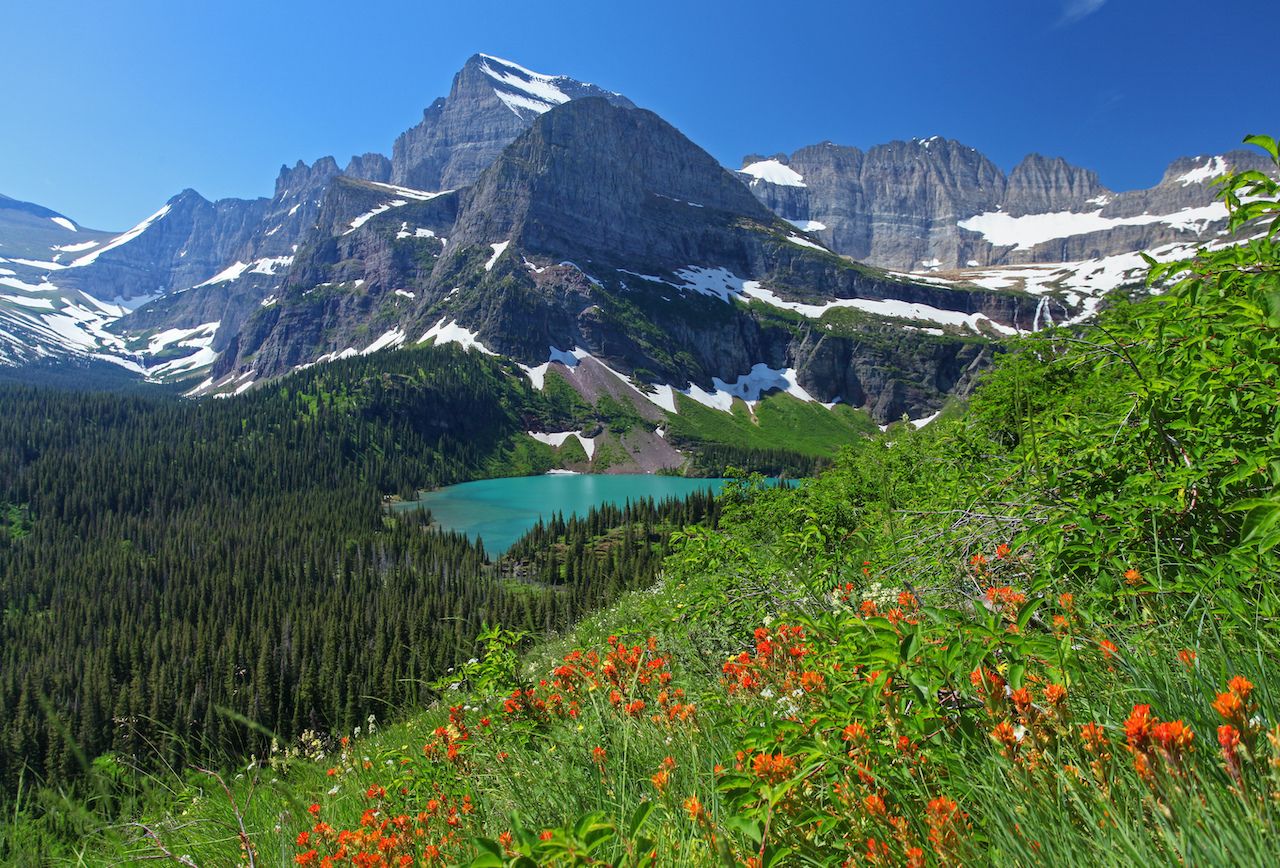
Going-to-the-Sun Road, accessible from both campgrounds, is one of the only roads in the US to cross the Continental Divide. Photo: Dan Breckwoldt/Shutterstock

Location: Fish Creek: western side of the park, four miles northwest of the West Glacier entrance; St. Mary: eastern side, half a mile from the St. Mary Visitor Center
Reservation window: Both open six months in advance on a rolling basis; book the day reservations drop
Facilities: Fish Creek — flush toilets, potable water, dump station, fire rings, showers (Loop A only), amphitheater; no hookups. St. Mary — flush toilets, potable water, dump station, fire rings, showers (Loop C only), amphitheater; no hookups
Best for: Fish Creek — forested western-side camping near Lake McDonald; St. Mary — east-side base for Going-to-the-Sun Road and Many Glacier

Seven of Glacier’s campgrounds require advance reservations, and the two most competitive sit at opposite ends of the park. Fish Creek, on the wooded western shore near Lake McDonald, has 178 sites spread across shaded loops with views of the water from some sites. It sits close to Apgar Village and the Camas Road corridor — one of the better spots in the park for birding and general wildlife watching. Rangers run nightly programs at the on-site amphitheater through peak season. On the east side, St. Mary is the largest campground in that half of the park, with around 150 sites spread across open, windswept terrain beneath Singleshot and Red Eagle Mountains. Its position half a mile from the St. Mary Visitor Center lands you directly at the eastern entrance to Going-to-the-Sun Road and within 30 minutes of Many Glacier — the park’s most celebrated hiking corridor. Both campgrounds book on the same six-month rolling window; neither has availability to spare once reservations open.

Madison — Yellowstone National Park, Wyoming

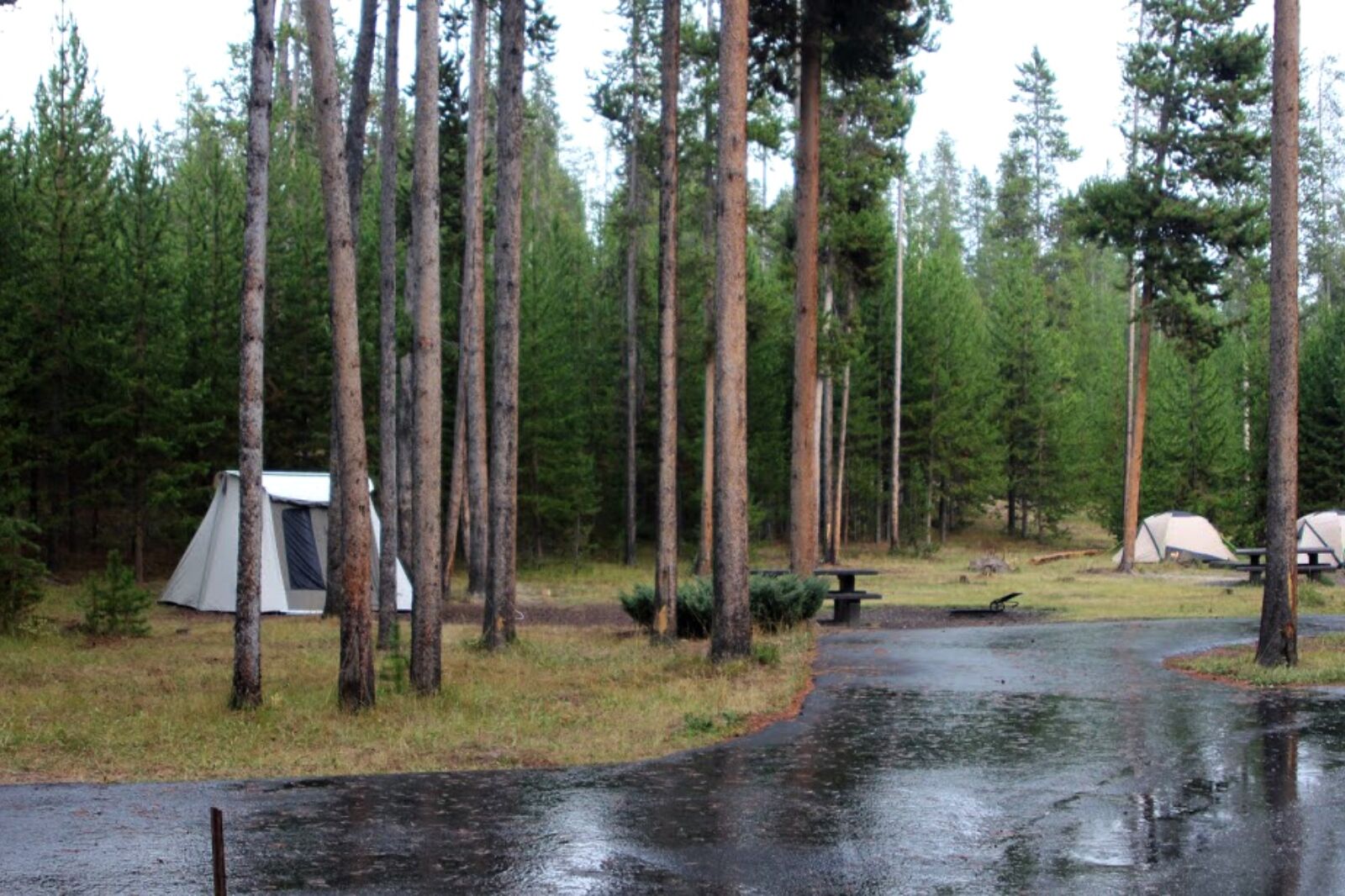
The campground sits in a valley where bull elk can be heard bugling on fall mornings. Photo: National Park Service/D. Renkin

Location: Madison Junction, 14 miles east of the West Entrance, 17 miles north of Old Faithful
Reservation window: Up to 13 months in advance through Yellowstone National Park Lodges; all summer reservations open on a single date in late March or early April (announced in February)
Facilities: Flush toilets, dump station, camp store, fire rings, picnic tables; no hookups, no showers (nearest showers at Canyon Campground)
Best for: Anglers, wildlife watchers, and anyone wanting a central base for the park’s western thermal features

America’s first national park fills its campgrounds faster than almost anywhere else in the system, and Madison leads the charge. Its 278 sites sit at the confluence of the Gibbon and Firehole Rivers, where they join to form the Madison — a blue-ribbon trout fishery that draws fly anglers from the first day the campground opens in early May. Bison and elk work the valley floor regularly, and Grand Prismatic Spring is 10 miles south. The booking system here works differently from most national parks: reservations currently run through Yellowstone National Park Lodges, not the standard federal booking portal, and all summer dates open on a single day in late March or early April — not on a rolling monthly basis. Miss that window and you are hunting cancellations. Starting with the 2027 season, reservations move to the standard federal system with a six-month rolling window, but for 2026 trips, go directly to the park’s lodging concessioner.

Mather — Grand Canyon National Park, Arizona

Mather — Grand Canyon National Park, Arizona

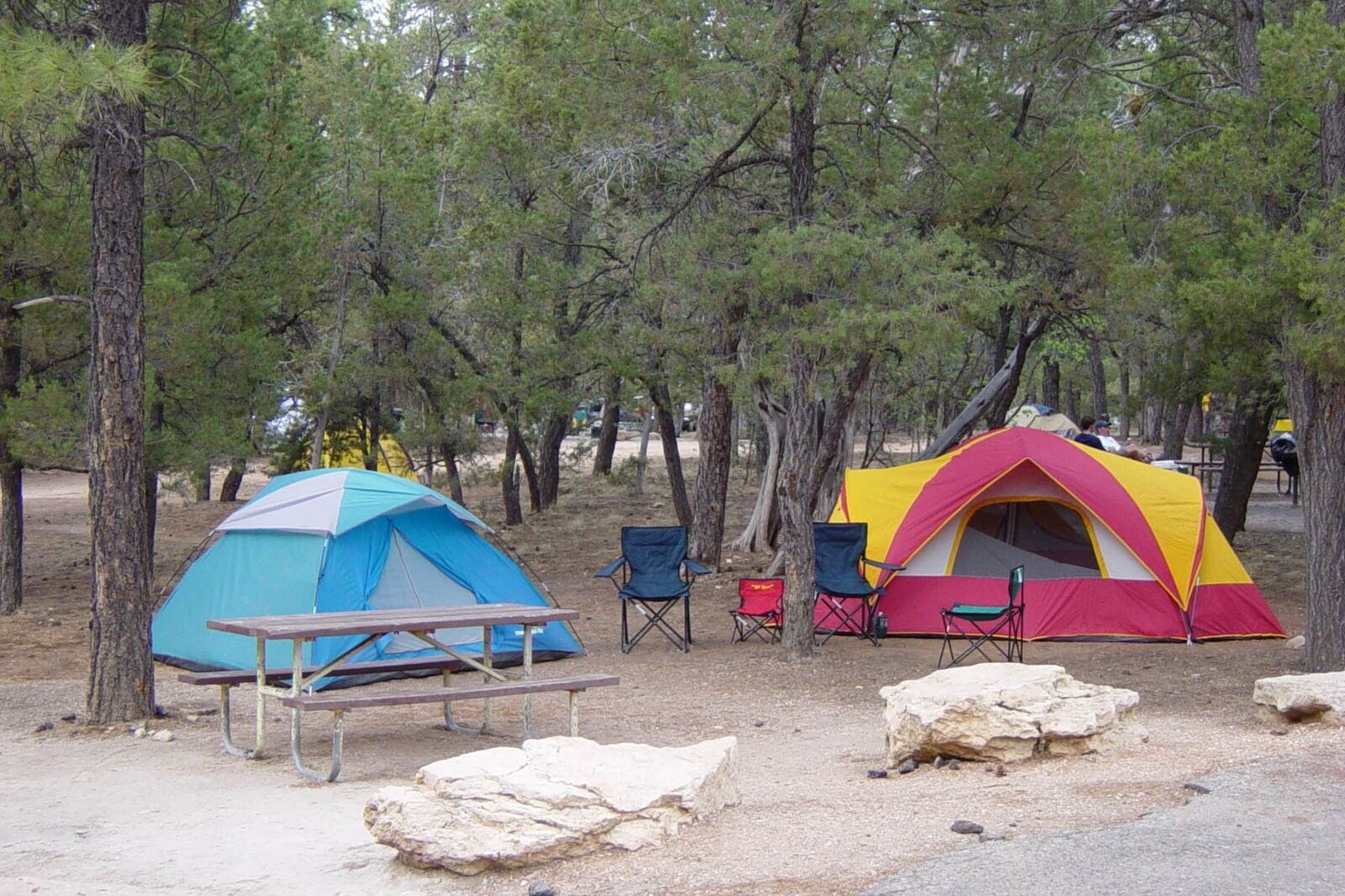
Mather sits at 7,000 feet in a forest of ponderosa pine, pinyon, and juniper — keep an eye out for the endangered California condor soaring above the rim. Photo: National Park Service

Location: Grand Canyon Village, South Rim
Reservation window: Up to six months in advance; strongly recommended March 1–November 30
Facilities: Flush toilets, coin-operated showers and laundry, campfire rings, grill grates, picnic tables, general store nearby; no hookups
Best for: Families, first-time national park campers, RVs up to 30 feet

Named for Stephen T. Mather, the first director of the National Park Service, Grand Canyon Village has one campground — Mather, the largest in the NPS system, with 327 campsites spread across seven loops, each with a different trade-off between shade, seclusion, and access to facilities. It sits a mile from the South Rim, within walking distance of shuttle stops, trailheads, and the visitor center. Reservations are strongly recommended from March through November and open six months in advance; they go fast even on weekdays during shoulder season. Winter camping (December through February) is first-come, first-served and one of the quieter ways to experience the canyon without the summer crowds.

Mazama — Crater Lake National Park, Oregon

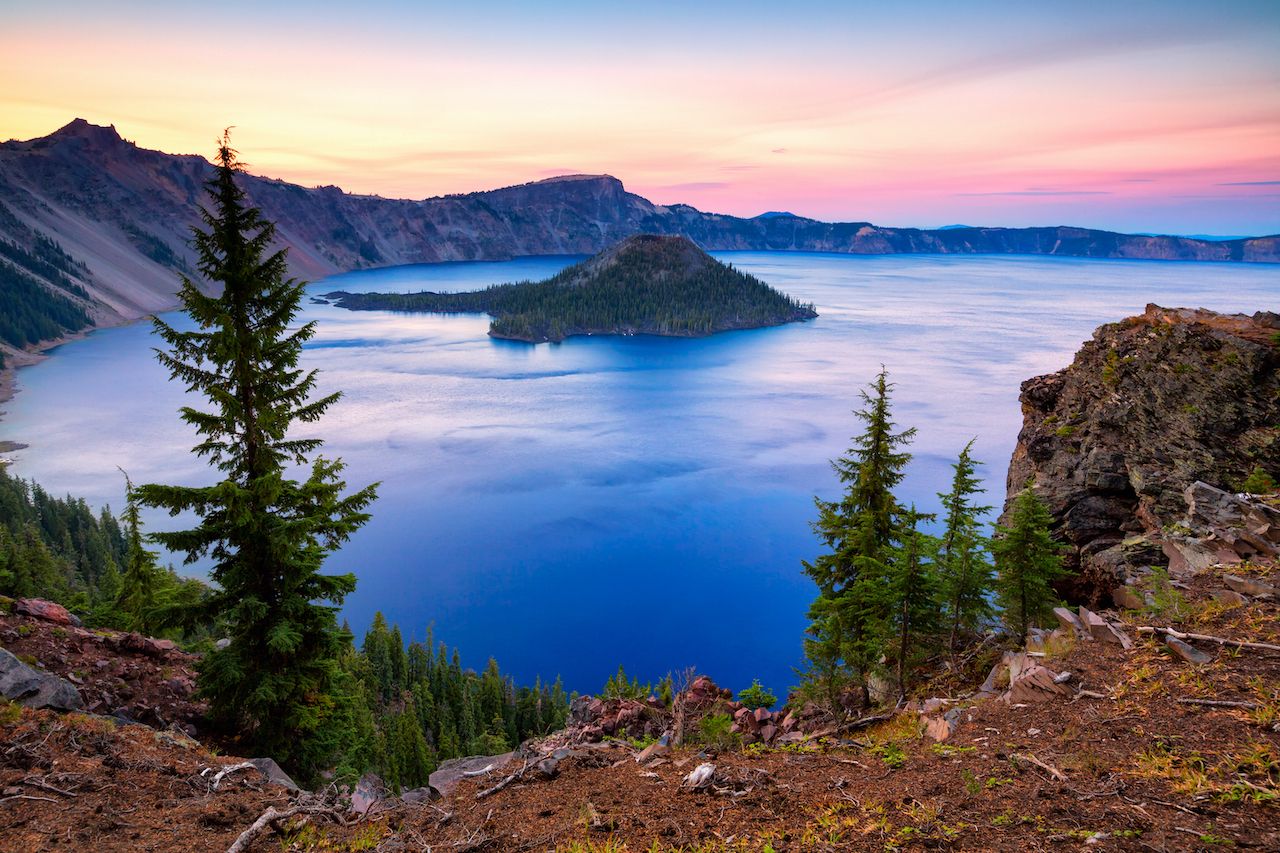
Crater Lake is the deepest lake in the United States, formed when the volcano Mount Mazama collapsed around 7,700 years ago. Photo: Bill45/Shutterstock

Location: Seven miles south of Rim Village, near the Annie Spring entrance
Reservation window: Reservations open for July 1 through October 1; late May through June 30 is first-come, first-served
Facilities: Flush toilets, potable water, dump station, coin-operated showers, laundry, fire rings, picnic tables, bear boxes, camp store, gas station; electric and full hookups available on select RV sites
Best for: Tent campers and RVs wanting a well-provisioned base for exploring Crater Lake

Oregon’s only national park sits in the caldera of an ancient volcano, and Mazama is the only campground in the park that takes reservations. Its 214 sites spread across seven loops in a forest of lodgepole pine at 6,000 feet, seven miles below the caldera rim. The village adjacent to the campground has a restaurant, general store, gas station, and showers, making it one of the better-provisioned campgrounds in the national park system. The rim and its views of the lake are a short drive up. Reservations cover July 1 through October 1; late May through June is first-come, first-served and dependent on snow clearance. The window for reservable dates books up months in advance and the park’s short summer season concentrates demand sharply. If the lake is what you came for, lock in July or August well ahead.

The Pines Campgrounds — Yosemite National Park, California

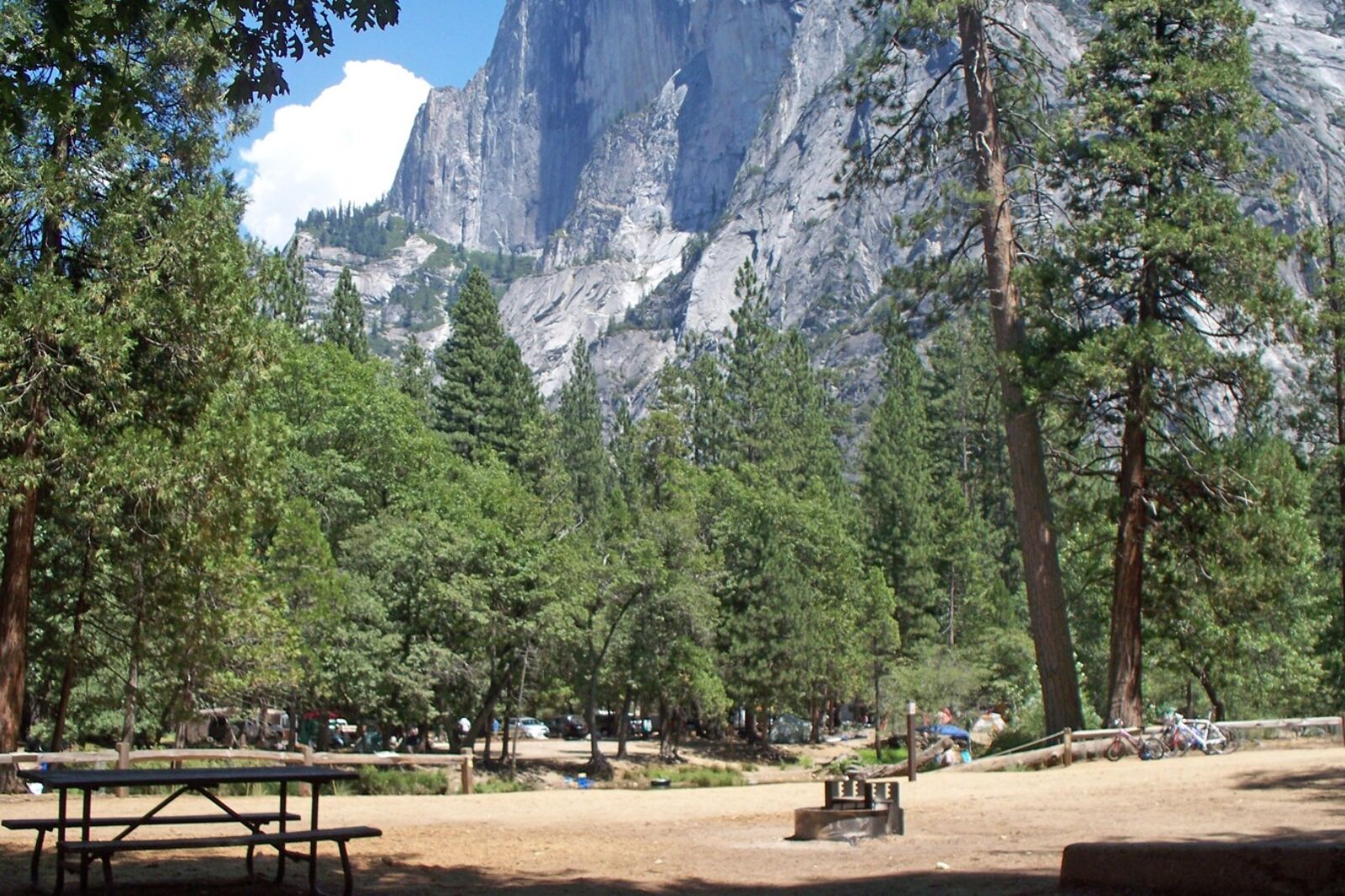
North Pines campsites look out through the pines to granite walls that rise from the valley. Photo: National Park Service

Location: Yosemite Valley floor, along the Merced River, 4,000 feet elevation
Reservation window: Five months in advance, on the 15th of each month at 7:00 AM PST; sites sell out in minutes
Facilities: Flush toilets, potable water, fire rings, picnic tables, bear boxes at every site; no hookups, no showers on site (fee showers at Curry Village)
Best for: Anyone wanting a base on the valley floor within walking and biking distance of Yosemite’s most celebrated trails and viewpoints

The three Pines campgrounds sit on the floor of Yosemite Valley along the Merced River, surrounded by granite walls, with Half Dome, Yosemite Falls, and El Capitan all reachable on foot. Upper Pines is the largest of the three at 236 sites and the only one open year-round. Lower Pines adds 74 sites along the river, and North Pines contributes 81 more on a spit of land between the Merced and Tenaya Creek. All three sit on the free valley shuttle route, putting Mirror Lake and the surrounding trailheads within easy reach. Reservations open on the 15th of each month at 7:00 AM PST, five months out, and sell out in minutes on release day. Be logged in and ready before that window opens. Do not arrive in Yosemite Valley between spring and fall without a confirmed reservation.

Watchman — Zion National Park, Utah

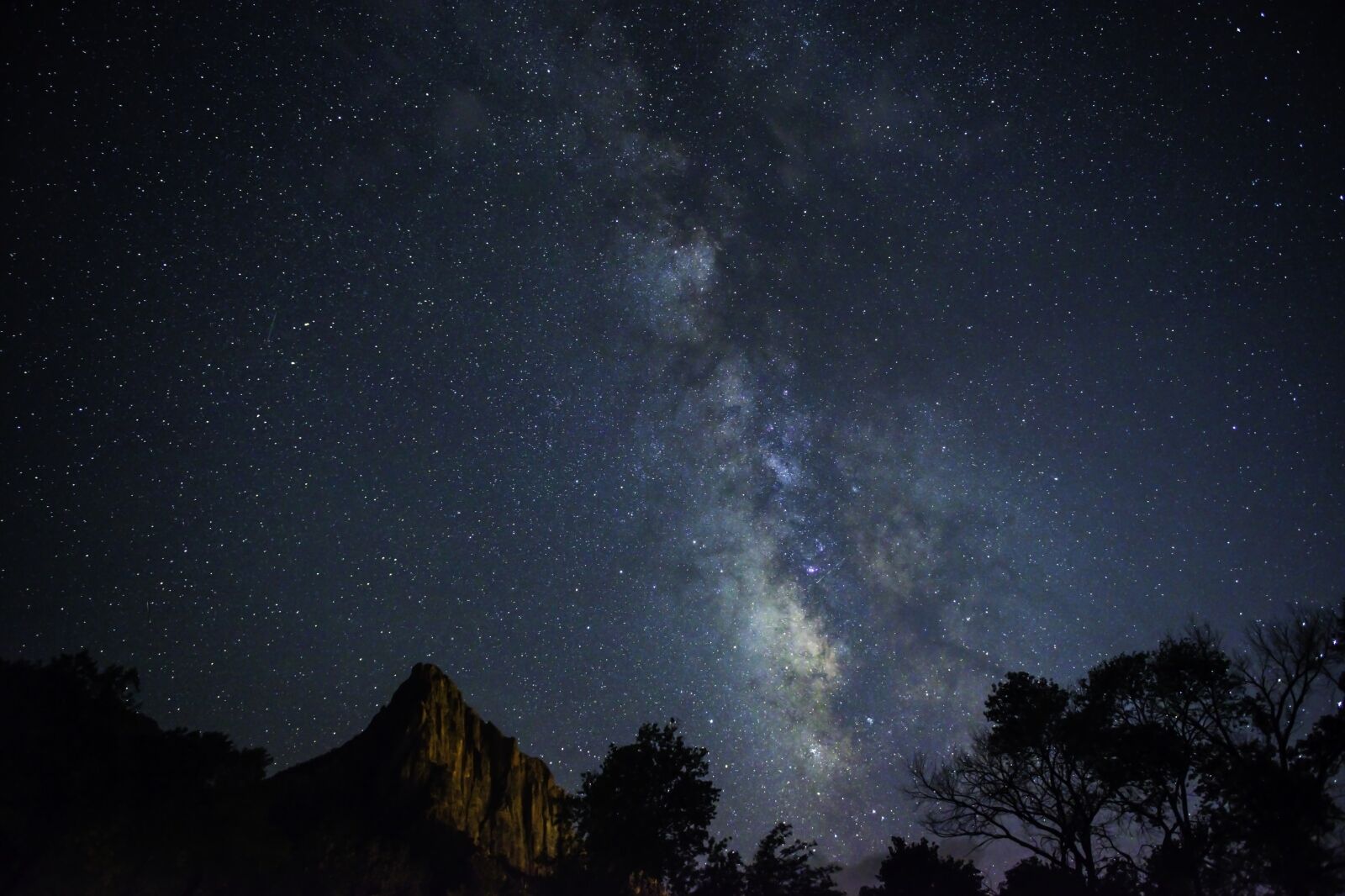
Zion was designated an International Dark Sky Park in 2021, and the canyon walls at Watchman frame a night sky with almost no light pollution. Photo: National Park Service/Patrick Buick, AstroVIP

Location: South entrance of Zion Canyon, adjacent to the visitor center and shuttle system
Reservation window: Six months in advance on a rolling basis; reservations open at 10:00 AM EST on your booking date
Facilities: Flush toilets, potable water, dump station, fire rings, picnic tables, electric hookups in A and B loops; no showers on site (available in Springdale)
Best for: Tent campers and RVs wanting direct access to Zion Canyon’s shuttle system and trails

Zion welcomes around five million visitors a year and Watchman, with 203 sites spread across six loops at the canyon’s south entrance, carries most of the in-park camping demand. Its position puts the visitor center, the canyon shuttle, and the town of Springdale within a short walk. Three trails start directly from the campground: the Watchman Trail ascending the peak behind the campsites, the Archeology Trail, and the Pa’rus Trail, a paved riverside path that is the only trail in the park where dogs are permitted. Angels Landing, the Narrows, and the park’s other signature hikes are all reachable by shuttle. The canyon fills on close to every night from mid-March through late November.

Discover Matador

Save Bookmark

We use cookies for analytics tracking and advertising from our partners.

For more information read our privacy policy.