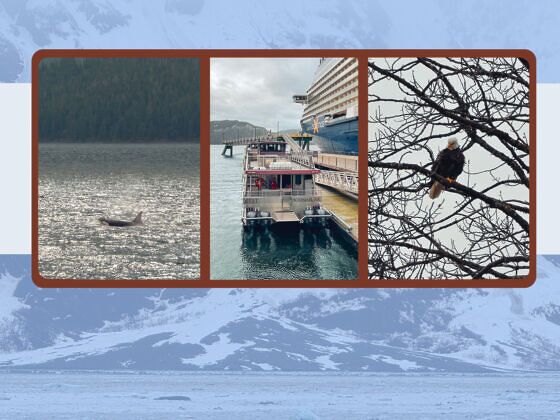
An hour after boarding Celebrity Solstice in Vancouver, while still tied to the dock, my fellow cruisers and I were treated to a special wildlife sighting: four orcas turned up in Vancouver Harbour, a couple of hundred feet from the ship, their tall fins slicing the water as they foraged for food. All the traffic in the busy harbor stopped to make way for them. We observed the small pod from the ship’s top deck until it swam away. We took the orcas’ appearance as a good omen for our upcoming sailing to Alaska.
Photos: Morgane Croissant and Jesse Adams
Camera Roll: Orcas, Glaciers, and Eagles on a 7-Day Alaska Cruise
Alaska comprises 586,000 square miles of land, among which are more than a dozen national parks and preserves, and very few people (fewer than 750,000 of them, to be exact). That means that no matter where you go in Alaska, and however you decide to explore, you’ll likely run into landscapes mostly inhabited by wildlife. And while small expedition cruises advertise that they can get you the best views and the most intimate encounters with Alaska’s wild animals, you don’t actually have to spend upwards of $15,000 per person to have that experience. A sailing on board a regular cruise ship will do the job for much less. That’s what I learned from spending a week at sea this past May, when the Alaska cruise season opened.
This wasn’t my first cruise around Southeast Alaska. Four years prior, I sailed a very similar itinerary, but I did so in late September, the tail end of the cruising season in Alaska. Although the weather was very much the same (rainy and chilly), the species I observed then were different. In the fall of 2022, I saw thousands of sea otters and bald eagles, while I only saw one of each this time around. In the spring of 2026, the species I got to see in abundance were orcas, humpback whales, and, somewhat surprisingly, Rufous hummingbirds. What helped me spot and observe these animals in the wild was a good pair of binoculars, an item you should definitely pack for your Alaskan cruise, along with a camera, of course.
Spotting orcas at Icy Strait Point
Left: orcas in Icy Strait Point. Right: whale-watching boat. Photos: Morgane Croissant and Jesse Adams
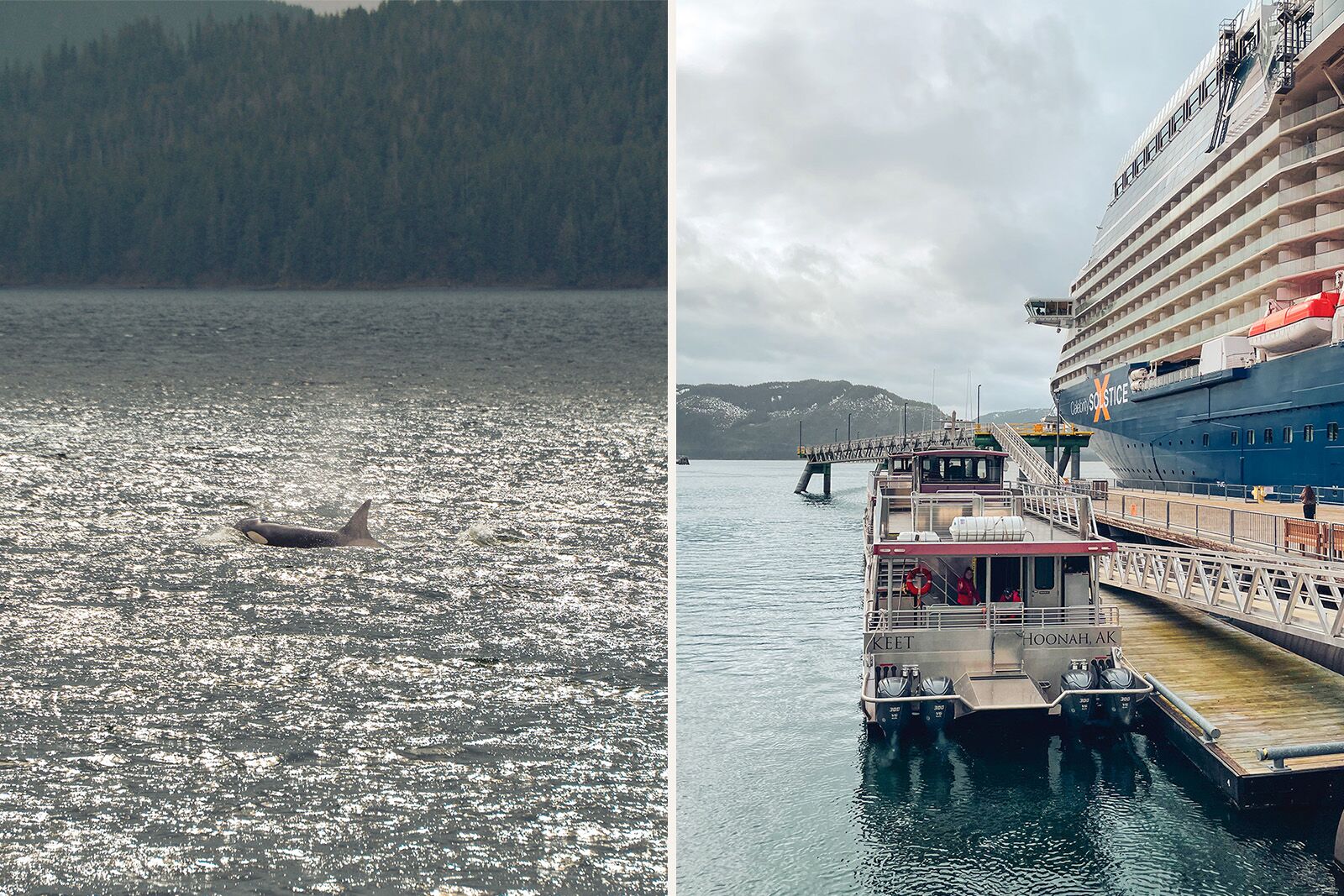
Some of the most exciting wildlife sightings we had during our trip took place in Icy Strait Point, an Indigenous-owned cruise ship destination located in Hoonah, Alaska. There’s plenty to do there, including hiking, ziplining, and riding cable cars, but we opted for a 2.5-hour whale and marine mammals cruise. While it’s becoming more and more common for whale-watching tours to guarantee sightings, you can never really predict if you’ll get to see the animals up close or if they’ll be there at all. Our captain and naturalists didn’t promise anything upfront, but they did mention that a pod of orcas had been seen in the area recently. And because we were on board a boat named Keet, the Tlingit word for orca, we were all feeling positive.
It took less than 10 minutes of navigating around Port Frederick Fjord (Komtok Hon in the Tlingit language) for us to spot the small transient pod of orcas. We were able to identify one adult male, one adult female, and one juvenile, recognizable by the size and shape of their fins. Male orcas have striking triangular fins that can measure up to six feet, while those of females and juveniles are much smaller and curved. Although orcas are commonly referred to as killer whales, they are not whales but dolphins (hence the fin). In fact, they are the largest members of the dolphin family. We observed them from a respectful distance for the two hours, in awe of their grace and large, smooth bodies.
Chasing ice at Hubbard Glacier
Hubbard Glacier. Photos: Morgane Croissant and Jesse Adams
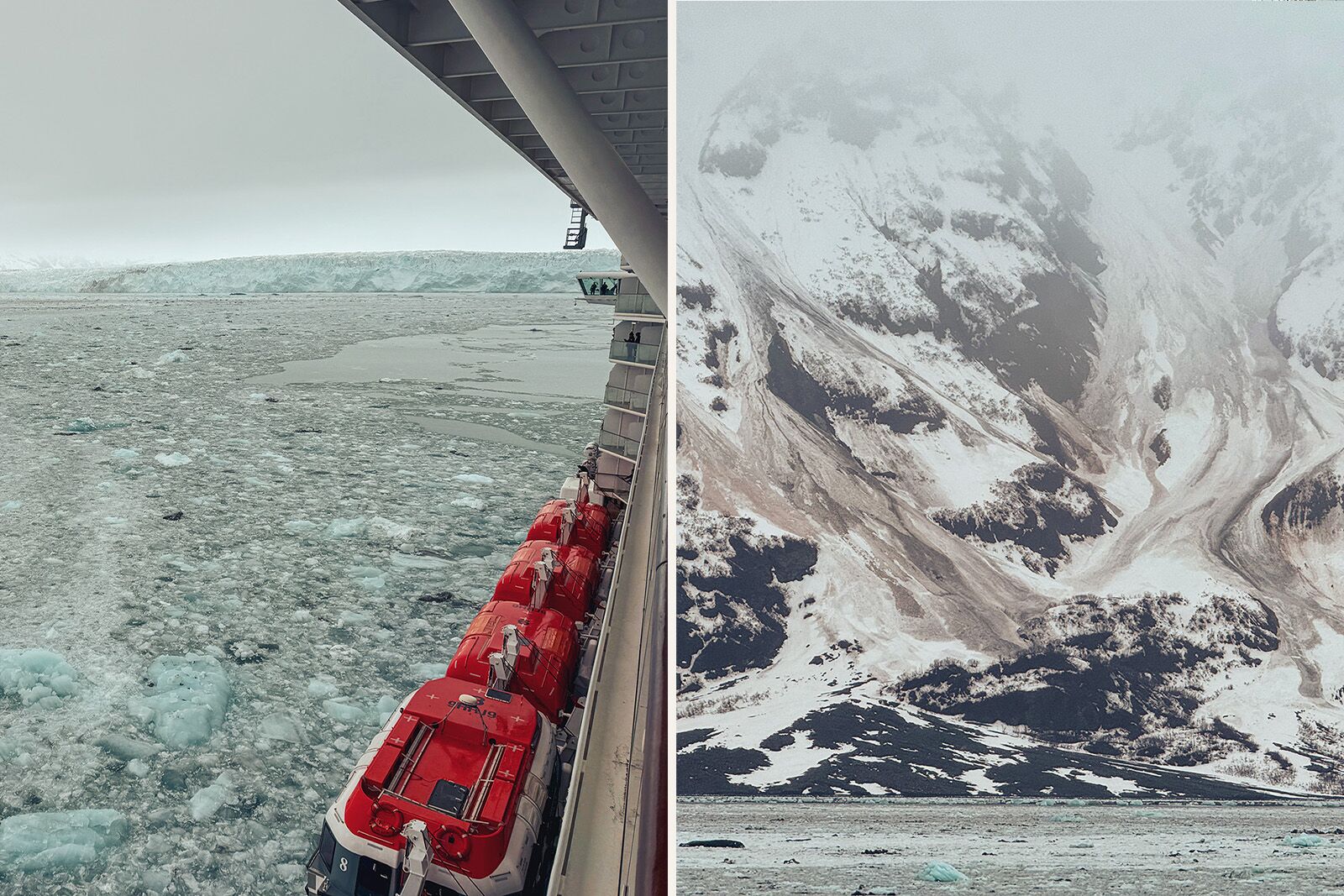
Wrangell-St. Elias National Park and Preserve is one of the least visited national parks in the US, but it attracts a lot of cruise ships. That’s mostly because this is where Hubbard Glacier, North America’s largest tidewater glacier, is located.
As we sailed up Yakutat Bay toward Hubbard Glacier, the weather was miserable, a common phenomenon in this part of Alaska. The pouring rain, fog, and low temperatures made being outside to watch the extraordinary scenery a little challenging, but it’s nothing a parka, a woolen hat, and some thick mittens can’t fix. Also, booking a room with a covered balcony helps immensely.
The ice, in all its varied shapes and colors, is the star of the show when sailing toward Hubbard Glacier. You can hear it cracking and moving as the ship advances, and if you’re patient and observant, you can see large ice floes flipping dramatically before your eyes. It’s a sight that’ll make you forget you’re soaked through and shivering.
A group of Steller sea lions. Photo: Morgane Croissant and Jesse Adams
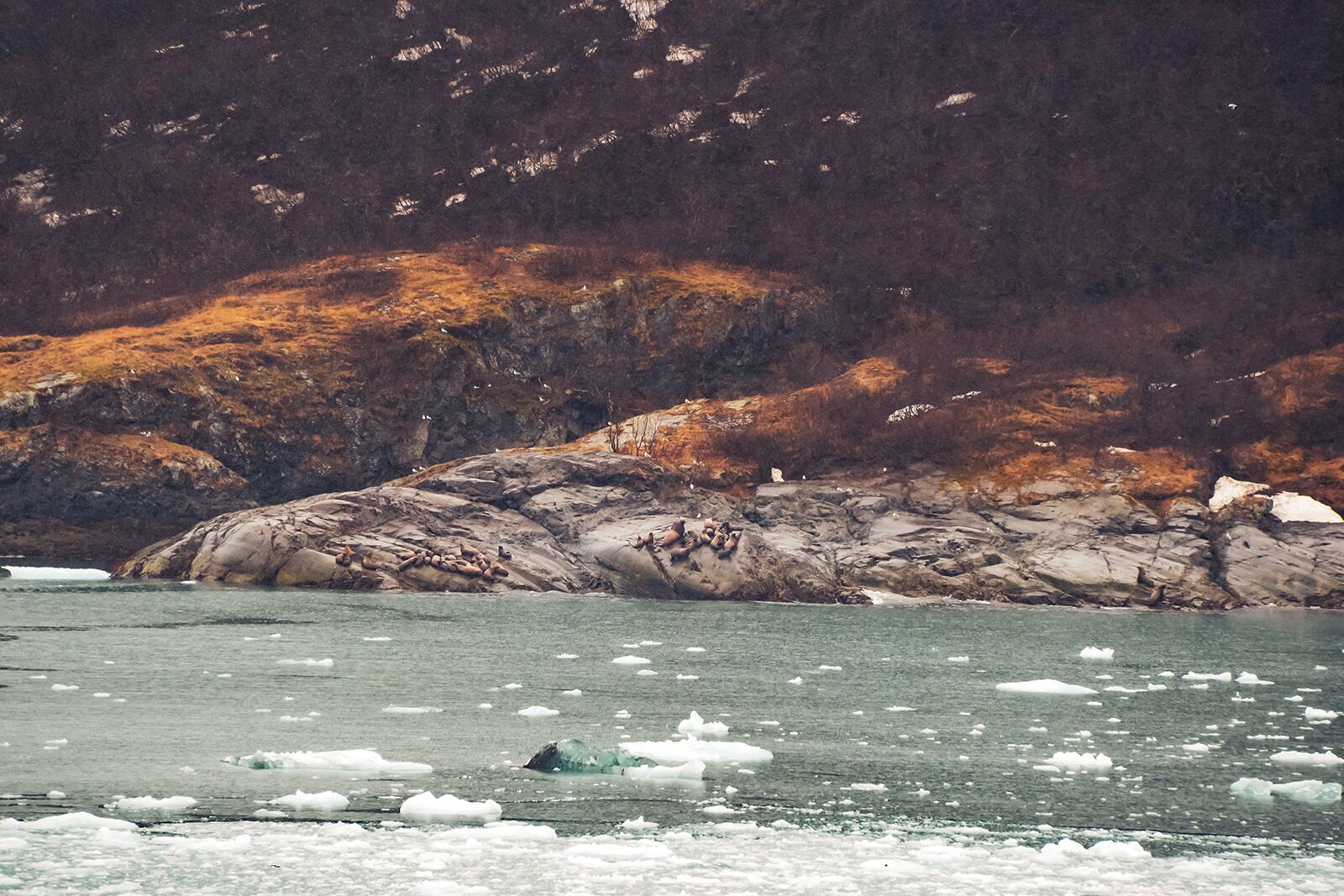
There’s a lot of wildlife to observe at Hubbard Glacier, but you need binoculars. I was able to spot a couple of harbor seals, a sea otter, and one very curious (and probably freezing) Rufous hummingbird, its red throat bright against the gray skies. My best catch of that day, however, was dozens of Steller sea lions resting on a rocky peninsula. Their loud barks marked their presence, but the weather, their distance from the ship, and the way their coloring blended into the landscape made them very hard to locate. Once spotted, it was easy to distinguish the males among the colony; they are nearly three times larger than the females.
There are two populations of Steller sea lions in Alaska: the Western Steller sea lion, which is listed as endangered under the IUCN Red List, and the Eastern Steller sea lion, which is considered near threatened.
Tracking eagles and totems in Ketchikan
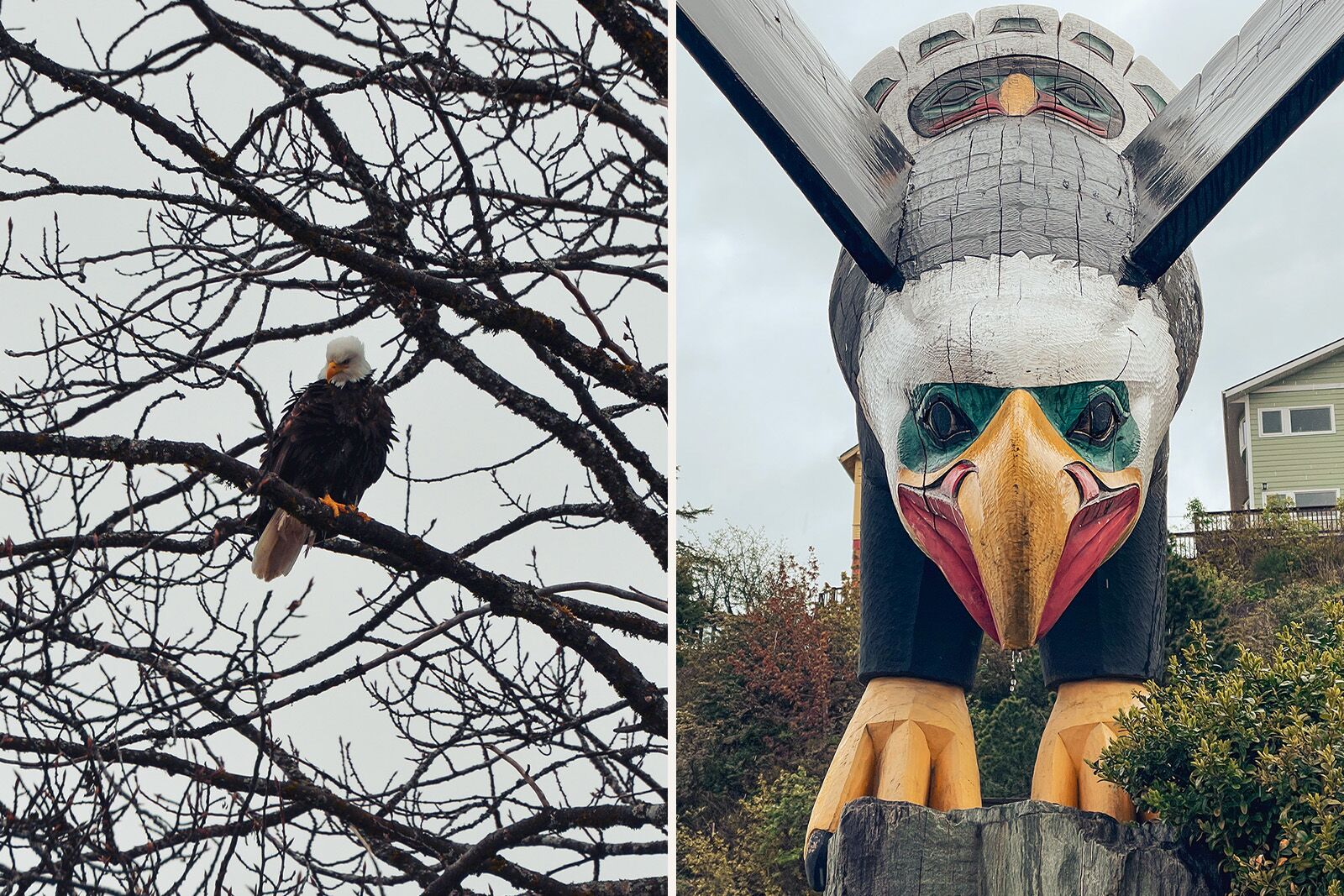
Left: bald eagle on a tree. Right: The Totem Heritage Center. Photos: Morgane Croissant and Jesse Adams
By some estimations, there are over 70,000 bald eagles in Alaska, more than in any other state in the nation. Since the birds’ main diet is fish, they are commonly spotted along the coast — good news for cruisers. In Southeast Alaska, the best place and time to see them by the dozens is the town of Ketchikan during the salmon run (May through September), but you can spot them elsewhere in the region if you keep your eyes peeled.
Case in point: I was able to observe and photograph one individual, as well as a nest, in Icy Strait Point. Bald eagles’ nests are huge; they can measure up to eight feet across, the largest nests of any birds in North America. Bald eagles hold special significance in the local Indigenous Tlingit culture, in art, folklore, and myths. The Totem Heritage Center in Ketchikan is a great place to see traditional carvings of eagles by Tlingit artists.
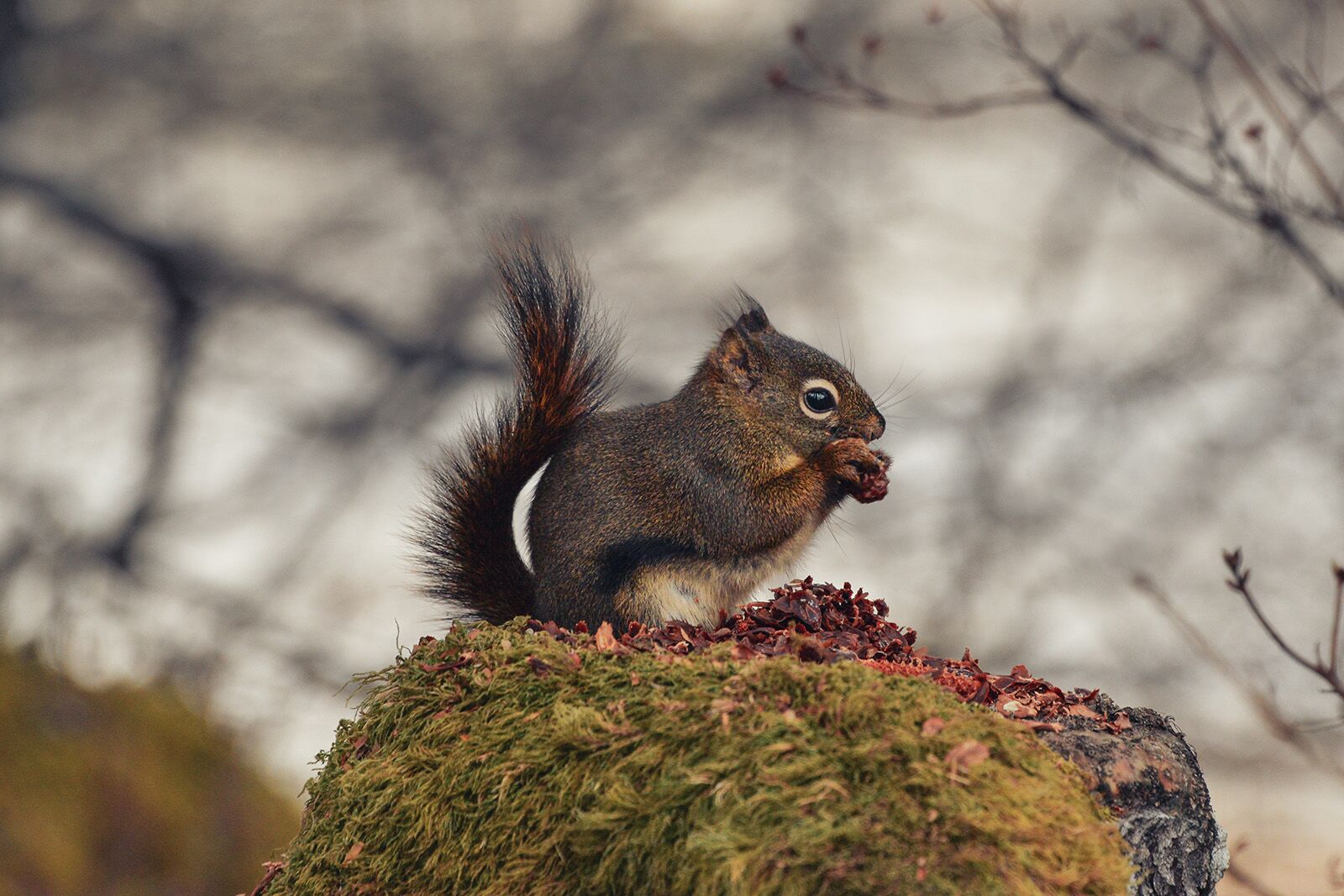
Photo: Morgane Croissant and Jesse Adams
While it’s the large, impressive animals that people travel to Alaska to see, there are many small creatures that are just as deserving of your attention. During a forest hike, I spotted a red squirrel meticulously chewing on a pine cone while sitting on a tree stump, a common behavior for the species. From the pile of pine cone cuttings on the ground next to the animal, I quickly understood that this particular stump was the equivalent of its kitchen table. Once finished with a pine cone, it would immediately leave its spot, grab another cone, and sit again to eat. Red squirrels are found almost throughout Alaska.
Saying goodbye to Alaska’s giants
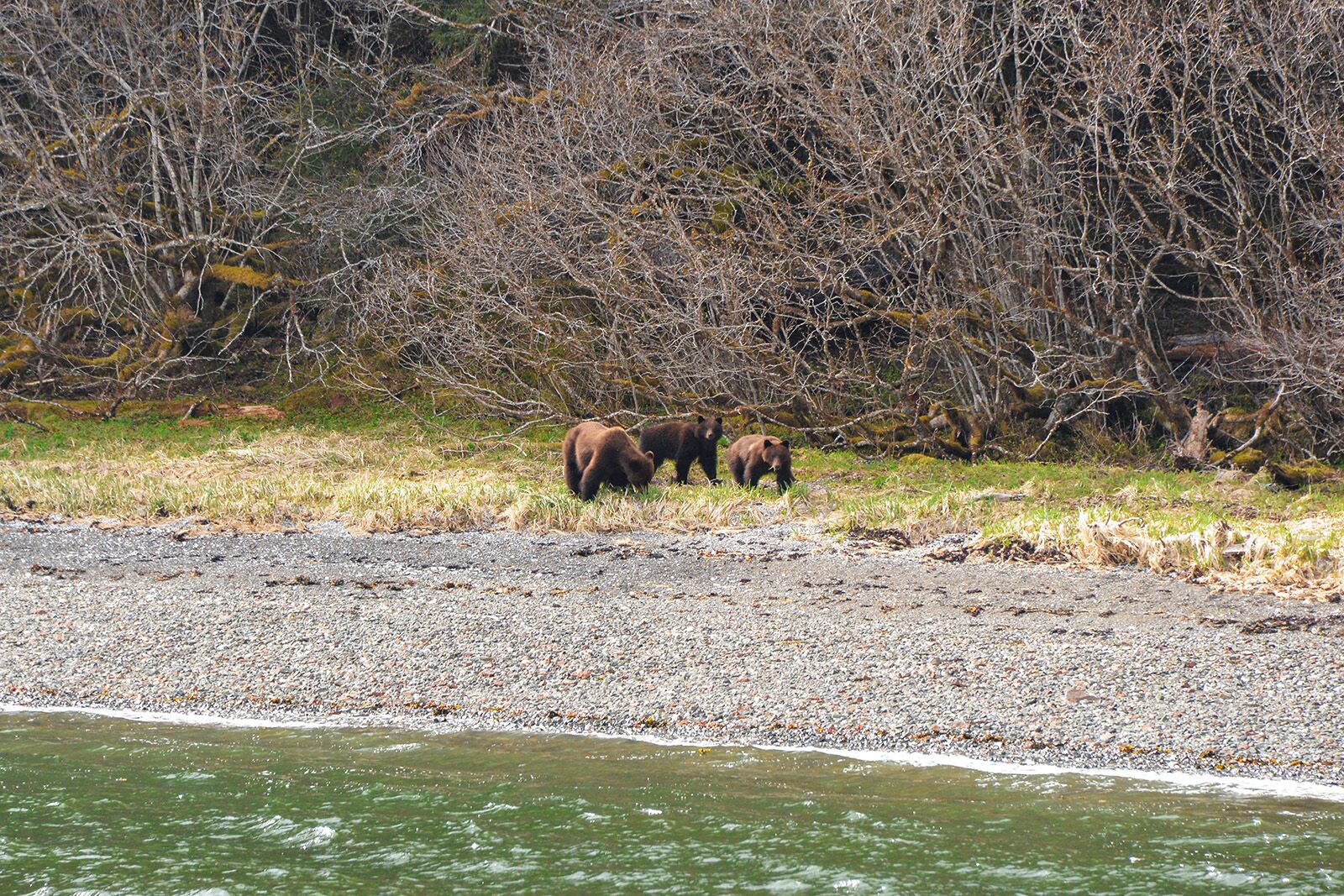
Coastal brown bears. Photo: Morgane Croissant and Jesse Adams
On our way back to terra firma at the end of our whale and marine mammals tour in Icy Strait Point, our sharp-eyed captain spotted three coastal brown bears, one mom and two cubs. We kept our boat a good distance away from the animals who were happily grazing along the beach so as not to spook them. Coastal brown bears are very similar to grizzlies; they are very large and have a prominent shoulder hump. The difference between the two is that one lives off marine food such as salmon and clams, while the other consumes more inland resources such as berries and meat.
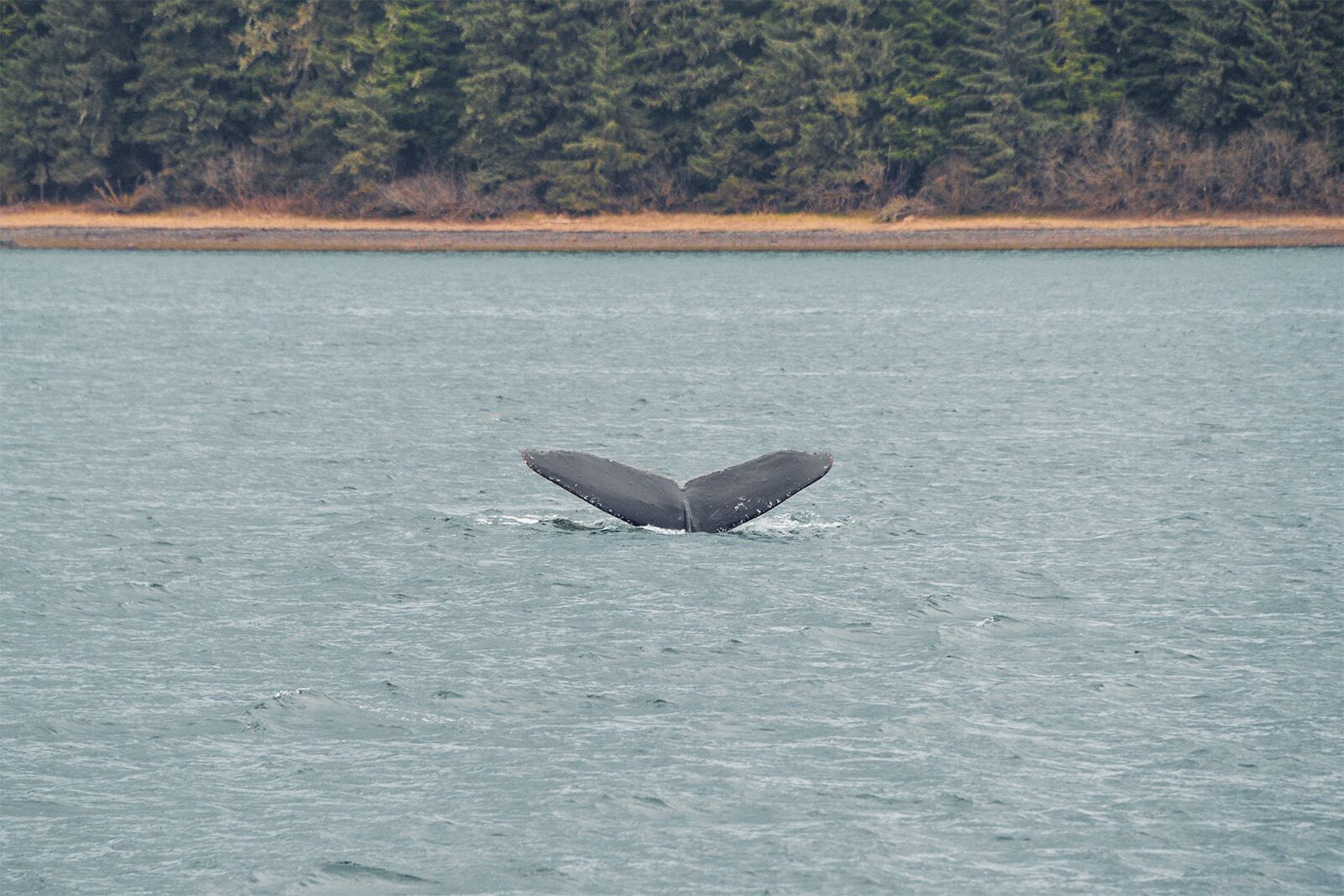
Photo: Morgane Croissant and Jesse Adams
In early spring, humpback whales migrate from their breeding grounds in Hawaii, Mexico, and Japan to their summer feeding grounds in the Alaskan waters. Much like cruisers, they spend spring, summer, and fall around Alaska.
Humpbacks are easy to spot, even from far away, thanks to the plumes of water they create as they exhale at the surface. Looking for flukes (when the whales raise their tails out of the water before diving deep) is another good way to spot them. We saw hundreds of humpbacks during our seven-day journey, some closer than others but always delightful.
The Inside Passage, the maritime route that stretches between northern Washington state and Southeast Alaska, has some of the highest concentrations of humpback whales, so make sure to book a cruise that follows this particular route.
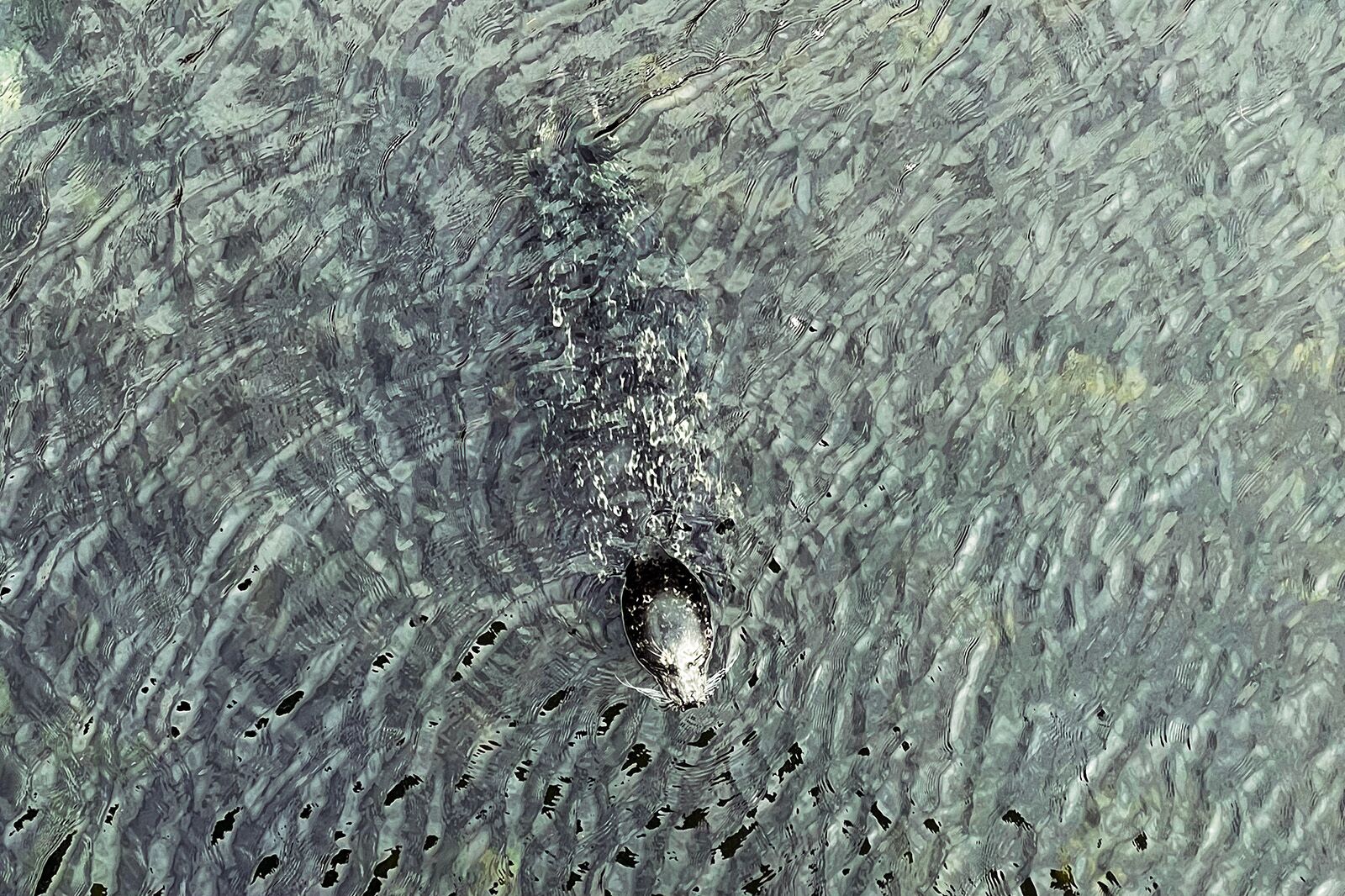
Photo: Morgane Croissant and Jesse Adams
Harbor seals’ round heads; long, thick whiskers; and slick, torpedo-shaped bodies make them one of the most endearing species you can see in Alaska. And because the animals are curious, the odds of seeing them are high. One harbor seal, who must be used to the crowds around Ketchikan’s Creek Street, was happy to swim and pop his head out of the water to observe the tourists at the very entrance of the creek. 