Someone from He Chu Chu, one of the community groups that march in Curaçao’s Seú festival, handed me a costume before I had time to ask what it was. It was deep green, intricately patterned, with a headwrap to match. Sherry, a local makeup artist, started on my mascara, warning me that the energy outside was unlike anything I could prepare for.
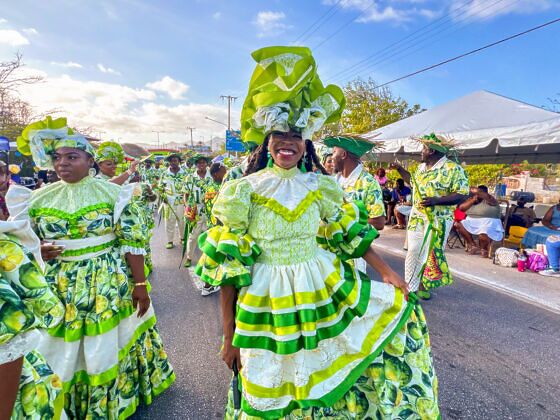
Photo: Ciara Turner-Ewert
Curaçao's Seú Festival Is 300 Years Old and Still the Best Party on the Island
She was right. Seú (pronounced say-ooo) is Curaçao’s annual harvest festival, one of the Caribbean’s largest cultural celebrations, with roots going back to the 18th century. Every Easter Monday, more than 3,000 people flood the streets of Willemstad in traditional costume. A week or so later, thousands more gather in the island’s rural west for a second parade through the Bandabou region. Together, the two events draw the whole island out to celebrate — everyone moving to the beat of the tambú, a drum the island has been playing since the days of slavery.
My heart raced as I approached the parade, unsure of what to expect. Seú was bigger than I had imagined. I pushed through the growing crowds looking for He Chu Chu and paused when a group of blind marchers came through. I had spent years recovering from an invisible injury of my own. They moved through the crowd completely at ease and full of joy. I wasn’t expecting to be so moved — but that’s Seú. It pulls everyone in.
Seú has been celebrated for over 300 years
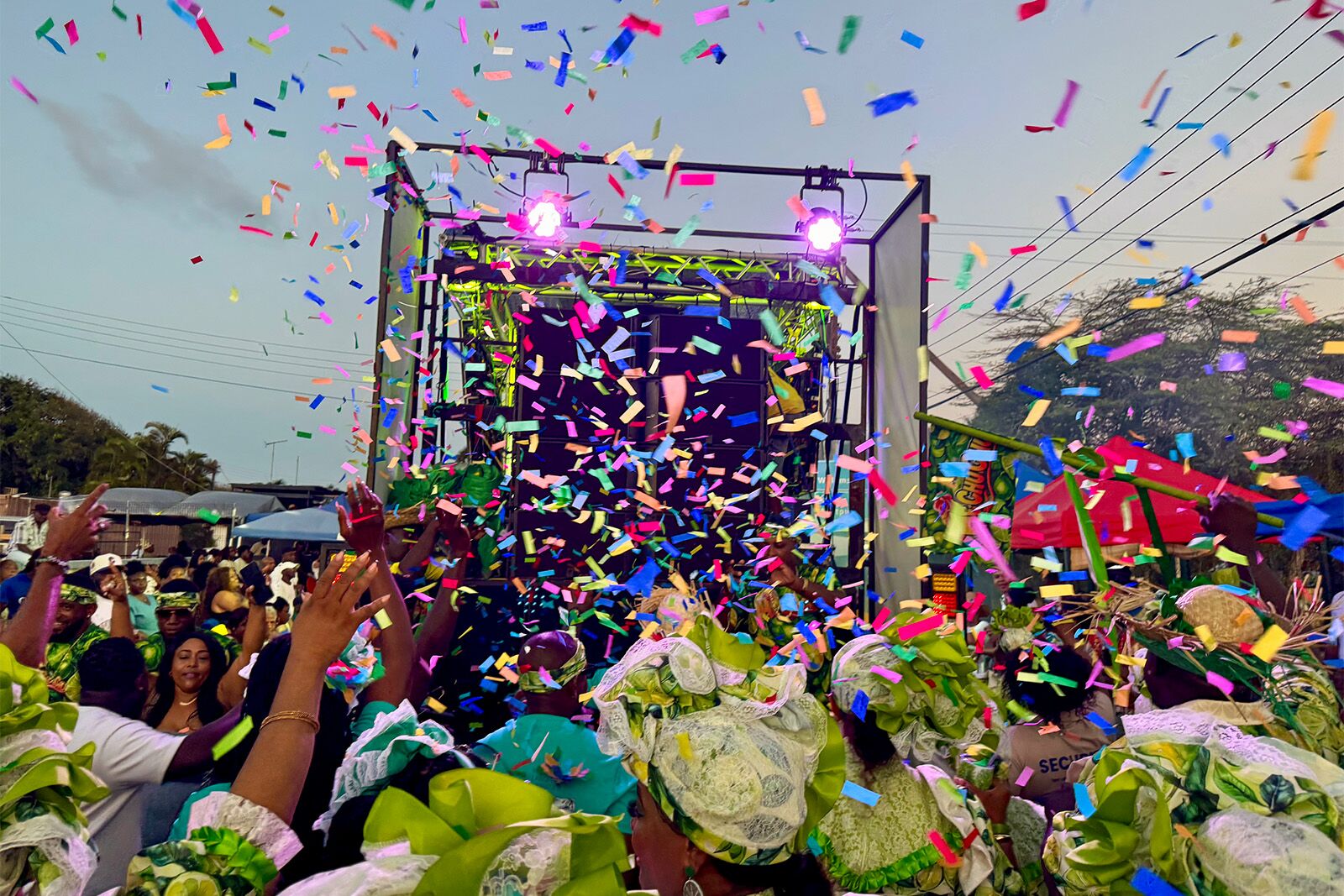
Photo: Ciara Turner-Ewert/Wellness Travel Diaries
The word Seú traces back to West Africa, specifically to Guinea-Bissau, where it entered the Creole language as a word for the sky. During slavery, field workers sang, drummed, and danced skyward to call for rain and give thanks for what the land yielded. When harvest came, people took to the streets. Men played the tambú and struck a metal scraper called a chapi. Women performed a traditional dance called wapa, holding crops above their heads as an offering of thanks. That procession became Seú, and it has carried forward ever since.
The Willemstad parade
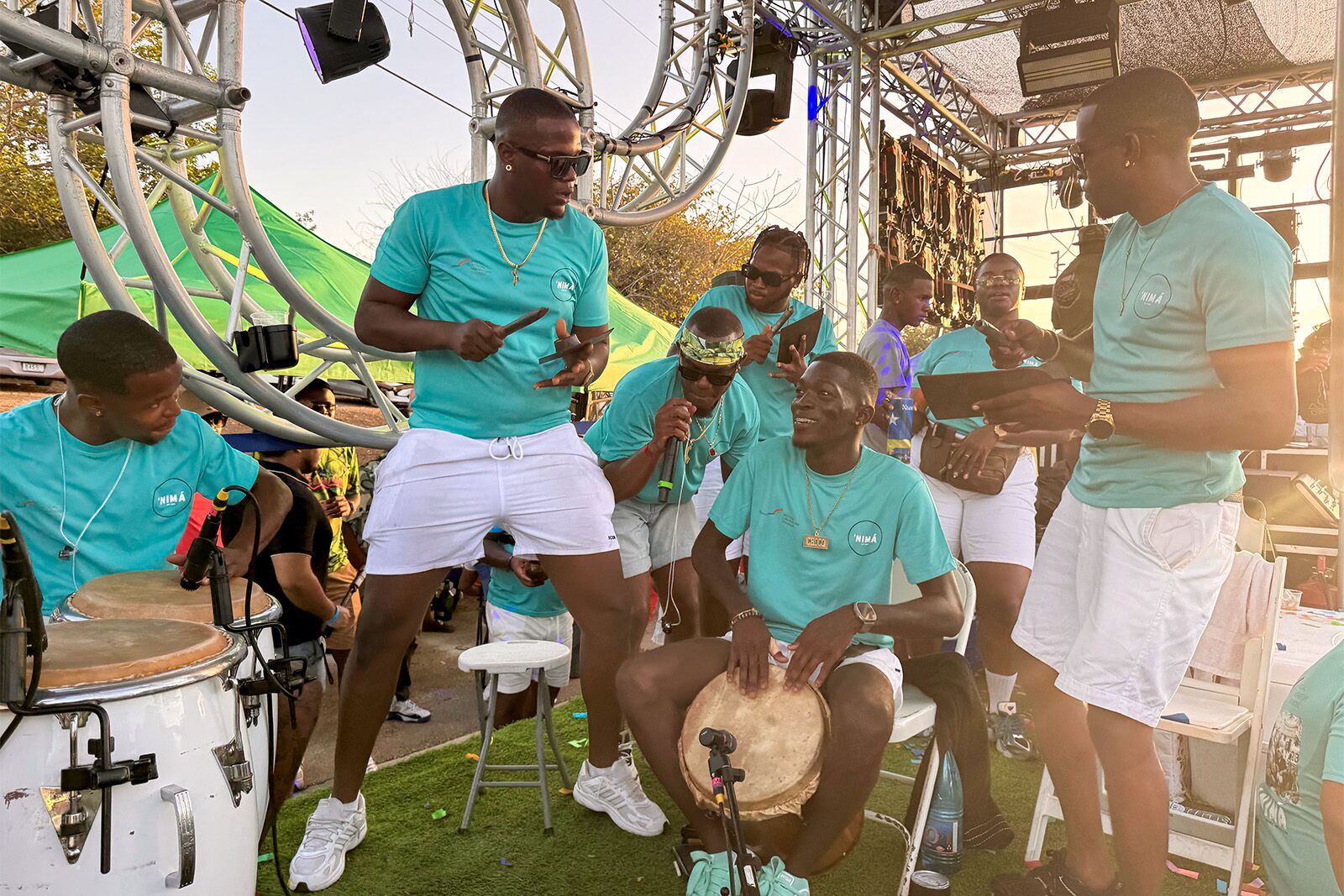
Photo: Ciara Turner-Ewert/Wellness Travel Diaries
The Willemstad parade departs from Tesoro Plaza on Franklin D. Roosevelt Road in Santa Maria at 11:00 AM, winding through the streets of Otrobanda before finishing near Mangrove Beach at the Aqualectra building in Mundu Nobo, a residential district on the western edge of Willemstad. The 2025 edition drew 26 participating groups and over 3,000 marchers, a number that has grown substantially as the festival has drawn more attention on and off the island.
Along the route, participants share homemade Keshi Yena, Curaçao’s national dish. It was born in Dutch colonial kitchens, where enslaved cooks took the hollowed-out rinds of Edam or Gouda wheels their employers discarded, stuffed them with spiced chicken or beef, raisins, olives, and capers, and baked the whole thing until the cheese went golden.
The Bandabou parade
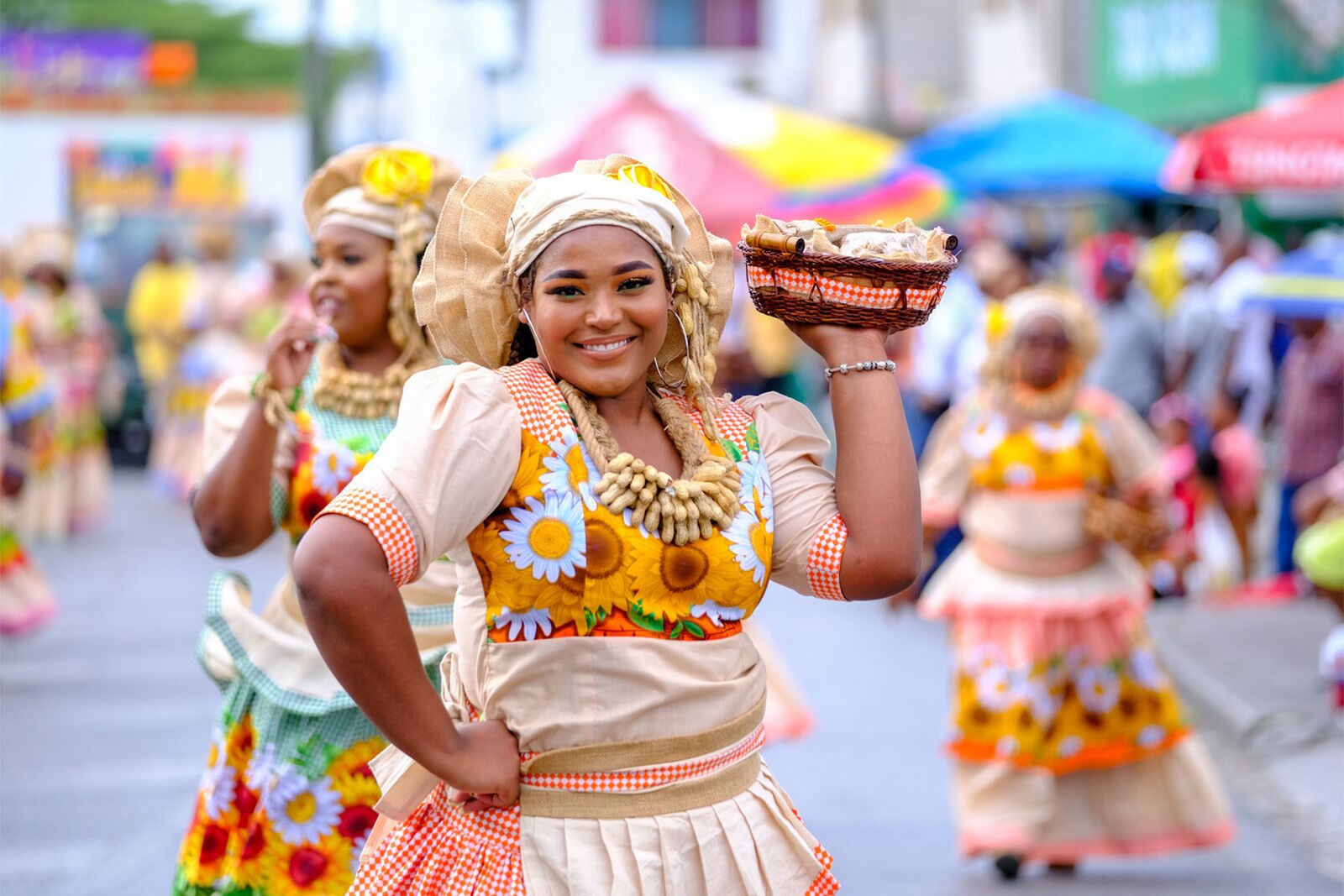
Photo: Curaçao Tourist Board
About a week after Willemstad, the festival moves west to the Bandabou region, departing from Hofi Abou, an open area on the outskirts of Barber village, and finishing at Veld di Barber, the local football field. The route passes old plantation houses with more than 40 groups taking part, the largest troupe breaking records at over 400 people.
“It’s more open, has less cars and that’s why it was brought to the westside,” said Naomi Coran, treasurer of He Chu Chu, one of the groups that has marched in both parades for years.
This is where I marched with He Chu Chu. Coran danced beside me, waving off bad energy with her hands as we screamed “I love He Chu Chu” with the rest of the group. Before I understood what was happening, the lead singer had pulled me to the front of the troupe to sing. The founder of He Chu Chu watched from the side. People ran over to introduce themselves, to dance with me, the American. I have traveled enough to know when welcome is performative. This wasn’t.
I was singing in Papiamentu — the island’s Portuguese-rooted Creole language, spoken by around 127,000 people on Curaçao alone — without knowing most of the words, and nobody cared. Kala (black-eyed pea fritters) and drinks kept appearing from somewhere behind me. Children danced alongside people who had been doing this their whole lives, and the mix of ages, abilities, and backgrounds moving together through those streets demonstrated how special community is on the island.
Where to eat and drink during the festival
Kultura Kòrsou at Hòfi Mango
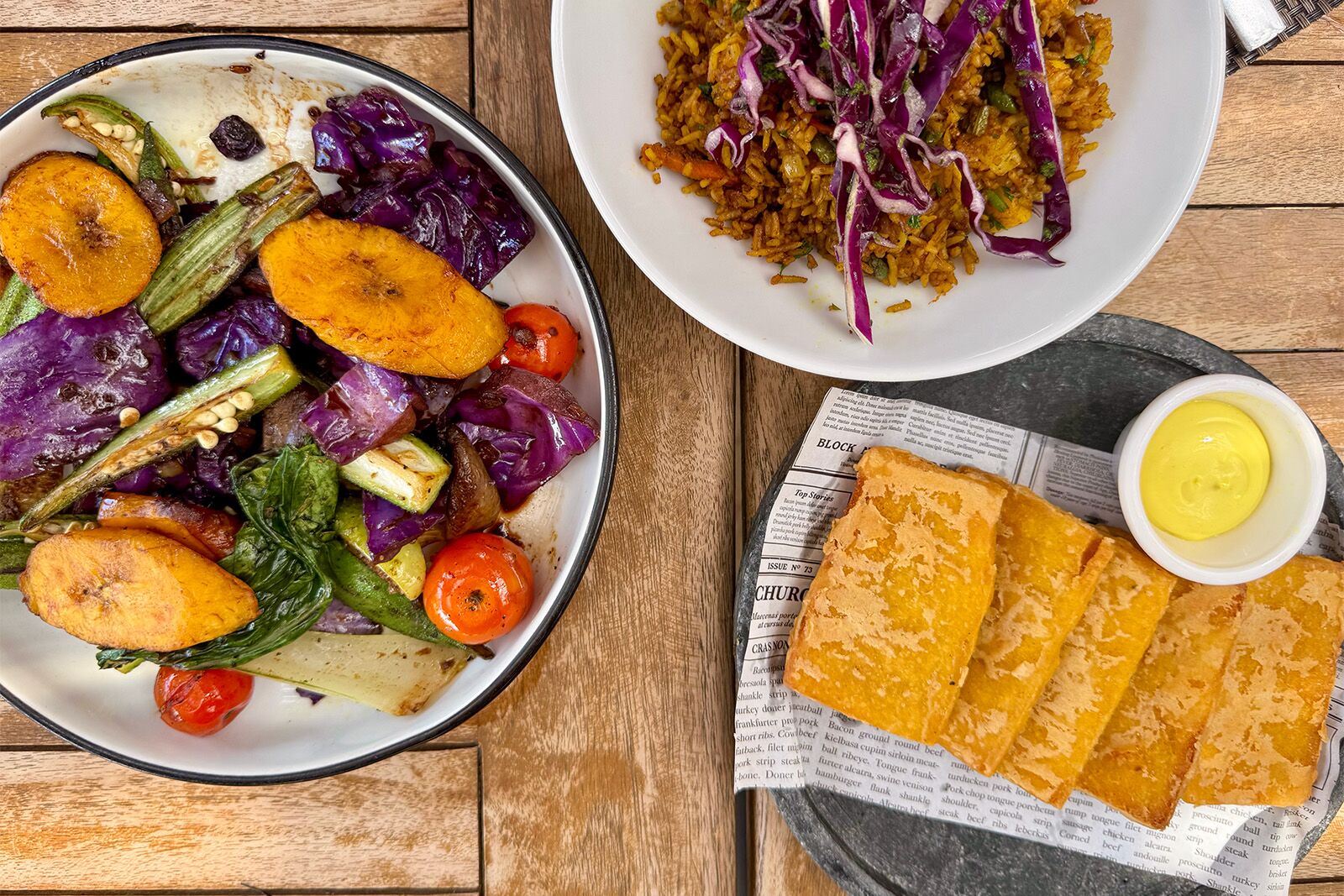
Photo: Ciara Turner-Ewert/Wellness Travel Diaries
Hòfi Mango is a nature park in the Bandabou region, about 30 minutes west of Willemstad and a natural stop if you are making the trip out for the second parade. The park was purchased and restored by Curaçaoan comedian and entrepreneur Jandino Asporaat, who reopened it to the public after flood damage in late 2024. The restaurant inside, Kultura Kòrsou, opened in January 2024 under chef Willy Balentina, who trained in some of the Netherlands’ most serious kitchens — including De Librije under Jonnie Boer and Ron Gastrobar under Ron Blaauw — before returning to Curaçao specifically to put the island’s Creole cuisine on the map. The menu is shaped by local ingredients and changes with what’s available. I trusted his instincts and ordered the catch of the day, served over roasted cucumber chikí, purple cabbage, and sweet potatoes, then finished with mango ice cream topped with caramelized sugar.
Kultura Kòrsou at Hòfi Mango: Santa Cruz 23, Westpunt, Curaçao
Hofi Cas Cora
Photos: Ciara Turner-Ewert/Wellness Travel Diaries
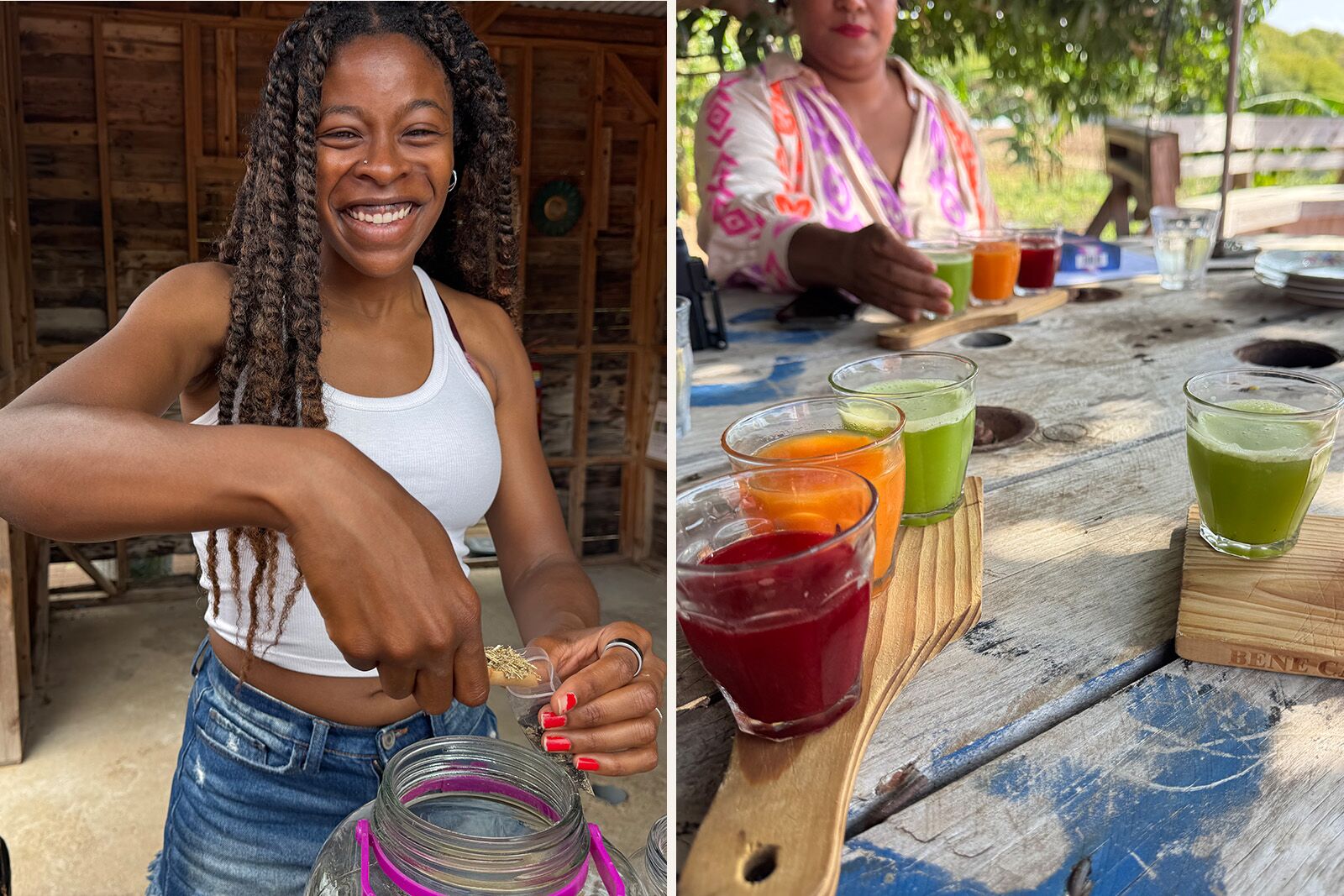
Hofi Cas Cora grows most of what it serves, with a menu that follows the garden through the seasons, and it has become a reliable brunch destination on the eastern edge of Willemstad. When I visited, I found myself at a herb and wellness ceremony under a mango tree, led by local herbalist Marerly Sambo from Universal Alchemist. I had a mango chia seed pudding topped with granola in one hand and a glass of fresh beet juice in the other while Sambo explained the benefits of milk thistle for the body. She finished by reading me a positive affirmation card. “Trust your heart always,” she said in Papiamentu. Rescue goats, peacocks, and donkeys roam the grounds, so as well as great food there’s a lot to do here and most people end up staying far longer than they planned.
Hofi Cas Cora: Landhuis Cas Cora, Reigerweg, Willemstad, Curaçao
What to do in Curaçao
Kura Hulanda Museum
Before Seú, spend a morning at Kura Hulanda, one of the most thorough museums on the history of the transatlantic slave trade anywhere in the world. The exhibits move through the full arc of that history using artifacts, reconstructed spaces, and sculpture drawn from across the African continent. It is a hard visit, and it is supposed to be. Going before the parade gives the celebration a context it wouldn’t otherwise have. The museum is open Monday to Saturday from 8:00 AM and Sunday from 9:00 AM, with admission at $12 per person. Guided tours in English are available for an additional $6. RustiQ, a Caribbean restaurant sitting just outside the museum entrance, is worth the stop after.
Kura Hulanda Museum: 9 Klipstraat, Willemstad, Curaçao
Snorkeling at Tugboat Beach
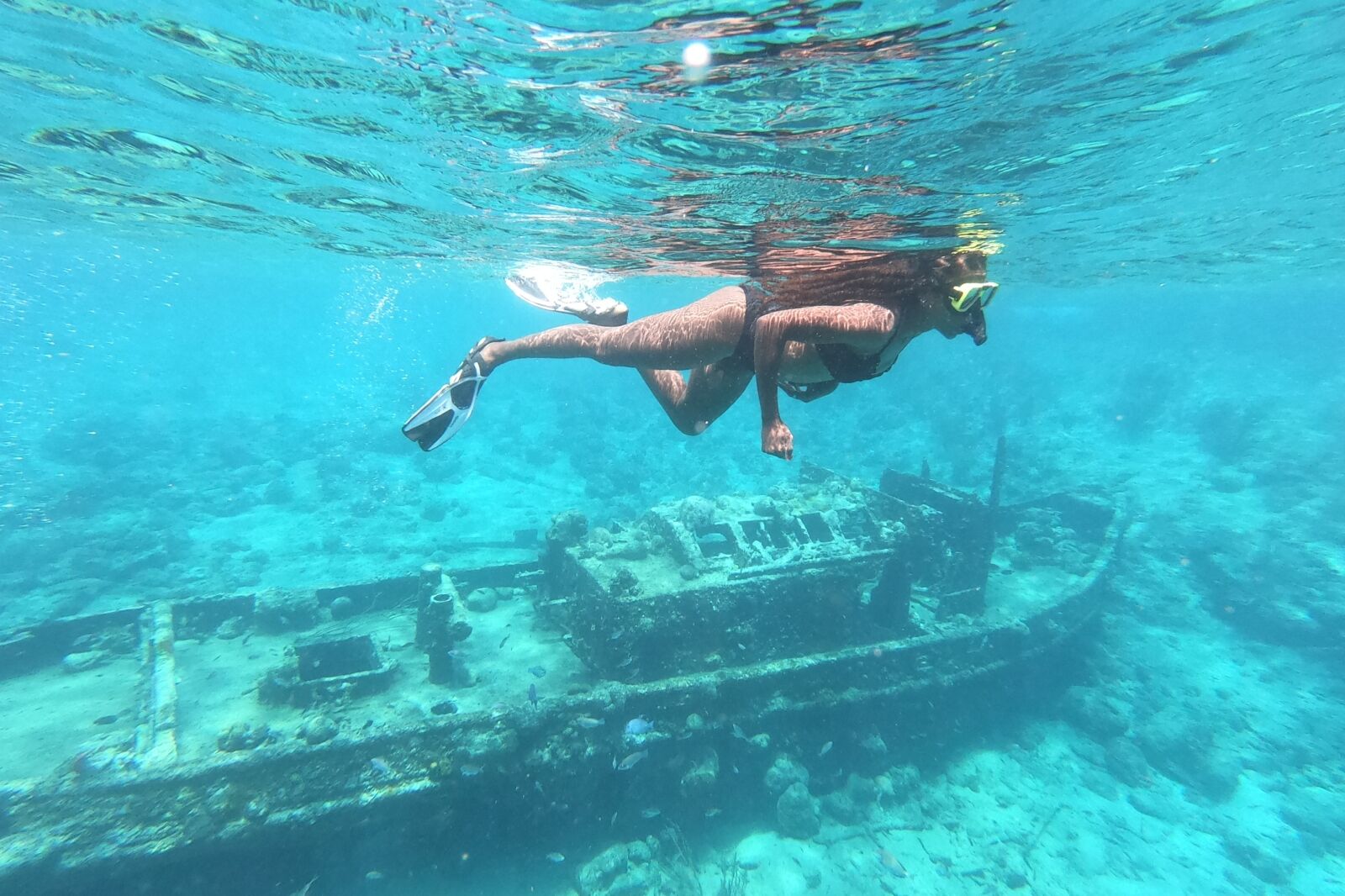
Photo: Ciara Turner-Ewert/Wellness Travel Diaries
The Caracasbaai Peninsula sits inside a protected marine park about 4.5 miles east of Willemstad and holds some of the best shore snorkeling on the island. A small tugboat sank just offshore in the 1980s and now rests upright in about 15 feet of water, completely overgrown with tube sponges and hard coral, with parrotfish, yellowtail snappers, and the occasional sea turtle moving through it. The wreck sits close enough to the surface that you can see it clearly without getting your feet wet. On the way in, Fort Beekenburg, a Dutch military fortification from 1703, guards the entrance to the peninsula and is worth exploring even if you’re not a history buff.
Tugboat Beach: Caracasbaai Peninsula, Curaçao
Spend a least a day or two in Willemstad
Ciara Turner-Ewert/Wellness Travel Diaries
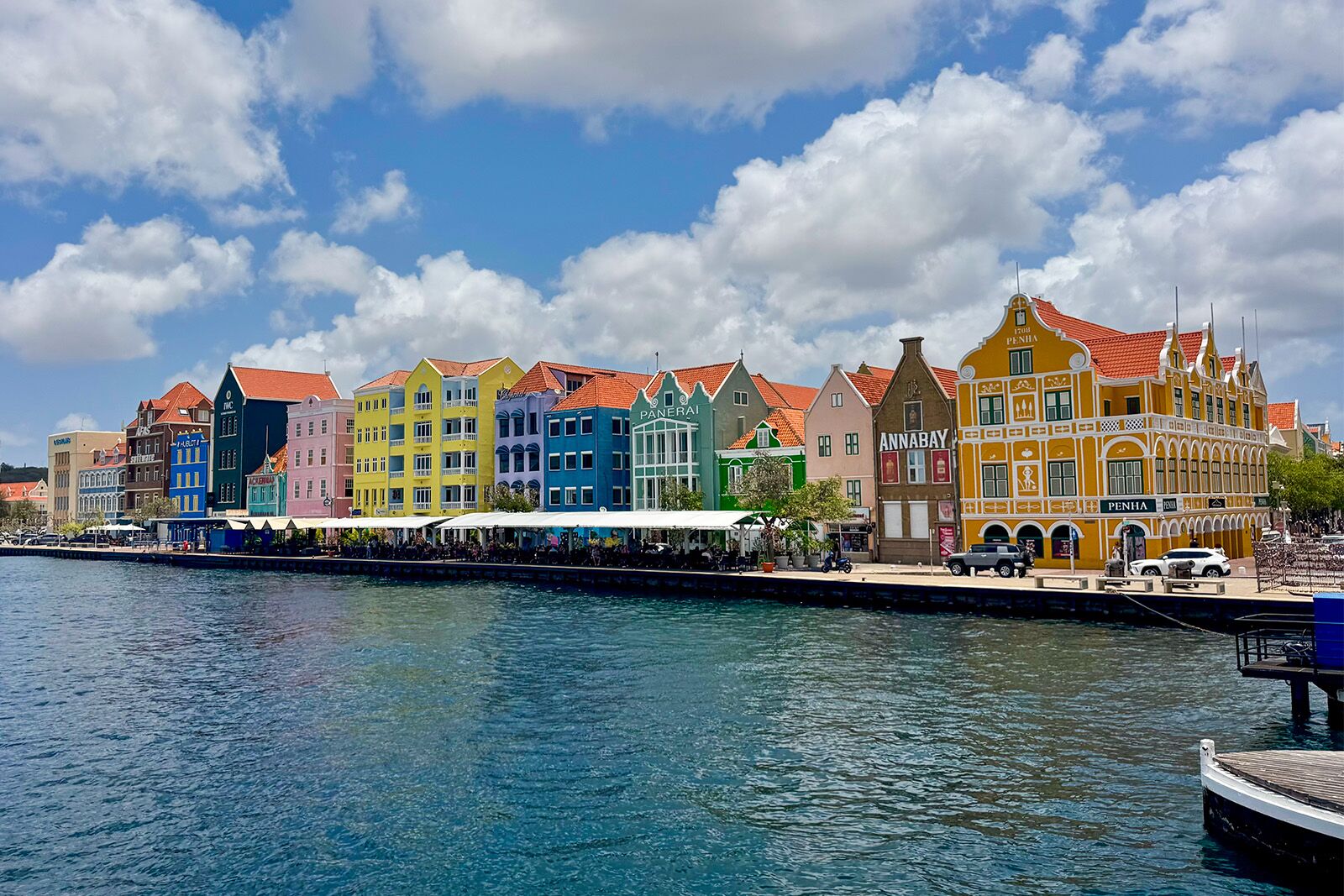
Willemstad sits on either side of St. Anna Bay, with the historic district of Punda on one side and Otrobanda on the other. The Queen Emma Bridge, a pedestrian pontoon bridge from 1888 supported by 16 boats, connects them across the water and swings open on a hinge whenever a ship needs to pass, which happens several times a day. Watch it from a waterfront café and you will understand why locals call it the Swinging Old Lady.
The Queen Juliana Bridge carries cars between the districts at 185 feet above the water, high enough to let oil tankers pass beneath it into the harbor. You can rappel off it through a hatch in the bridge deck, with the full panorama of Willemstad below you. The experience is led by instructor Albert Schoop and departs most mornings from the Punda side of St. Anna Bay.
Most of the city is manageable on foot, and Curaçao Green Wheels rents electric scooters near the city center for moving between neighborhoods. The pastel-colored buildings along the Handelskade waterfront in Punda are the most photographed thing on the island, and they are just as impressive in person.
Where to stay in Curaçao
Coral Estate Luxury Resort
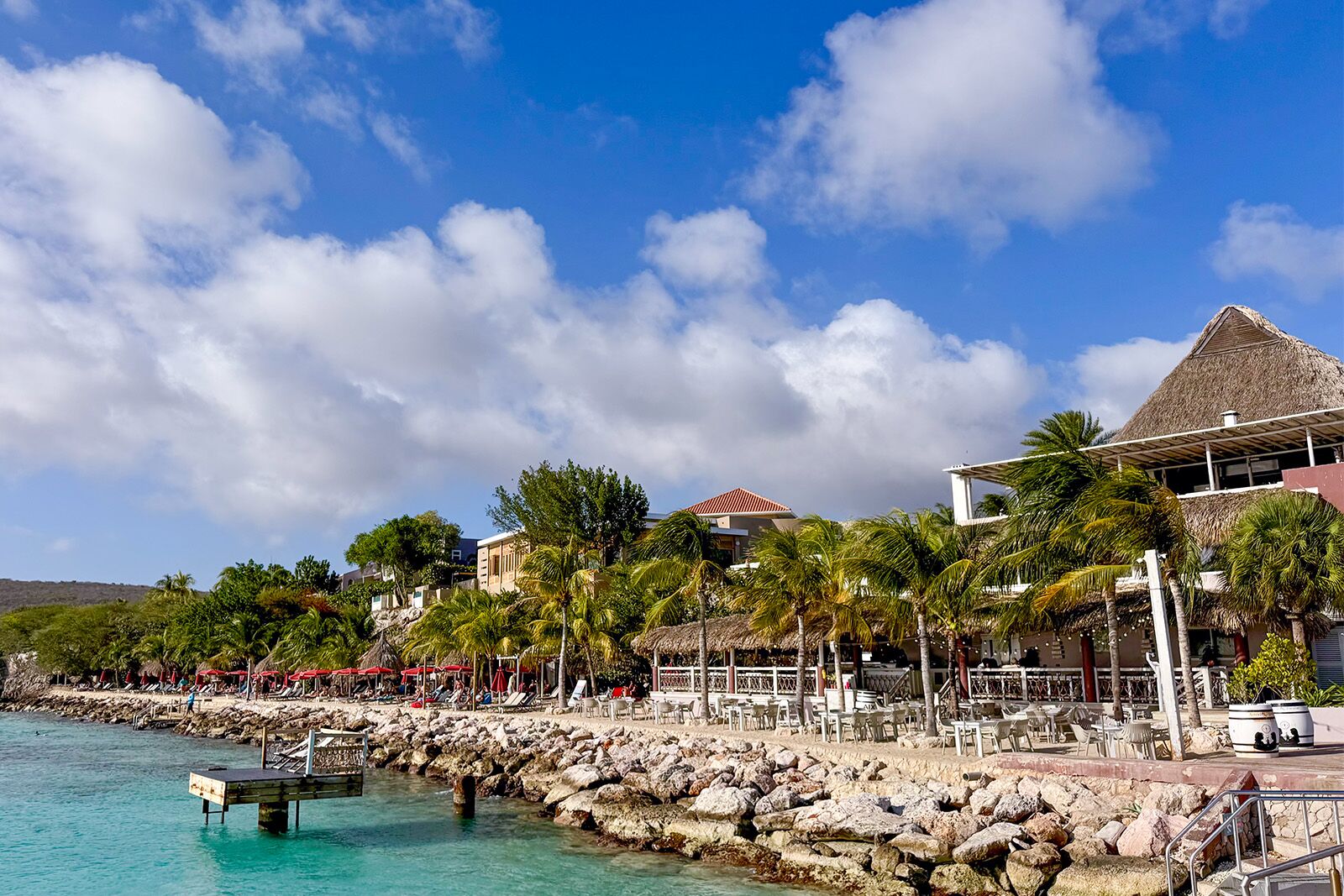
Photo: Ciara Turner-Ewert/Wellness Travel Diaries
Coral Estate sits on the island’s western coast near Sint Willibrordus, about 30 minutes from Willemstad, with direct access to Porto Marie Beach and two swimming pools on the property. Accommodation ranges from standard sea-view rooms to private bungalows with kitchenettes and terraces over the water, and there is a spa and a dive school operating off the beach. Most evenings I ended up at Bread and More, one of the three independently managed restaurants on the property, eating pizza under bistro lights strung through a giant tree with a coastal breeze coming off the water. It was delightful. It suits people who want to be near the ocean and away from the city, and who plan to rent a car — the surrounding coastline has some of the island’s best snorkeling a short drive in either direction.
Coral Estate Luxury Resort: Rif St. Marie, Sint Willibrordus, Curaçao
Bario Hotel
Bario occupies a 23-room property in Otrobanda, the older, art-covered side of Willemstad, and feels more like a neighborhood base than a hotel.Barrio occupies a 23-room property in Otrobanda, the older, art-covered side of Willemstad, and feels more like a neighborhood base than a hotel. The surrounding streets are covered in murals and the building sits on the historic tour routes through the district. There is a pool on site and Bario Food Yard, a street food market, is just next door. The Queen Emma Bridge is a short walk away, which puts the Seú parade route essentially at the door.
Bario Hotel: IJzerstraat 59, Willemstad, Curaçao
Getting around Curaçao
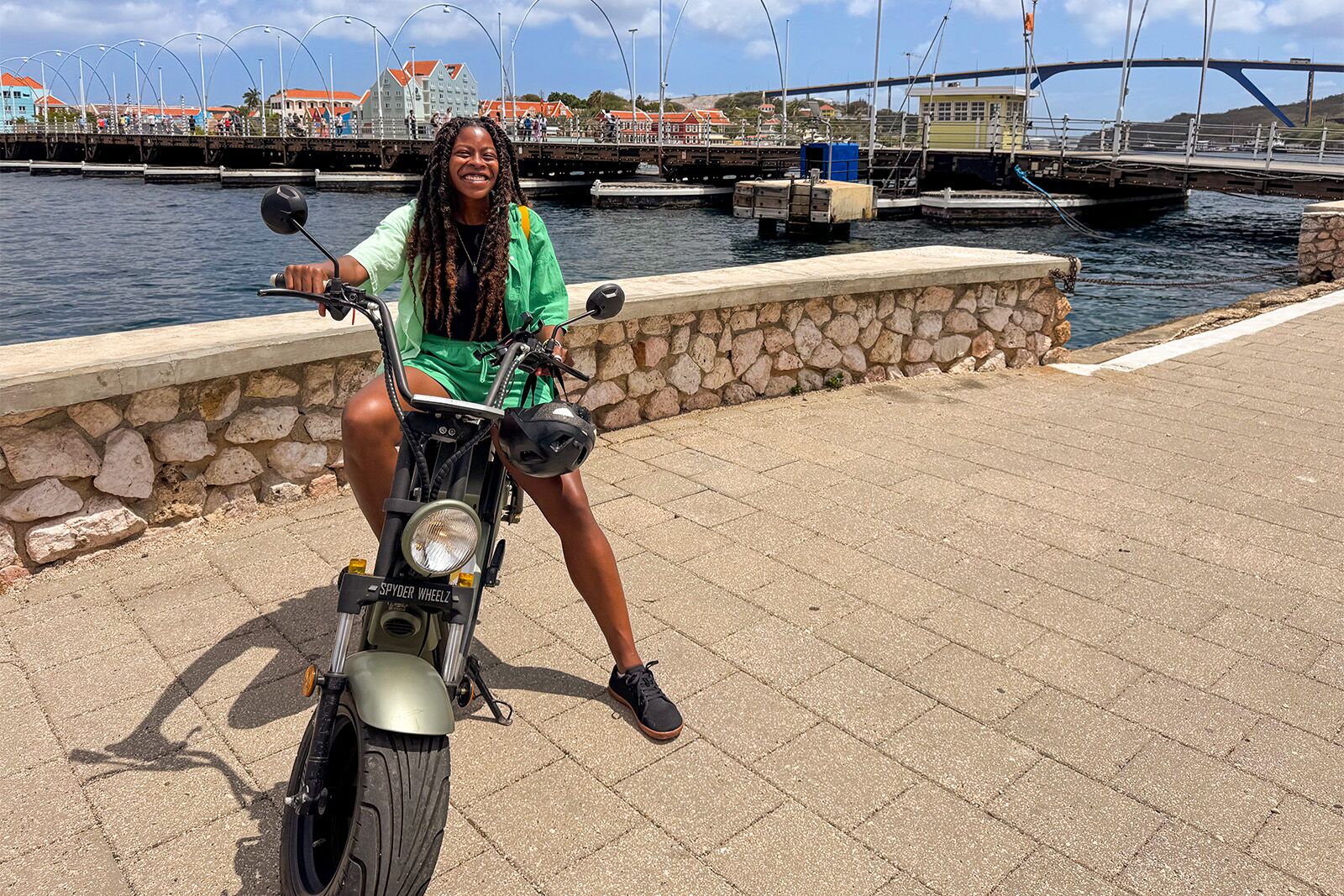
Photo: Ciara Turner-Ewert/Wellness Travel Diaries
Willemstad is walkable, and if you want to go further there are the aforementioned electric scooters. If you are doing both parades, you will need a car for the Bandabou leg. There is no public transport close to the route on parade day or ride-share services on the island. For the Willemstad parade, good spots to watch along the route fill up early and parking is easiest at Sambil Mall or near SDK Stadium, both a short walk from the route. 