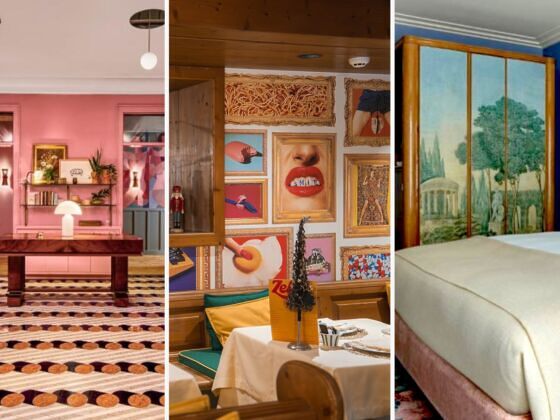
If you’ve recently sauntered into a hotel lobby or restaurant with the type of ostentatious, movie-set style that begs to be Instagrammed, chances are you’ve encountered “dopamine decor.” Picture playful shapes, rainbows of colors and flashy tones, and joy-sparking details like disco balls and circus tents. It seems like it’s become the design language du jour in hospitality, transforming once-neutral lobbies and lounges into vibrant, social media-ready experiences.
Dopamine Decor: Why Your Next Hotel Stay May Feel Like ‘Alice in Wonderland’
But the shift from blasé to bold and bubbly isn’t just about aesthetics or racking up social media tags. It reflects a growing desire among travelers for spaces that offer an emotional antidote to the low hum of modern-day stress.
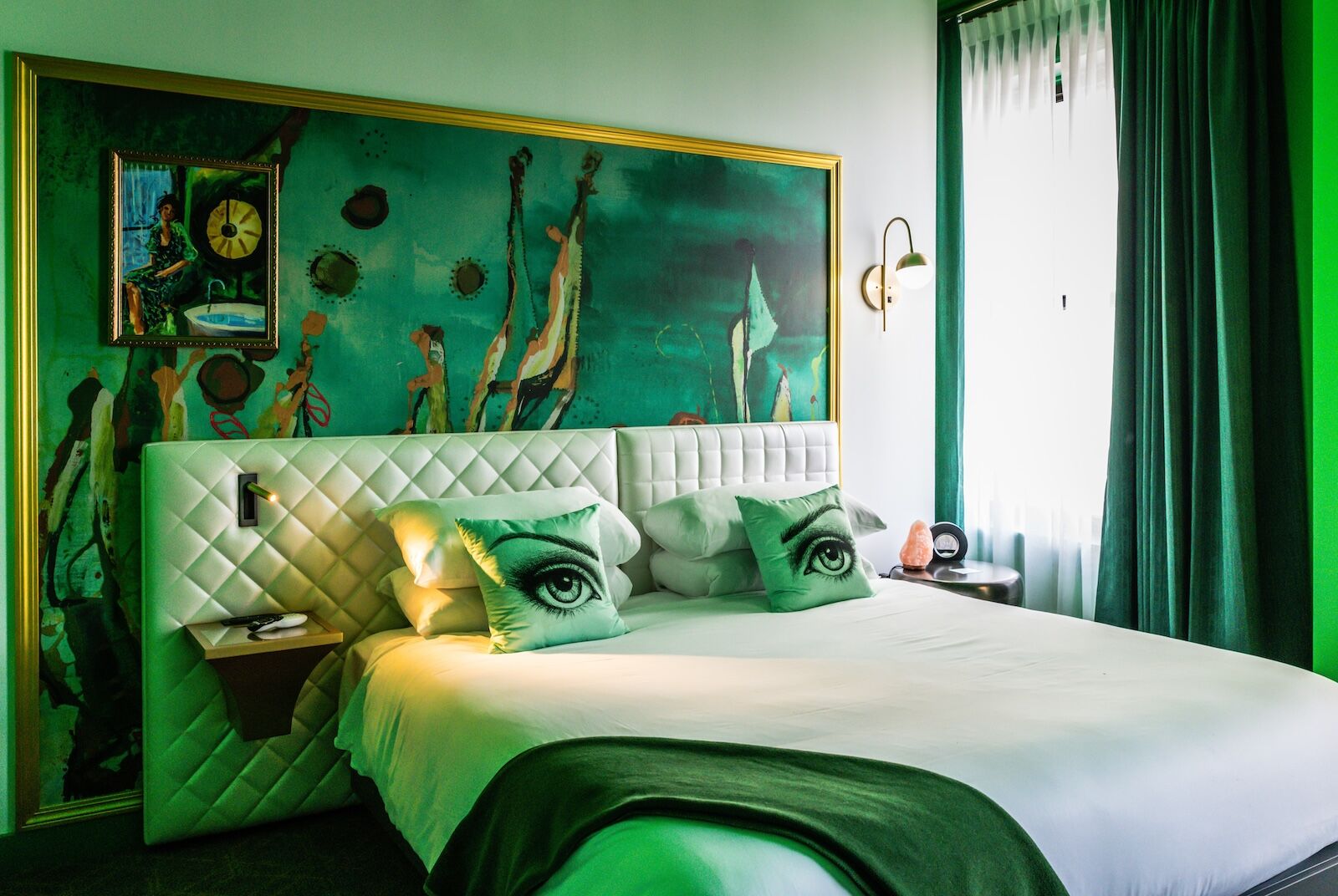
A room at the Angad Arts Hotel in St. Louis. Photo: Sandra Foyt/Shutterstock
I first grew interested in this trend when I read a book by designer and author Ingrid Fetell Lee, who has long studied the relationship between aesthetics and emotion. In her book Joyful: The Surprising Power of Ordinary Things to Create Extraordinary Happiness, she wrote “From the moment I first started studying joy, it was clear that the liveliest places and objects all have one thing in common: bright, vivid color… vibrant color invariably sparks a feeling of delight.” It was her research that helped me start tuning in to my emotions when I saw lobbies with pink terrazzo floors, banana-leaf wallpaper, and jewel-toned furniture, and piqued my interest in how the trend can ignite an instant mood lift.
Now more than ever, people need a mood boost
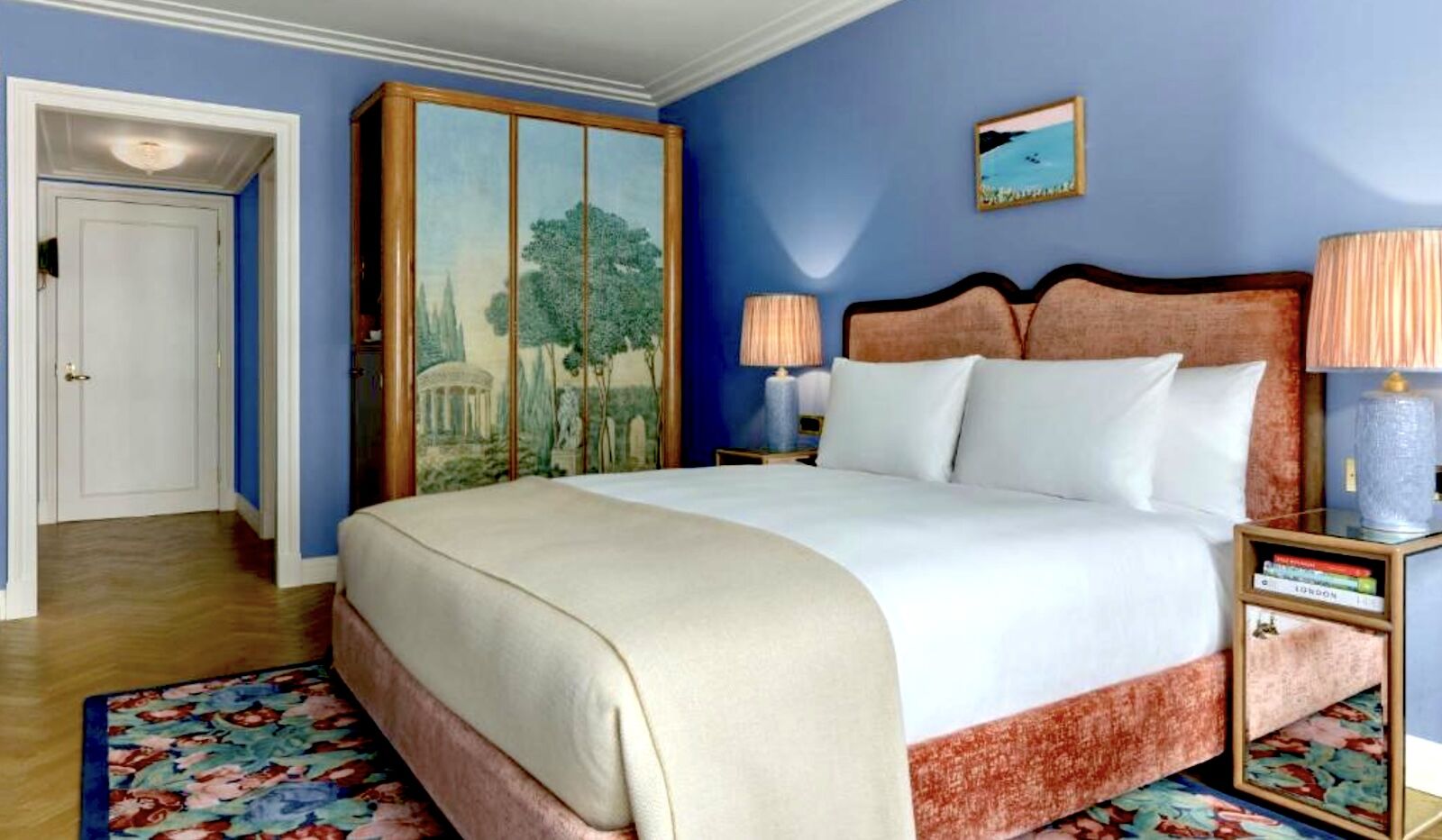
A room at London’s Broadwick Soho. Photo:
After years of sleek minimalism and neutral palettes, hospitality today is leaning into a no-holds-barred brand of exuberance. Boutique stays in destinations from Spain to New York City are embracing whimsy, play, and color with open arms. It might look like a return to maximalism, but this emerging aesthetic is less about overwhelming the senses with abundance, and more about making intentional choices that appeal to that ultimate directive of great hospitality: surprise and delight.
It’s about creating a sensory landscape that feels intentional, generous, and alive. It can be as maximalist as a multicolor Moroccan carpet or as subtle as a cheeky piece of art. What matters is how it makes guests feel.
Leading research on design and environmental psychology suggests that interior design choices can directly impact a guest’s mood, and aid with certain travel objectives. Environmental psychologist Dr. Sally Augustin, author of Place Advantage: Applied Psychology for Interior Architecture, notes, for instance, that greens can be soothing and inspire creative thinking, while warm colors like oranges, yellows, and pinks can evoke feelings of comfort and cheerfulness.
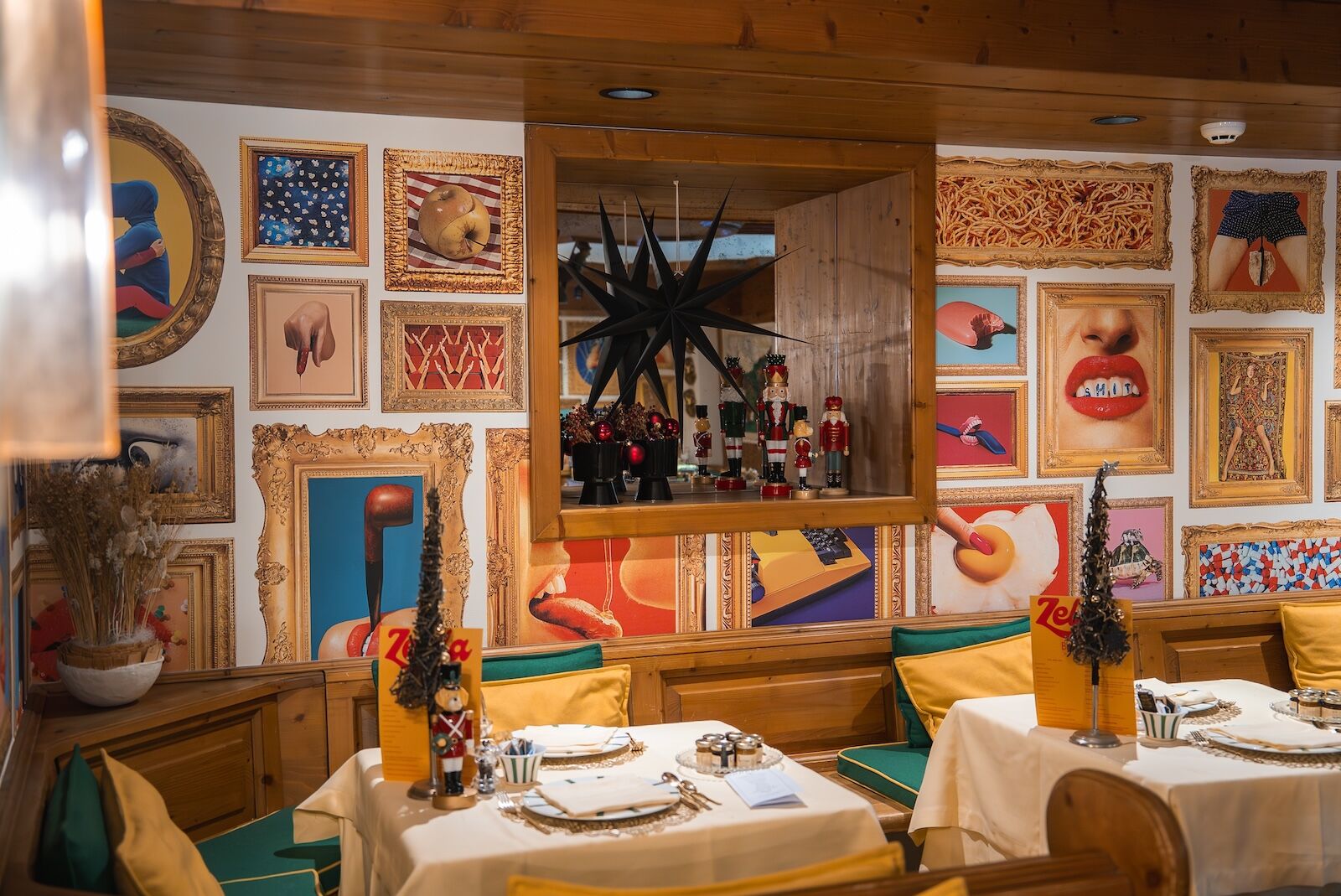
A colorful hotel restaurant in Cortina, Italy. Photo: NorthSky Films/Shutterstock
Augustin has ideas as to why the hospitality world is seeing such a rise in dopamine decor. “I think that this is a time of uncertainty, and people dealing with that stress might be looking for a way to feel better,” she says. “This energizing design…can indeed result in a sort of distraction.”
The desire to design for joy comes at a moment when travelers are expanding their idea of wellness way beyond spas and smoothies. A 2025 nationwide wellness report found that millennials and Gen-Z no longer consider mental health optional, but rather, an important factor in how to live, work, and travel.
Hotels leaning into the dopamine decor trend
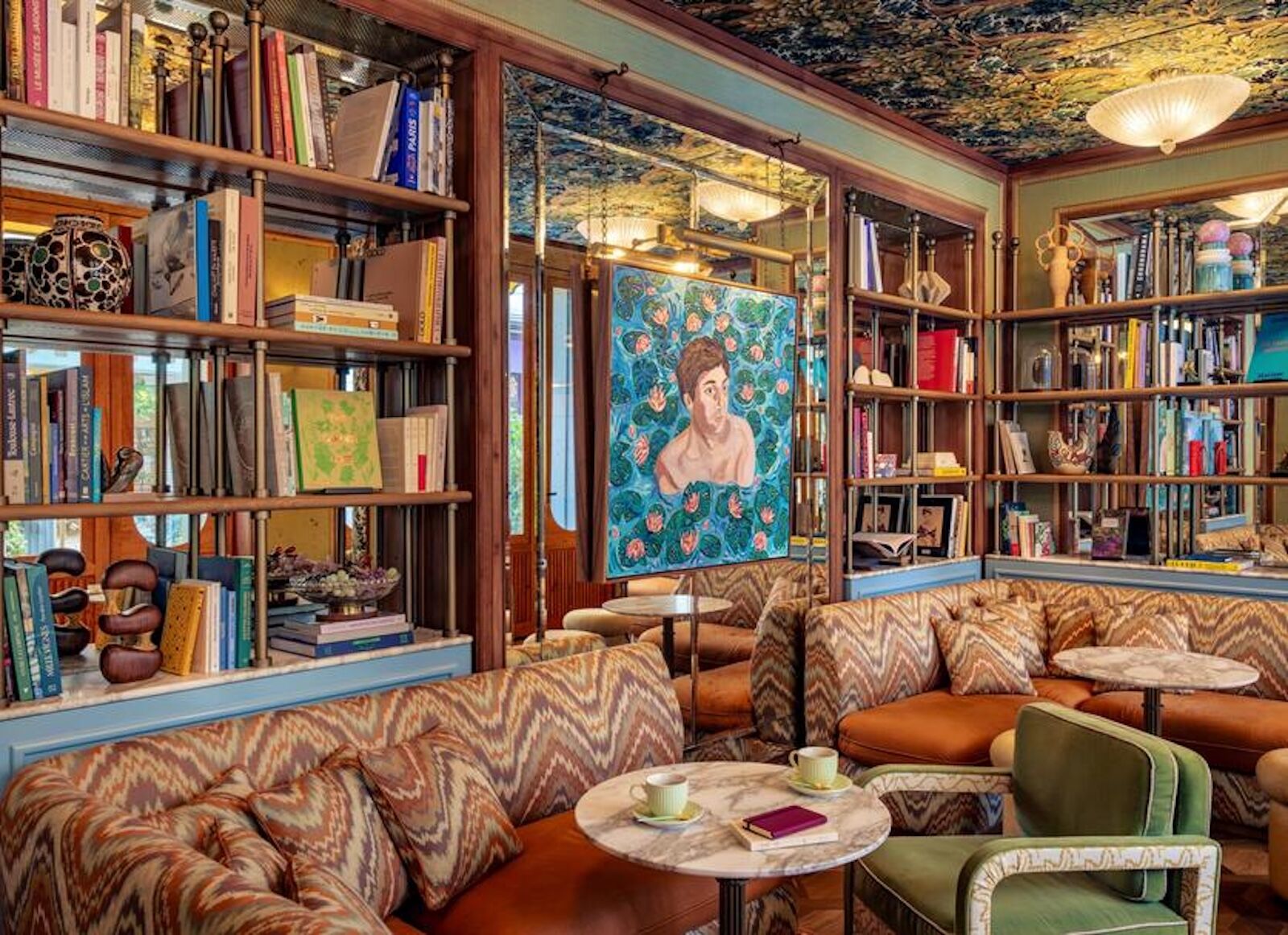
Photo: La Fantasie
Interior designer Victoria-Maria Geyer seems to have an intuition for this. Referring to the boutique hideaway she recently worked on, Cortijo Genesis in Andalusia, Spain, Geyer explains “It’s all about rhythm and restraint. Even in a colourful space like Cortijo Genesis, there’s a considered balance – vibrancy anchored by quiet textures, natural materials, and negative space.” She says that playfulness isn’t about just piling more and more on, but about knowing when to surprise, and when to soothe. “I believe joyful design should feel intentional, not accidental,” she shares.
“I think we’re moving away from anonymous luxury,” says Geyer. “People are craving spaces that tell a story; places that are full of warmth, soul, and identity. In hospitality especially, guests want to feel something personal, something that lingers.” She thinks the bold design of dopamine decor, as long as they feel authentic to the space, will be a relevant design trend for years to come.
Dopamine decor-inspired spaces are now a common sight at hotels and resorts across Europe and North America. In Paris, the newly opened La Fantaisie describes itself as a “home of joy,” drawing attention for its unapologetically bright and richly decorated interiors, leaning heavily on a botanical motif played out in ceiling murals, art prints and floral-patterned furniture.
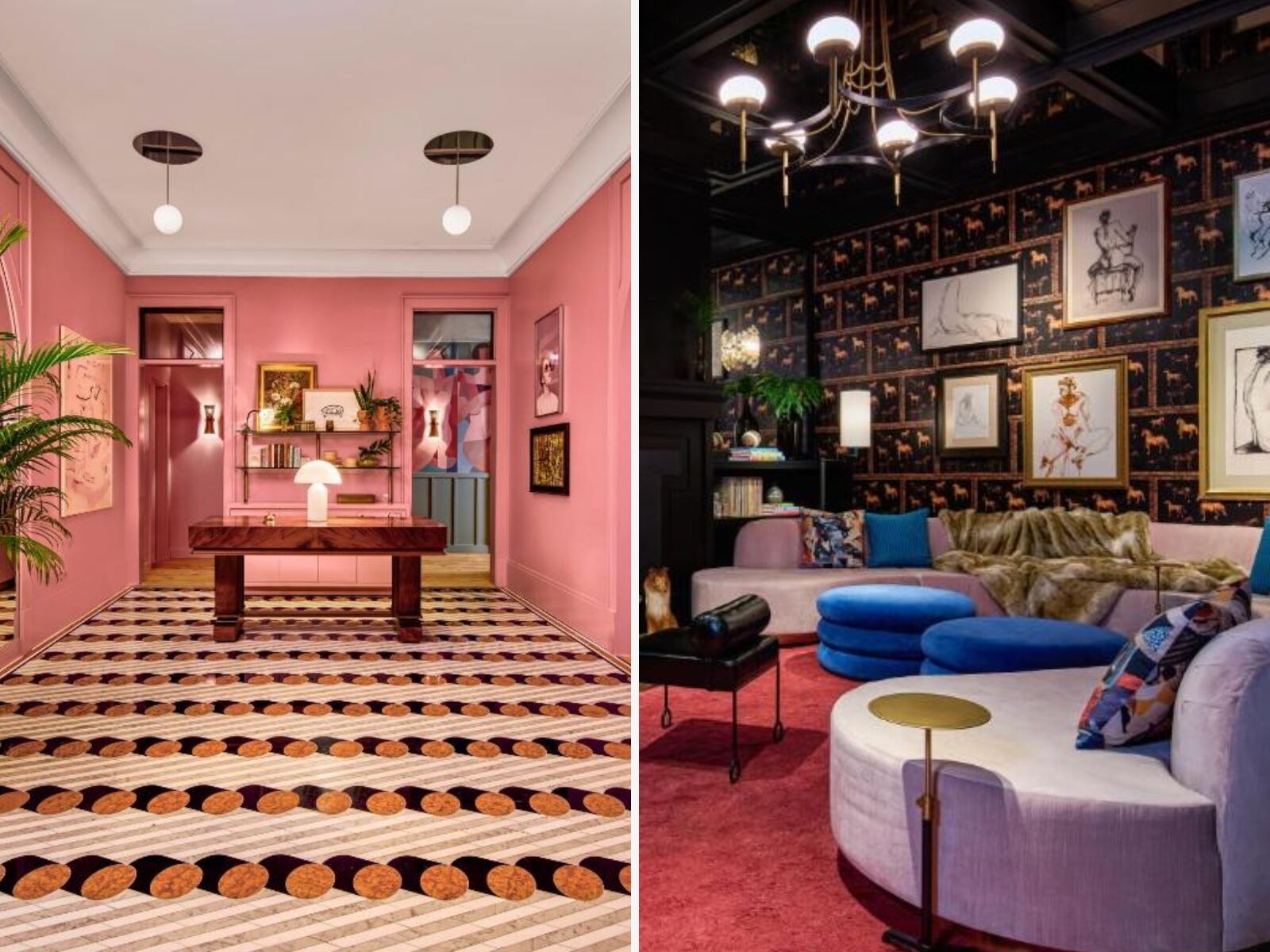
Photo: Virgin Hotels New Orleans
In New York City, the Fifth Avenue Hotel fills Instagram feeds with patterned wallpaper, jewel-toned sofas, and glittery chandeliers. Staying in London’s Broadwick Soho feels like living out a psychedelic, Great Gatsby-esque fever dream, while the pairing of burnt orange walls and eye-popping geometric prints at Amsterdam’s Hoxton Lloyd reads like a Wes Anderson film set.
Even chain hotels and resorts are leaning into the trend. The high-end Andaz chain embraces bright and bold design in its Bali, Prague, and Miami Beach locations, while Virgin Hotels mixes its signature red-and-white stripes with fun elements like floor-to-ceiling wallpaper murals in its New Orleans suites, and funky pop-art in its Las Vegas outpost.
It’s a product of the social media revolution
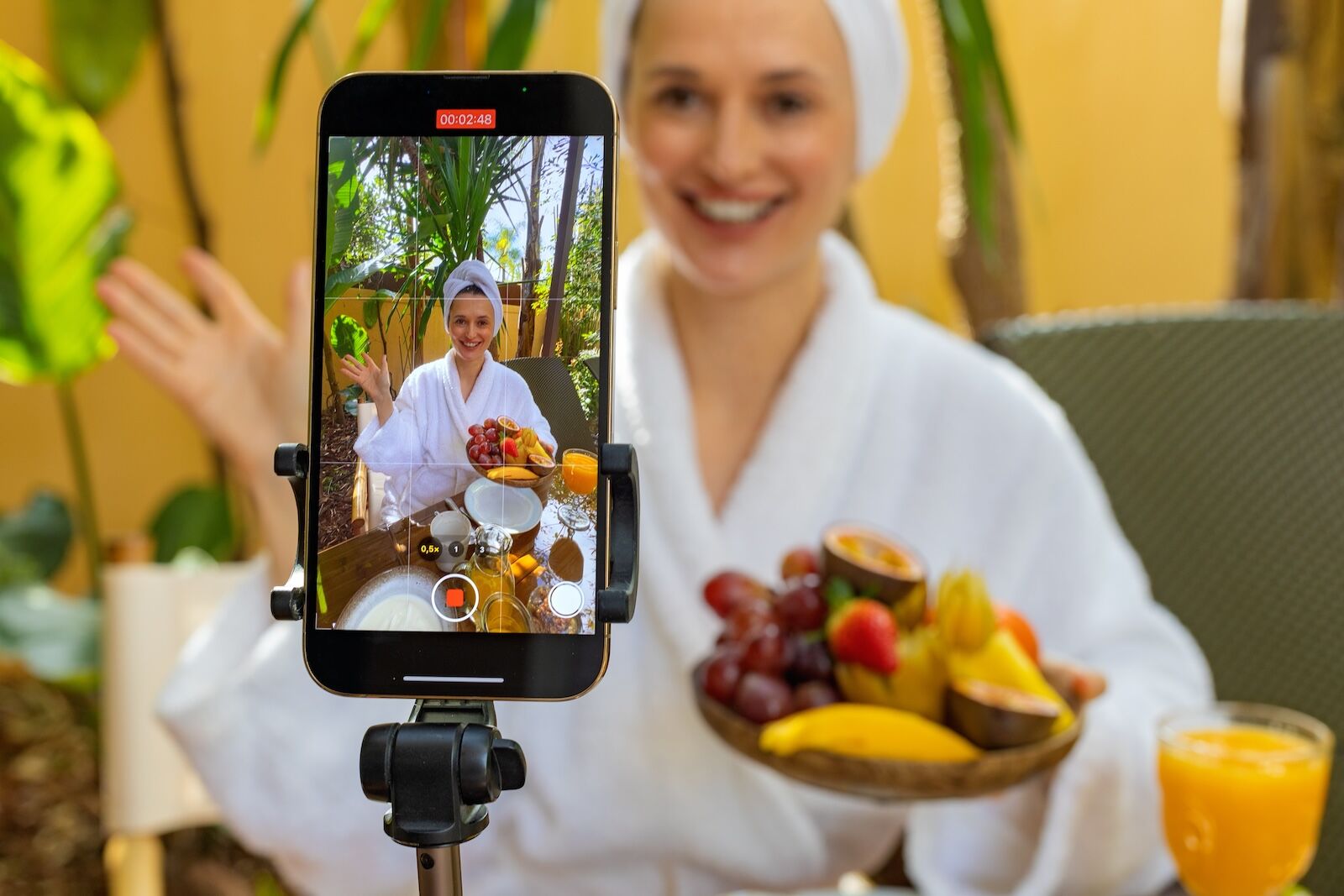
Photo: Mike Orlov/Shutterstock
The rise of dopamine decor feels a bit like a snake-eating-its-tail situation. Resorts and restaurants that embraced colorful and sensory-rich designs early on started getting more attention on social media, which led other resorts to create similarly inspired spaces. Put simply, dopamine decor is very camera-friendly. ”It takes a good photograph,” Augustin noted in our interview.
When it comes to the bottom line, more snaps and shares often means more bookings. Seventy-five percent of respondents in a recent survey said social media had inspired their choice on where to travel. And the name “dopamine decor” hints at how closely the trend is tied to social media use, as it’s well-known that each social media like and interaction is a mini-dopamine boost to which many people have become nearly addicted. The industry has taken note, creating more spaces designed with aesthetics and photography in mind.
This doesn’t mean the movement is hollow – just that the line between what’s designed for pleasure and what’s designed for performance is increasingly blurred. The best examples of dopamine decor manage to do both, influencing joy in real life while also creating drool-worthy photo backdrops for online content.
As I scroll through images of these quirky, out-there, yet undeniably joyful properties, I find myself agreeing with Geyer. Because in the end, the most lasting souvenirs aren’t the photos or the products. They’re the feelings we carry with us, long after we’ve checked out. And if a hotel can offer that kind of joy—the kind you instantly feel in your body when you walk into a room— isn’t that what travel is all about? 