Photo: eyetravelphotos /Shutterstock

See Afghanistan Differently On a Virtual Tour With Its First Female Guide

Afghanistan Travel
by Tim Wenger Feb 17, 2026

Note: Fatima’s family names and location have been omitted from this story for security purposes.

In early February, I joined a journey across Afghanistan that began in the capital, Kabul, and moved west through Bamiyan and onto the city of Herat. But I never left my coworking space in western Colorado for this adventure. A group of five, including myself, joined a virtual tour of Afghanistan through Untamed Borders, an adventure travel company that guides trips throughout Asia, the Middle East, Africa, and beyond. We learned about historic sites, including the DarulAman Palace in Kabul, watched videos of Band-e-Amir, the country’s national park, and strolled virtually through the Ka Faroshi Bird Market in Kabul’s old city. The journey was fascinating, but it was the story of our guide, Fatima Haidari, that left the biggest impression on me, along with a desire to further understand Afghanistan’s complex cultural legacy.
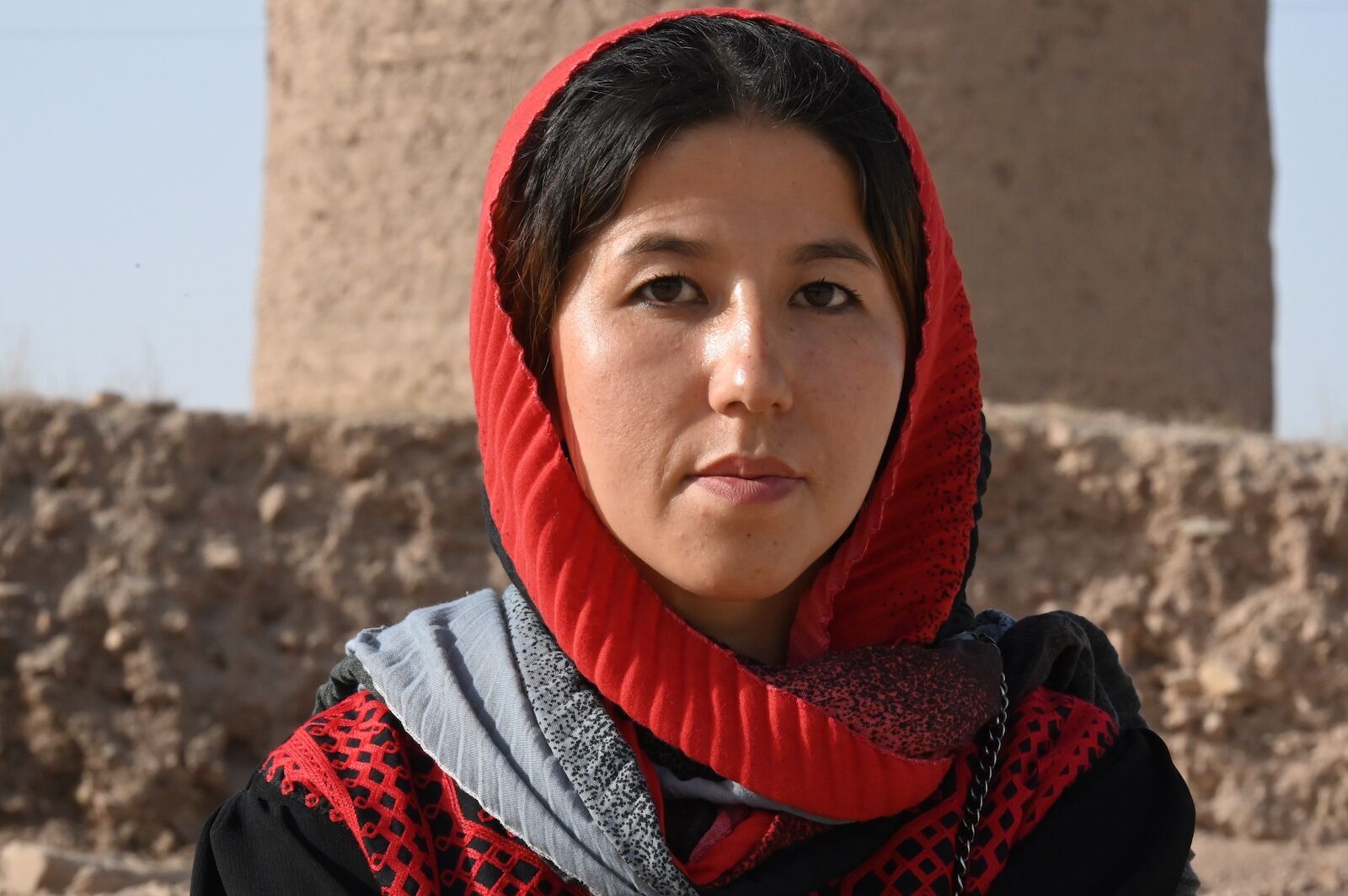
Afghanistan’s first female tour guide

Portrait of Fatima Haidari, Afghanistan's first female tour guide

Photo: Untamed Borders

I spoke with Fatima via Google Hangouts a couple of weeks before the virtual Afghanistan tour. She discussed working in the country as a woman, along with her harrowing escape from the Taliban. The story is fascinating not only because of her lived experience, but also because of the vision and leadership Fatima has displayed both before the return of the Taliban and since – from her decision to begin posting about her country on Facebook, leading to her work as a tour guide, to her ability to rebuild in a place far from home.

Let’s start at the beginning. It’s the 2010s, and Fatima’s country is in the midst of a brief but encapsulating period of democratic reform. Afghanistan established the Islamic Republic in 2004 with a new constitution approved by a Loya Jirga, enabling direct presidential elections, including Hamid Karzai’s in 2004 and Ashraf Ghani’s in 2014. This reform also included a bicameral parliament, marking a shift from theocracy to a centralized democratic framework that included concepts previously considered post-revolutionary in the country, such as women’s voting rights.

Fatima grew up in a rural part of the country outside of a town, and always believed there was more to life than the stuttered existence that had been forced upon Afghan women. She began her journey toward becoming Afghanistan’s first female tour guide while she was a university student not far from home, her entry into the profession stemmed from a desire to challenge negative media stereotypes about her country. Fatima created a Facebook account to share positive aspects of Afghan culture, food, and history, hoping to reach people who were curious what life was like in a country that hasn’t exactly been a media darling throughout the 21st century. This eventually led to her first in-person guiding experience when two travelers from Ukraine contacted her to show them her hometown.

“I was thinking maybe Afghanistan, from another side, needs to be seen positively by the world,” Fatima told Matador. “Before starting to guide tours, I never knew that being a tour guide is a kind of job or that it would be paid. But then I came to understand, oh yeah, that is a job. ”

Following this experience, she attracted the attention of Untamed Borders, who hired her after she successfully guided a group of five people, including the company’s founder, James Wilcox. She notes that she had to self-train on safety measures and professional standards, as she had never been formally educated for the role. This eventually brought recognition from global media outlets, including CNN, and a growing cohort of inbound travelers interested in hearing Fatima’s perspective on Afghanistan.

“Being a tour guide as a woman is so much more difficult because when I was taking my guests around, a lot of people were staring at me,” Fatima says. “Some people were insulting me with words, and some were like, I have to repent, what I’m doing is wrong.”

Still, she persisted. Tourism in Afghanistan experienced modest growth, with visitor numbers rising from near-zero post-conflict levels to thousands annually by the late 2010s, fueled by improving security in select areas and promotion of sites like Bamiyan and Band-e-Amir. Fatima and Untamed Borders developed a route from Kabul east to Herat that included stops in both of these “hot spots.” Wilcox’s experience serving as a fixer for foreign journalists in this part of the world lent deep logistical knowledge, and when combined with Fatima’s homegrown character, the tours, while drawing a very niche cohort, gained traction.

Fatima even hosted a weekly radio program called “Winner Woman” while she was living in Afghanistan, part of her efforts with her female empowerment organization, with the primary goals of growing women’s awareness and empowerment.

Seeing Afghanistan through Fatima’s eyes

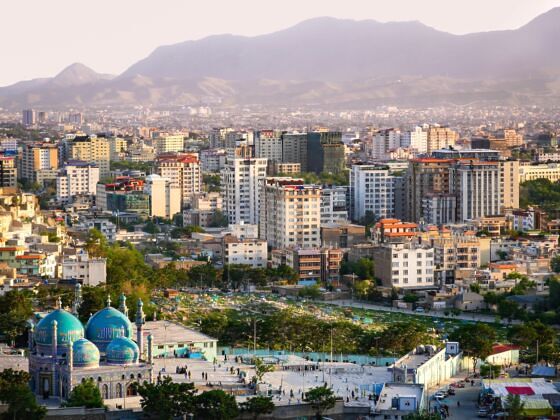
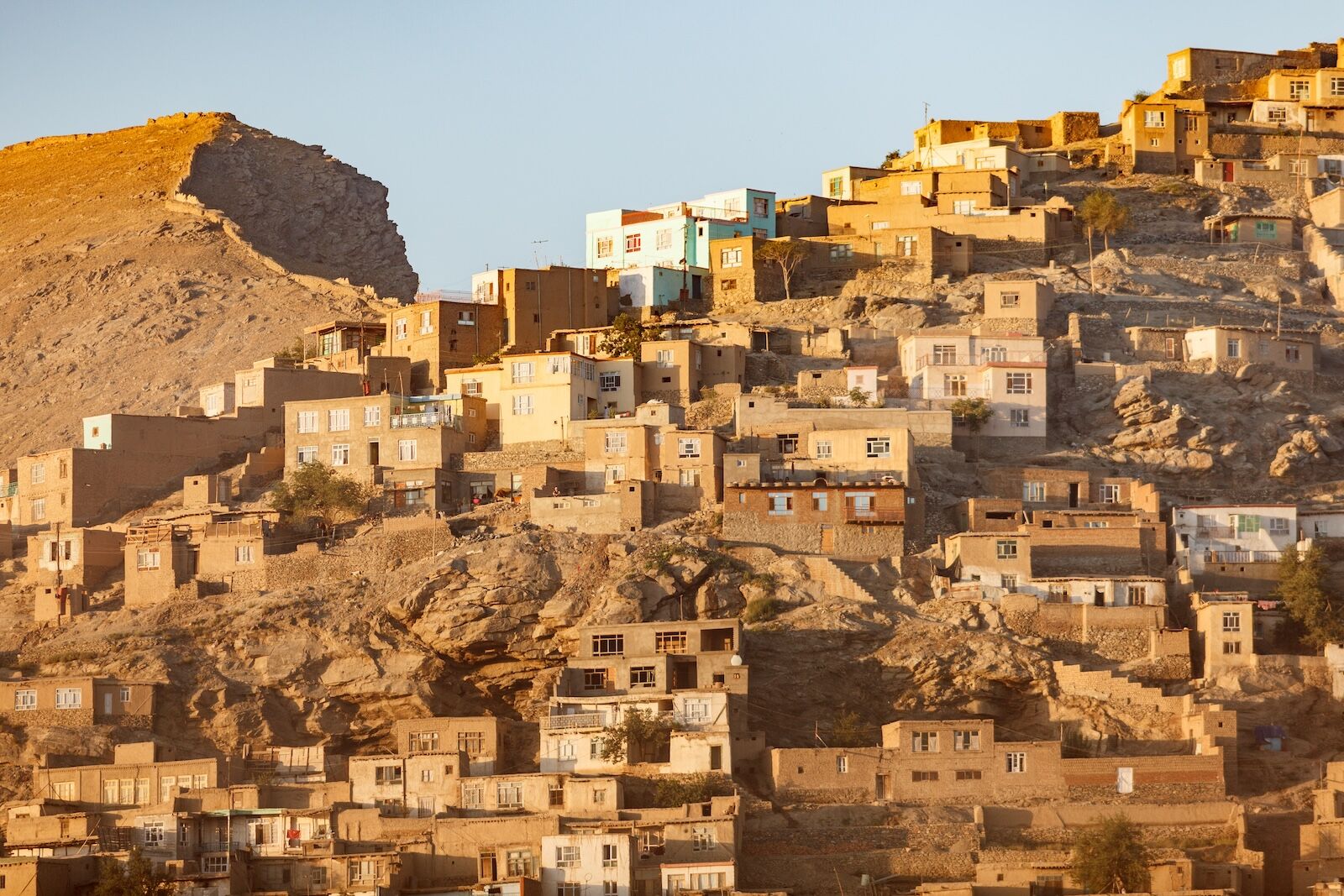
homes on a hillside in kabul, afghanistan

Photo: Pvince73/Shutterstock

Our tour started in Kabul, where Fatima showed us photos of the DarulAman Palace, now in ruins. The Taliban continued to bomb the country throughout its departure from rule, leaving many sacred sites destroyed. We learned of Kabul’s history in Buddhism prior to the arrival of Islam in the 7th century.  We saw and learned the origins of the country’s national dish, Kabuli Palaw,  a dish a steamed rice with tender lamb or beef, caramelized carrots, raisins, and pistachios or almonds, and she walked us through the city’s iconic Gardens of Babur.

In Bamiyan, we saw photos of the two important Buddhas destroyed by the Taliban in 2001 and learned of the city’s history as the center of Buddhism in Afghanistan. A drone video flew us over the Dragon Valley in the Hindu Kush highlands, where local Hazara tradition says the ridge is the petrified body of a dragon that once terrorized nearby villages, demanding virgins and camels as sacrifice. A still-frame introduced us to Buzkhashi, the national sport where the decapitated head of a goat serves as a the goal for horse-bound players to deliver it to a goal circle amid fierce physical tussles, made famous globally by the “Nomad Games” tournament in Kyrgyzstan. 

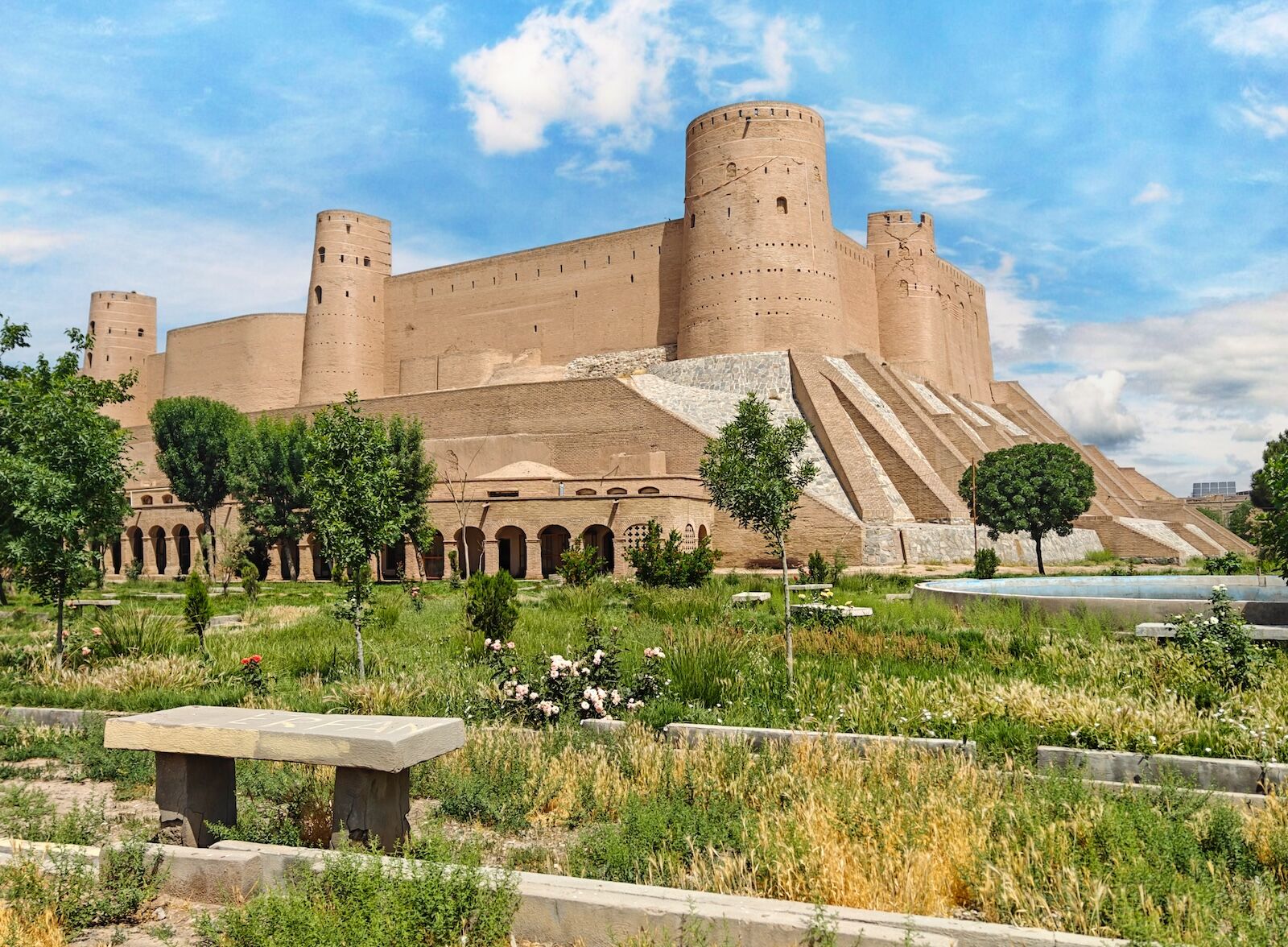
At the Hari Rud River’s confluence with the Jam River in Ghor Provnce, we saw the Minaret of Jam, a 22th-century structure that towers above the waters and landscape below. In Herat, where the tour ended, we learned of the history of red wine production in the region as well as its legacies in pottery, poetry, and music. The city, and the country as a whole, is known for exceptional hospitality, where guests are treated with profound generosity and relevance as part of the Islamic tradition of diyafa. Fatima certainly embodies this.

The return of the Taliban, and the decision to leave

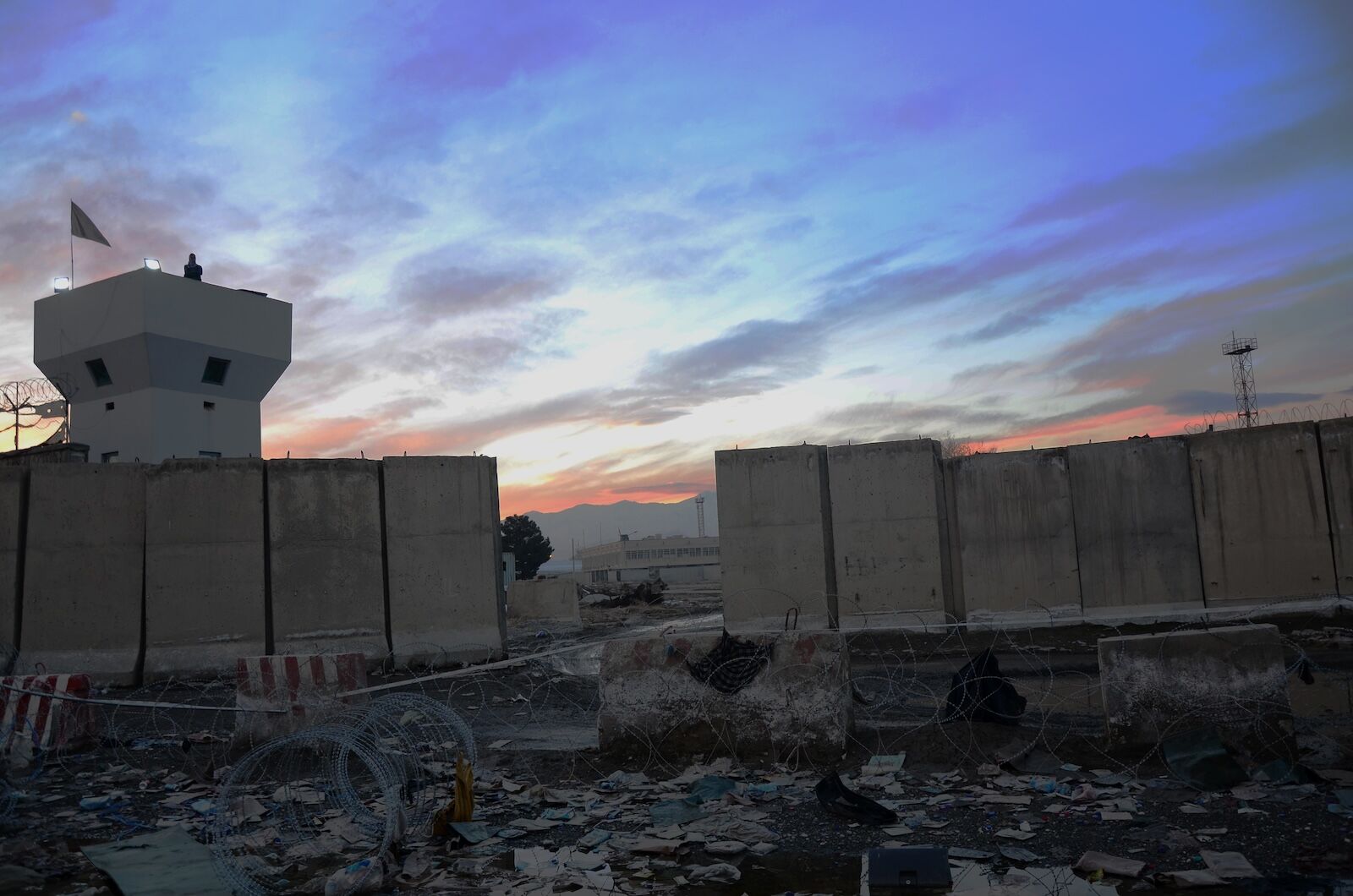
kabul airport after bombing

Photo: Masood Shnizai /Shutterstock

And then, following the withdrawal of US and NATO troops in 2021, the Taliban returned to power following 10 days of rapid advances and a brutal insurgency. On August 15 of that year, the Taliban entered Kabul, effectively bringing to an end any progress made towards human rights in the country. For Fatima, this meant the end of everything she’d worked so hard to build. As a woman who’d taken the charge to put herself out there as a tour guide, any attention now was bad attention.

“I was a university student, I was on my third year so I had one more year to to be graduated,” she says. “Together with 10 of my friends, we had in our town a small organization for woman empowerment. And obviously my job as a tour guide. I had to leave everything.”

Her evacuation was made possible by an “enormous group of people from different countries” who organized fundraising to help her and others get out of the country. On the day of her departure, Fatima arrived to a terrifying environment at the Kabul airport. Here, the problem was not getting a seat on a plane, but actually getting past the Taliban to enter the building.

“They were like pushing us back with the air gun shots and a lot of people obviously were fainting because they were not receiving enough oxygen,” she says.

She made it to the airport and left only two days before a major explosion occurred there.

Rebuilding from nothing, in Italy

islamic architecture in herat, afghanistan

Islamic architecture in Herat. Photo: Sirio Carnevalino /Shutterstock

Fatima departed Afghanistan from Kabul. She explains that “everything happened so fast” because she moved from her hometown to Kabul just as the Taliban began capturing territory. Before being evacuated to Italy, she attempted to get a visa for Spain. Her friends in Spain advised her to go to Pakistan to process the paperwork, but the Taliban took over the country on the exact day she was scheduled to fly to Pakistan, leaving her stuck in Kabul for two to three weeks. Eventually, she secured the ability to travel to Italy, where she now studies international politics and journalism.

“Once I came to Italy, eventually the traumas I have been through started to be bolder and bolde,” Fatima says. “I just eventually came to understand that I’m not well. I went through panic attacks, mental breakdown, and depression.”

Studying and guiding virtual tours of her home country have helped her find her footing living abroad. She still believes in the importance of the work she does and in the importance of broadening perspectives about Afghanistan.

“It’s very hard for me to accept I am never able to go back to my country, that the Taliban is there, they closed the doors of schools, universities, and job offices for women,” Fatima says. “And I cannot believe we are living in this century. We are still in Afghanistan combating to get our very basic rights, to get a book to study, or to, I don’t know, dream of becoming somebody we want to be.”

During the virtual tour, Fatima added this context as she highlighted the spots she was formerly able to show travelers like us in person. One of her dreams was to learn skiing and biking, the former of which Untamed Borders became the first to organize trips around within Afghanistan. This proved elusive, but she remains positive about any recognition the country does receive in those regards.

“I do believe that we, as Afghan people, we always love to have tourists visiting our country,” Fatima says. “But more than that we love the interaction between tourists and us because we have never been able to travel outside the country because our passport is also very weak.”

Fatima, however, highlights a painful irony: Foreign visitors can often enjoy the very sites and rights that have been stripped away from Afghan women living there.

“As an Afghan or local woman, I’m not allowed to visit certain public spaces like parks, certain parks, or, for example, the big mosques or attractions,” she says. “But when it comes to for young [foreign] women, they are allowed to do so. I kind of understand if this creates certain sentiments against tourism. Imagine you are you you worked so hard for 20 years to get your most basic rights, and then all of a sudden, it’s taken away from you.”

As citizens and as travelers, we may not have the power to overthrow the Taliban. But Fatima believes that those who are willing to visit Afghanistan play an important role in keeping the country, and the Taliban, visible. Addressing concerns that visiting Afghanistan is empowering the Taliban, she noted that due to how weak the government is, very little of the money spent by travelers ends up in government hands. Beyond airport tax and other small fees, the vast majority of money spent goes to local business owners and communities, through restaurants and hotels, visiting markets, and shopping in local boutiques.

It’s important, she notes, not to normalize the Taliban or its actions by posting photos of party members or soldiers on social media. Rather, if one must post, focus on the people and the places that make Afghanistan special. Perhaps most importantly, use your words and your media to dispel the incomplete view of the country that is often portrayed in Western media.

“If Afghanistan is isolated, the Taliban can do far worse things than if it isn’t.”

How to help Fatima and women in Afghanistan

Untamed Borders and Fatima have remain committed to delivering a portion of the proceeds from her virtual tours to an underground girls’ school in Afghanistan. If you’d like to sign up – a spot on the one-hour tour costs $60 – you can do so through the Untamed Borders website. Fatima also recommends donating to the Shuhada Organization, an NGO which works to advance women’s rights in Afghanistan, and Afghanaid, which works to help families in marginzlized parts of the country.

Discover Matador

Save Bookmark

We use cookies for analytics tracking and advertising from our partners.

For more information read our privacy policy.