Usually, planning a trip seven months in advance would give you plenty of time to book your hotels, activities, and transportation without worrying about everything being sold out. But when it comes to the 2026 FIFA World Cup, being held throughout 16 North American cities in June 2026, you’ll want to make your plans as soon as possible. Many cities have already reported huge increases in bookings over World Cup dates, with some hotels already sold out — and pricing rising on those that still have rooms left.
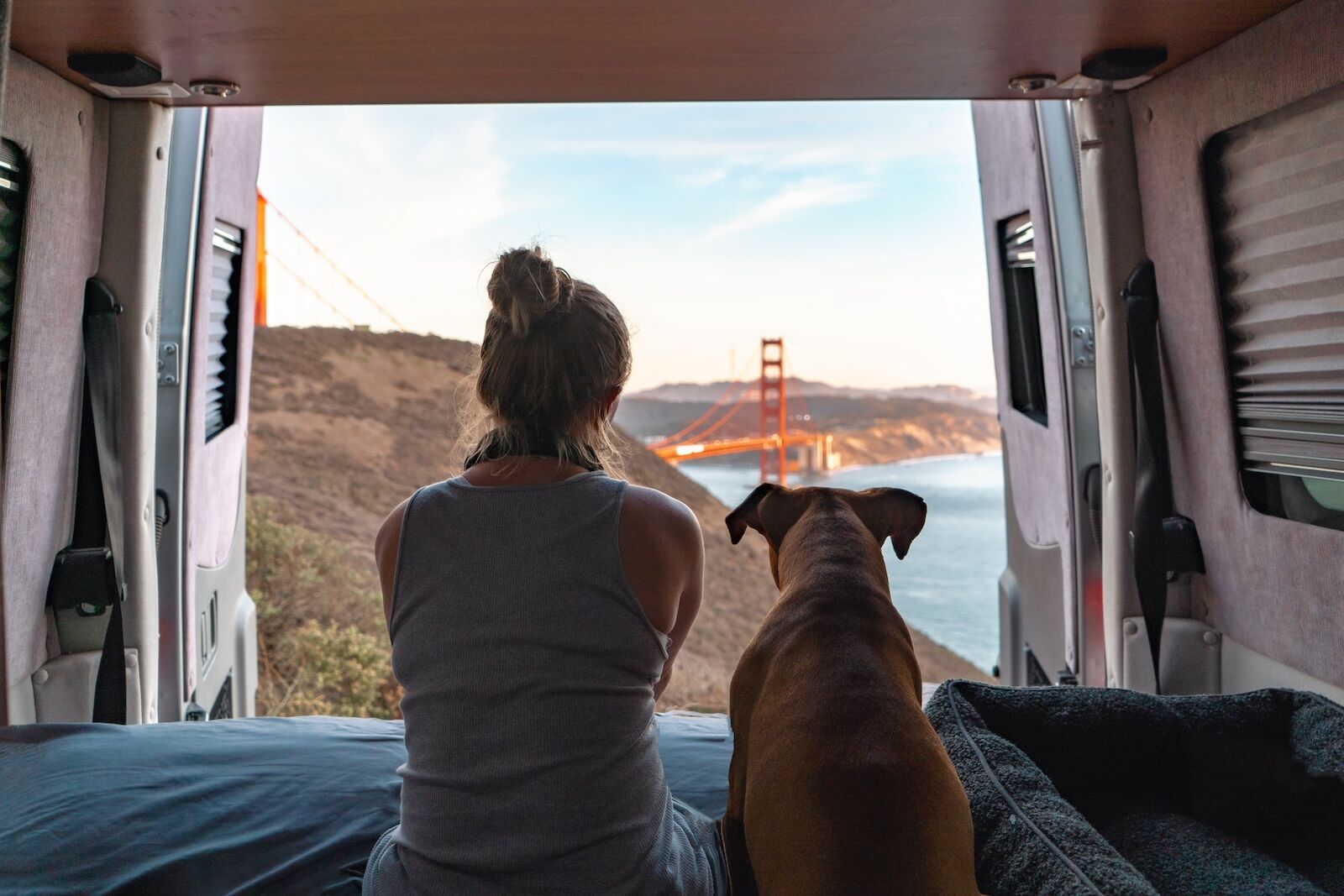
How to Avoid FIFA World Cup Hotel Prices and See the Games by RV
But let’s say you want to catch a World Cup match or two, but don’t want to fly in for just a night or two, watch the games, and immediately leave again — but nor do you want to pay inflated rates for a week of hotel rooms. In that case, while you may have options like clean but cheap motels, you could instead turn the opportunity to see the 2026 FIFA World Cup by RV, turning the global competition into a full-on road trip.
Matador Network spoke with Jen Young, co-founder of Outdoorsy, to get the scoop on how to rent an RV for a big event like the 2026 FIFA World Cup. Outdoorsy is a peer-to-peer RV rental service similar to Turo, but with RVs. According to Young, inquiries for summer of 2026 are already 11 percent higher than this time last year. While that’s not just due to the World Cup — 2026 is also the anniversary of historic Route 66 and the 250th birthday of the USA — she advised that these three “mega events” may be spurring a rise in summer travel.
“This event is a once-in-a-generation opportunity to truly experience the depth and diversity of North America,” says Young. “An RV trip turns the World Cup into an immersive, shared cultural experience and an opportunity to explore the country before and after the event.”
This interview has been edited for length and clarity.
Matador Network: Have you noticed any increase so far in interest around World Cup rentals, or have you noticed any trends based around similar events?
Jen Young: Excitingly, we are already seeing an 11 percent spike in bookings for summer 2026 travel compared to last year. The 2026 World Cup’s massive scale across three countries offers a unique chance for millions of fans to see the best of the US. When you look at where the host cities are located, it’s not surprising that we’re seeing the greatest reservation spikes in Florida, Washington, California, Pennsylvania, and British Columbia.
Avid road trippers, who we host regularly, are also anticipating the squeeze that all these events are having on supply and are booking earlier than usual. We expect this trend to continue for the remainder [of 2025 and into 2026], especially after the World Cup Final Draw on December 5, when fans find out where their teams will be competing.
This is an effect we’ve previously observed with events like the total solar eclipse, where we saw a 300 percent spike in bookings. During “mega-events,” when hotels and short-term rentals become scarce and extremely expensive, RVs offer guests both affordable accommodations and transportation and a unique opportunity to explore nature and the freedom of the open road. In the case of the World Cup, an RV is a more affordable mobile lodging solution that provides accommodations across multiple host cities, allowing fans to roadtrip as they follow their team and maybe more importantly, explore the country before and after the tournament.
“Being Canadian, I’m excited to see the bump in British Columbia. Canada is a beautiful country that more of the world should experience.”
— Jen Young, Outdoorsy co-founder
How is traveling by RV different from driving between cities? Won’t trying to drive/park an RV in some of these cities be significantly more difficult than driving/flying?

Some cities, like San Francisco, can be tricky to navigate with larger RVs. Photo: Brandon J Hale/Shutterstock
Young: Unlike flying, where every city requires a new hotel booking and a big budget for dining out, the RV is your home that travels with you. In addition, fans can give TSA lines and flight cancellations the red card.
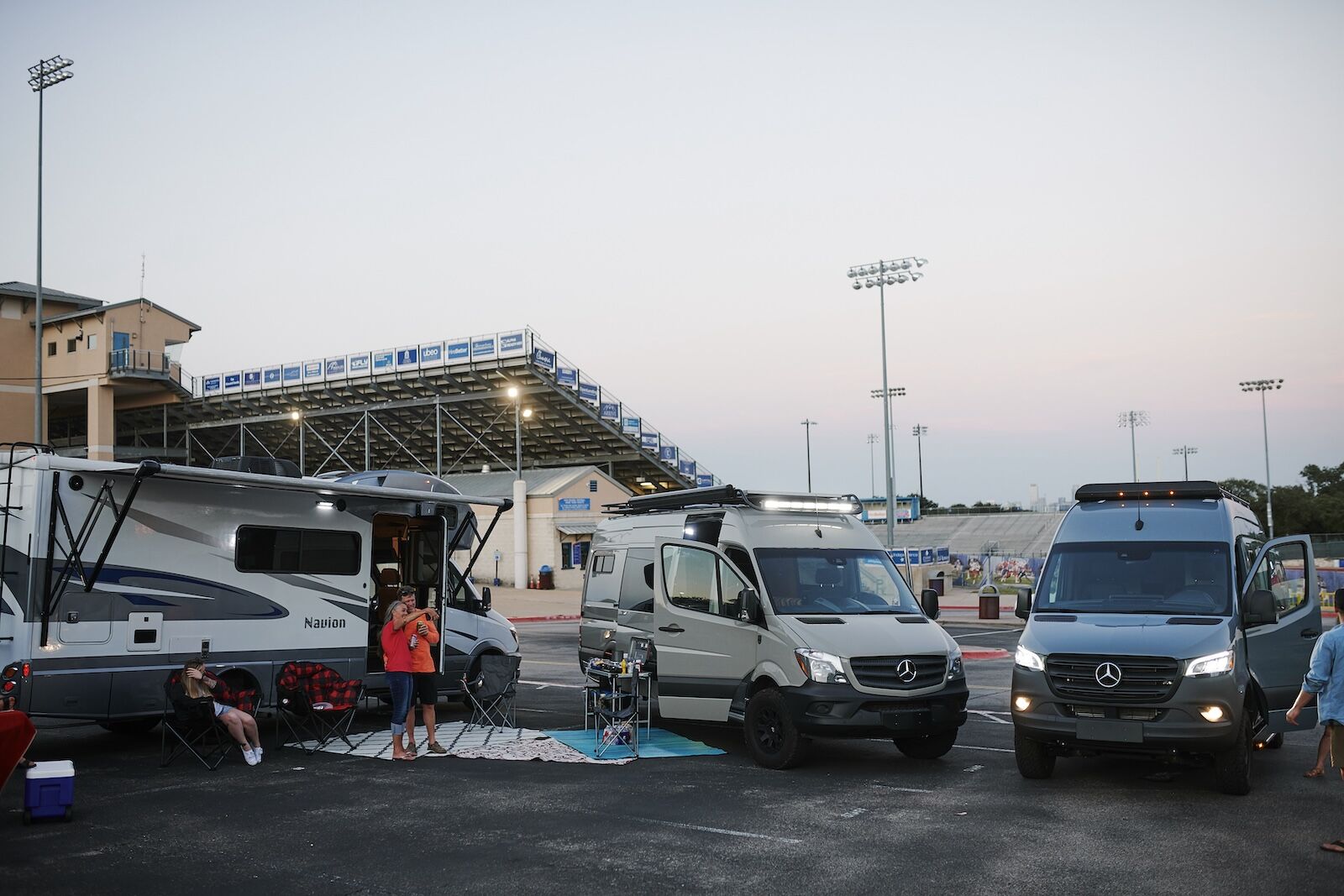
You are absolutely right that driving a large ‘Class A’ RV in downtown traffic is the last thing a soccer fan wants, especially if they’re an international visitor. Our advice is to use the RV to stay in the RV parks or campgrounds located just outside the major metro areas. Then, fans can use public transit or rideshares for the final few miles into the stadium. The RV becomes their pre- and post-game escape from the frenzy and as a way to travel between host cities.
When do you recommend people rent their RVs?
Young: With three major events happening in summer 2026, we are expecting unprecedented demand for RV rentals and road trips. So, our expert advice is to book early.
The World Cup, for example, is expected to involve more fan travel than any sporting event in history, which makes advanced planning even more necessary. We recommend advance planning (a.k.a., now), and booking quickly after the Final Draw on December 5.
Summer is Outdoorsy’s peak travel season for road trips, typically May to September. The usual volume combined with all the summer 2026 events means that our Superhosts’ offerings and premium inventory, especially newer, Class C motorhomes, Class Bs, and campervans, will probably be in hot demand.
“Booking early secures not only your choice of vehicle and your desired dates, but often a better rate and the ability to book better campgrounds.”
— Jen Young
To help fans, Outdoorsy created an interactive map featuring convenient campgrounds, national parks, epic road trips and the most interesting destinations. For fan groups who are traveling, we have a dedicated concierge service that will streamline the logistics for supporter clubs looking to secure three or more RVs.
How does it work if you want to rent an RV in one city and return it in another? What if someone wanted to cross Mexico into the US, or US into Canada? Or vice-versa?

Photo: oksana.perkins/Shutterstock
Young: Outdoorsy will be launching a new one-way rental service in advance of the World Cup. This option will give fans the opportunity to travel between host cities to follow their team or to other destinations post tournament without having to make the return trip. This service will largely be enabled by our pro-hosts who offer some of our best rigs and customer service.
Any idea of how traveling by RV compares cost-wise to flights and hotels in some of the host cities?
Young: Independent studies by the RV Industry Association consistently show that an RV vacation can be 30 to 60 percent less expensive than a comparable vacation involving flights, hotels, and dining out for a family of four. With World Cup inflation, these savings will only be more dramatic. Instead of paying peak-season hotel rates of hundreds of dollars per night in a downtown city, which will be inflated for the World Cup, you are paying a fraction of that for a nightly rate at an RV park — often between $180 and $250 per night in surrounding areas.
The RV is your single asset for both transportation and a place to sleep, eliminating the cost of multiple flights, expensive rental cars, airport transfers, and baggage fees. And having a full kitchen in your RV allows you to prepare family meals, cutting your food costs by potentially thousands of dollars for your group over the course of a multi-week trip.
Any advice for international visitors navigating renting an RV, from RV etiquette to driving to international licenses?

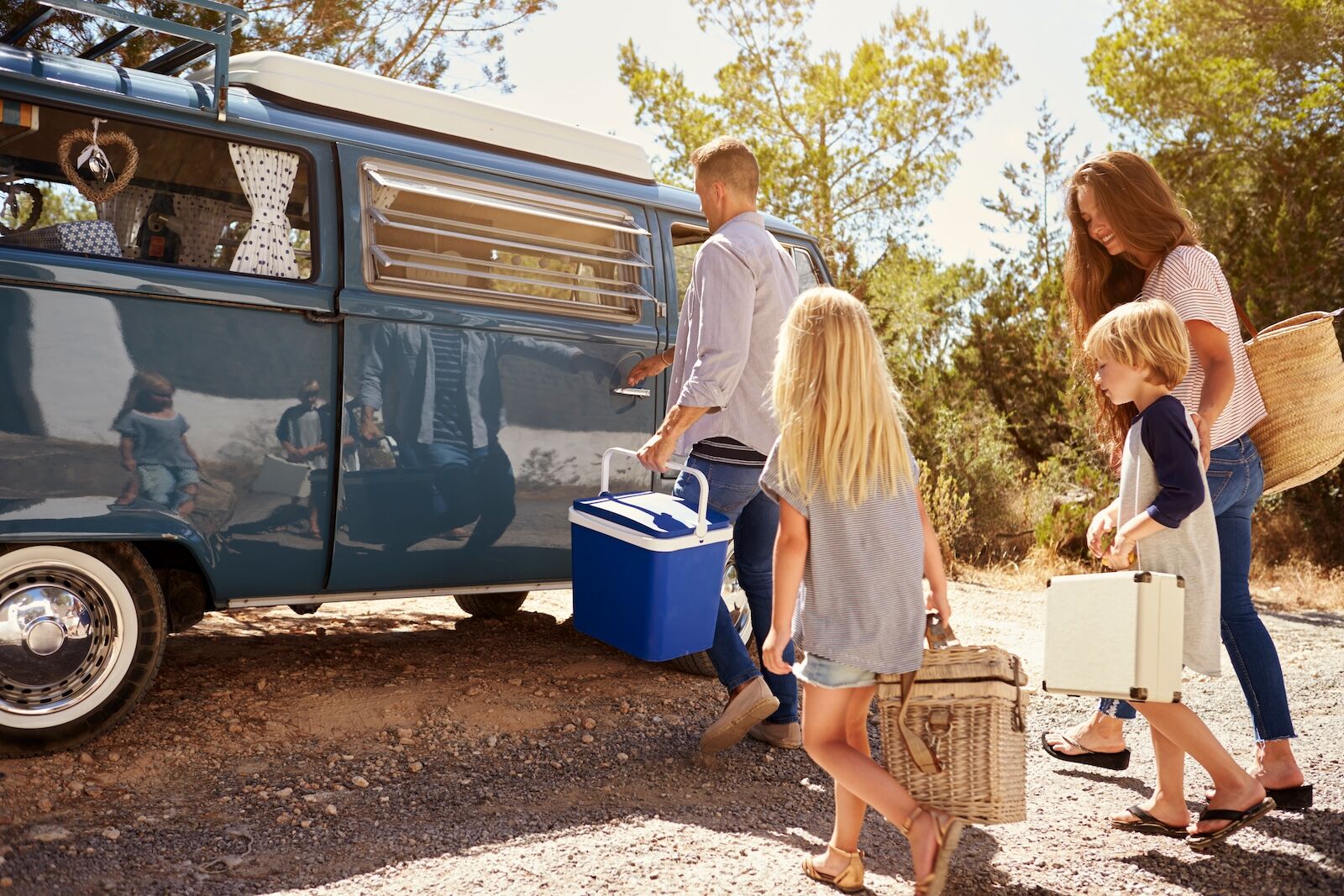
Photo: Monkey Business Images/Shutterstock
Young: Absolutely. Outdoorsy operates in 11 countries across 4,800 cities, and we recognize that international visitors are a vital part of the World Cup experience.
Our platform is designed to facilitate direct conversation between the guest and the RV host. This is the most valuable resource for international guests to ask about local driving norms, RV hookup procedures, and any specific vehicle-size considerations before they book (or make campsite reservations). For driving, travelers typically need a valid driver’s license from their home country. While most rentals don’t require a special commercial license, an International Driving Permit (IDP) is highly recommended as a useful translation of their existing license.
In addition to the expert help and advice provided directly by our hosts, Outdoorsy provides guests with pre-trip resources as part of our communication experience, and our customer service team is available 24/7 before and during the trip.
What are some rookie mistakes people often make on their first long RV trips?
Young: We have a lot of resources on Outdoorsy.com to help plan for RV road trips. The best RV trips are about embracing simplicity and good preparation. We have a blog post on RV travel for beginners.
A big one is over-planning the drive: Focus on the experience and don’t try to drive more than four to six hours per day. The beauty of an RV is the stops, not just the driving
Also take into account the vehicle height. Write the RV’s height, width, and length on a piece of tape and stick it right on the dashboard. This prevents accidental encounters with low bridges, drive-thrus, or low-hanging branches.
For a World Cup trip, booking campsites and RV parks immediately after securing the RV is imperative. Don’t rely on finding a spot the day of, especially near major host cities. We also advise that travelers sign up for alerts for availability at the most in-demand campgrounds using our “campground waitlist” service.
“Before you depart, ensure the host provides a thorough walkthrough of how to hook up and unhook the electricity, water, and sewage. You’ll need this knowledge every time you stop.”
— Jen Young, Outdoorsy co-founder
Finally, be careful with the awning. Outdoorsy also operates its own insurance company (Roamly) that provides all the guest coverage on rentals, so we have deep insight into the most common claims. They invariably involve easy-to-avoid mishaps with the RV’s awning (or misjudgments at gas stations when refueling).
Any sense of what match-to-match road trips are going to be most popular? Any particularly scenic or fun stretches you’d recommend?

Photo: canadastock/Shutterstock
Young: Based on the host city locations, we anticipate that there will be three ways fans will experience the tournament and explore the United States before, during, and after the tournament. We anticipate having a better sense of the most popular routes after the December 5 Final Draw.
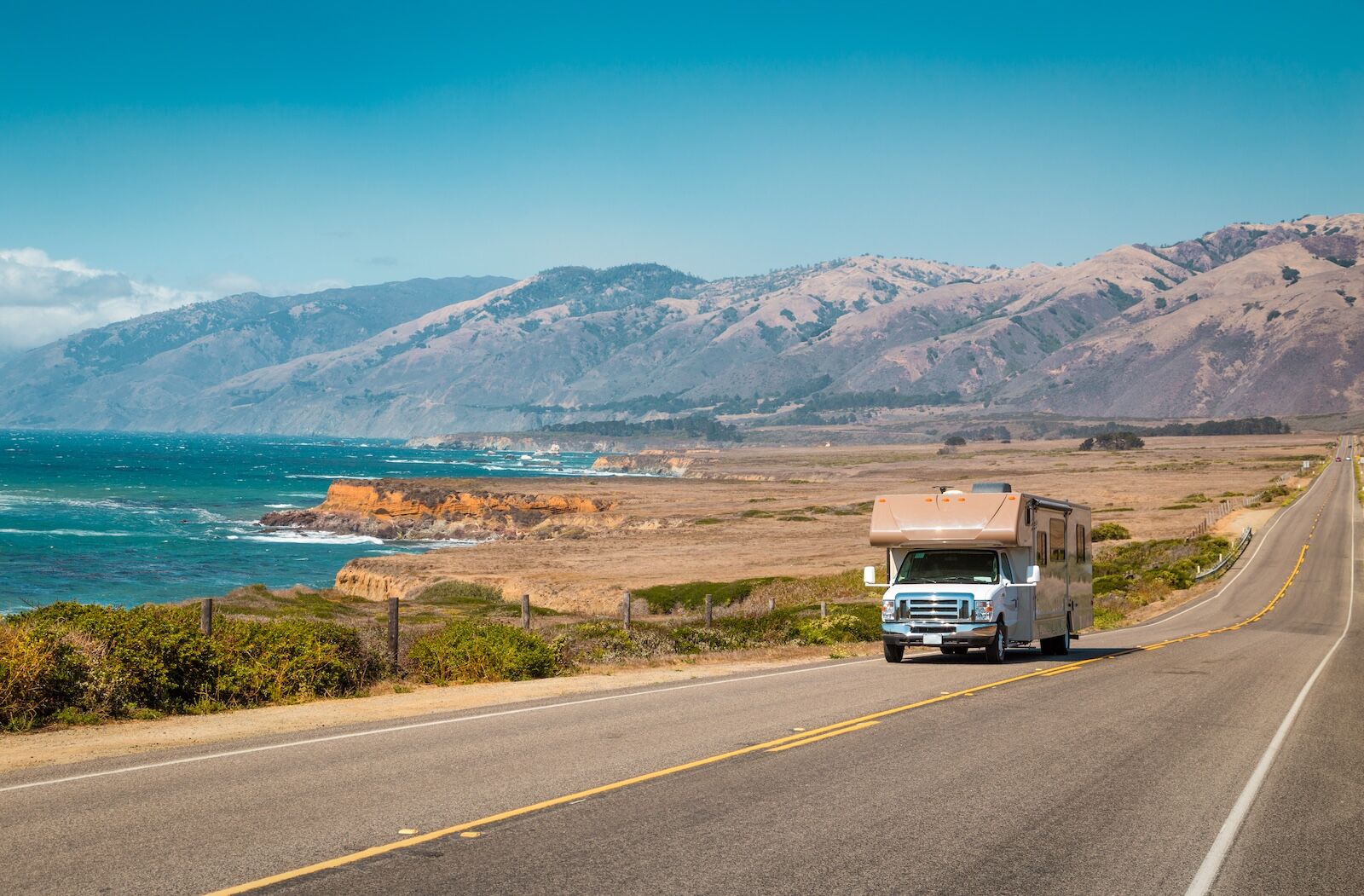
First is the Pacific Coast run, starting perhaps in Los Angeles and following Team USA (if they play in LA) to Seattle. This is an epic stretch along the Pacific Coast Highway (Highway 1) with legendary sights like Big Sur, Redwood National Forest, and San Francisco. It’s one of the world’s greatest drives.
Second is the eastern corridor, connecting Boston, New York/New Jersey, and Philadelphia, extending down to Atlanta and Miami. This route is a blend of history and city excitement. The drive between Philadelphia and New York is quick, but the stretch south of Washington, DC, into the warmer climates is a beautiful coastal cruising opportunity.
Finally, the Texas/Midwest Loop, linking Dallas, Houston, and Kansas City. This route offers a quintessential American road trip through the heartland, fueled by the best BBQ, with vast landscapes on display and a chance to experience true local culture.
Regardless of the route, the best scenic stops and most unplanned, memorable experiences [will happen] on road trips between the match cities. The spontaneous moments of seeing and experiencing the beauty of nature are what I love most about road tripping in an RV. Wherever fans want to travel, we have a plethora of resources for summer 2026 roadtrip travel and our Ultimate RVer’s Guide to the 2026 Summer of Soccer in North America.
What’s the best order of operations for the various pieces that all have to fit together to make a World Cup trip work: getting match tickets, deciding what games to attend, flights, campsites, etc?

Photo: Outdoorsy.com
1. Secure game tickets and book in-bound flights: Use this to work out the duration of your trip and [host city] that will be the anchor of your trip.
2. Rent the RV next. With your fixed dates and cities in hand, use Outdoorsy to find the perfect vehicle for those dates.
3. Book your campsites or parking spots. As soon as the RV is booked, secure your RV park or campground reservations, especially for the nights surrounding the matches in host cities. We cannot stress this enough. This inventory is also finite and will sell out fast.
4. Once the logistics are locked, the fun begins. Plan the scenic drives, the National Park visits, the unique restaurants, and the local experiences between the match cities.