In an era when it feels like people find it hard to agree on anything, one thing feels universal: commercial flights are not a great experience. Train travel, by contrast, is almost endlessly romanticized. As someone who’s lost countless hours to flight delays and cancellations, the idea of settling into a train seat with a book and playlist is much more appealing. That’s especially true when stunning scenery is included.
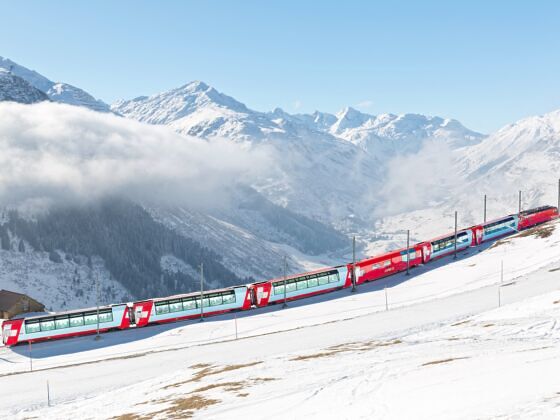
Photo: AaronChenPS2/Shutterstock
Chasing Winter Alpine Views by Train: A Slow-Travel Route Across France, Switzerland, and Italy
Switzerland’s Glacier Express in the winter — eight hours of train travel snaking through the snow-capped Swiss Alps in a glass-ceiling train — checks all the boxes: views, dining car for food and drinks, and a complimentary audio guide. My partner and I started making our itinerary. As someone who tends to turn a straightforward adventure into a full-blown journey, I booked extensions to this trip immediately, including another train ride on Italy’s Bernina Express. That turned this scenic, one-train trip into a week-long train adventure through France, Switzerland, and Italy.
(My one caveat: booking rules can be unintuitive, as I found in Switzerland. Glacier Express, for example, requires both a seat reservation and a valid route ticket. More on that later.)
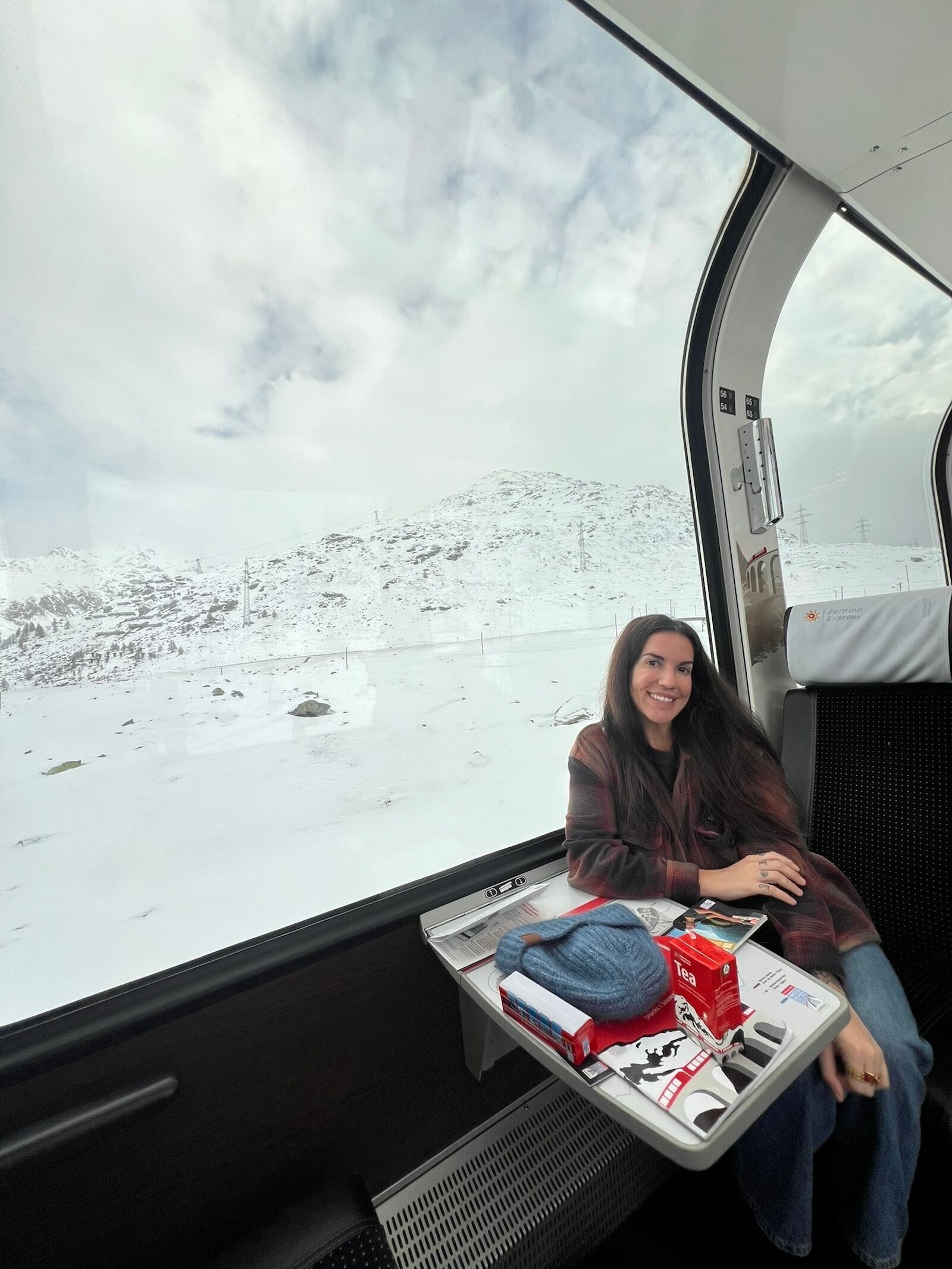
The author aboard the Bernina Express, panoramic windows included. Photo: Vicki Denig
If you’re looking to hit France, Switzerland, and Italy on one of the most picturesque and relaxing routes possible — and without the cost of a luxury train company attached to it — here’s exactly how I did it from Paris to the Glacier Express, then onward via the Bernina route into Italy.
Day 1: Arrive in Europe
If you’re coming from the United States, this journey starts with a transatlantic flight. The good news is you have a number of starting points to choose from.
I chose Paris, as the city is a part-time home base for me, and it’s a major hub for international airlines as well as an easy gateway dense with rail connections across Europe. If you’re a Francophile looking to tack on a few days of museums, wine bars, and cheese before your train journey, allez.
For those looking to start a bit closer to the Glacier Express starting point in Zermatt, Switzerland, fly into Zurich or Geneva as your day one starting point. Zurich is an easy rail hub and exciting city to visit, while Geneva can work if you’re pairing your trip with a stop in the Lake Geneva region.
Day 2: A night in Zermatt
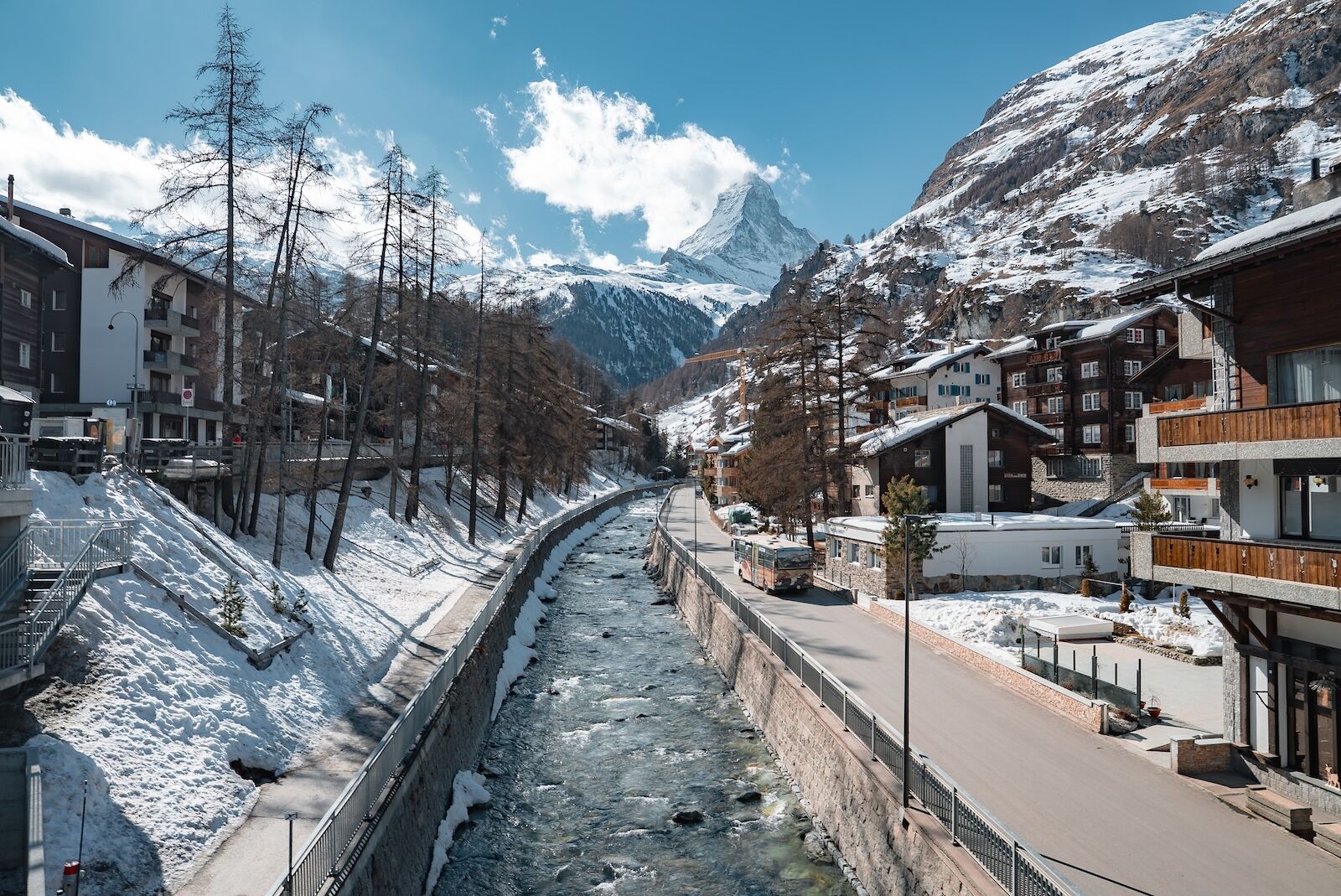
Photo: Zermatt with the Matterhorn in the backdrop. Photo: NorthSky Films/Shutterstock
The Glacier Express leaves from Zermatt at 8:52 AM, so arriving the night before is essential to avoid any snags that could make you miss the early departure time.
Admittedly, if you started in Paris then getting to Zermatt is a bit of a haul. Plan for roughly seven to nine hours by rail from Paris, depending on connections, though the rail system between France and Switzerland is incredibly reliable.
If the price difference is reasonable, spring for the first class ticket on the stretch from Paris to Zurich. These seats are significantly larger and more comfortable, and each has dedicated outlets that come in handy for the length of this trip. From Zurich, connect onward for the final leg into Zermatt.
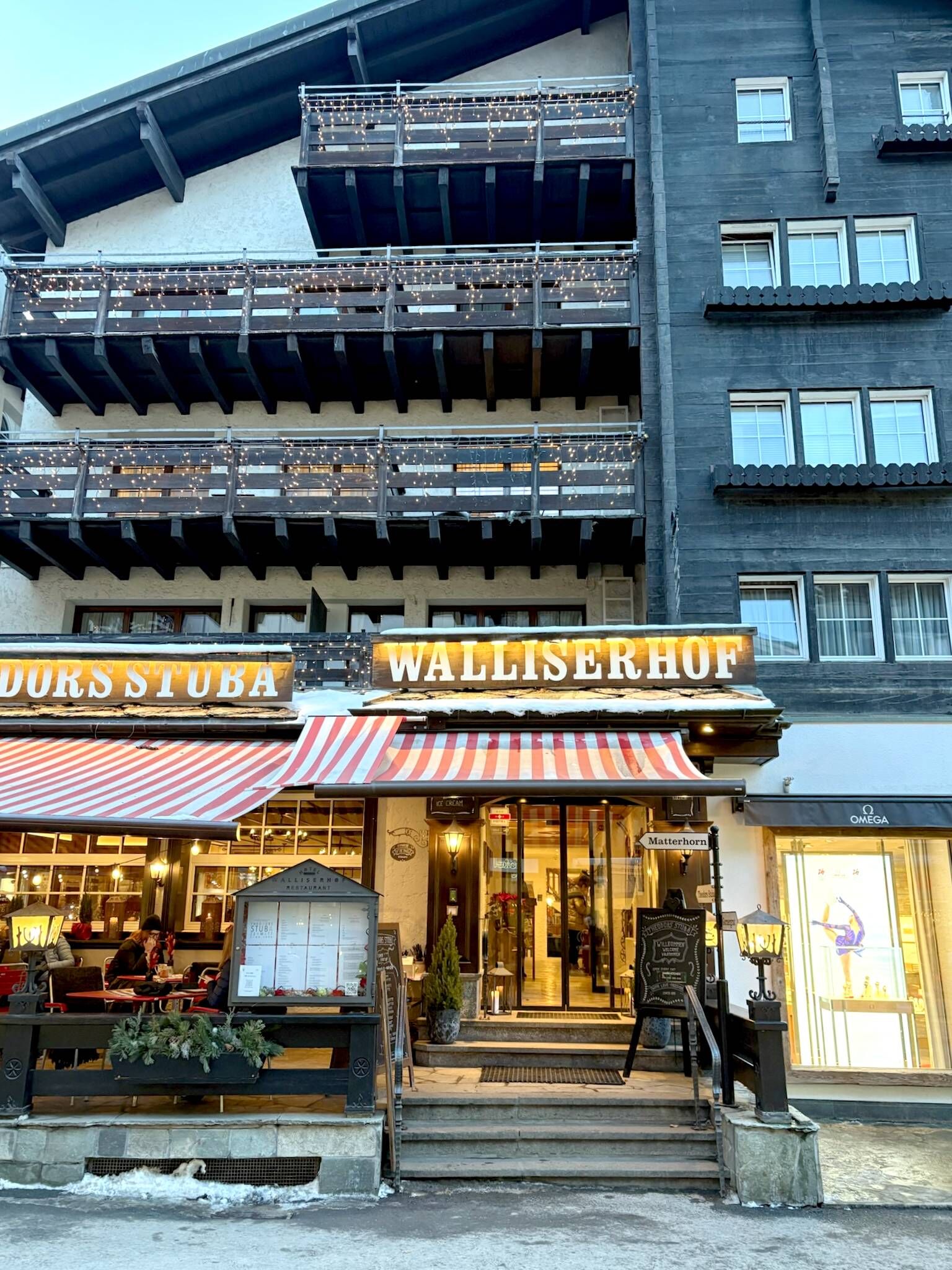
Hotel Walliserhof in Zermatt. Photo: Vicki Denig
Zermatt is a car-free mountain town with a permanent population under 6,000 people. It’s a popular ski and tourist destination surrounded by famous peaks like the Matterhorn, so the traveler infrastructure is easy to navigate.
My partner and I spent the night at Hotel Walliserhof, a delightful small hotel close to the train station that’s a fraction of the price that the nearby luxury hotels were charging. When it came to the rest of the night, we’re always the type to spring for a good drink. We stopped in at Stars Bar, the high-end cocktail bar at Grand Hotel Zermatterhof, for expertly crafted martinis and live piano next to a roaring fire. After drinks, stomachs full of raclette from the same hotel’s saycheese! restaurant, we mosied back to Walliserhof, grabbed a spiked hot chocolate nightcap, and snored off to dreamland.
Day 3: Taking the Glacier Express to Chur
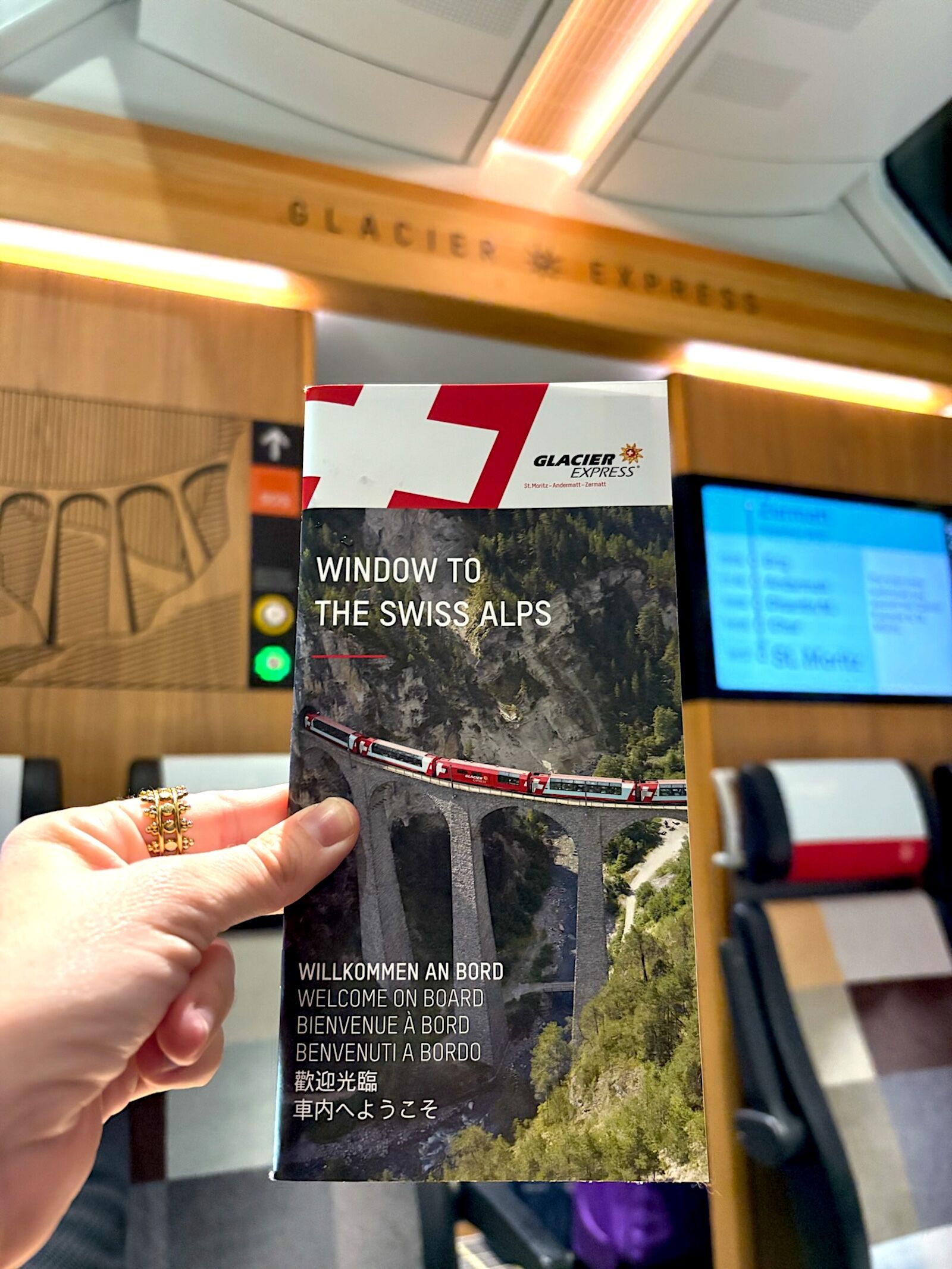
Photo: Vicki Denig
Despite the haze from the previous night’s martinis, I quite literally sprung out of bed in excitement for our Glacier Express day. We took the four minute walk from Hotel Walliserhof and arrived with time to spare.
It’s at this point in the trip where proper planning will help you avoid some common issues. First, do your best to travel as lightly as possible — carry-on bags only is best. Lugging large suitcases from train to train is not ideal. Also, no one really cares if you wear the same jeans and sweater a few times over.
Second, and this is the big one, understand the ticket process. Unbeknownst to me, a reservation on the Glacier Express is not a ticket. Some of you may find this as mindblowingly confusing as I did. The travelers seated near us, however, looked at me like I had seven heads as I expressed my stupefication to the conductor. To travel on these trains, you must first book your reservation, which comes with seat assignments, then purchase tickets to accompany those seat assignments (the easiest way in my situation was on the Swiss travel app SBB).
Our Glacier Express reservations were about $75 USD each, which seemed reasonable to me — in retrospect, maybe too reasonable. The additional ticket cost of about $165 per person made up for it. While not as affordable as I was expecting, the total price was still far more accessible than a luxury train booking with companies like Belmond, which can start at $13,000 for a few days of travel.
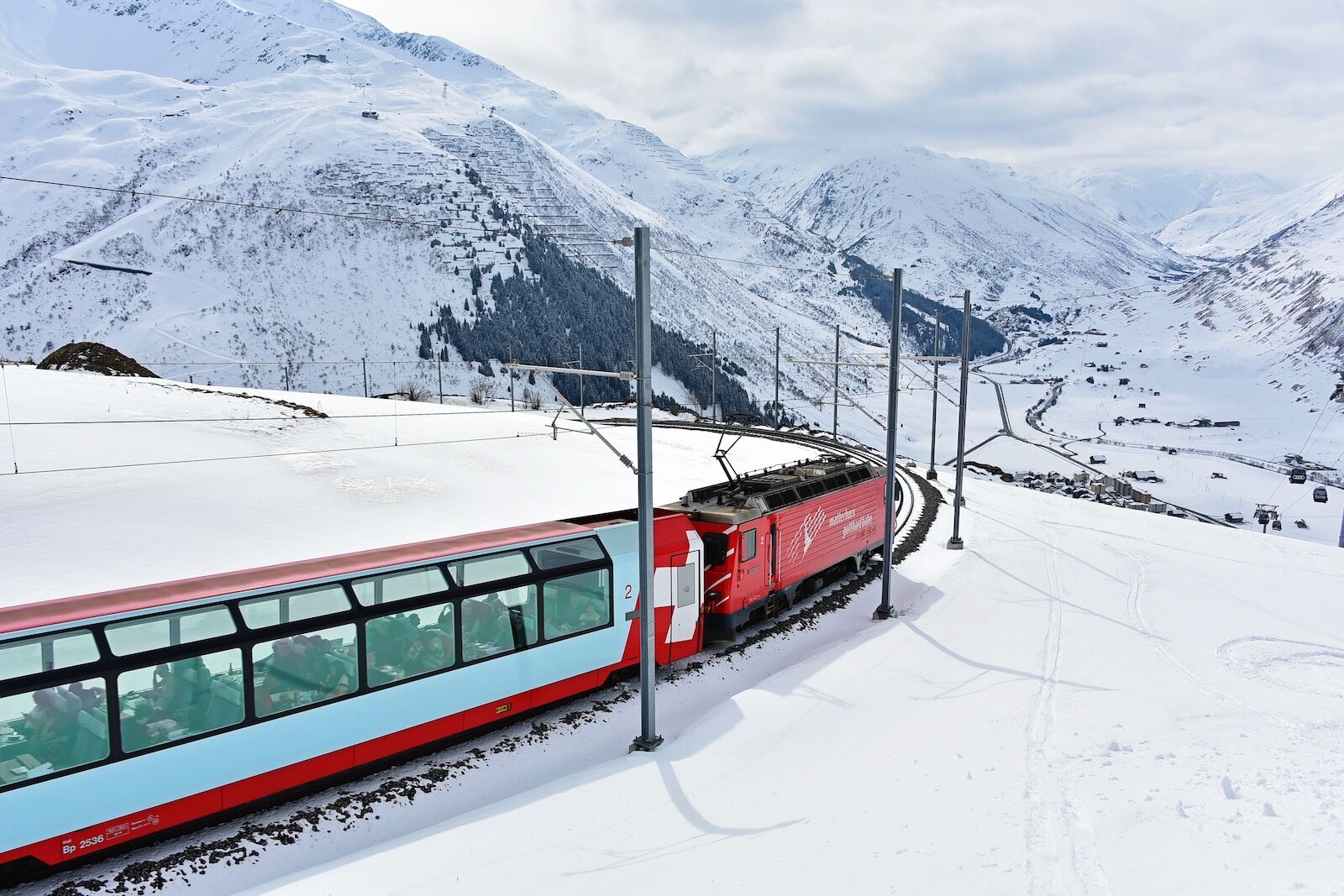
Photo: Napat Aor70/Shutterstock
Putting that incident aside, the scenery was absolutely breathtaking, and the childlike feeling of pure joy was worth the $250 hole in my pocket for a once-in-a-lifetime adventure. Each picturesque village we passed through evoked feelings of my earliest travels in Europe, while the snowy, white-out landscapes at the journey’s peak recalled core childhood memories of snow days with my sister. The Glacier Express makes a handful of stops between Zermatt and St. Moritz, the route’s terminus, though the majority of travelers on our train—my partner and I included—simply sat back, relaxed, and took it all in.
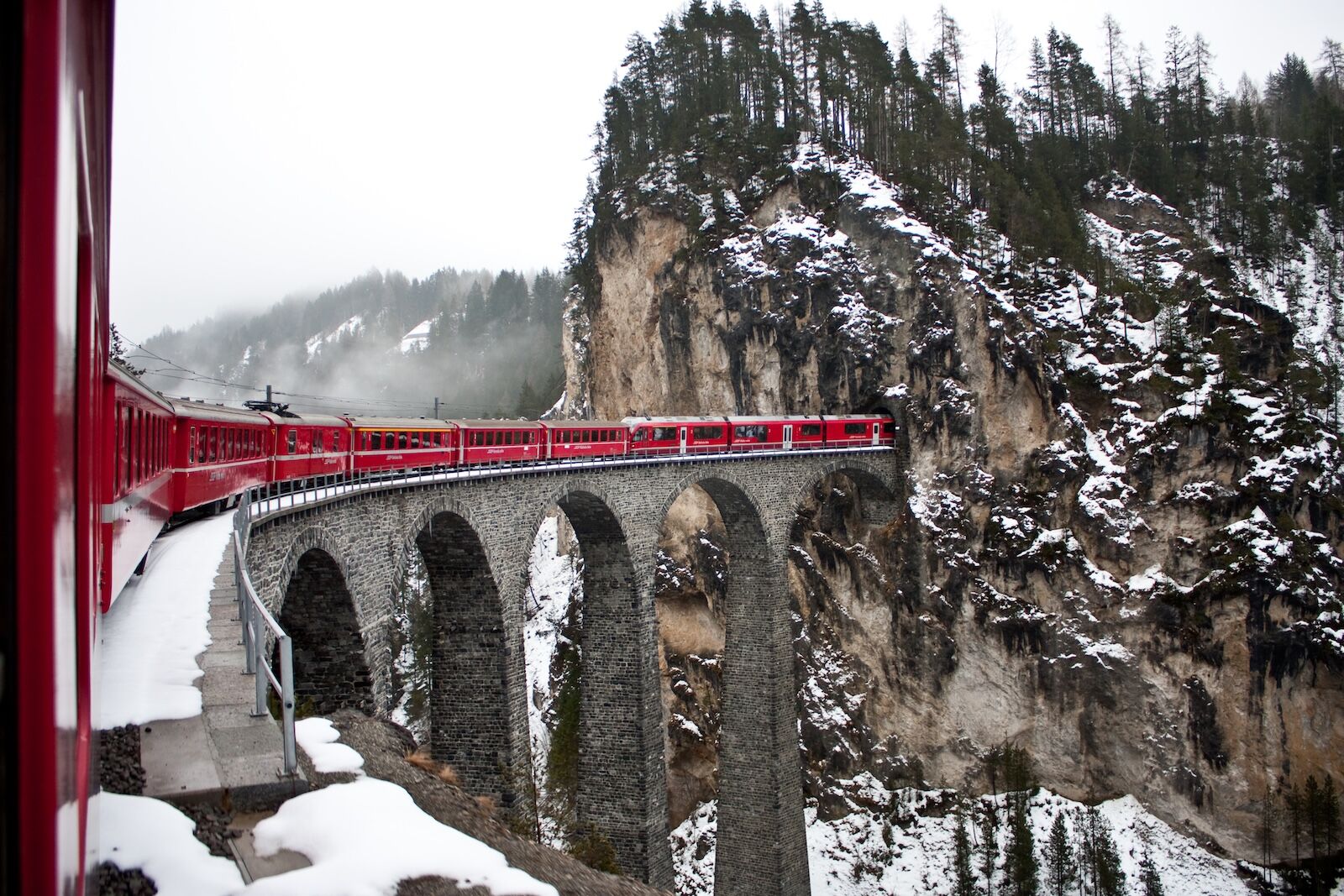
Photo: Jia Li/Shutterstock
However, seeking to maximize as much train travel as possible, I did some research and found a second panoramic route via the Bernina Express. This particular journey starts in the Swiss village of Chur before the final Glacier Express stop in St. Moritz. Chur is also a stop on the Glacier Express, about five hours from the starting point of Zermatt. We decided the best option for us would be to book the Glacier Express from Zermatt to Chur, spend the night there, and board the Bernina Express to its ending point of Tirano, Italy, the following day.
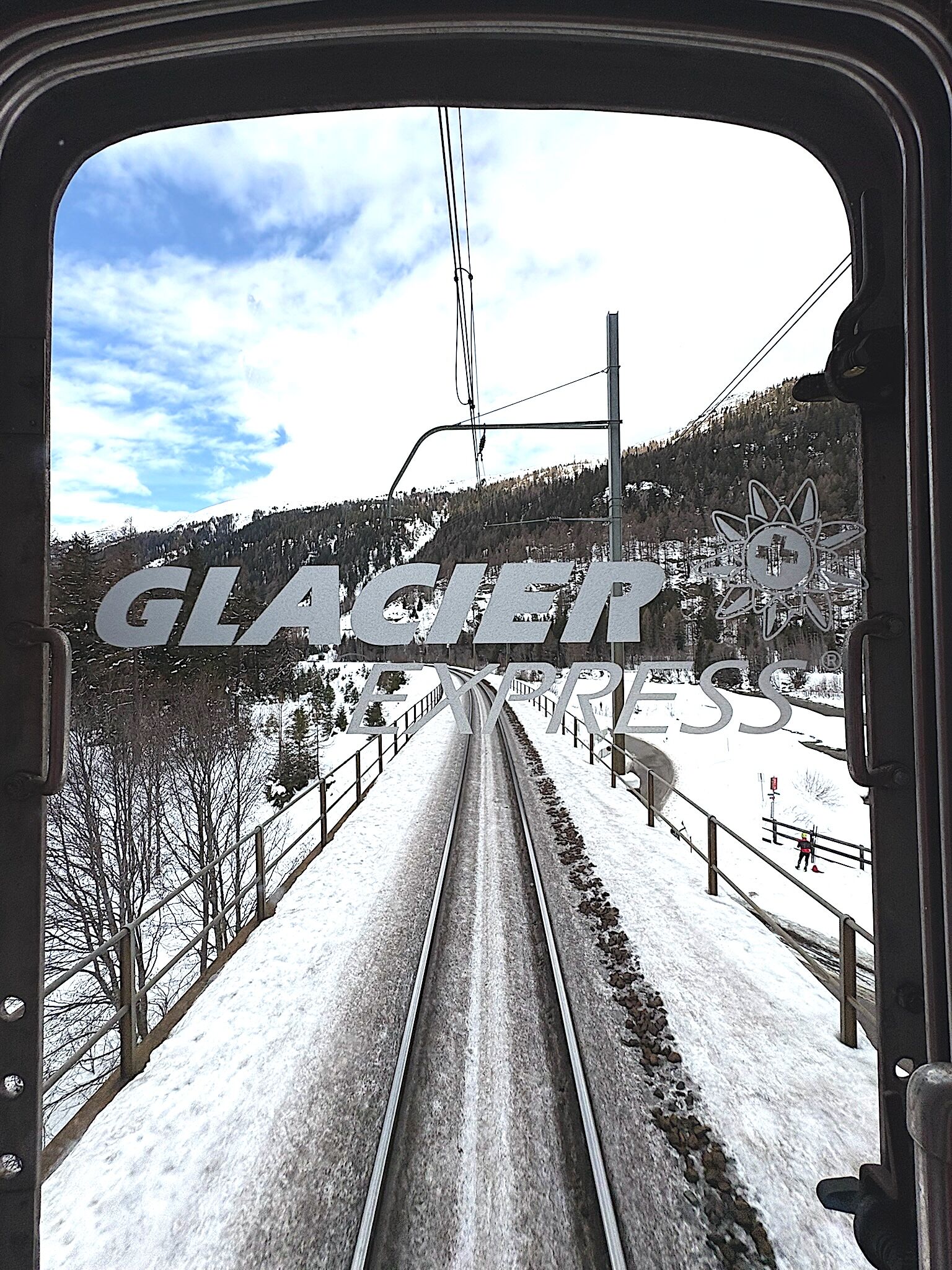
Photo: Vicki Denig
To be completely honest, I found Chur to be a weird little Swiss town that I will probably never go back to. We did what all good tourists do and stayed at an affordable local hotel with a name any English speaker would struggle with (Zunfthaus Zur Rebleuten), walked a few laps around the village, and satisfied our hunger with a hefty serving of fondue. A smoking lounge on the ground floor of our hotel came complete with a stale cigarette-fueled charm and an intriguing elderly women who owned the place and immediately won us over.
We slept as best we could with the hotel’s paper-thin walls and let the impending excitement of the Bernina carry us through to the morning.
Day 4: The Bernina Express to Milan
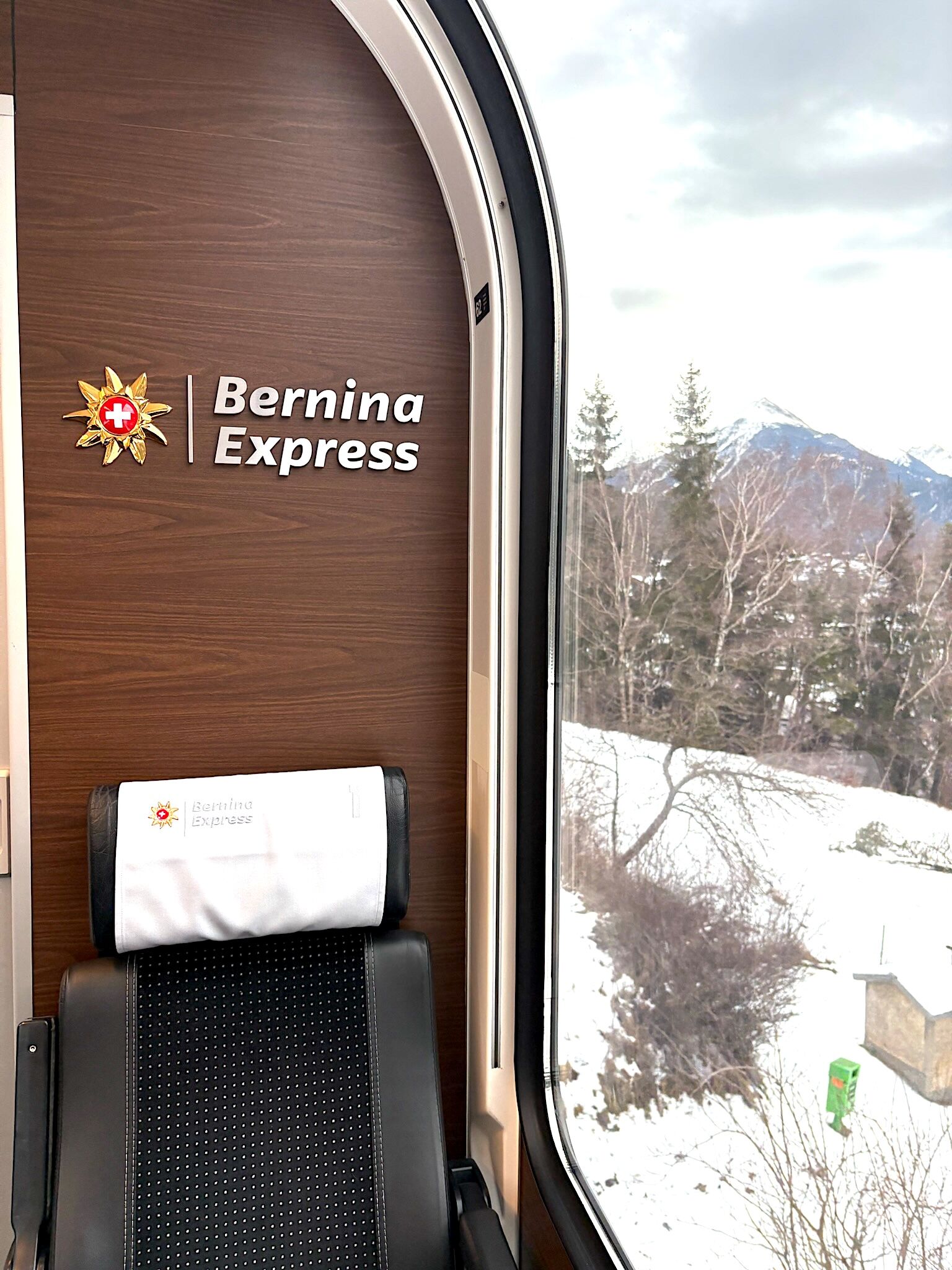
Photo: Vicki Denig
I didn’t think it could get better than the Glacier Express. For me, the less famous Bernina Express actually surpassed the experience. While the Glacier spends a good chunk of time passing through eye-catching towns, the Bernina snakes her way across jaw-dropping elevated bridges and even snowier mountainscapes than the former. We were even able to hop out and snap some photos at Ospizio Bernina, the route’s most breathtaking peak, during a quick platform stop.
Post-photo opp, the train’s staff passed out complimentary chocolates and boxes of locally-made Alpine iced tea, which added a touch of local flavor to the journey. While unforgettable landscapes were cemented in my memory on the Glacier Express, The Bernina Express brought unmatched views, comfort, and hospitality.
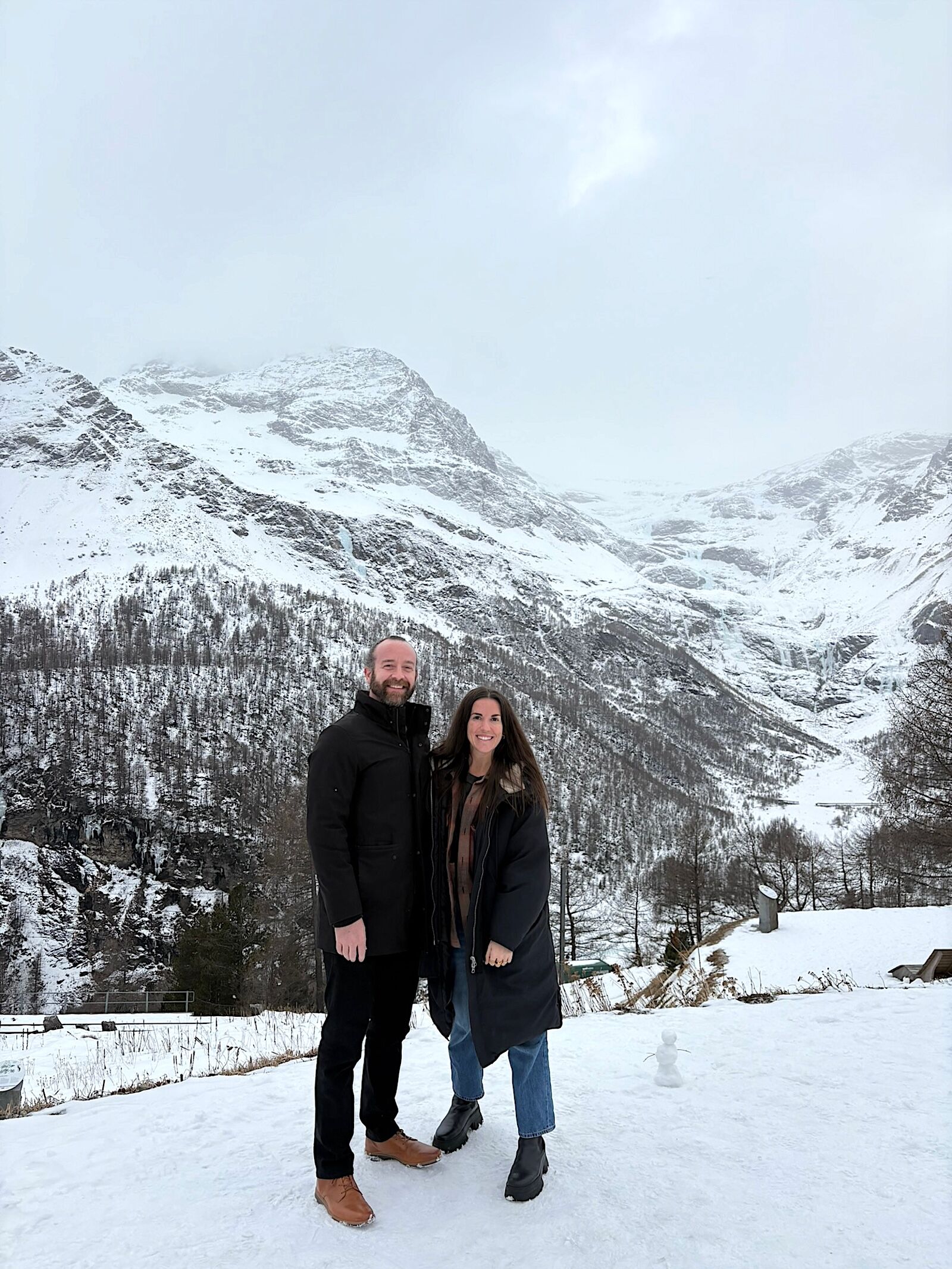
The author and her partner at a pit stop on the Bernina Express. Photo: Vicki Denig
The Bernina Express ends in Tirano, which I wish we allotted more time for. The train arrives just before 1 PM — leave it to the Italians to perfectly align transport schedules with meal times. It would have been nice to enjoy a quick lunch in town, though in typical American fashion we quickly booked our tickets to Milan on arrival in Tirano. An accident on the tracks caused serious travel delays, and we made it to Milan close to aperitivo hour (perfect timing in another sense, I suppose).
We walked 10 minutes from Milano Centrale station to Hotel Principe di Savoia, our crown jewel stay of the trip. Principe di Savoia is one of the most luxurious places to stay in all of Milan. Situated on Piazza della Repubblica, the property has 301 expansive rooms and suites, as well as a top-floor spa with sauna and indoor pool. The hotel’s common areas alone exude a sense of opulence — think stunning marble floors, designer fashion outfits displayed behind built-in glass windows, hand-painted murals, and breathtaking 19th-century style decor fit for royalty. The care for luxury details has won the hotel some famous patrons: it’s hosted the likes of the Prince of Monaco and Sophia Loren, as well as stars like Frank Sinatra, Elizabeth Taylor, and David Beckham.
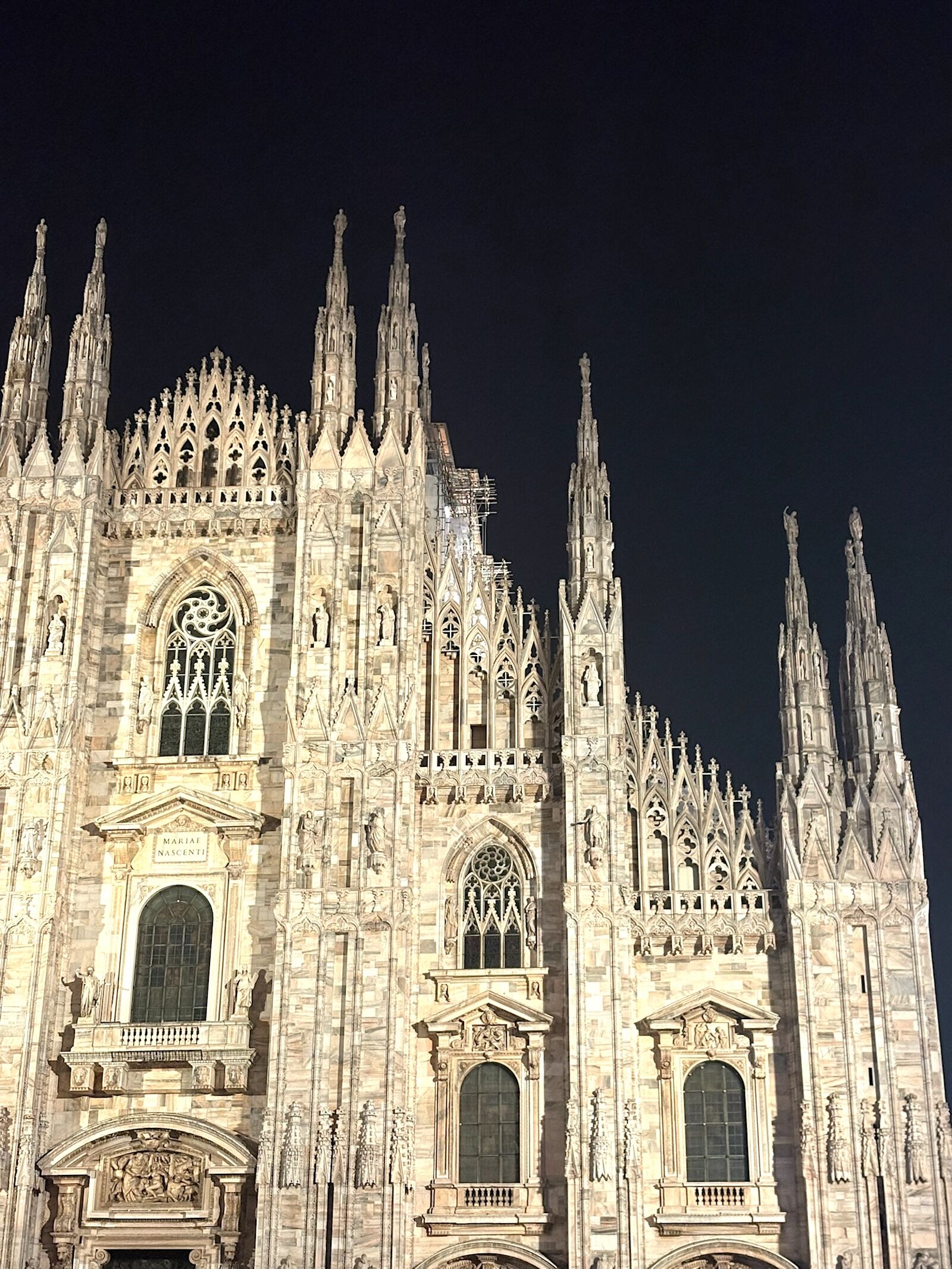
The Duomo in Milan. Photo: Vicki Denig
After a quick run to see the Duomo (and a negroni sbagliato at Marchesi 1824 in the Galleria Vittorio Emanuele), we returned to Acanto, the on-site restaurant at Principe di Savoia, and indulged in fresh black truffles shaved over soft eggs, seabass prepared with a crispy mushroom crust, and luscious tiramisu prepared tableside. We finished with a nightcap at Principe, the property’s on-site cocktail bar, and immediately fell asleep when we hit our room’s plush pillows.
Day 5 (and then some): Rome
We woke up in Milan wishing we had more time to explore. Take into considering how much time you want to spend in the city before solidifying your travel plans. At about 9 AM, we walked the ten minutes back to Milano Centrale and hopped on a three-hour train to Rome. It lacked the scenic grandeur of our prior train trips, but was comfortable and reliable.
We arrived at Termini station just after 12 PM — timing that once again aligned with lunch, and this time we immediately headed to a 2.5-hour Sunday lunch at Roscioli Salumeria. As the saying goes, when in Rome?
From here, the options of where you take your voyage are up to you. Thanks to the ease of train travel in this part of the world, plans can generally be flexible. We chose to stay in Rome for two nights, then headed our separate ways — my partner back to New York City, and me back to Paris (unfortunately, by plane this time instead of the scenic train route). There is a 10-hour train from Rome to Paris, but by that point, I’d gotten my fix.
If you’re looking to slow down and savor the moment, a tri-national train adventure may just be the ticket you’re looking for — just make sure to also have a reservation when required. 