This Commuity-Focused Tour Is Changing the Way Travelers Experience Tulum

Travel
by Hannah D. Cooper Jul 1, 2026

What’s cooking in Tulum? My tote bag. Or, more accurately, my canvas tote is stewing in the jungle of Xunáan Kab, a tiny village 50 miles north of Mexico’s most hyped beach town. Located two hours south of Cancún in the Yucatán Peninsula, some love Tulum for its beach clubs and wellness infrastructure. Others avoid it, out of fear of contributing to overtourism — accelerated development and Insta-fame haven’t necessarily benefited the local economy.

Including Tulum as a base on their new Short Breaks series, where big adventures are condensed into manageable long weekenders, Intrepid strikes a balance. The Tulum to Chichén Itzá Short Break comes with sunshine, cenotes, archaeological exploration, and tacos aplenty over four days, while centering the people whose stories lie at the heart of the region. This trip bypasses the hotel zone and highly-trafficked spots in favor of meaningful, community-based tourism co-hosted with Mayan guides. This brings me to how my canvas tote bag found itself in hot water in the middle of the Mexican jungle.
Into the jungle with Maya Blue

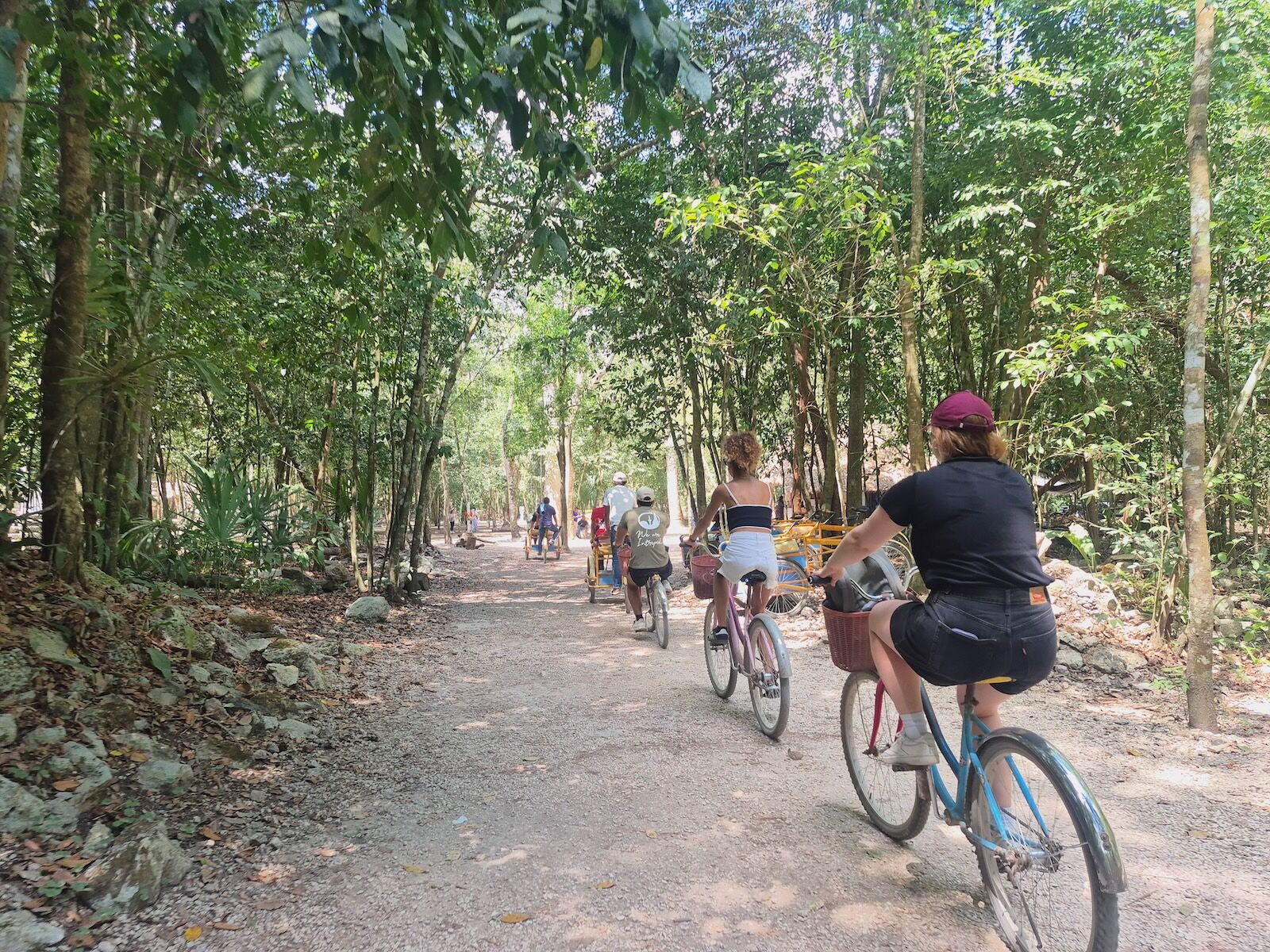
travelers biking into Cobá Archaeological Site

Photo: Intrepid

Our day had started with a bike ride around the Cobá Archaeological Site, a former trade powerhouse under the Mayans. The city slipped into decline when attention shifted to Chichén Itzá, a more structured site we’d encounter later in the itinerary. As we caught our breath at the summit of Nohoch Mul — the Yucatán Peninsula’s tallest pyramidical structure at about 138 feet — our trip leader pointed out a smudge of blue on the shrine entrance. Its tale was revealed at Xunáan Kab, where we spent the afternoon with Arturo, an artisan who preserves the craft of Maya Blue whereby pigments are extracted from plants (indigo, notably) and minerals and bonded with soil and clay.

Attributed to the Early Classic Maya period, the practice was almost lost during the Spanish conquest. These days, only a few Mayans maintain it, and those who do keep the technique under lock and key. Witnessing Arturo’s demonstration is a peek into the past, where measurements are replaced by instinct and patience overcomes rapid production. One by one, we each dropped our Intrepid tote bag into the simmering pot of blue water, watching the dye work its magic as Arturo explained the value of this pigment (his ancestors considered it the closest thing to gold and believed it offered protection) and how the lunar cycle impacts the hues of the dyes.

A lesson in ‘cochinita pibil’

woman making tortillas on comal

Photo: Intrepid

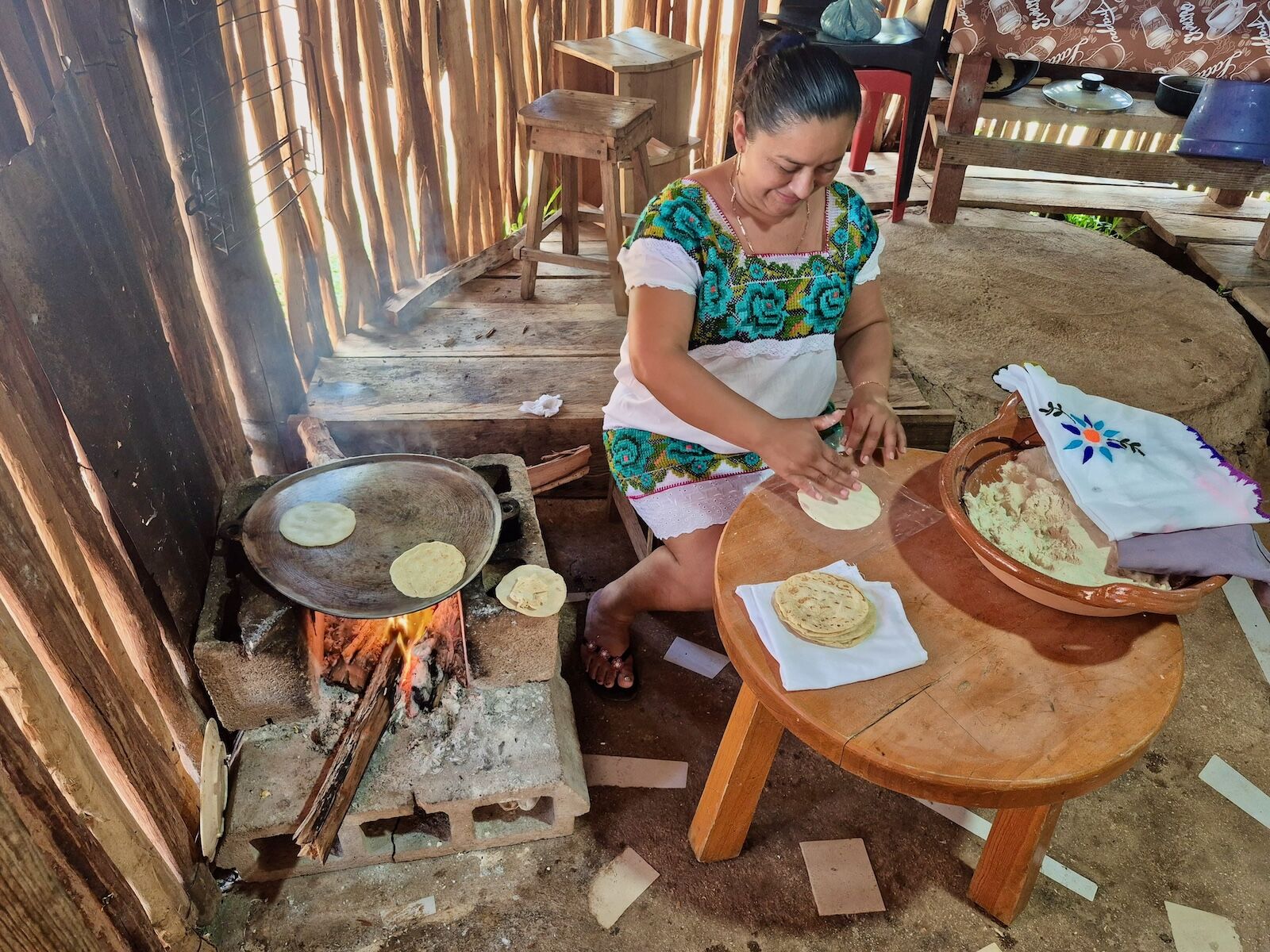
As for what’s actually cooking in Tulum, we had the opportunity to find out how Quintana Roo’s delectable slow-roasted pork is traditionally prepared. Now, in a family kitchen in the Yaxuna community, we were shown the process of making cochinita pibil. As we crushed garlic, cumin, peppercorn, oregano, cloves, and cinnamon with achiote (the seeds responsible for the paste’s fiery hue), our hosts explained how the dish is named for the pib (a subterranean pit oven). Although it has roots in ancient Mayan culture, the recipe has undergone tweaks: game would have been used in place of the now-standard pork, and native fruits in place of the oranges imported by the Spanish. Left to simmer underground, four hours is just long enough for the marinated meat to produce that earthy, spicy finish — and for us to rustle up fresh tortillas.

Flattening and shaping the dough turned out to be harder than it looks, although our feeble efforts at tossing the rounds onto a stovetop comal (griddle) did prompt laughter as we sat down to eat and tried to guess from the stack whose was whose. Beyond the cooking class, our itinerary stayed close to our downtown Tulum hotel, with evenings spent cruising taco trucks, perching on roadside plastic chairs, and licking hot sauce off our fingers.

Mayan-operated cenotes and canal drifts

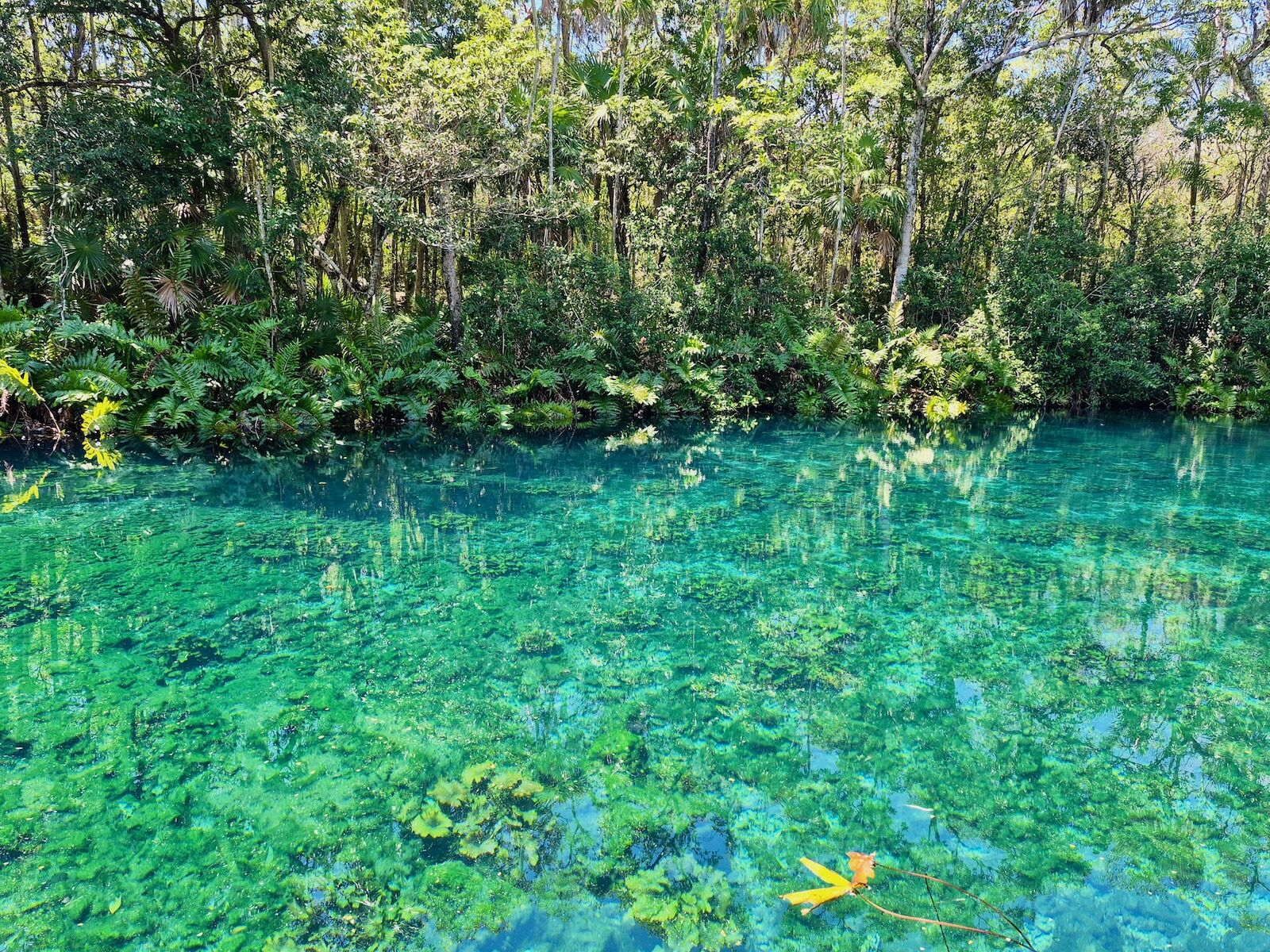
tankah cenotes in mexico

Photo: Intrepid

Cenotes, those water-filled sinkholes formed by the same asteroid that wiped out the dinosaurs, are behind much of Tulum’s appeal. Avoiding the more commercial swimming spots, Intrepid’s itinerary took us to the Mayan-operated Tankah, where we learned how these pools are considered sacred, representing gateways to the underworld. Scene set, we were left to float in caves as bats swooped above, row canoes across an open cenote the color of sapphire, and admire the full spectrum of the jungle by zipline. The eco-park retains a traditional identity while satisfying a hunger for adventure — and even more cochinita pibil, served sizzling under the canopies with tropical fruits and hibiscus juice.

The UNESCO-designated Sian Kaʼan Biosphere Reserve (“where the sky is born” in Mayan) is another place where tourism is handled responsibly. Besides daily visitor caps, all-inclusives are prohibited from developing on the land and primitive access rules out large buses. We explored the lagoon side of the coastal park by boat, each helmed by certified guides from nearby Mayan villages. We passed mangrove forests emerging from water the same hue as the Caribbean Sea. Part of the Mesoamerican Barrier Reef, manatees and sea turtles are among the reserve’s inhabitants. This surreal experience was rounded out as we slipped off the boat into the blueprint for the lazy river: currents engineered by the Mayans 1,000 years earlier.

Chichén Itzá and Cobá: Tulum’s archaeological wonders

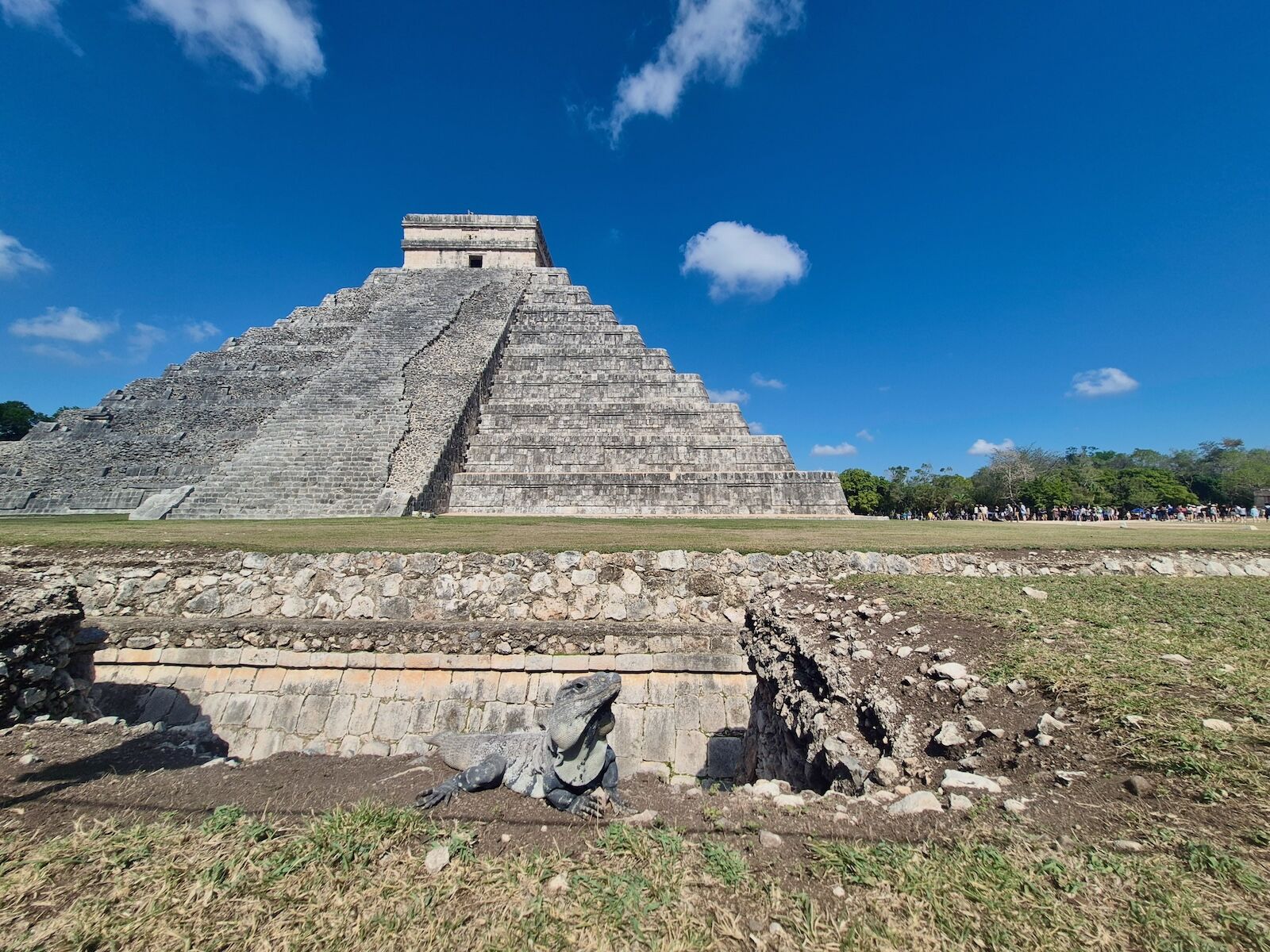
Chichén Itzá - Temple of Kukulcán.jpeg

Photo: Intrepid

After getting our first schooling in Mayan city planning at Cobá, Chichén-Itzá marked the finale of four full yet calmly paced days. It could be easy to fall into the trap of comparing the sites and maybe questioning if Chichén-Itzá is worth it. Cobá certainly carries a greater sense of mystery, particularly as less than 5% of the ruins have been excavated. Findings from as recently as 2025 confirm the city had multiple female rulers: this turns the tables on what historians thought they knew about societal structure. Pedaling the forested paths is an unexpected twist, and being allowed to climb Nohoch Mul — where that streak of blue lingers — adds another thrill. If your toe goes within an inch of Kukulcán Temple, this will be your last vacation in a while.

But without visiting the younger, more monumental site, it’s hard to truly grasp the mastery of the ancient Mayans. Even more impressive than seeing “El Castillo,” a calendar built in stone, was hearing about its precision and place within cosmology from our archaeologist guide. Chichén-Itzá was the only point in the trip where we had to contend with crowds, but there’s something compelling about seeing so many people enthused by history and remembering that, despite the actions of conquistadores, eight million Mayans remain today as cultural custodians.

Discover Matador

Save Bookmark

We use cookies for analytics tracking and advertising from our partners.

For more information read our privacy policy.