“Be bold, start cold,” said Jack Prowse, my guide for the next week on Australia’s Larapinta Trail, when he saw me shivering at the start of the day. The harsh conditions of the Red Centre — the arid desert area in the center of the country’s Northern Territory — are unforgiving to man and beast. However, while wildlife have adapted over millennia to thrive in the dry conditions, we humans aren’t quite there yet.
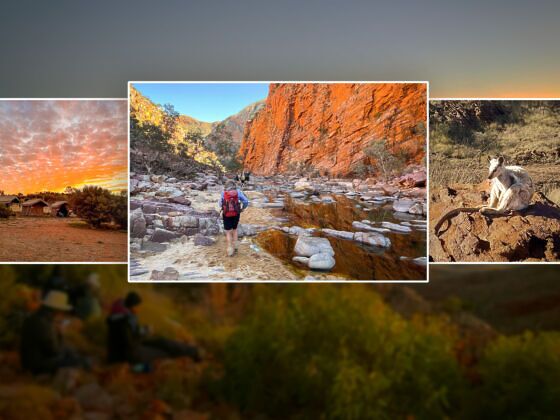
Photos: Katie Dundas
I'm Not a Backpacker, but I Spent 6 Days Walking Through the Outback
I was there to tackle the Larapinta Trail, my first-ever multi-day hike. We hadn’t even started walking yet, but I was already doubting my clothing choices, stressing about the comfort of camping in the Outback, and dreading coming face-to-face with whatever wildlife slithered my way in this remote part of the world.
I’ve always been the person who was down for going on a hike if everyone else was, but it’s one of many activities I like, rather than my top outdoor passion. However, I’ve always wanted to see this part of Australia, and a group trip seemed almost purpose-built for someone like me: a solo traveler with limited backpacking experience who doesn’t want to carry a heavy, multi-day pack. With access to permanent tented campsites, all I had to carry was a daypack with the things I needed during the hike. With all that in mind, I signed up and set out in July 2026, nervous, unsure of what to expect, and going anyway.
The short version of a long walk
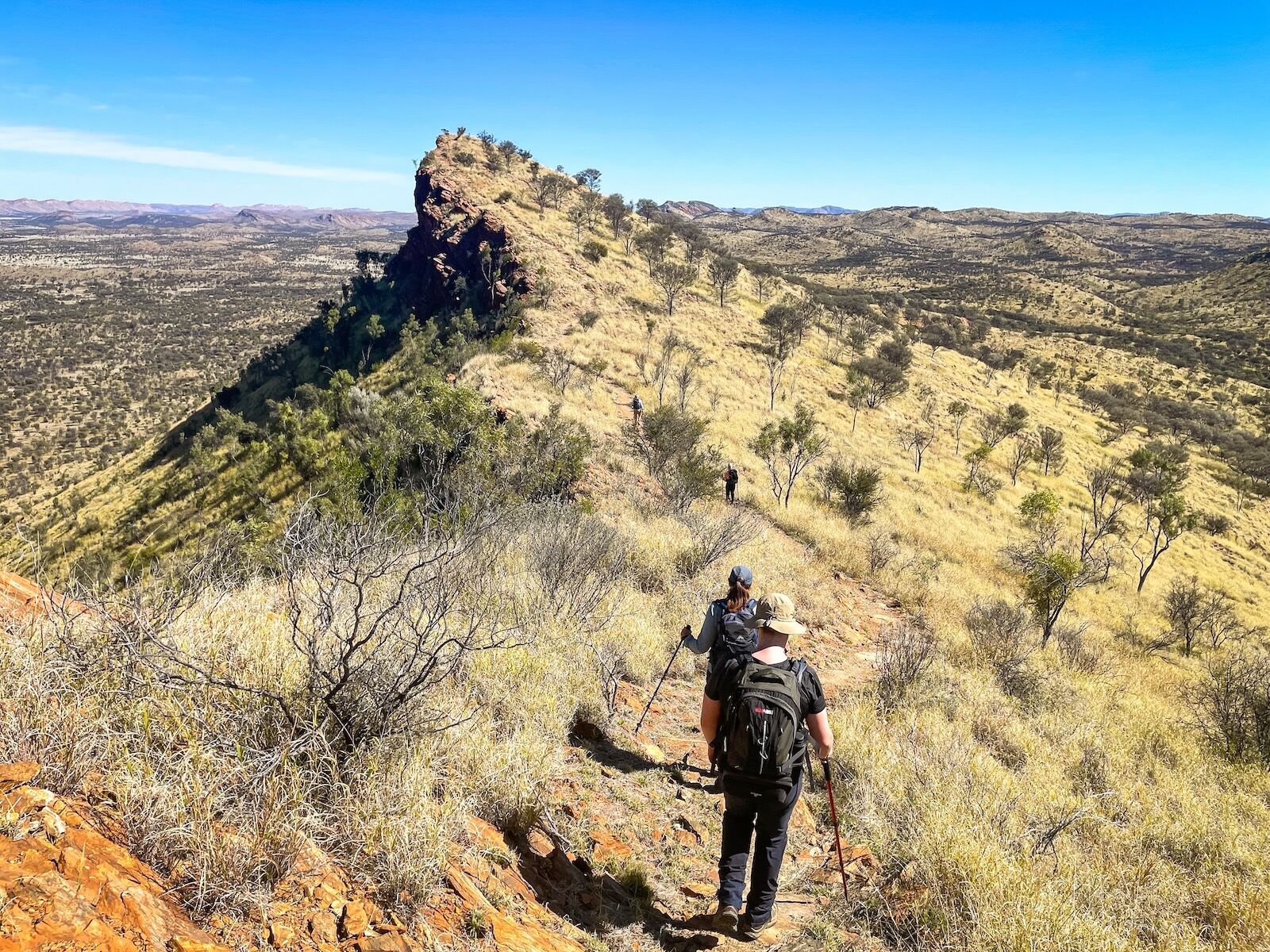
Photo: Katie Dundas
The Larapinta Trail spans more than 143 miles end-to-end and is one of 15 Great Walks of Australia. It’s popular with adventure travelers seeking an immersive experience into the Outback, the vast inland region that spans 81 percent of the continent. While many tourists simply spend a few days in Outback destinations like Uluru and Alice Springs, taking the time to experience the destination on a multi-day walk creates a deeper connection, with the chance to spend time in the trail’s landmarks, like Serpentine Gorge, before the day-tripping crowds arrive. Evenings are just as special, as most groups have exclusive use of private campsites.
The Larapinta is divided into 12 distinct sections that run from east to west, starting just outside the Northern Territory town of Alice Springs. Most backpackers take about two weeks to hike the whole thing. However, I was walking just six days of the trail with World Expeditions. The itinerary covers five sections, plus two of the trail’s most popular detours: Ormiston Pound and the Arrernte walk. My trip had the added designation of being “in Comfort,” so it included a few upgrades; namely, permanently tented, solar-powered eco-camps with showers, plus three-course dinners each night. Solo travelers get their own tents, so even though I was hiking with a group, I still had a bit of space to myself to decompress at night.
A trail with deeper meaning behind it
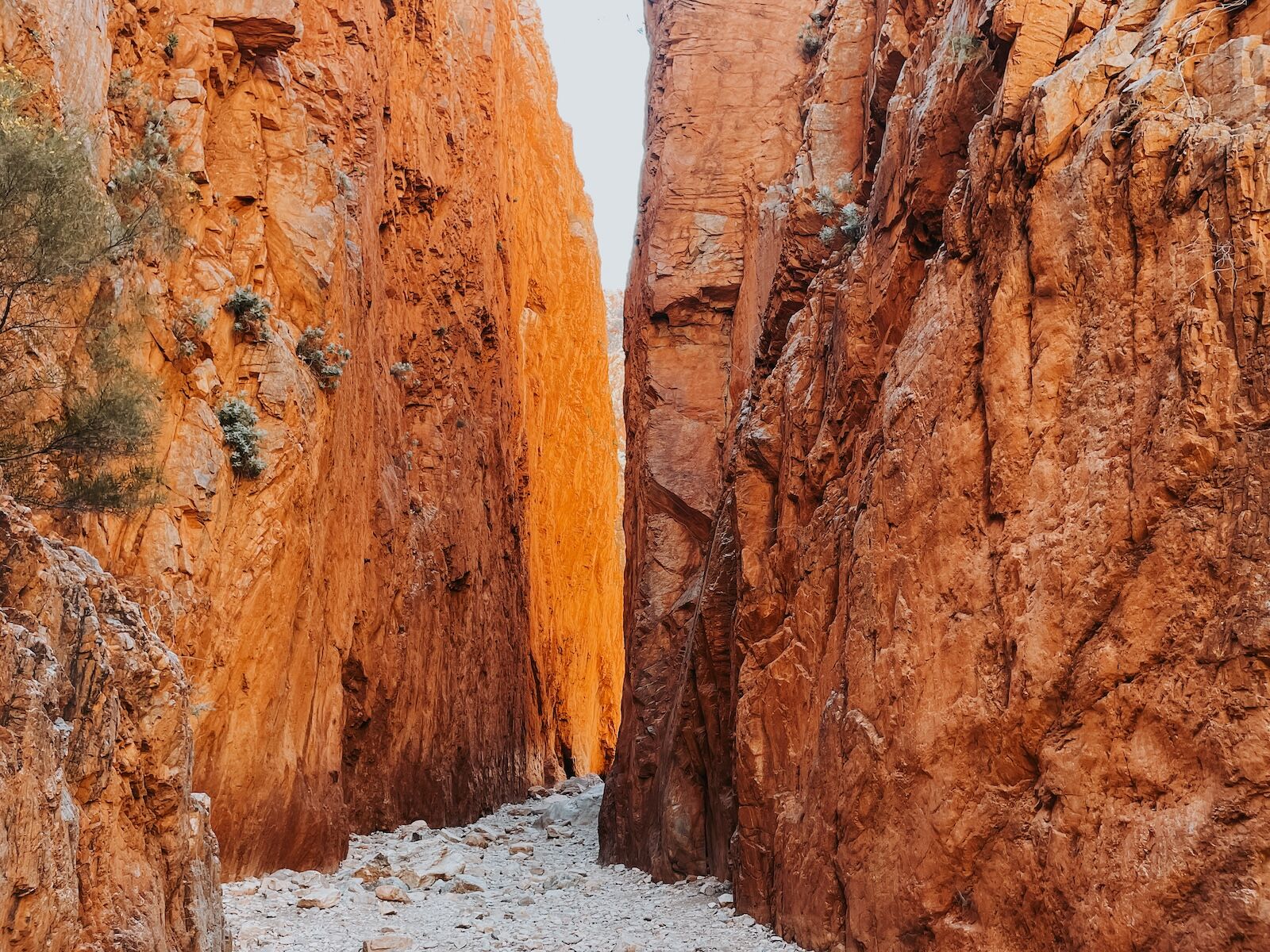
Standley Chasm, also called Angkerle Atwatye, is a sacred site for the is a sacred site for the Western Arrernte. Photo: Katie Dundas
On my first day, I excitedly set foot on the first section of the trail. The Larapinta starts at the historic Telegraph Station Nature Reserve and takes hikers all the way to Mount Sonder, the official end of the trail. Jack’s advice was already ringing true — the morning chill in the air dispersed after the first hour, and as the sun climbed high, I swapped out my beanie for a legionnaire hat — a slightly unfashionable but highly effective baseball cap with fabric flaps to protect your neck and ears from the sun. Low pollution levels and clear skies mean the Australian sun is intense, and on any day outside, desert conditions or not, sunscreen and long-sleeve sun shirts are a must.
The Larapinta Trail was first conceptualized in 1988 by a longtime Northern Territory parks planner, who imagined it as a way to link the gorges, chasms, and points of interest dotted along the West MacDonnell Ranges (or Tjoritja, in Arrernte — one of the traditional languages of Aboriginal Australians in this part of the country).
But according to those involved in its construction, the aim of building the Larapinta wasn’t just to increase tourism and connect these stunning landscapes. It was also to highlight the region’s Arrernte culture, which dates back tens of thousands of years. The relationship between the land and its people is everywhere along the trail, with landmarks such as Serpentine Gorge and Simpsons Gap held in reverence as sacred Arrernte cultural sites still in use today. In 1995, World Expeditions became the first commercial guided hike operator on the Larapinta.
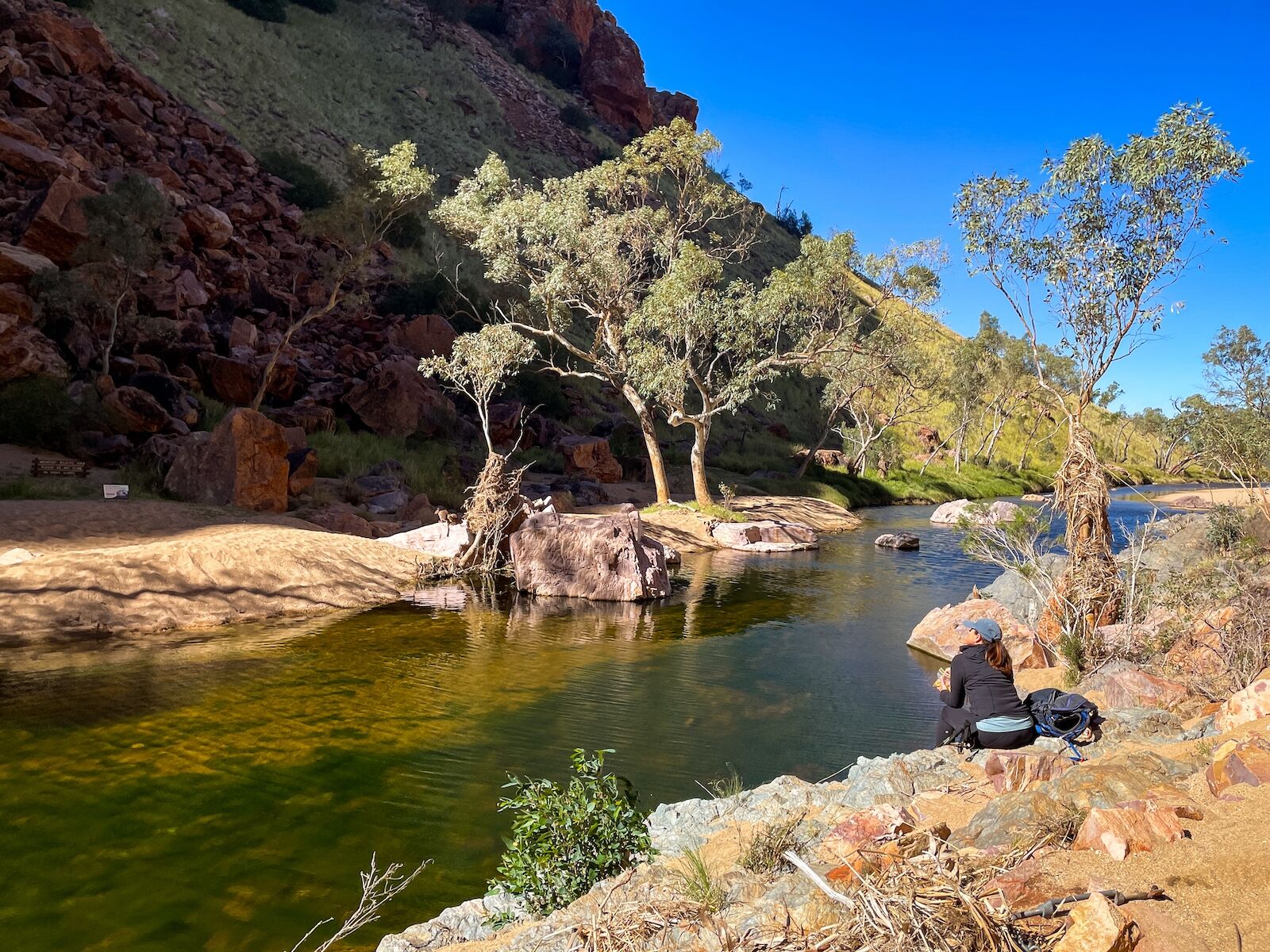
Simpsons Gap. Photo: Katie Dundas
Arrernte guide William Palmer, who works with World Expeditions to deliver Indigenous presentations at Simpsons Gap, explained how important the connection is. “I hope travelers leave with a better understanding of Arrernte culture and the strong connection we have to country,” he told me. “I want them to understand that the landscape they are traveling through has a lot of meaning, history and knowledge behind it.”
On the Larapinta, it’s the slowest walkers who are rewarded. This definitely isn’t a hike you take to get comments and kudos on Strava (there’s little internet reception, anyway). If you go too fast, you’ll miss the unique details of the landscape that make the trip unlike anything else in Australia.
The West MacDonnells began to form roughly one billion years ago, and the varied beauty of the trail as it formed and changed over time means each section is unique. From towering rock formations like Standley Chasm, Serpentine Gorge, and Simpsons Gap to flitting glimpses of color from birds like the purple-backed fairywren, I didn’t want to miss any of it.
Palmer confirmed to me I was approaching it the right way.
“Take your time and be in the moment,” he advised. “There is a lot to see if you slow down and pay attention. Look at the plants, listen for the birds, and take in the landscape around you.”
Not only was it good advice, but it made me feel better about bringing up the rear most days.
What hiking the Larapinta is actually like
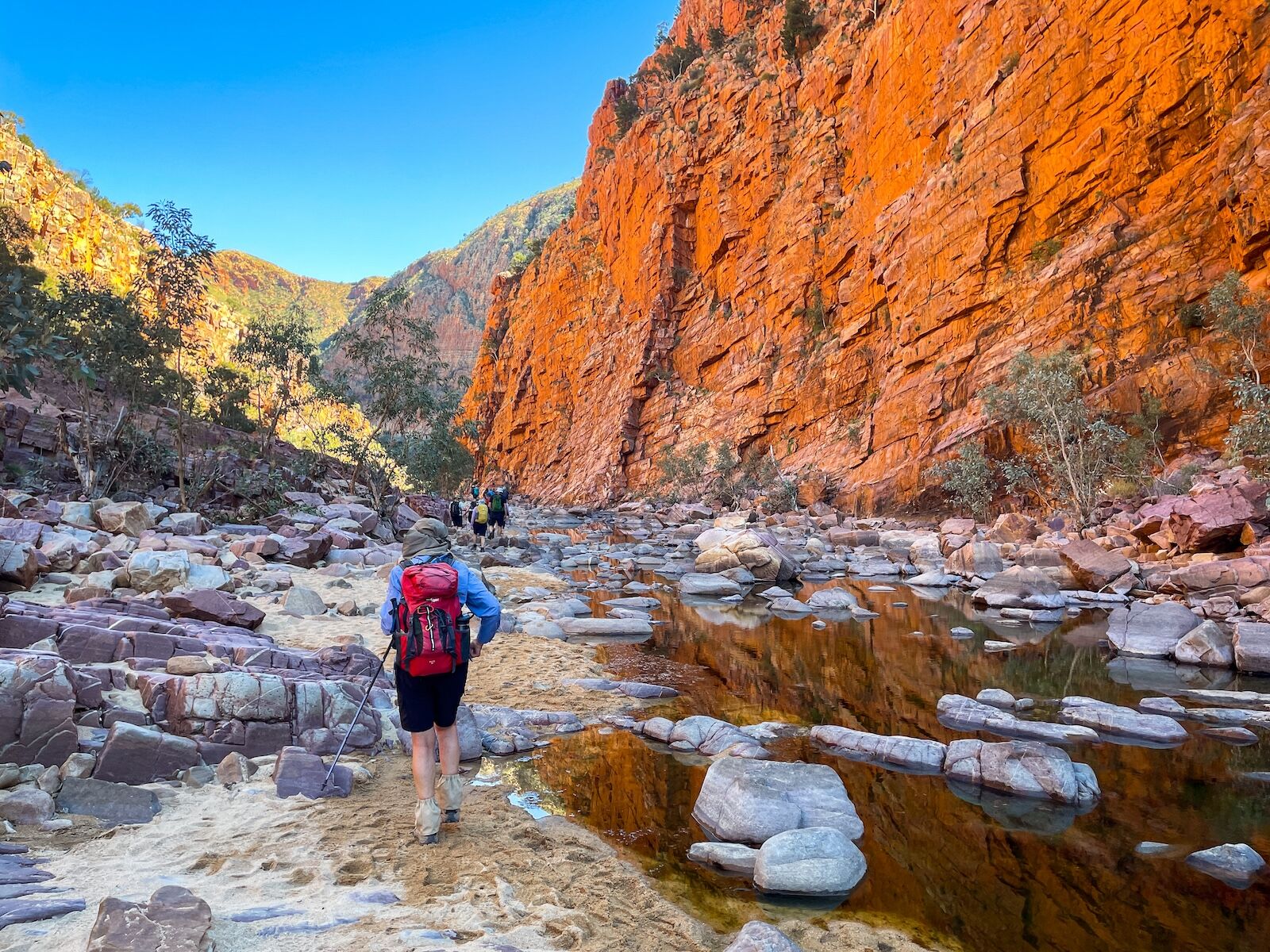
Photo: Katie Dundas
Each morning, we’d climb out of our tents around 7 AM, though I usually woke up just before dawn — the golden sunrises were worth getting up early to watch, cup of tea in hand. Our guides served a filling breakfast each morning, usually along the lines of oats, toast, and eggs. We’d all pitch in with cleaning up before getting geared up for the day. Around 9 AM, we’d set off with our day packs to hike approximately 7-10 miles, making leisurely stops along the way when our guide found an interesting plant to point out, wanted to share a historical fact, or the group just wanted a quick snack break.
Hikers on the trip ranged from married couples to groups of friends and a few other millennial women traveling solo like me. I chatted with different people most days, though I also appreciated the time to myself to just take in the sights. We’d usually stop for the day around 4 PM, with plenty of daylight to unpack in our tents — luggage having arrived well before us, of course — and enjoy a sundowner around a campfire before tasty bush dinners like grilled barramundi, roast chicken, and Thai curries. After dinner, it was great to sit around the fire and chat, play games, or just retire to my tent for an early night.
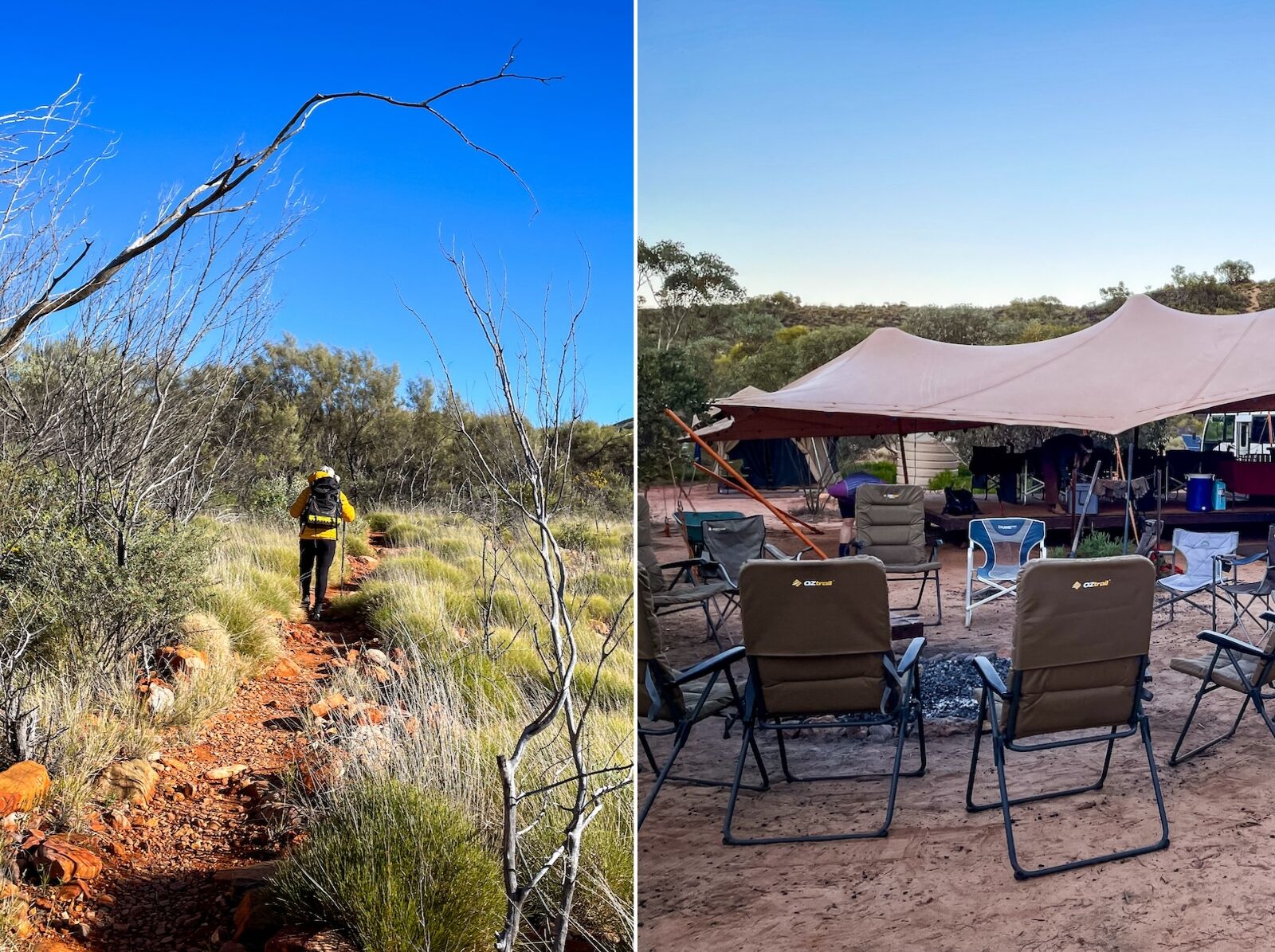
Photos: Katie Dundas
While walking rocky sections of the trail, I was constantly trying to watch my footing. But it was difficult to pull my eyes off the views, with the dramatic red quartzite, warm sandstone, and steely granite of the surrounding cliff faces and gorges changing color as light hit it throughout the day.
There was little shade and the heat offered no breaks while walking through ancient riverbeds and scrambling over boulders, but the camaraderie and laughter along the trail were contagious. When I do hike, I’m often alone, and sharing this particular adventure with like-minded people made the experience more enjoyable than it would have been as a solo hiker. I immediately found plenty in common with my 11 fellow hikers and three guides, starting with our obvious shared love of the outdoors that brought us to this corner of the world in the first place.
Biodiversity blossoms in the desert
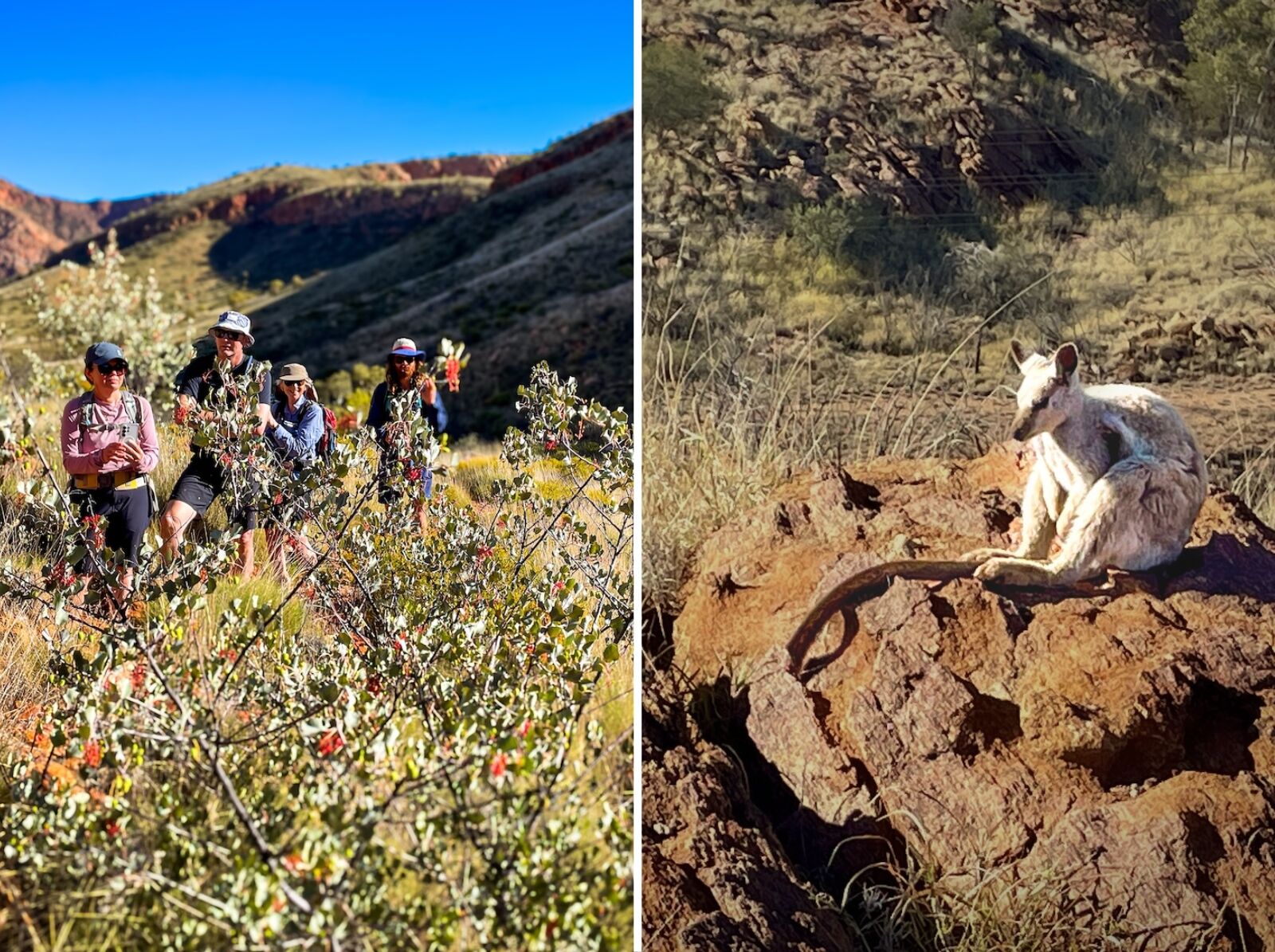
Vivid blooms and a resident wallaby. Photos: Katie Dundas
I expected the Red Centre to look the way deserts do in photos: red dirt, orange rock, not much else. But that couldn’t have been further from the truth. The Larapinta was alive and greener than I ever imagined. Heavy rain in the months before my visit had set off wildflower blooms: Sturt’s desert pea, bush tomato, and curry wattle, a low shrub with leaves that smell like curry when you crush them.
Of course, wildflowers attract wildlife, and if you stay still for long enough, you might observe the vibrant painted lady butterfly, the beautifully crested Spinifex pigeon, or one of the Red Centre’s larger inhabitants, such as the black-footed rock-wallaby (often spotted at Simpsons Gap) or the wedge-tailed eagle. It’s the largest bird of prey in Australia, with up to a seven-foot-wide wingspan.
Prowse, our intrepid guide, was a passionate birder, and took some of our group around camp for a nocturnal bird-watching mission one night. Armed with headlamps, we found that a whole new cast of characters took the stage in the desert after the sun went down. That evening, we’d heard the wonderfully named Australian boobook, a type of native owl named for its distinctive two-toned call. It was exhilarating, if not somewhat frightening, as we set off to find it by exploring the pitch-black surrounds of our camp.
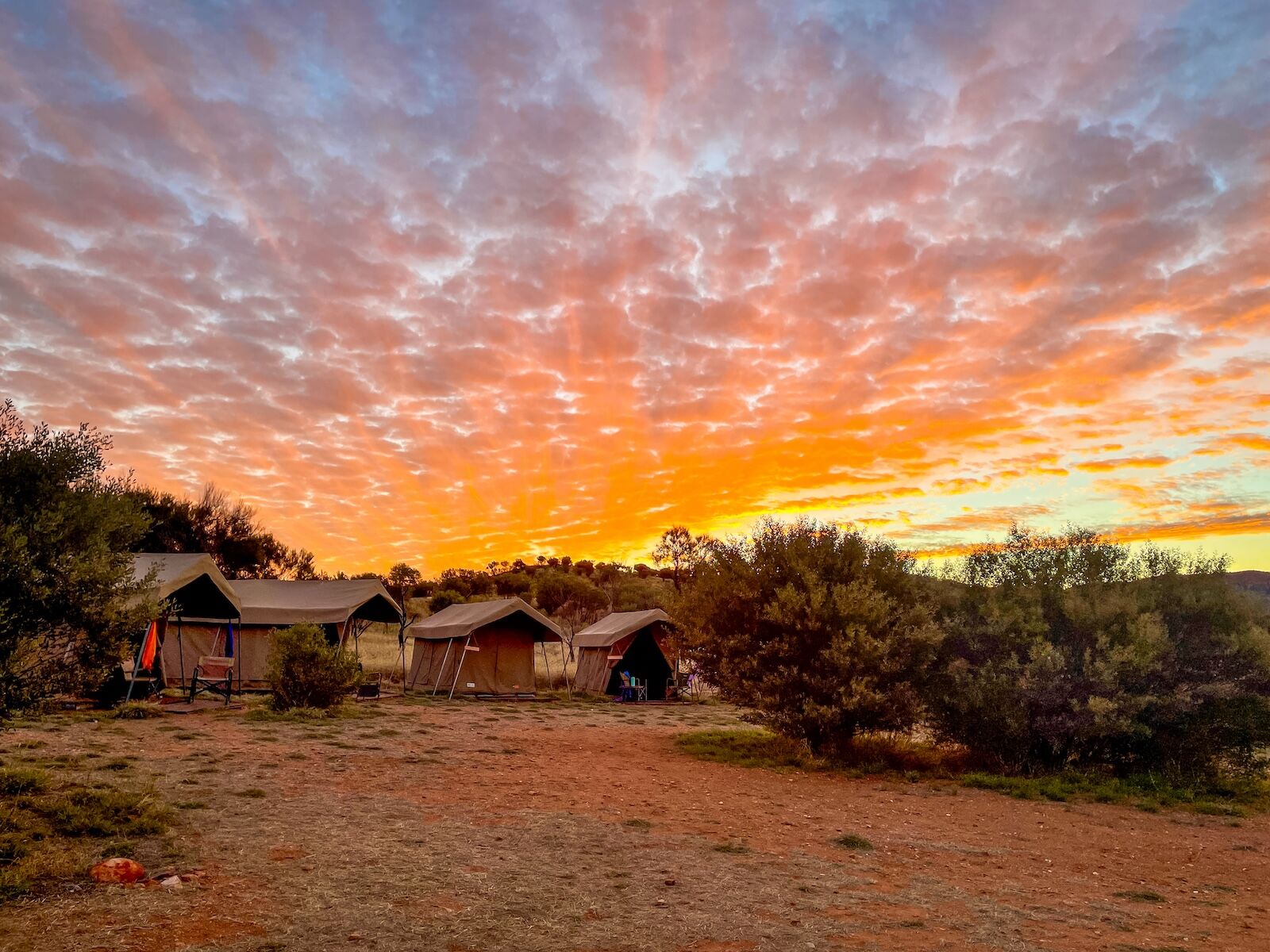
The writer’s Larapinta Trail campsite at sunset. Photo: Katie Dundas
After just a few minutes, my headlamp illuminated a large spider just by my feet, at a distance I would describe as much too close. But I took a deep breath and stepped around it, keeping up with the group and focusing on scanning the pale ghost gum trees for the boobook, rather than imagining the other creatures nearby in the dark I couldn’t see. I never did catch sight of the elusive owl, but soon learned it wasn’t the only creature that had set up camp just next to ours.
Curled up in my tent that night, I heard the hauntingly beautiful howl of a nearby pack of dingoes. Seconds later, a lone dingo answered their call, coming from the opposite direction. As with wolves, coyotes, jackals and their nearest relative, the New Guinea singing dog, the howling isn’t random. Dingoes howl to defend territory and keep track of one another across the ranges, each call carrying its own information. They’re Australia’s apex predator and intelligent pack animals with a hierarchical social structure. I couldn’t help but wonder what they were communicating about, hoping it wasn’t to give each other a heads-up that our campsite was occupied with hikers and snacks.
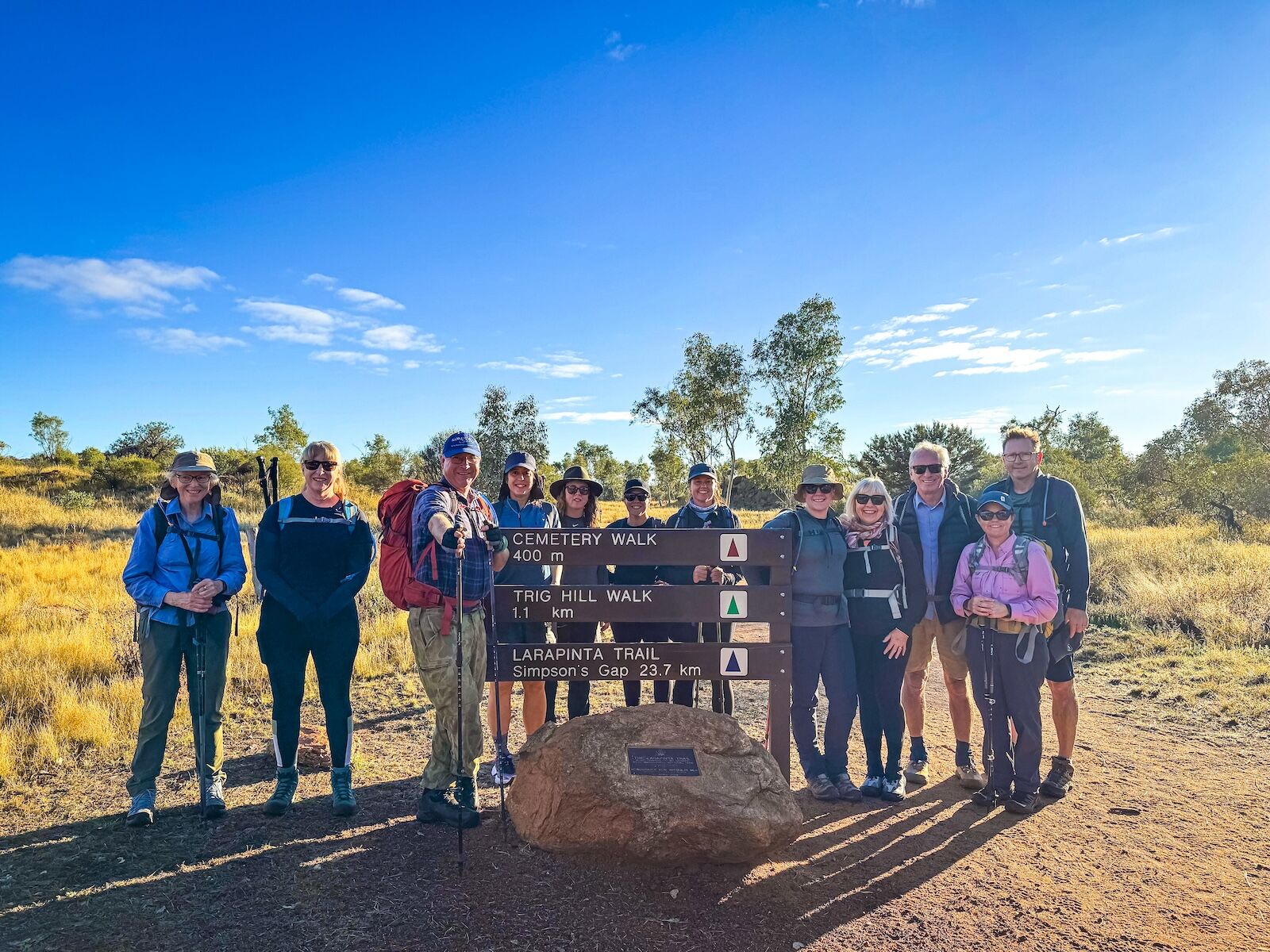
The author with her fellow hikers. Photo: Katie Dundas
After the first 15 or so miles, I finally felt at ease with the routine of days on the trail. I’d gotten my clothes layering down to a fine art, coexisted with more than a few spiders (and even a deadly king brown snake, from a safe distance), and I started waking each morning refreshed and ready for another active day. By the final morning, I was reluctant to leave the Larapinta and head back into a world of traffic, skyscrapers, and phone reception. But I’m already planning my next trip to the desert — and hiking has definitely gone up a few notches on my list of favorite outdoor activities. 