Photos: Jessica Devnani

This Alaska Wilderness Lodge Throws Out the Schedule and Asks What You Want to Do Instead

Alaska Wildlife Epic Stays
by Jessica Devnani Aug 26, 2026

It was 8:30 in the morning and already bright outside when Kevin Ryter, who owns the Lodge at Whale Pass, knocked on my door. He was apologetic and told me there are only two reasons he’ll ever wake up a guest: the northern lights or whales. That morning it was whales.

A group staying at the lodge had taken a boat out that morning and spotted orcas in Whale Pass, the passage in Southeast Alaska that lends its name to both the lodge where I was staying and the tiny community a short boat ride away. Not wanting me to miss the wildlife sighting, Kevin rounded up two guides to take me on a private boat ride to see them.
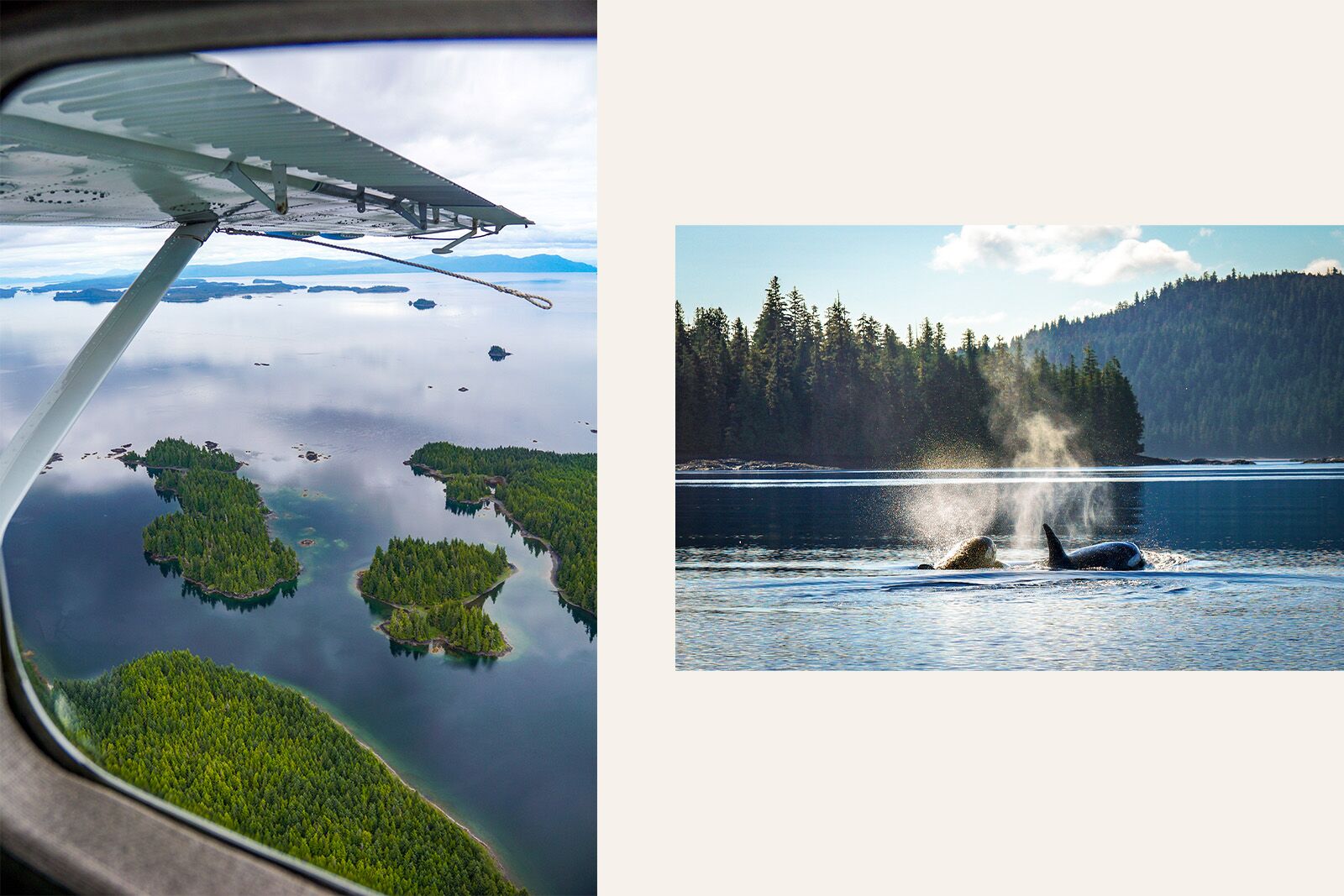
I met the guides, Chelsea and James, down at the lodge’s dock. The water was flat, and the bay was quiet. We motored out maybe 10 minutes before spotting the pod. At one point Chelsea told me that one of the whales was about to surface on the other side of the boat. I never saw it go under, but it surfaced just where she said it would.

We watched the orcas, moved forward a little, stopped, and watched them again for close to an hour. The whole time, we didn’t pass another boat. That kind of morning — spontaneous, personalized, and molded around the natural environment — turned out to be less of a lucky break and more of a preview of how the Lodge at Whale Pass runs.

Daily itineraries are flexible and mapped out the night before

the lodge at whale pass

Photos: Jessica Devnani

The Lodge at Whale Pass is located on Prince of Wales Island, part of the Alexander Archipelago in Alaska’s Southeast Panhandle, which is closer in travel time to Seattle than to Anchorage. Most guests fly into Seattle, connect to Ketchikan, and finish the trip on a floatplane for the roughly 45-minute transfer to the lodge.

The lodge itself sits on a stretch of water that feels almost like private property, given how few other structures sit anywhere nearby. Getting there was my first time on a floatplane. I was surprised how fast it got off the water and how close the pilot flew to the higher terrain. Beyond the transfer, flightseeing is one of many activities available to guests of the lodge, which works with local charter operators running everything from small bush planes to helicopters over the surrounding islands and peaks.

Kevin, who runs the lodge with his wife, Lyn, started it partly as a reaction to the fixed schedules he saw at other Alaskan lodges, with early morning departure times and set plans handed to guests for the week. Most evenings at the Lodge at Whale Pass, usually around dinner, guests sit down with Kevin or Lucas, Kevin’s son and the general manager, to figure out the next day together.

Weather and wildlife factor into the day’s itinerary, but so does what a particular group actually wants to do. Where a family might want a slower day after two straight mornings on the water, another guest might want to chase a fish they missed the day before. With guides and boats rotated based on that conversation, groups headed to the same place often get folded together, and groups with different plans get their own boat and their own day.

The rooms are simple, leaving the focus on the common areas

the lodge at whale pass

Photos: Jessica Devnani

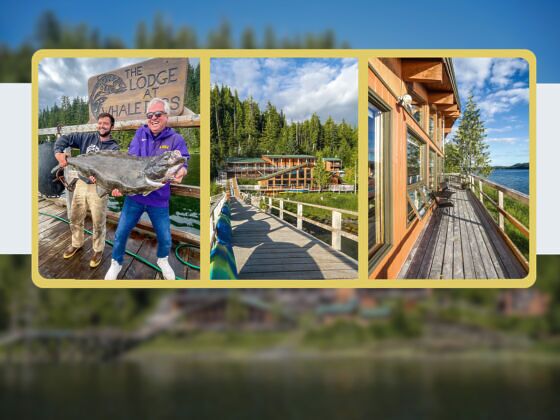
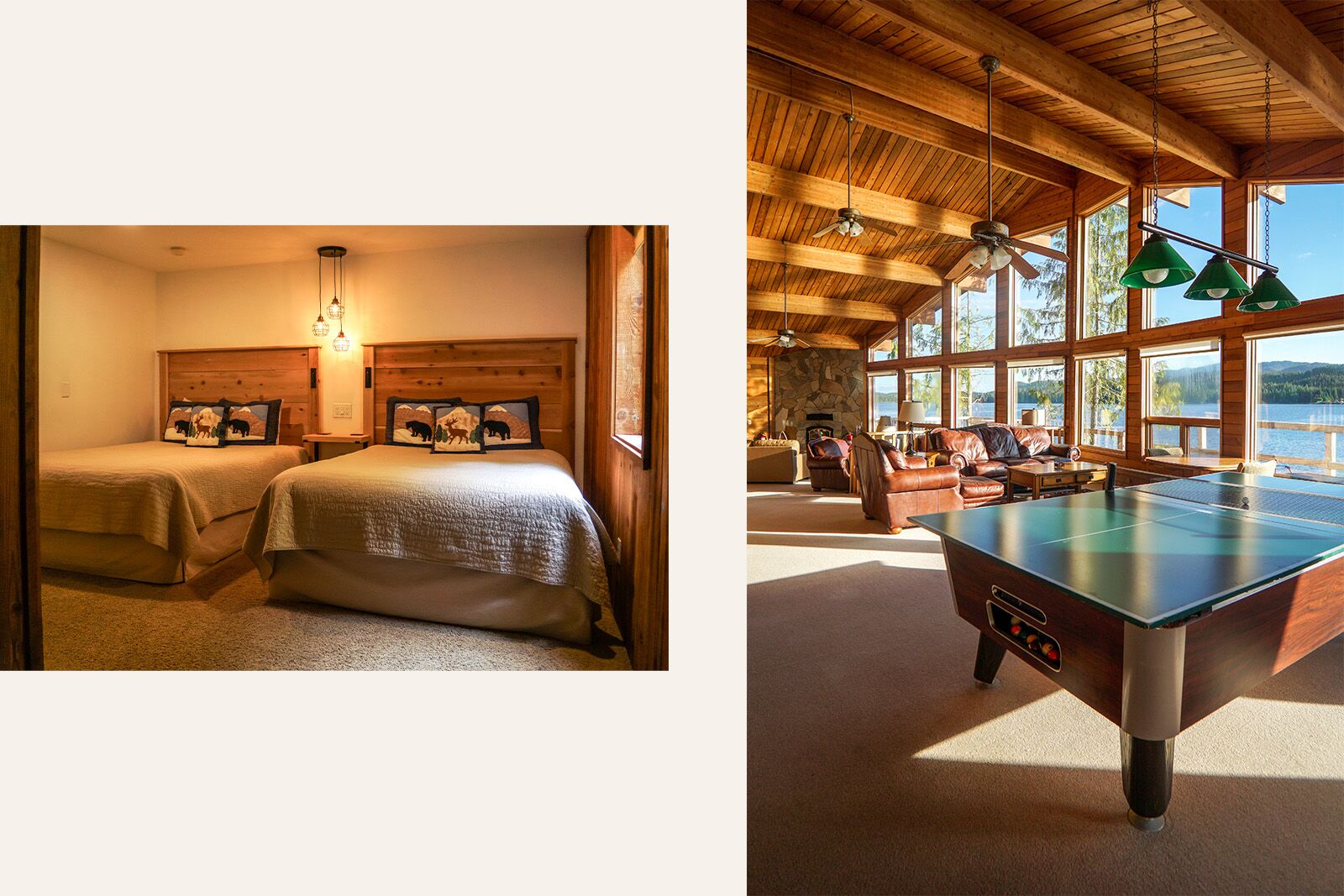
The property is built around a long dock leading to two main buildings. The first is a recreation room where a wall of windows frames the water and the forest behind it. There’s a fireplace, a pool table, ping pong, darts, and a shelf of old VHS and DVD movies. A short wooden path on the opposite side of the dock leads to a hot tub and a sauna looking out over the water.

The second building is the main lodge, with another fireplace, couches, the dining room, a fully open bar where guests can help themselves to drinks and snacks, and guest rooms towards the back. Room configurations range from twins to kings, and the lodge mixes doubles, singles, and a handful of larger suites with their own sitting areas to accommodate everything from couples to bigger family groups. My room was simple but comfortable, with wood paneling, two beds, and a private bathroom.

Breakfast runs on a drop-in system rather than set seating, from 6:30 AM to 8:30 AM. Anyone headed out for the day can take a packed lunch, and then dinner runs during roughly the same window as breakfast, only in the evening. Dinner starts with a round of appetizers and drinks, then moves to the main courses, and then dessert.

Your catch could become the chef’s special

the lodge at whale pass

Photos: Jessica Devnani

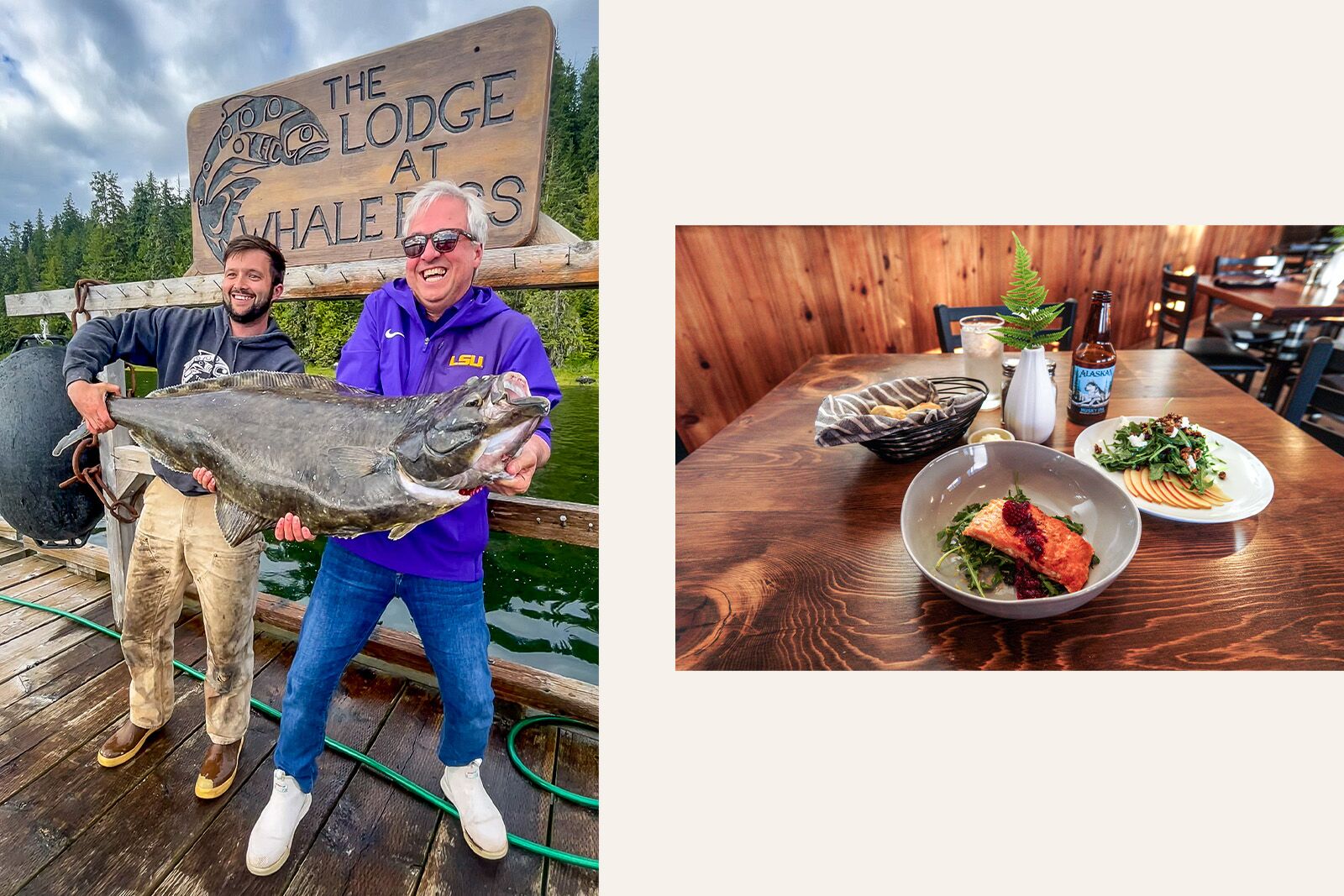
I ended up arriving at the lodge a day late because of flight delays and went straight out fishing that afternoon with four other guests. One of them, Wade, was an avid angler. I’d only gone fishing a handful of times as a kid at Lake Wilcox near Toronto, but our guide, Owen, showed me the basics. He taught me how to keep the line low enough that it bounced off the ocean floor, not too long and not too short.

We were close to calling it when Wade hooked something heavy enough that our other guide, Lucas, stepped in to help land it: a halibut the guides guessed to be 50 to 60 pounds. It was flopping on the deck before I fully registered what had happened.

Lucas grew up on the property and guides fishing trips every summer. Back at the lodge, he walked us through filleting the fish, and that night, the chef turned it into our dinner. More meat came off that halibut than I expected, served with corn relish and an avocado cream sauce over crispy roasted potatoes.

A couple of hours away by boat, bears do the fishing

the lodge at whale pass

Photo: Jessica Devnani

On my last full day, I took a two-hour boat ride to Anan Creek, a wildlife observatory inside Tongass National Forest that’s known for one of the largest pink salmon runs in Southeast Alaska. As many as 300,000 fish return to spawn there some years. The creek’s name comes from a Tlingit word roughly meaning “a place to sit down together,” and Stikine Tlingit clans ran summer fish camps here for generations, drawn by the same run that draws bears there today. The surrounding two miles of creek on either side now carry special protected status.

The US Forest Service requires a day-use permit to visit Anan during peak season, roughly July 5 through August 25, and caps visitation at 60 people a day. Most visitors get there through an authorized guide service that already holds a block of permits.

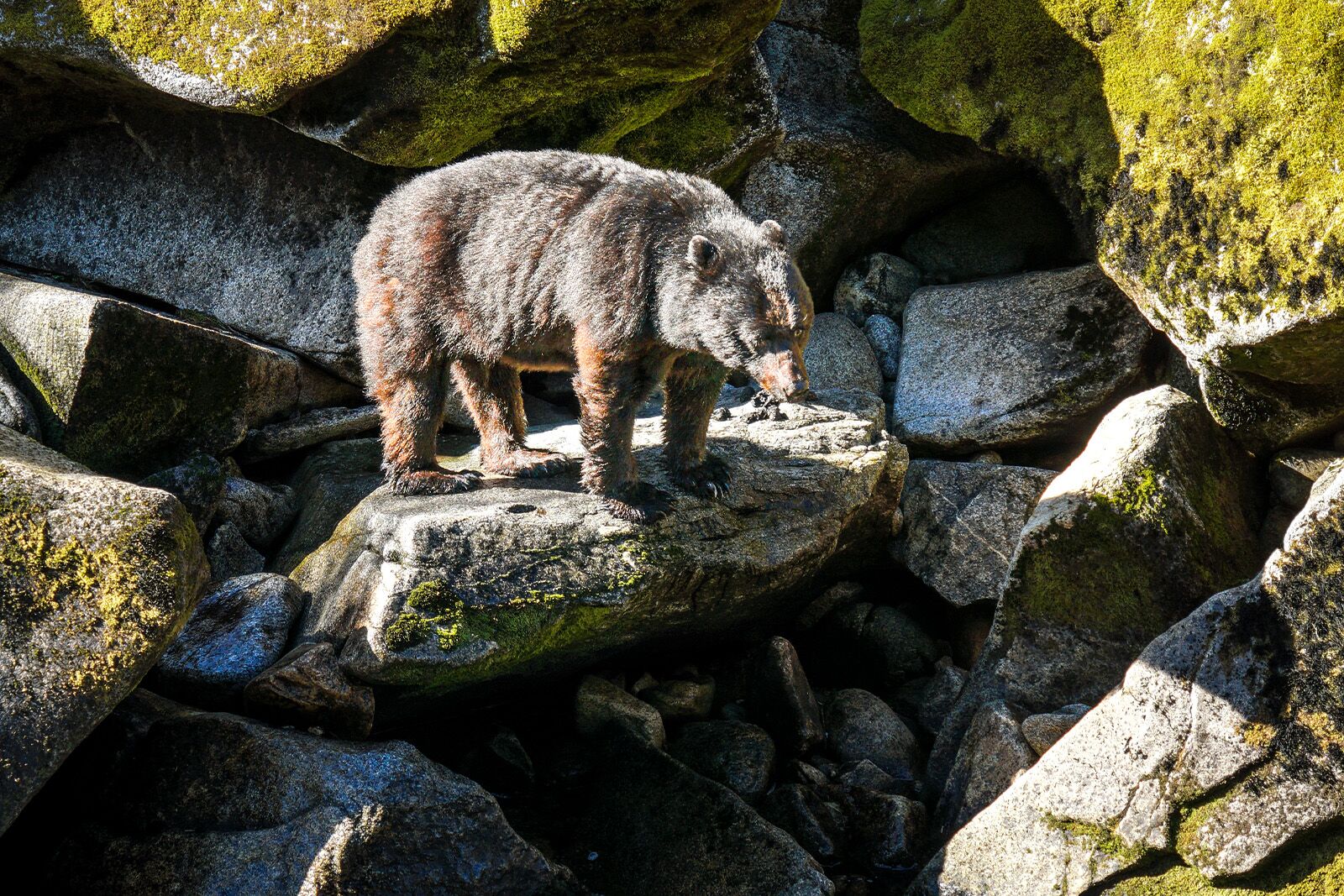
We arrived early, walked the half-mile trail to a covered viewing platform over the river, and watched three bears over the next couple of hours. Anan is one of the few places in the world where black and brown bears fish the same stretch of water without much conflict. Black bears tend to stay closer to the falls near the platform while brown bears range farther up and down the creek.

Adventures big and small

the lodge at whale pass

Photos: Jessica Devnani

Though the most memorable moments of my trip revolved around wildlife, the lodge also runs excursions where any wildlife sightings are a bonus. Activities range from kayaking, mountain biking, hiking and glacier viewing to limestone cave exploration and remote beach cookouts. Guests interested in the region’s Indigenous history, the same history behind Anan Creek’s name, can also arrange trips into nearby towns for a closer look at the totem poles, longhouses, and other Tlingit and Haida heritage sites scattered around Prince of Wales Island.

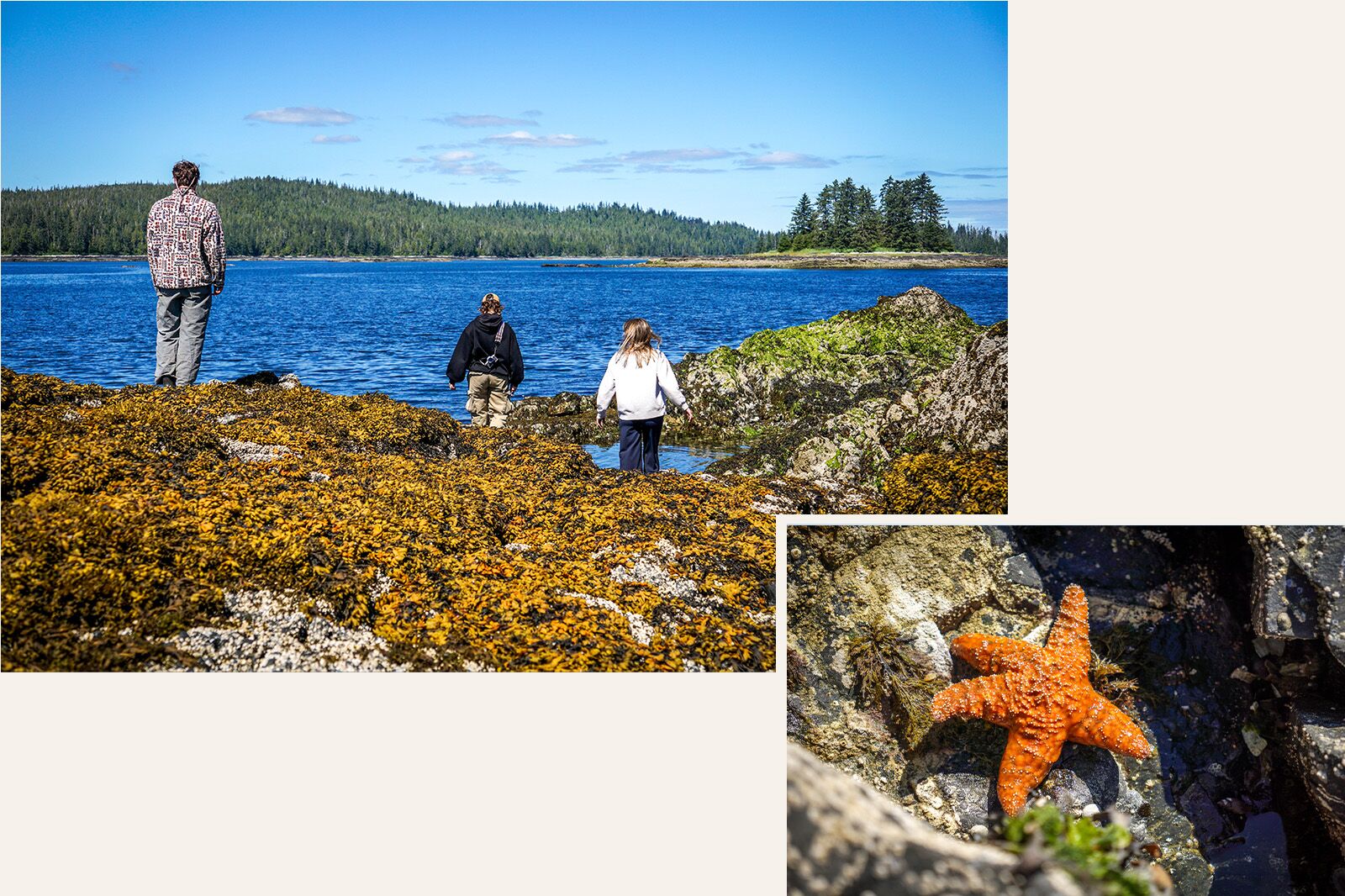
One afternoon during my trip, after orca-spotting in the morning, we went out and stopped on a small island to walk through tide pools. I saw sea stars in colors and shapes I hadn’t seen before, plus assorted small creatures that our guide could name and I mostly couldn’t. From there, we continued on to a larger settlement along the pass with a burger-and-shake counter and a small gift shop for lunch.

On a different day, we took the boat into the town of Whale Pass, a settlement of under 100 year-round residents with little more than a post office and a library, before taking the lodge van to a hike up a limestone cave nearby.

What struck me most, boating between all of it, was how little else was out there. Aside from a handful of houses along the shoreline, we didn’t pass another lodge or another operator’s boat until we reached a town. By the end of the trip, Chelsea and James, a couple from Florida on their first season at the lodge, felt less like guides and more like people I’d been traveling with. I guess that’s what happens at the kind of place where you map out your adventures over dinner.

Book Now

Discover Matador

Save Bookmark

We use cookies for analytics tracking and advertising from our partners.

For more information read our privacy policy.